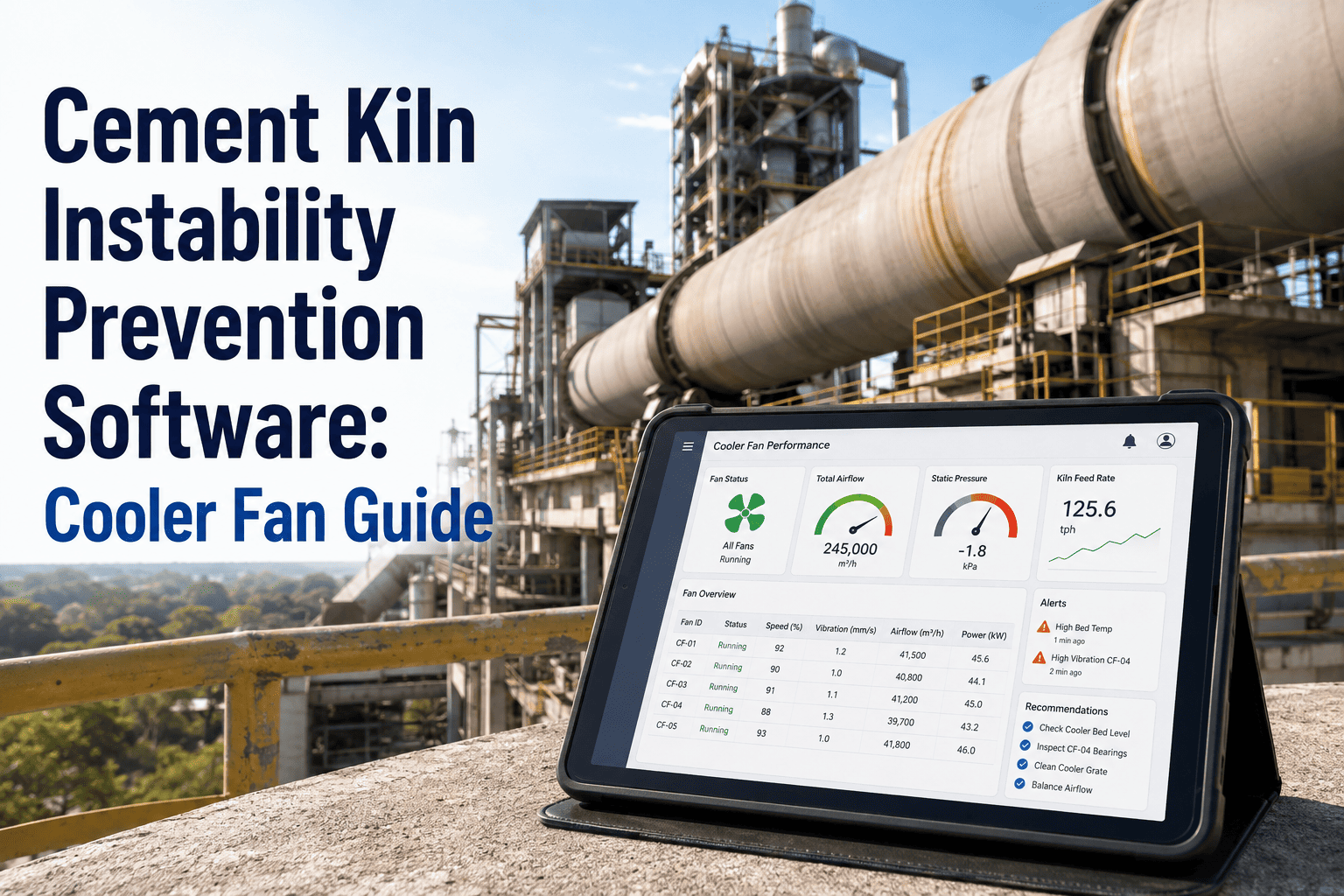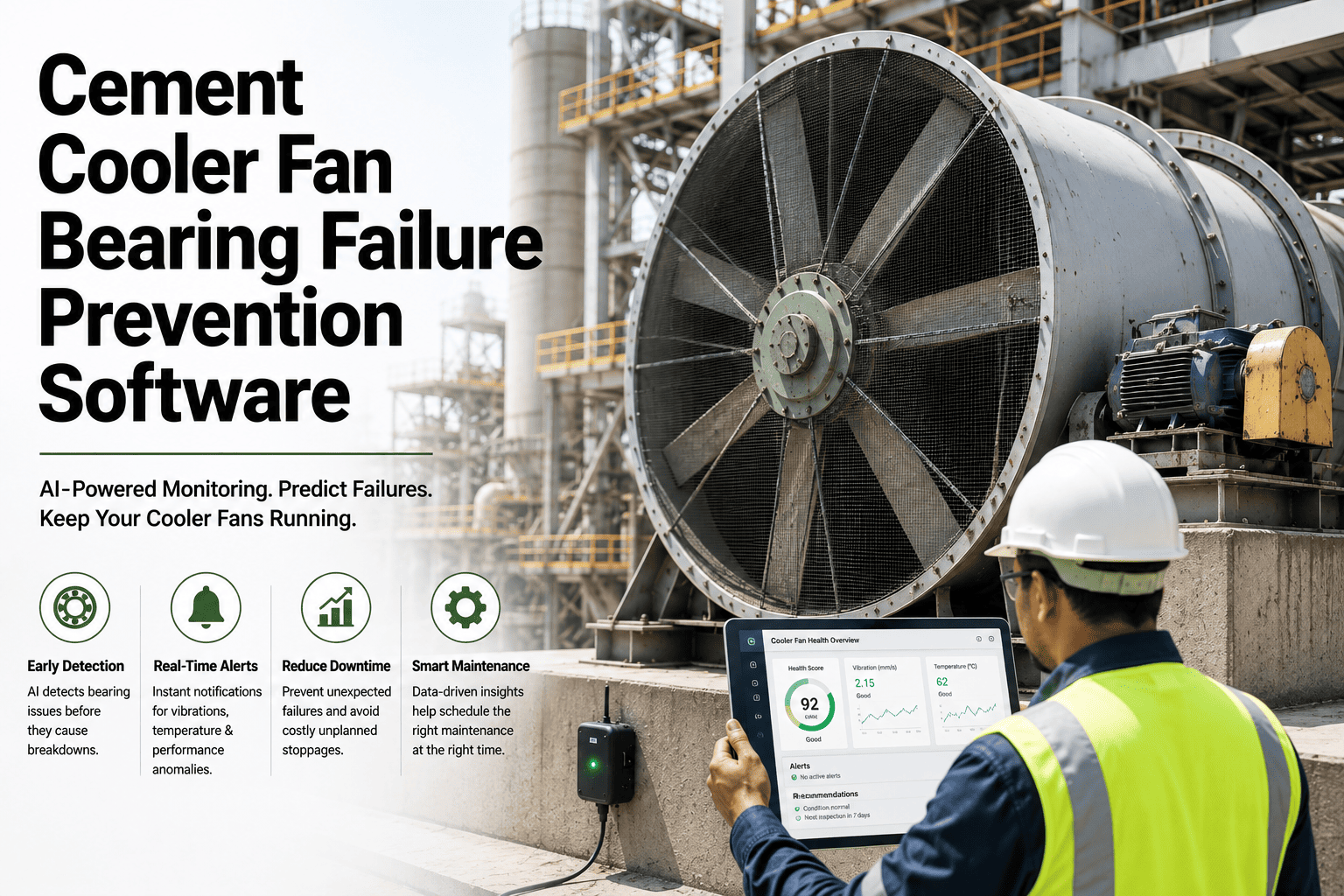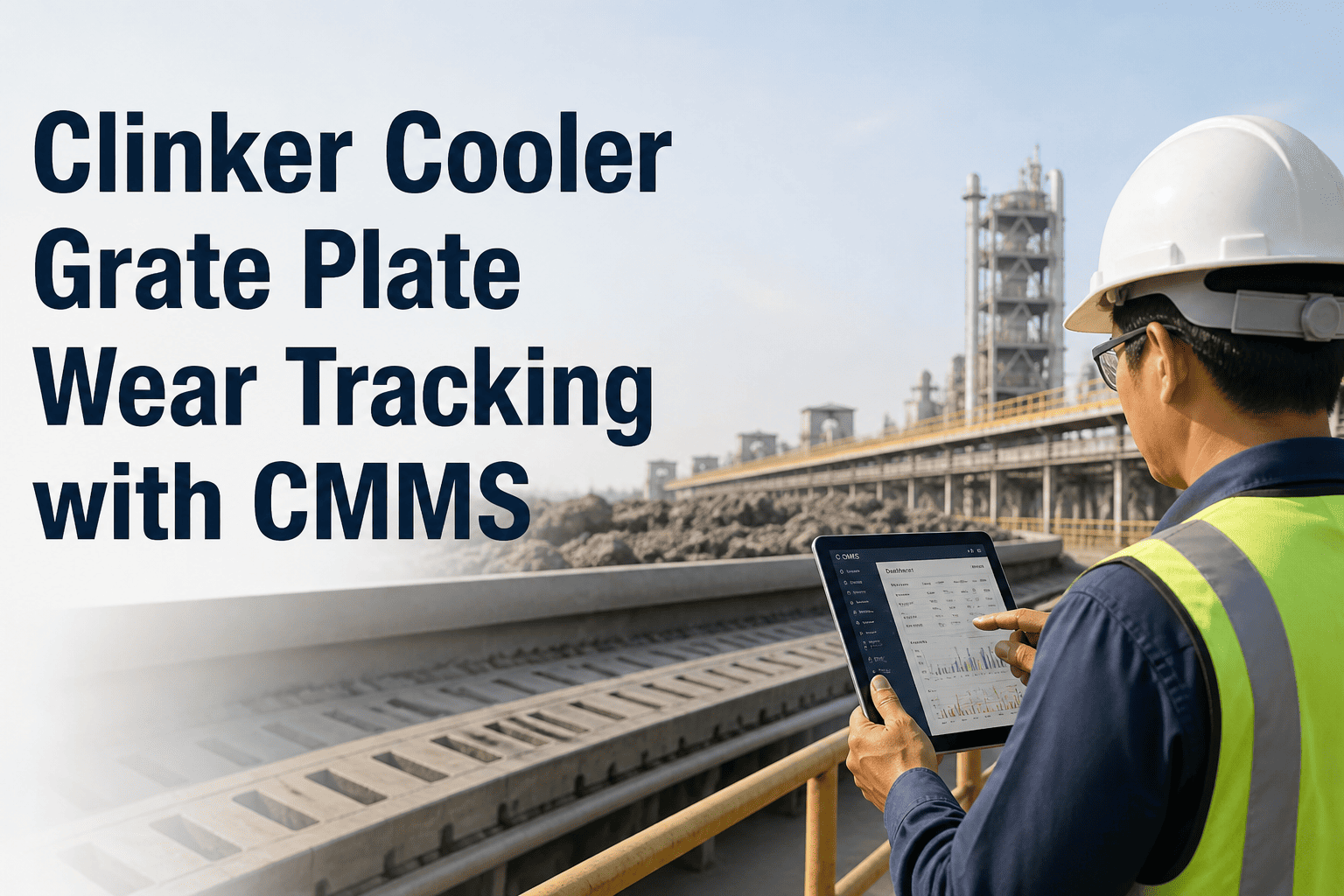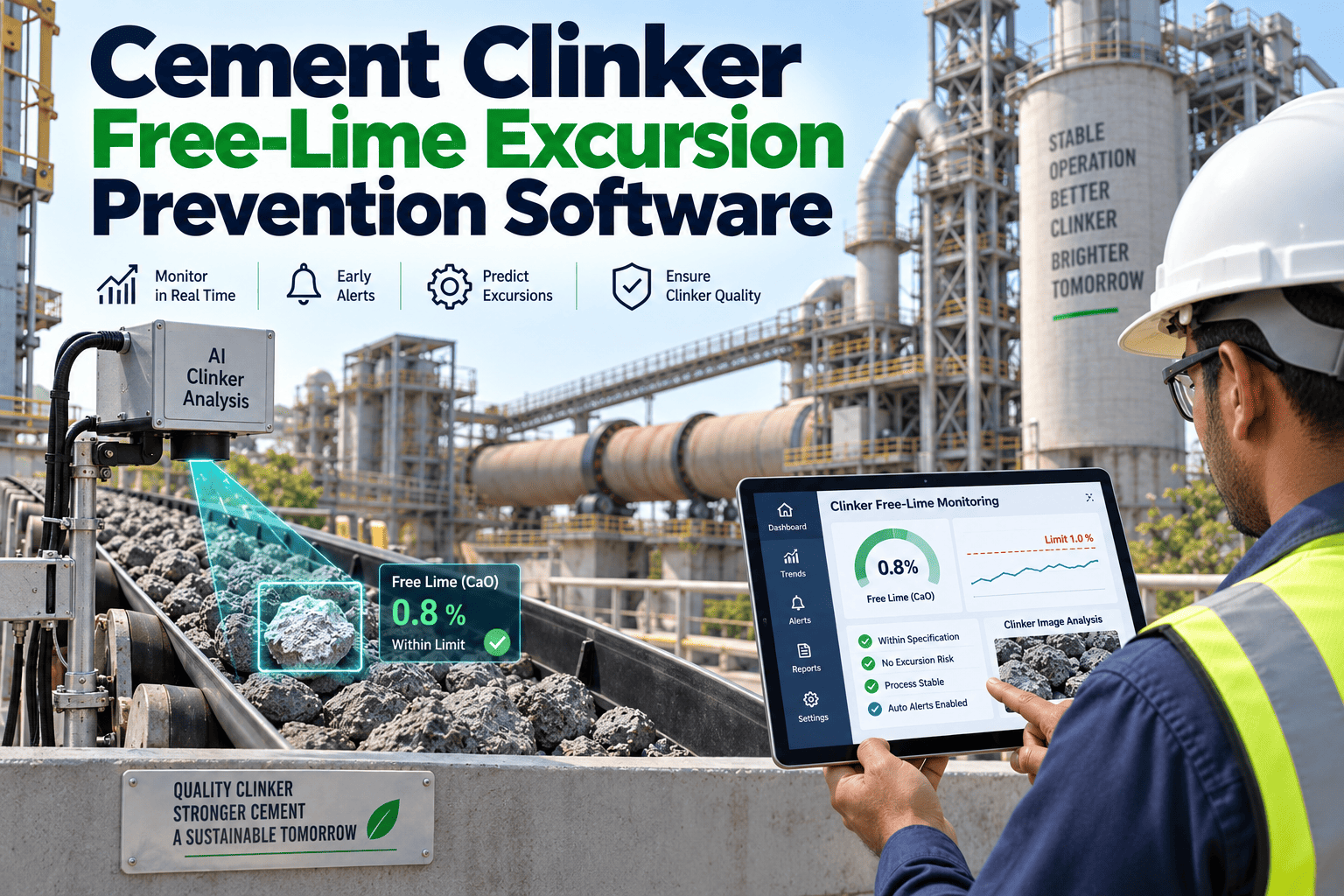
Somewhere between the burning zone at 1,450°C and the clinker leaving the cooler at 120°C, a cement plant loses the ability to see what its own kiln just produced. Free lime, the single most important quality signal in clinker, only shows up in a lab result that arrives two to four hours after the material was made. In that gap, an excursion driven by a worn grate plate or a drifting cooler fan can quietly push out hundreds of tonnes of off-spec clinker before anyone reacts. This guide breaks down how free-lime excursions actually start, why the cooler is the hidden trigger, and how a maintenance-driven approach catches the mechanical causes early. Start managing cooler and kiln reliability with OxMaint free and turn condition signals into work orders before quality drifts.
What a Free-Lime Excursion Really Is
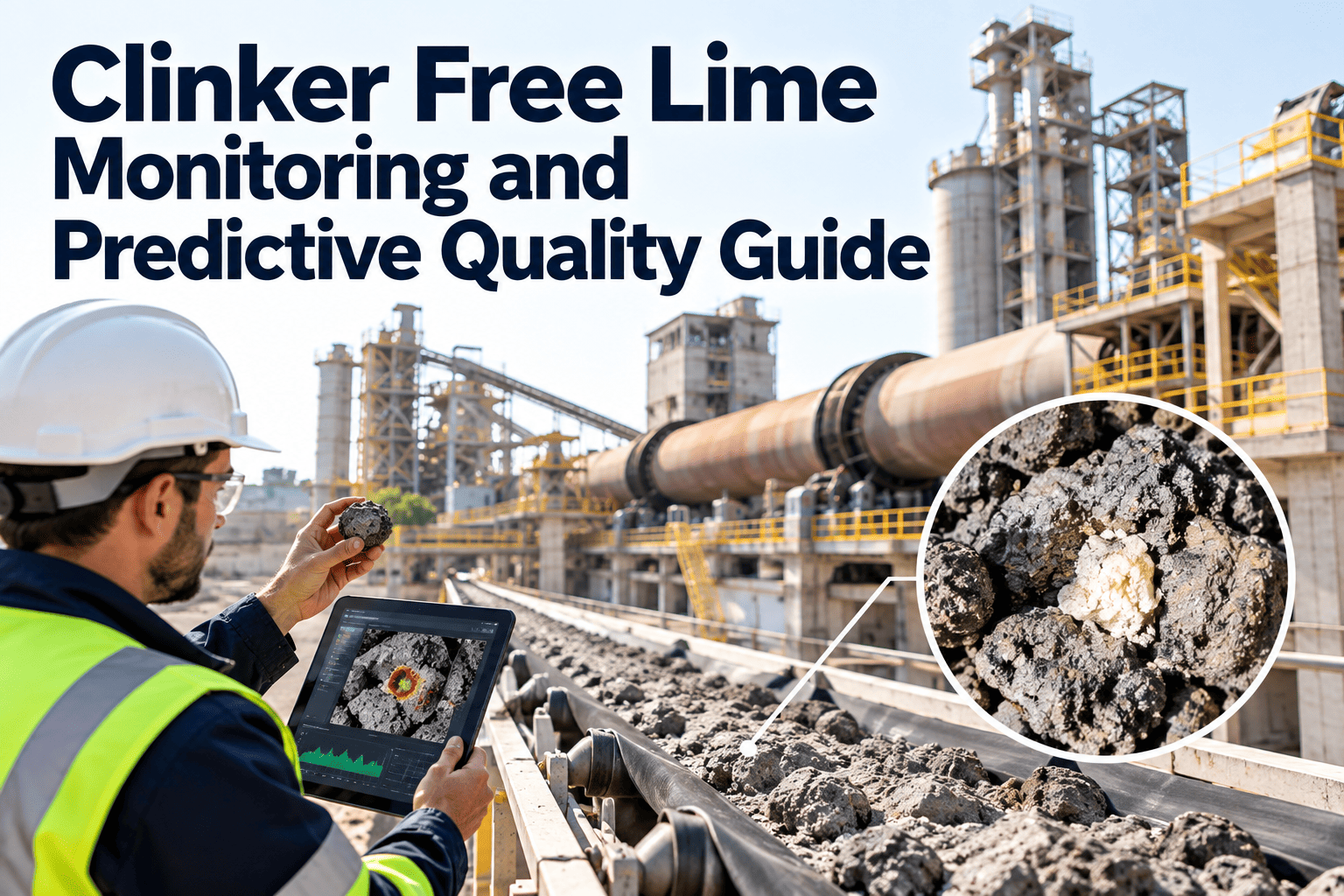
Free lime, written as f-CaO, is unreacted calcium oxide left in the clinker after burning. A healthy kiln holds it inside a narrow window, usually between 1% and 2%. Push above that band and the clinker is underburnt: it fails early-strength targets, triggers customer claims, and forces grinding energy up. Drop too far below it and the kiln is being overburnt, wasting fuel and chewing through refractory to buy a safety margin nobody actually needs.
An excursion is any sustained move outside that target band. The dangerous part is not the number itself but the delay. Because free lime forms in the burning zone at 1,350°C to 1,450°C, it cannot be measured directly there. Operators sample cooled clinker, send it to the lab, and wait. By the time a high reading lands on the control-room screen, several hundred tonnes of questionable material have already been produced, conveyed, and blended into silos.
Why the Cooler Drives Excursions Nobody Predicted
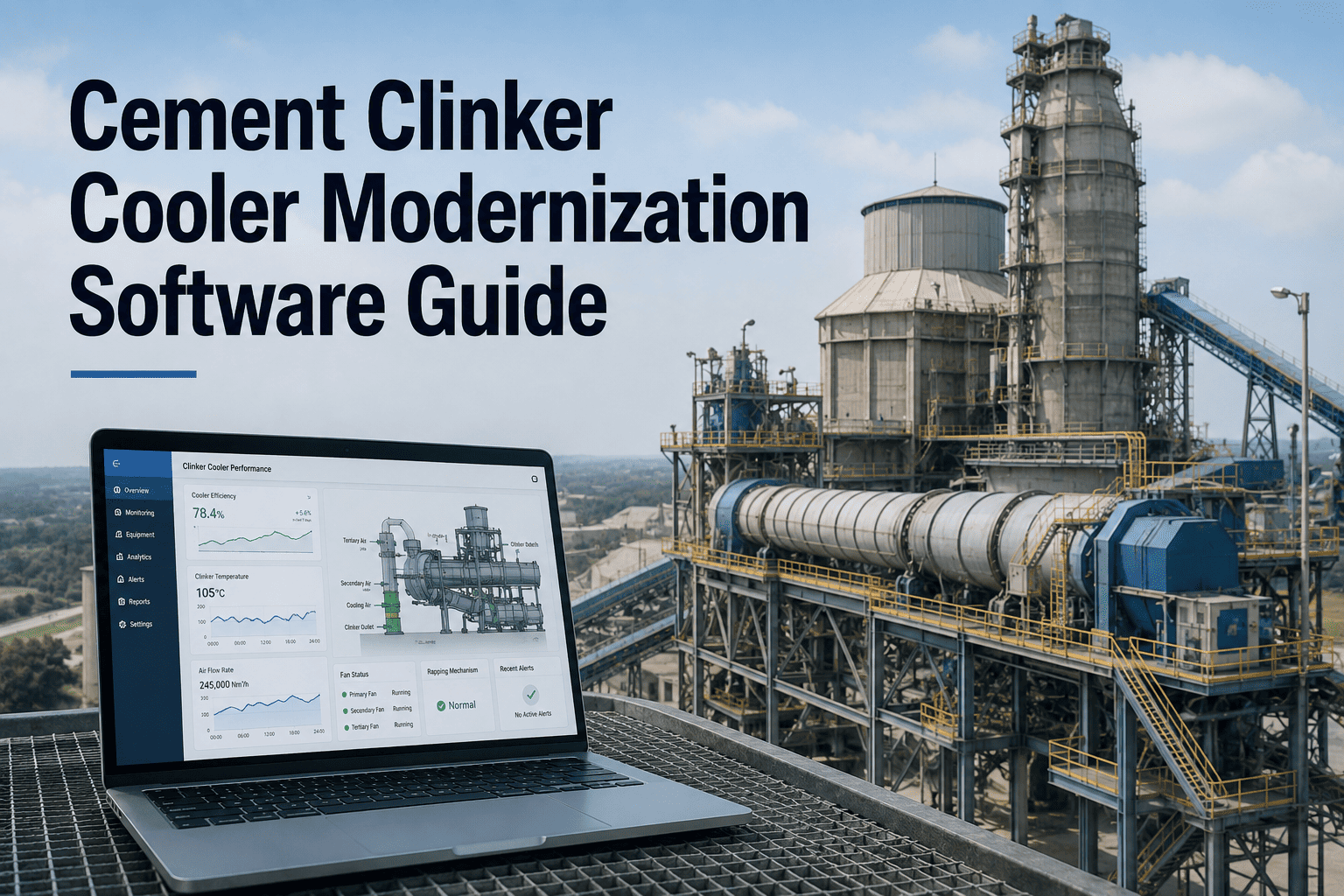
Most engineers instinctively blame the burning zone when free lime climbs. Often the real culprit sits downstream in the clinker cooler. A cooler is supposed to quench clinker rapidly and return 60% to 75% of its heat to the kiln as secondary air. When grate plates wear, when a fan drifts, or when under-grate pressure falls out of balance, the cooling air stops flowing evenly across the bed. It follows the path of least resistance and bypasses the clinker entirely.
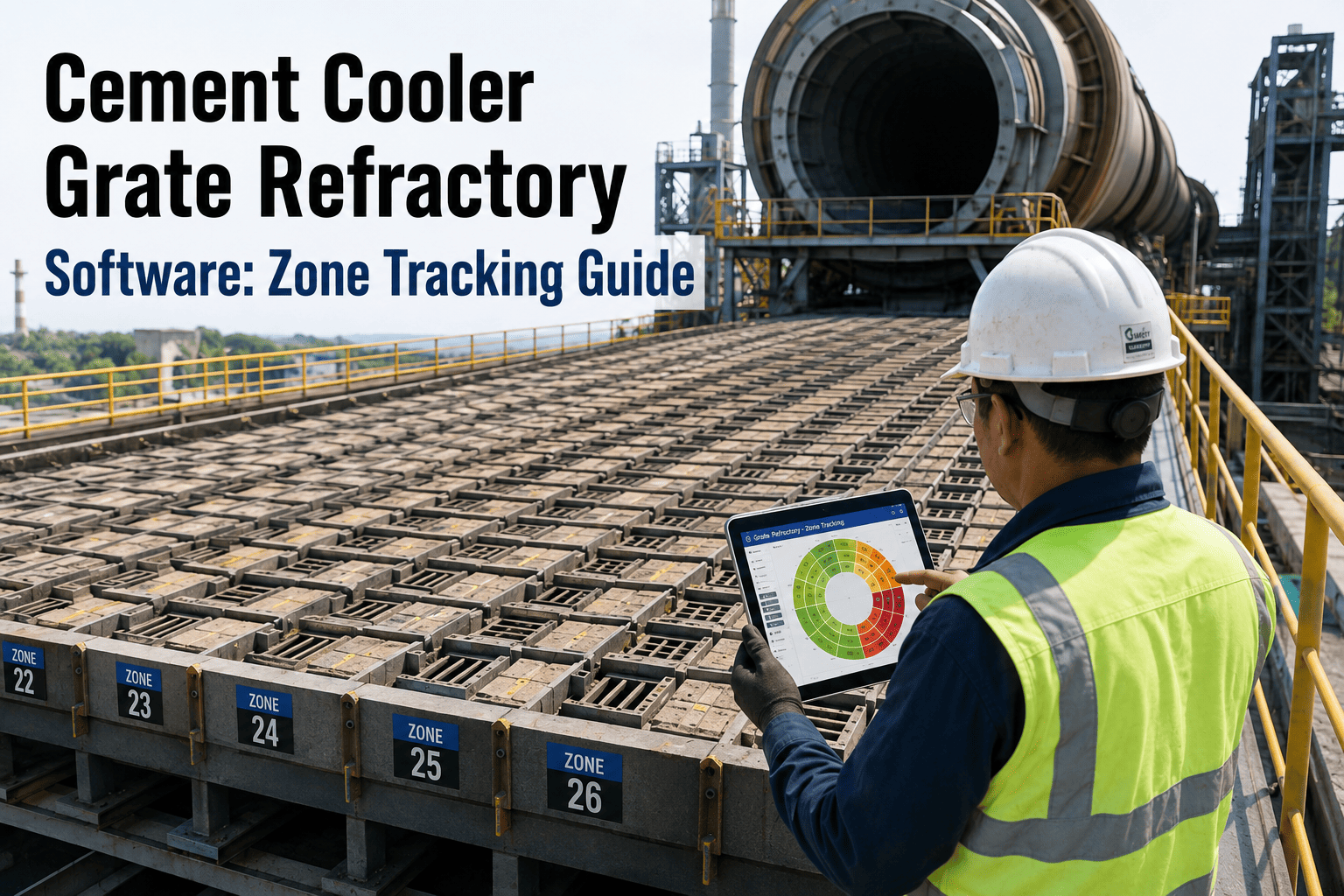
The consequences compound quietly. Worn plates create localized hot zones that raise clinker discharge temperature and generate free lime in exactly the sections air is bypassing. At the same time, a 10°C drop in secondary air temperature raises kiln fuel cost by roughly 0.8% and pushes free-lime risk higher because the burning zone loses recovered heat. Grate wear, fan drift, and dust cycling all move slowly and silently, so the first visible sign is often a red river of poorly cooled clinker, by which point plates have already failed.
The Problem With Waiting for a Titration Result
Every cement plant already measures free lime. The issue is not whether it is measured but when the result becomes actionable. Wet-chemistry titration depends on an analyst's judgment at the endpoint, so two people can read the same sample differently. XRF reports total calcium rather than the free-lime phase, so it cannot separate reacted from unreacted CaO. XRD identifies phases more directly but demands careful sample preparation and struggles with overlapping peaks. Each method, however good, still requires the clinker to be collected, cooled, ground, and interpreted before a number exists.
That sequence turns quality control into a series of intermittent snapshots instead of a continuous feedback loop. In steady-state operation the gaps are manageable. But free lime moves precisely when conditions are not steady — when raw mix drifts, when fuel blend shifts, or when a cooler fan slowly changes the thermal picture. Those are the exact moments the lab is blindest, because the sample being titrated describes clinker made hours ago under conditions that have already changed. The result is over-burning as a defensive habit: operators hold an expensive fuel margin simply because they cannot see the current state of the process.
A maintenance-led prevention layer does not compete with the lab. It removes the mechanical volatility that makes the lab's delay dangerous in the first place. If grate plates, fans, seals, and thermocouples are all held in a known condition, the process drifts far less, and the lab result becomes a confirmation rather than a surprise. Prevention is what shrinks the blind spot the lab clock creates.
The Equipment Conditions That Push Free Lime Out of Band
Free-lime excursions rarely have a single cause. They emerge where mechanical wear, process drift, and delayed feedback overlap. A prevention program works because it attacks the mechanical and detection layers a CMMS can actually control, rather than waiting for the lab to confirm what already went wrong. These are the six conditions that most consistently drive excursions on a working kiln line.
Where Prevention Beats the Lab Clock
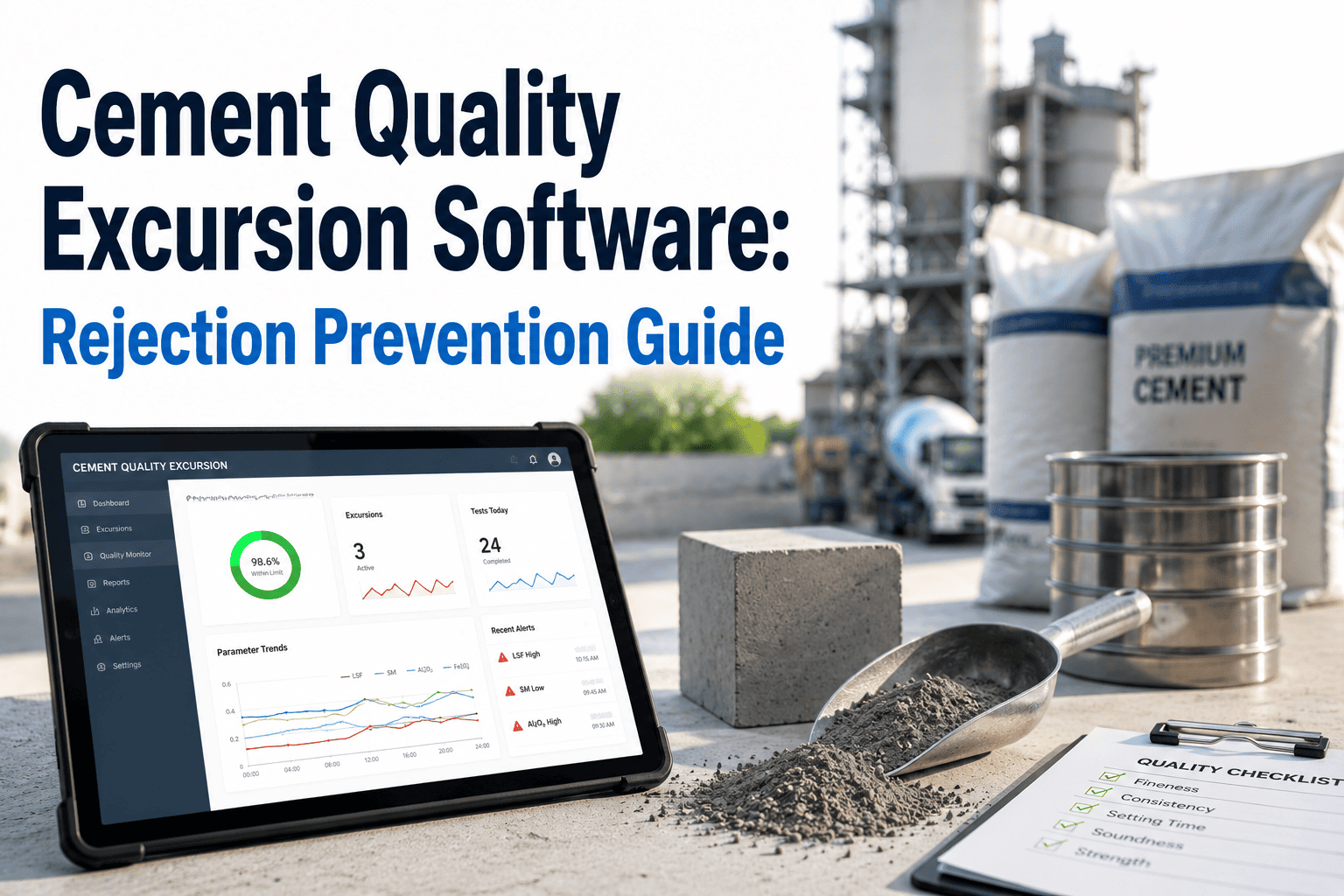
The core problem with free lime is timing. Conventional control runs on intermittent lab snapshots, so operators either overburn to stay safe or discover a deviation hours too late. A maintenance-led prevention program shifts detection upstream, to the mechanical signals that precede the excursion. The earlier the signal, the cheaper the fix and the smaller the volume of off-spec clinker at risk.
What an Excursion Actually Costs a Kiln Line
The direct cost of a free-lime excursion is easy to underestimate because it hides across several budgets. There is rejected or reblended clinker, extra fuel from overburning to compensate, refractory stressed by chasing margin, and in the worst case a cooler failure that takes the kiln down entirely. Structured cooler maintenance exists precisely because these costs stack quietly until a single event makes them visible.
There is also a reputational cost that never appears on a spreadsheet. Underburnt, high free-lime clinker that reaches customers as finished cement can fail strength tests in the field, trigger claims, and damage a producer's standing with the buyers who matter most. That risk is why plants so often overburn: the downside of shipping weak cement feels far larger than the downside of a slightly higher fuel bill. Prevention breaks that trade-off. When the mechanical causes of excursions are controlled, a plant can operate closer to its optimal free-lime target with confidence, capturing the fuel savings without gambling on quality.
How a CMMS Prevents Free-Lime Excursions
OxMaint is a maintenance management platform built for the assets that actually drive free lime. Rather than trying to replace the lab or the DCS, it closes the loop between equipment condition and quality outcome, turning inspection checklists into recurring, auditable work orders and condition data into automated triggers. That is where an excursion gets stopped: at the grate plate, the fan, and the seal, before the burning zone ever sees the effect.
Free-Lime Drivers and How to Catch Them Early
| Driver | Asset | Early Signal | Lead Time |
|---|---|---|---|
| Grate plate wear | Clinker cooler | Wear trend vs baseline | Weeks |
| Fan drift | Cooler fans | Amp and vibration trend | Days to weeks |
| Bed maldistribution | Grate compartments | Under-grate pressure >15% | Days |
| False-air ingress | Cooler seals | Draft and combustion shift | Hours |
| Lost burning-zone view | Kiln thermocouples | Calibration drift | Scheduled PM |
| Coarse raw meal | Raw mill classifier | Wear measurement | Weeks |