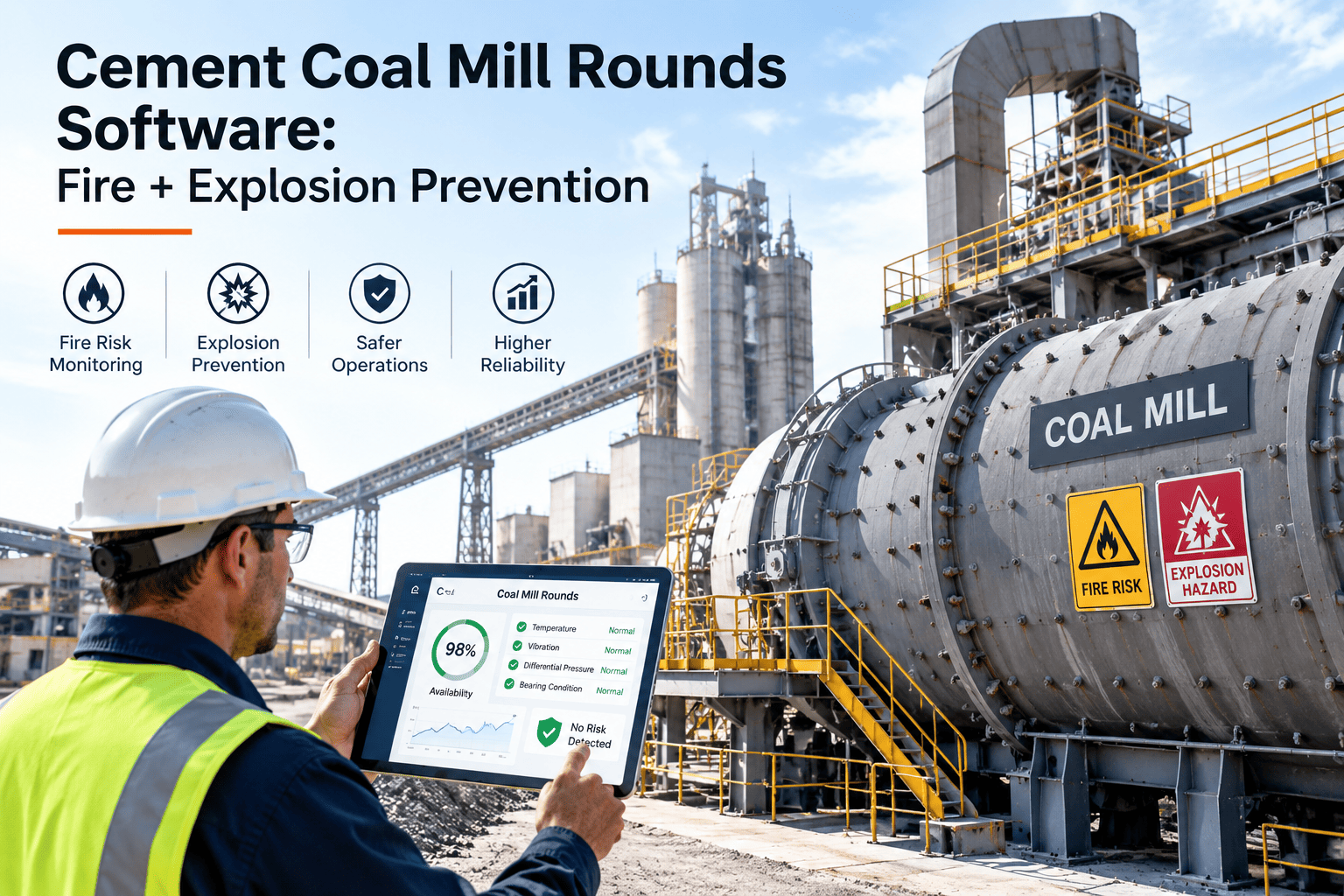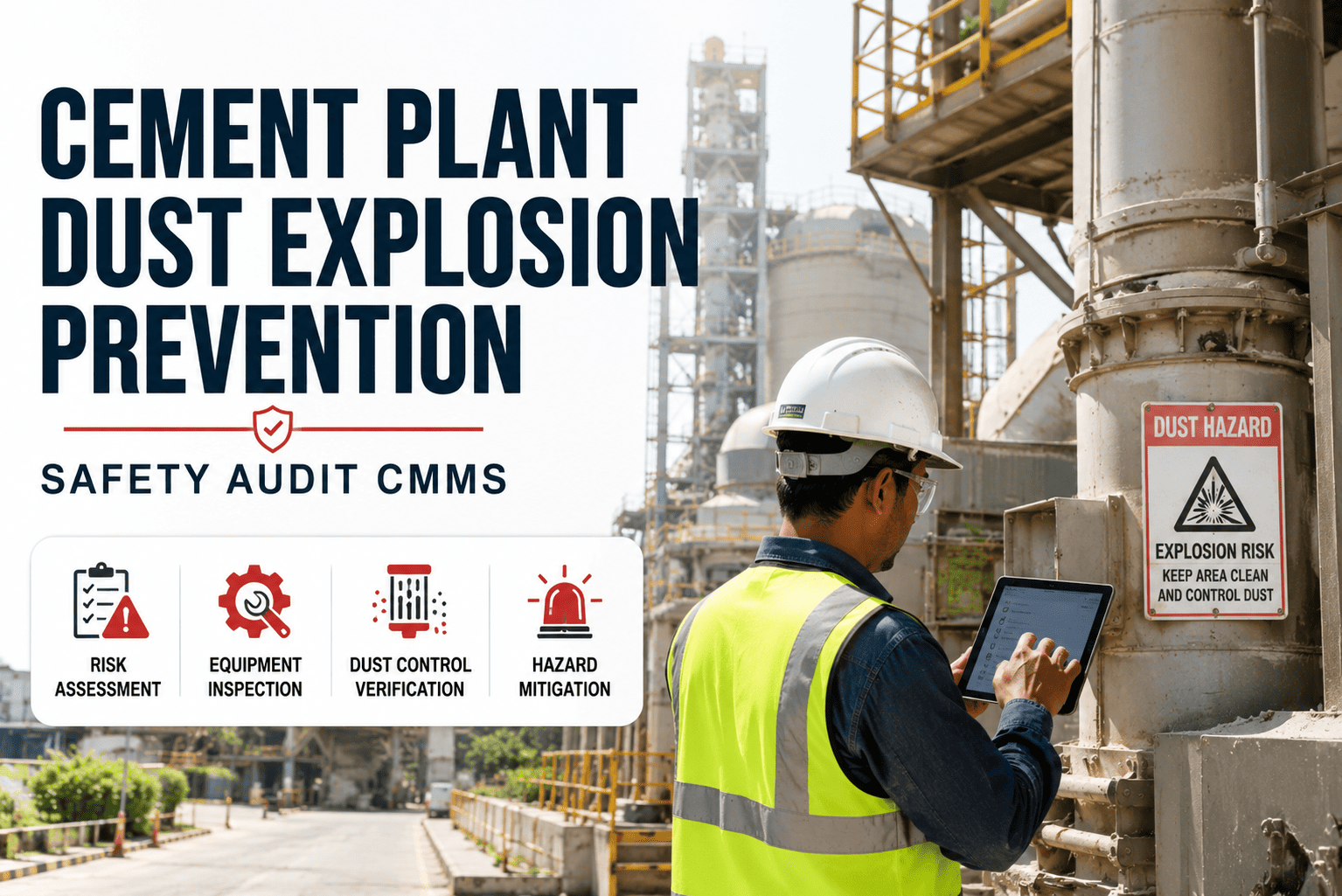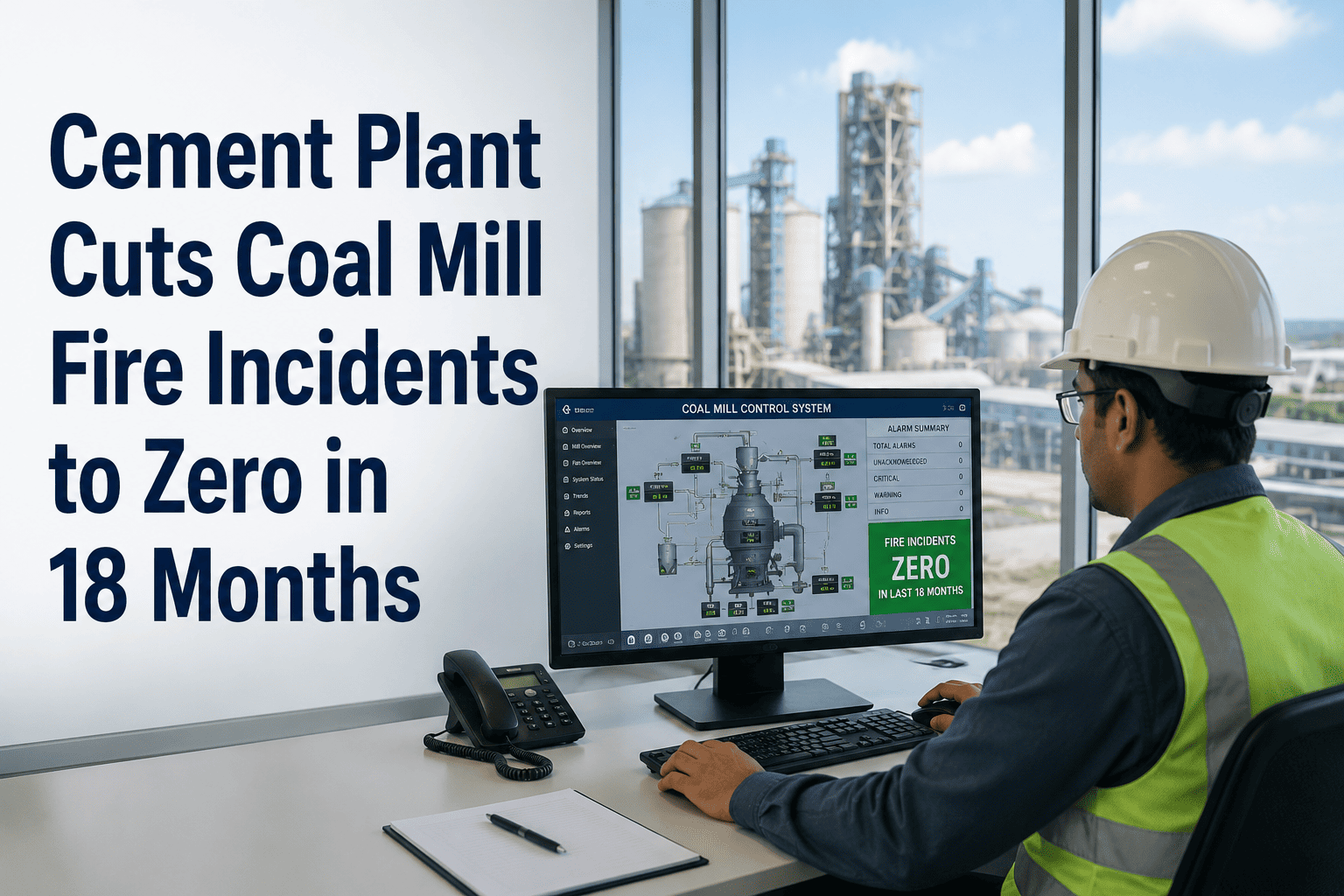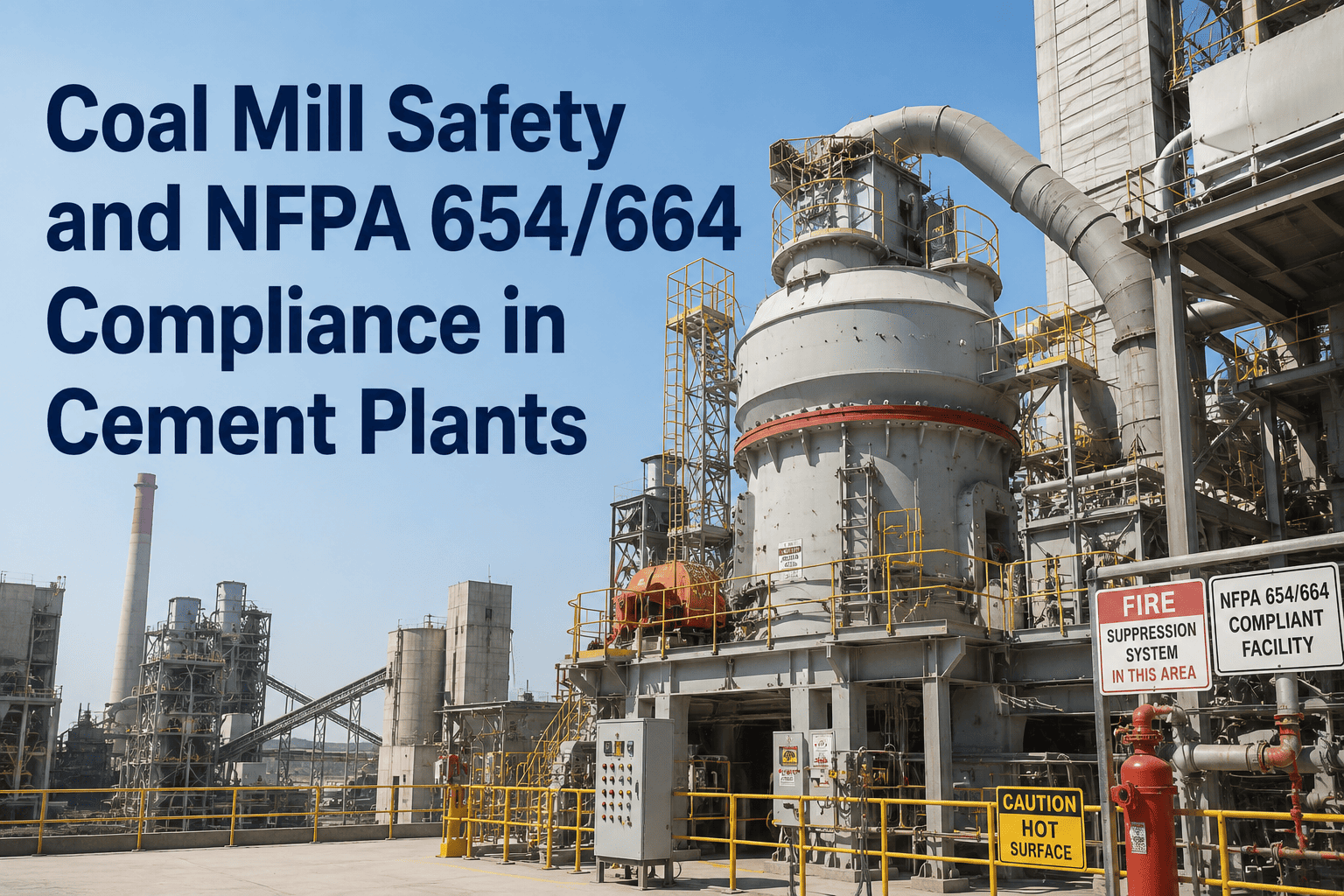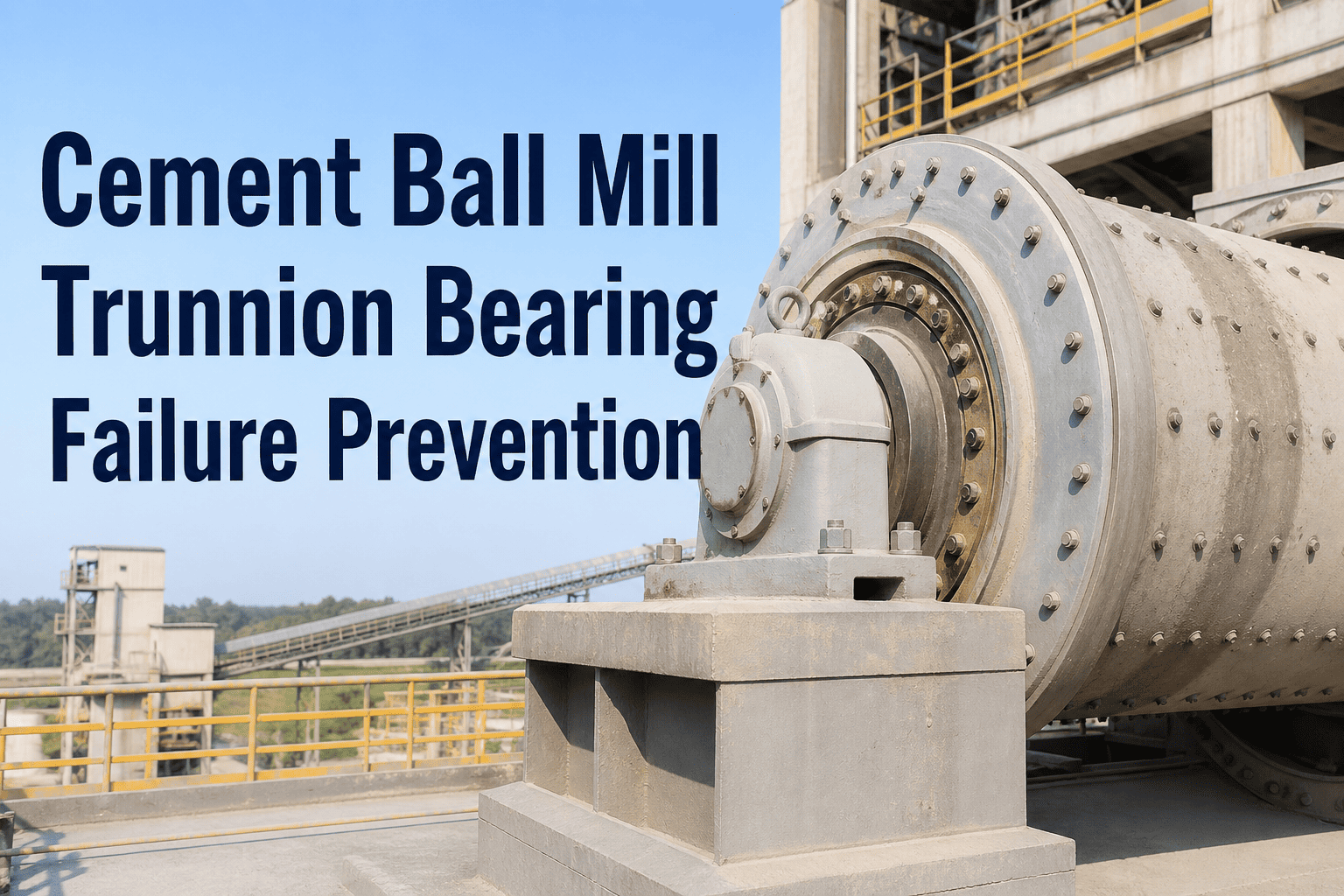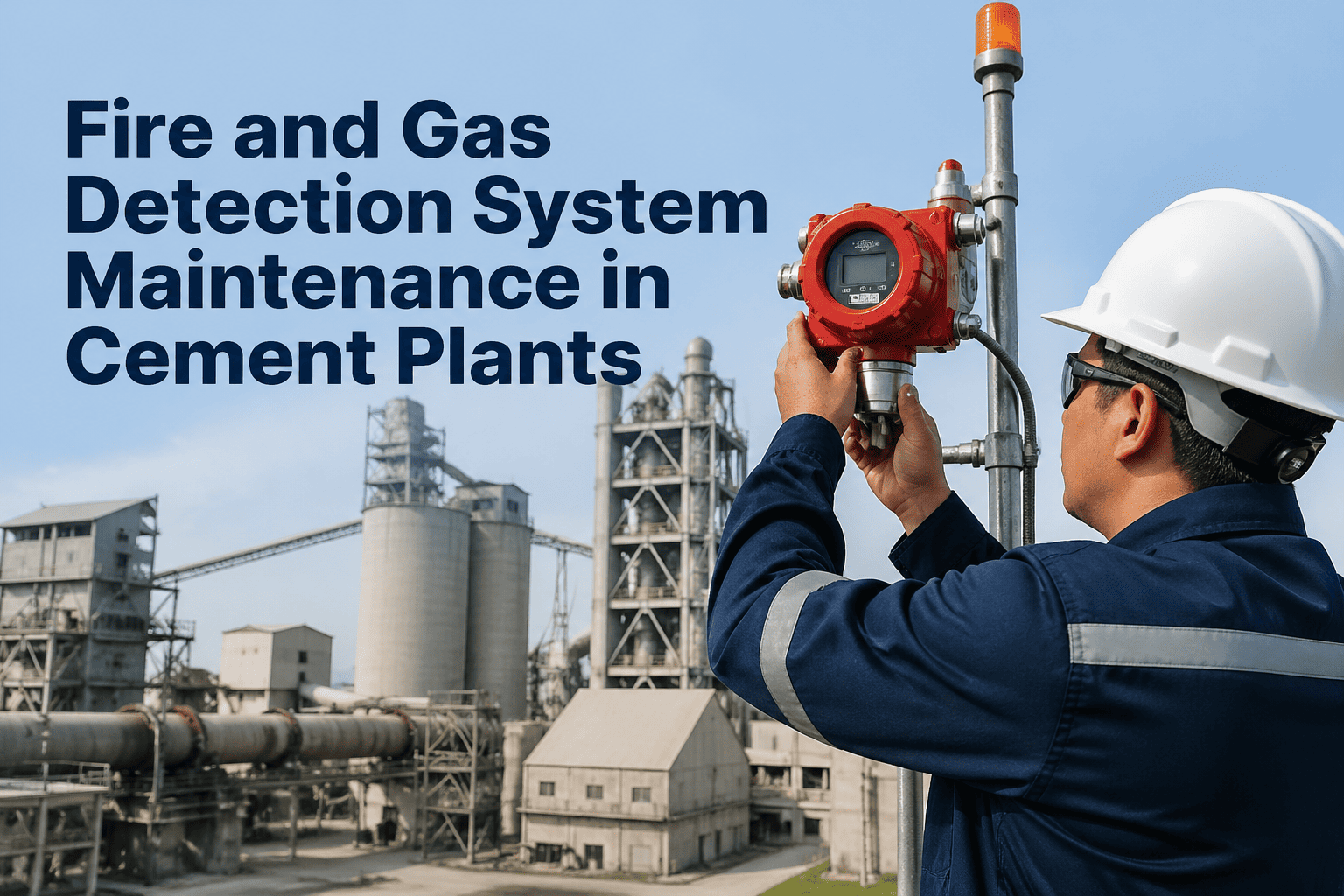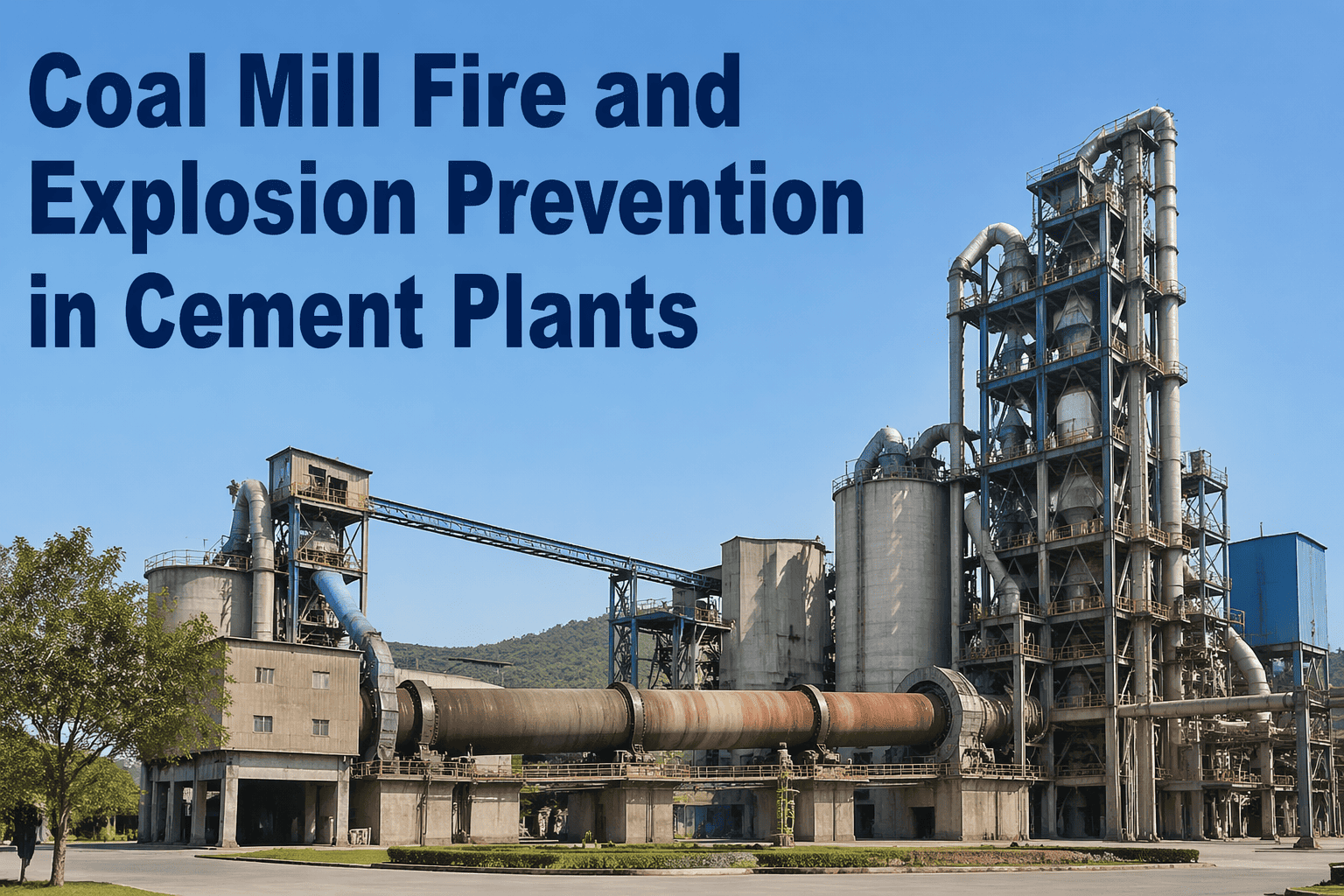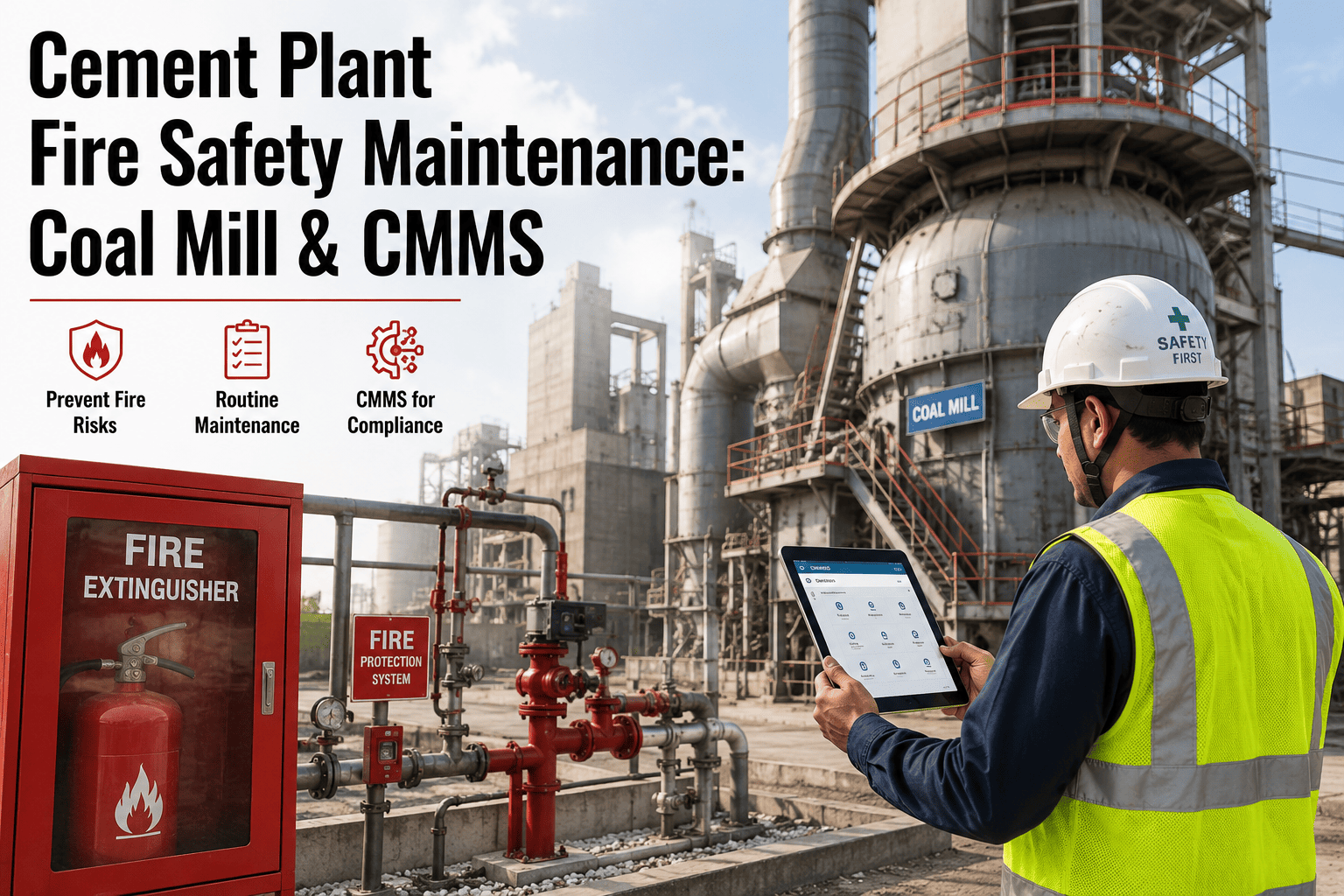
Coal dust fires in cement plants are among the most destructive and most preventable losses in heavy industry — a single smoldering event in a coal mill can escalate to a deflagration in under 90 seconds and sideline a kiln line for weeks. This guide translates NFPA 85, ATEX and cement-sector maintenance practice into a CMMS-driven fire safety program covering coal mill inertion, bag filter protection, hot clinker handling and fire detection PM. Every figure, threshold and inspection interval below is something a planner can drop straight into a work-order template. When you are ready to operationalize it, you can Start Free Trial and load the PM library in an afternoon.
Is your coal mill one missed temperature alarm away from a deflagration?
Coal dust is not a passive fuel — it is an actively combustible hazard that demands continuous, instrumented control. The cement plants that avoid coal mill fires do not rely on memory or spreadsheets; they run a CMMS-enforced safety program where every inertion valve test, CO trend and bag filter inspection is scheduled, signed off and auditable.
The four ignition zones every cement plant must police
Roughly 8 of every 10 cement-plant fire incidents originate in just four areas — and three of them are dust-related. Mapping these zones into the CMMS asset register is the first concrete step toward a defensible fire safety program.
Coal Mill & Grinding Circuit
Pulverized coal below 75 microns is explosible at concentrations as low as 40 g/m³. Hot gases from the kiln preheater exhaust (300–380 °C) enter the mill and any oxygen spike combined with a trapped pyrite spark can trigger ignition within seconds.
Bag Filter & Dust Collectors
Fine coal and raw meal dust accumulations above 1 mm on filter bags create a ready fuel bed. Static discharge, hot carry-over embers or a failed cleaning cycle are the most common ignition sources in cement baghouse fires.
Clinker Conveyor & Cooler
Hot clinker discharged above 200 °C can ignite lubricant-soaked spillage, rubber belt edges and hydraulic oil leaks on pan conveyors. Red-hot nodules trapped under guards are a chronic source of belt fires.
Fuel & Oil Storage Areas
Diesel, heavy fuel oil and hydraulic power units located near kiln bearings carry both fuel and ignition potential. Bund integrity, valve leak PM and foam system checks are the lifeline here — and the most often deferred.
An 8-point CMMS PM schedule for the coal mill
A coal mill safety program lives or dies on whether each control is tested on a fixed cadence — not on whether someone "walked past it last week." The schedule below mirrors NFPA 85 Subsection 6.4 and is structured for direct import into a CMMS work-order library.
| PM Task | Cadence | Acceptance Criterion | Failure Cost If Skipped |
|---|---|---|---|
| Mill outlet temperature transmitter calibration & drift check | Monthly | Drift ≤ ±2 °C at 90 °C setpoint | Loss of pre-alarm → uncontrolled drying temperature |
| CO & O₂ analyzer function test on mill inlet & outlet | Weekly | CO alarm at 200 ppm, O₂ trip at <8 % | Undetected smolder → deflagration in ~90 s |
| Inerting steam / CO₂ valve stroke test & flow verification | Monthly | Full open ≤ 3 s, flow ≥ rated 2,400 kg/h | Inertion failure at the moment of ignition |
| Hot gas damper positioner & limit switch inspection | Quarterly | Repeatability ≤ 1 %, full close confirmed | Uncontrolled hot gas ingress during start-up |
| Pulverizer seal air fan differential pressure check | Monthly | DP ≥ 2.0 kPa above mill housing | Dust ingress into bearings → friction ignition |
| Explosion vent panel integrity & burst disc inspection | Semi-annual | No corrosion, relief path unobstructed | Vent failure → vessel rupture on deflagration |
| Static continuity & grounding of mill housing & ducts | Quarterly | Resistance to earth ≤ 10 Ω at every joint | Static arc ignites dust cloud during fill |
| Coal feeder rate accuracy & tramp metal detector test | Monthly | Feeder error ≤ 2 %, detector trips test piece | Over-feed or pyrite spark enters grinding zone |
The fire-risk formula every maintenance planner should know
Fire risk in a cement coal circuit is not a single number — it is the product of fuel readiness, ignition proximity, oxygen availability and the inverse of detection-and-suppression speed. Quantifying it makes the case for CMMS-scheduled instrumentation PM in language a plant manager cannot ignore.
From calendar-based to condition-based fire protection
The plants that hold their fire-incident rate near zero treat the CMMS as the legal record of a safety program — not as a helpdesk for breakdowns. Here is how the four CMMS pillars convert a paper fire-safety manual into a live, auditable system.
Map every fire-critical asset by zone
Tag each detector, valve, vent panel and suppression nozzle with a fire-zone code in the CMMS so a single filter surfaces every PM due in coal mill, baghouse, clinker cooler and fuel farm areas.
Schedule inspections by risk, not habit
Condition-based triggers — mill run-hours, tons ground, CO trend slope — generate work orders automatically, so a high-load month produces proportionally more detection PM rather than the same flat calendar task.
Capture evidence at the asset
Technicians photograph the stroked inertion valve, log the actual mill outlet temperature and sign off on the tablet beside the equipment — turning each PM into a defensible compliance record.
Survive an NFPA / insurance audit in an hour
Every calibration, test and repair is time-stamped with the technician ID, the measured value and the pass/fail verdict — exportable as a single PDF for an FM Global or NFPA 85 compliance review.
Turn fire-safety PM into a 90-day CMMS rollout
Load the coal mill, bag filter and clinker cooler PM library, wire CO and temperature triggers to work orders, and start the audit trail in a single afternoon — no migration project required.
A 6-step fire-prevention checklist beyond the coal mill
Once the coal mill is governed, the next loss vectors are the bag filters and the hot clinker conveyors. These six checks — each schedulable as a CMMS round — catch the slow-burn failures that precede most baghouse and conveyor fires.
Bag filter differential pressure trend
A rising DP signals blinding and dust hold-up — the precursor to a smoldering filter. Review the 7-day DP trend weekly and trigger a cleaning cycle audit on any slope exceeding 200 Pa/day.
Clean-air-plenum spark detector test
Verify each UV/IR spark detector on the baghouse inlet trips the abort gate within 100 ms. A failed test must lock out coal feed until the detector head is replaced — never deferred to the next outage.
Rotary valve & isolation seal inspection
A leaking rotary valve under a baghouse hopper lets burning material propagate downstream. Inspect clearances monthly; replace rotor tips when clearance exceeds 0.4 mm to preserve the explosion isolation function.
Hot clinker conveyor belt thermography
Run a thermal sweep of the clinker pan conveyor weekly. Any bearing or belt edge above 110 °C generates a work order — the threshold that precedes 90 % of recorded clinker-line belt fires.
Hydraulic power unit oil leak walk-down
A 0.5 L/min leak onto a 200 °C clinker guard is an ignition event waiting to happen. A 15-minute visual walk-down, logged in the CMMS round, is the single highest-leverage fire check on the clinker floor.
Fire water & foam skid monthly run-test
Run the fire water pump and foam skid on auto-test for 30 minutes monthly, recording discharge pressure and foam concentration. A skid that has not run in 60 days has a 1-in-5 chance of failing on demand.
A 180-asset plant, one missed CO calibration, $1.8M avoided
We rolled the coal mill PM library into OxMaint in week one. Three months in, a CO analyzer drift trigger fired a work order the same morning — the mill would have run blind through an entire weekend otherwise. The CMMS-scheduled inertion valve test caught a sticking actuator the same week. Insurance flagged both as a $1.8M loss avoided.
Cement plant fire safety & CMMS — the questions planners ask most
How often should a coal mill inertion system be tested in a cement plant?
The inerting steam or CO₂ valve should be stroke-tested monthly and flow-verified quarterly. The CO and O₂ analyzers that trigger inertion should be function-tested weekly and calibrated monthly, with a drift check against a certified gas at the 200 ppm CO alarm point. Scheduling these in the CMMS guarantees the test happens even during outage crunches.
What temperature thresholds should trigger a coal mill shutdown?
Mill outlet temperature should pre-alarm at 95 °C and trip the coal feeder at 110 °C. Mill inlet hot gas temperature should alarm at 380 °C. Bearing temperatures on the mill trunnion or gearbox should alarm at 75 °C and trip at 85 °C. These thresholds must be set, locked and audited in the CMMS so they cannot drift without an engineering change record.
Can a CMMS really prevent bag filter fires in a cement plant?
Yes — most bag filter fires follow a detectable rise in differential pressure and a failed spark detector. A CMMS that trends DP, schedules weekly spark-detector tests and logs rotary valve clearances catches the precursor conditions weeks before ignition. You can Start Free Trial and import the bag filter PM library to see the schedule immediately.
What records does an FM Global or NFPA 85 audit expect for fire safety PM?
Auditors expect a time-stamped, technician-signed record for every detector test, inertion valve stroke, vent panel inspection and suppression run-test — including the measured value and the pass/fail verdict. A CMMS audit trail that exports this as a single PDF per quarter is the standard format insurers now accept without re-questioning.
How long does it take to roll out a cement fire-safety CMMS program?
A focused team can import the coal mill, bag filter, clinker conveyor and fuel storage PM library, assign triggers and go live with mobile sign-off in 2–4 weeks. To see the library and the rollout plan on your asset list, Book a Demo with our cement maintenance team.
Make fire safety maintenance your plant's default setting
Load the cement fire-safety PM library, schedule the coal mill inertion and detection tests, and start building a defensible audit trail today — no migration project, no credit card.
Free 14-day trial · No credit card