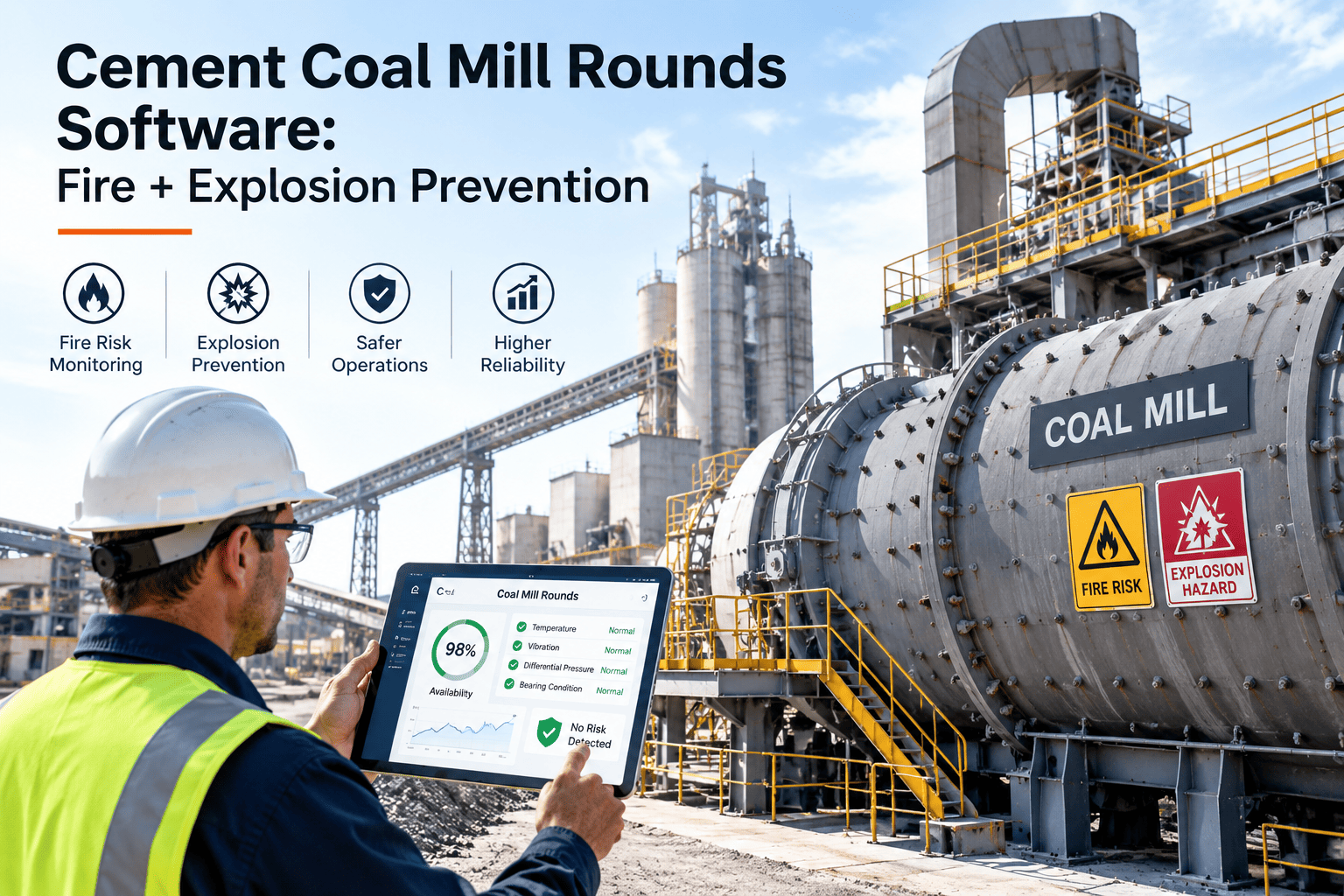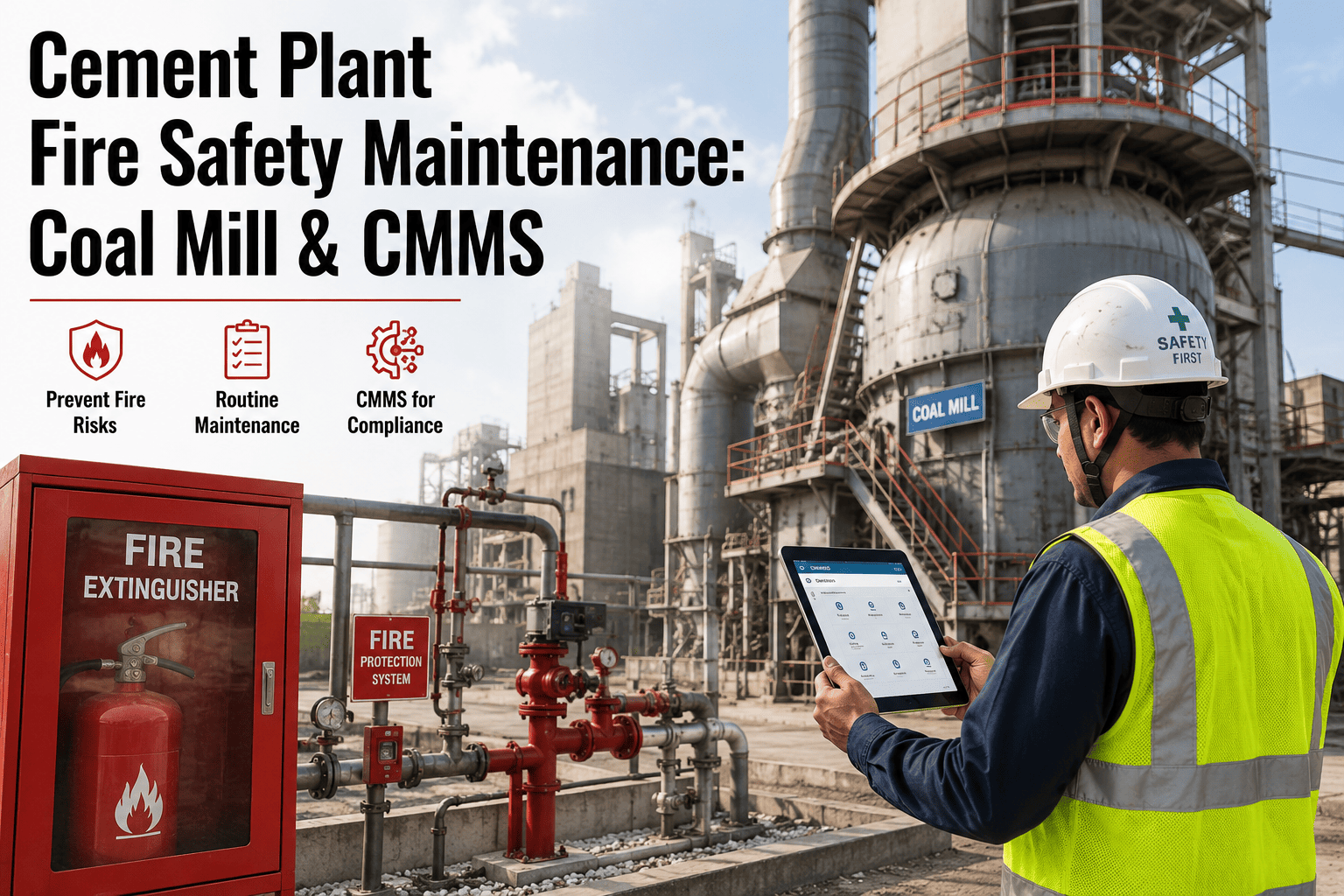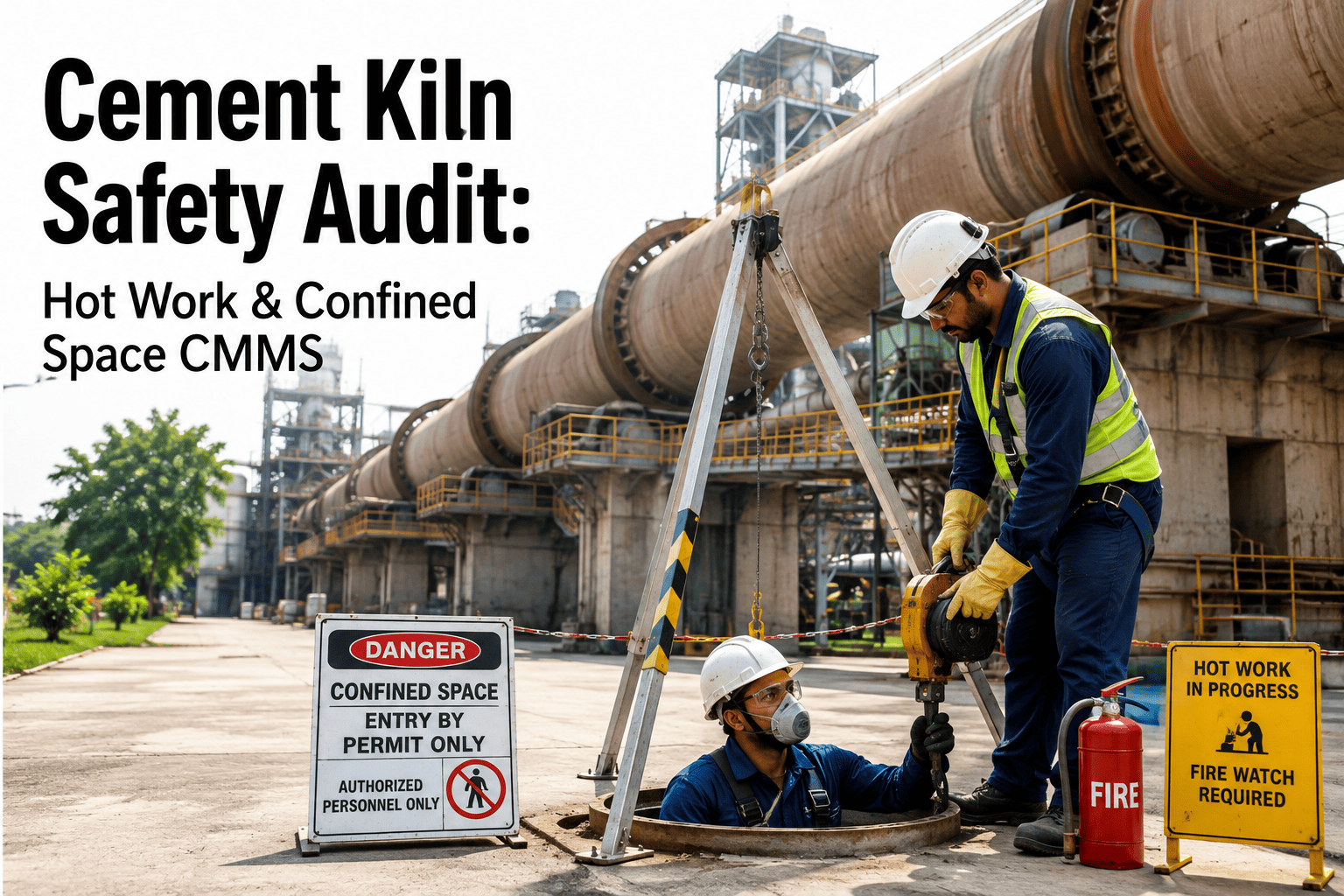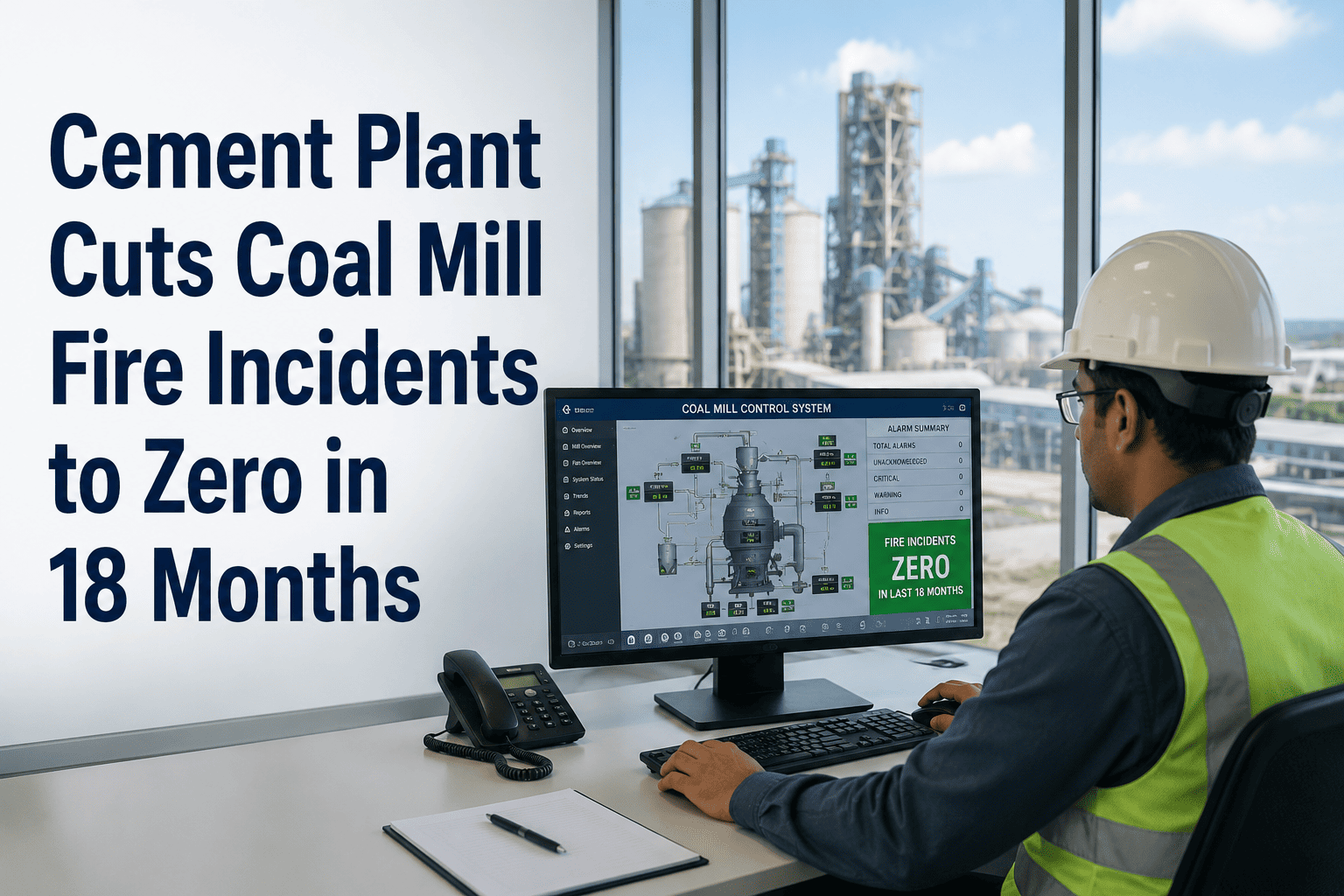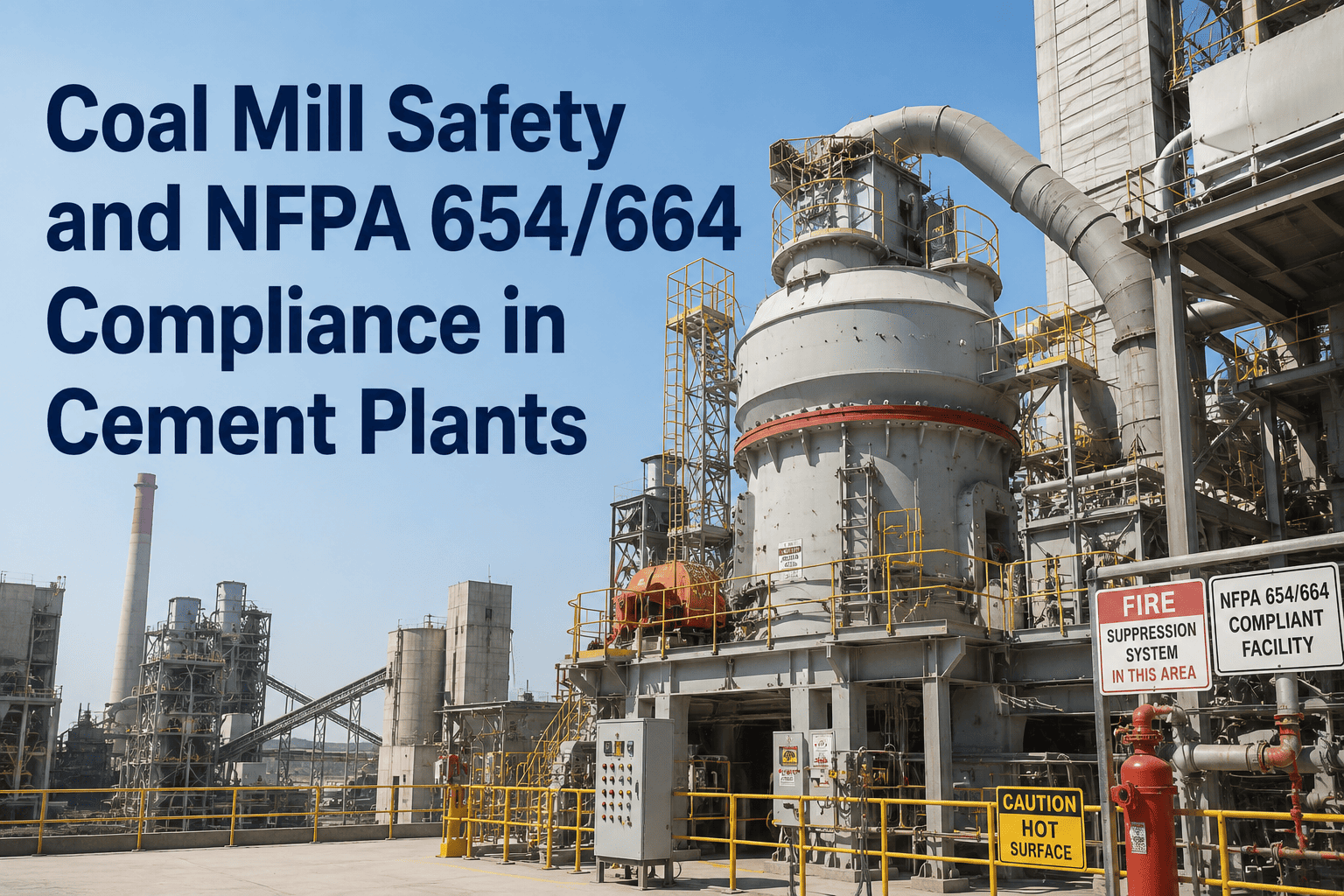
Dust explosions in cement plants are not freak accidents — they are predictable failures of process discipline. Combustible dust from limestone, coal, petcoke, and alternative fuels accumulates in silos, conveyors, baghouses, and coal mills where a single static spark or hot surface above 400°C can trigger a deflagration traveling faster than 30 m/s. NFPA 654 and NFPA 664 require cement producers to maintain documented dust hazard analyses (DHA), ignition source controls, and verified housekeeping frequencies — but most plants still rely on paper checklists and tribal knowledge. A CMMS-driven safety audit program converts these obligations into scheduled, evidenced, and auditable work orders that close the gap between compliance and actual prevention. Start your Start Free Trial today and turn dust explosion prevention into a continuous, defensible process.
Cement Dust Safety Audit · CMMS Guide
Can your cement plant survive the next coal mill ignition?
A single 20-micron coal dust layer 1.6 mm deep is enough fuel for a catastrophic secondary explosion. This audit framework converts NFPA 654 / 664 obligations into 47 scheduled, evidenced CMMS work orders — closing the gap between compliance paperwork and actual prevention.
Hazard Analysis
Where explosive dust risk actually lives in a cement plant
Cement production generates combustible dust at six distinct transfer points. Kst values for coal dust typically range 80–150 bar·m/s, placing it in St 2 — strong explosion class. Without a DHA mapped to each node, prevention is guesswork.
Coal Mill & Grinding
Pulverized coal below 75 microns at 90–110°C exit temperature. Kst 80–150. Primary ignition risk: hot surface, self-heating, tramp metal spark. Requires CO monitoring, O2 reduction, and rapid fire suppression interlock.
Alternative Fuel Storage
RDF, tire-derived fuel, and biomass introduce variable moisture and volatile content. Mixed dust Kst can exceed 200. Methane off-gassing in storage creates dual explosion/toxic risk requiring continuous LEL monitoring.
Baghouse & Dust Collection
Fine dust concentrated at filter elements — the highest loading in the plant. Static discharge during pulse-jet cleaning is a documented ignition source. Requires bonding, grounding verification, and explosion venting per NFPA 68.
Clinker Silos & Conveyors
Cement dust is generally St 1 but accumulates in bucket elevators and conveyor transfer points. Smoldering nests in silo walls can ignite suspended dust during loading. Infrared thermography detects hot spots early.
Raw Mill & Crusher
Limestone and shale dust is low Kst but mixed with coal dust during co-grinding creates unpredictable explosibility. Moisture content must be verified weekly; DHA must reflect actual mix ratios, not design assumptions.
Packaging & Loadout
Fugitive dust at packing machines and truck loading spouts. High worker exposure and secondary explosion risk if primary event elsewhere propagates through connected ductwork. Isolation valves are mandatory at duct junctions.
Audit Checklist
47-point dust explosion prevention audit — built for CMMS scheduling
Each audit item below maps to a recurring CMMS work order with assigned technician, evidence photo, and pass/fail criteria. Frequency driven by NFPA 654 §6 and industry incident data.
Dust Hazard Analysis (DHA)
- DHA completed for every dust-generating process node, reviewed every 5 years
- Dust sample tested for Kst, Pmax, MIE, MIT per ASTM E1226 — annually for coal, biennially for cement
- Layer depth measured at 100+ locations quarterly — tolerance ≤1.6 mm (1/16 in) per NFPA 654
- Process change log reviewed for DHA revalidation triggers
- Management of change (MOC) issued for any fuel switch, co-grinding ratio change, or new alternative fuel
Ignition Source Control
- Coal mill exit temperature trended daily — alarm at 110°C, trip at 120°C
- CO sensors in coal silo and mill — calibrated monthly, alarm set at 100 ppm
- Bonding and grounding resistance verified ≤10 ohms at all baghouse, silo, and conveyor points
- Hot work permit logged in CMMS with fire watch duration ≥1 hour post-work
- Tramp metal detectors and magnetic separators function-tested weekly at crusher feed
- Self-heating monitoring in alternative fuel storage — infrared scan weekly
Dust Suppression & Housekeeping
- Vacuum cleaning frequency — coal mill area: every shift; packaging: daily; silos: weekly
- Compressed air blowdown prohibited where layer depth exceeds 0.8 mm — vacuum only per NFPA 654 §8
- Water spray suppression in raw mill verified at design flow rate — tested monthly
- Fugitive dust leak audit at conveyor transfers, bucket elevators, and packing machines
- Spill response plan posted and rehearsed quarterly — response time ≤15 minutes
Explosion Protection & Isolation
- Vent area per NFPA 68 calculated and verified at every baghouse, silo, and mill separator
- Flameless venting devices inspected annually — burst disc integrity, gasket condition
- Isolation valves (active or passive) installed at every duct junction between process nodes
- Suppression system cylinders weighed and pressure-tested per manufacturer interval
- Pre-ignition detection logic tested in CMMS — full interlock chain from sensor to trip verified monthly
- Deflagration pressure relief paths documented and unobstructed — verified during each shift walkdown
Cost of Inaction
What a single coal mill fire actually costs a cement plant
A mid-size 1.8 MTPA cement plant running a single coal mill experienced a smoldering ignition that propagated to the baghouse. Below is the documented cost breakdown from the 2023 incident — a scenario repeatable at any plant without verified CMMS-driven prevention.
Total incident cost: $10.1 million. The root cause audit found the CO sensor had drifted 40 ppm and the last baghouse inspection was 11 months overdue — both were CMMS-scheduled tasks that had been deferred without documentation. A functioning CMMS would have escalated both automatically.
CMMS Prevention Program
The 4-phase timeline to a continuously-managed dust safety program
A CMMS-driven dust explosion prevention program is not a one-time project — it is a 12-week implementation followed by continuous evidence-based execution. Here is the proven rollout timeline.
Weeks 1–3 · Hazard Mapping & DHA Upload
Upload existing DHA documents, tag each process node in the CMMS asset hierarchy, and assign Kst/Pmax values. Identify gaps where dust testing is older than 2 years and auto-generate sampling work orders.
Weeks 4–6 · Inspection Template Build
Convert the 47-point audit checklist into digital inspection forms with pass/fail criteria, photo evidence, and measurement fields. Assign frequency: shift, daily, weekly, monthly, quarterly, annual — per NFPA 654 and plant risk matrix.
Weeks 7–9 · Interlock & Sensor Integration
Integrate CO sensors, temperature trends, and dust monitor outputs into CMMS alert workflows. Configure escalation rules: any reading within 20% of alarm threshold auto-creates an inspection work order with 4-hour response SLA.
Weeks 10–12 · Audit Readiness & KPI Dashboard
Launch executive dashboard tracking audit completion rate, overdue inspections, sensor drift events, and DHA currency. Target: 100% on-time inspection completion and zero overdue critical-path items at any given audit date.
Compliance & ROI
Audit coverage, compliance status, and payback — at a glance
A 1.8 MTPA plant with 240 dust-generating assets implemented the CMMS prevention program for an annual software + implementation cost of $48K. The 12-month results compared to the prior paper-based system:
| Metric | Paper-Based (Before) | CMMS-Driven (After) | Improvement |
|---|---|---|---|
| Audit checklist completion rate | 71% | 99.2% | +28 pts |
| Overdue critical inspections (avg/month) | 14 | 0 | Eliminated |
| DHA document currency | 2 of 9 nodes current | 9 of 9 nodes current | 100% compliant |
| Coal mill CO sensor drift incidents (uncaught) | 6 per year | 0 per year | Auto-detected |
| Housekeeping frequency adherence | 58% | 97% | +39 pts |
| OSHA/NFPA audit preparation time | 120 hours | 8 hours | −93% |
| Estimated annual incident risk exposure | $10.1M (1 incident/3yr) | $1.2M (residual) | −88% |
| Program cost (software + implementation/year) | — | $48,000 | Payback < 6 months |
Take Action
Stop deferring the inspections that prevent your next explosion
Deploy the 47-point dust explosion prevention audit as scheduled CMMS work orders in under 12 weeks. Your first DHA gap report is free.
FAQ
Cement dust explosion prevention — what plant managers ask
Is cement dust itself explosive, or is the risk only from coal and alternative fuels?
Portland cement dust is typically St 1 (Kst < 200 bar·m/s), meaning it can deflagrate but with lower violence than coal. However, cement dust layers act as fuel for secondary explosions — the primary event (often coal mill or baghouse ignition) suspends accumulated cement dust, and the secondary explosion is usually the more destructive one. NFPA 654 requires treating all combustible dust as a hazard regardless of Kst class.
How often should a dust hazard analysis (DHA) be revisited for a cement plant?
NFPA 654 mandates DHA review every 5 years, but a revalidation is required sooner after any process change: fuel type switch, co-grinding ratio adjustment, new alternative fuel introduction, equipment modification, or a recorded near-miss. The CMMS should auto-flag DHA currency and trigger revalidation work orders when MOC tickets are closed. You can Start Free Trial to automate this trigger.
What is the single highest-risk ignition source in a cement plant coal mill?
Self-heating of pulverized coal deposits in the mill, classifier, or ductwork is the leading cause — not external sparks. Coal with volatile matter above 30% and moisture above 12% is especially prone. Continuous CO monitoring at the mill exit and classifier, combined with temperature trending and O2 control below 14%, are the three critical prevention layers. If any one layer fails, the CMMS must escalate within 4 hours.
Can a CMMS actually prevent dust explosions, or does it just improve documentation?
Documentation is the baseline. The prevention value comes from three CMMS capabilities: (1) sensor-integrated alerting that auto-creates inspection work orders when CO, temperature, or dust loading trends toward alarm thresholds; (2) escalation rules that prevent critical inspections from being silently deferred; and (3) evidence-based audit trails that expose gaps before an incident, not after. Plants using CMMS-driven prevention report 88% reduction in uncaught sensor drift events within 12 months.
How long does it take to implement the 47-point audit program in a typical cement plant?
A plant with 200–300 dust-generating assets and an existing CMMS can deploy the full 47-point program in 10–12 weeks. Phase 1 (DHA upload and asset tagging) takes 2–3 weeks; inspection template build takes 3 weeks; sensor integration takes 3 weeks; dashboard and audit-readiness validation takes 2–3 weeks. Book a 30-minute demo to see the implementation plan scoped to your plant.
Get Started Today
Your dust explosion prevention program starts with one work order
Join cement producers who converted NFPA compliance from a paper exercise into a continuous, evidenced safety system. Deploy in weeks — not quarters.
Free 14-day trial · No credit card