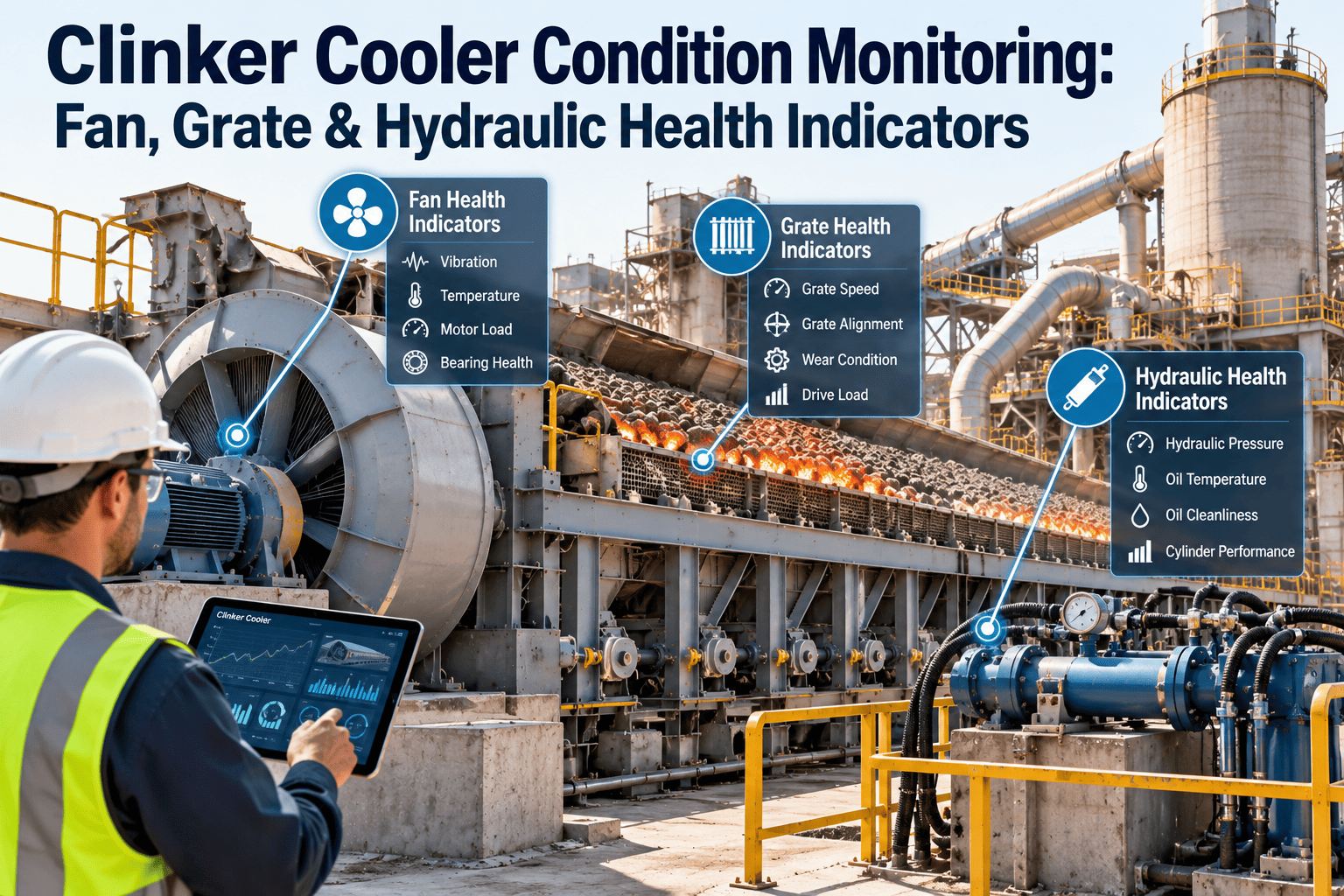
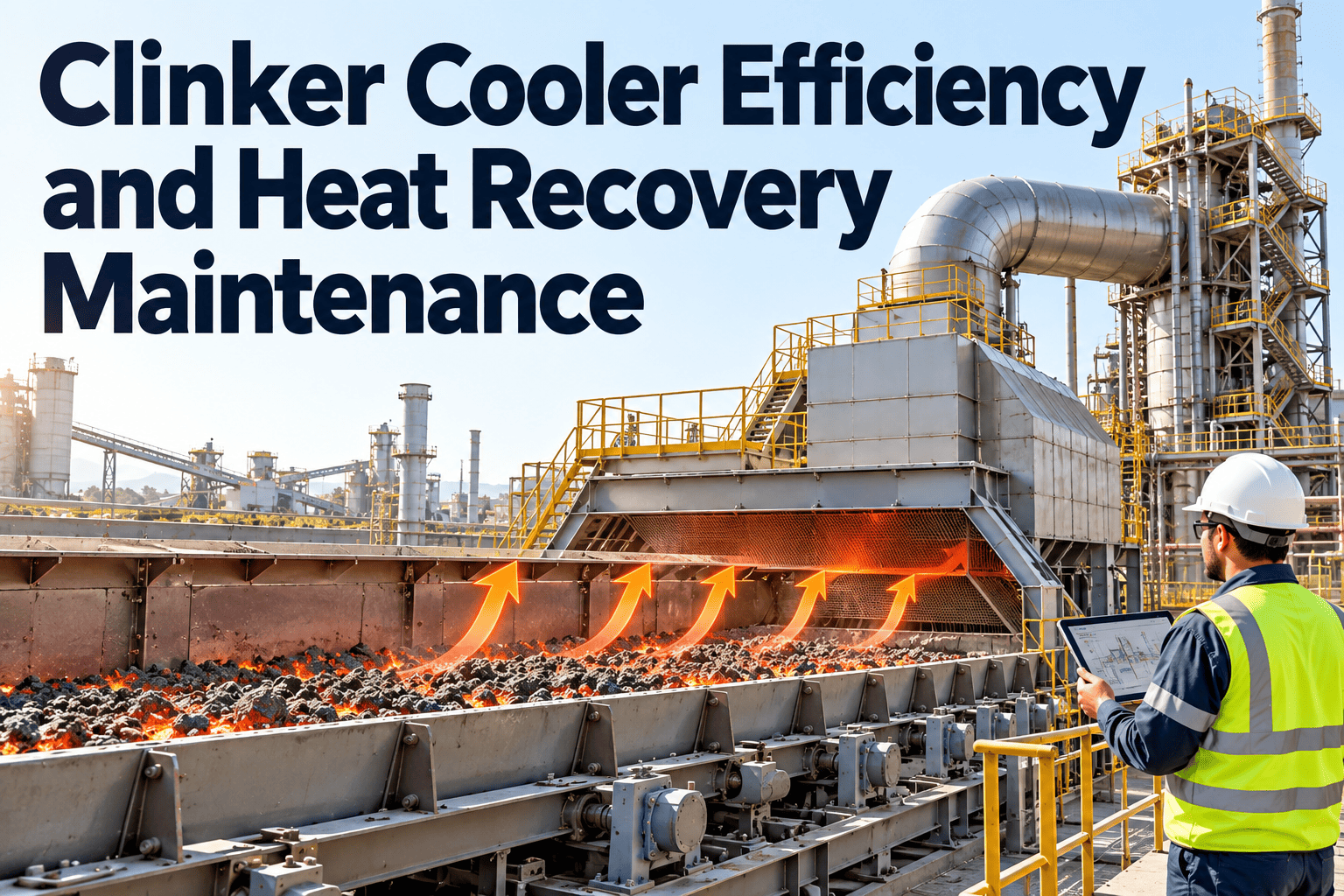
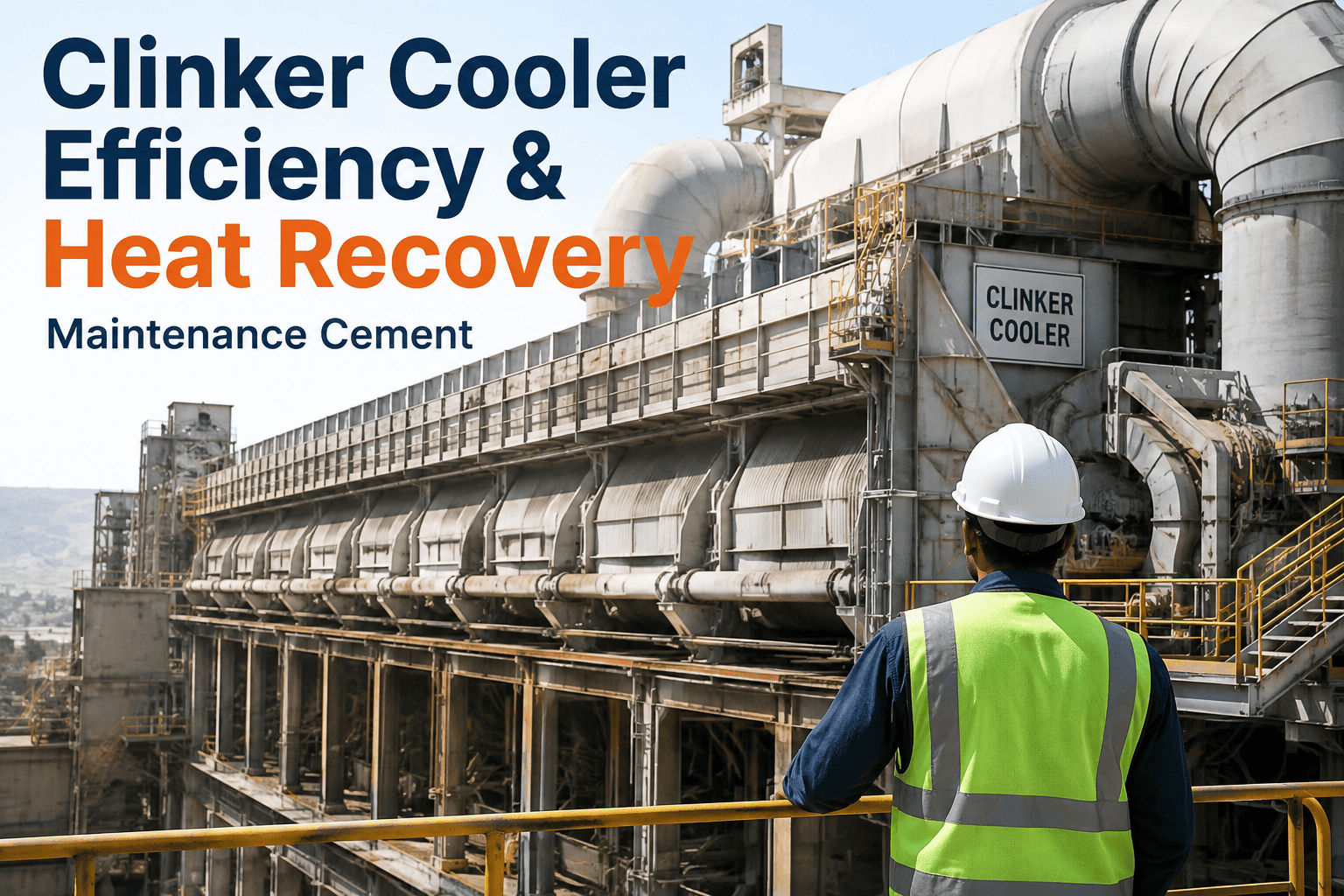
In a cement plant's pyroprocessing system, the clinker cooler is where 35–40% of total process heat is either recovered or lost. That single piece of equipment determines your secondary air temperature feeding back into the kiln (typically 1,050°C), your tertiary air quality driving the calciner, and the final clinker temperature that affects grindability and cement quality. Modern grate coolers operate at approximately 76–86% thermal efficiency, but most plants leave 5–10% efficiency gains on the table due to unoptimized airflow distribution, worn grate plates, poor bed depth control, and inadequate instrumentation. For a 5,000 tpd kiln line, closing that gap translates to 3–8 kg less coal per tonne of clinker, 2–5 kWh less electricity per tonne, and clinker discharge temperatures dropping below 65°C plus ambient — all while improving C₃S crystal structure for better cement strength. The cooler is not just cooling equipment; it is the plant's primary heat recovery engine. Maintaining it at peak performance requires structured inspection routines, condition-based monitoring, and centralized work order management — exactly what Oxmaint's CMMS platform provides for cement plant maintenance teams.
Cooler Zone Architecture: Understanding the Three-Stage Process
The grate cooler is not a single process — it is three distinct thermal zones operating simultaneously, each with different airflow requirements, temperature profiles, and maintenance challenges. Treating the entire cooler as one unit is the most common optimization mistake. Effective control demands zone-specific air distribution, independent fan management, and targeted instrumentation.
This is the most critical zone. Rapid cooling in the first 2–3 meters locks the alite (C₃S) crystal structure that determines cement strength. Insufficient quench rate causes C₃S to revert to belite (C₂S), permanently reducing cement reactivity. The secondary air generated here is the primary combustion air for the rotary kiln — its temperature directly controls flame intensity and fuel efficiency.
The heat recovery zone consumes half of total cooling air and generates the tertiary air that fuels the precalciner. Raising tertiary air temperature by even 50°C reduces coal consumption measurably. Red river formation — where hot clinker channels through gaps in the bed — bypasses this zone entirely, wasting recoverable heat and causing localized damage to grate plates and sidewalls.
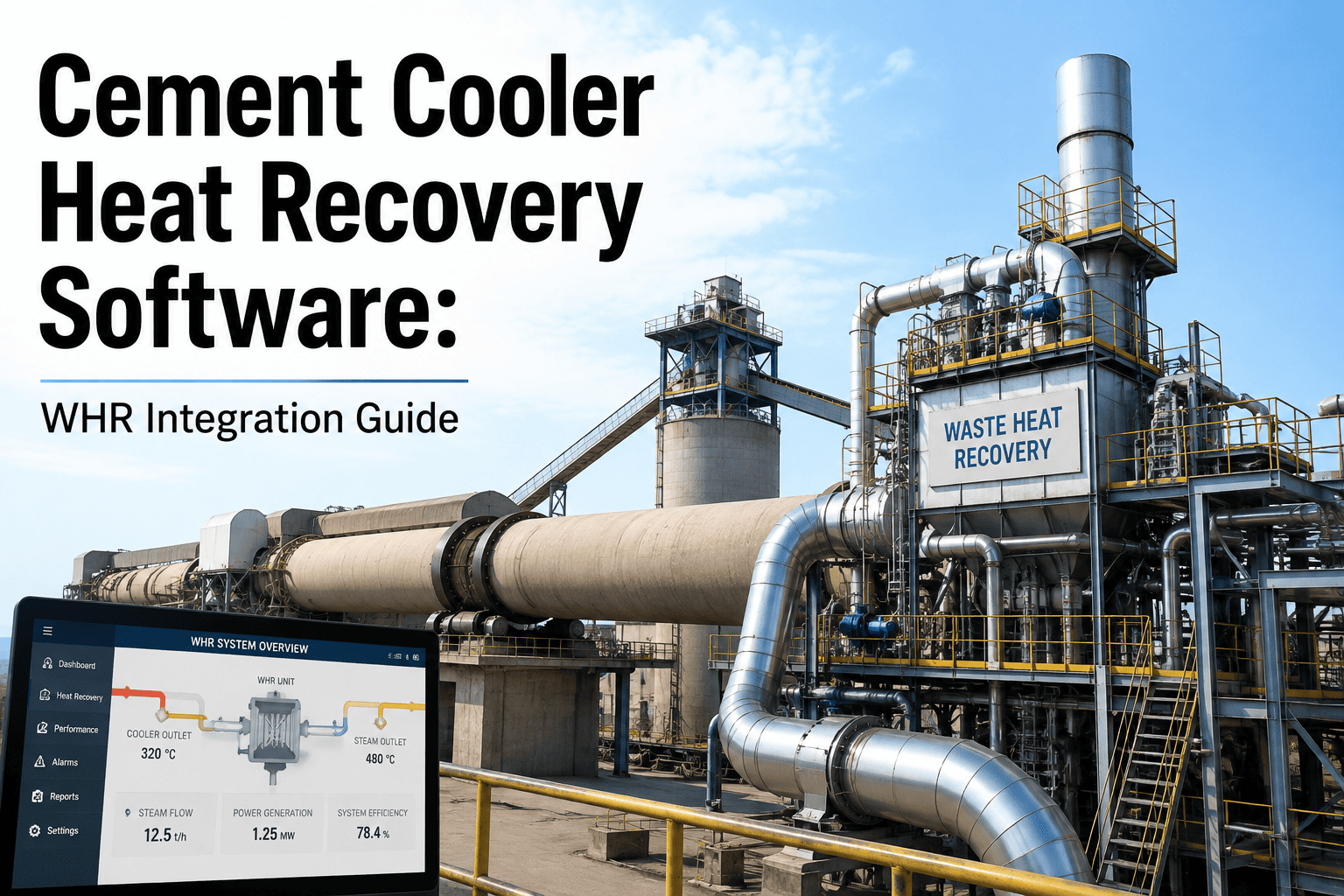
Clinker must exit below 65°C plus ambient temperature for safe conveyor transport and optimal grindability. High discharge temperatures indicate insufficient bed residence time or inadequate Zone 3 airflow. The exhaust air from this zone can feed waste heat recovery (WHR) systems generating 25–35 kWh of electricity per tonne of clinker — a secondary revenue stream that many plants underutilize.
Monitor Every Cooler Zone from One Dashboard
Oxmaint connects your cooler instrumentation data to structured maintenance workflows — tracking grate plate wear, fan performance, thermocouple readings, and airflow metrics in real time across all three cooler zones.
Critical Failure Modes and Their Operational Impact
Clinker cooler failures rarely arrive without warning. Each failure mode follows a predictable degradation pattern that structured inspections can detect weeks before catastrophic breakdown. The maintenance cost of a cooler shutdown on a 5,000 tpd line ranges from $50,000 to $200,000 per day of lost production — making prevention not just prudent but financially essential. Signing up for Oxmaint gives your team the inspection templates and condition monitoring workflows needed to catch these failure modes early.
Snowman Formation
Severity: CriticalLarge clinker agglomerations form in Zone 1 when liquid phase sticks to the grate surface. These "snowmen" obstruct clinker flow, create uneven bed depth, and can grow large enough to damage grate plates and sidewall castables. Root causes include excessive kiln liquid phase (>28%), insufficient quench airflow, and worn or blocked aeration slots.
Red River
Severity: HighHot clinker channels through gaps in the bed, bypassing the cooling zone entirely. This creates localized overheating that destroys grate plates, warps support structures, and produces clinker discharge at 200–400°C instead of the target <65°C. Causes include uneven clinker distribution, broken or missing grate plates, and insufficient bed depth in specific areas.
Grate Plate Wear & Breakage
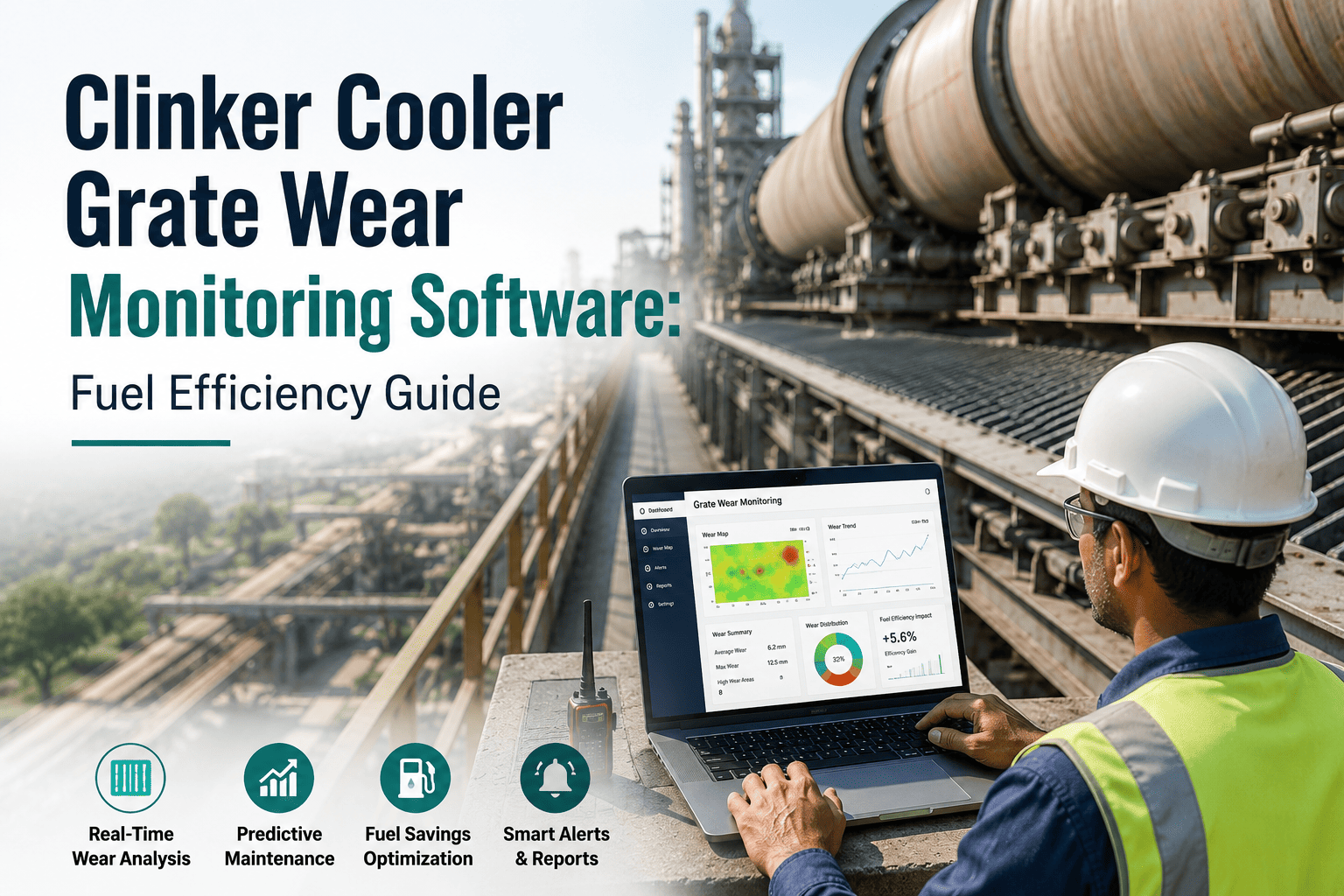
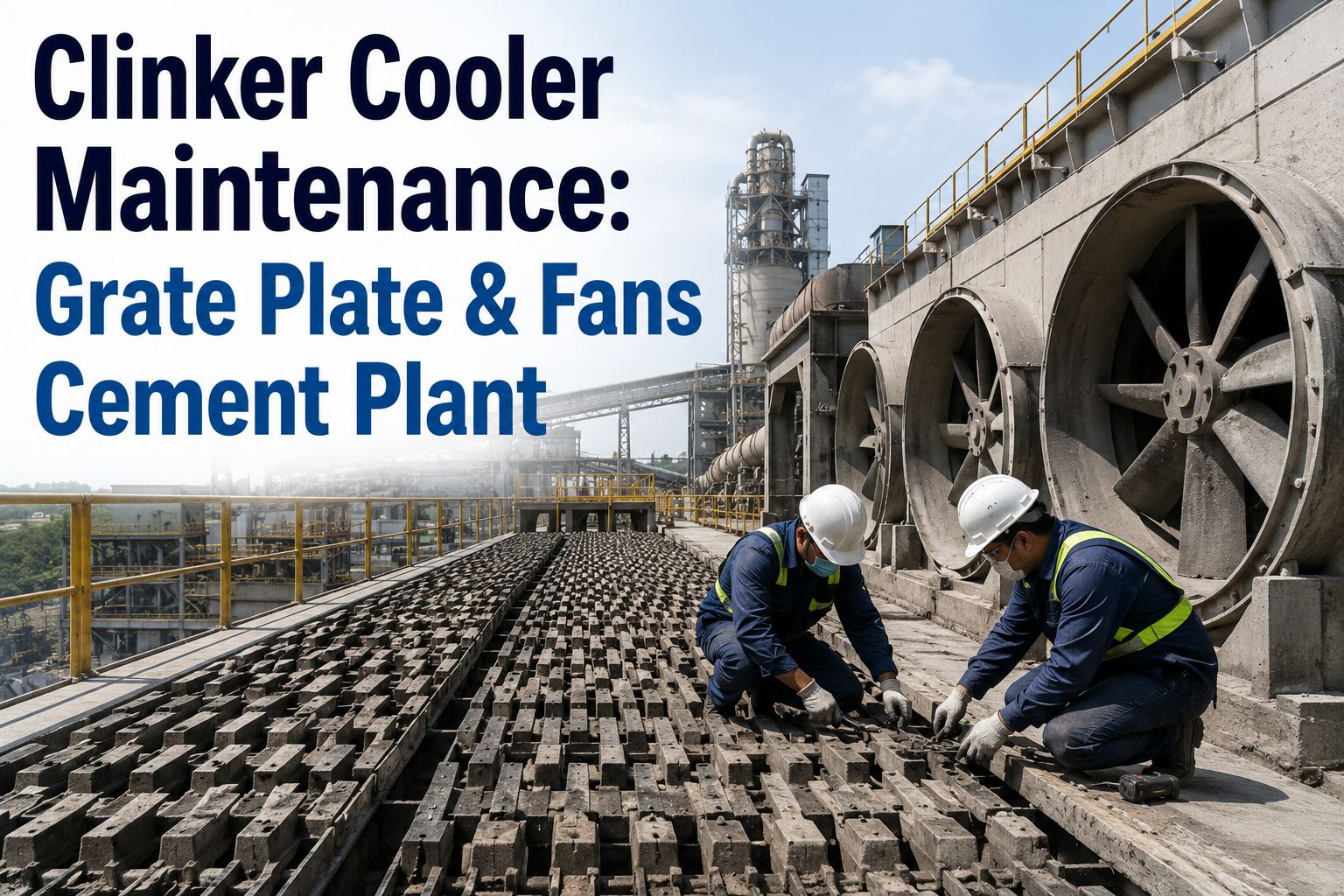
Severity: HighGrate plates endure extreme abrasion from clinker movement and thermal cycling from ambient to 1,400°C. Worn plates lose aeration efficiency as slot openings enlarge, causing clinker fines to fall through (spillage) and reducing controlled airflow. Modern designs use static aeration floors with a cold clinker protection layer to extend plate life, but monitoring wear rates remains essential.
Fan Performance Degradation
Severity: MediumCooling fans operate continuously in dust-laden environments, accumulating material on impellers that reduces airflow capacity and increases power consumption. A 10% buildup on fan blades can reduce output by 15–20% while increasing energy draw. Combined with duct leakage and damper deterioration, total system airflow can fall 25% below design without operators noticing through standard process parameters.
Optimization Strategies: Proven Approaches for Maximum Heat Recovery
Cooler optimization is not a single action — it is a system of coordinated improvements across airflow management, mechanical condition, instrumentation, and process control. Plants that approach optimization holistically achieve the full 5–10% efficiency improvement potential. Those that address individual components in isolation typically recover only 1–3%.
Zone-Specific Airflow Optimization
Install independent airflow measurement on each cooler compartment fan. Balance air distribution to match the thermal profile: maximum quench velocity in Zone 1 for C₃S preservation, controlled heat recovery in Zone 2 for tertiary air temperature, and sufficient but not excessive flow in Zone 3. Reducing total air from 2.0 to 1.7 m³/kg saves 2 kWh per tonne. Use VFDs on all cooler fans to enable real-time airflow adjustment based on kiln operating conditions — connecting fan speed to automated control workflows in your CMMS.
Grate Plate Technology Upgrade
Modern grate plate designs with optimized aeration geometry, wear-resistant alloys, and static floor concepts deliver measurably better air distribution uniformity than legacy reciprocating designs. The thyssenkrupp polytrack eco achieves 76% cooling efficiency with reduced spillage and lower maintenance. Upgrading grate plates in the high-temperature zone alone — where wear is most severe — typically pays back in 6–12 months through reduced coal consumption and improved clinker quality.
Bed Depth Control and Clinker Distribution
Uniform bed depth across the cooler width is the single most important variable for consistent cooling. Uneven distribution creates hot channels (red river) on one side and overcooled dead zones on the other. Install inlet distribution devices (breaker bars, spreader plates) and maintain them during every shutdown. Target bed depth of 400–600mm across the full grate width, measured by resistance-to-motion indicators on the drive system.
Advanced Process Control Integration
Model Predictive Control (MPC) applied to cooler fan management minimizes electrical consumption while maintaining clinker quality and heat recovery targets. An IEEE-published study on cement plant MPC implementation showed significant process stabilization, measured by reduced pressure standard deviation on the cooler grate, along with improved tertiary air temperature and better kiln combustion. Integrate cooler control data with your plant DCS and CMMS for closed-loop optimization.
Waste Heat Recovery from Cooler Exhaust
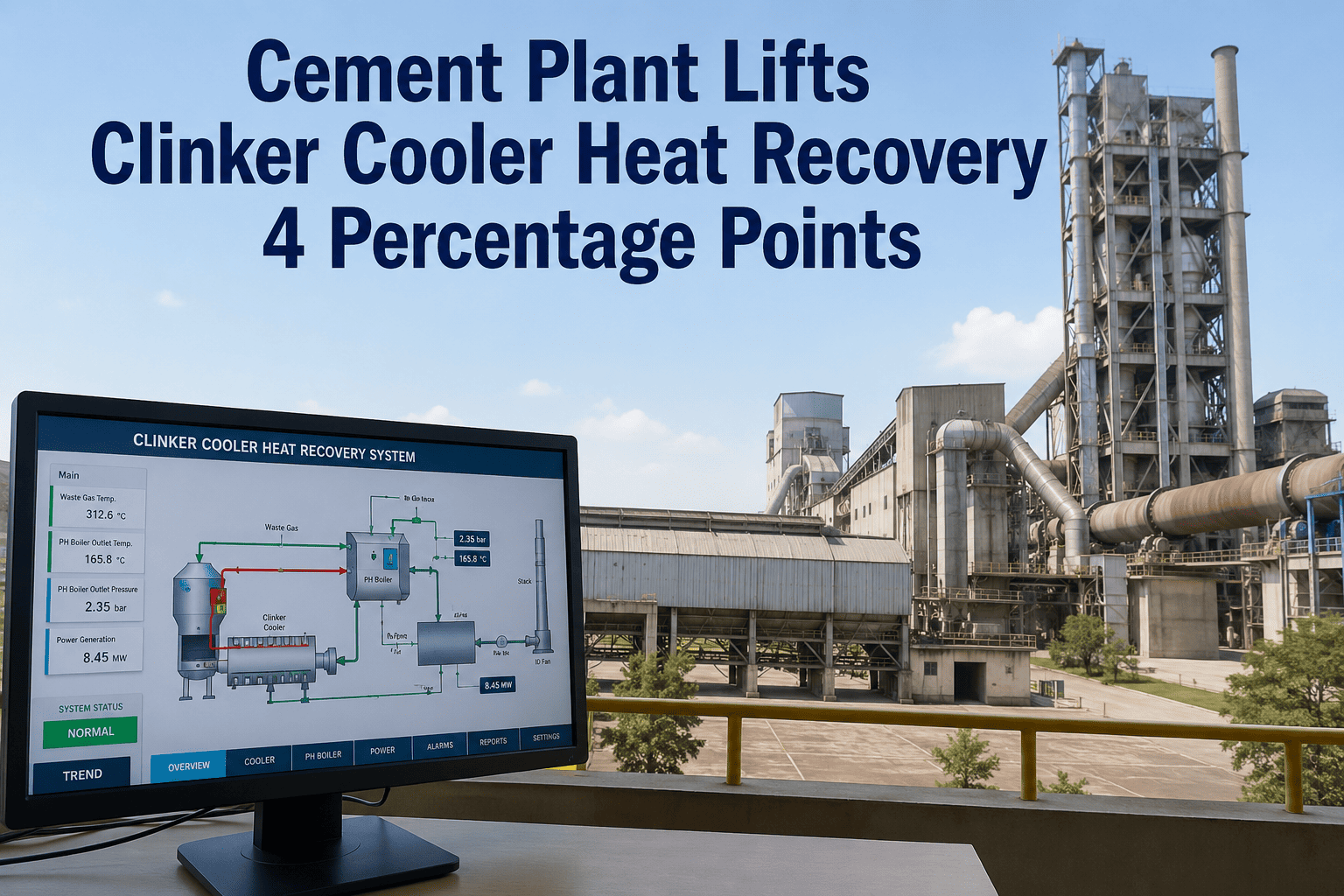
Zone 3 exhaust air at 250–350°C is the primary feed for waste heat recovery (WHR) systems generating 25–35 kWh per tonne of clinker. Steam Rankine cycles handle high-moisture gas streams effectively; Organic Rankine Cycle (ORC) systems suit drier, lower-pressure exhausts. UltraTech Cement credited WHR and cooler upgrades as key enablers in doubling their energy productivity. Plants without WHR are leaving $500,000–$2,000,000 in annual electricity value in the exhaust stack.
Preventive Maintenance Schedule for Clinker Coolers
Cooler maintenance must be scheduled around planned kiln shutdowns, typically every 6–12 months. However, several inspection and monitoring activities can and should be performed during operation. The following schedule reflects best practice from plants maintaining cooler thermal efficiency above 80% consistently. Every task generates a work order that should be tracked in your maintenance management system — explore how Oxmaint structures these workflows.
Automate Your Cooler Maintenance Program
Oxmaint generates PM work orders automatically based on runtime, shutdown schedules, or condition triggers — ensuring every grate plate inspection, fan check, and refractory measurement gets done on time, documented properly, and tracked to completion.
Frequently Asked Questions
What is clinker cooler thermal efficiency and how is it measured?
Thermal efficiency measures the percentage of clinker sensible heat that is recovered as useful hot air (secondary and tertiary) versus the total heat available. It is calculated as the ratio of heat recovered in secondary and tertiary air to the total heat input from hot clinker. Modern grate coolers achieve 76–86% efficiency. The key measurement inputs are clinker inlet/outlet temperatures, air temperatures, and mass flow rates for both clinker and air streams across all zones.
Why does rapid quenching in Zone 1 matter for cement quality?
Rapid cooling in the first zone stabilizes the alite (C₃S) crystal phase, which is the primary strength-giving compound in Portland cement. If clinker cools too slowly through the 1,250–1,100°C range, C₃S partially reverts to belite (C₂S), which hydrates much more slowly. This permanently reduces 28-day cement strength — a quality loss that no amount of grinding or blending can fully recover. Target quench rates above 20°C per minute through this critical temperature window.
How much energy can cooler optimization save?
A comprehensive optimization program targeting airflow distribution, grate plate condition, bed depth control, and fan efficiency typically saves 3–8 kg coal per tonne of clinker (thermal) and 2–5 kWh per tonne (electrical). For a 5,000 tpd plant, this translates to $300,000–$800,000 annually in combined fuel and power savings, plus improvements in clinker quality that reduce cement grinding energy. Adding waste heat recovery from cooler exhaust captures an additional 25–35 kWh per tonne in electricity generation.
What causes "red river" in a clinker cooler?
Red river occurs when hot clinker channels through low-resistance paths in the bed rather than flowing uniformly across the full grate width. Causes include uneven clinker distribution at the cooler inlet, broken or missing grate plates creating gaps, insufficient bed depth on one side, and inconsistent aeration between compartments. Red river destroys grate plates in the affected area within days, reduces heat recovery by 15–30%, and produces clinker discharge at 200–400°C. Prevention requires proper inlet distribution devices and regular grate plate inspection.
How often should grate plates be inspected and replaced?
Grate plates should be visually inspected and thickness-measured during every planned kiln shutdown (typically every 6–12 months). Zone 1 plates experience the most severe wear due to high temperatures and abrasive clinker contact — expect 12–24 month service life depending on material grade and cooler design. Zone 2 and 3 plates typically last 24–48 months. Track wear rates in your CMMS to predict replacement timing and ensure spare plates are in inventory before they are needed.
What role does a CMMS play in cooler maintenance?
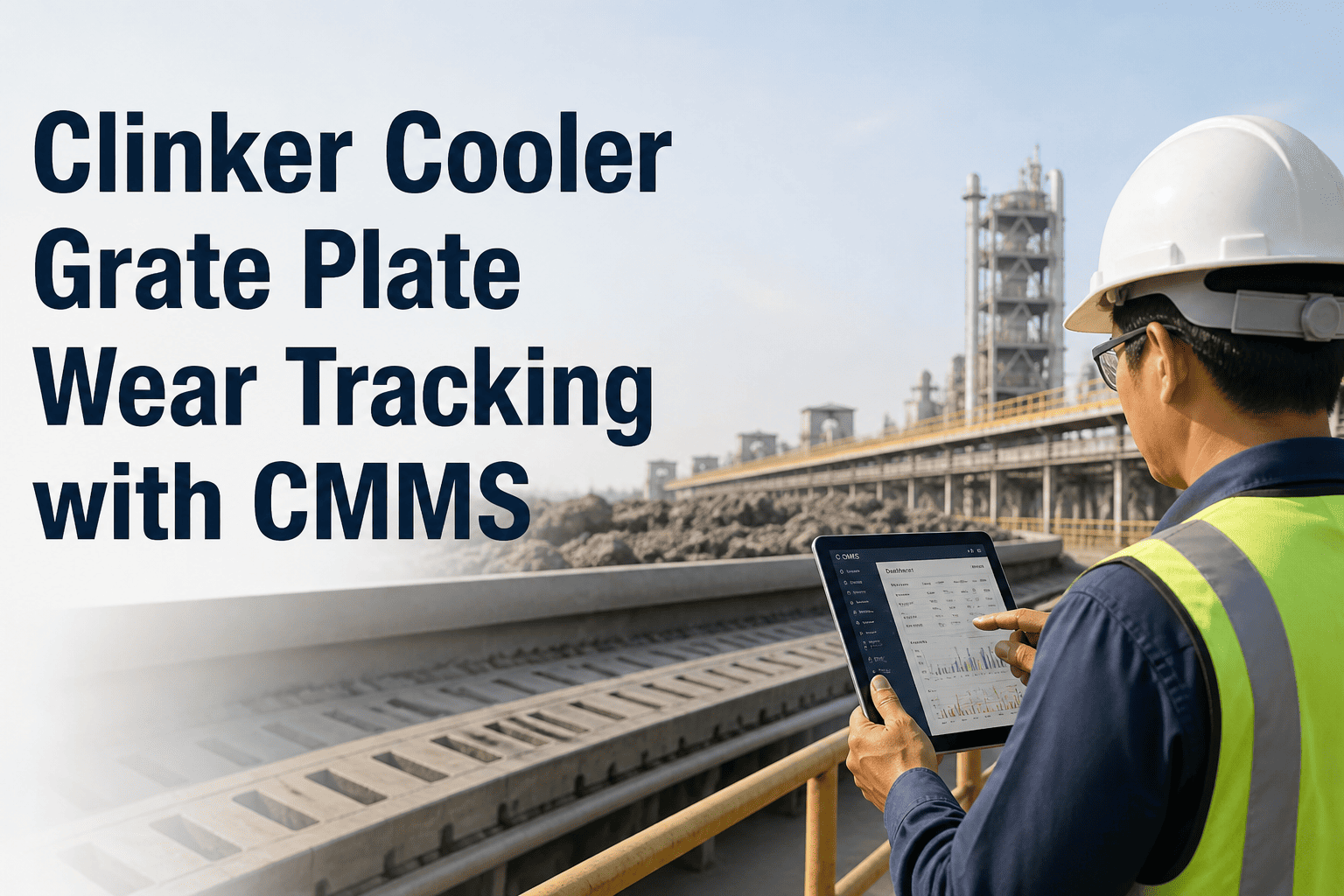
A CMMS centralizes all cooler-related maintenance: PM scheduling tied to kiln shutdown windows, grate plate wear trending, fan vibration and motor current tracking, refractory condition logging, thermocouple calibration records, and spare parts management. It connects operational data (discharge temperatures, air pressures, fan currents) to automated work order generation — so when a cooler parameter drifts outside specification, the corrective maintenance action is triggered before production is affected.
Should we upgrade to a modern cooler design or optimize our existing system?
This depends on your current cooler age, design generation, and condition. If your cooler is less than 15 years old and a grate type, optimization of airflow, grate plates, and controls can typically recover 3–5% efficiency at 10–20% of the cost of a new cooler. If your cooler is 20+ years old, a planetary type, or experiencing chronic reliability issues, a full replacement with a modern design like the polytrack eco or IKN Pendulum Cooler delivers 76%+ efficiency with significantly lower maintenance costs and payback within 3–5 years.