Cooling water failures are among the fastest routes to a kiln stoppage in any cement plant. Kiln bearing circuits, clinker cooler pumps, raw mill gearbox cooling, and compressor aftercoolers all depend on water systems that most maintenance programs treat as "set and forget" utilities — until a pump seal blows, a heat exchanger fouls beyond recovery, or a Legionella compliance inspection reveals records that do not exist. A properly structured closed-loop and open-circuit cooling water program, built on CMMS-scheduled PM, water chemistry sampling intervals, and heat exchanger fouling thresholds, prevents these failures before they reach the kiln. It also produces the documented maintenance records that regulators, auditors, and plant managers require when something eventually goes wrong. With Oxmaint, every cooling circuit — from tower cells to bearing cooling manifolds — is registered as an asset with its own inspection schedule, compliance trigger, and repair history, accessible from any device on the plant floor. Create your free Oxmaint account and register your first cooling circuit today.
4
Critical systems that stop kiln operation when cooling fails
2x
Higher pump replacement cost from running with degraded seals
15%
Heat transfer efficiency lost from 1mm scale on heat exchanger tubes
100%
Of Legionella compliance failures trace to gaps in documented records
What Makes Cement Plant Cooling Systems Uniquely Demanding
Unlike commercial HVAC cooling, cement plant cooling circuits operate under extreme dust loads, thermal cycling from kiln upsets, and vibration from rotating equipment — all simultaneously. The kiln itself generates consistent heat that demands uninterrupted cooling flow to bearings and tyres. A two-minute interruption in kiln bearing cooling can cause irreversible damage to bearing shells that take weeks to source and replace. Closed-loop circuits present a different challenge: because they recirculate the same treated water, chemistry degradation is slow and invisible — corroding heat exchanger tubes and pump impellers over months before failure becomes visible.
Circuit TypeClosed-loop with make-up water
Flow MonitoringContinuous — flow switch on each bearing
Critical FailurePump seal failure or flow switch fault
PM IntervalWeekly flow check, monthly chemistry
Circuit TypeOpen-circuit from cooling tower
Flow MonitoringPump discharge pressure and flow meter
Critical FailureCavitation from scaling, seal wear
PM IntervalVibration monthly, impeller annual
Circuit TypeClosed-loop oil-to-water heat exchanger
Flow MonitoringOil temperature delta-T as proxy
Critical FailureHeat exchanger fouling, water-side scaling
PM IntervalDelta-T monthly, HX cleaning semi-annual
Circuit TypeOpen or closed depending on compressor OEM
Flow MonitoringOutlet air temperature and water flow rate
Critical FailureTube fouling leading to high discharge temp
PM IntervalTube bundle inspection quarterly
CMMS for Cooling Systems
Every Circuit Registered. Every PM Scheduled. Every Record Stored.
Oxmaint gives each cooling circuit — tower cells, bearing loops, gearbox HX, and more — its own asset page with inspection history, water chemistry logs, and compliance documentation. No spreadsheets, no missing records.
Water Chemistry: The Invisible Maintenance Problem
Closed-loop cooling systems can be neglected for months because performance decline is gradual. Hardness ions — calcium and magnesium — precipitate from heated water and form scale on heat exchanger tubes. A 1mm layer of calcium scale reduces heat transfer efficiency by up to 15 percent, forcing the system to circulate harder and consume more energy to maintain the same cooling effect. Biological growth, particularly Legionella in tower basins, is a separate risk that carries regulatory and safety consequences far beyond maintenance cost.
| Water Parameter |
Acceptable Range |
Action If Exceeded |
Sampling Frequency |
| pH |
7.0 – 8.5 |
Adjust chemical dosing; check make-up water pH |
Weekly |
| Total Dissolved Solids (TDS) |
Below 1,500 mg/L |
Increase blowdown rate; review cycles of concentration |
Weekly |
| Total Hardness (as CaCO3) |
Below 400 mg/L |
Chemical scale inhibitor dosing increase; softener check |
Monthly |
| Langelier Saturation Index |
-0.5 to +0.5 |
Above +0.5: scaling risk; below -0.5: corrosion risk |
Monthly |
| Legionella spp. (tower basins) |
Below 100 CFU/L |
Biocide shock treatment; notify EHS immediately above 1,000 CFU/L |
Quarterly minimum |
| Corrosion inhibitor concentration |
Per chemical supplier spec |
Replenish dosing; inspect inhibitor injection system |
Monthly |
Heat Exchanger Fouling: Detection and PM Schedule
Heat exchanger fouling is the most common cause of closed-loop cooling failure in cement plants — and the easiest to prevent with a consistent PM program. Delta-T monitoring (the difference between water inlet and outlet temperature across the exchanger) is the most reliable early warning indicator. When delta-T rises beyond the design value while flow rate remains constant, fouling is occurring. Catching it early means a chemical clean; catching it late means a tube bundle replacement.
Normal Operation
Delta-T within design range. Record weekly reading in CMMS. No action required.
→
Early Fouling Signal
Delta-T rises 10 to 15% above design. Schedule chemical clean before next shutdown. Log trigger in CMMS.
→
Significant Fouling
Delta-T above 20% design. Mechanical cleaning required. Inspect tubes for pitting or scale deposit type.
→
Critical Failure Risk
Delta-T above 30% or flow restriction detected. Immediate shutdown and tube bundle assessment required.
CMMS-Backed PM Schedule for Cooling Water Systems
Daily
Cooling tower basin visual inspection — check for debris, foam, or unusual colour
Confirm all cooling pump running lights and discharge pressure gauges within normal range
Weekly
pH and TDS sampling on all open-circuit cooling towers and closed-loop headers
Pump vibration check on critical circuits — kiln bearing cooling, clinker cooler
Tower fan motor amp draw and fan blade visual inspection
Monthly
Full water chemistry panel: hardness, LSI, corrosion inhibitor, biocide residual
Heat exchanger delta-T measurement and trending vs baseline
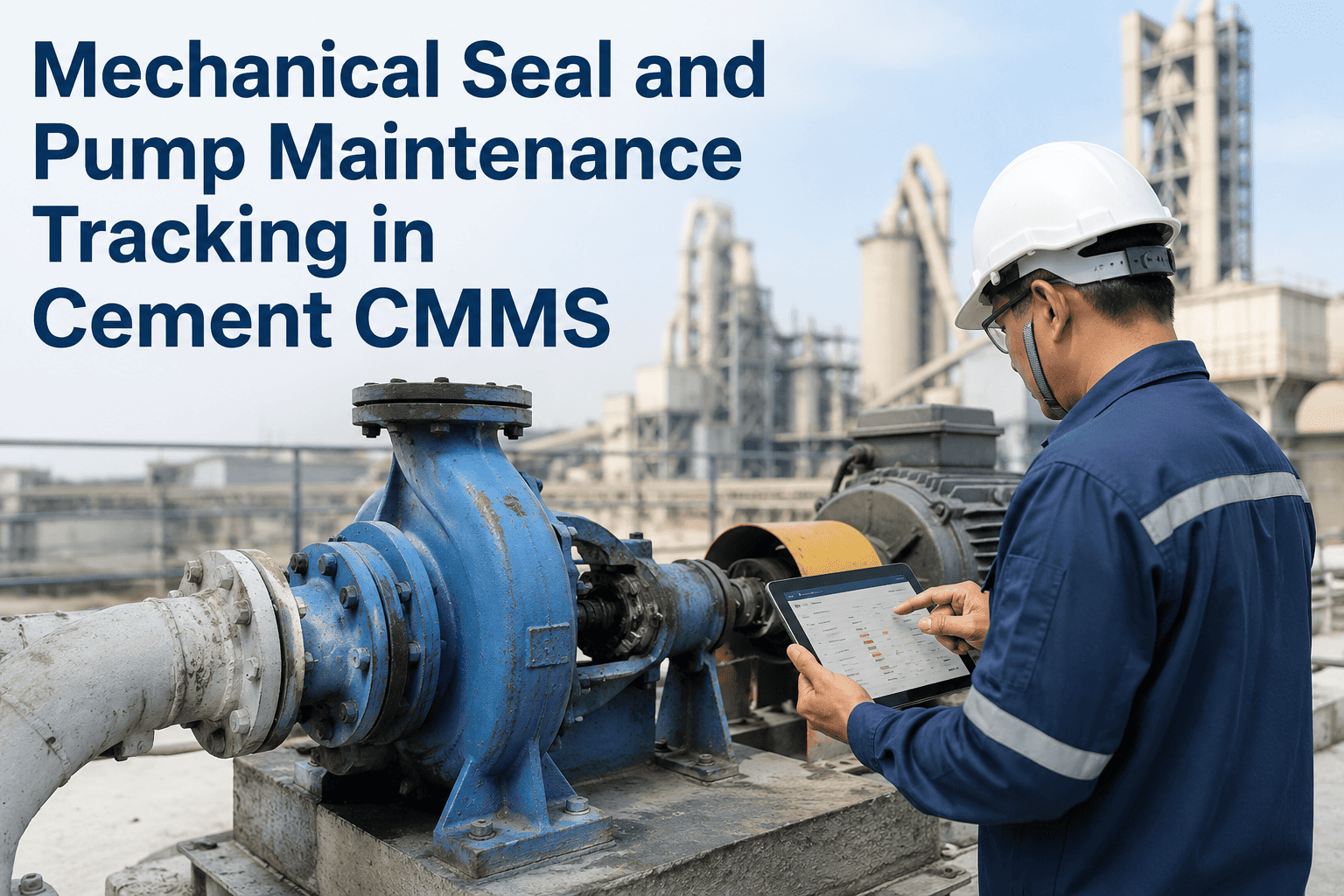
Pump mechanical seal inspection and bearing temperature logging
Quarterly
Legionella sampling from cooling tower basins and recirculation headers
Strainer and screen cleaning on all cooling water suction lines
Make-up water flow meter calibration check
Annual
Heat exchanger mechanical inspection — tube bundle pullout, eddy current testing on critical HX
Tower fill inspection and replacement assessment
Full compliance audit — Legionella risk assessment update, water treatment programme review
Frequently Asked Questions
How often should Legionella sampling be conducted in cement plant cooling towers?
Quarterly sampling at minimum from tower basin water and recirculation headers is the regulatory baseline in most jurisdictions. If TDS or biocide readings fall outside specification between scheduled samples, triggered sampling is required. Oxmaint can be configured to auto-generate a Legionella sampling work order whenever water chemistry readings fall outside defined thresholds.
Set up your compliance triggers in Oxmaint.
What is the best early warning sign of heat exchanger fouling?
Rising delta-T (inlet-to-outlet temperature difference) at constant flow rate is the most reliable signal. A 10 to 15 percent rise above the design delta-T value indicates early fouling that responds to chemical cleaning. Beyond 20 percent, mechanical cleaning is required. Log delta-T monthly in your CMMS and set an alert threshold to catch it early.
Book a demo to see Oxmaint's trending setup.
What closed-loop cooling water chemistry parameters should we track in a cement plant?
The core parameters are pH (7.0 to 8.5), TDS (below 1,500 mg/L), total hardness (below 400 mg/L as CaCO3), Langelier Saturation Index, corrosion inhibitor concentration, and biocide residual. Monthly sampling of this full panel is the industry standard for closed-loop industrial circuits. Weekly pH and TDS checks catch rapid chemistry shifts from make-up water events or blowdown failures.
How does CMMS documentation protect a cement plant during a regulatory audit?
Regulators reviewing Legionella compliance, ISO 14001, or water discharge permits require evidence that maintenance was performed — not just that a programme exists. Oxmaint produces timestamped records of every water sample, every PM task completed, and every corrective action raised. This creates an unbroken audit trail that protects the plant and demonstrates due diligence to inspectors.
Start building your compliance record today.
What is the most common cause of closed-loop cooling pump failure in cement plants?
Mechanical seal wear from running with poorly controlled water chemistry is the most frequent cause. High TDS or acidic pH accelerates seal face corrosion. Vibration from cavitation — caused by scaling on the impeller — is the second leading cause. Both are preventable with consistent PM and water chemistry control logged in a CMMS.
Oxmaint for Cement Plants
Your Cooling Systems Are Too Critical to Manage on Spreadsheets
Register every cooling circuit, schedule every PM task, track every water chemistry sample, and produce compliance-ready documentation — all in Oxmaint. No implementation fees. No hardware lock-in. Set up in under 30 minutes.