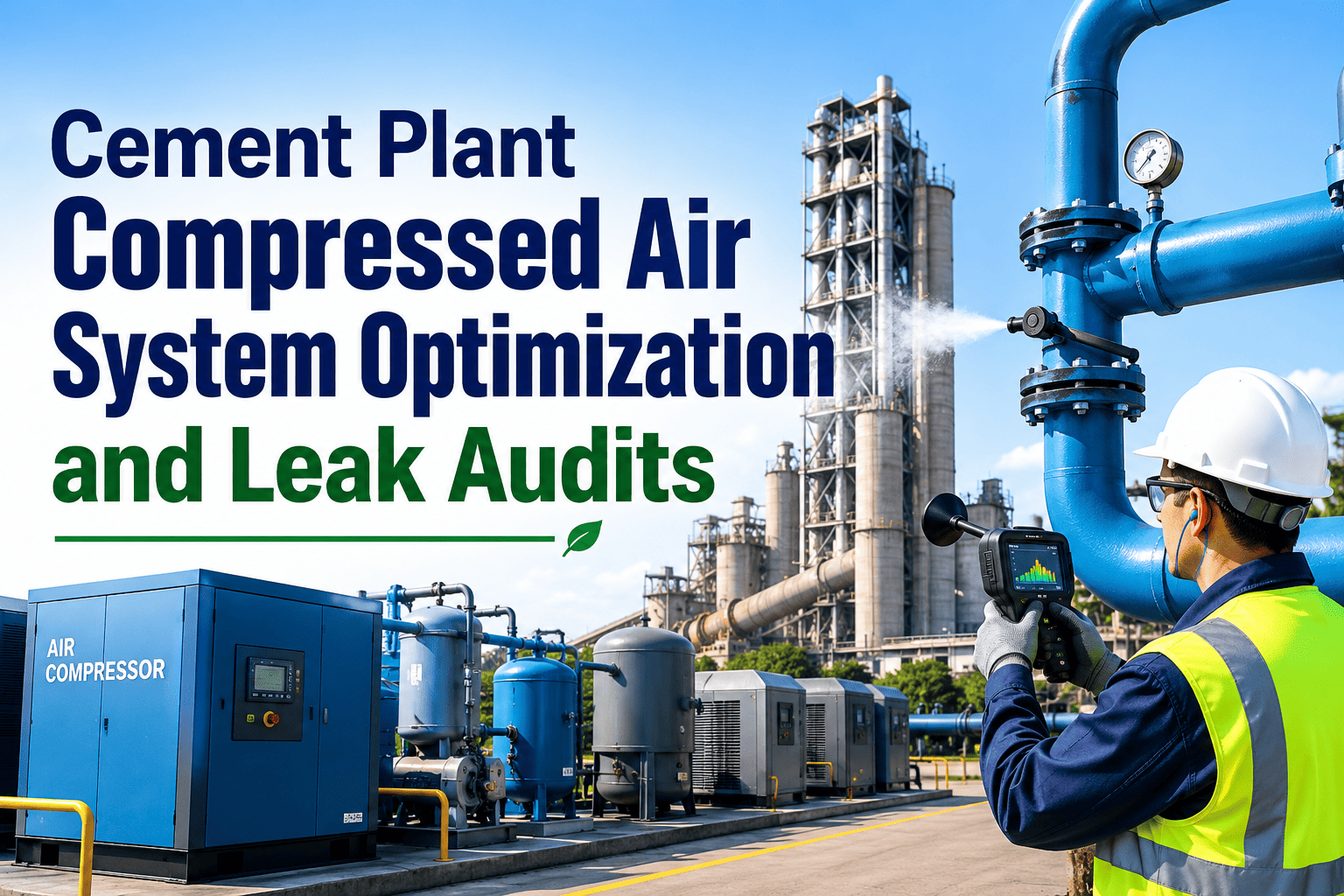
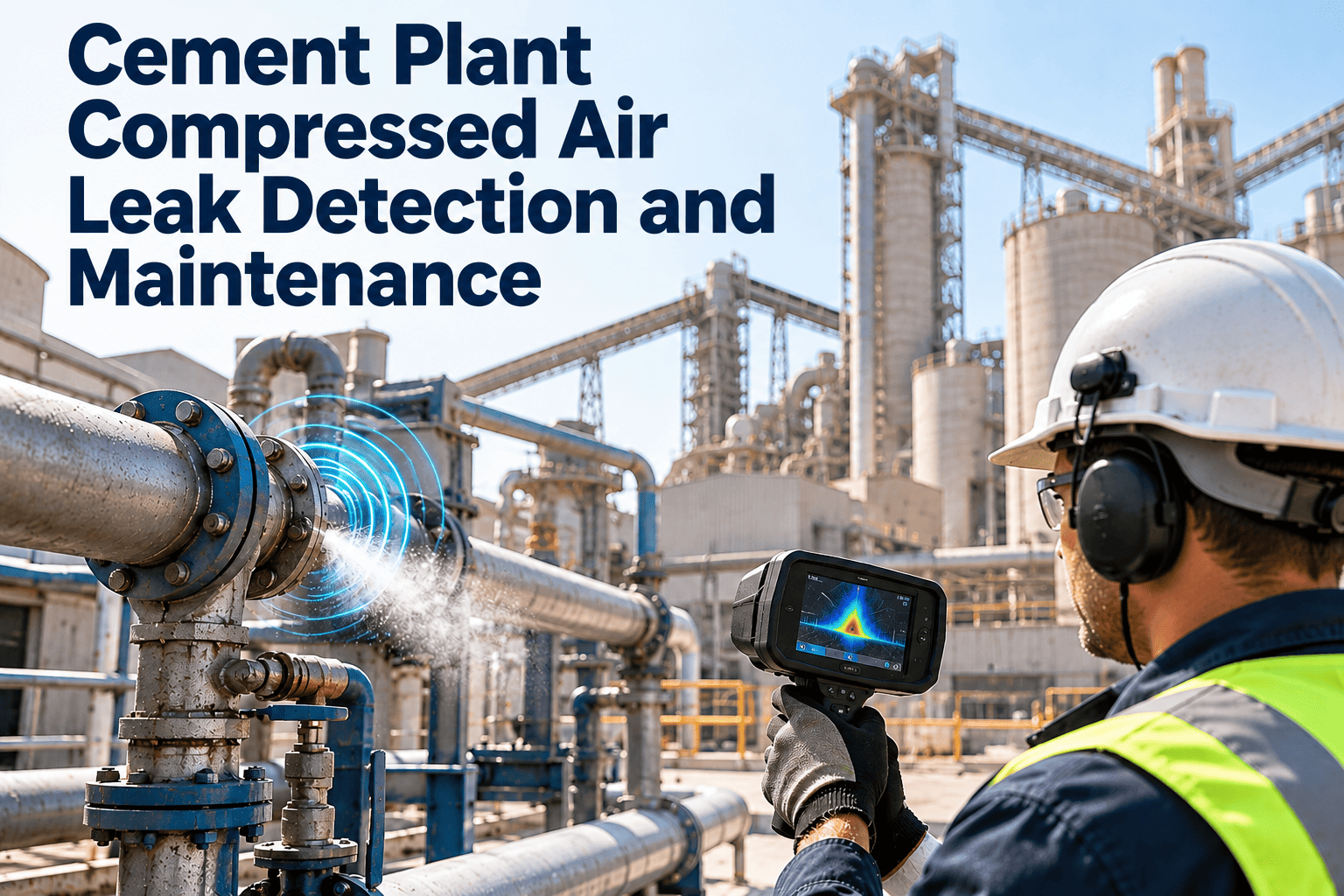
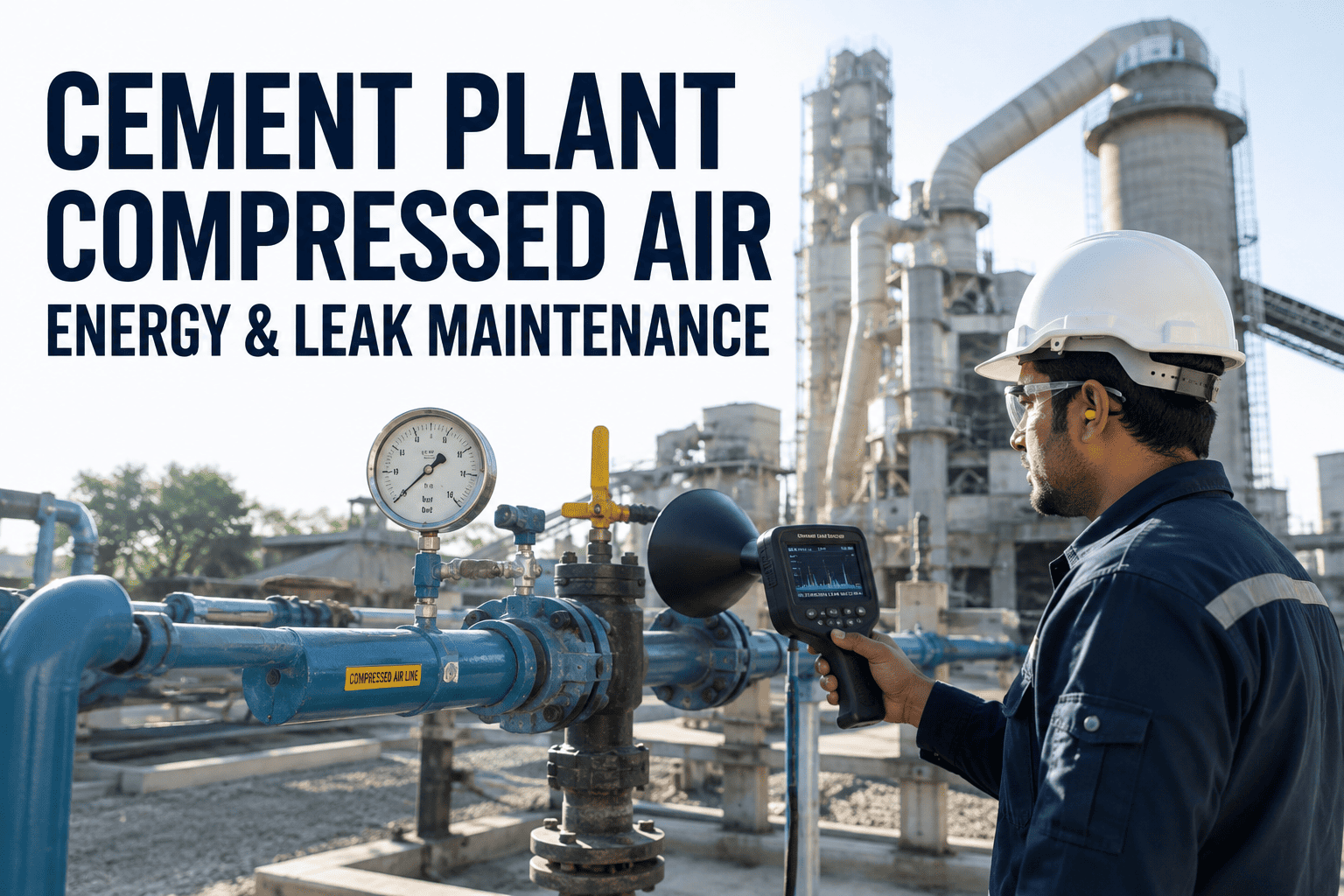
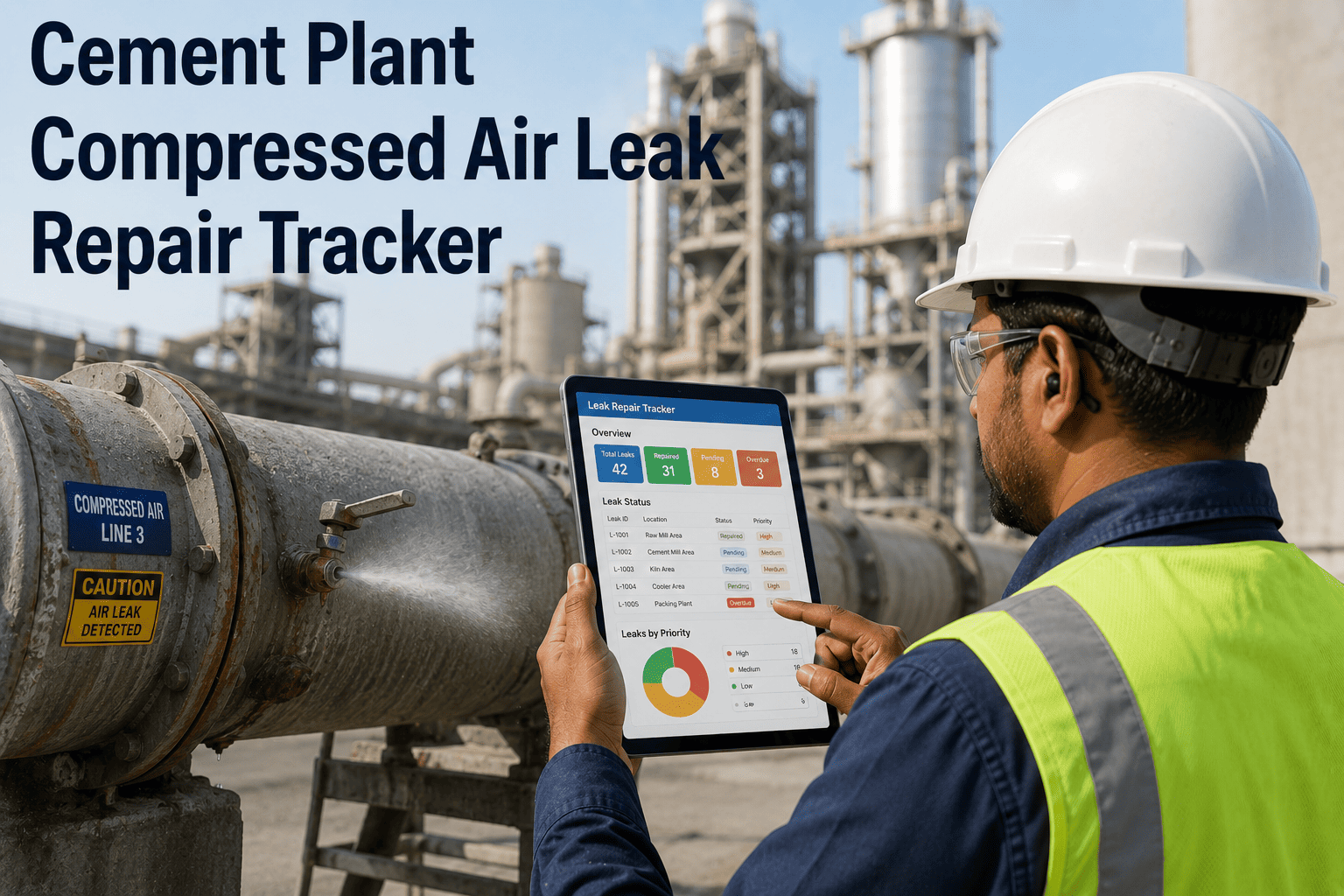
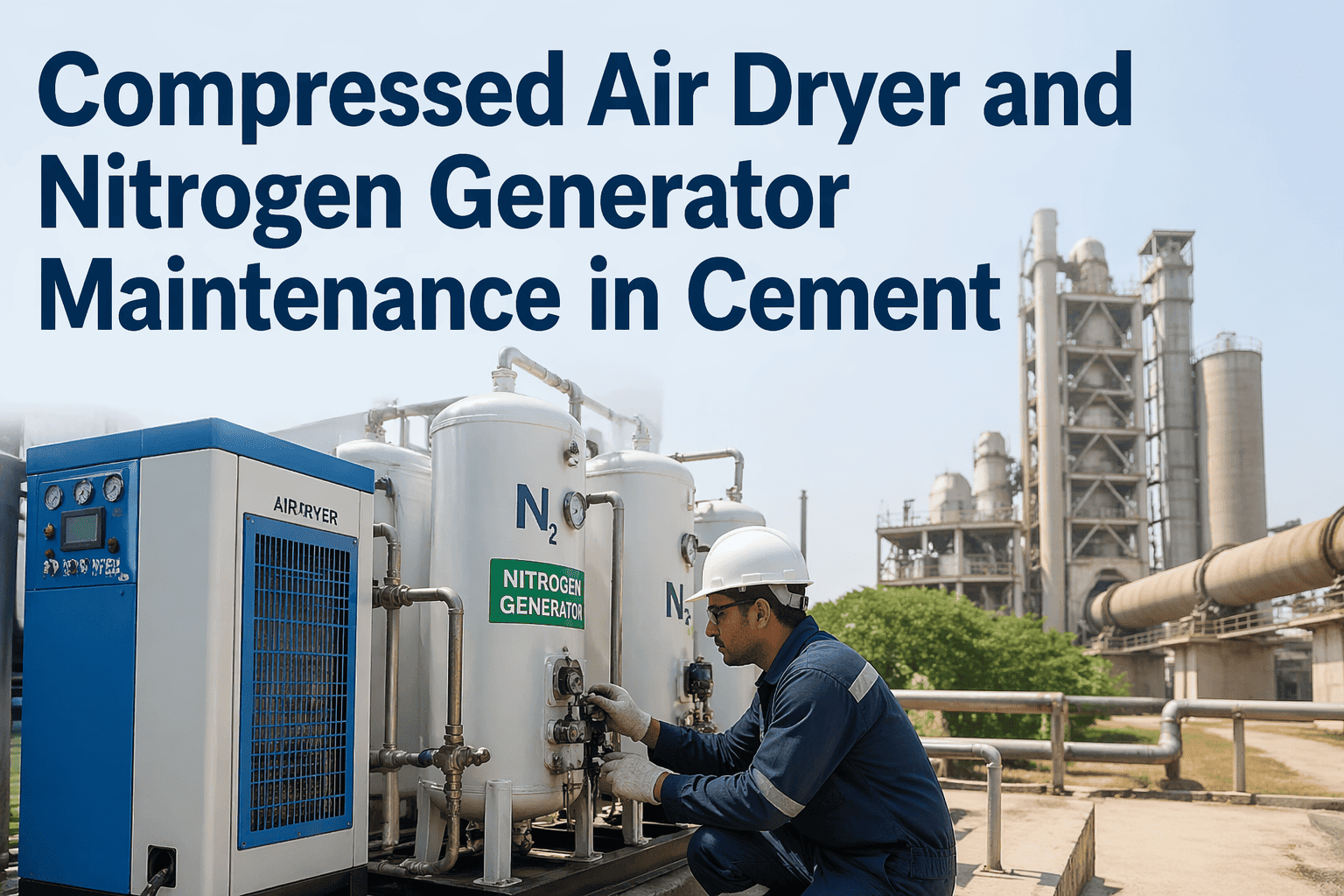
Compressed air is the silent electricity drain in every cement plant — consuming 8 to 12 percent of total electrical energy, yet operating almost entirely without real-time oversight. Industry surveys consistently find that 25 to 40 percent of all compressed air generated in a cement plant escapes through undetected leaks before reaching a single pneumatic actuator, bag filter solenoid, or air slide. On a 3,500 TPD plant running a 1.5 MW compressor fleet, that leakage alone represents tens of lakhs in wasted electricity every year. A structured compressed air optimization program — built on regular audits, dew point monitoring, dryer maintenance, and CMMS-scheduled PM — eliminates that waste methodically, delivering measurable cost reductions within 90 days. Oxmaint makes it possible to track every leak repair, every dryer check, and every compressor PM in one place, giving your maintenance team the audit trail and compliance records that manual systems simply cannot produce. Start your free account on Oxmaint and connect your compressed air assets today.
25–40%
Compressed air lost to leaks before end use
8–12%
Of total plant electricity consumed by compressed air
72%
Energy cost reduction achievable within 12 months
90 days
Typical payback after a structured leak audit program
Why Compressed Air Leaks Are a Priority Problem
Most cement plants operate on a "generate more" philosophy when pressure drops — running an additional compressor instead of fixing the root cause. Every kilogram of air that escapes through a worn fitting, cracked hose, or failed condensate drain is electricity converted directly into noise. The U.S. Department of Energy estimates that up to 50 percent of compressed air produced in industrial facilities is ultimately lost. In cement plants, where pneumatic conveying lines, bag filters, and kiln dosing systems all run simultaneously, the compounding effect is severe.
L
Distribution Line Leaks
Threaded fittings, flanged joints, and isolation valves across aging piping networks account for 30 to 50 percent of total leakage in most plants. Ultrasonic detection finds them in minutes.
D
Failed Condensate Drains
Float and timer-based condensate drains that fail open become permanent air bleed points. One failed drain on a 100 psig system wastes over 10 CFM continuously — every hour of every shift.
P
Pneumatic Tool and Actuator Seals
Bag filter solenoid valves, clinker cooler actuators, and raw mill pneumatic cylinders develop seal wear over time. Each degraded seal may leak only slightly — but across hundreds of actuators, the total is significant.
O
Over-Pressurised Headers
Running system pressure 10 bar above actual end-use requirements increases leakage rate by 20 to 25 percent. Pressure optimisation alone — with no hardware changes — immediately reduces waste.
Free for Cement Plants
Track Every Leak. Schedule Every Fix. Prove Every Saving.
Oxmaint's CMMS lets you tag leak points during an ultrasonic audit, auto-generate repair work orders, and produce a closed audit trail showing energy saved per repair — all without spreadsheets.
The 5-Zone Compressed Air Audit Framework
A complete audit is not a single walk-through — it is a structured assessment across five distinct zones, each requiring specific measurement techniques. Plants that segment audits this way and assign one zone per month complete a full plant review annually without disrupting production.
01
Compressor Room Performance
Measure specific power (kW/CFM) for each compressor. Identify units running outside design efficiency. Assess VSD opportunities and compressor staging sequences against actual demand profiles.
02
Air Treatment — Dryers and Filters
Verify dew point at dryer outlet and at point-of-use. Refrigerant dryers should maintain pressure dew points of +3°C to +5°C; desiccant dryers at -20°C or lower for instrument air. Record differential pressure across filter elements — replace at 0.07 bar drop to prevent compressor backpressure.
03
Distribution Network Leak Survey
Use ultrasonic leak detectors at 40 kHz sensitivity during low-noise periods. Tag every identified leak with location, estimated CFM loss, and repair priority. Map findings to your CMMS asset tree for automated work order generation.
04
End-Use Demand Validation
Survey all pneumatic end-uses — bag filters, air slides, dosing systems, conveying lines. Identify artificial demand from over-pressurisation, mismatched regulators, and open-blow applications that can be replaced with amplifiers.
05
Energy Metering and kWh Baselining
Install or verify sub-metering on the compressor room busbar. Establish a kWh-per-tonne-of-cement baseline. Any deviation beyond 5 percent from baseline triggers an automatic anomaly review in your CMMS.
Dew Point and Dryer Maintenance: The Hidden Efficiency Gap
Dew point failures are the most expensive and least-detected compressed air problem in cement plants. Moisture in instrument air corrupts pneumatic positioner signals on kiln gas valves, causes corrosion inside conveying pipes, and triggers false signals in bag filter control systems. Most plants only discover a dryer failure when downstream equipment begins malfunctioning — weeks after the dew point first climbed.
| Application in Cement Plant |
Required Pressure Dew Point |
Dryer Type |
PM Interval |
| Pneumatic conveying (raw meal, cement) |
+3°C to +7°C |
Refrigerant dryer |
Quarterly |
| Bag filter pulse jet control |
+3°C to +5°C |
Refrigerant dryer |
Quarterly |
| Instrument and control air (valves, positioners) |
-20°C to -40°C |
Desiccant dryer |
Monthly check, annual desiccant |
| Kiln dosing and metering systems |
-20°C minimum |
Desiccant dryer |
Monthly check |
| Air slide aeration blowers |
Ambient dew point acceptable |
Cyclone separator minimum |
Semi-annual |
CMMS-Tracked PM Program for Compressed Air
A compressed air PM program without a CMMS is a checklist that gets filed and forgotten. Oxmaint structures PM tasks by asset, interval, and technician — and generates compliance records automatically, so your team is always audit-ready for ISO 50001 and environmental submissions.
Weekly
- Check condensate drain operation on all drains — verify timed cycle or float function
- Log compressor discharge temperature and system pressure at header
- Visual inspection of compressor oil level and cooler cleanliness
Monthly
- Dew point verification at dryer outlet and critical end-use points
- Filter differential pressure check — replace element if drop exceeds 0.07 bar
- Ultrasonic leak spot check on highest-priority distribution zones
Quarterly
- Full refrigerant dryer service — heat exchanger inspection, refrigerant pressure verification
- Compressor valve inspection and torque check on all high-pressure fittings
- kWh specific power benchmarking vs baseline — flag any unit showing greater than 5% drift
Annual
- Full five-zone compressed air audit — leak survey, pressure mapping, demand analysis
- Desiccant replacement in desiccant dryers — condition-based or timed as per OEM
- Complete energy audit report with kWh savings quantified and documented for compliance
ROI That Justifies Itself in Months
Real outcomes from structured compressed air programs in industrial facilities — not projections.
72%
Energy cost reduction in compressed air within 12 months of structured audit and PM program
30%+
Leakage reduction from above 30% to under 10% achievable with zone-based audit and repair
88%
PM compliance rate improvement when transitioning from ad-hoc to CMMS-scheduled maintenance
5:1
Typical ROI ratio on leak repair programs — $70,000 saved for $14,000 spent, per industry case studies
Frequently Asked Questions
How often should a cement plant conduct a compressed air leak audit?
A full plant audit should be completed annually. The most effective approach is to divide the plant into 10 to 12 zones and audit one zone per month — this keeps leak management continuous rather than a once-a-year event. New leaks develop constantly in active production environments.
Oxmaint can schedule and track zone-by-zone audits automatically.
What is the correct dew point for instrument air in a cement plant?
Instrument and control air — used for pneumatic valve positioners, actuators, and kiln dosing systems — requires a pressure dew point of -20°C to -40°C, requiring a desiccant dryer. Conveying and bag filter air can run at +3°C to +7°C from a refrigerant dryer. Running instrument air through only a refrigerant dryer is a common and costly error.
Book a demo to see how Oxmaint tracks dryer PM by circuit type.
How does a CMMS improve compressed air program compliance?
A CMMS eliminates the gap between "we have a PM schedule" and "we can prove it was followed." Oxmaint auto-generates work orders at defined intervals, captures technician sign-off, and produces compliance reports for each asset. This is the documentation regulators and ISO 50001 auditors require — and it takes manual effort out of the process entirely.
Can compressed air optimization alone reduce our electricity bill noticeably?
Yes — significantly. Leak repairs and pressure optimisation typically reduce compressed air energy consumption by 20 to 30 percent with no capital equipment investment. On a plant spending ₹80 lakh annually on compressed air electricity, that represents ₹16 to ₹24 lakh in annual savings from maintenance alone.
Start tracking with Oxmaint for free.
What equipment do we need to start a compressed air audit program?
At minimum: an ultrasonic leak detector (approximately ₹50,000 to ₹1.5 lakh for a quality unit), a portable dew point meter, and pressure gauges at key headers. Combined with Oxmaint to log findings and generate work orders, this represents a complete starting kit. Many plants see full payback on this equipment cost within the first month of repairs.
Built for Cement Plants
Stop Paying for Air That Goes Nowhere
Oxmaint structures your compressed air audit program, schedules PM tasks by asset and interval, tracks leak repairs to closure, and produces the energy savings documentation your team needs — all in one platform with no implementation fees.