SCAN — Shell Temperature Scanning
Scheduled Infrared Shell Scanning With Zone-Level Temperature Logging
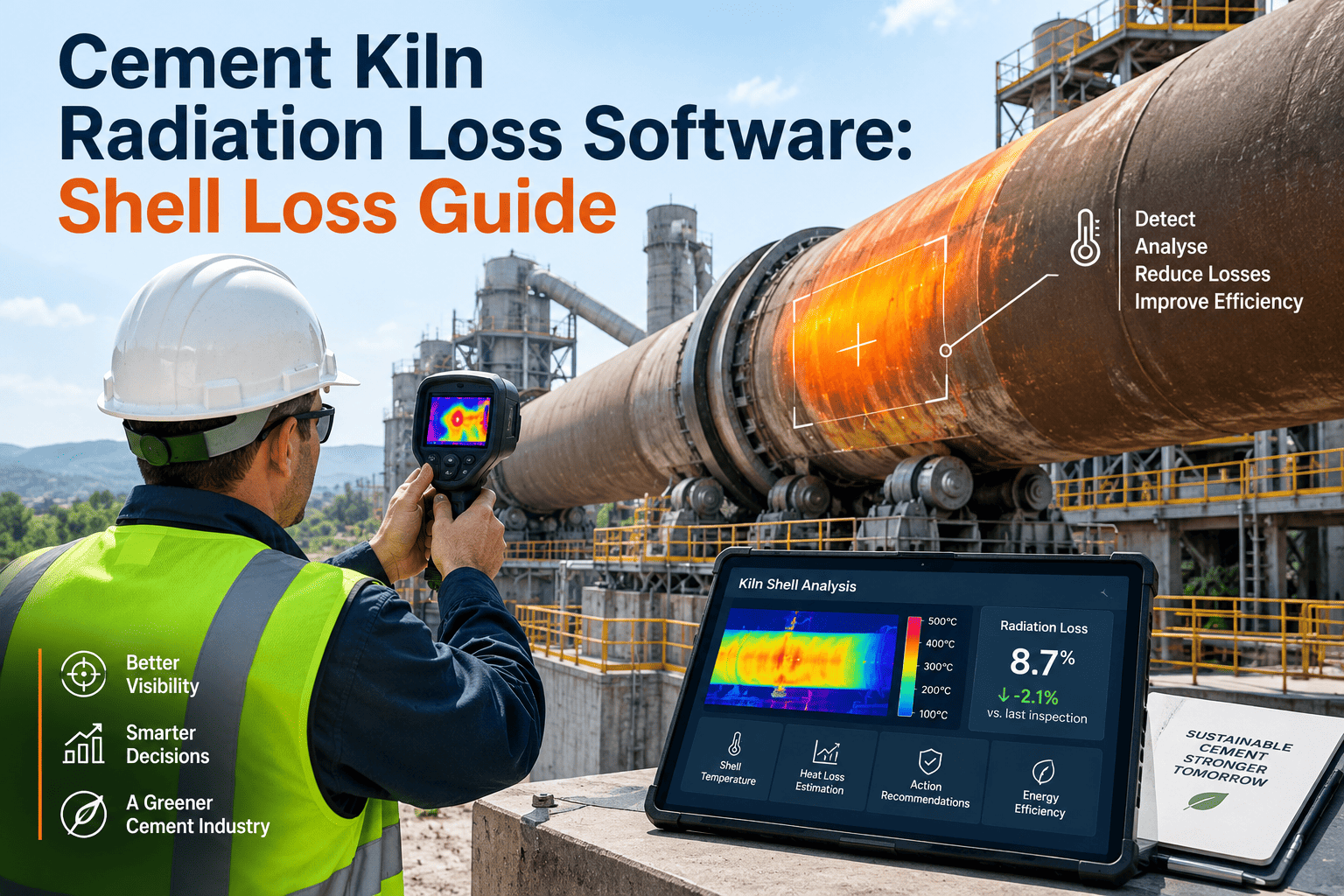
A single point-and-shoot infrared reading tells you almost nothing about a kiln shell that is 40 to 80 metres long and rotating continuously. Radiation loss has to be measured as a full temperature profile — steady readings taken at consistent shell positions, on a fixed interval, so that a rising trend at one zone is visible long before it becomes a visible glow through the paint. OxMaint schedules recurring infrared scanning rounds for every kiln in the plant, structures the scan route by shell zone and position, and stores each reading against that exact position so consecutive scans can be compared point for point. AI trend detection flags any zone where shell temperature is climbing faster than the surrounding sections, well before the reading crosses the plant's hot-spot alarm threshold.
Key Scan Parameters OxMaint Tracks
Shell surface temperature — recorded per zone position at every scheduled scan
Ambient-corrected reading — normalized against outside air temperature and wind
Zone-to-zone variance — flags a single position climbing faster than its neighbours
Scan completion status — every position checked, none skipped on a rushed round
Scanning Failures OxMaint Prevents
Inconsistent scan positions — readings not comparable between rounds
Skipped zones — hard-to-reach shell sections left unmeasured for months
No ambient correction — a hot day misread as a developing hot spot
COAT — Coating & Refractory Stability
Coating Stability Trending and Refractory Wear Correlation by Zone
The clinker coating that builds up inside the burning zone is the kiln's first line of insulation — when a section of coating falls away, the exposed refractory heats up fast, and shell temperature at that position rises well before the lining itself is measurably thinner. OxMaint links every shell temperature reading to the coating and refractory condition noted for that zone at the last internal inspection, so a temperature spike can be immediately read against whether a coating loss event was logged nearby. Refractory thickness estimates entered from kiln internal inspections are trended against the corresponding shell temperature history, giving reliability teams a data-backed way to decide whether a hot zone needs a coating gun run, a refractory patch, or can wait for the next planned outage.
Key Coating Parameters OxMaint Tracks
Coating status per zone — stable, thinning, or lost, logged at each internal inspection
Refractory remaining thickness — measured or estimated per shell zone position
Days since last coating event — how long a zone has run without protective buildup
Temperature-to-refractory correlation — AI-linked trend across both data sets
Coating Failures OxMaint Catches
Coating loss unlogged — shell temperature rises with no recorded cause on file
Refractory thinning ignored — repeated hot readings not connected to lining condition
Repair scheduled reactively — patch ordered only after shell glows through the paint
CALC — Radiation Loss Calculation
Automated Radiation Loss Share Calculation Against the Kiln Heat Balance
A shell temperature reading on its own is just a number in degrees. What a reliability team actually needs is the answer in kilocalories per kilogram of clinker — how much fuel is that reading actually costing, and what share of the total heat balance does it represent. OxMaint converts logged shell temperature and shell surface area per zone into an estimated radiation and convection loss figure, aggregates it across the full kiln shell, and expresses it as a percentage share of total thermal input using current production and fuel consumption data. That number is tracked over time as a single trend line — the clearest possible signal of whether the shell loss reduction programme is actually working, and the fastest way to justify a refractory repair budget with a real fuel-cost number instead of a temperature reading nobody outside maintenance can interpret.
Key Calculation Inputs OxMaint Uses
Shell surface temperature by zone — the primary scan input feeding the estimate
Shell surface area per zone — geometry data configured once per kiln
Production rate and fuel consumption — pulled from plant process data
Radiation loss trend line — plant-wide percentage share tracked scan over scan
Calculation Failures OxMaint Prevents
No fuel-cost translation — hot readings noted but never converted to a loss estimate
No trend baseline — no way to tell if the programme is reducing loss over time
Manual spreadsheet drift — one-off calculations that are never repeated consistently
RPT — Heat Balance Reporting
Loss Stream Heat Balance Reports for Energy Audits and Management Review
Energy audits, ISO 50001 reviews, and internal management reporting all need the same underlying evidence: a documented breakdown of where kiln thermal energy is going, updated on a known schedule rather than reconstructed once a year from scattered notes. OxMaint compiles scan history, coating and refractory status, and calculated radiation loss share into a structured heat balance report for any kiln and any date range — showing the loss stream trend, every zone flagged during the period, and every corrective work order raised in response. Reports are formatted for direct use in energy audits, corporate sustainability reporting, and capital planning discussions where a refractory repair budget needs a documented fuel-savings case behind it.
Key Reporting Elements OxMaint Generates
Radiation loss share trend — plant and kiln level, over any selected period
Zone-level hot spot history — every flagged position and its resolution status
Corrective work order log — repairs raised, completed, and re-scanned for effect
Scan completion record — proof every scheduled round was actually carried out
Reporting Failures OxMaint Prevents
No audit trail — energy audit team reconstructing loss data from memory
Repairs undocumented — refractory work done with no before-and-after comparison
Report built once a year — no ongoing visibility between audit cycles