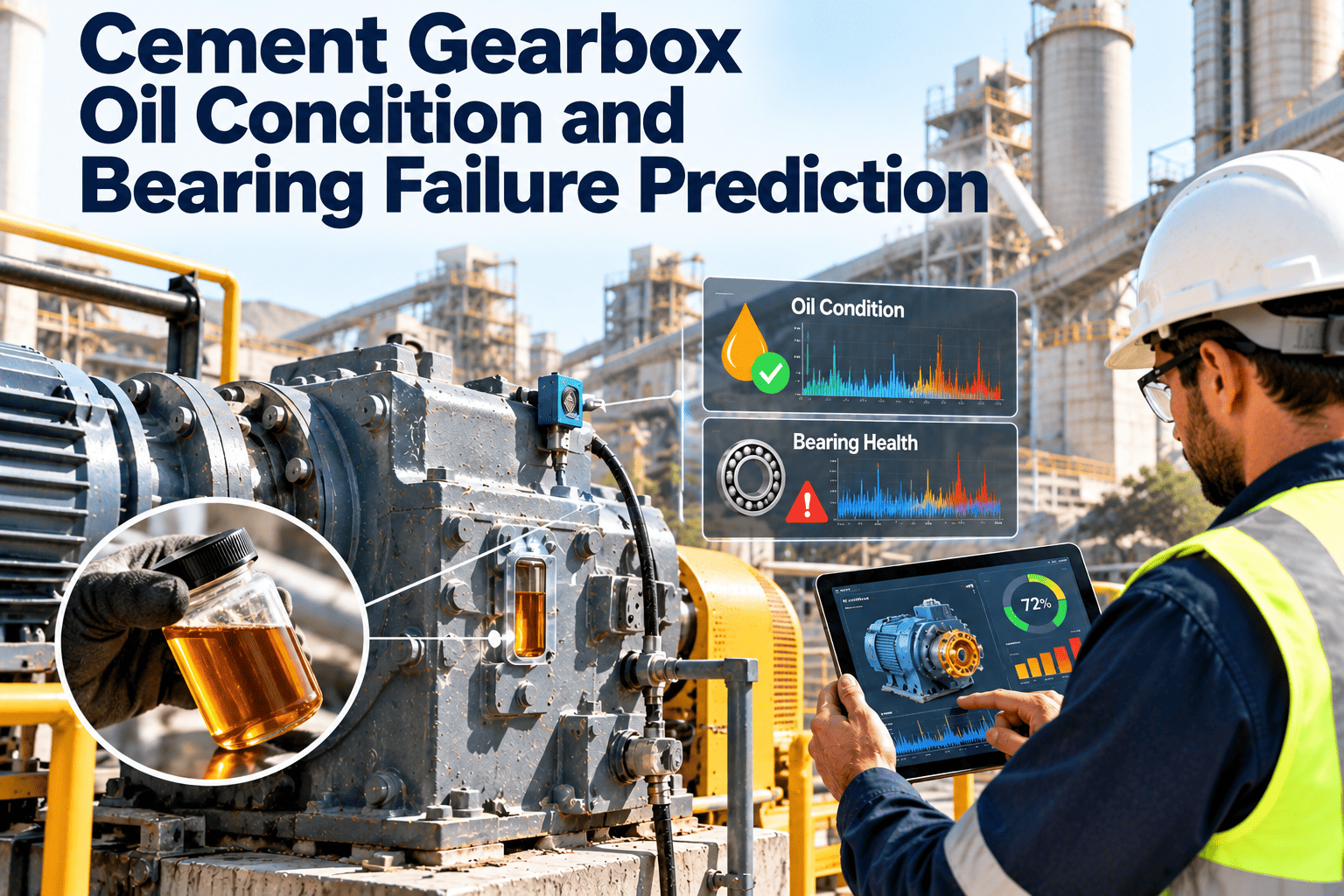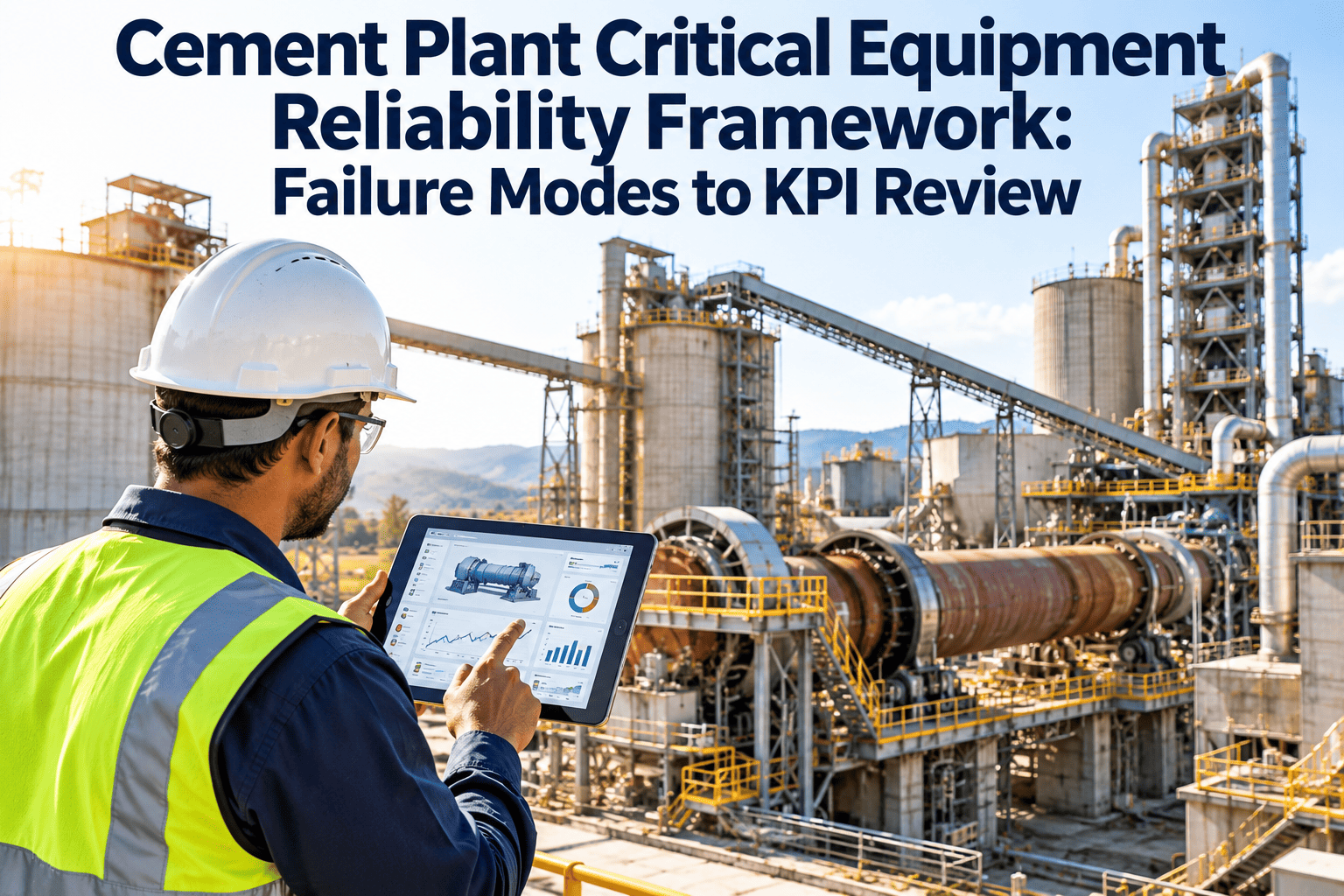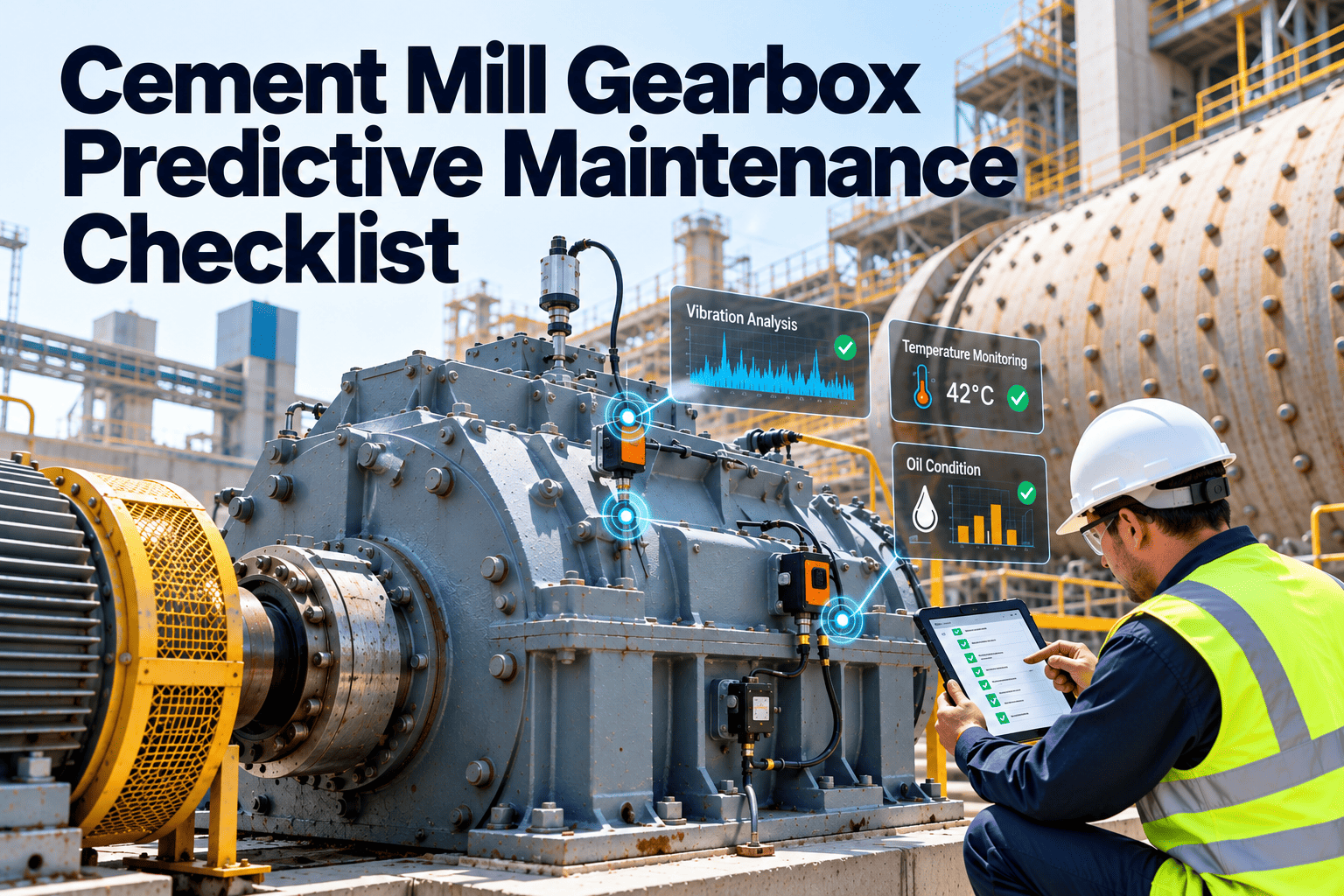
A cement mill gearbox rarely fails without warning, but the warning is easy to miss. Oil temperature drifts up, vibration changes character, filters clog faster or wear particles appear in the oil sample. Each sign is small on its own. Together they show a gearbox moving toward a stoppage that can take a grinding line offline for days. This checklist turns those signs into structured field checks and escalation rules, and maintenance management software keeps the readings and follow-up work in one asset history.
Grinding and Milling Reliability
Cement Mill Gearbox Predictive Maintenance Checklist
Condition indicators, field checks, maintenance actions and escalation criteria for ball mill and vertical roller mill gearboxes.
Oil temperature
Vibration
Oil cleanliness
Filter pressure drop
Before You Start
Condition Indicators and What They Tell You
Use limits from the gearbox manufacturer and your own baseline. The table shows what each indicator points to, not universal alarm values.
| Indicator | Rising or abnormal reading suggests | Typical first action |
|---|---|---|
| Oil supply temperature | Cooler fouling, low oil flow, or excess friction | Check cooler, flow and oil level |
| Bearing temperature | Lubrication loss, misalignment or bearing damage | Compare against baseline and trend |
| Vibration level and spectrum | Gear mesh wear, bearing defects, looseness or misalignment | Analyse spectrum and confirm with a second reading |
| Wear particles in oil | Active gear or bearing wear | Send sample, inspect filters, shorten sampling interval |
| Water in oil | Seal, breather or cooler leak | Find the ingress path and treat the oil |
| Filter differential pressure | Contamination, cold oil or filter blockage | Change filter and inspect the removed element |
Inspection frequency key
SEvery shift
WWeekly
MMonthly
OOutage or annual
Section 01
Lubrication System
Oil level and colour checked at the sight glass. Milky oil suggests water and dark, burnt oil suggests overheating.
Escalate if: level falls between checks or oil looks milky. Find the leak or ingress path.
Oil supply pressure, flow and pump status recorded. Confirm standby pumps start on demand and alarms are not bypassed.
Escalate if: pressure or flow drops. Do not run the mill without adequate lubrication.
Filter differential pressure and element condition reviewed. A filter that clogs faster than usual is itself a condition signal.
Escalate if: pressure drop climbs quickly after a change. Check for debris and take an oil sample.
Oil cooler and heater condition checked, including water flow, fouling, leaks and thermostat operation in cold weather.
Escalate if: oil temperature cannot be held within range. Plan cooler cleaning or repair.
Breathers, seals and drains inspected for blockage, damage and oil weeping, keeping dust and moisture out of the housing.
Escalate if: dust is present around seals or breathers. Replace and check oil cleanliness.
Section 02
Oil Analysis Workflow
1
Take samples from the same point, at the same operating state, using clean bottles.
2
Test for viscosity, water, particle count and wear metals.
3
Compare the report with baseline and the last several samples.
4
Raise a work order for filtration, oil change or inspection when trends shift.
Oil sample taken and logged on the scheduled interval, with running hours and operating conditions recorded.
Escalate if: a sample is missed. Take one at the next safe opportunity.
Lab results reviewed for trends in wear metals, particle count and water, not only for single alarm values.
Escalate if: results worsen over consecutive samples. Shorten the sampling interval.
Keep Gearbox Readings in One Asset History
Oxmaint stores inspection results, oil sample records and work orders against each mill gearbox, so trends are visible before a stoppage.
Section 03
Vibration, Temperature and Noise
Vibration measured at defined points on the gearbox and drive train using the same method and load condition each time.
Escalate if: overall level or a gear mesh frequency rises against baseline. Analyse the spectrum.
Bearing and casing temperatures recorded, or thermal images taken, and compared against previous readings at similar load.
Escalate if: a bearing runs hotter than its trend. Verify lubrication and load.
Unusual noise noted during rounds: knocking, whining, grinding or a change in tone with load.
Escalate if: noise is new or worsening. Confirm with a vibration check.
Motor current, mill load and torque reviewed alongside gearbox readings, since overload and surge can shorten gear life.
Escalate if: peaks exceed design limits. Review operating practice.
Section 04
Mechanical Condition and Alignment
Foundation bolts, mounting and torque arms inspected for looseness, cracks and movement. Soft foot or shifting causes misalignment.
Escalate if: looseness or cracks are found. Stop and repair before restart.
Couplings checked for wear, guard condition and alignment records. Coupling damage often shows up first as vibration.
Escalate if: misalignment exceeds tolerance. Schedule realignment at the next window.
Gear tooth contact pattern and surface condition inspected through inspection ports or by borescope during outages.
Escalate if: pitting, scuffing or uneven contact is found. Involve the gearbox specialist.
Girth gear and pinion lubrication and mesh checked on ball mills, including spray system, guard and dust ingress.
Escalate if: lubricant coverage is patchy. Repair the spray system.
Compare Approaches
Run to Failure Versus Predictive Response
Reactive practice
- Alarm is the first sign of trouble.
- Readings are kept on paper or in one person's notebook.
- Repairs happen during unplanned stops.
Predictive workflow
- Trends show drift weeks ahead.
- Readings and samples are stored on the asset.
- Repairs are planned into a scheduled outage.
Measure It
Gearbox Reliability KPIs
| KPI | How to measure | Direction |
|---|---|---|
| Route completion | Vibration and oil rounds done on schedule | Aim for complete |
| Alerts to work order time | Hours from abnormal reading to job raised | Trending down |
| Oil sample compliance | Samples taken against plan | Aim for complete |
| Unplanned gearbox downtime | Stop hours from gearbox faults | Trending down |
| Repeat lubrication faults | Recurring leaks and filter issues | Trending down |
Frequently Asked Questions
What should be monitored on a cement mill gearbox?
Oil condition, temperatures, vibration, filter pressure and load. Together they show developing faults early.
How often should gearbox oil be sampled?
Follow the manufacturer's advice and shorten the interval when trends shift or wear metals rise.
Is vibration or oil analysis better?
They complement each other. Vibration shows mechanical faults, and oil shows wear and contamination.
Can a CMMS trigger work from condition data?
Yes. Set alert rules and raise work orders. Try Oxmaint to see how.
Can rounds be done on mobile?
Yes. Book a demo to see mobile checklists for grinding assets.
Plan Gearbox Repairs Before the Mill Stops
Use Oxmaint to schedule inspection routes, capture condition readings and turn abnormal trends into planned work orders.