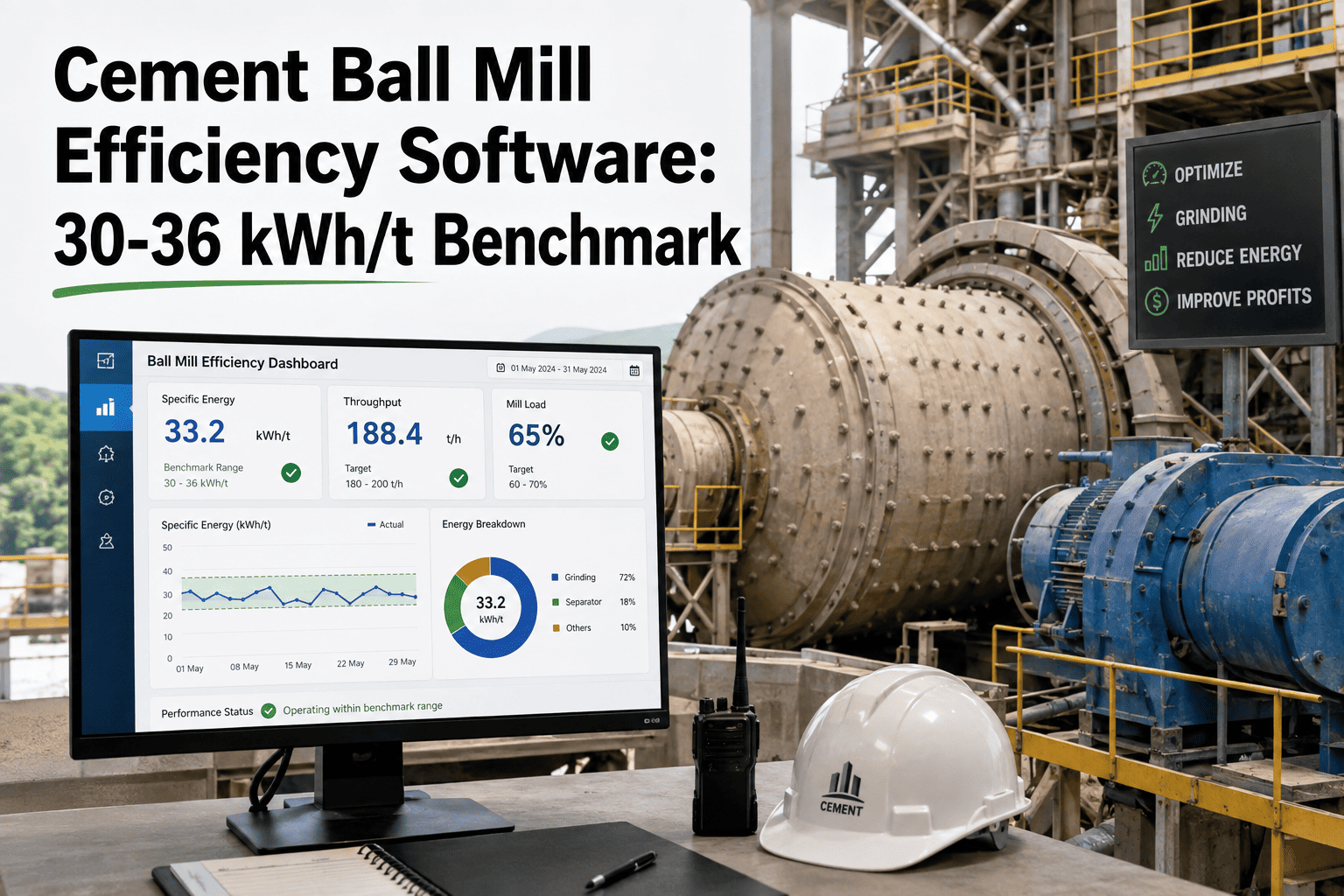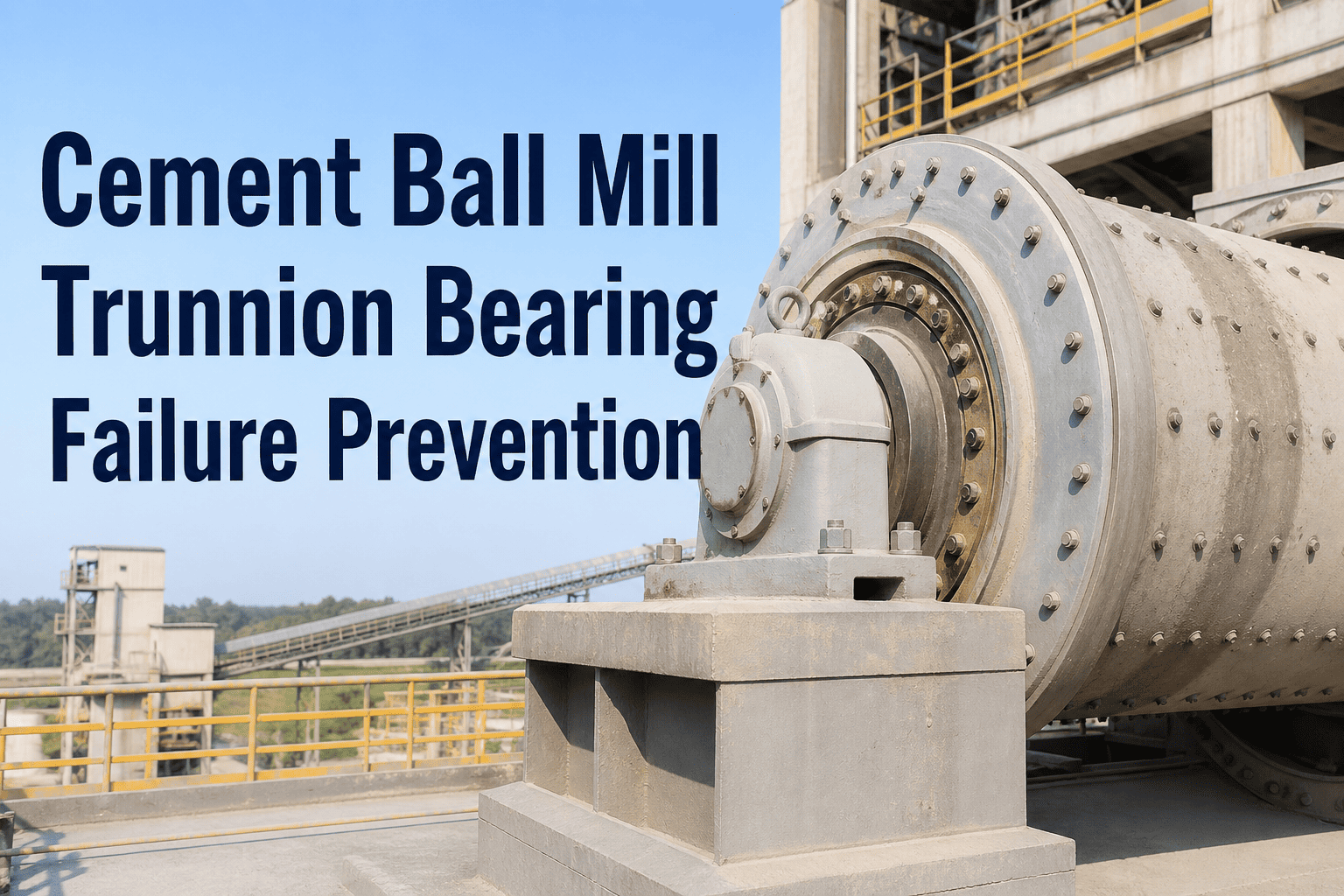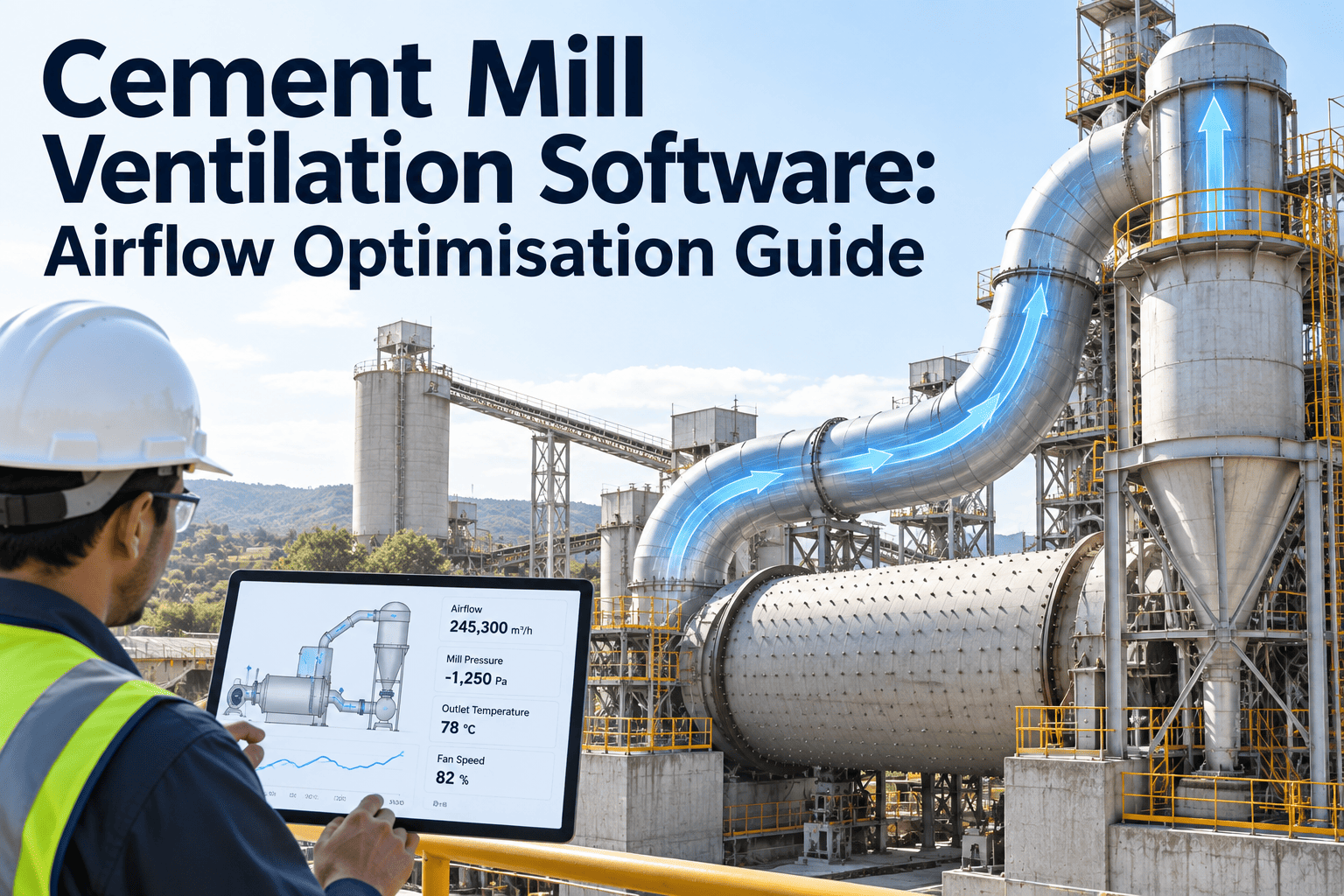
Cement mill ventilation is the most undermanaged variable in grinding circuit performance, directly controlling material drying, internal dew point, and finished product transport velocity. When vent airflow drops below critical thresholds, fine particles coat grinding media and liners, severely reducing throughput and skyrocketing specific energy consumption. Pressure drop escalation across the diaphragm and outlet vent signals imminent blockages that manual walk-downs miss until production losses mount. OxMaint AI monitoring resolves this by continuously tracking differential pressure, vent fan amp draw, and outlet temperature, triggering automated corrective work orders the moment airflow deviates from baseline. Start your free OxMaint trial or book a 30-minute specialist demo to see the full ventilation prediction workflow.
Cement Mill Ventilation Airflow Optimisation in Cement Plants
Track mill vent airflow, pressure drop, and dust load to prevent false setting, reduce specific energy consumption, and maintain grinding efficiency with OxMaint AI alerts and automated corrective workflows.
The Four Ventilation Failure Modes That Kill Mill Output
Mill ventilation failures follow predictable physical sequences tied to material properties, mechanical wear, and hygroscopic dynamics. Understanding this failure chain is the first step toward intercepting it at the earliest detectable stage — before pressure drop, temperature rise, or coating advancement reaches destructive levels that halt grinding efficiency.
Fine material accumulation progressively blocks diaphragm slots, reducing cross-sectional airflow area. As slots blind, pressure drop across the grinding chamber rises, airflow velocity falls below the suspension threshold, and material recirculation increases. This triggers a cascading effect where reduced transport velocity causes further coating, accelerating the blockage rate until the mill chokes. Detecting the early pressure differential change is critical before the slot area drops below the functional minimum.
Abrasive dust transport through the outlet vent slowly accumulates static charge or moisture-induced adhesion along duct walls. Over time, this narrows the effective duct diameter, increasing system resistance. The vent fan responds by operating further left on its performance curve, delivering less actual cubic feet per minute while consuming more power. The reduced airflow fails to sweep the mill shell, allowing internal temperatures to climb and risking false setting of the cement near the outlet.
Vent fan wheel erosion from highly abrasive cement dust changes the aerodynamic profile of the blades. Clearance gaps between the wheel and inlet cone widen due to housing wear, allowing internal recirculation. Bearing degradation increases friction losses. Each factor independently reduces fan capacity, but together they create a compounding effect where the fan cannot overcome the system pressure drop, leading to a complete loss of venting capability under high load conditions.
Dampers controlling mill inlet or outlet draft operate in extremely dusty environments. Linkage pivots seize due to dust packing, and actuator shafts bind from material accumulation. When a damper seizes in a position suited for low production rates, the mill cannot increase ventilation to match higher feed rates. Operators compensate by reducing feed to control temperature, directly sacrificing output. The seized damper often goes unnoticed until a production uprate fails to achieve target temperatures.
From First Signal to False Setting: The 72-Hour Ventilation Window
Every catastrophic ventilation failure is preceded by a detectable signal window spanning days. The difference between a planned duct cleanout and a mill choked with false-set cement is whether your monitoring system sees the signal — and whether your maintenance workflow acts on it fast enough to restore airflow before coating accelerates.
OxMaint AI monitors pressure drop, airflow velocity, and fan performance patterns across every mill, correlates multi-signal anomalies, and generates prioritized work orders automatically — so your team cleans ducts and replaces dampeners on schedule, not after the mill chokes.
How OxMaint Predicts Ventilation Failure and Closes the Loop
Detection alone does not prevent false setting — the signal must trigger the right action, at the right priority, with the right information, delivered to the right person. OxMaint connects monitoring data to corrective action in a closed workflow that restores airflow before efficiency collapses.
Differential pressure transmitters, anemometers, and fan bearing temperature sensors feed readings into OxMaint in real time. Baseline profiles are established per mill type, grinding stage, and production rate — so alarms fire against the right normal for a 120 tph raw mill versus a 80 tph cement mill, not a global average that misses critical context.
OxMaint AI correlates rising chamber pressure, dropping airflow velocity, and increasing fan amp draw together. Single-signal spikes like temporary feed rate changes or ambient temperature shifts are filtered out. Only correlated multi-signal anomalies indicating true system resistance trigger prioritized alerts, eliminating alarm fatigue and focusing attention on real degradation.
Alert priority determines work order urgency and scheduling window. Each WO includes sensor readings, trend charts, asset location, and recommended corrective action like diaphragm cleaning or damper linkage inspection — no additional investigation required before dispatch. The maintenance team has all context needed to restore airflow immediately.
Technicians receive work orders on mobile with exact mill location, affected ventilation zone, required cleaning tools, and safety isolation instructions. Completion is logged directly in the app — no paper, no radio calls, no data loss. Post-cleaning airflow readings confirm the intervention restored system capacity to baseline levels.
After corrective action, the sensor baseline resets automatically. Maintenance records are stored against the asset. Repeat blockages on the same duct section trigger root cause escalation prompts, driving permanent fixes like duct lining upgrades instead of repeated cleanings. The system continuously learns the specific failure patterns of your equipment.
Cement Mill Ventilation Health Monitoring Schedule
AI monitoring supplements — it does not replace — periodic physical inspection and mechanical cleaning. The table below reflects industry-standard monitoring intervals for cement mill ventilation systems, calibrated to mill type and material abrasiveness.
| Mill Type | Monitoring Focus | Inspection Interval | Ventilation Trigger | OxMaint Action |
|---|---|---|---|---|
| Raw Mill | Dew point and drying capacity | Continuous DP monitoring | DP >15% above baseline | Auto WO for diaphragm inspection |
| Coal Mill | Inerting airflow and temperature | Continuous flow and temp | Airflow |
Critical WO, emergency inert gas check |
| Cement Mill | False setting prevention | Hourly outlet temp trend | Outlet temp >115°C with rising DP | High-priority WO, vent duct clean |
| Finish Mill | Gypsum dehydration control | Continuous exhaust temp | Temp swing >10°C over 4 hrs | Medium WO, damper actuator check |
| Roller Press | Dynamic separator airflow | Vibration and DP trend | Separator fan amp deviation | Scheduled WO, fan inspection |
The Direct Cost of Ignoring Mill Ventilation
Ventilation is not just an environmental control; it is a primary grinding lever. When airflow is restricted, the energy applied to the grinding media is wasted on recirculating load and generating excess heat instead of producing finished product. The financial impact is immediate and measurable.
A 10% drop in vent airflow velocity directly correlates to a 5-8% increase in kilowatt-hours per ton of material ground. The grinding media cannot scour fine material off the bed effectively, so the mill consumes the same power but produces less output. On a 100 tph mill consuming 3,500 kW, this translates to thousands of dollars in wasted electrical cost monthly, entirely avoidable with proper ventilation maintenance.
To control mill temperatures when ventilation fails, operators are forced to reduce feed rates. A typical cement mill must drop production by 15-20% to stabilize temperatures without adequate airflow. This lost production window is rarely recovered and directly impacts the plant's ability to meet dispatch schedules, leading to inventory stockouts and delayed customer shipments during peak demand periods.
Frequently Asked Questions
How does OxMaint detect vent blockages without flow sensors on every duct?
Can OxMaint correlate mill ventilation health with grinding efficiency metrics?
How long does deployment take for a typical cement mill circuit?
Does the system account for different ventilation requirements during mill startup versus steady state?
Can OxMaint automatically trigger damper adjustments if controlled by the plant DCS?
Your Next False Setting Event Is Still Preventable. Act on the Signal, Not the Aftermath.
OxMaint gives cement plant maintenance teams AI-driven ventilation anomaly detection, automatic prioritized work orders, and mobile dispatch — closing the gap between the first pressure rise and the duct cleanout that prevents a mill choke. Most plants are fully operational within two weeks.