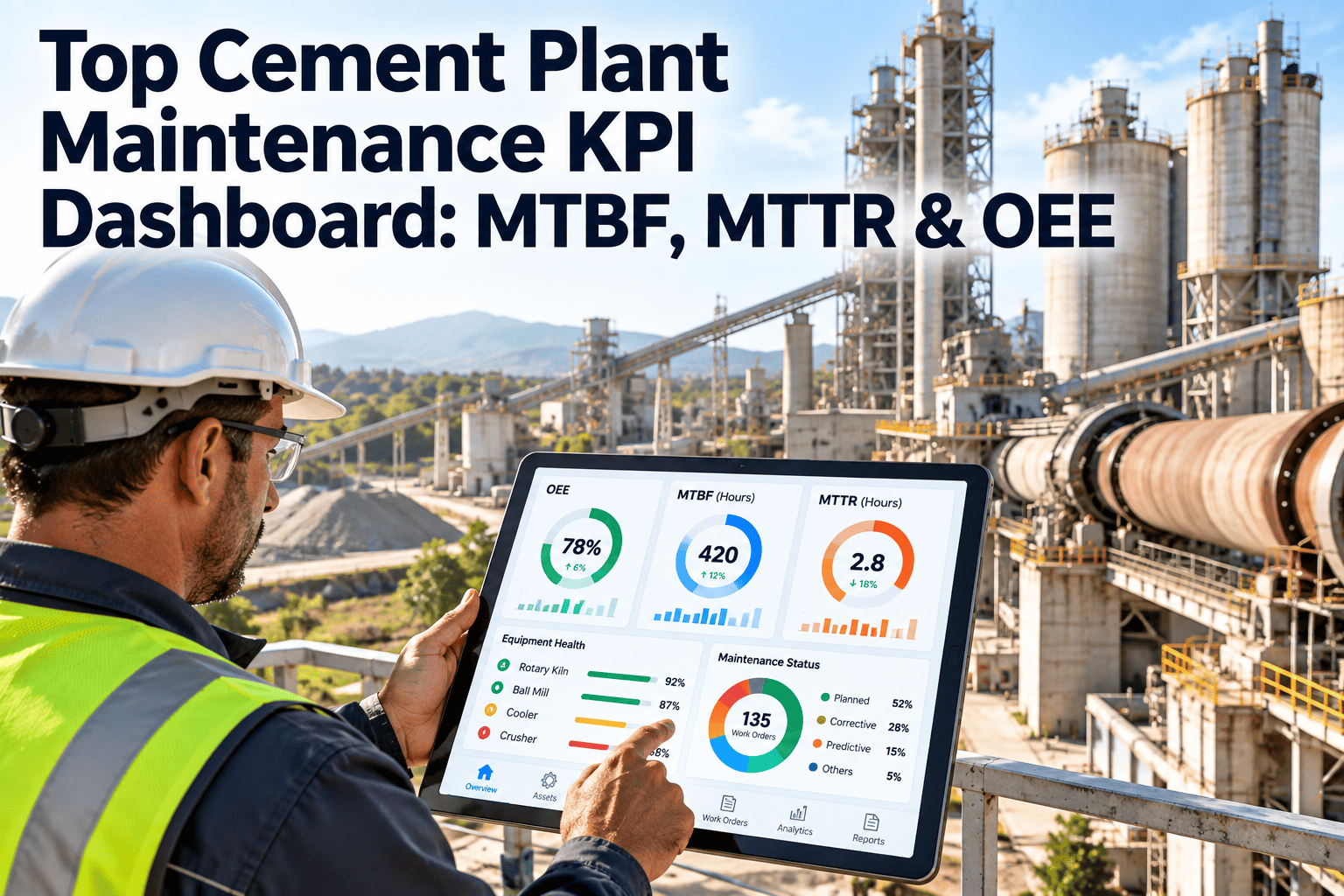
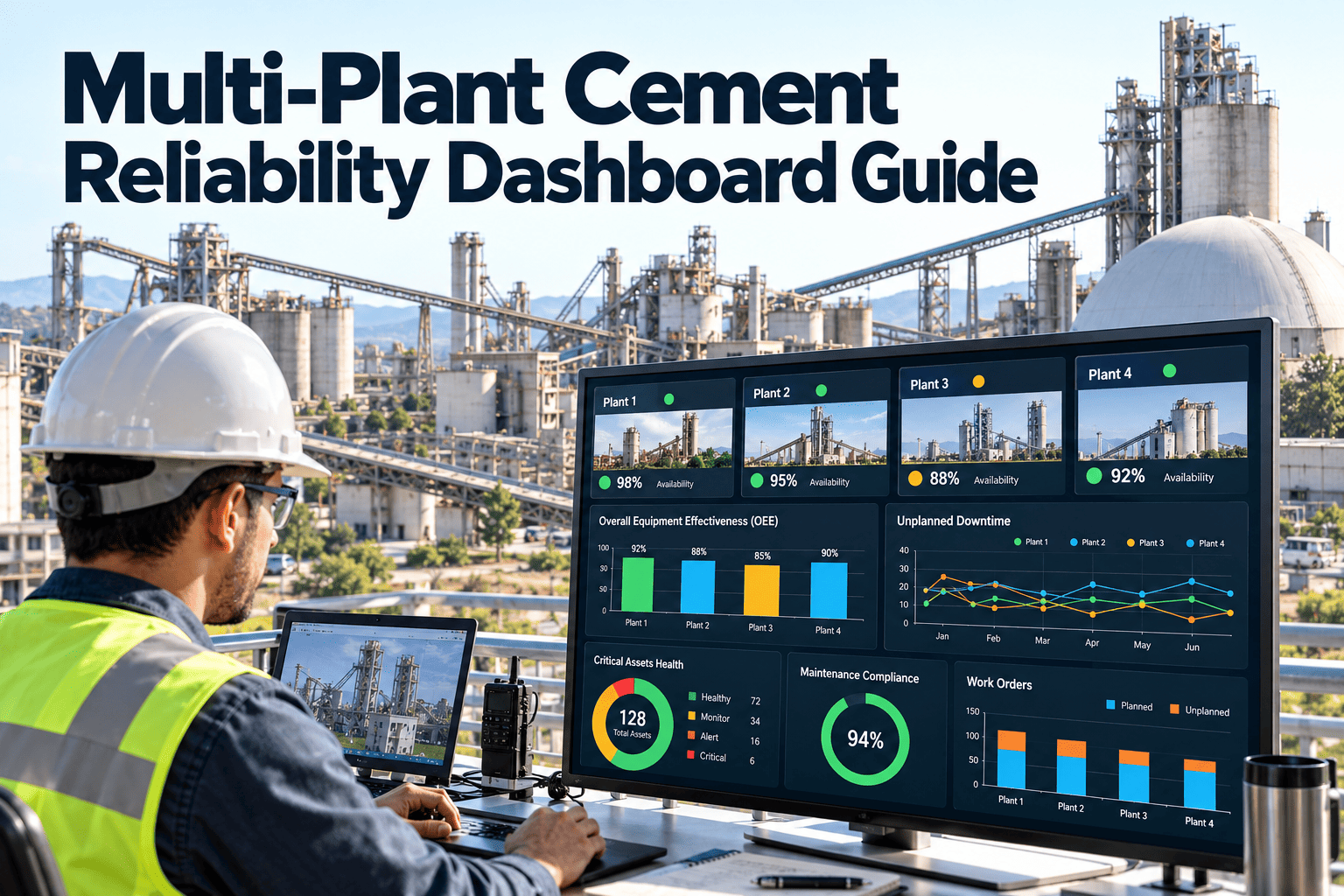
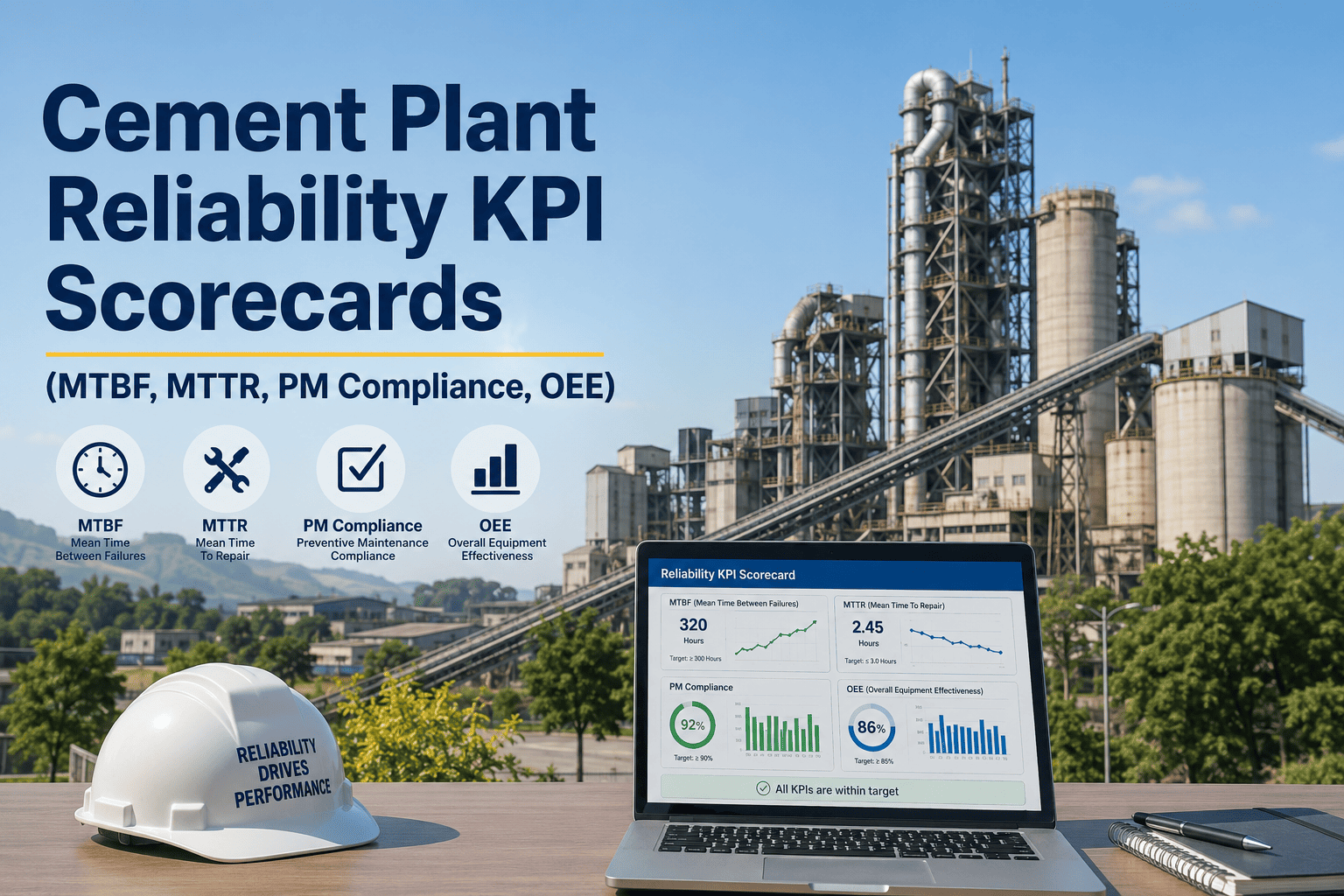
Cement plants that operate without real-time KPI visibility lose between 8% and 15% of available kiln production hours annually to unplanned stoppages — failures that generate $150,000 to $220,000 in lost clinker output per idle hour and carry emergency repair premiums 3.4 times above planned intervention costs. MTBF, MTTR, OEE, and PM compliance rate are not administrative reporting figures: they are operational control instruments that separate plants running to production plan from those absorbing preventable shutdown costs quarter after quarter. Book a demo to see how Oxmaint tracks and benchmarks every critical maintenance KPI in real time across your full cement plant asset hierarchy.
Maintenance KPI Documentation Requirements by Region
Maintenance KPI records are not just operational tools — they are audit evidence required by safety and equipment inspection frameworks across every major cement-producing region. Oxmaint generates compliant maintenance documentation automatically from live plant data, with no manual transcription and no retrospective reconstruction of records at audit time.
| Region | Key Frameworks | Oxmaint KPI Coverage |
|---|---|---|
| USA | OSHA 29 CFR 1910, MSHA 30 CFR Part 56, EPA maintenance records | Automated work order audit trails, real-time MTBF and MTTR dashboards, digital PM compliance registers |
| UAE | OSHAD-SF equipment logs, Civil Defence inspection records, SASO | Live KPI dashboards, digital maintenance documentation, multi-site KPI benchmarking across facilities |
| India | Factories Act 1948 Rule 73, BIS IS 14489, DGMS inspection directives | PM compliance automation, statutory inspection registers, full work order history archives per asset |
| Germany | BetrSichV, DIN EN 13306, TUV inspection intervals | MTBF trending per DIN standards, automated inspection scheduling, condition audit record generation |
| UK | PUWER 1998, BS EN 13306, HSE maintenance guidance | Digital KPI records, automated PUWER inspection scheduling, compliance export reports on demand |
| Canada | CSA Z1000 maintenance management, Provincial OHS Acts | KPI benchmark reporting, automated PM compliance tracking, portfolio-level KPI dashboards |
Oxmaint delivers real-time MTBF, MTTR, OEE, and PM compliance dashboards that generate compliant maintenance documentation automatically from live plant data — no manual transcription, no audit gaps, no records reconstructed after the fact from memory or paper forms. Book a demo to see how the Oxmaint KPI dashboard maps to your plant's specific compliance requirements and asset hierarchy.
What Are Cement Plant Maintenance KPIs?
Cement plant maintenance KPIs are quantified measures of equipment reliability, maintenance execution efficiency, and planned maintenance performance. Each metric isolates a distinct dimension of maintenance quality and connects directly to kiln availability, clinker output, and capital expenditure outcomes. The four metrics every cement plant maintenance team must track — and the formulas behind them — are defined below.
Mean Time Between Failures
Total operating hours divided by the number of recorded failure events over a defined period. For a rotary kiln targeting 91% availability, MTBF below 720 hours signals developing reliability risk requiring immediate investigation. Oxmaint calculates MTBF automatically from work order closure data across every asset in the plant hierarchy — no spreadsheet, no manual calculation cycle.
Mean Time To Repair
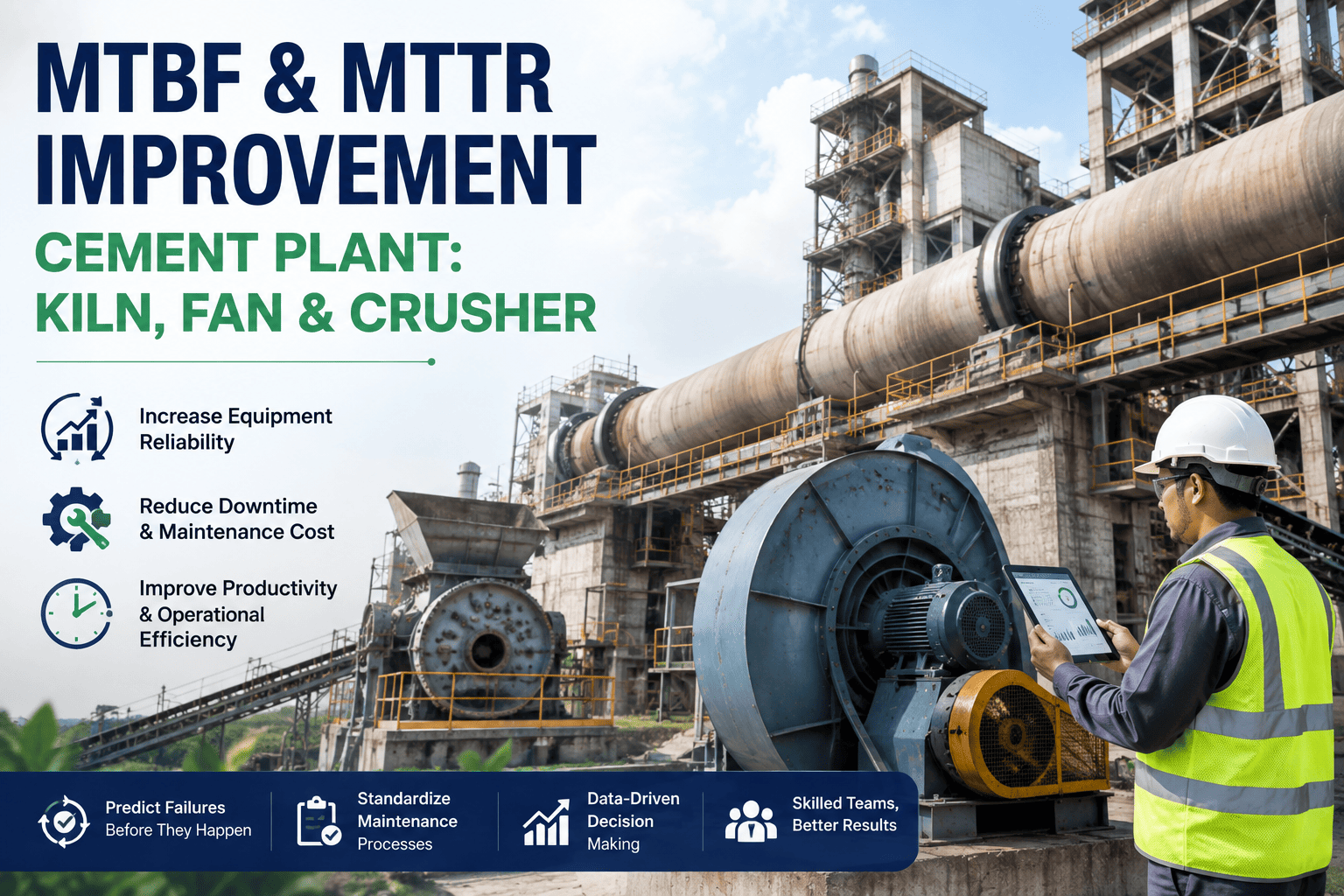
Total repair time divided by the number of repair events in the same period. Cement plant MTTR benchmarks vary by equipment class: kiln drive gearbox under 8 hours, clinker cooler grate replacement under 12 hours. Oxmaint tracks MTTR per asset class, technician, and fault type to expose the repair bottlenecks inflating your actual average above target intervals.
Overall Equipment Effectiveness
The product of availability, performance, and quality rates expressed as a percentage of theoretical maximum output. World-class OEE for a cement kiln is 85%. Most plants operate between 60% and 75%, meaning 10 to 25% of clinker production capacity is consumed by downtime, speed losses, and quality defects. Oxmaint integrates sensor data to calculate OEE continuously per shift, not once a month.
PM Compliance Rate
Percentage of scheduled preventive maintenance tasks completed on time within the defined window. Cement plants averaging 62% PM compliance with manual systems predict 3.4x higher reactive maintenance costs and 44% more unplanned downtime events per quarter. Oxmaint automates PM scheduling and enforces completion criteria digitally to drive compliance above 90% within 90 days of deployment.
Track Every KPI Automatically Across Your Full Asset Register
Oxmaint calculates MTBF, MTTR, OEE, and PM compliance continuously from live work order data and sensor feeds — without spreadsheets, manual calculation, or monthly reporting delays. Book a demo to see the live KPI dashboard configured for your plant's equipment hierarchy and production targets.
Four KPI Failures Driving Avoidable Unplanned Downtime
MTBF Data Trapped in Disconnected Systems
Failure events recorded across paper logs, radio reports, and multiple shift spreadsheets produce MTBF figures 20% to 35% above actual equipment performance. The data gaps mask developing failure modes in rotary kiln trunnion bearings, ball mill girth gears, and preheater cyclone inlet flanges until they escalate to unplanned shutdowns. Book a demo to see Oxmaint MTBF tracking running against your actual asset register.
MTTR Inflated by Avoidable Repair Delays
A rotary kiln girth gear repair targeting 6 hours runs to 14 hours because technicians spend 2 hours locating parts, 90 minutes reviewing repair history at a desktop in the control room, and 45 minutes coordinating a specialist who could have been pre-assigned. Each delay type is visible in Oxmaint's MTTR breakdown and eliminable with mobile asset history access, pre-staged parts, and automated technician assignment.
OEE Calculated Retrospectively From Monthly Reports
Cement plants calculating OEE from monthly production summaries make maintenance decisions on data 3 to 6 weeks old. A kiln degrading to 68% OEE this week will not surface as a problem until the month-end review — by which point the developing bearing failure, refractory hot zone, or classifier throughput loss has consumed 200 to 400 additional production hours at reduced output.
PM Compliance Overstated by Paper Recording
Reported PM compliance of 78% on paper forms hides an actual execution rate below 55% when verified against required measurement fields, photo documentation standards, and linked follow-up work order creation. This gap is invisible without digital enforcement of task completion criteria. The overstated figure gives maintenance managers false confidence while undetected asset degradation builds toward failure events. Book a demo to see how Oxmaint enforces genuine PM completion across your full task schedule.
How Oxmaint Tracks and Improves Cement Plant KPIs
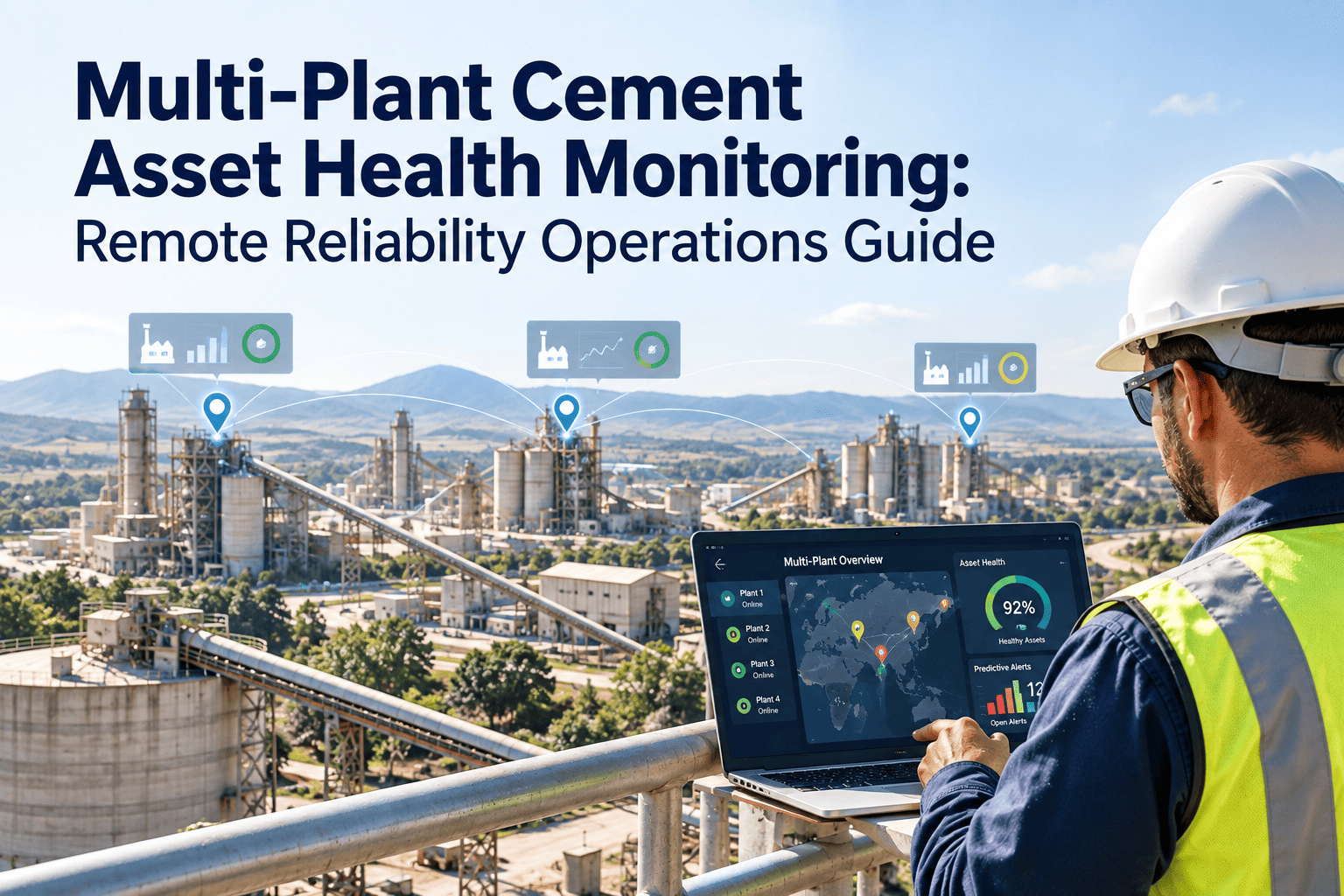
Oxmaint replaces fragmented KPI tracking with an integrated maintenance intelligence platform that calculates MTBF, MTTR, OEE, and PM compliance automatically from live work order and sensor data. Every metric updates in real time as technicians complete work orders on the plant floor. Book a demo to walk through the KPI configuration specific to your cement plant equipment classes and production targets.
Oxmaint KPI and Reliability Analytics Feature Modules
Each Oxmaint module addresses a specific KPI measurement gap in cement plant maintenance. Together they create a real-time maintenance intelligence platform that calculates, tracks, and benchmarks every critical performance metric from plant floor to portfolio level. Book a demo to walk through each module mapped to your plant's actual equipment classes and KPI targets.
Deploy Real-Time KPI Intelligence Across Your Cement Plant
Oxmaint configures your full KPI dashboard — MTBF, MTTR, OEE, PM compliance, and planned-versus-reactive ratio — to your plant's asset hierarchy and production targets in a single implementation engagement with no downtime required. Book a demo to see the KPI configuration process for a cement plant of your size and equipment profile.
Cement Plant KPI Performance: Without vs With Oxmaint
The operational gap between manual KPI tracking and Oxmaint's integrated maintenance intelligence is measurable at every level — from individual work order efficiency to plant-wide OEE and capital budget accuracy. Book a demo to see how these performance differences apply to your plant's current maintenance cost structure and production targets.
| Performance Factor | With Oxmaint KPIs | Without KPI Dashboard |
|---|---|---|
| Kiln MTBF Visibility | MTBF updated in real time on every work order closure. All failure events captured against the specific asset, shift, and technician. Trend lines identify degradation 6 to 8 weeks before a critical unplanned shutdown event occurs. | MTBF calculated monthly from incomplete spreadsheet data. Missing 20% to 35% of failure events. Figures inflated by data gaps, masking developing failure patterns in kiln trunnion bearings and girth gear assemblies. |
| MTTR per Repair Event | MTTR tracked per event with time-to-diagnose, time-to-part, and active repair time split. 44% average MTTR reduction within 6 months. Kiln girth gear repairs completing under 8 hours with mobile asset history and pre-staged parts. | Average MTTR of 11 to 14 hours for major equipment events. 40% of elapsed time spent on avoidable delays — parts search, repair history review at desktop, and specialist coordination with no forward planning. |
| OEE Calculation Frequency | OEE updated per shift from integrated sensor and work order data. Supervisors identify OEE drops within the same shift they occur across kiln, mill, cooler, and separator equipment classes. | OEE calculated from monthly production reports, typically 3 to 5 weeks after the events occurred. Degradation consumes hundreds of production hours before any corrective action is triggered. |
| PM Compliance Accuracy | Compliance calculated against genuine task completion — measurements entered, photos attached, follow-up work orders linked. Cement plants reach above 91% true compliance within 90 days of Oxmaint PM automation deployment. | Reported compliance of 78% on paper while actual verified execution sits below 55%. The 23-point gap is invisible without digital enforcement. Audits reveal missing measurements, absent photo evidence, and unlinked corrective tasks. |
| Shutdown Scope Accuracy | Shutdown scope built from MTBF trend alerts, condition scoring, and OEE degradation data. Assets flagged 3 to 6 months before shutdown. Capital budget variance falls below 8% with continuous KPI-driven scope development. | Scope built from informal condition estimates. Scope surprises add 15% to 30% to shutdown duration and cost. Capital budget variance of 20% or more is common in plants without structured KPI-driven planning processes. |
| KPI Report Generation | All KPI reports generated from live data in under 2 minutes. MTBF, MTTR, OEE, and PM compliance available on demand. Board-level capital reports exported directly from the dashboard with zero manual compilation. | Monthly KPI reports require 6 to 10 hours of manual compilation across spreadsheets, paper records, and CMMS exports. Reports arrive too late to inform decisions for the current reporting period. |
Cement Plant KPI Benchmark Results: 12-Month Averages After Oxmaint Deployment
These benchmark measurements represent average KPI improvements recorded across cement plants that replaced manual and spreadsheet-based maintenance tracking with Oxmaint's integrated KPI and reliability analytics platform across a 12-month measurement period.
KPI Platform Investment Analysis: Costs Against Returns
Each Oxmaint KPI module is included in the platform — there are no add-on licensing costs for analytics, trend engines, or reporting. The table below shows implementation effort, annual value delivered in cement plant operations, and the typical payback period calculated from avoided downtime and maintenance cost reduction.
| KPI Module | Implementation Effort | Annual Value Delivered | Payback Period |
|---|---|---|---|
| Real-time KPI Dashboard | 2 weeks configuration | Avoid 2 or more unplanned kiln stops annually $360,000 per year in avoided downtime costs |
Under 1 month |
| MTBF Trend Engine | 3 weeks with historical data import | Predictive maintenance scheduling reduces emergency events $140,000 per year in emergency repair premium savings |
2 months |
| PM Compliance Automation | 2 weeks schedule configuration | 81% compliance improvement reduces degradation events $95,000 per year in avoided corrective maintenance costs |
1 month |
| OEE Monitoring Module | 6 weeks with sensor integration | 12 percentage point kiln OEE improvement per shift $320,000 per year in additional clinker production value |
4 months |
| MTTR Optimiser | 3 weeks work order configuration | 44% faster repair closure across all equipment classes $165,000 per year in reduced downtime and labour costs |
2 months |
| Capital Planning Dashboard | 4 weeks with asset registry build | Avoid premature replacement decisions and scope surprises $480,000 per capital planning cycle in avoided expenditure |
6 months |
Frequently Asked Questions: Cement Plant Maintenance KPIs
QWhat is a realistic MTBF target for a cement plant rotary kiln?
QHow does Oxmaint calculate OEE for cement plant equipment?
QWhich regional compliance frameworks require documented maintenance KPI records?
QHow long before a cement plant sees measurable KPI improvements after deployment?
QCan Oxmaint track MTTR separately for different cement plant equipment classes?
QWhat is the industry benchmark for planned versus reactive maintenance ratio in cement plants?
Continue Reading: Cement Plant Maintenance and Shutdown Resources
Explore these related resources to build a complete operational picture — from annual shutdown planning and contractor coordination through to kiln-specific checklists and root cause analysis frameworks for recurring equipment failures.
Put Every Maintenance KPI on a Live Dashboard Across Your Plant
Oxmaint deploys full KPI intelligence — MTBF trending, MTTR breakdown, real-time OEE, and PM compliance tracking — across your complete asset hierarchy within the first 30 days of implementation. No spreadsheets, no monthly calculation cycles, no audit-time data reconstruction. Book a 30-minute demo to see the live KPI dashboard running against your plant's actual equipment classes, production targets, and maintenance team structure.