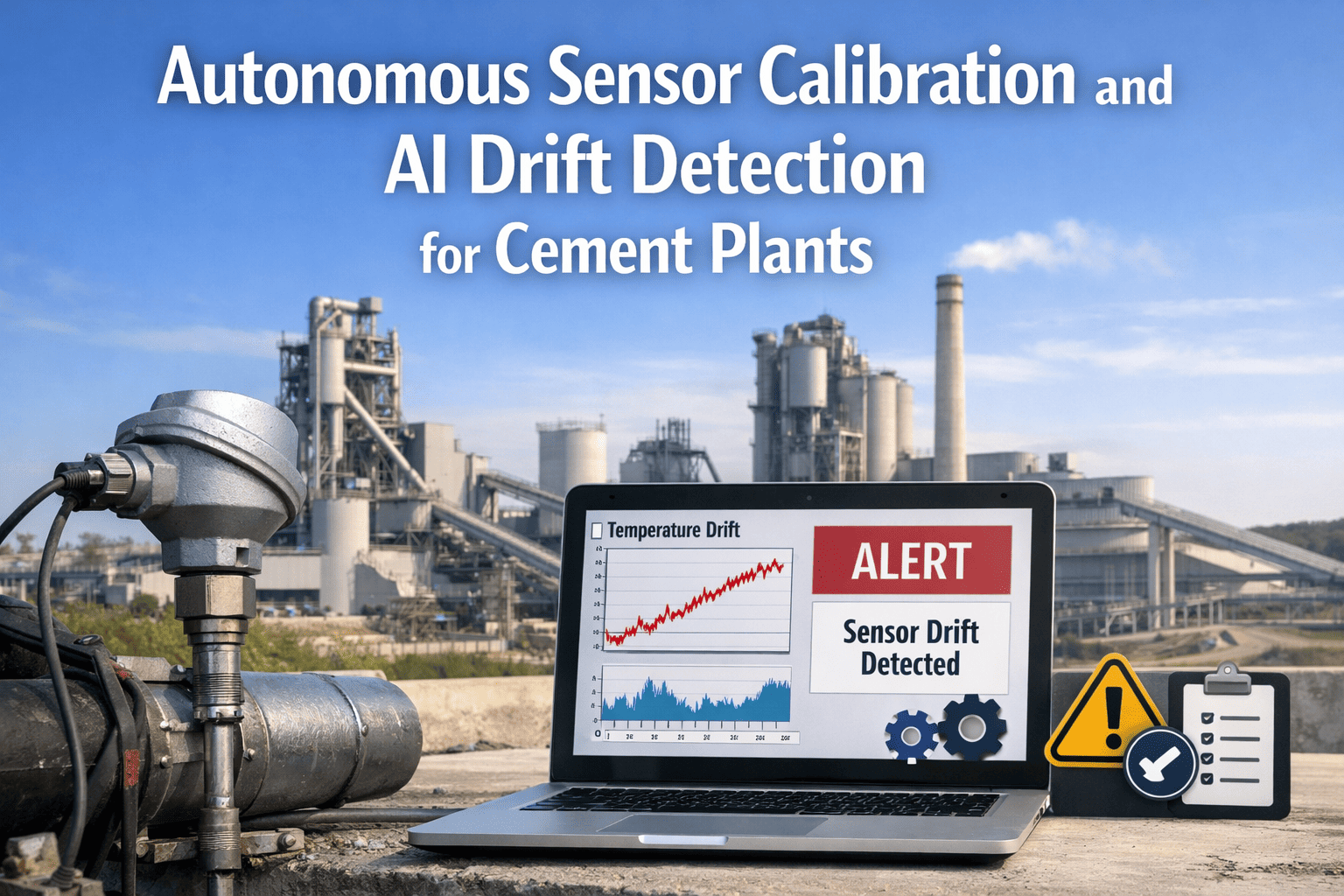
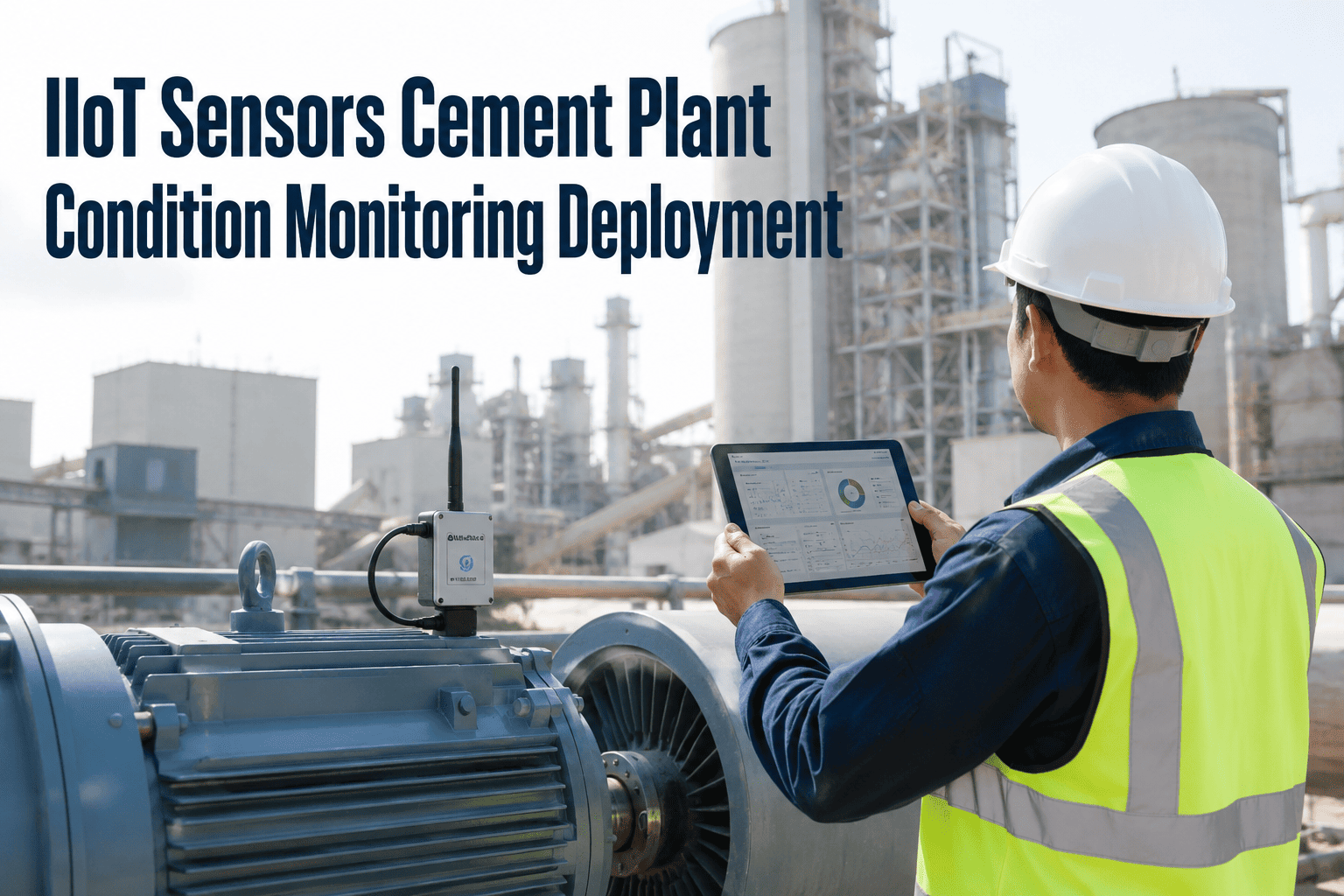
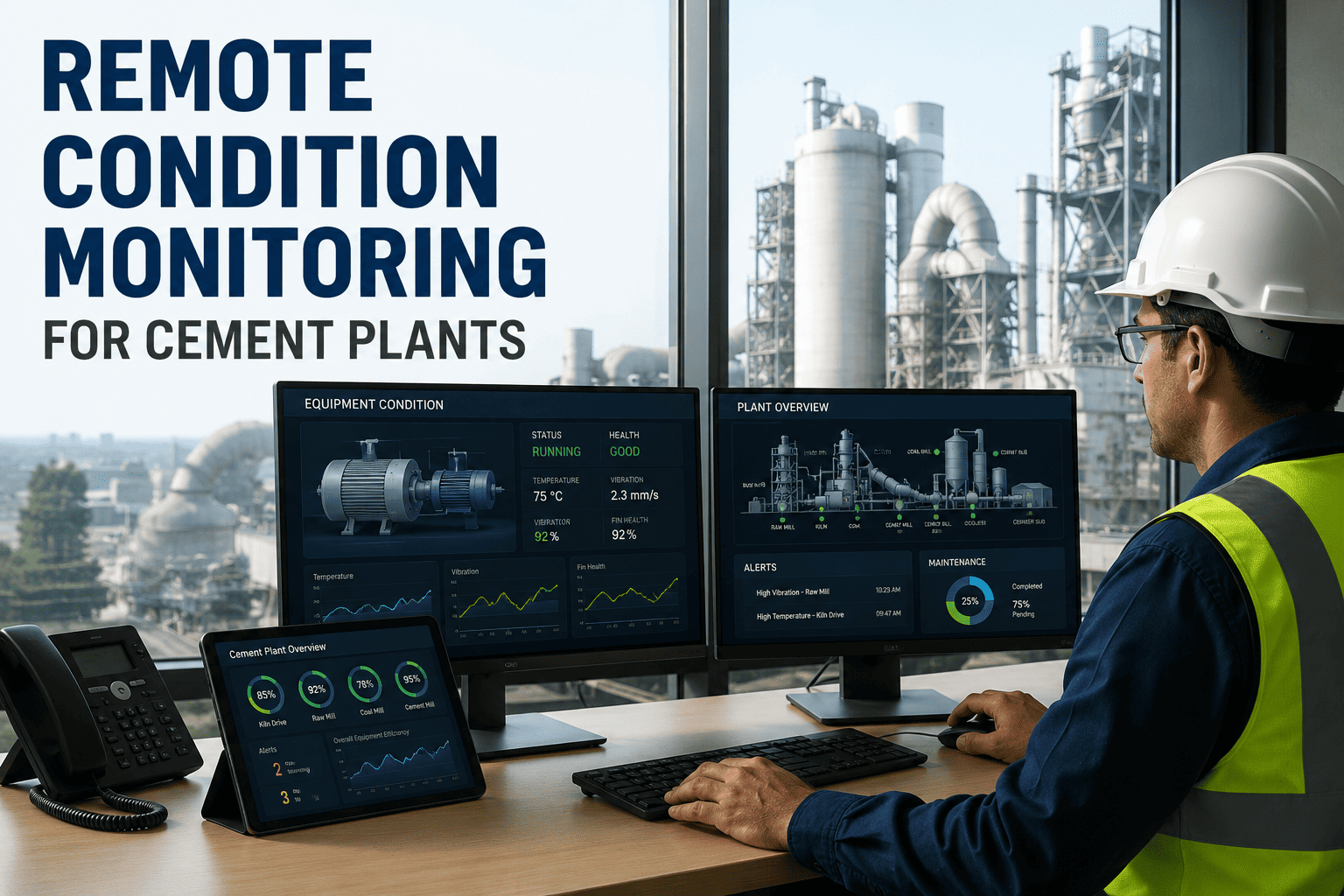
A temperature sensor drifting 15°C over six months doesn't trigger an alarm — it quietly poisons every prediction your AI-driven condition monitoring system makes. In cement plants where kiln thermocouples, mill vibration probes, and cooler airflow sensors feed thousands of data points per hour into predictive maintenance models, undetected calibration drift turns sophisticated analytics into expensive noise. Oxmaint's AI-powered CMMS detects sensor drift automatically by cross-validating measurements against asset behavior patterns, generating calibration work orders the moment sensor accuracy begins to decay — before bad data reaches your maintenance decisions.
The Silent Failure Mode Killing Cement Plant Predictive Maintenance
Condition monitoring systems assume one thing: the sensors are telling the truth. In cement production environments — with dust loads, thermal cycling, vibration, and chemically aggressive atmospheres — that assumption fails faster than most plants realize. A drifted sensor doesn't stop working. It keeps reporting numbers. Those numbers just stop matching reality, and every downstream system trusts them completely.
Accumulated Drift
15.2°C
Over 180 operating days
True process condition — what the asset is actually experiencing
Sensor output reaching the CMMS and AI model — increasingly wrong
Why Cement Plant Sensors Drift Faster Than Any Other Industry
01
Thermal Cycling Extremes
Kiln shell and preheater sensors experience 400°C to 1450°C swings during startup and shutdown cycles. Thermocouple junctions develop micro-cracks, slowly shifting the reference point by 0.5-3°C per thermal cycle.
Raw meal and clinker dust coats flow sensors, pressure transducers, and gas analyzers. Even 2mm of accumulated dust on a differential pressure cell introduces systematic measurement bias invisible to the DCS.
03
Vibration Probe Saturation
Ball mill and vertical mill vibration sensors experience continuous high-amplitude forcing. Piezoelectric elements depolarize, and mounting bolts fatigue — shifting resonant frequency calibration by the week.
SO₂, NOₓ, and chloride compounds attack sensor membranes, electrodes, and protective sheaths. Gas analyzer cells degrade, and pH probes in water treatment drift within weeks rather than months.
05
Electrical Noise Environment
High-voltage motors, VFDs, and induction heating create EMI that degrades signal conditioners and analog front-ends. Zero offsets shift permanently after lightning strikes or switching transients.
Continuous vibration loosens sensor mountings, shifts probe insertion depth, and changes thermal contact resistance. Small physical displacements create large measurement errors over time.
The Downstream Cost of Undetected Sensor Drift
Stage One
Sensor Drifts Silently
A kiln inlet thermocouple develops a 0.3°C/week reference junction drift. No alarms trigger. DCS trend lines still look reasonable. Data historian captures thousands of increasingly inaccurate readings per day.
Stage Two
AI Model Poisoning Begins
The predictive maintenance model retrains on drifted data, accepting the new "normal" baseline. It loses sensitivity to the actual failure mode the sensor was placed to detect. False negatives multiply.
Stage Three
Process Decisions Go Wrong
Kiln operators tune feed rates based on corrupted thermal data. Fuel consumption creeps up. Clinker quality parameters shift. Energy intensity per tonne increases — nobody connects it to sensor health.
Stage Four
The Failure That Shouldn't Have Happened
A refractory brick failure, a bearing seizure, or a bag filter rupture occurs — exactly the kind of event predictive maintenance was supposed to catch. Root cause analysis eventually traces back to a sensor that quietly lied for months.
Sensor Health Is Predictive Maintenance Health
Stop Training AI Models on Drifted Data
Oxmaint's AI drift detection continuously validates every sensor feeding your condition monitoring system — cross-referencing readings against asset behavior, peer sensors, and physics-based expected ranges. The moment drift begins, a calibration work order is on the technician's tablet.
How AI Drift Detection Actually Works
Autonomous sensor calibration does not replace physical calibration — it decides when physical calibration is needed. Instead of fixed 6-month or annual calibration cycles, the AI watches each sensor continuously and flags those that have started lying. Four validation techniques work in parallel, each catching drift signatures the others miss.
Method A
S1
S2
S3
S4
Peer comparison
Peer Sensor Cross-Validation
Multiple sensors measuring related process variables should move together. When one thermocouple in a kiln section drifts while its neighbors hold steady, the statistical divergence is detectable within days. The AI learns the correlation structure of your sensor network and flags any probe that starts breaking its historical relationship with peers.
Best for: redundant instrumentation, thermocouple banks, pressure taps
Method B
Tout = Tin + Q/mcp
Physics model
vs sensor reading
Physics-Based Residual Analysis
First-principles models know what a sensor should be reading given upstream and downstream conditions. Energy balances across a kiln, mass balances across a separator, or heat transfer models across a cooler all predict expected values. Persistent residuals between model and measurement identify the drifting sensor.
Best for: heat exchangers, mass balance points, mill circuits
Signal Signature Anomaly Detection
Healthy sensors have characteristic noise profiles, response times, and statistical distributions. Drift changes these fingerprints — often before it changes the mean value. Spectral analysis of vibration probes, autocorrelation of pressure signals, and distribution tests on gas analyzer outputs catch drift at its earliest onset.
Best for: vibration sensors, analyzers, dynamic signals
Known-State Benchmark Validation
During stable operating conditions — kiln idle, mill at steady state, cooler at equilibrium — sensors should report predictable values. The AI records these benchmark points and flags sensors whose known-state readings have drifted from the historical baseline.
Best for: idle-state checks, planned shutdown data, startup conditions
Calibration Decision Matrix — Traditional vs AI-Driven
How Calibration Workflows Change With AI Drift Detection
Scroll horizontally to view complete comparison
The Business Case — What Drift Detection Is Actually Worth
Annualized Value
$2.4M
Typical mid-size cement plant
42%
Unplanned downtime reduction from catching failures predictive models missed
28%
Lower calibration labor cost from condition-based scheduling
1.8%
Thermal energy efficiency gain from accurate kiln control signals
6-9%
Reduction in off-spec clinker from validated process measurements
Implementation Roadmap for Cement Plants
Phase 1
Weeks 1 to 3
Sensor Inventory and Baseline
Catalog every sensor feeding the CMMS and condition monitoring system. Import historical data and establish healthy baseline signatures for each measurement point. Map peer relationships.
Phase 2
Weeks 4 to 7
Drift Model Training
AI models learn normal sensor behavior across operating conditions. Physics-based residual models are calibrated against mass and energy balances. False-positive thresholds are tuned to plant tolerance.
Phase 3
Weeks 8 to 11
CMMS Workflow Integration
Drift alerts auto-generate calibration work orders with sensor location, historical context, and suspected drift magnitude. Technicians receive mobile tasks; completed calibrations feed back into the drift model.
Phase 4
Weeks 12+
Continuous Optimization
Monthly reviews refine detection sensitivity. Correlation with downstream failures validates model value. Gradual expansion to secondary sensors — water treatment probes, utility meters, environmental monitors.
Frequently Asked Questions
AI-Powered Sensor Integrity for Cement Plants
Predictive Maintenance Only Works If Your Sensors Tell the Truth
Oxmaint watches every sensor feeding your condition monitoring system — catching drift before it corrupts your AI models, before it misleads your operators, and before it lets the failure you were predicting slip through undetected. Calibration when it's needed. Data you can trust. Every shift.