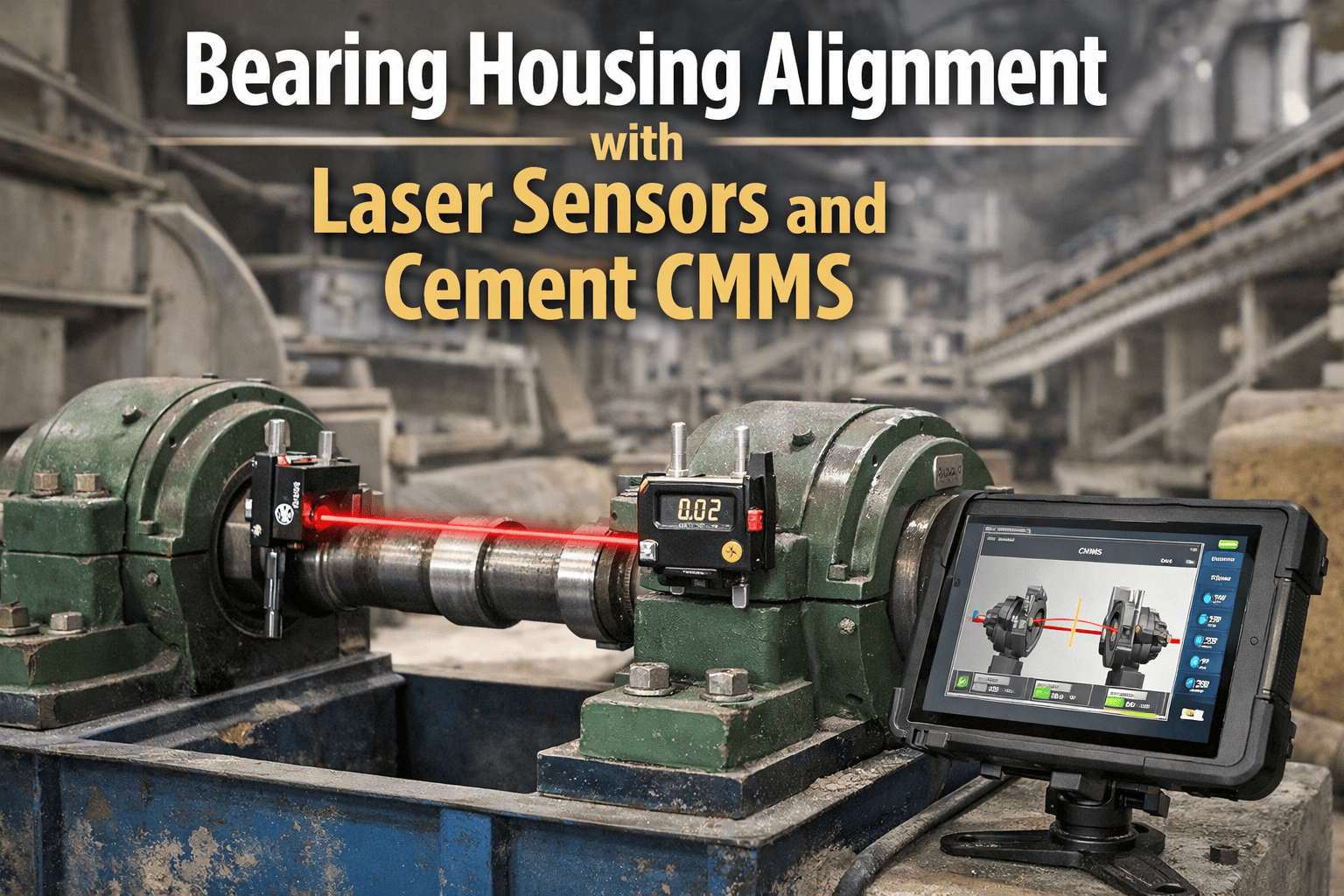
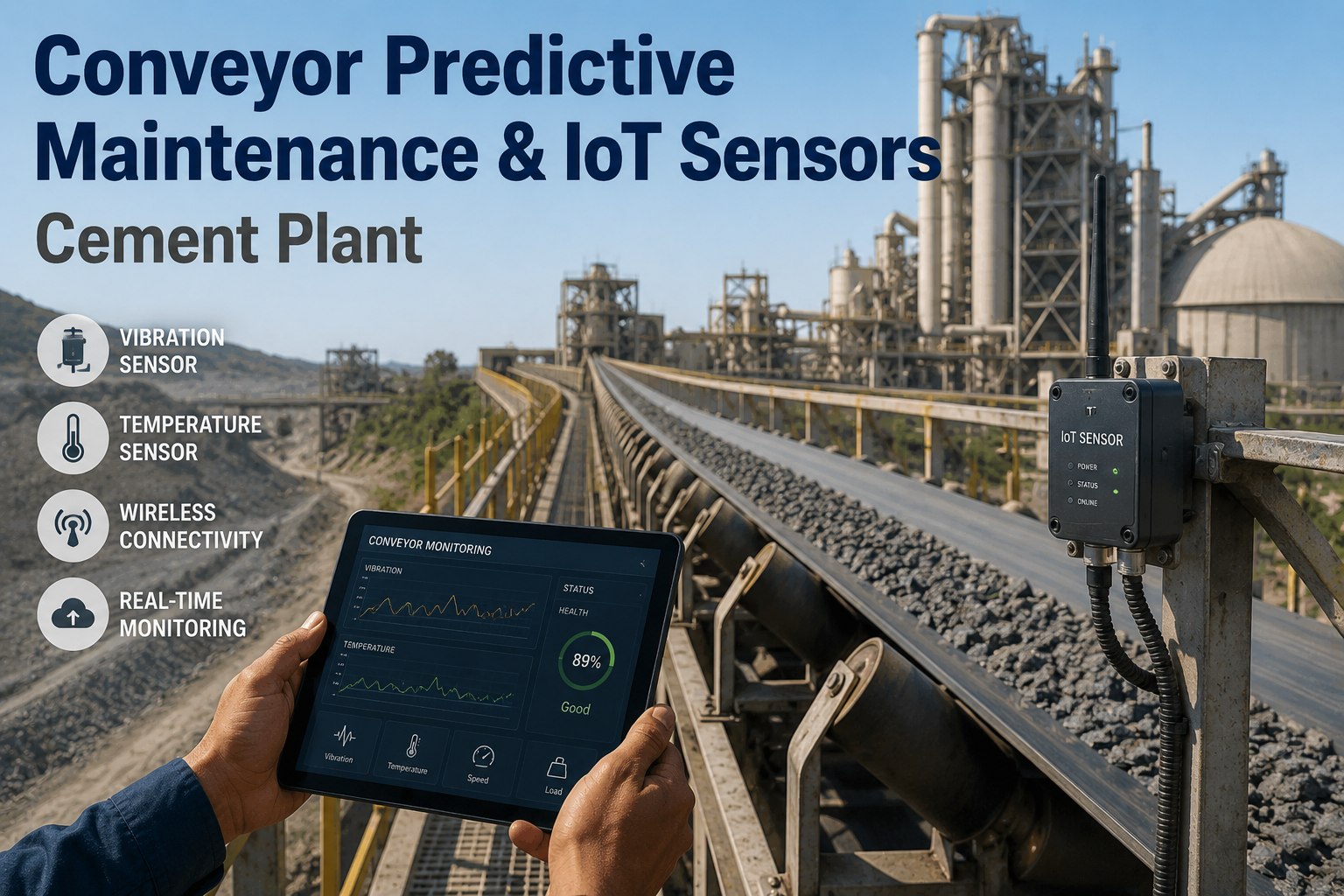
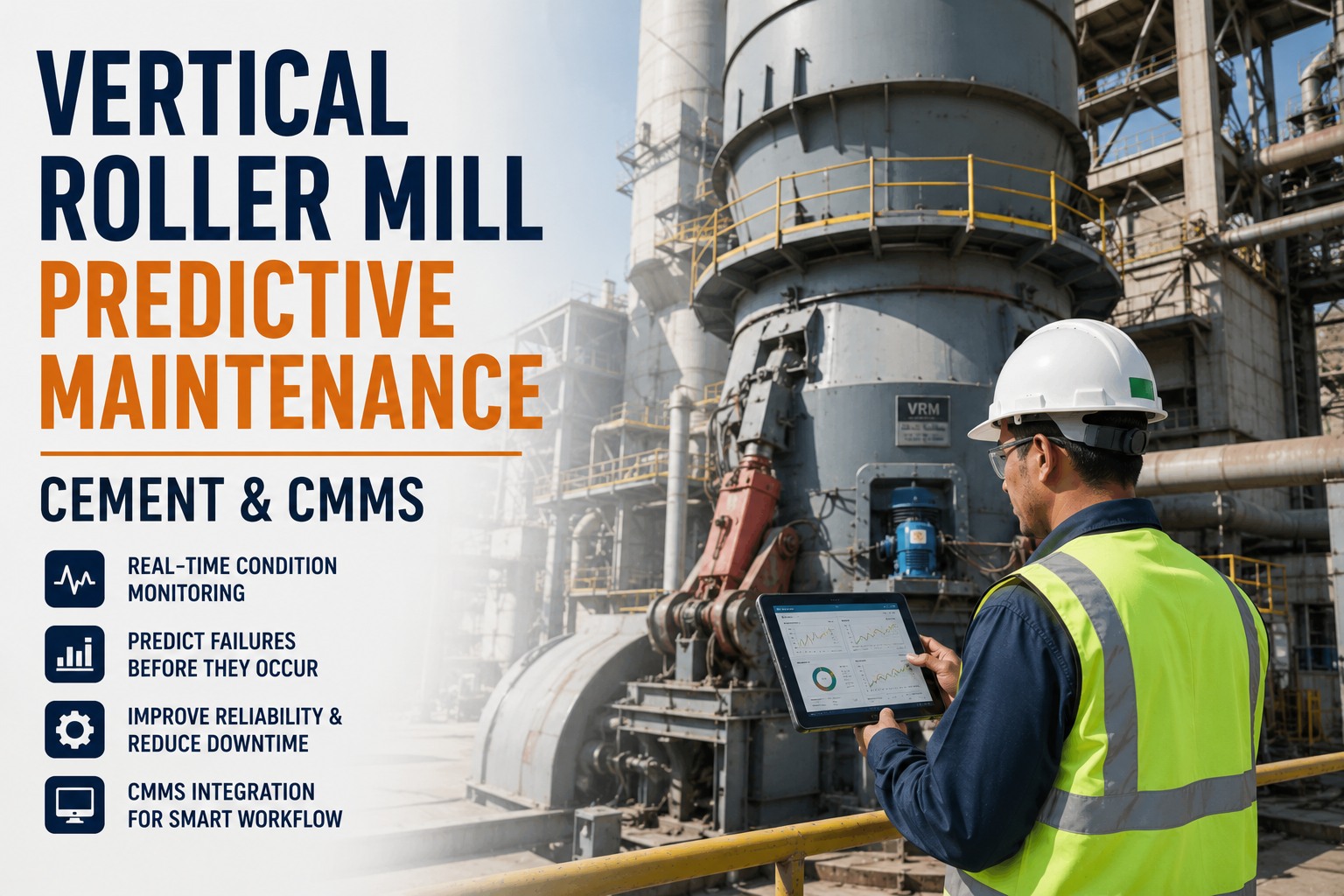
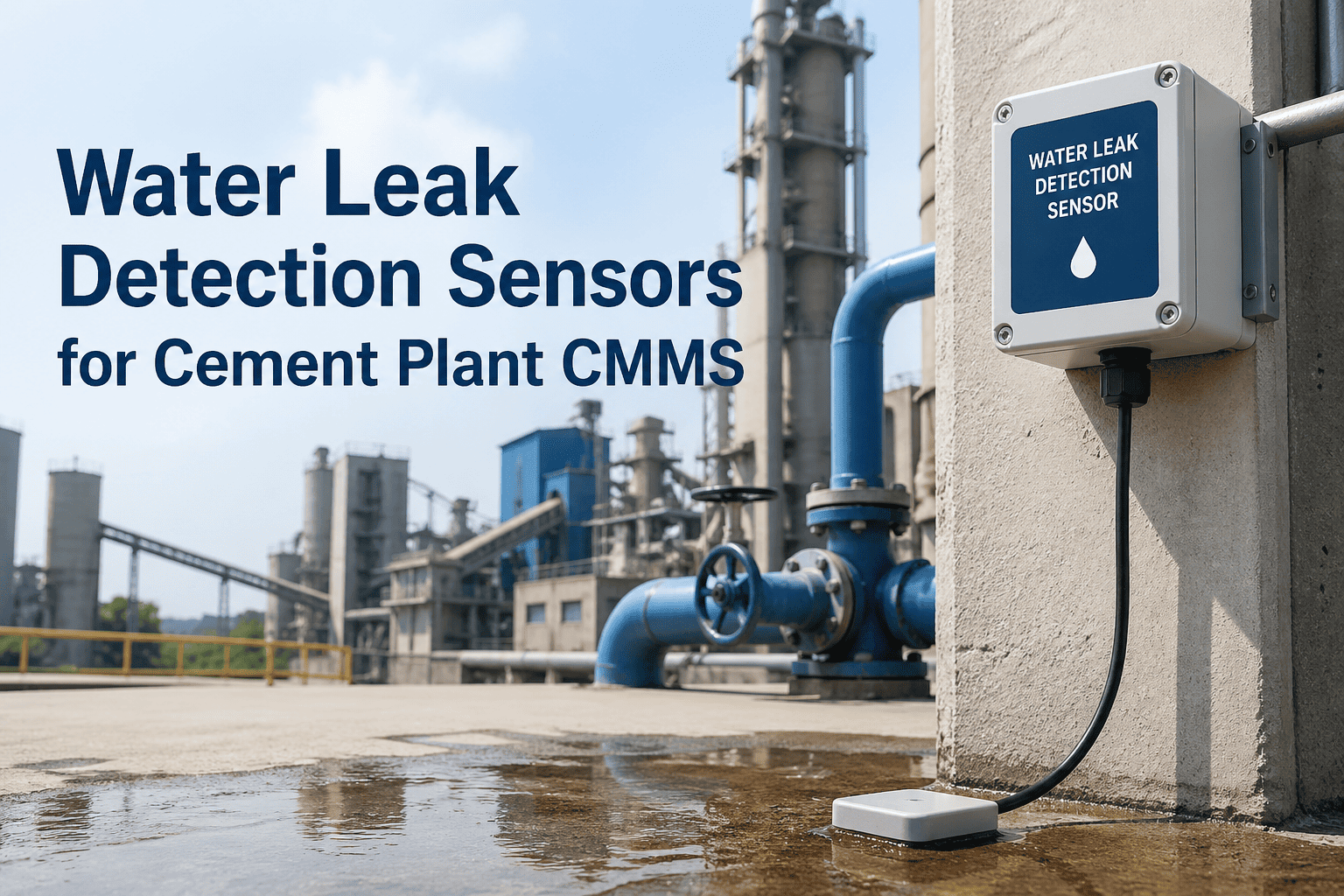
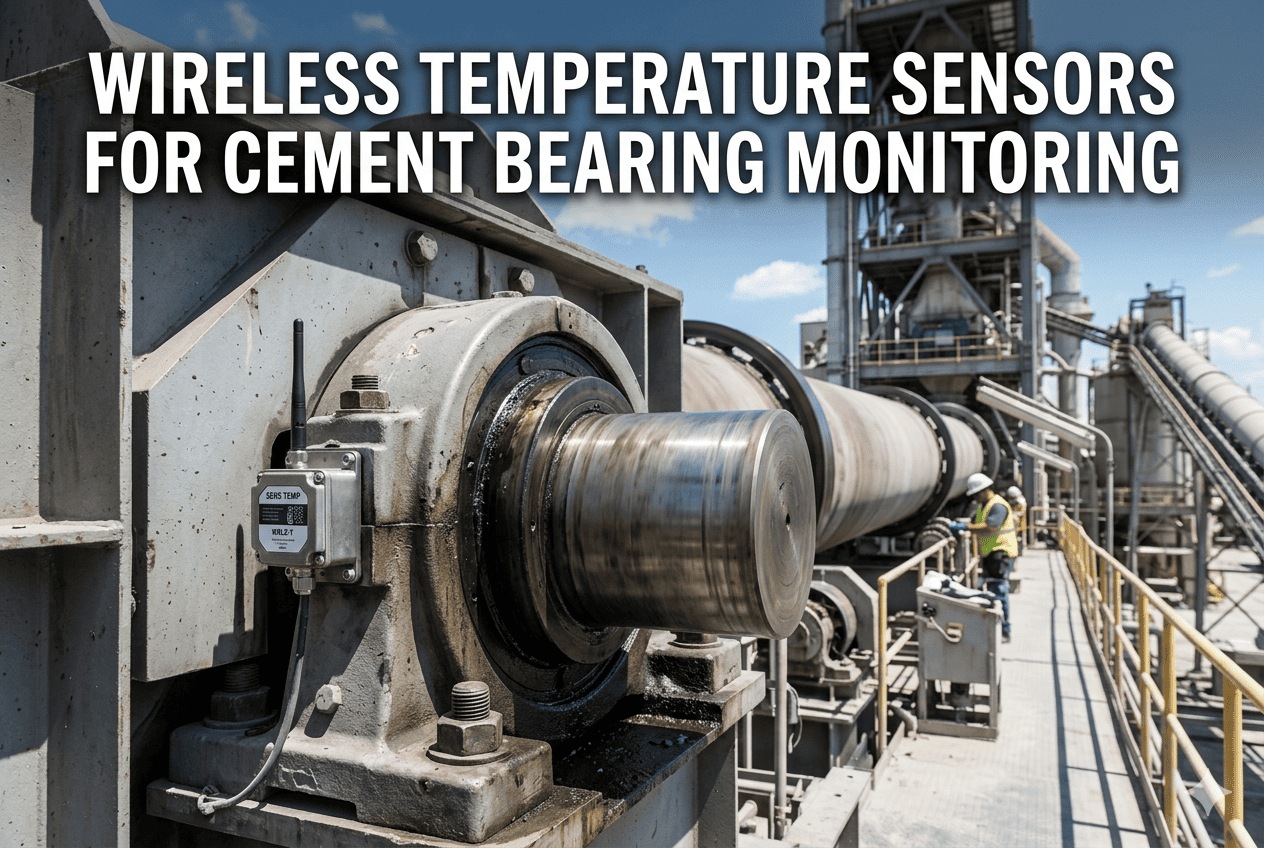
A bearing housing misaligned by just 0.15 mm across a cement mill fan shaft generates radial loads 3–5 times the design rating — collapsing bearing service life from 36 months to under 6 months and cascading into seal failures, shaft bending, and unplanned shutdowns that cost cement plants $45,000–$120,000 per event. Most plants only discover misalignment through vibration symptoms after damage has already begun. Laser alignment sensors measuring shaft centerline deviation in real-time change this completely — feeding continuous alignment health scores into Oxmaint, which converts every deviation crossing into a prioritized corrective work order before bearing damage starts. The result — bearings that reach their rated life, fans that stop vibrating, and mills that run full campaigns without alignment-induced failures. Book a demo to see laser alignment data flowing into Oxmaint live.
Bearing Housing Alignment Monitoring — The Hidden Killer in Cement Rotating Equipment
3–5x
Bearing load multiplier from 0.15mm shaft misalignment on cement fans and mills
84%
Of premature bearing failures in cement rotating equipment traced to misalignment
$95K
Average cost per unplanned bearing failure across mill fans and kiln drives
0.02mm
Laser alignment sensor resolution — 100x better than dial indicator methods
At A Glance
Laser alignment sensors continuously monitor shaft centerline deviation on cement plant bearing housings — feeding real-time alignment health scores into Oxmaint. When deviation exceeds safe operating limits (typically 0.05mm angular, 0.08mm parallel), Oxmaint automatically generates corrective work orders with the deviation magnitude, suspected root cause, and recommended shim adjustments — catching misalignment before bearing damage begins. Plants achieve bearing life extension of 2.5–4x, vibration reduction of 60–75%, and alignment-related shutdown reduction of up to 88%.
What Actually Happens When a Bearing Housing Goes Out of Alignment
Shaft misalignment creates forces that shouldn't exist. A properly aligned shaft transmits only torque. A misaligned shaft transmits torque plus parasitic bending loads, cyclic stress, and vibration energy that destroys everything it touches — bearings, seals, couplings, and eventually the shaft itself. The damage cascade moves faster than most maintenance teams realize.
The Misalignment Damage Cascade — Minute 1 to Month 6
Minute 1
Misalignment Begins
Bearing housing deflection from thermal growth, foundation settlement, or pipe strain. Shaft centerline shifts 0.10–0.25mm from design position.
down
Hour 1–24
Cyclic Load Amplification
Bearing races experience 3–5x rated load on every rotation. Rolling elements begin surface fatigue. Vibration signatures rise in 1x and 2x RPM frequency bands.
down
Week 1–4
Seal and Lubrication Failure
Shaft wobble degrades lip seals — grease contamination begins. Lubrication film breakdown at 3x higher rate. Bearing temperature rises 15–25°C above baseline.
down
Month 2–4
Surface Damage and Spalling
Bearing race surfaces show visible pitting and spalling. Coupling elements wear unevenly. Shaft fatigue cracks initiate at stress concentration points.
down
Month 5–6
Catastrophic Bearing Failure
Bearing seizes or cage fractures. Unplanned shutdown, secondary damage to shaft and housing. Production loss + repair + labor = $45K–$120K per event.
Six Cement Plant Assets Where Alignment Monitoring Pays Back Fastest
01
Preheater ID Fans
Critical — Plant Stopper
Thermal growth of 3–6mm across fan housing; foundation drift from vibration; ductwork pipe strain transmitted to bearing pedestals
Annual saving per fan — $180K avoided shutdowns + $42K extended bearing life
02
Raw Mill Main Drive
Critical — High-Value Asset
Gearbox-motor alignment drift from mill vibration; coupling wear accelerates deviation; housing bolt loosening under cyclic load
Annual saving — $240K avoided gearbox damage + extended motor bearing life to 4 years
03
Cement Mill Pinion Bearings
Critical — Long Lead Spare
Girth gear mesh alignment drift; pinion shaft deflection under full mill load; thermal expansion asymmetry in housing supports
Annual saving — $310K avoided pinion replacement (18-month lead time averted)
04
Kiln Drive Girth Gear Assembly
Critical — Non-Redundant
Kiln shell thermal distortion transmitted through riding ring to drive; long-term foundation settlement; tire-to-support roller alignment drift
Annual saving — $450K avoided drive replacement and associated kiln shutdown
05
Clinker Cooler Fans
High — Production Critical
Hot gas exposure creating thermal growth up to 4mm; erosion-driven imbalance transmitting force to bearings; duct pressure variations
Annual saving per fan — $95K avoided bearing failures and clinker cooler shutdown events
06
Belt Conveyor Drive Pulleys
High — Supply Chain Critical
Belt tension variations transmitting radial load asymmetrically; pulley crown wear causing tracking drift; gearbox-pulley alignment decay
Annual saving per conveyor — $38K avoided bearing failures + belt life extension
See Laser Alignment Data Flow Into Oxmaint
Watch a live demo of shaft deviation readings converting into prioritized work orders — with exact shim adjustment recommendations — in under 30 minutes.
How Laser Alignment Sensors Actually Work in a Cement Plant Environment
Traditional dial-indicator alignment required production shutdown, manual shaft rotation, and specialist labor for each measurement — meaning alignment was checked only during major overhauls every 12–18 months. Continuous laser alignment sensors mounted on bearing housings measure shaft centerline position against a fixed reference continuously, during operation, with data feeding into Oxmaint every second.
Laser Sensor Measurement Architecture
Layer 1 — Sensor
Laser diode emits beam toward position-sensitive detector mounted on opposing bearing housing. Resolution — 0.02mm. Sample rate — 1000 Hz. Operating range — minus 20°C to plus 80°C.
Layer 2 — Gateway
Ruggedized IP67 edge gateway at each monitored asset. Aggregates laser data plus temperature, RPM, and vibration. Transmits via LoRaWAN or Ethernet to plant network.
Layer 3 — Oxmaint Ingestion
Deviation values logged against asset record every second. Alignment health score calculated per asset using parallel offset, angular offset, and thermal compensation algorithms.
Layer 4 — Action Trigger
Deviation crossing Threshold A (0.05mm angular, 0.08mm parallel) creates investigation work order. Threshold B (0.15mm either axis) creates urgent corrective work order with shim calculation.
Deviation Thresholds — What Each Reading Means
Green Zone
0 to 0.05mm
Normal operation. Bearings carry design load only. No intervention required. Oxmaint logs data for trend baseline.
Amber Zone
0.05 to 0.15mm
Early deviation detected. Bearing load rising 1.5–2.5x rated. Oxmaint generates investigation work order. Typical root cause — thermal growth, bolt loosening.
Red Zone
Above 0.15mm
Severe misalignment. Bearing load 3–5x rated. Urgent corrective work order with shim calculation, shutdown priority, and suspected root cause.
Critical Alert
Above 0.25mm or rapid drift
Immediate shutdown recommended. Oxmaint notifies maintenance leadership, operations, and shift supervisors simultaneously via mobile alert.
The Oxmaint Alignment Health Score — One Number That Tells You Everything
Every monitored bearing housing gets an Alignment Health Score in Oxmaint — a single 0 to 100 value that incorporates parallel offset, angular deviation, rate of change, thermal compensation, and historical baseline. Maintenance leads scan a single dashboard to see which assets need attention, which are healthy, and which are drifting dangerously.
Excellent
90–100
Sub-threshold alignment, stable trend. Continue routine monitoring.
Good
75–89
Minor deviation within normal operating band. Next PM cycle inspection.
Watch
60–74
Amber zone deviation. Oxmaint creates investigation work order within 48 hours.
Action
40–59
Red zone deviation. Urgent corrective work order with shim calculation included.
Critical
0–39
Severe misalignment. Production impact imminent — shutdown recommended.
Before Laser Monitoring vs After — Real Plant Outcomes
Annual alignment cost — $680K
Bearing life8–14 months
Alignment checks per year2 major shutdowns
Unplanned bearing failures6–9 per year
Vibration levels (typical)7.5–12 mm/s RMS
Root-cause diagnosisWeeks after failure
Alignment documentationPaper-based, lost
Annual alignment cost — $145K
Bearing life30–42 months
Alignment checks per yearContinuous
Unplanned bearing failures0–1 per year
Vibration levels (typical)1.8–3.2 mm/s RMS
Root-cause diagnosisMinutes, automated
Alignment documentationAuto-archived in Oxmaint
$535K saved per plant per year
Averaged across cement plants deploying laser alignment sensors with Oxmaint — before additional production gains from shutdown elimination
Implementation Roadmap — From Decision to Full Alignment Monitoring
Phase 1 — Week 1 to 2
Critical Asset Prioritization
Asset criticality assessment across rotating equipment fleet
Baseline vibration and bearing-life data collected in Oxmaint
Laser sensor specification matched to each asset class
Pilot assets selected — typically 4 to 6 highest-impact machines
Phase 2 — Week 3 to 5
Sensor Installation and Calibration
Laser sensors mounted on pilot asset bearing housings
Gateway configuration and plant network integration
Baseline alignment measured and stored in Oxmaint asset record
Threshold values configured per asset class
Phase 3 — Week 6 to 8
CMMS Workflow Integration
Deviation threshold triggers configured in Oxmaint
Work order templates created for each severity level
Shim calculation logic integrated into corrective work orders
Maintenance team mobile app training completed
Phase 4 — Week 9 to 12
Fleet Rollout and Optimization
Remaining rotating equipment fitted with sensors
Alignment Health Score dashboard deployed plant-wide
Baseline vs post-deployment metrics reported to leadership
Multi-plant rollout planning activated
Start Your 90-Day Alignment Monitoring Program
Pilot assets identified, laser sensors installed, and Oxmaint alignment workflows live — in under 3 months, with measurable bearing life extension in the first quarter.
Why Oxmaint vs Other CMMS Platforms for Alignment Monitoring
| Capability |
Oxmaint |
MaintainX |
UpKeep |
Fiix |
Maximo |
Limble |
| Laser sensor direct data ingestion |
Yes |
No |
No |
Partial |
Custom |
No |
| Alignment Health Score per asset |
Yes |
No |
No |
No |
Custom |
No |
| Deviation threshold to work order |
Yes |
No |
No |
Partial |
Yes |
No |
| Shim calculation in work order |
Yes |
No |
No |
No |
Manual |
No |
| Thermal compensation logic |
Yes |
No |
No |
No |
Custom |
No |
| Vibration data cross-correlation |
Yes |
No |
No |
Partial |
Yes |
No |
| Cement asset hierarchy pre-built |
Yes |
No |
No |
No |
Config |
No |
| Deployment time (full plant) |
12 weeks |
16 wks |
18 wks |
20 wks |
36 wks |
16 wks |
| Multi-plant alignment benchmarking |
Yes |
No |
No |
Partial |
Yes |
No |
Measured Results — What Cement Plants Report After Deployment
2.8x
Bearing life extension
Average across mill fans, conveyors, and cooler fans — from 12 months baseline to 34 months observed
88%
Alignment-induced shutdowns eliminated
Year-over-year reduction measured 6 months post-deployment versus pre-deployment baseline
72%
Vibration level reduction
Measured at bearing housings using portable vibration data and continuous sensor readings
$535K
Annual savings per plant
Across bearing replacement, unplanned shutdown avoidance, and extended overhaul intervals
11 months
ROI payback period
Laser sensor hardware plus Oxmaint subscription recouped within first year of deployment
94%
Work order auto-generation accuracy
Oxmaint deviation-triggered work orders validated against manual root cause diagnosis
Asset-Specific Impact — Bearing Life Extension After Laser Alignment Deployment
Value Propositions — Why Cement Operators Choose Oxmaint for Alignment Monitoring
VP 01
Continuous, Not Periodic
Replace 18-month dial-indicator checks with second-by-second laser monitoring. No shutdown required for alignment measurement. No surprises between inspection cycles.
VP 02
Deviation Becomes Work Order
Misalignment crossing threshold generates a prioritized work order in Oxmaint automatically — with shim calculation, suspected root cause, and labor estimate included.
VP 03
Thermal Compensation Built-In
Cement rotating equipment experiences 2–6mm thermal growth. Oxmaint's alignment algorithm adjusts for operating temperature — eliminating false alarms during startup and cooldown.
VP 04
Root Cause in Minutes
When deviation occurs, Oxmaint cross-references vibration, temperature, and trending history to identify the probable root cause — thermal growth, foundation, pipe strain, or bolt loosening.
VP 05
Single Score Simplifies Decisions
Maintenance leads see one Alignment Health Score per asset. No data interpretation required. Green means go, amber means schedule, red means act now — across hundreds of monitored bearings.
VP 06
Fast ROI, Proven Savings
11-month ROI payback on sensor investment plus Oxmaint subscription. Bearing life extension of 2.5–4x delivers $535K annual saving per plant — before production uplift.
Frequently Asked Questions
Can laser alignment sensors be retrofitted to existing bearing housings, or do we need to redesign the housing?
Laser sensors are designed for retrofit installation on standard bearing housings with magnetic or bolt-on mounting brackets. Most installations complete in 2–4 hours per asset without machining.
Book a demo to review retrofit options.
Do laser sensors work in dusty cement plant environments with high temperature and vibration?
Industrial-grade laser alignment sensors are rated IP67 for dust and moisture, operate reliably from minus 20°C to plus 80°C, and include vibration compensation in the detector electronics.
Book a demo for sensor specifications.
How does Oxmaint distinguish between thermal growth and actual alignment problems?
Oxmaint's algorithm correlates laser readings with bearing temperature, operating RPM, and historical thermal profiles per asset — suppressing alerts during normal thermal expansion and flagging deviations that persist beyond thermal envelope.
Book a demo to see thermal logic.
What happens if we only want to monitor a few critical assets instead of the whole fleet?
Oxmaint supports pilot deployments starting with 4–6 critical assets. Most cement plants begin with preheater fans and main drives, then expand based on measured ROI in first 90 days.
Book a demo to scope a pilot program.
How accurate is laser alignment compared to traditional dial indicator methods?
Laser sensors achieve 0.02mm resolution versus 0.02–0.05mm for well-executed dial indicator methods — and deliver continuous measurement rather than single-point snapshots during shutdown.
Book a demo for accuracy benchmarks.
What is the total deployment cost including hardware and Oxmaint subscription?
Typical 1 MTPA plant deployment across 12–18 critical assets ranges from $85K–$140K in sensor hardware plus Oxmaint industrial SaaS subscription — with 11-month average ROI payback.
Book a demo for a plant-specific quote.
Extend Bearing Life. Eliminate Alignment Shutdowns. Prove ROI in One Year.
Oxmaint's laser alignment integration converts continuous shaft deviation data into prioritized corrective work orders — with shim calculations included. Bearings reach their rated life. Unplanned shutdowns disappear. Vibration drops 72%. Your plant runs as it was designed to run.
Laser Alignment Sensors
Alignment Health Score
Bearing Life Extension
Continuous Monitoring
Shim Calculation Automation