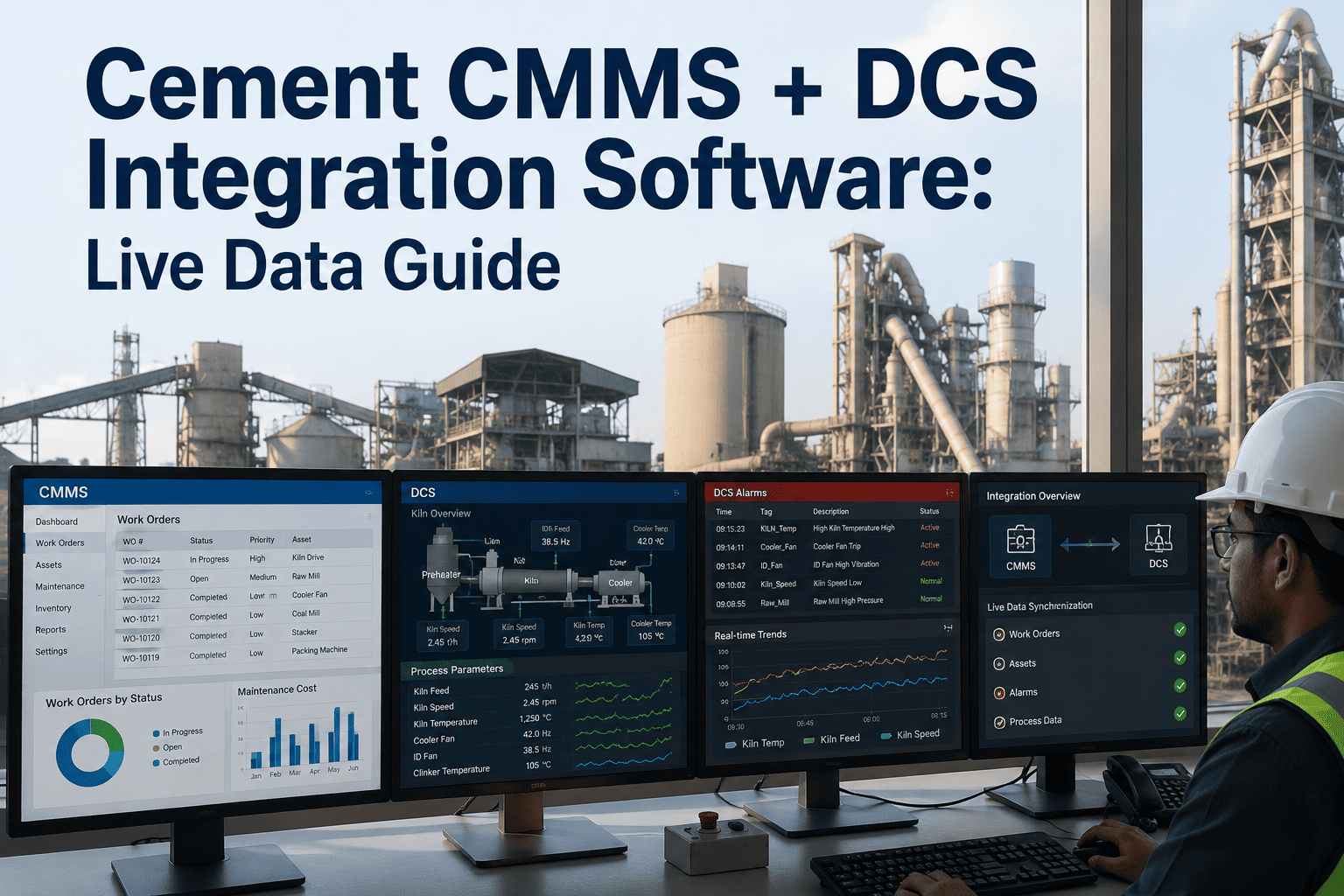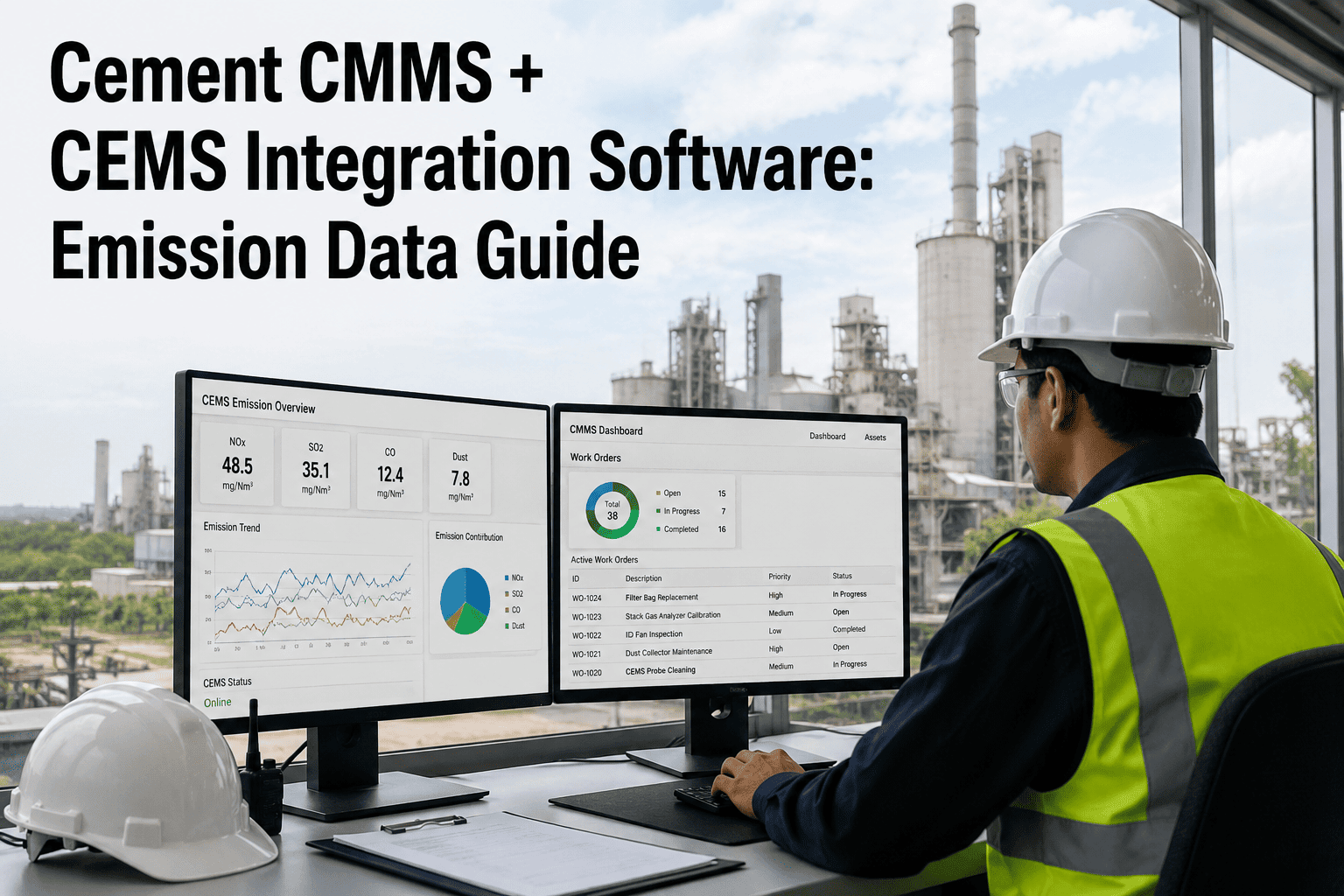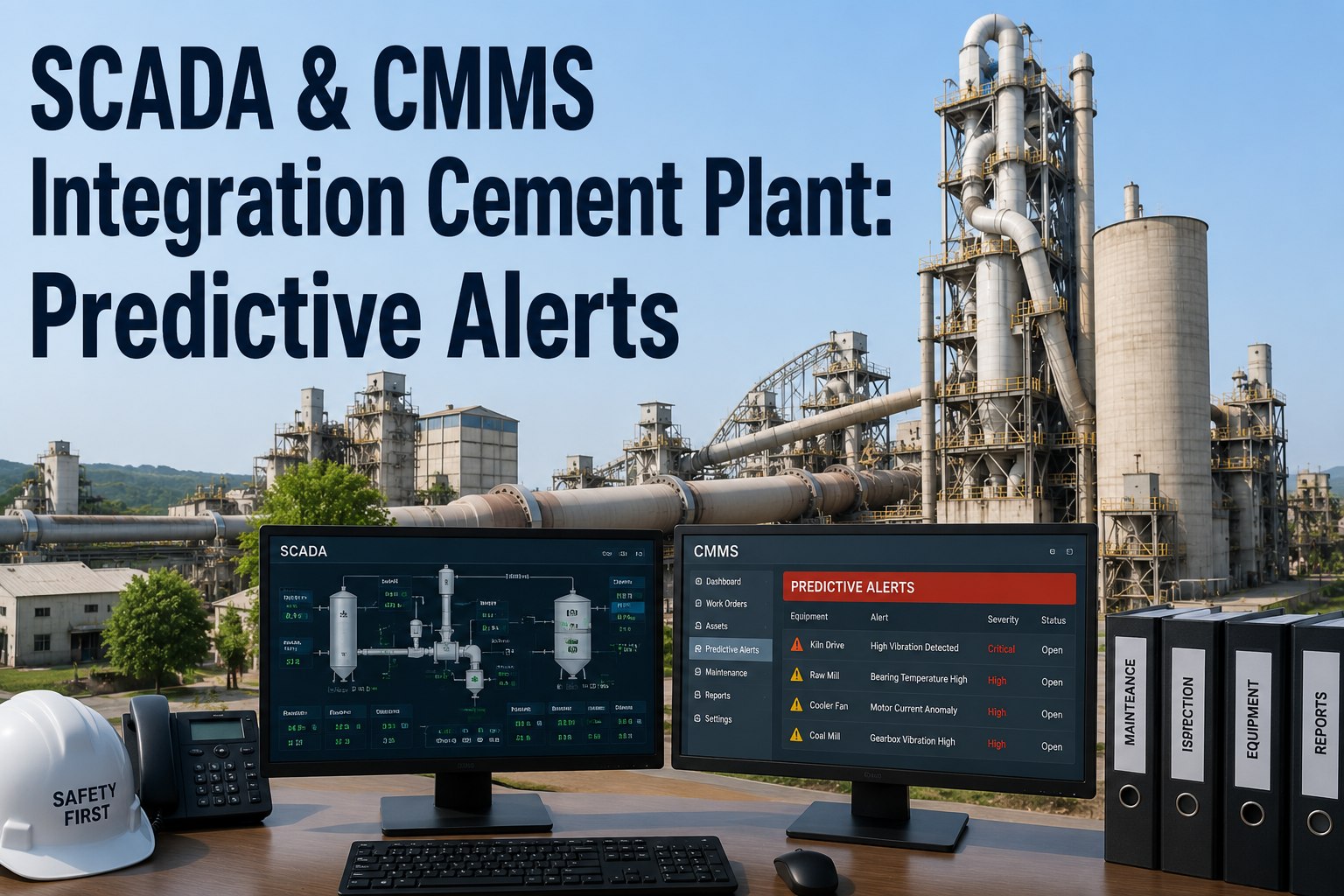
A modern 3 MTPA cement plant generates millions of sensor readings every day — vibration telemetry from rotating equipment, temperature profiles from kiln shell scanners, DCS process tags updating every 30 seconds, SCADA alarm logs, CMMS work orders, lab quality records, and energy meter readings — all flowing from systems that have never talked to each other. The consequence is predictable: maintenance teams make critical equipment decisions from data that is hours or days old, reliability engineers cannot correlate failure events with upstream process conditions, and finance cannot connect maintenance spend to production outcomes in a single model. A maintenance data lake solves this by creating one unified store for every data source the plant generates — structured and unstructured, real-time and historical — and feeding it to BI tools and predictive models that operate on the complete picture. The smart cement digitalization market reached $3.2 billion in 2024 and is growing at 11.8% CAGR, driven precisely by this shift from siloed historian data to integrated analytics platforms. See how OxMaint integrates with your plant's existing data sources to build a live maintenance intelligence layer — start free today. Plants that unify CMMS data with IoT sensor feeds and process historians reduce equipment failure rates by 40–60% and cut maintenance reporting time by up to 89%. Book a 30-minute architecture walkthrough with our cement industry team.
Cement Plant Maintenance Data Lake: Analytics and BI Integration
Millions of sensor readings, work orders, and inspection records per month need more than a CMMS dashboard — they need a unified data architecture. Learn how leading cement producers turn maintenance history into plant-wide reliability intelligence.
Why Cement Plant Data Stays Siloed — and What It Costs
Most cement plants run the same data infrastructure they built in the 1990s: a process historian for control room data, a separate CMMS for maintenance records, a standalone quality LIMS, and energy metering that feeds a different spreadsheet entirely. Each system is functional in isolation — and together they produce a maintenance blindspot that costs $150,000–$220,000 per unplanned kiln downtime hour.
Connect Your Maintenance Data — Without Replacing Your Existing Systems
OxMaint integrates with DCS, SCADA, vibration monitors, and ERP via OPC-UA and REST API — pulling all maintenance-relevant data into one analytics layer that calculates KPIs automatically and triggers work orders on real conditions, not schedules.
The Cement Plant Maintenance Data Lake: Four-Layer Architecture
A maintenance data lake for cement plants is not a single product — it is a four-layer architecture that moves data from raw sensor streams through structured storage to analytical outputs. Each layer has a specific function, and CMMS sits at the coordination layer where structured maintenance data and real-time sensor data converge.
All data sources stream into the ingestion layer — handling millions of time-series readings per day alongside lower-frequency structured records from CMMS, lab, and finance systems. Protocol translation happens here: OPC-UA, Modbus TCP, REST API, and MQTT are normalized to a unified message format before storage.
Raw data lands in the lake in its native format — schema-on-read, not schema-on-write. This preserves the full fidelity of sensor data including millisecond-resolution vibration waveforms and process historian tags without the data loss that occurs when forcing industrial data into rigid relational tables at ingestion time.
The analytics layer is where raw data becomes maintenance intelligence. CMMS coordinates this layer — receiving sensor threshold breaches and automatically generating work orders, calculating MTBF from work order closure data, and correlating energy consumption spikes with equipment health readings to build predictive failure signatures.
The output layer delivers the right data to the right role — real-time vibration trends and health scores to maintenance engineers, planned-versus-reactive ratios and MTBF benchmarks to reliability managers, and cost-per-tonne and kiln availability to plant directors and finance. Role-specific views, not one dashboard for everyone.
Five High-Value Analytics Use Cases Enabled by a Maintenance Data Lake
The value of a maintenance data lake is not in the architecture — it is in the specific analytical questions it answers that a standalone CMMS or historian cannot. These five use cases generate the most measurable ROI in cement plant environments.
A bearing failure on a kiln ID fan typically has a process precursor — kiln outlet temperature spike, ID fan inlet damper fluctuation, or abnormal kiln draught variation — visible in the DCS historian 48–72 hours before the vibration alarm fires. Only a data lake that joins CMMS failure records with DCS process tag history can build this correlation model. Plants using this analysis reduce repeat failures by 35–50% by addressing the process root cause, not just the mechanical symptom.
Equipment degradation shows up in energy consumption before it shows up in vibration. A cement mill with worn liners draws progressively more kWh per tonne of cement as grinding efficiency falls — weeks before the vibration signature crosses the alarm threshold. Correlating energy meter data with CMMS asset health scores and production throughput creates an early warning signal that is available continuously from existing metering infrastructure.
Joining CMMS work order history with equipment MTBF trends and current condition monitoring data produces a probabilistic spare parts demand forecast — showing which bearings, gears, and wear parts are likely to be needed in the next 90 days based on the actual degradation trajectory of each asset. This eliminates both emergency procurement premiums and inventory carrying costs from overstocking against uncertain failure timelines.
Annual kiln shutdowns are the single largest maintenance budget line item. Scope creep — driven by uncertainty about which components actually need replacement — routinely inflates planned shutdown budgets by 15–25%. A maintenance data lake that joins CMMS replacement history with real-time condition monitoring data on every critical asset produces a data-driven shutdown scope recommendation that captures only the components where degradation data justifies intervention.
For cement groups operating multiple plants, a shared data lake architecture enables cross-plant MTBF comparison, PM compliance benchmarking, and best-practice maintenance interval sharing. The plant with the best kiln availability in the group becomes the benchmark against which all others are measured — and the specific maintenance programs driving that performance are visible in the data, not buried in anecdotal knowledge transfer between reliability teams.
Where OxMaint Sits in Your Cement Plant Data Architecture
OxMaint functions as the CMMS coordination layer in a cement plant's data architecture — sitting between raw sensor and process data (Layer 2) and BI output tools (Layer 4), connecting real-time condition data to maintenance workflows and structured KPI reporting without requiring a complete data infrastructure rebuild.
| Data Source | OxMaint Integration Method | What OxMaint Does with the Data | Output for Maintenance Team |
|---|---|---|---|
| Vibration sensors / CBM systems | OPC-UA, REST API, IoT gateway | Compares readings to asset-specific thresholds, calculates trend trajectory | Automatic condition-based work order with pre-populated checklist |
| DCS / SCADA process data | OPC-UA, OPC-DA, Modbus TCP | Monitors process parameters linked to equipment health — motor current, temperature deltas | Process-triggered maintenance alerts and work order escalation |
| Portable instrument readings | Mobile work order manual entry | Stores readings against asset records, calculates deviation from baseline | Trend charts per asset, threshold breach notifications |
| ERP maintenance cost data | REST API integration | Links parts cost and labor cost to work order records per asset | Live maintenance cost per tonne, cost-per-failure event analysis |
| BI tools (Power BI, Tableau) | OxMaint REST API data export | Feeds structured KPI data: MTBF, MTTR, PM compliance, reactive ratio | Executive maintenance dashboards, board-level reliability reporting |
We had a process historian with 12 years of kiln data and a CMMS with 8 years of work order history — and they had never spoken to each other. When we connected OxMaint to both data sources, we built a failure model for our kiln ID fan that predicted the last three bearing failures an average of 31 days in advance. That window is the difference between a planned bearing change and an emergency kiln cold stop.
Cement Plant Maintenance Data Lake — Common Questions
Does a cement plant need a full data lake before connecting CMMS to analytics?
How does OxMaint integrate with existing DCS and SCADA systems in a cement plant?
What is the difference between a data lake and a CMMS for cement plant maintenance?
How long does it take to connect OxMaint to a cement plant's existing data sources?
Can OxMaint feed maintenance KPI data into Power BI or Tableau for executive reporting?
Turn Your Cement Plant's Maintenance Data Into Reliability Intelligence — Starting Today
OxMaint connects to your existing DCS, vibration monitors, and ERP via standard industrial protocols — building the analytics layer between raw sensor data and actionable maintenance decisions without replacing a single system you already run. Go live in under 60 minutes for core CMMS. Full sensor integration in 6–10 weeks.