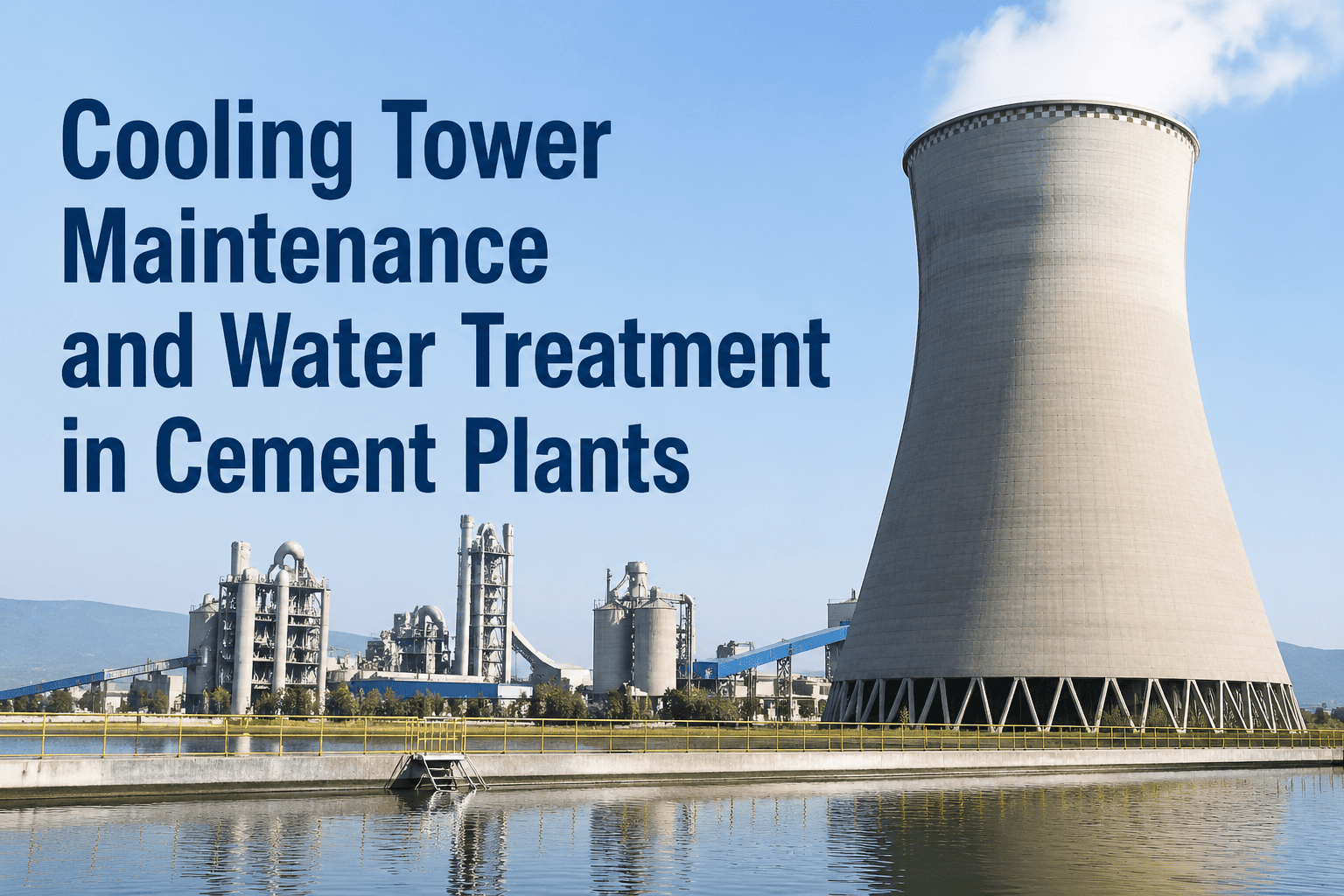
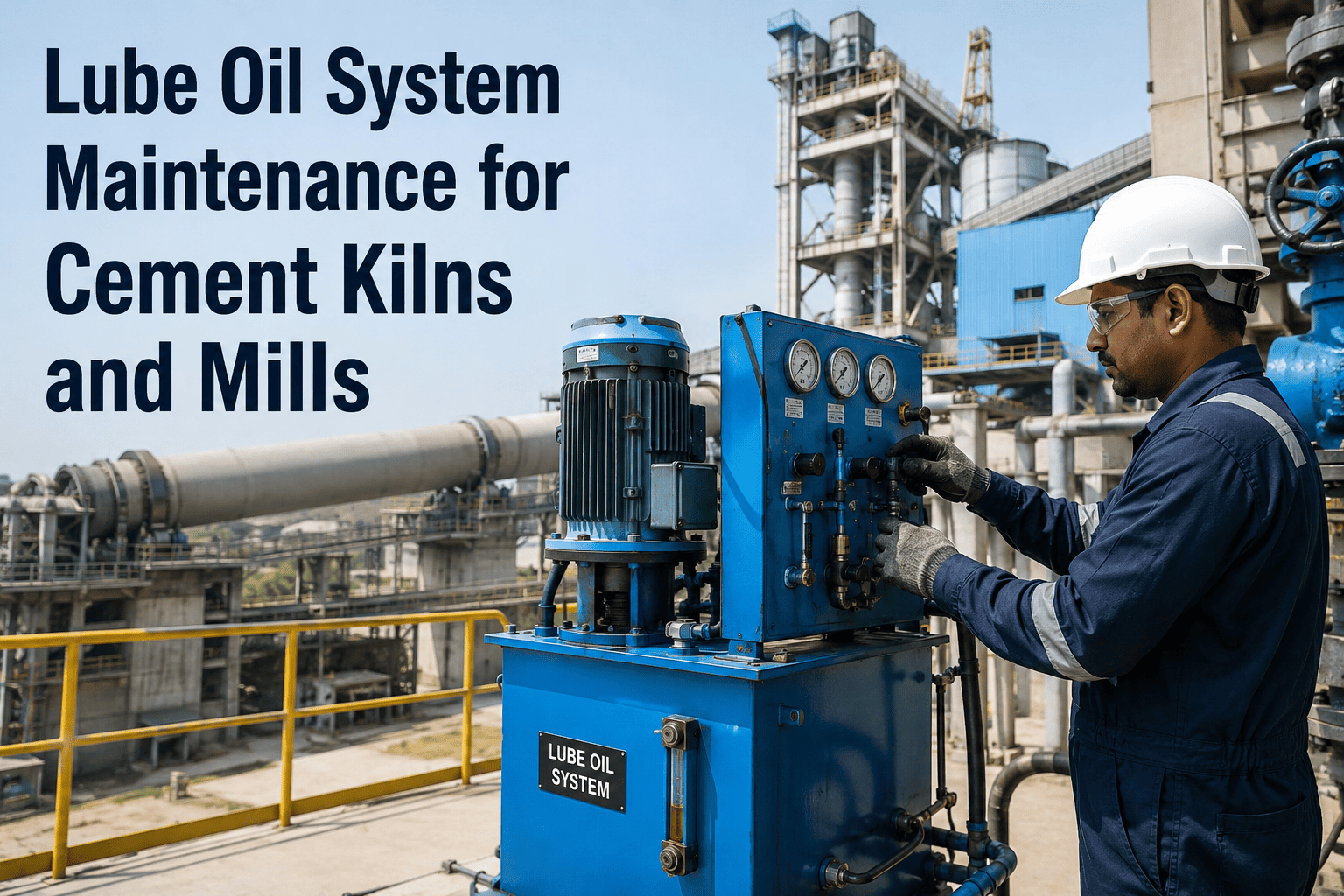
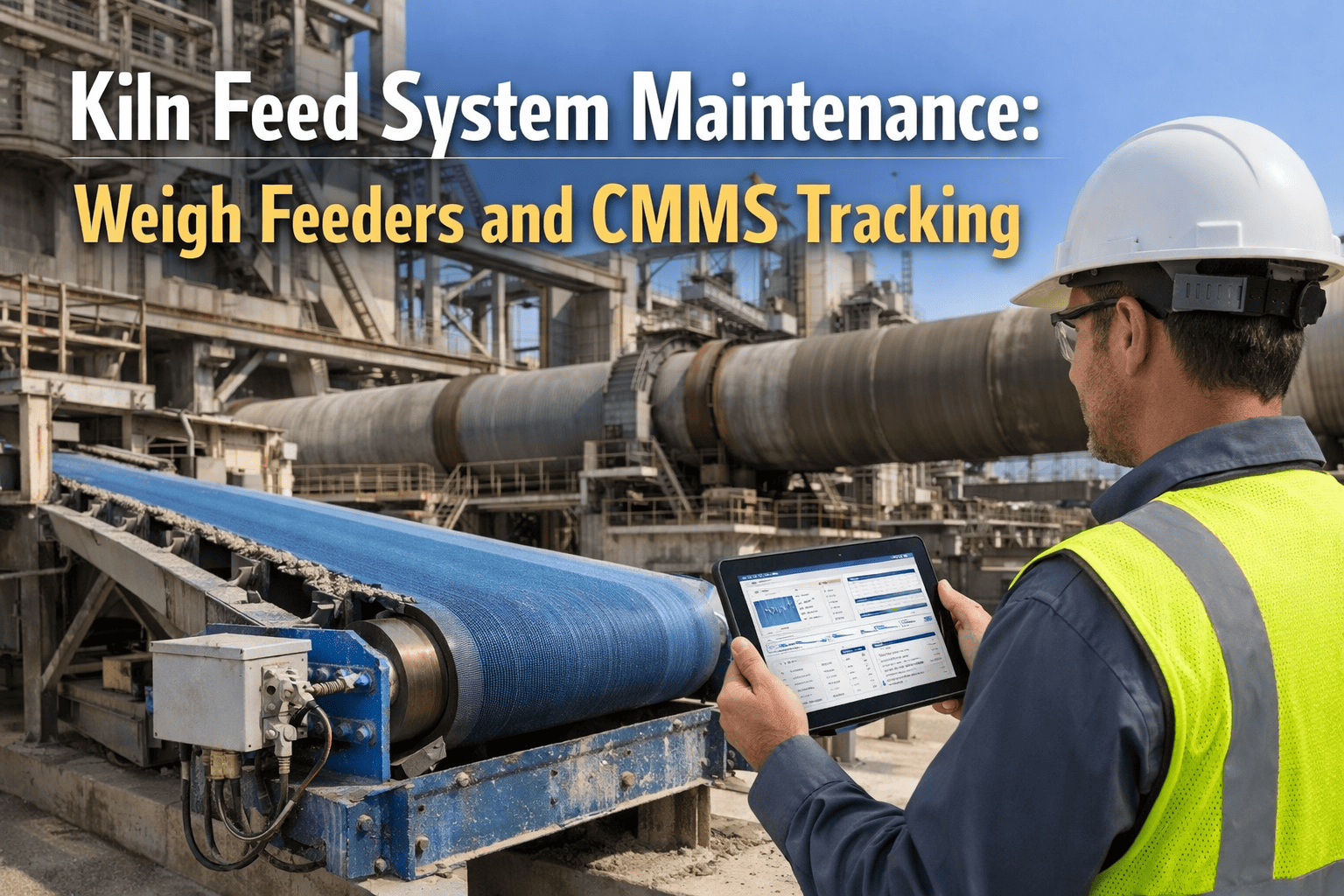
Cement plant cooling towers are the circulatory system of your heavy equipment — quietly moving heat away from kiln bearing circuits, compressor intercoolers, and VRM hydraulic systems every hour of every campaign. Unlike a failed conveyor or a tripped fan, cooling tower degradation is invisible until it isn't: heat exchangers foul gradually, biological growth establishes quietly, and drift eliminators crack without triggering a single alarm. By the time cooling performance has dropped 25–30%, the damage is already compounding in the equipment they serve. CMMS-scheduled fill inspection, drift eliminator cleaning, water chemistry testing, and fan bearing maintenance are not optional PM activities — they are the early warning system that keeps your most capital-intensive assets from cooking themselves. Oxmaint's cooling system maintenance module puts every one of these tasks on an automated schedule, with water chemistry results and inspection photos stored against the tower asset record for full audit traceability.
The Silent Performance Drain Nobody Measures Until It's Too Late
Cooling tower performance does not fail suddenly — it erodes over months. A 0.2mm scale layer on a heat exchanger surface imposes a 5–10% energy penalty. Fill sections fouled with cement dust reduce thermal transfer efficiency by up to 30% before the process team notices temperatures drifting. Fan blades losing balance from debris accumulation generate vibration that destroys bearings in weeks. None of these failures announce themselves. All of them are completely preventable with structured CMMS scheduling.
How Cooling Tower Performance Degrades Without Scheduled Maintenance
Month 1–2
Dust and particulate begin accumulating on fill sections. Barely measurable performance impact. Inspection interval missed — no alert.
Month 3–4
Scale starts forming on heat exchanger surfaces. Biological count rising in basin. Chemical dosing still on calendar schedule — not adapted to conditions.
Month 5–6
Cooling efficiency down 15–20%. Compressor intercooler inlet temperatures rising. VRM hydraulic oil running hotter. Fan bearing vibration measurable but not measured.
Month 7–9
Drift eliminator sections blocked or cracked. Legionella risk window opening. Equipment served by cooling system beginning to show thermal stress.
Month 10–12
30%+ performance loss. Downstream equipment failure imminent. Remediation now costs 4–6x what structured PM would have cost across the entire year.
Schedule Every Inspection Before the Problem Schedules Itself
Oxmaint puts fill inspection, drift eliminator checks, water chemistry testing, and fan bearing PM on automatic schedules — calibrated to your specific tower type and operating environment. See how it works in a live cement plant configuration.
The Four Failure Pathways in Cement Plant Cooling Towers
Cement plant cooling towers face a uniquely hostile operating environment — high ambient dust loads, continuous 24/7 duty, and process water that varies in chemistry depending on the circuits it serves. Each failure pathway has a distinct signature and a distinct maintenance response. The CMMS task is to track all four simultaneously.
01
Biological Fouling and Legionella Risk
Warm recirculating water between 25–45°C is an ideal growth environment for biological organisms when biocide levels drop below effective thresholds. In a cement plant, a missed chemical dosing cycle, a failed feed pump, or an extended shutdown without proper treatment procedures can establish a biological hazard condition within days — with regulatory, legal, and public health consequences that no maintenance budget can absorb.
CMMS Tracks:
Chemical dosing pump run confirmation, heterotrophic plate count from water samples, biocide concentration log, shutdown and restart treatment protocols
02
Scale and Corrosion on Heat Transfer Surfaces
Cement plant process water carries suspended solids, calcium hardness, and variable pH depending on circuit origin. Without structured blow-down management and chemical stabilization, scale builds on heat exchanger tube surfaces at a rate of 0.1–0.3mm per quarter under typical conditions. Even a thin scale layer creates a significant thermal resistance — the kiln bearing cooling circuit or the compressor intercooler starts running hotter before the process screen shows any alarm.
CMMS Tracks:
TDS conductivity readings, pH trend, blow-down frequency vs. cycles of concentration, corrosion coupon weight loss per quarter
03
Fill and Drift Eliminator Degradation
PVC fill media in cement plant cooling towers collects cement dust that passes through the air intake. Over time, this loading creates flow channeling, reduces the effective wetted area, and drops thermal exchange efficiency by 15–30%. Drift eliminators — the sections that prevent aerosolized water droplets from escaping — crack under UV exposure and chemical stress. Once damaged, they cannot be compensated by improved chemistry. The only fix is physical inspection and replacement.
CMMS Tracks:
Fill section visual inspection records with photos, drift eliminator condition score, approach temperature trend as a performance proxy
04
Fan Motor and Bearing Failure
Cooling tower fans operate in continuous high-humidity, high-particulate environments that accelerate bearing wear well beyond nameplate predictions. Blade fouling from dust creates imbalance that generates vibration. That vibration destroys bearings in weeks if undetected. A failed tower fan reduces cooling capacity immediately — and in a cement plant, the equipment it serves does not stop needing cooling just because the fan does.
CMMS Tracks:
Fan motor bearing temperature, vibration amplitude at monthly intervals, belt tension check, fan blade visual inspection, run hours vs. bearing replacement interval
The Complete CMMS Maintenance Schedule for Cement Plant Cooling Towers
Calendar-based PM is the enemy of condition-based efficiency — but cooling towers need both. Some tasks are condition-triggered; others must happen at fixed intervals regardless of apparent condition. Oxmaint manages both schedules simultaneously against the same tower asset record.
Cooling Tower PM Schedule — Frequency, Task, and Trigger Type
What CMMS-Managed Water Chemistry Actually Prevents
Water chemistry is where most cement plant cooling tower programs fail — not through ignorance of what to test, but through inconsistent execution. A monthly lab sample submitted two weeks late, a biocide dose skipped during a contractor handover, a blow-down frequency unchanged through a summer heat spike — these are the gaps that accumulate into equipment damage and compliance exposure. Oxmaint closes each gap with a timestamped work order and a required result field before the next task can be assigned.
pH Control (6.8–7.5)
Prevents:
Acidic conditions below 6.8 accelerate corrosion in copper and mild steel heat exchangers. Alkaline conditions above 8.0 promote calcium carbonate scaling that reduces heat transfer and clogs distribution nozzles.
Cycles of Concentration (3–6 target)
Prevents:
Under-blowing wastes water and chemicals. Over-concentrating beyond 6 cycles allows total dissolved solids to reach scaling precipitation thresholds — creating mineral deposits that require chemical cleaning or mechanical descaling to remove.
Biocide Residual (target maintained continuously)
Prevents:
Any period where biocide drops below minimum effective concentration allows bacterial populations to establish. Once a biofilm forms on fill media or heat exchanger surfaces, it requires shock dosing at 5–10x normal concentration to clear — and may require physical scrubbing.
Inhibitor Dosing (corrosion and scale)
Prevents:
Corrosion inhibitors form a protective film on metal surfaces. Scale inhibitors sequester calcium and magnesium ions before they precipitate. Without continuous dosing at correct concentrations, both failures develop simultaneously — scale reduces efficiency while corrosion attacks the underlying metal structure.
30%
Cooling performance loss before any alarm fires
Typical threshold for visible process impact from fouled fill and scaled heat exchangers
5–10%
Energy penalty from 0.2mm scale
On compressor and hydraulic system heat exchanger surfaces — invisible to process operators
60–80%
Reduction in unplanned cooling events
Reported by facilities moving from paper PM to CMMS-structured cooling tower maintenance
Frequently Asked Questions
How does CMMS help manage water treatment chemical dosing in a cement plant environment?
Oxmaint schedules daily dosing pump confirmation work orders and weekly water chemistry tests as separate, timestamped tasks. If a test is not completed and results entered, the next linked task will not auto-generate — creating an automatic compliance gap alert before the chemistry has had time to deteriorate. Chemical supplier reports can also be uploaded directly to the tower's asset record for audit purposes.
What is the biggest cooling tower maintenance mistake in cement plants?
Treating fill inspection as an annual task rather than quarterly. Cement dust loads in the cooling tower air stream are far higher than in commercial or power plant environments — PVC fill media fouls in a fraction of the time the manufacturer's calendar recommends. Plants that inspect fill quarterly catch channeling and flow restrictions before they create measurable performance loss.
Can approach temperature trend be used as an early warning indicator in CMMS?
Yes, and it is one of the most cost-effective condition indicators available. Oxmaint can track the delta between ambient wet-bulb temperature and cold water outlet temperature on a weekly basis. A rising approach temperature trend — even 1–2°C above baseline — is an early signal of fill fouling, scale buildup, or airflow reduction that can be investigated before it escalates.
How do we manage cooling tower maintenance records for environmental compliance reporting?
Every water chemistry test result, dosing record, and inspection outcome in Oxmaint is timestamped and linked to the tower asset record. Generating a compliance report for a specific period is a single export — no manual collation, no spreadsheet assembly. This is particularly valuable for sites under EPA or regional environmental permit conditions that require documented water quality histories.
Is fan bearing maintenance typically included in the cooling tower PM scope?
It should be, but often isn't. Fan bearing failure is one of the top three unplanned cooling events in cement plants, yet many PM programs only include fan motors in annual electrical checks. Oxmaint includes cooling tower fan bearing vibration checks as a separate monthly work order on the tower asset record — with an independent alert threshold and bearing replacement interval tracked against run hours.
Your Cooling Towers Are Already Degrading — The Question Is Whether You Know It
Every cement plant cooling tower not running a CMMS-structured PM program is losing performance the operations team will not see until it shows up in equipment temperatures, energy consumption, or an unplanned stop in the equipment it was supposed to protect. Oxmaint deploys with cooling tower PM templates pre-configured for cement plant operating conditions — so your team starts with a complete schedule on day one, not a blank system to configure from scratch.