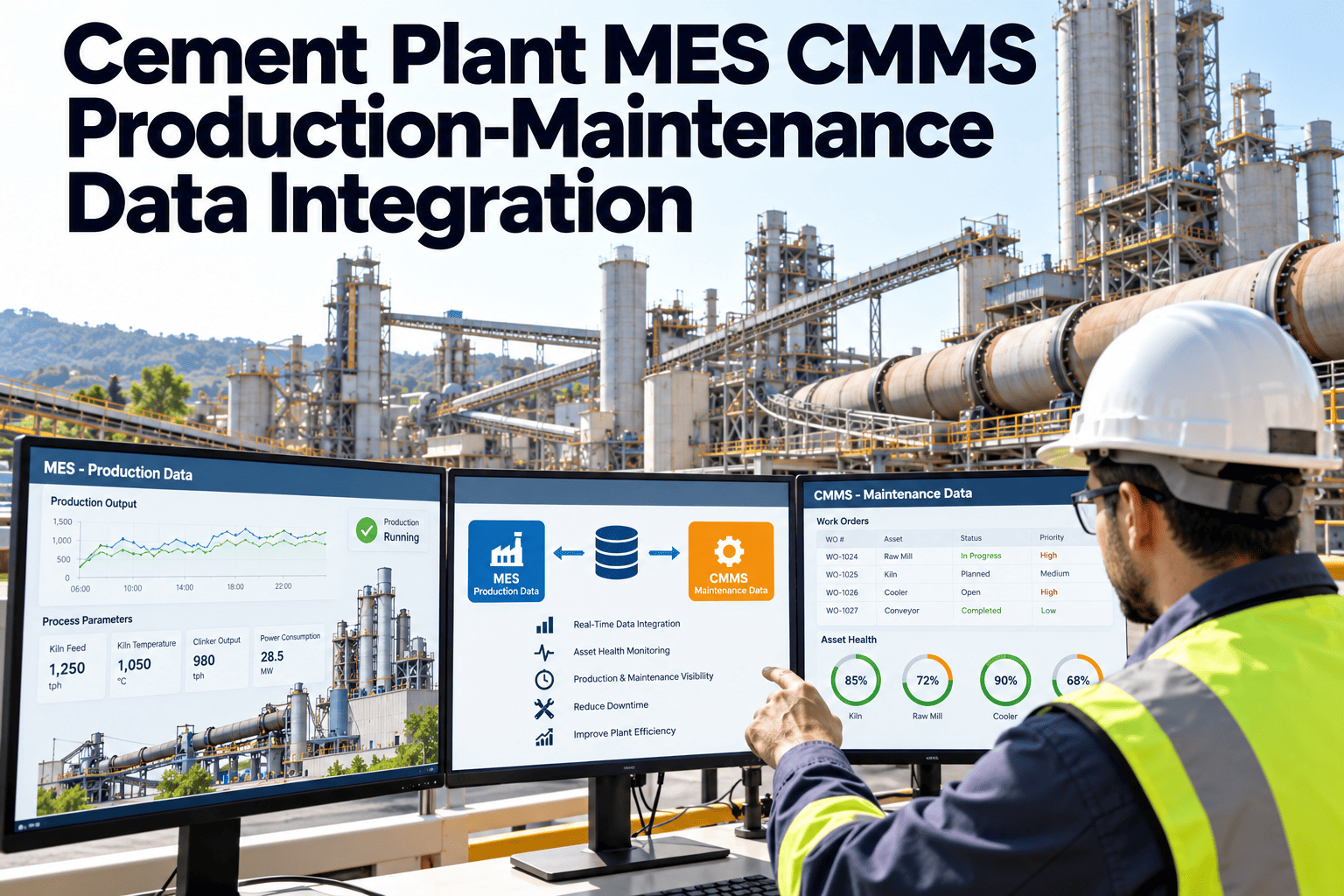
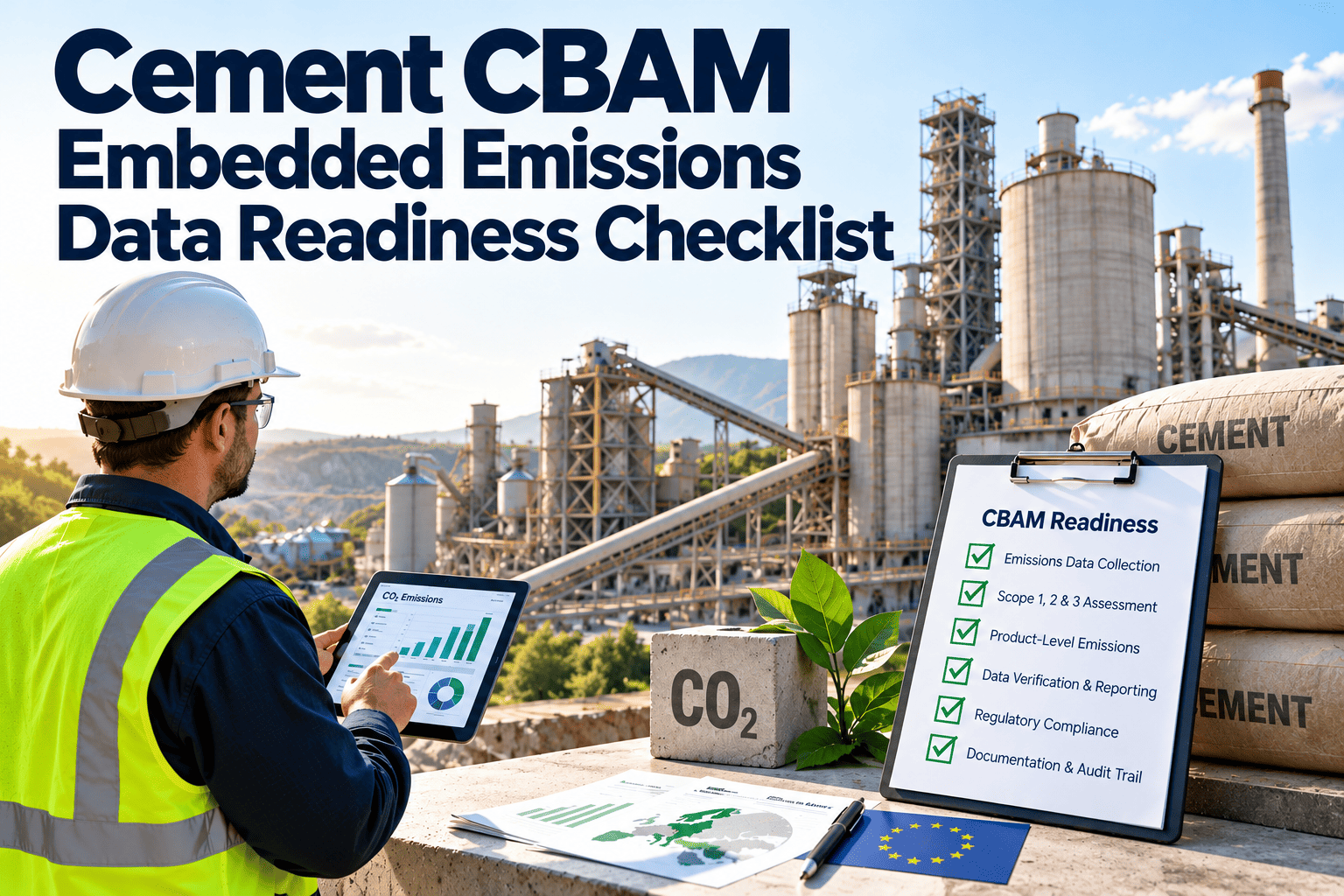
A cement plant capacity expansion is one of the highest-capital decisions an operations leadership team will make — greenfield lines run $150M–$400M, brownfield additions $40M–$120M, and major equipment upgrades $8M–$35M per asset class. The difference between an expansion that reaches design capacity within 90 days of commissioning and one that runs 60–75% of nameplate for 18 months is almost never the equipment itself. It is the quality of specification development, vendor qualification, pre-commissioning preparation, and systematic handover to the maintenance team. Plants that commission without a digital asset register, without baseline condition measurements, and without PM schedules already configured in their CMMS start every new asset's lifecycle at a disadvantage that compounds for years. Book a demo to see how Oxmaint structures new equipment integration, commissioning asset setup, and CMMS handover for cement plant expansion projects.
The Capital and Operational Stakes of Cement Plant Expansion
Compliance Standards by Region: Equipment Commissioning and Plant Expansion
Cement plant expansions and new equipment commissioning intersect with environmental permitting, equipment safety certification, statutory inspection requirements, and construction quality standards that vary significantly across operating regions. Oxmaint automates statutory inspection scheduling, equipment certification tracking, commissioning documentation, and compliance audit trail generation from the first day a new asset enters the plant.
| Region | Key Frameworks | Oxmaint Coverage |
|---|---|---|
| USA | EPA New Source Review, OSHA PSM 29 CFR 1910.119, MSHA equipment standards, ASME pressure vessel codes, NEC electrical commissioning | Commissioning inspection scheduling, PSM equipment documentation, statutory test records, EPA permit condition tracking |
| UAE | Civil Defence NOC for new facilities, SASO equipment standards, OSHAD-SF commissioning requirements, Ministry of Industry permits | Civil Defence inspection scheduling, equipment certification tracking, multi-site commissioning dashboards, permit condition management |
| India | Factories Act 1948 plant expansion approval, CPCB environmental clearance, BIS equipment standards, CEA electrical installation standards, DGMS mining equipment approval | EC condition tracking, statutory inspection scheduling, equipment approval documentation, DGMS commissioning records |
| Germany | BImSchG emission permit amendment, BetrSichV plant safety, TUV equipment certification, DGUV machinery safety, DIN commissioning standards | TUV inspection scheduling, BImSchG permit condition tracking, BetrSichV documentation, commissioning record archiving |
| UK | Environmental Permit variation, PSSR 2000 pressure systems, LOLER lifting equipment, HSE construction and commissioning CDM regulations | Environmental permit condition tracking, PSSR inspection scheduling, LOLER certification management, CDM documentation support |
| Brazil | IBAMA environmental licensing, NR-12 machinery safety, ABNT equipment standards, CREA engineering registration, CONAMA environmental resolution | IBAMA condition tracking, NR-12 commissioning documentation, multi-site expansion compliance dashboards, permit expiry alerts |
Oxmaint delivers commissioning documentation management, statutory inspection scheduling, equipment certification tracking, and compliance audit trails for cement plant expansion projects across every region above — your project and operations teams maintain complete records from first steel to full production.
What Is Structured Equipment Selection and Commissioning Management in Cement Plants?
Equipment selection and commissioning management is the systematic process of specifying, procuring, installing, testing, and handing over new cement plant assets with complete documentation — from technical specification through vendor qualification, factory acceptance testing, site acceptance testing, and final integration into the plant's CMMS with baseline condition data, PM schedules, and spare parts inventory established before commercial production begins. Book a demo to see how Oxmaint structures the commissioning-to-operations handover for new cement plant equipment from day one of asset registration.
Equipment Specification and Vendor Evaluation
Technical specifications developed from process requirements, site conditions, and lifecycle cost targets — not just purchase price. Vendor evaluation against technical capability, reference plant performance data, spare parts availability, local service network, and total cost of ownership over the asset's design life. Vendor scorecards documented in Oxmaint with evaluation criteria, scores, and selection rationale recorded — the audit trail that supports procurement governance and protects against future disputes.
Factory and Site Acceptance Testing
Factory Acceptance Tests (FAT) and Site Acceptance Tests (SAT) structured as Oxmaint work order checklists — every test point, acceptance criterion, and result recorded against the equipment asset record. Punch list items raised as work orders with assigned responsibility and required close-out date. No equipment progresses to the next commissioning phase with open punch list items above a defined severity — preventing the accumulation of unresolved defects that characterises poorly managed commissioning programmes.
Condition Baselining
Baseline vibration measurements, alignment readings, oil analysis samples, thermal images, and performance test results recorded against each new asset in Oxmaint during commissioning — before the equipment enters production. These baseline measurements are the reference against which all future condition monitoring data is compared. Without a commissioning baseline, the first year of production cannot distinguish equipment degrading from its as-installed condition versus equipment that was never correctly aligned or loaded.
CMMS Handover and PM Activation
Complete asset registration, PM schedule activation, spare parts linkage, and warranty tracking configured in Oxmaint before first production run — not months after commissioning when the first preventable failure has already occurred. Warranty periods tracked per asset and component with alerts generated before expiry. OEM documentation, installation records, as-built drawings, and FAT/SAT results all stored against the asset record — transferring institutional knowledge from the project team to the operations team in a searchable digital format.
See Oxmaint Structuring a Cement Plant Commissioning Programme
Our team will walk you through a live demo with equipment asset registration, commissioning checklist workflows, baseline condition data setup, and PM schedule activation from a real cement plant expansion programme — in under 30 minutes.
Four Commissioning Management Failures That Undermine Cement Plant Expansions
These four structural failures consistently produce the same outcome: new cement plant assets running well below design capacity for 12–18 months, with high infant mortality failure rates and a maintenance team that inherited assets with no history, no baseline, and no organised PM programme.
Equipment Specified on Purchase Price Rather Than Total Lifecycle Cost
Equipment selection driven primarily by capital cost systematically produces higher total cost of ownership. A kiln drive with lower purchase price and a 15% shorter design life, higher lubrication consumption, and limited local spare parts availability will cost more over 20 years than the higher-priced alternative — but the comparison is rarely made because lifecycle cost is not part of the specification process. Vendor evaluations that do not include reference plant performance data, local service network quality, and spare parts supply chain reliability consistently produce commissioning problems and premature failures that the capital budget never anticipated.
Punch Lists Not Closed Before Production Pressure Takes Over
The most common commissioning failure: production pressure to start the new line forces operations to accept equipment with outstanding punch list items — alignment defects, instrument calibration lapses, guarding incomplete, control loop commissioning unfinished. Each accepted punch list item is a known defect entering the production asset base. Within 90 days, the defects that were accepted under commissioning pressure become the maintenance emergencies consuming the maintenance team's capacity. The cost of the resulting failures consistently exceeds the cost of the production delay that would have allowed proper punch list closure.
No Condition Baseline — First Year Failures Have No Reference
A new kiln drive bearing that develops elevated vibration in month 4 of operation — is that elevated from new, indicating a commissioning defect? Or has it degraded from an acceptable baseline, indicating accelerated wear from a process or lubrication issue? Without baseline vibration measurements taken at commissioning under defined load conditions, this question cannot be answered. The bearing replacement happens reactively, the root cause is unknown, and the same failure mode may repeat. Condition baselining at commissioning is the investment that makes all subsequent condition monitoring data meaningful.
CMMS Setup Deferred Until After Commissioning — PM Starts Months Late
Asset registers, PM schedules, and spare parts linkages are commonly configured in the CMMS months after new equipment starts production — after the first set of early-life failures have already occurred. New equipment in the infant mortality phase of its reliability curve needs PM more intensively than mature equipment, not less. Every month of production before PM schedules are active is a month of unprotected operation on the most failure-vulnerable equipment in the fleet. Warranty claims missed because failures occurred after expiry of a warranty period that was never tracked in the CMMS compound the cost further.
How Oxmaint Structures Cement Plant Expansion and Commissioning Management
Oxmaint connects equipment specification, vendor qualification, commissioning testing, condition baselining, and CMMS handover into a single managed programme — ensuring that every new cement plant asset starts its operational life with complete documentation, active PM schedules, and a baseline against which all future condition data is measured. Book a demo to walk through the full commissioning handover framework with your expansion project scope and equipment classes.
Ready to Commission Your Cement Plant Expansion the Right Way?
Oxmaint deploys across a cement plant expansion project's commissioning programme from the procurement phase — giving your operations team a complete CMMS handover before commercial production begins. Book a personalised 30-minute demo — your expansion scope, our platform, zero obligation.
Oxmaint Platform: Purpose-Built for Cement Plant Expansion and Commissioning
Each module addresses a specific failure point in cement plant expansion and equipment commissioning management. Together they form a structured handover programme where every specification decision, test result, and baseline measurement transfers from the project team to the operations team in a searchable digital format. Book a demo to walk through each module with real cement plant expansion data.
Project-Managed Commissioning vs. Oxmaint: The Performance Gap in Cement Plant Expansions
| Factor | With Oxmaint | Manual Management |
|---|---|---|
| Time to Design Capacity | 3–6 months to sustained nameplate capacity. Punch list enforced, PM active pre-production, baselines established — no infant mortality surprises. | 12–18 months to design capacity on average. Punch list items accepted under production pressure become the first year's emergency repair list. |
| Commissioning Documentation | Complete FAT, SAT, and punch list records stored against asset in CMMS from procurement. Project history complete and searchable by operations team from day one. | Commissioning documents held by project team on shared drives or paper. Operations team inherits equipment with no accessible project history — first failures have no reference. |
| Condition Baseline Availability | Vibration, alignment, thermal, and oil baselines recorded during commissioning runs against each asset. Future condition anomalies compared to a known starting point. | No commissioning baseline recorded. First-year condition monitoring data has no reference. Degradation cannot be distinguished from incorrect initial condition — root cause analysis is guesswork. |
| PM Programme Start Date | OEM-recommended PM schedules active before first production run. Infant mortality phase intervals shortened. No production month passes without PM coverage on new assets. | CMMS setup deferred until 3–6 months post-commissioning. New equipment runs unprotected during its highest-risk lifecycle phase. First preventable failures occur before PM programme exists. |
| Warranty Recovery Rate | Warranty periods tracked with 60-day advance alerts. Early-life failure work orders cross-referenced to warranty. Claims documentation built from FAT records. Warranty recovery maximised before expiry. | Warranty periods tracked on spreadsheet or not at all. Most warranty claims missed due to expiry before claim is raised or inadequate documentation to support claim submission. |
| Spare Parts Readiness | Minimum stock levels set from OEM criticality classification and confirmed lead times before production begins. No critical spare part stockout in the first 90 days of operation. | Spare parts procurement driven by first failures — ordered after the breakdown, not before it. Emergency procurement at 25–40% premium on first-year critical spares is the standard outcome. |
Cement Plant Commissioning Performance Benchmarks
These performance improvements represent average results from cement plant expansion projects that used structured Oxmaint commissioning management versus projects that relied on paper-based commissioning and deferred CMMS setup.
Your Commissioning Programme Starts Before First Steel
Oxmaint deploys into a cement plant expansion project from the procurement phase — no waiting for commissioning to begin. Book a 30-minute demo to map your expansion scope against the commissioning management framework and build a structured handover plan for your operations team.
Critical Asset Commissioning Profiles: Key Equipment Classes in Cement Plant Expansions
Commissioning requirements and first-year failure risk vary significantly across cement plant equipment classes. These profiles define the commissioning documentation, baseline measurements, and CMMS setup priorities for the assets that carry the highest capital and operational risk in a new cement plant line. Book a demo to see how Oxmaint structures commissioning management for each of these equipment classes in a live expansion project.
Rotary Kiln and Girth Gear Assembly
Shell ovality baseline and tyre migration rate recorded at commissioning. Girth gear backlash measurement documented against acceptance tolerance. Pre-heat temperature ramp logged against protocol. First three refractory inspections at 30, 90, and 180 days scheduled as mandatory work orders. Girth gear and tyre lubrication PM weekly during first 90 days. Warranty tracking active from mechanical completion date.
Raw Mill and Cement Mill Systems
Main bearing vibration baseline at full production load recorded per bearing position. Drive coupling alignment measurement documented. Liner thickness per segment entered as commissioning baseline — future measurements compared against these values for remaining wear calculation. First PM at 500 hours includes oil analysis, coupling re-check, and liner thickness reverification. Gear spray lubrication system flow verification recorded as commissioning SAT test point.
Primary and Secondary Crusher Systems
Crusher power draw at design feed rate recorded as commissioning performance baseline. Jaw liner initial thickness per segment documented — replacement work order scheduled from throughput counter. Main bearing temperature and vibration at design load form the condition monitoring baseline. Feed chute wear liner baseline thickness recorded. Crusher oil cooler performance verified at operating temperature and logged as SAT test result.
Clinker Cooler and Preheater Systems
Cooler outlet clinker temperature and tertiary air temperature at design kiln output recorded as performance baseline. Preheater cyclone differential pressure per stage at design gas flow documented. ID fan, cooler fan, and tertiary air fan vibration baselines recorded at design operating point. Clinker cooler grate beam condition inspection scheduled at 90 days — first opportunity for grate wear assessment at design throughput.
ROI From Structured Commissioning Management in Cement Plant Expansions
Frequently Asked Questions: Cement Plant Expansion, Equipment Selection, and Commissioning
QWhat is the most important factor in cement plant equipment selection beyond purchase price?
QWhy does structured CMMS setup before production matter — can it not be done retrospectively?
QWhat environmental permits are typically required for a cement plant capacity expansion?
QWhat should a cement plant commissioning baseline measurement programme include?
QHow should PM intervals be set for newly commissioned cement plant equipment?
QWhen in the project timeline should Oxmaint be deployed for a cement plant expansion?
Continue Reading: Cement Plant Asset Management and Maintenance Resources
Explore these in-depth guides to build a complete picture of asset lifecycle management, maintenance strategy, and capital planning across cement manufacturing operations.
Start Your Cement Plant Expansion Right — From Day One of Procurement
Oxmaint deploys into cement plant expansion projects from the purchase order stage — no waiting for commissioning to begin managing your new assets. Start with equipment registration, configure commissioning checklists, and build the CMMS handover programme that gives your operations team a complete asset register and active PM schedules before commercial production begins. Book a 30-minute demo — your expansion scope, our platform, zero obligation.