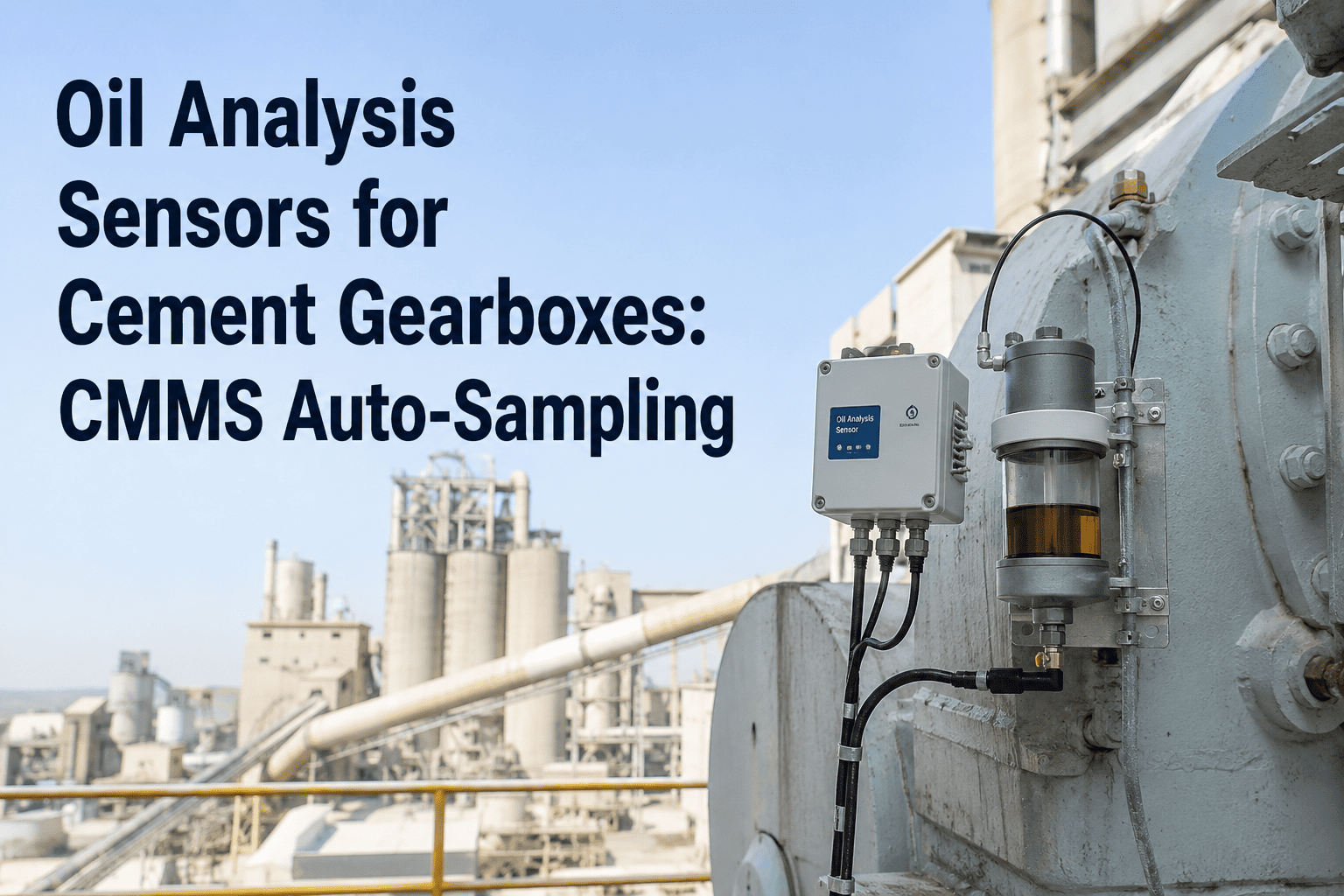
A typical cement plant operates over 2,000 motors with more than 5,000 lubrication points—each one a potential failure waiting to happen if neglected. The harsh reality: up to 80% of premature bearing failures stem directly from improper lubrication, whether through contamination, incorrect lubricant selection, over-greasing, or missed service intervals. In cement manufacturing environments where silica and clinker dust particles match the hardness of bearing steel on the Mohs scale, every unprotected lubrication point becomes an abrasive grinding zone destroying components from within. World-class cement operations recognize that lubrication management isn't a maintenance afterthought—it's a strategic reliability program requiring systematic scheduling, contamination control, and precise documentation. Sign up for Oxmaint to digitize your lubrication routes, automate scheduling, and capture every service event with mobile verification that ensures no point gets missed.
Equipment Reliability
Cement Plant Lubrication Management: Best Practices
Transform reactive greasing into a precision reliability program that extends equipment life, reduces bearing failures by up to 80%, and cuts unplanned downtime across your entire operation.
5,000+
Lubrication Points Per Plant
80%
Bearing Failures from Poor Lubrication
2,000+
Motors Requiring Lubrication
Why Lubrication Failures Devastate Cement Operations
Cement plants operate under conditions that amplify every lubrication deficiency. Kilns reach temperatures exceeding 1,400°C, transferring heat to support bearings. Crushers endure shock loads that squeeze lubricant films to near-zero thickness. Mills generate vibration that causes grease migration away from contact surfaces. Throughout the facility, airborne clinker dust—harder than bearing steel—infiltrates every inadequately sealed housing. Understanding these failure mechanisms reveals why systematic lubrication management delivers outsized reliability returns. Request a demo to see how digital route management ensures consistent lubrication execution.
Silica, alumina, and clinker particles infiltrate bearing housings through inadequate seals. These abrasive contaminants score raceways and rolling elements, generating metal debris that accelerates wear exponentially.
Impact: 3-5x accelerated wear rate
Insufficient lubricant quantity or missed service intervals allow metal-to-metal contact between rolling elements and raceways. Friction generates heat that further degrades remaining lubricant.
Impact: Rapid temperature rise, seizure risk
Excess grease causes churning that generates heat, damages seals, and forces lubricant past shields. Over-greasing is as destructive as under-greasing but often overlooked as a failure cause.
Impact: Seal damage, thermal degradation
Incorrect viscosity, inadequate EP additives, or incompatible thickener types compromise film strength under load. High-temperature applications require specialized formulations that commodity greases cannot provide.
Impact: Film breakdown under load
Kiln and cooler bearings absorb process heat that oxidizes lubricant, depletes additives, and causes base oil evaporation. Standard greases fail rapidly in these thermal environments.
Impact: Lubricant breakdown, additive loss
Equipment-Specific Lubrication Requirements
Each cement plant equipment category presents unique lubrication challenges requiring tailored approaches. Kiln support bearings operate under sustained high temperatures demanding synthetic high-viscosity lubricants. Ball mill trunnion bearings endure heavy loads requiring extreme-pressure additives. Conveyor idlers spread across kilometers need efficient single-point lubricators. Understanding these requirements enables proper lubricant selection and service interval optimization. Schedule a consultation to assess your equipment-specific lubrication requirements.
Kiln Support Bearings
High temp (80-120°C), slow speed, heavy load
Synthetic ISO VG1000, high-temp grease
Continuous circulation / Weekly grease
Kiln Girth Gear
Open gear, high load, dust exposure
Open gear compound, spray lubricant
Automatic spray system
Ball/Vertical Mill
Heavy shock loads, high vibration
Synthetic EP gear oil ISO VG220-460
Oil analysis every 500 hours
Crusher Bearings
Extreme shock, contamination ingress
Heavy-duty EP grease, NLGI 2
Centralized system / Daily manual
Conveyor Idlers
Outdoor exposure, dust, moisture
Water-resistant grease, NLGI 2-3
Single-point lubricators / Quarterly
Fan Bearings
High speed, moderate load, dust
Polyurea or lithium complex grease
Monthly grease / Oil mist system
Bucket Elevator
Vertical operation, chain wear
Chain lubricant, bearing grease
Weekly chain / Monthly bearings
Digitize Your Lubrication Program
Mobile-verified routes ensure every lubrication point receives the right lubricant at the right interval with full documentation.
Building a World-Class Lubrication Program
Effective lubrication management transforms from reactive greasing to a precision reliability discipline. The journey requires systematic assessment, standardization, training, and continuous improvement. Book a consultation to develop a customized lubrication excellence roadmap for your facility. Digital CMMS integration provides the foundation for route optimization and compliance tracking—learn how CMMS reduces cement plant downtime through systematic maintenance execution.
01
Lubrication Survey & Assessment
Document every lubrication point across the facility with equipment identification, current lubricant, quantities, and service frequencies. Identify gaps in sealing, contamination control, and storage practices. Assess current failure rates and maintenance costs as baseline metrics.
Asset registry
Point inventory
Baseline metrics
02
Lubricant Consolidation & Selection
Work with lubricant suppliers and bearing manufacturers to select optimal products for each application. Consolidate lubricant types to reduce inventory complexity while ensuring each critical application receives appropriate formulation. Establish approved lubricant lists and substitution rules.
Approved list
Selection criteria
Consolidation plan
03
Storage & Handling Standards
Establish dedicated lube rooms with climate control, contamination barriers, and proper dispensing equipment. Implement color-coded containers, quick-connect fittings, and filtration systems. Eliminate funnels and open containers that introduce contamination during transfer.
Lube room setup
Color coding
Transfer protocols
04
Route Optimization & Scheduling
Design efficient lubrication routes that minimize travel time while ensuring appropriate service frequencies for each point. Configure CMMS with route sequences, quantities, lubricant specifications, and safety requirements. Enable mobile verification with barcode/RFID scanning.
Optimized routes
CMMS configuration
Mobile access
05
Training & Certification
Train technicians on proper lubrication techniques, contamination control, lubricant identification, and equipment-specific requirements. Establish certification programs that verify competency. Create visual standards and job aids for reference during execution.
Training program
Certifications
Visual standards
06
Monitoring & Continuous Improvement
Track lubrication compliance rates, oil analysis trends, and bearing failure rates. Conduct root cause analysis on lubrication-related failures. Adjust intervals based on condition monitoring data. Benchmark against industry standards and pursue lubrication excellence certifications.
KPI dashboards
RCA process
Benchmarking
Automated vs. Manual Lubrication Systems
Modern cement plants increasingly deploy automatic lubrication systems for critical and hard-to-access equipment. These systems deliver precise quantities at optimal intervals while eliminating safety hazards associated with manual greasing near operating machinery. Understanding when automatic systems justify their investment helps optimize lubrication program design. Request a system assessment to identify automation opportunities. For comprehensive equipment reliability, explore how asset lifecycle management integrates lubrication with broader maintenance strategies.
−
Inconsistent intervals dependent on technician availability
−
Safety exposure near operating equipment
−
Over/under-lubrication from subjective "feel"
−
Contamination risk during manual application
+
Lower capital investment
+
Visual equipment inspection during rounds
Best for: Low-criticality equipment, accessible locations, infrequent service intervals
+
Precise, consistent delivery at programmed intervals
+
Lubrication during operation without safety exposure
+
Metered quantities prevent over/under-lubrication
+
Sealed system minimizes contamination
−
Higher capital and installation cost
−
Requires monitoring to verify operation
Best for: Critical equipment, hard-to-access points, high-frequency service, safety-sensitive areas
Measured Results from Systematic Lubrication Management
60-80%
Reduction in Lubrication-Related Failures
30-50%
Extended Bearing Service Life
15-25%
Reduction in Lubricant Consumption
100%
Route Compliance Visibility
Frequently Asked Questions
Q
How do you determine optimal relubrication intervals for cement plant bearings?
Relubrication intervals depend on bearing size, speed, load, temperature, and contamination exposure. Bearing manufacturers provide baseline calculations using the SKF or similar relubrication formulas. For cement plants, divide calculated intervals by 2-3 to account for contamination severity. Monitor bearing temperatures and vibration to validate intervals, adjusting based on condition data. High-temperature kiln bearings may require weekly or even daily service, while cooler conveyor idlers might need only quarterly attention.
Q
What causes over-lubrication and why is it as harmful as under-lubrication?
Over-lubrication occurs when technicians add grease until it emerges from seals, believing more is better. Excess grease causes internal churning that generates heat, raising bearing temperature and accelerating lubricant oxidation. The pressure damages seals, creating pathways for contamination entry. Grease guns deliver significant pressure—a few extra pumps can pack bearings far beyond capacity. Proper technique involves calculated quantities based on bearing dimensions, not visual observation of grease emergence.
Q
How should cement plants manage lubricant storage to prevent contamination?
Dedicated lube rooms with climate control prevent moisture condensation and temperature extremes. Store drums horizontally or with proper covers to prevent water pooling on tops. Implement desiccant breathers on bulk storage. Use dedicated, color-coded transfer containers with quick-connect fittings—never funnels. Filter new oil before use since "new" oil often exceeds cleanliness targets. Maintain sealed containers and wipe fittings clean before connecting grease guns. These practices prevent introducing contamination during the handling process.
Q
When should cement plants invest in centralized automatic lubrication systems?
Automatic systems justify investment for critical equipment where failure consequences are severe (kilns, mills), locations presenting safety hazards for manual access, equipment requiring frequent service intervals (daily or more), and hard-to-reach points that get missed during manual rounds. Calculate ROI based on reduced bearing failures, labor savings, lubricant optimization, and avoided downtime. Centralized systems serving crusher or mill bearing clusters often achieve payback within 12-18 months through failure reduction alone.
Q
What role does oil analysis play in cement plant lubrication management?
Oil analysis provides early warning of both lubricant degradation and equipment wear. For gearboxes and circulating oil systems, regular sampling reveals particle contamination levels, water content, viscosity changes, and additive depletion. Wear metal trending identifies developing gear or bearing damage before failure. Analysis also validates that the correct lubricant is in service and that contamination control measures are effective. Establish sampling frequencies based on equipment criticality—monthly for critical gearboxes, quarterly for others.
Q
How does CMMS improve lubrication program compliance and documentation?
CMMS provides systematic scheduling that ensures no lubrication point is forgotten regardless of technician changes or workload variations. Mobile apps enable barcode verification at each point, confirming actual service rather than estimated completion. The system tracks lubricant quantities, enabling consumption analysis and identifying leaks or over-application. Historical records support failure analysis—correlating bearing failures with lubrication compliance gaps. Dashboards display route completion rates, enabling management visibility and accountability.
Q
What lubricant types are essential for cement plant applications?
Cement plants typically require several lubricant categories: high-temperature synthetic greases (polyurea or perfluoropolyether thickeners) for kiln and cooler bearings operating above 80°C; extreme-pressure lithium complex greases for crushers and mill bearings under heavy loads; water-resistant calcium sulfonate greases for outdoor conveyor applications; synthetic gear oils (PAO or PAG) in ISO VG220-680 for gearboxes; and open gear compounds for kiln girth gears. Lubricant consolidation reduces inventory but must not compromise application-specific requirements.