Sub-Saharan Africa's cement industry is entering its most significant expansion phase — installed capacity is projected to double from 180 MTPA to over 360 MTPA by 2030, driven by greenfield investments in Nigeria, Ethiopia, Kenya, Tanzania, and Ghana. Yet over 71% of operational plants across the region run without a structured CMMS, managing maintenance through paper registers and verbal work orders across sites where spare parts lead times run 6 to 14 weeks and power supply interruptions average 18 hours per week. Every unplanned kiln stop at an African cement plant carries a multiplied cost: not just the production loss, but the emergency logistics of sourcing parts across constrained supply chains. Book a demo to see how Oxmaint deploys in Sub-Saharan African cement plant conditions.
Sub-Saharan Africa Cement Market: Five Countries Driving Capacity Expansion
Five markets — Nigeria, Ethiopia, Kenya, Tanzania, and Ghana — account for over 60% of projected new cement capacity in Sub-Saharan Africa through 2030. Each has a distinct investment structure and maintenance challenge, but all share the same infrastructure constraints that make preventive maintenance more critical — and more difficult — than in any other global market.
CMMS Built for Greenfield Deployment and Infrastructure Constraints
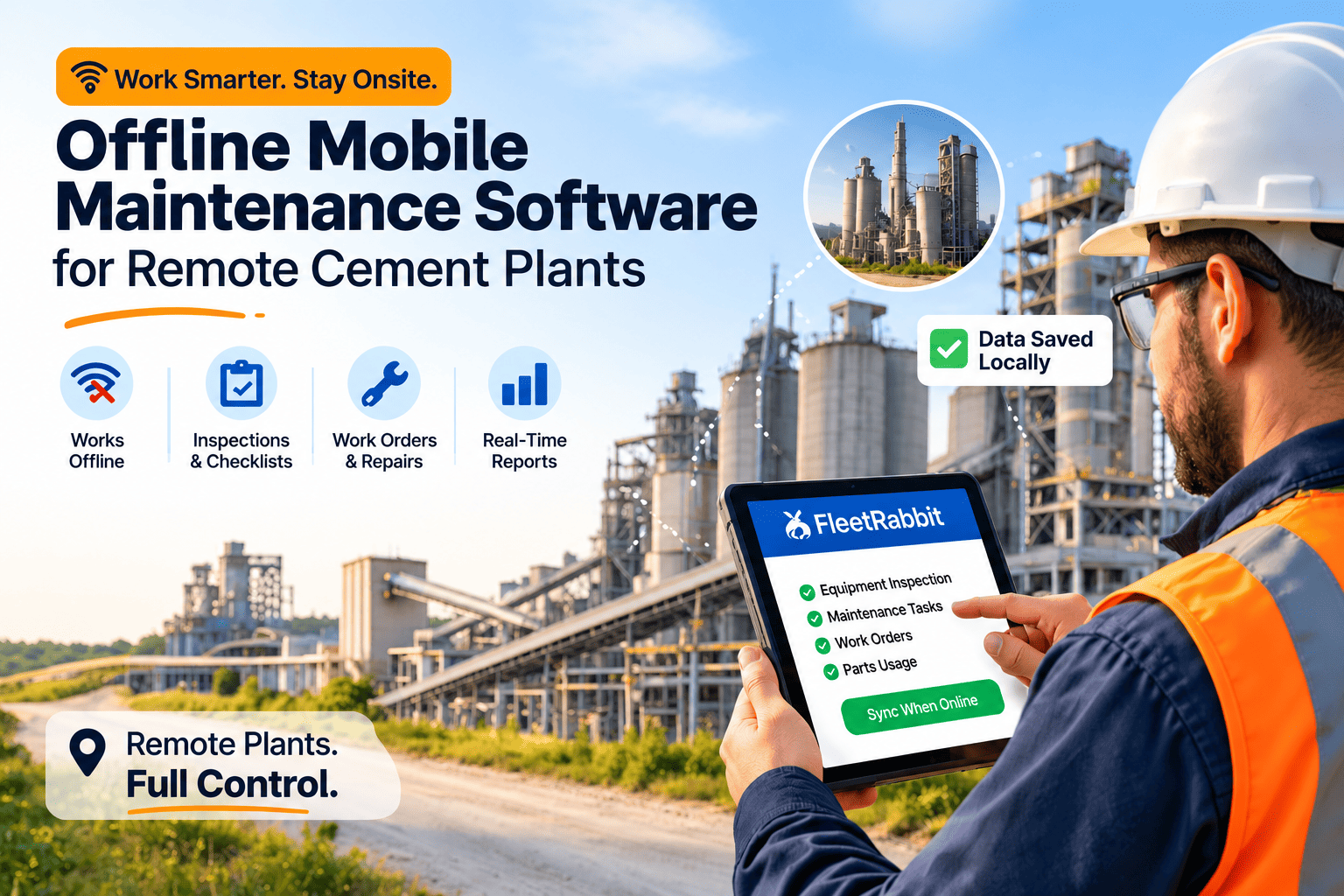
Oxmaint deploys in under 14 days at greenfield African cement plants — no ERP integration required, no on-site consultant, no IT infrastructure prerequisites. Mobile-first with full offline capability for low-connectivity sites. Book a demo to see Oxmaint's greenfield plant setup for African operations.
Africa-Specific Maintenance Challenges: Equipment by Equipment
Sub-Saharan African cement plants face maintenance challenges that no standard OEM manual addresses — grid power interruptions, extreme dust loading in arid zones, tropical humidity in coastal plants, and spare parts supply chains that can take 14 weeks to deliver a bearing. The six assets below account for over 75% of unplanned downtime at African cement plants.
Greenfield Plant Setup: Getting CMMS Right from Day One
The majority of new cement capacity being added in Sub-Saharan Africa is greenfield — plants commissioned from scratch with no legacy maintenance system to migrate from. This is the optimal CMMS deployment window: asset registry built from commissioning drawings, PM schedules set before first kiln fire, and condition baselines established from the first weeks of operation rather than being retrofitted years later.
Compliance and Regulatory Coverage: Sub-Saharan Africa and Global
| Region | Regulatory Frameworks | Oxmaint Coverage |
|---|---|---|
| Nigeria | NESREA environmental standards, DPR regulations, NAFDAC industrial compliance, FEPA air emission limits for cement manufacturing | NESREA PM task templates, dust emission equipment inspection logs, generator compliance records, digital audit trail for DPR inspections |
| Ethiopia / East Africa | Ethiopia EPA regulations, KEBS Kenya Bureau of Standards, Tanzania Bureau of Standards, EAC industrial standards across East African Community | EAC-aligned PM templates, multi-site dashboard for regional operators, mobile field access with offline mode for remote highland plants |
| Ghana / West Africa | EPA Ghana environmental standards, GSB standards, ECOWAS industrial compliance framework, community dust exposure limits | Community dust emission inspection tracking, EPA Ghana compliance records, arid-zone dust suppression PM scheduling |
| Middle East and North Africa | SASO standards, Civil Defence codes, Saudi Vision 2030 smart manufacturing, UAE Industrial Strategy 2030 digitalization | SASO-aligned PM templates, heat-resistant operations configuration, multi-site dashboards, greenfield plant registry |
| India (comparison) | CPCB Consent to Operate, State PCB compliance, DGMS safety records, BIS standards | CPCB PM templates, digital emission logs, inspection audit trail, multi-site portfolio for large Indian cement groups |
| USA / Canada | EPA Tier 4 emissions, OSHA PSM, MSHA safety compliance, CSA Z1000 maintenance standard | PSM inspection scheduling, OSHA work order records, multi-plant CapEx dashboards, enterprise portfolio management |
Oxmaint Runs on Low-Connectivity Sites — From Day One of Commissioning
No IT infrastructure, no on-site server, no ERP dependency. Oxmaint deploys via mobile devices, works offline, and syncs when connectivity is available — designed for exactly the infrastructure constraints that define Sub-Saharan African cement operations. Book a demo to see the basic infrastructure deployment mode for African plant sites.
How Oxmaint Solves African Cement Plant Maintenance Gaps
Four constraints define the maintenance challenge at Sub-Saharan African cement plants — no structured PM program at greenfield sites, grid-unreliability forcing captive power as a parallel asset stream, extreme dust and wear conditions not covered by OEM intervals, and supply chain constraints that make unplanned stops far more costly than in any other market. Oxmaint addresses each through greenfield plant setup tools, Africa-adapted PM templates, offline mobile deployment, and a spare-parts-aware CapEx forecasting engine that accounts for the long lead times of the African supply chain.
Oxmaint builds the full asset registry — kiln, mill, generator, crusher, dust systems, electrical — directly from commissioning drawings before first kiln fire. PM schedules load with Africa-adapted intervals including captive generator Tier-1 PM, post-power-interruption inspection tasks, and shortened refractory cycles. New greenfield African plants are fully operational on Oxmaint within 14 days of commissioning — with no ERP integration, no on-site IT infrastructure, and no migration of legacy records. Book a demo to walk through the greenfield setup workflow.
Most Sub-Saharan African cement plant sites — particularly inland Nigerian, highland Ethiopian, and remote Tanzanian locations — have intermittent or absent mobile connectivity and no on-site IT server infrastructure. Oxmaint's basic infrastructure mode runs entirely on field technician mobile devices. Work orders are assigned, completed, and closed offline. QR scans identify assets. Photos are attached to records. Everything syncs when connectivity is restored — no data loss, no duplicate records, no IT department required. Book a demo to see the offline deployment configuration.
Standard CMMS deployments treat generators as auxiliary assets. At African cement plants where grid power is unreliable, captive generator failure is a direct kiln-stop trigger. Oxmaint's Africa deployment configures captive generators as Tier-1 critical assets — with the same PM scheduling frequency, condition monitoring integration, and CapEx tracking as the kiln drive itself. Post-switchover thermal inspections and oil analysis intervals are built into the PM program from day one.
A bearing failure at a Nigerian plant with a 14-week spare parts lead time is not a 4-hour shutdown — it is a 14-week partial or full production loss. Oxmaint's Remaining Useful Life engine calculates degradation trajectories and flags replacement windows 12–16 weeks ahead of predicted failure — enough lead time to procure parts through standard African supply chains before the component fails in service. CapEx forecasts are built around Africa-realistic lead times, not European spare parts availability assumptions. Book a demo to see RUL forecasting configured for African supply chain lead times.
African Cement Plant KPI Benchmarks vs Oxmaint Targets
Maintenance Cost vs Return: African Cement Plant CMMS Investment
| Investment Area | Annual Saving / Return | Without CMMS Baseline |
|---|---|---|
| Unplanned kiln stop prevention | 71% stop reduction — $180,000–$420,000 annual saving per kiln from production loss avoidance at African market cement prices | $6,000–$14,000 per stop in production loss — 12–18 unplanned stops annually at typical SSA plant without PM program |
| Generator cascade failure prevention | 84% reduction in generator-caused kiln stops — each prevented cascade saves the full kiln stop cost plus emergency generator repair premium | Generator failure treated as auxiliary event — no Tier-1 PM scheduling, no condition monitoring, no advance warning |
| Spare parts advance procurement | 67% reduction in emergency parts costs — RUL engine flags replacements 12–16 weeks ahead, enabling standard procurement lead times | Emergency parts procurement at 3–5x standard cost via air freight — or 14-week production loss waiting for standard supply |
| Ball mill liner life optimization | 78% improvement in replacement timing accuracy — condition-based change decisions eliminate premature and overdue replacements | Liners changed on calendar estimates that do not account for African limestone abrasivity — resulting in premature or overdue replacement |
| Greenfield commissioning efficiency | Full PM program operational within 14 days of commissioning — condition baselines established in weeks 1–12 from first operation | CMMS deployed 12–24 months after commissioning — first year of operation produces no usable condition baseline data |
Frequently Asked Questions: CMMS for Sub-Saharan African Cement Plants
Continue Reading
71% Fewer Unplanned Stops. Live in 14 Days From Commissioning.
Oxmaint deploys at greenfield African cement plants without IT infrastructure, internet dependency, or legacy data migration — full PM program running from commissioning day, offline-capable field access from day one. Book a 30-minute demo for your plant's commissioning timeline and supply chain parameters.