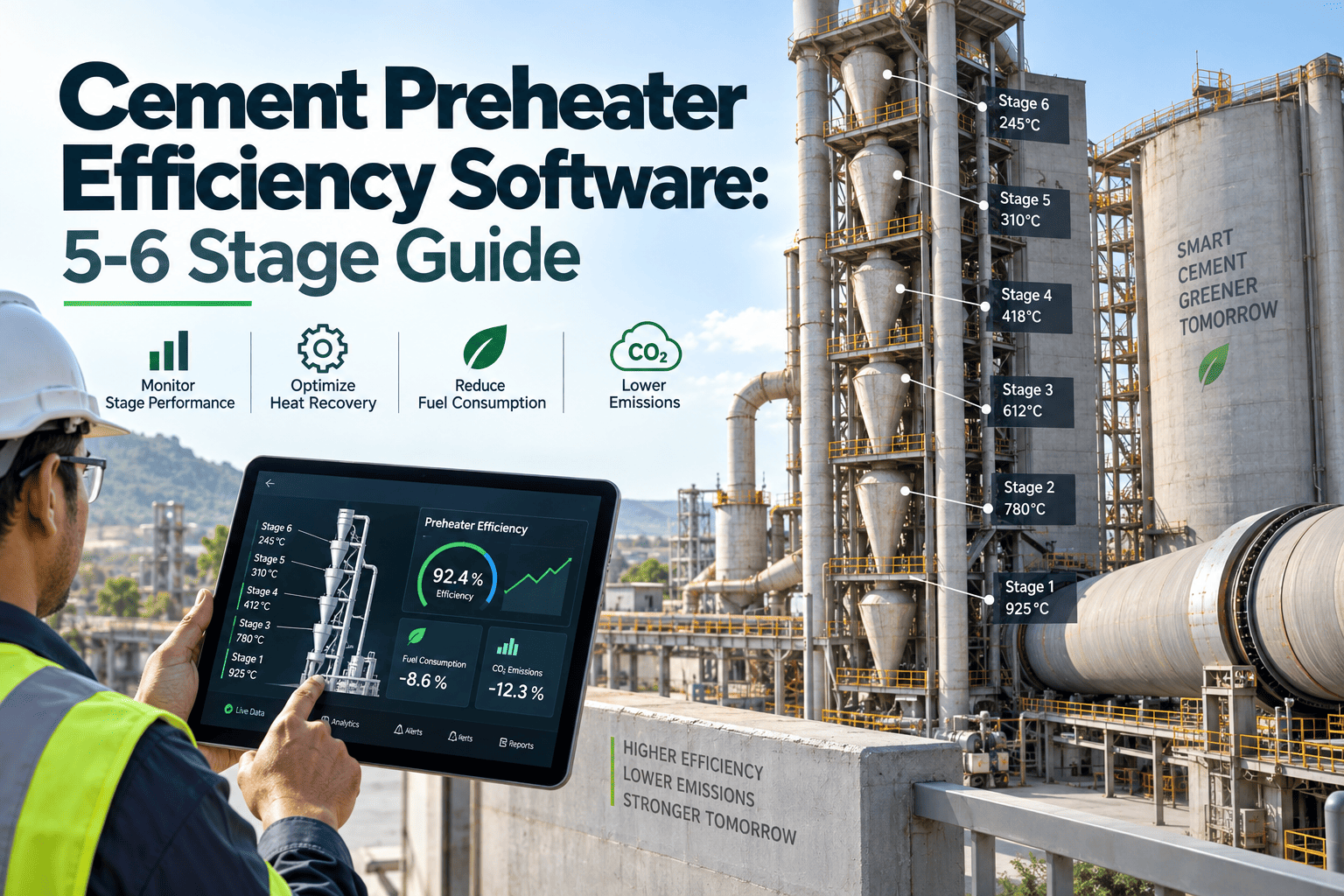
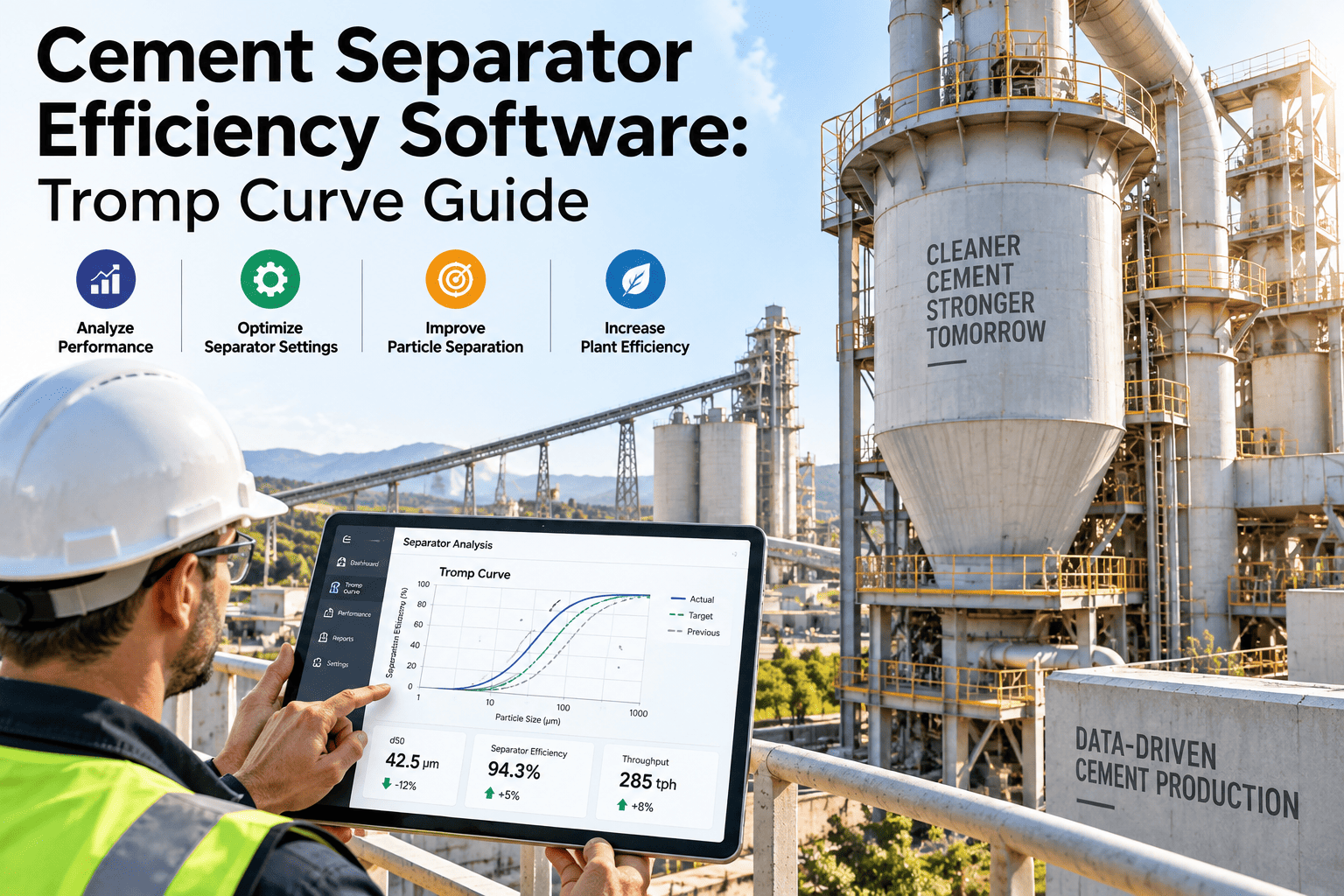
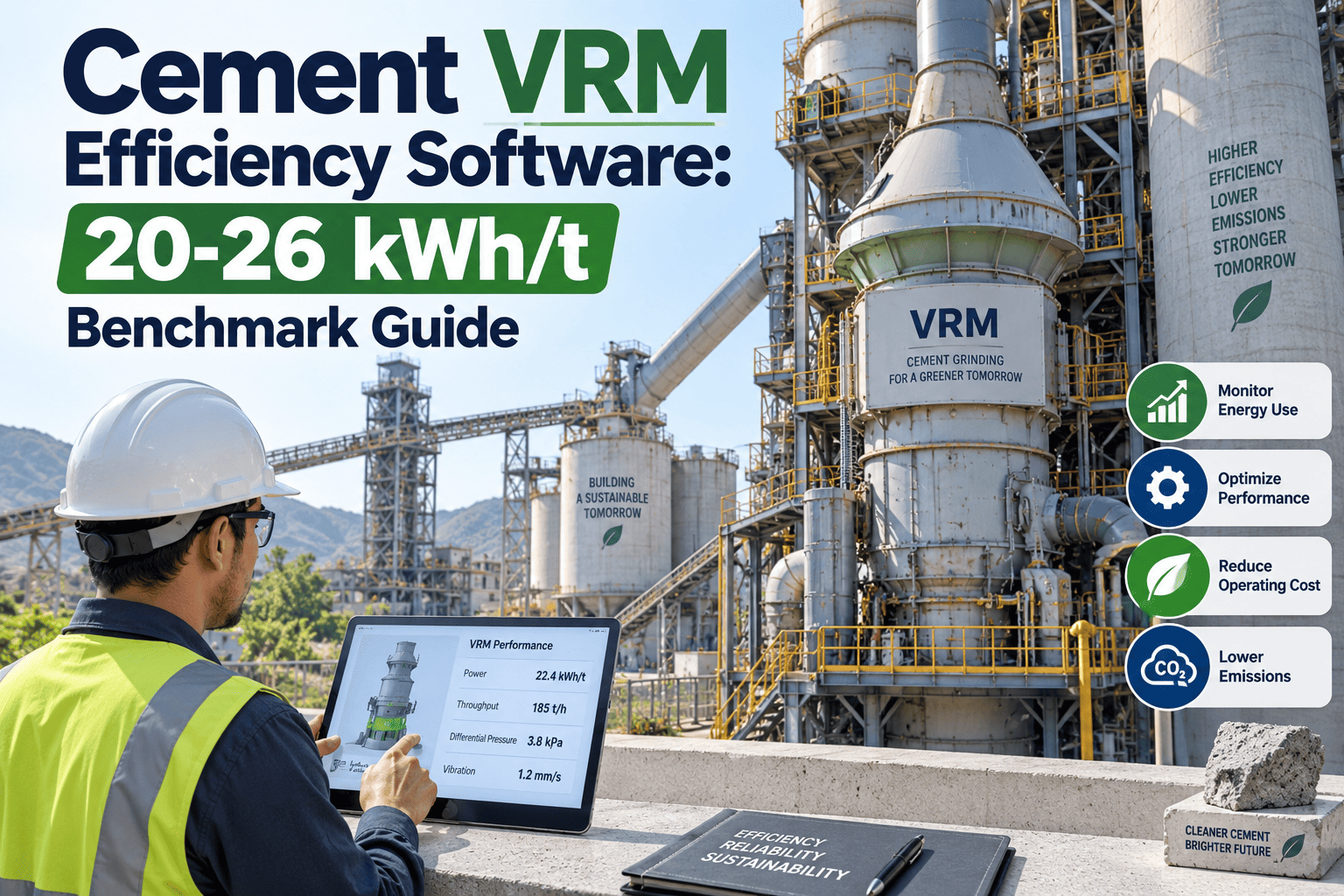
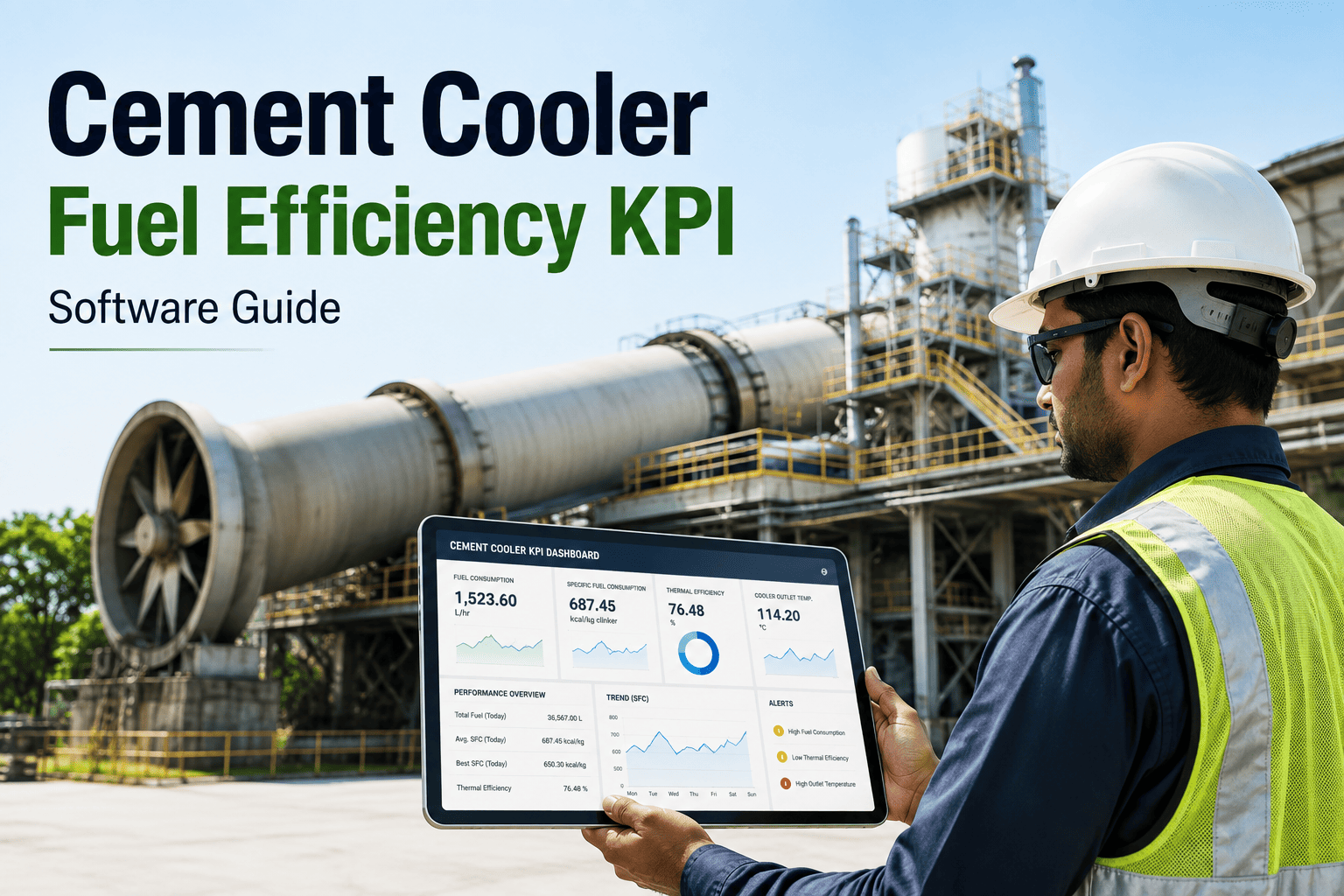
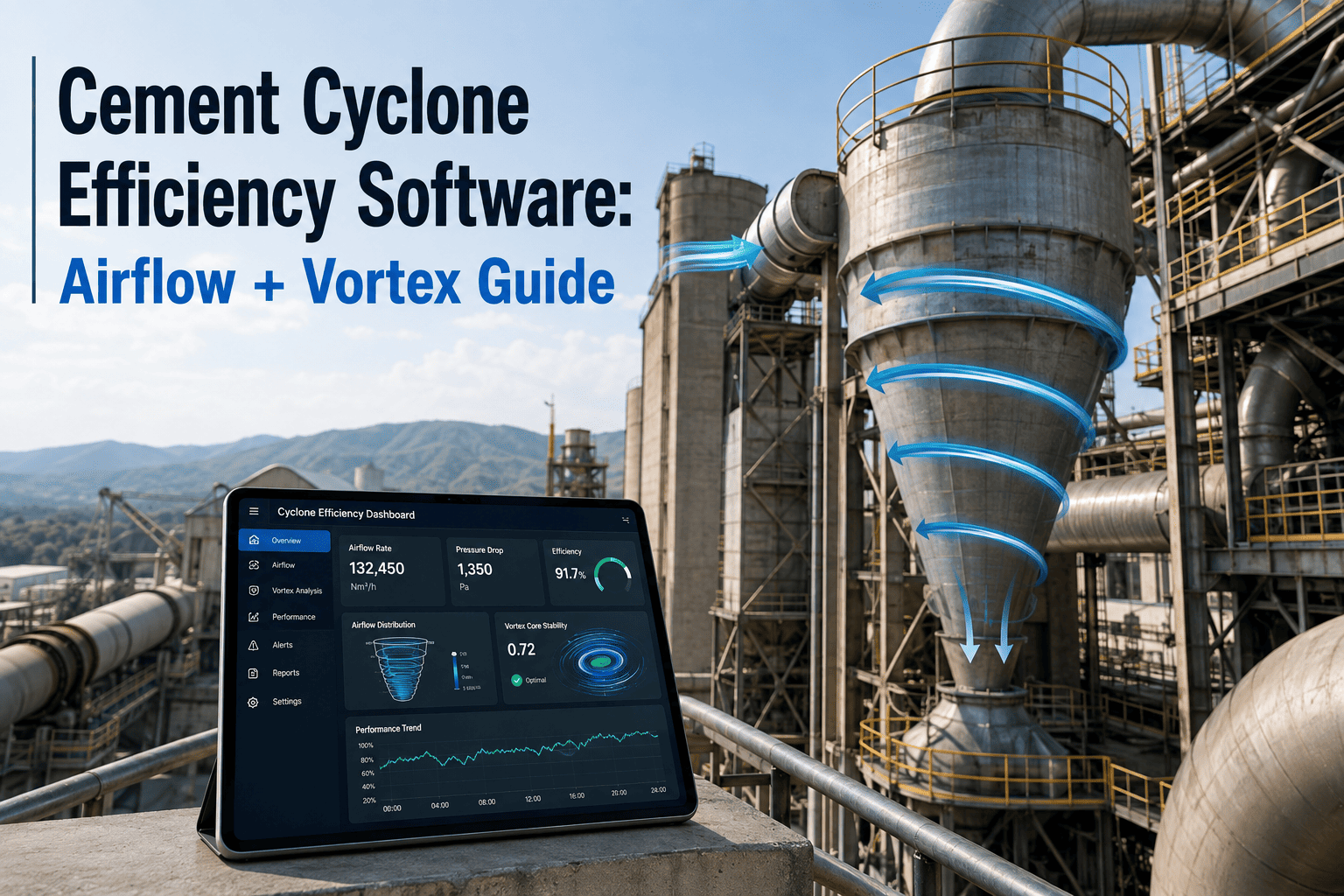
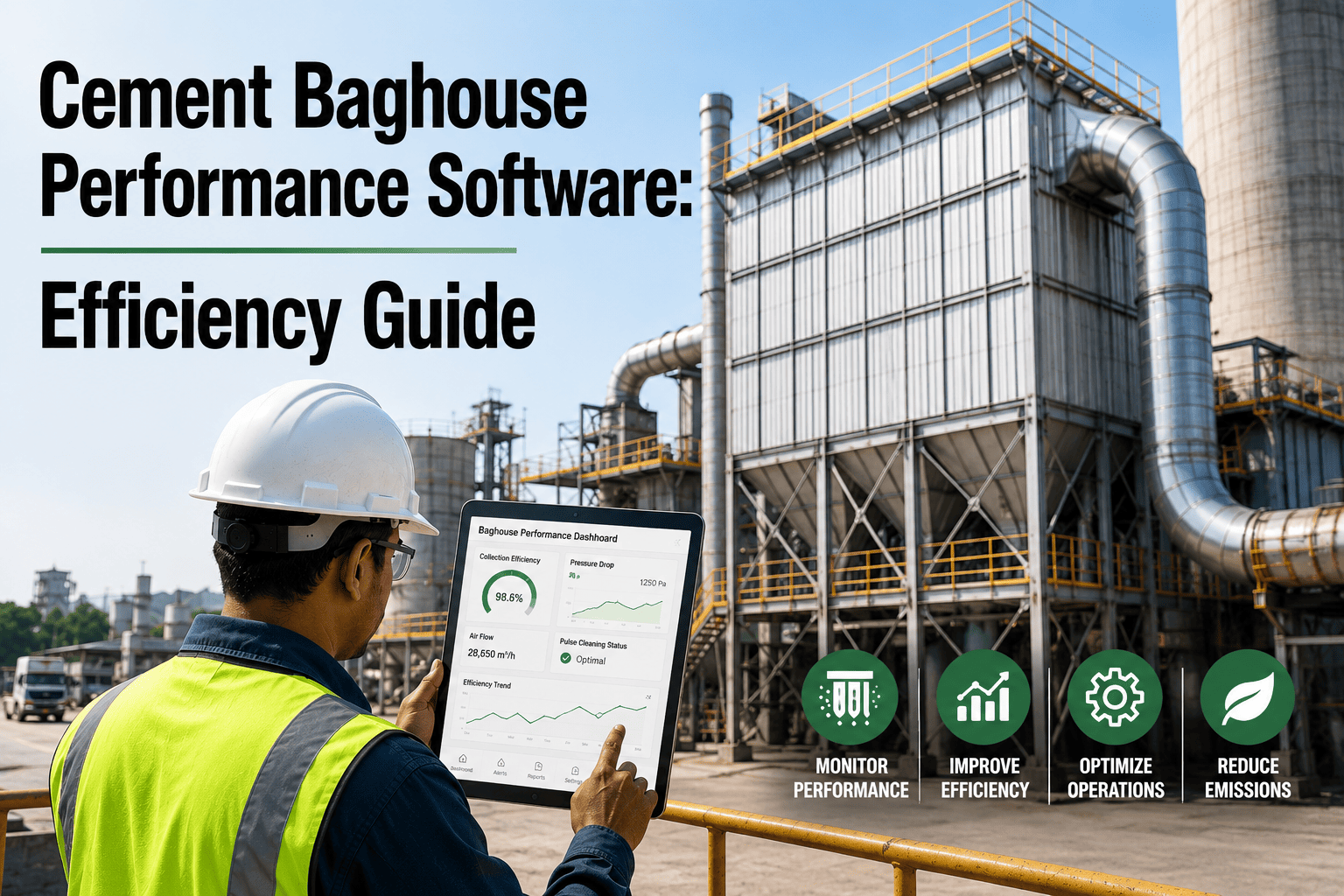
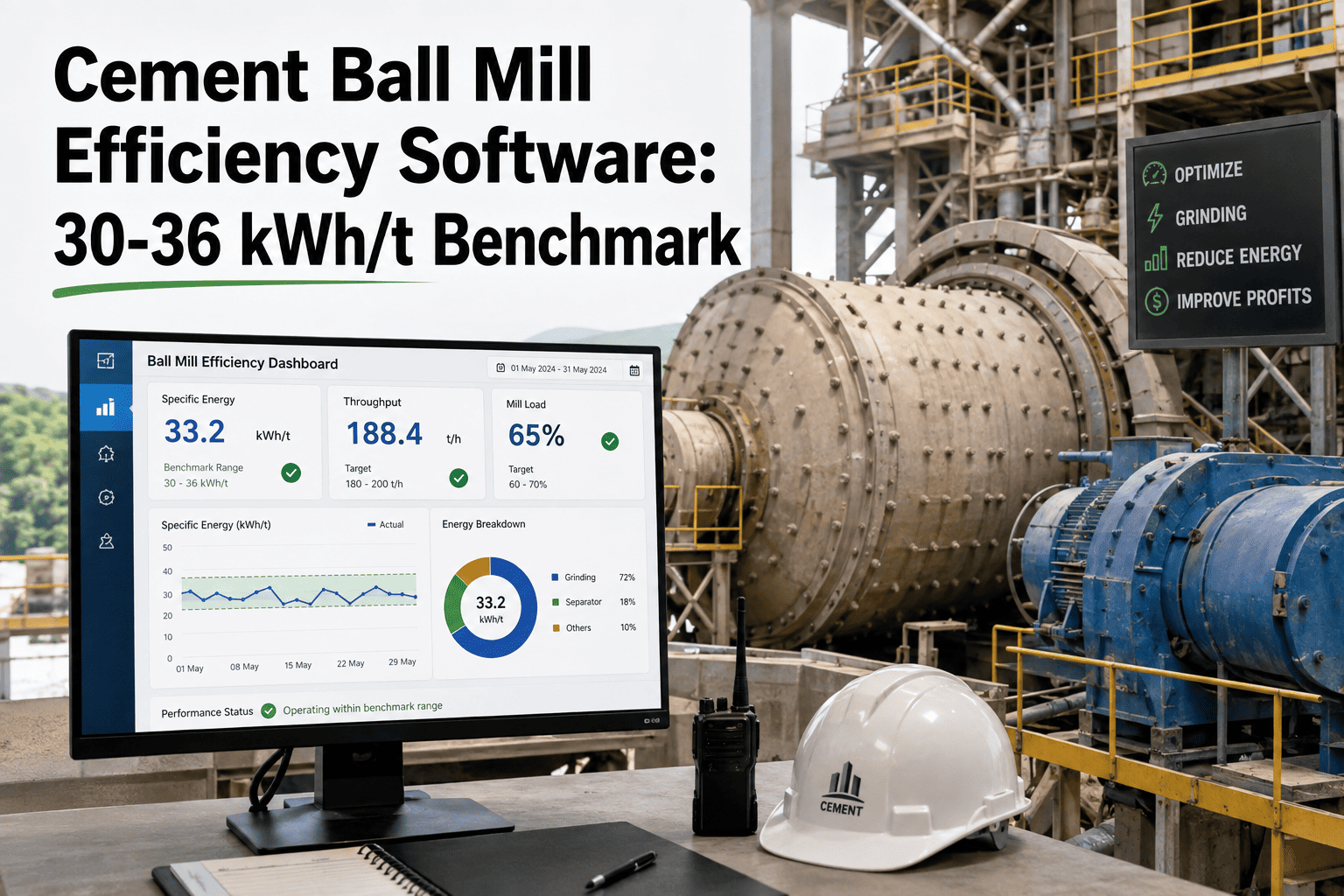
A cement plant's preheater tower is where roughly three quarters of the plant's entire thermal energy budget is spent, yet it is also the equipment most likely to be running below design efficiency without anyone noticing on a shift report. A cracked expansion joint, a worn cyclone dip tube, or a build-up of alkali deposits does not trip an alarm — it just quietly raises specific heat consumption by a few percentage points every week until the fuel bill tells the story months later. Most plants still track preheater condition through manual DP readings, occasional shutdown inspections, and operator instinct rather than continuous, logged data tied to actual kcal per kilogram of clinker. That gap is exactly where a dedicated cement preheater efficiency software layer earns its place — turning cyclone pressure drop, gas temperature, and false air readings into a maintenance schedule instead of a mystery. This guide walks through how 5-stage and 6-stage preheater systems actually perform, where the 4 to 8 percent thermal SEC swings come from, and how OxMaint keeps that number under control across every cyclone stage.
Cement Pyroprocessing · Preheater Efficiency · CMMS Guide 2026
Cement Preheater Efficiency Software: The 5-Stage and 6-Stage Cyclone Guide
Why identical kiln lines with identical fuel post 4 to 8 percent different specific heat consumption — and the cyclone, false air, and gas temperature data your CMMS needs to close that gap for good.
75-80%
Share of a cement plant's total thermal energy consumed inside the preheater and precalciner system
700
Realistic kcal per kg clinker achievable by a well-maintained modern 6-stage preheater
4-8%
Typical thermal SEC swing between a well-run preheater and one drifting on false air and cyclone wear
3
Kcal per kg of clinker wasted for every 1 percentage point rise in false air at the preheater exit
5-Stage vs 6-Stage
Why Plants Choose 5-Stage or 6-Stage Cyclone Preheaters
Both designs use the same principle — raw meal cascades through a series of cyclones counter-current to hot kiln exhaust gas, transferring heat before the meal ever reaches the calciner or kiln. The difference is how many times that heat exchange happens, and each additional stage trades a lower exit gas temperature for a higher pressure drop and fan power draw.
5-Stage Preheater
The industry standard for decades, a 5-stage tower cuts heat consumption by roughly 20 to 30 percent compared to older preheating methods and typically lifts kiln output by around 30 percent over a non-preheater line, while keeping fan power and tower height more moderate.
6-Stage Preheater
Adding a sixth cyclone stage extracts more heat from the exit gas before it leaves the tower, and well-run 6-stage systems on high-grade fuel have demonstrated specific heat consumption close to 700 kcal per kg clinker in continuous operation.
Heat Cascade
How Heat Moves Down the Cyclone Tower
Raw meal enters at the top cold and exits at the bottom near calciner temperature, while gas flows the opposite direction, giving up heat at every stage. This counter-current exchange is what makes suspension preheating so efficient — but only when every cyclone is sealed and every dip tube is intact.
Stage 1
Raw Meal Feed and Top Cyclone
Cold raw meal enters the riser duct and is instantly dispersed into the hottest available exit gas, capturing the first and fastest stage of heat exchange.
Stage 2-4
Mid-Tower Cyclone Stages
Meal cascades downward through successive cyclones, and gas-solid suspension rate at each riser duct determines how much of the theoretical heat exchange is actually captured.
Stage 5-6
Lowest Cyclone and Calciner Inlet
Near-calcined meal exits the final stage close to calciner temperature, and this is where a sixth stage recovers marginal heat that a 5-stage design would send up the stack.
Cement Preheater CMMS
Stop Finding Out About Cyclone Wear From the Fuel Bill
OxMaint logs pressure drop, gas temperature, and inspection findings against every cyclone stage so a cracked expansion joint or a worn dip tube shows up as a scheduled work order, not a three percent jump in specific heat consumption nobody can explain.
Where the Efficiency Leaks Out
The Four Failure Modes Behind Rising Preheater SEC
False Air Through Seals and Joints
Cold ambient air entering through worn expansion joints, cyclone doors, and meal pipe seals dilutes the hot gas stream and raises exit gas oxygen readings, wasting roughly 3 kcal per kg of clinker for every point of false air gained.
Cyclone Dip Tube and Cone Wear
Erosion from abrasive raw meal gradually enlarges the dip tube opening, lowering separation efficiency and allowing more fines to bypass the cyclone, which reduces suspension rate and heat transfer.
Buildup and Blockage from Alkali Condensation
Sulfur and alkali vapors condense on cooler cyclone walls, forming crusty deposits that narrow gas passages, increase pressure drop, and can trigger material blockages that force an unplanned shutdown.
Riser Duct Feed Point Misalignment
When the feed point drifts from its designed location relative to the gas inlet, suspension rate drops sharply since most heat exchange happens in the first fraction of a second after meal enters the duct.
SEC Impact Visual
What Each Preheater Issue Costs in Thermal Energy
False air above 5 percent at preheater exit
+9-15 kcal/kg
Degraded cyclone efficiency, unaddressed
Up to 5-15% SEC rise
Operating 15-20% above theoretical minimum
Industry average today
Well-maintained modern 6-stage tower
~700 kcal/kg achievable
The takeaway for maintenance planning
None of these losses announce themselves with an alarm. They show up as a slow drift in specific heat consumption that only becomes obvious once someone compares this month's fuel report against last quarter's — usually far later than the point where a cyclone inspection could have caught it.
5-Stage vs 6-Stage Comparison
Side-by-Side Preheater Performance and Maintenance Focus
| Preheater Type |
Typical SEC |
Fan Power Draw |
Maintenance Priority |
Best Fit |
| 5-Stage Cyclone |
750-820 kcal/kg |
Moderate |
Seal integrity, dip tube wear, suspension rate |
Moderate-capacity kiln lines |
| 6-Stage Cyclone |
700-780 kcal/kg |
Higher |
Lowest-stage buildup, additional cyclone seals |
High-capacity kiln lines |
| No Precalciner Line |
1000-1300+ kcal/kg |
Lower |
Legacy design, limited optimization headroom |
Older or smaller installations |
Common Questions
Cement Preheater Efficiency — Frequently Asked Questions
What is the difference between a 5-stage and 6-stage cement preheater?+
A 6-stage preheater adds one extra cyclone to the tower, extracting more heat from the exit gas at the cost of higher pressure drop and fan power. Well-run 6-stage systems have demonstrated specific heat consumption close to 700 kcal per kg clinker, compared to 750-820 kcal per kg for a typical 5-stage design.
How much does false air actually cost a cement plant in fuel?+
Every one percentage point increase in false air at the preheater exit raises exhaust oxygen by roughly 0.5 percent and wastes approximately 3 kcal per kg of clinker. Plants running above 5 percent total false air are typically leaving meaningful, recoverable fuel savings on the table.
Why does thermal SEC vary by 4 to 8 percent between similar kiln lines?+
The gap comes almost entirely from maintenance condition rather than design — false air infiltration, worn cyclone dip tubes, alkali buildup, and feed point misalignment each degrade heat exchange gradually, and their combined effect is what separates a plant near the theoretical minimum from one running 15 to 20 percent above it.
How does OxMaint help manage cement plant preheater efficiency?+
OxMaint schedules cyclone inspections, logs pressure drop and false air readings against each stage, and generates work orders for seal, dip tube, and buildup issues before they show up as a fuel cost increase.
Start a free trial to connect your preheater data.
How often should preheater cyclones be inspected for wear?+
Most plants schedule a full internal cyclone inspection at every planned kiln shutdown, with seal and expansion joint checks more frequently since these degrade faster than the cyclone body itself.
Book a demo to see a sample inspection checklist.
OxMaint · Cement Preheater CMMS
Keep Every Cyclone Stage Working as Hard as It Was Designed To
OxMaint gives cement plant reliability teams one platform to schedule preheater inspections, log false air and pressure drop data, and connect maintenance history directly to thermal SEC — so the fuel savings a 5-stage or 6-stage tower was built to deliver actually show up on the fuel report.