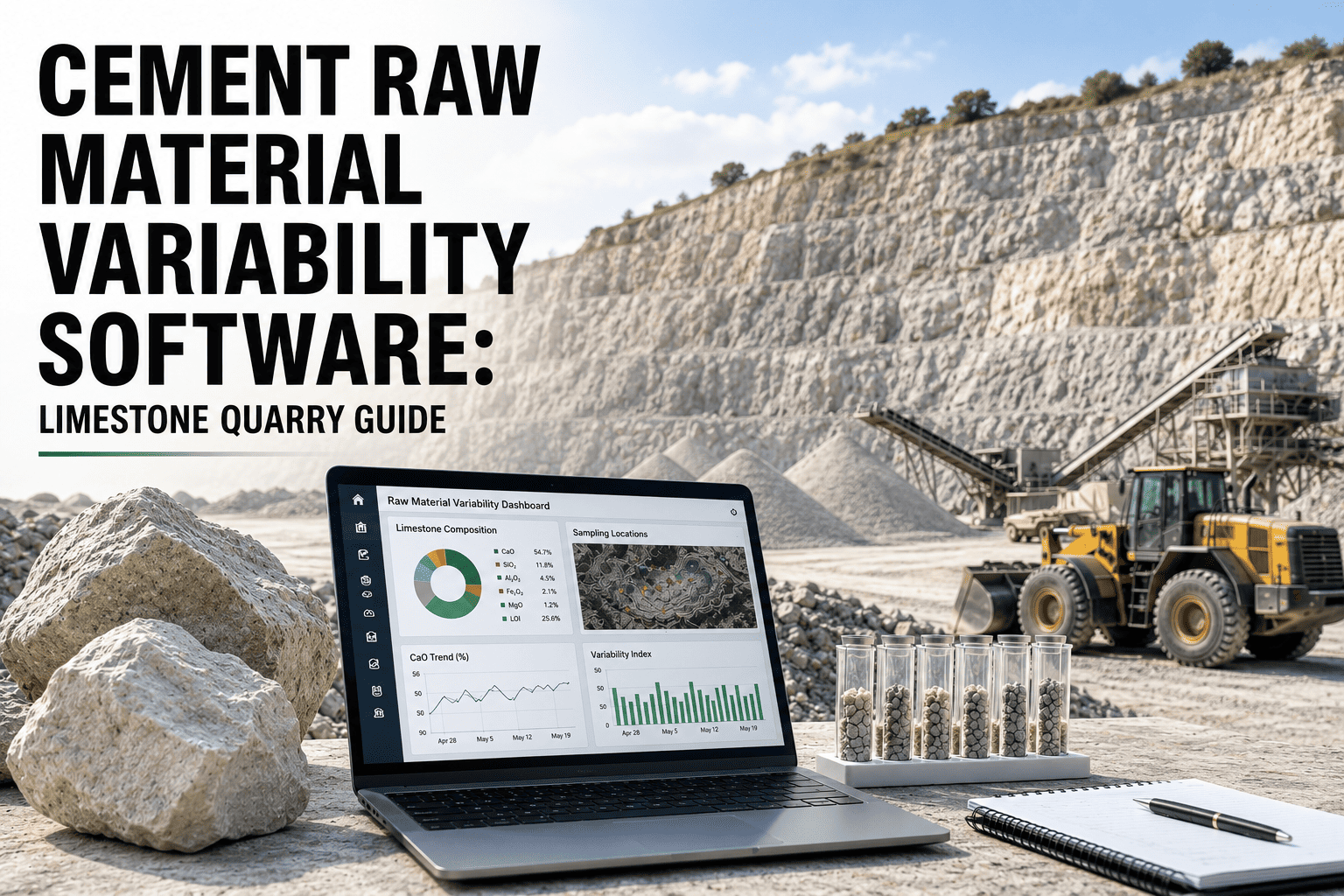
Kiln fuel use is often treated as a combustion and heat recovery topic, yet a large share of it is decided long before the burner. When raw material chemistry swings from hour to hour, operators protect clinker quality by burning harder than the average mix needs, and every extra margin shows up as fuel. The link between variability and fuel is real, measurable, and partly controlled by equipment that maintenance teams already look after. This guide explains the link, the assets that shape it, and how Oxmaint maintenance software keeps those assets reliable.
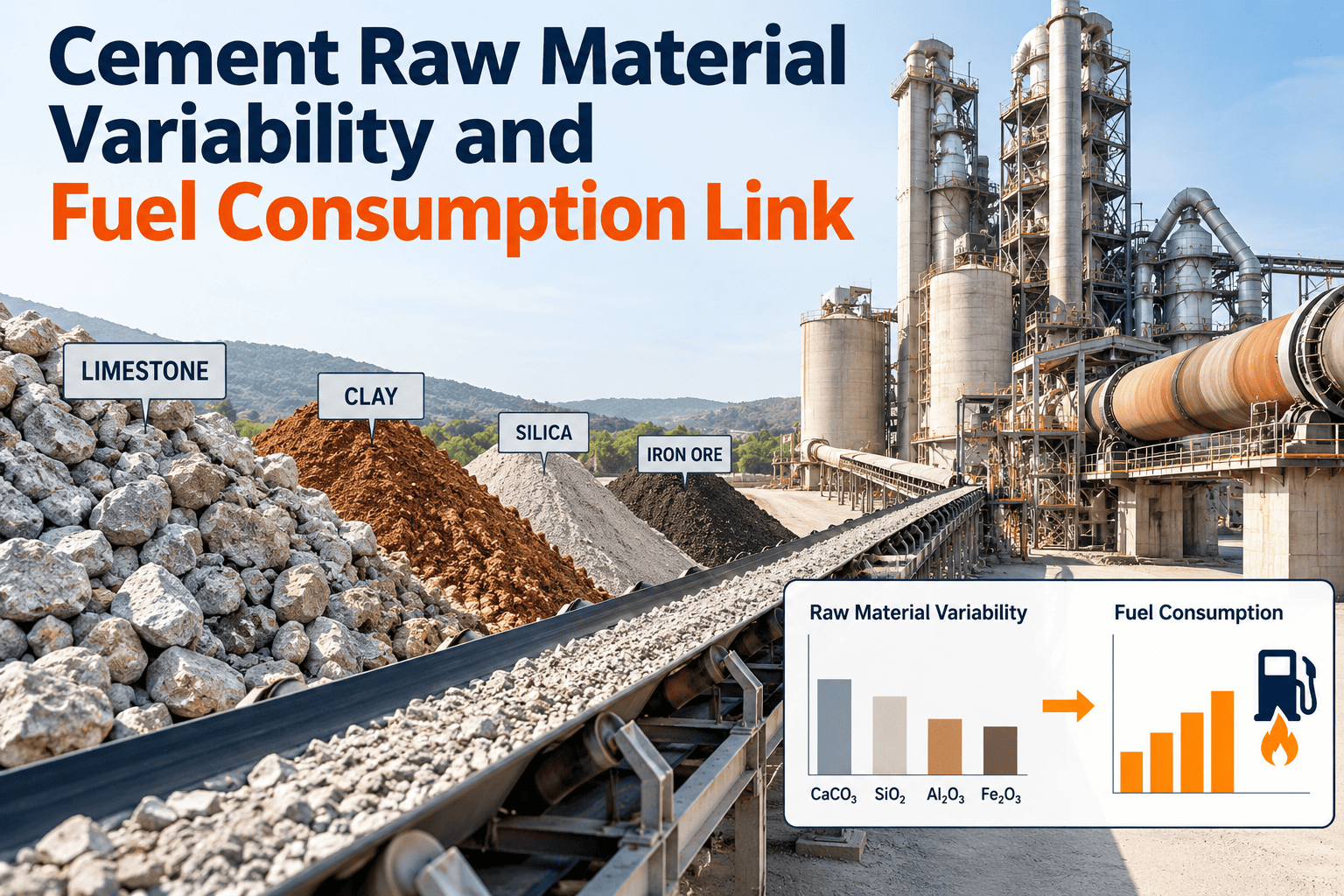
Cement Raw Material Variability and Fuel Consumption Link
The wider the spread in raw meal chemistry, the larger the safety margin the kiln has to carry. Reducing variability is one of the few fuel savings that needs no change to the kiln itself.
Why variability turns into fuel use
The kiln does not burn the average of the feed. It has to produce acceptable clinker from the hardest material that reaches the burning zone, so the operating point is set by the tail of the distribution, not the middle.
Where variability enters between quarry and kiln
Every stage either adds variability or removes it. Mapping the chain shows where a modest equipment improvement has the greatest effect on what the kiln finally sees.
| Stage | How variability is added | How it is reduced | Assets that decide the result |
|---|---|---|---|
| Quarry and crushing | Changing face chemistry, clay seams, and mixed benches | Mine planning and selective loading | Crusher, loaders, sampling equipment |
| Stacking and pre-blending | Few layers, uneven travel, segregation | Many thin layers and full-face reclaiming | Stacker, reclaimer, conveyors |
| Proportioning | Feeder drift, bin hang-ups, wrong moisture assumption | Accurate dosing and feedback from analysers | Weigh feeders, bins, online analyser |
| Raw mill | Coarse fraction changes and unstable circulation | Stable separator performance and fineness control | Mill, separator, fans, sampler |
| Homogenisation silo | Poor aeration or blending reduces averaging | Effective air blending | Blowers, aeration pads, silo extraction |
| Kiln feed | Feed rate surges and dust return changes | Stable feed measurement and control | Kiln feed feeder, elevator, airslides |
The timing problem behind the safety margin
Operators do not hold a margin out of habit. They hold it because information is late. The longer the delay between a chemistry change and a corrective action, the more off-target meal is already in the system.
- Sample takenA mechanical sampler cuts a representative increment from the stream.
- Preparation and analysisThe lab or online analyser produces a result after preparation time.
- DecisionThe control system or operator decides which feeder to change and by how much.
- Mill transport delayThe correction takes time to move through the mill and into the silo.
- Silo and kiln responseThe corrected meal blends with stored meal before the kiln sees any change.
Fuel variability compounds the raw material effect
Raw material is not the only source of swings. Fuel characteristics also change burning conditions, and the two effects interact.
Raw side
- Chemistry and hardness of the meal
- Particle size distribution and moisture
- Feed rate and dust return stability
- Homogenisation quality
Fuel side
- Calorific value and ash content, since ash adds to the clinker chemistry
- Feeding stability of coal, petcoke, and alternative fuels
- Particle size and moisture of solid fuels
- Burner condition and flame shape
Make the equipment behind variability visible
Schedule feeder checks, sampler inspections, and blending equipment maintenance, and keep a clear record of every quality deviation traced to equipment.
Maintenance conditions that quietly widen the spread
Most plants can name a few equipment issues that repeatedly coincide with rough chemistry. Writing them down turns scattered experience into a prevention list.
Common misreadings of the fuel signal
Fuel data is easy to misinterpret because many effects overlap. These patterns lead teams to chase the wrong cause.
- Blaming the burner firstA rise in specific heat consumption is often assumed to be a combustion fault, while the real driver is a harder meal that arrived a few hours earlier.
- Comparing months with different productsChanges in clinker type, kiln feed rate, or fuel mix can hide or mimic the effect of chemistry spread.
- Using averages onlyTwo months with the same average LSF can have very different spreads and very different fuel results.
- Ignoring the time lagFuel response follows chemistry changes after a delay through the mill and silo, so same-hour comparisons are misleading.
What a monthly variability review should cover
A short, regular meeting between quality, process, and maintenance keeps the link between equipment and chemistry visible. Use a fixed agenda so it stays practical.
Look back
- Chemistry spread and fuel use for the month
- Quality deviations and their confirmed causes
- Overdue calibrations and inspections
Find patterns
- Equipment events that preceded wider spread
- Repeat faults on the same sampler, feeder, or machine
- Seasonal effects such as rain and moisture changes
Decide
- Which preventive tasks to add or tighten
- Which spares to hold for critical sampling and dosing assets
- Which findings need a design or procedure change
Equipment that shapes how much variability reaches the kiln
Use this list to decide where maintenance attention pays back fastest. Each item has a direct path from condition to chemistry spread.
Is it the raw material or the equipment?
When fuel use rises, process teams often assume the raw material changed. This quick triage separates a genuine material shift from an equipment fault that is imitating one.
Measure the link with your own data
General figures from other plants are a poor guide to your own kiln. A simple internal analysis shows how much fuel variability is costing you and where to act first.
Practical first actions for the next quarter
You do not need a new control system to start. These four actions use existing equipment and usually pay back in clearer data within weeks.
Indicators that tie chemistry control to fuel results
Track a small set of measures that move together. When variability falls and fuel follows, the maintenance work behind it is easy to justify.
Maintenance rhythm for variability-critical assets
Treat this as a starting point and set final intervals from supplier guidance and your own drift and failure history.
How Oxmaint supports variability control
Oxmaint is maintenance management software. It does not control the mix or the kiln, but it keeps the equipment that measures and doses the raw meal scheduled, inspected, and documented.
Raw material variability and fuel FAQs
How does raw material variability increase fuel consumption?
Operators hold extra burning margin to cope with the hardest material that may arrive. That margin is paid for in fuel on every tonne of clinker.
Can maintenance really influence chemistry stability?
Yes, through feeders, samplers, analysers, and blending equipment. When they drift or fail, the control loop works from wrong or late data.
What should be measured first?
Start with the spread of LSF and the on-time calibration of feeders and analysers. Oxmaint tracks the calibration side in one place.
Is a blending silo enough to remove variability?
Silos reduce short-term swings but cannot fix a persistent bias or a long-term shift. Accurate dosing and good sampling are still required.
How can a plant get started?
Map the chain from quarry to kiln and list the assets that affect chemistry. Book a demo to plan the schedules.
Lower the margin your kiln has to carry
Give quality, process, and maintenance teams one reliable record of the equipment that keeps raw meal chemistry on target.