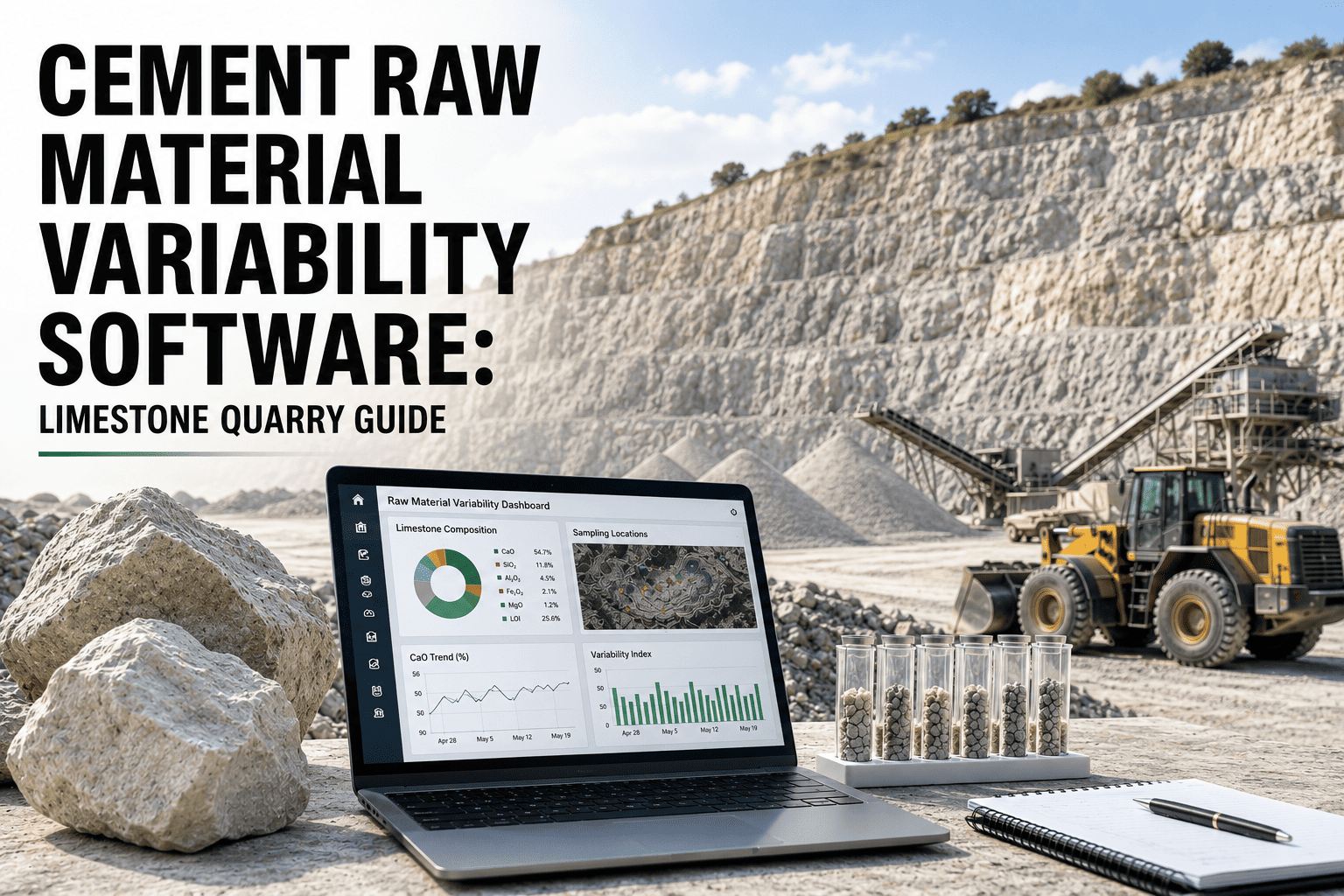
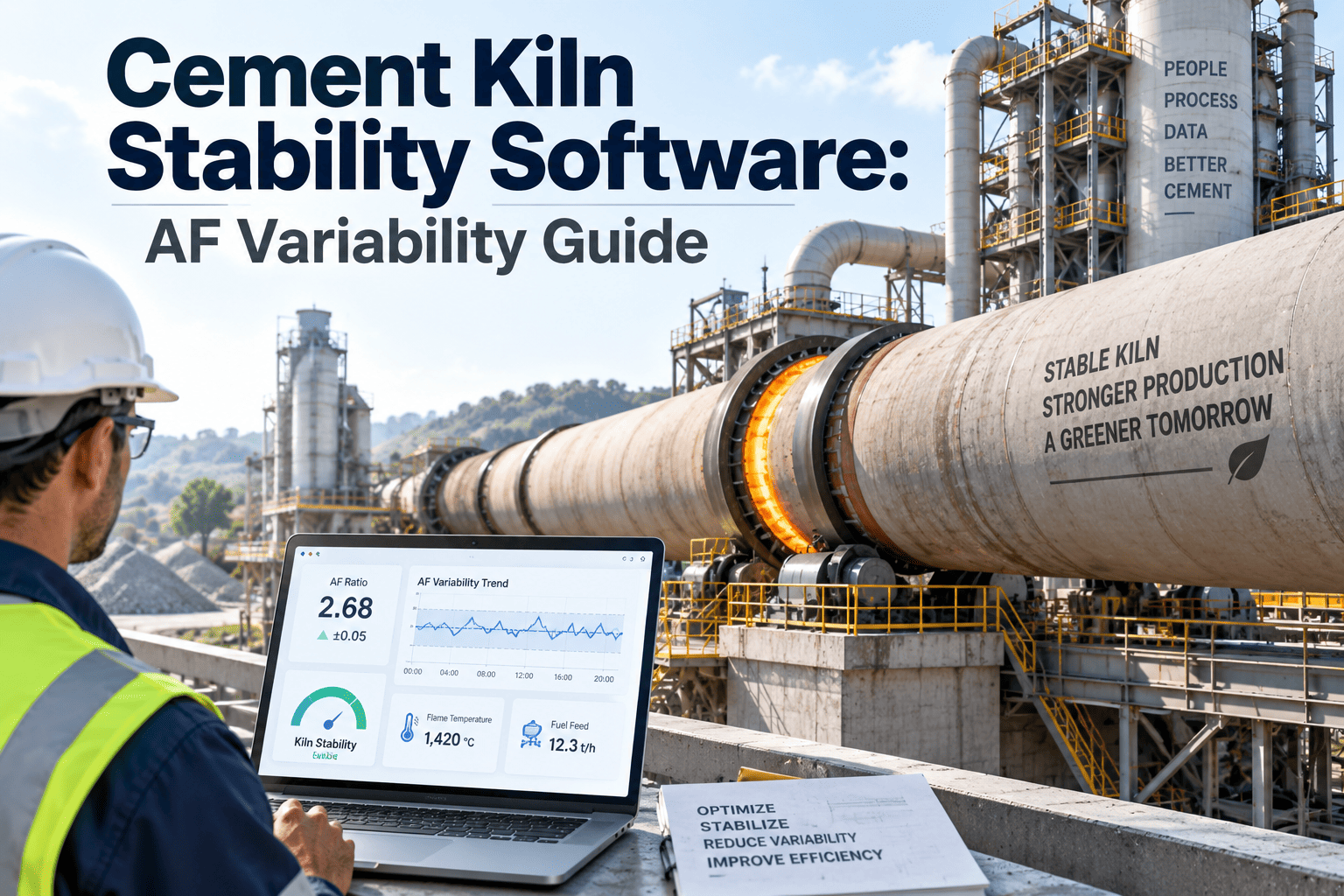
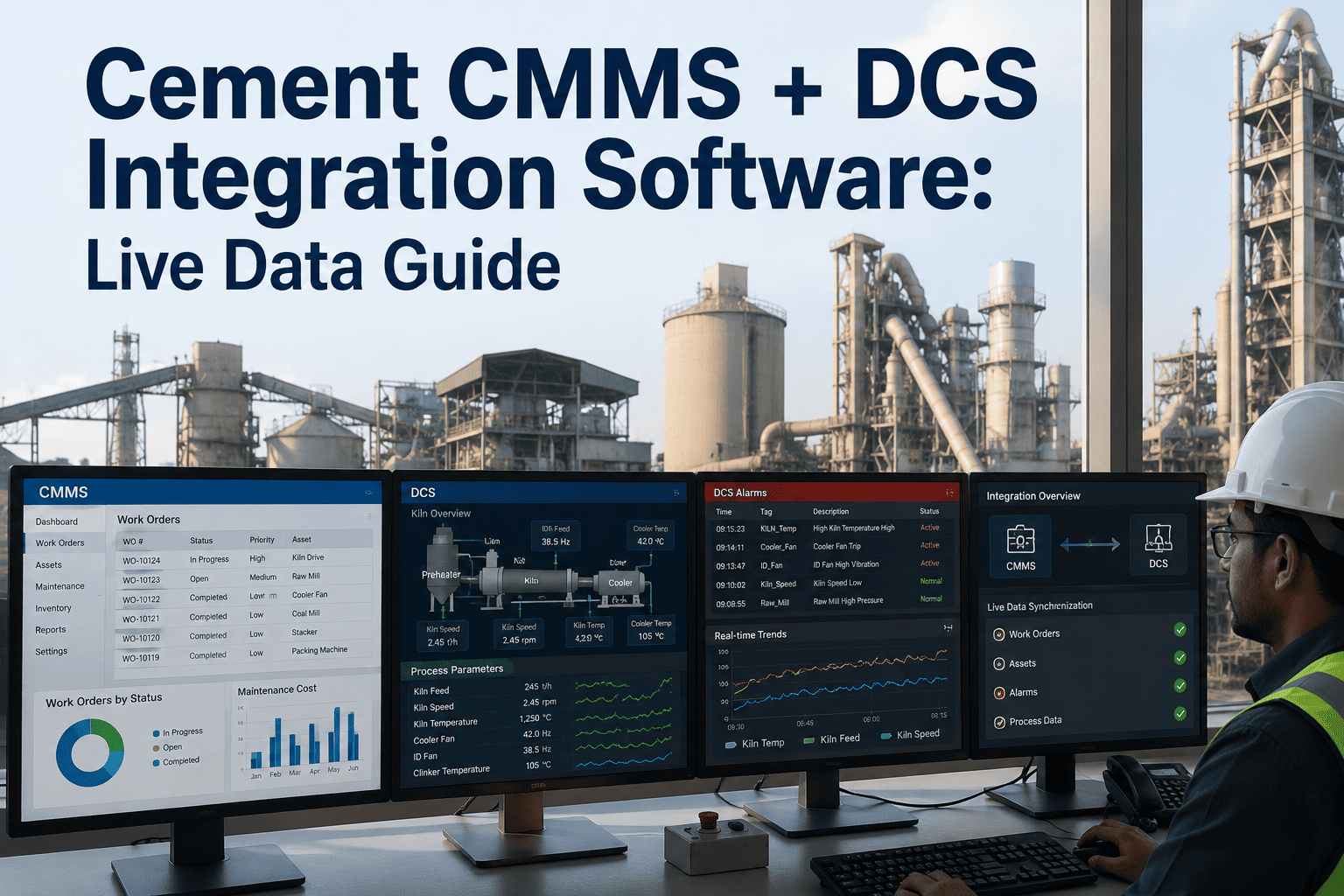
Limestone from one bench of a quarry face rarely matches limestone from the next — CaO content can swing several percentage points across a single blast pattern, and every one of those swings travels straight into the raw mill if nobody is tracking it. Cement plants lose 5–15 kcal/kg of clinker to specific heat consumption every time raw mix chemistry drifts off target, and a single undocumented additive lot substitution can push Lime Saturation Factor outside tolerance for an entire shift. Most plants still catch this after the fact, once free-lime results come back from the lab two to four hours later and several hundred tonnes of clinker have already left the burning zone. Raw material variability is not a lab problem — it is a tracking and discipline problem, and it starts at the quarry face, moves through the additive stockyard, and ends at the blending bins feeding the raw mill. Oxmaint gives cement plant teams a single CMMS to log quarry face chemistry, additive lot analysis, and bin-to-bin variance so nobody is chasing a kiln upset they could have seen coming three process steps earlier.
Cement Plant Operations · Raw Material Control
Cement Raw Material Variability Software for Limestone Quarry & Bin Control
Track quarry face chemistry, additive lot analysis, and bin-to-bin variance in one CMMS — so raw mix drift gets caught before it reaches the kiln, not after.
Why Raw Material Variability Costs More Than Plants Realize
78–82%
Limestone Share of Raw Feed
Limestone makes up the large majority of raw material feed in an integrated cement plant, so quarry-face chemistry swings dominate everything downstream.
5–15
kcal/kg Wasted on Drift
Uncontrolled raw mix chemistry corrections inflate specific heat consumption by 5 to 15 kcal per kg of clinker as kiln operators chase moving targets.
2–4 hrs
Lab Result Delay
Free-lime and XRF results typically arrive two to four hours after sampling — enough time for hundreds of tonnes of off-spec clinker to already be in the cooler.
0.04
LSF Drop per 1% Ash
Every 1% increase in coal ash infiltration reduces clinker LSF by roughly 0.04 units — a fuel-side variable most plants never log against raw mix records.
Where Variability Enters Your Process — Three Stages, One Blind Spot
1
Quarry Face Chemistry
Limestone is not one uniform material — it is dozens of chemically distinct benches sitting under the same quarry name. High- and low-grade zones, silica-rich pockets, and clay-contaminated faces sit meters apart, and without face-by-face chemistry logs, blast crews load whatever bench is easiest to reach that shift, not whatever bench the raw mix needs. Chevron or windrow stacking with end-of-pile reclaim is the first real defense, but it only works if someone is recording which face fed which pile.
2
Additive Lot Analysis
Iron ore, bauxite, fly ash, and gypsum arrive in lots from different suppliers, different mines, and sometimes different countries — each with its own certificate of analysis and its own quiet variance from the last delivery. A plant that doesn't tie every additive lot number to a raw mix proportioning record is flying blind the moment a new lot enters the bin, because the last lot's chemistry no longer applies.
3
Bin-to-Bin Blending Variance
Even with a well-blended stockpile and consistent additive lots, proportioning bins drift — feeder calibration wears, bin levels fluctuate, and reclaim rates change as a pile draws down from full to empty. Bin-to-bin variance is the last checkpoint before the raw mill, and it is the one most plants monitor least, because it feels like "normal operations" rather than a quality control point.
Every one of these three stages generates a record — a blast log, a certificate of analysis, a feeder setpoint. Oxmaint is the CMMS where cement teams connect those records to the raw mix decisions they actually feed downstream.
The Chemistry Behind the Numbers: LSF, SM, and AM
Raw mix control in cement manufacturing comes down to three moduli that must be held within tight tolerances no matter how much the quarry face or additive lots shift underneath them. Understanding what moves each one is the difference between a proactive raw mix adjustment and a reactive kiln upset.
LSF — Lime Saturation Factor
Governs the ratio of lime to the other three oxides. Drift here is the most common driver of free-lime failures and directly tracks quarry face CaO variation.
SM — Silica Modulus
Controls the balance of silica against alumina and iron, shaping burnability and clinker nodulization. Sensitive to clay contamination in limestone feed.
AM — Alumina Modulus
Sets the ratio of alumina to iron oxide, influencing liquid phase formation temperature. Additive lot swings in bauxite or iron ore move this fastest.
Cost of Unmanaged Variability by Source
| Variability Source |
Typical Cause |
Downstream Impact |
Tracking Fix |
| Quarry Face Shift |
Untracked bench-to-bench CaO variation |
Sharp LSF swings, homogenization silo overload |
Face-by-face chemistry logs tied to blast records |
| Additive Lot Change |
New supplier lot without updated CoA on file |
Silent AM/SM drift at proportioning |
Lot-linked certificate of analysis records |
| Bin Level Drawdown |
Feeder rate drift as pile empties |
Bin-to-bin variance entering raw mill feed |
Scheduled feeder calibration checks |
| Coal Ash Infiltration |
High-ash fuel delivery unlogged |
LSF reduction of ~0.04 per 1% ash |
Fuel quality logs cross-referenced to raw mix |
| Lab Result Lag |
2–4 hour gap between sampling and result |
Off-spec clinker already through burning zone |
Digital sampling logs with instant CMMS alerts |
How Oxmaint Structures Raw Material Variability Control
Quarry Face Chemistry Logs
Record CaO, SiO2, and contamination readings by bench and blast pattern, linked directly to which stockpile each load fed.
Additive Lot Traceability
Attach certificates of analysis to every incoming additive lot so proportioning teams see exactly what chemistry entered the bin and when.
Bin-to-Bin Variance Tracking
Log feeder calibration checks and bin level trends as scheduled maintenance tasks, not afterthoughts, so drawdown drift gets caught early.
Audit-Ready Records
Every chemistry log, lot certificate, and calibration check lives in one asset-linked history — ready for management review or a quality audit.
Frequently Asked Questions
Why does limestone chemistry vary so much within a single quarry?
Limestone deposits form in layers and pockets, so CaO, silica, and clay content genuinely differ between benches just meters apart.
Logging chemistry face-by-face is the only way to catch this before it hits the mill.
How often should additive lot certificates be checked against raw mix targets?
Every new lot delivery should trigger a review, since even the same supplier's material can shift between shipments. Waiting until a quality miss shows up is always more expensive than checking on arrival.
What causes bin-to-bin variance if the stockpile chemistry is already blended?
Feeder calibration drift and changing reclaim rates as a bin empties both alter the actual proportion reaching the raw mill, even when the pile chemistry itself is stable and well blended.
Can a CMMS really help with chemistry-driven variability, not just equipment maintenance?
Yes — the same discipline that schedules a bearing inspection can schedule a quarry face sample or a feeder calibration check.
Book a demo to see how Oxmaint connects both in one system.
What is the fastest first step for a plant with no variability tracking today?
Start by logging additive lot certificates against proportioning records — it is the lowest-effort, highest-impact fix because the data already exists, it just needs to be connected to a system.
Stop Chasing Kiln Upsets You Could Have Seen Coming
Quarry face chemistry, additive lot certificates, and bin feeder calibration are all maintenance and quality records your plant already generates. Oxmaint connects them in one CMMS so raw mix variability gets caught at the source, not discovered in the lab two hours later. Start free today.