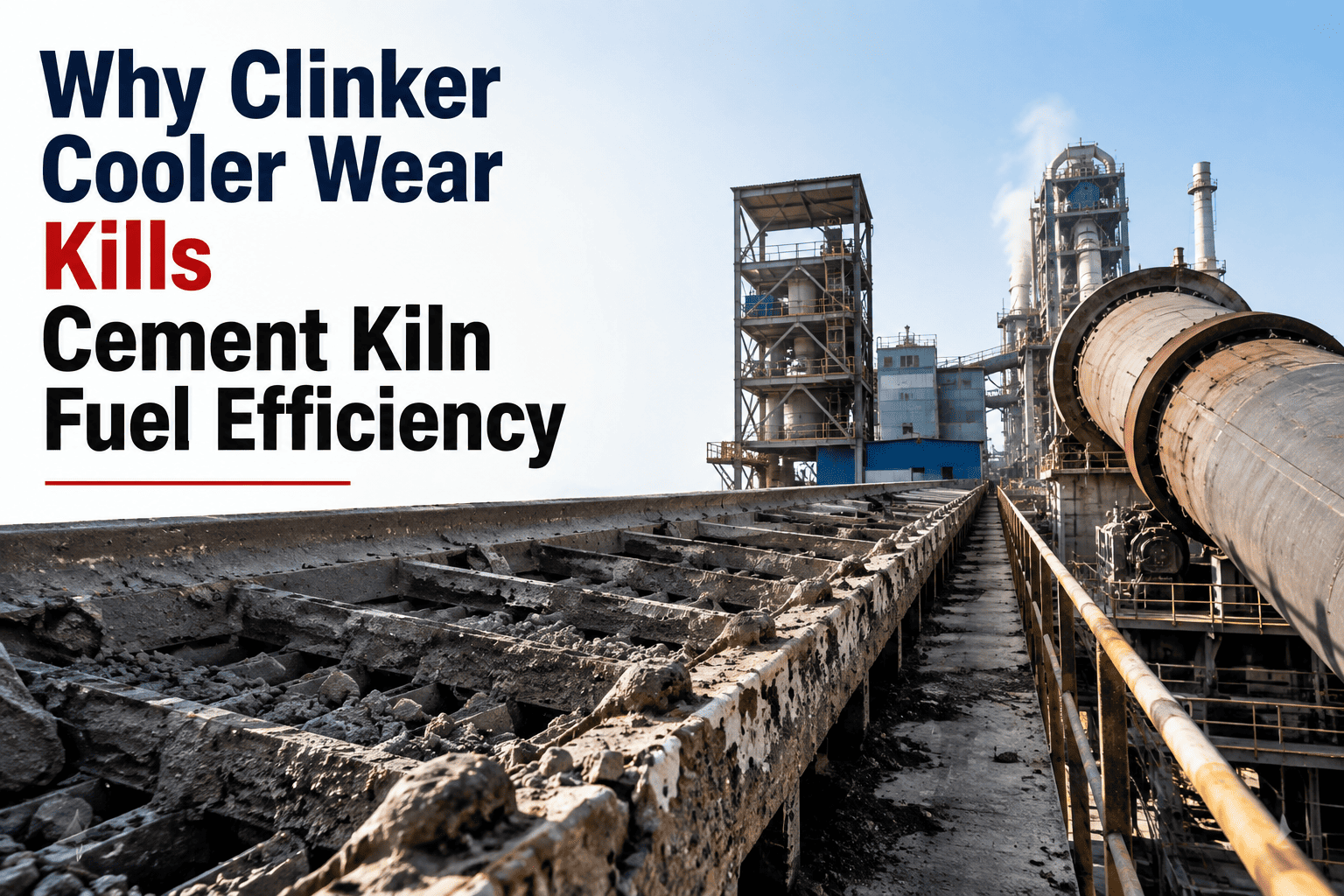
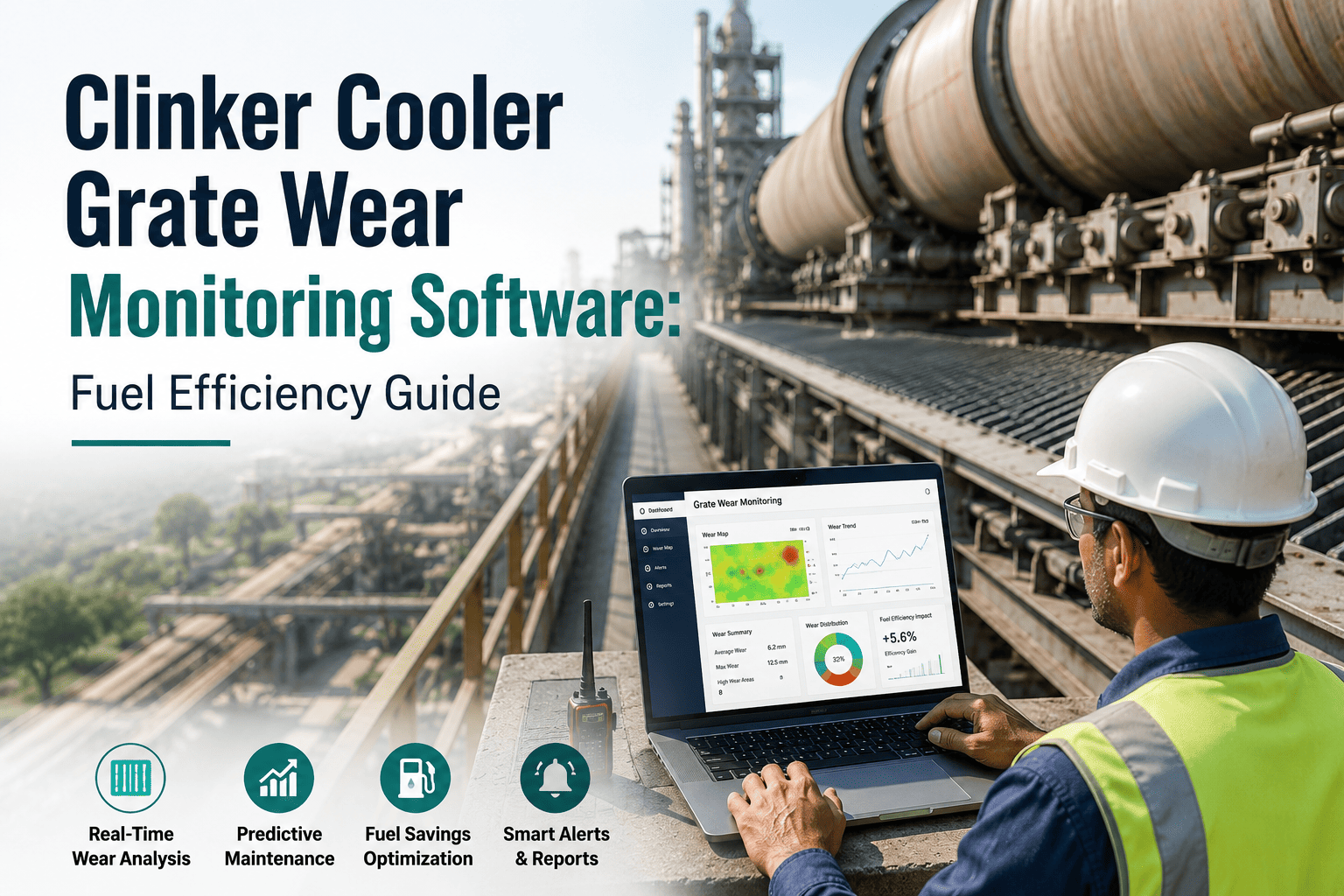
A worn grate plate in your clinker cooler never trips an alarm. It just lets air find the path of least resistance through the clinker bed instead of pushing through it evenly, and secondary air temperature drifts down ten, twenty, sometimes eighty degrees over months without anyone noticing on the control room screen. The kiln compensates the only way it can — by burning more fuel to hold the same clinker output — and that extra fuel shows up as a bigger coal or petcoke bill, not as a line item anyone traces back to a grate plate. Plants that track grate wear against secondary air temperature catch the drift while it is still a maintenance decision, not a margin problem. Sign up free at https://app.oxmaint.ai and see your own cooler's wear curve mapped against fuel cost this week.
Clinker Cooler Wear, By The Numbers
30-80°C
Typical secondary air temperature drop once grate plates wear through
35-40%
Share of total kiln process heat recovered or lost right at the cooler
$200K+
Added annual fuel spend per 1% rise in specific heat consumption at a 1 MTPA plant
3-8%
Fuel savings typically unlocked by a structured grate plate maintenance program
How Grate Plate Wear Quietly Steals Kiln Fuel Efficiency
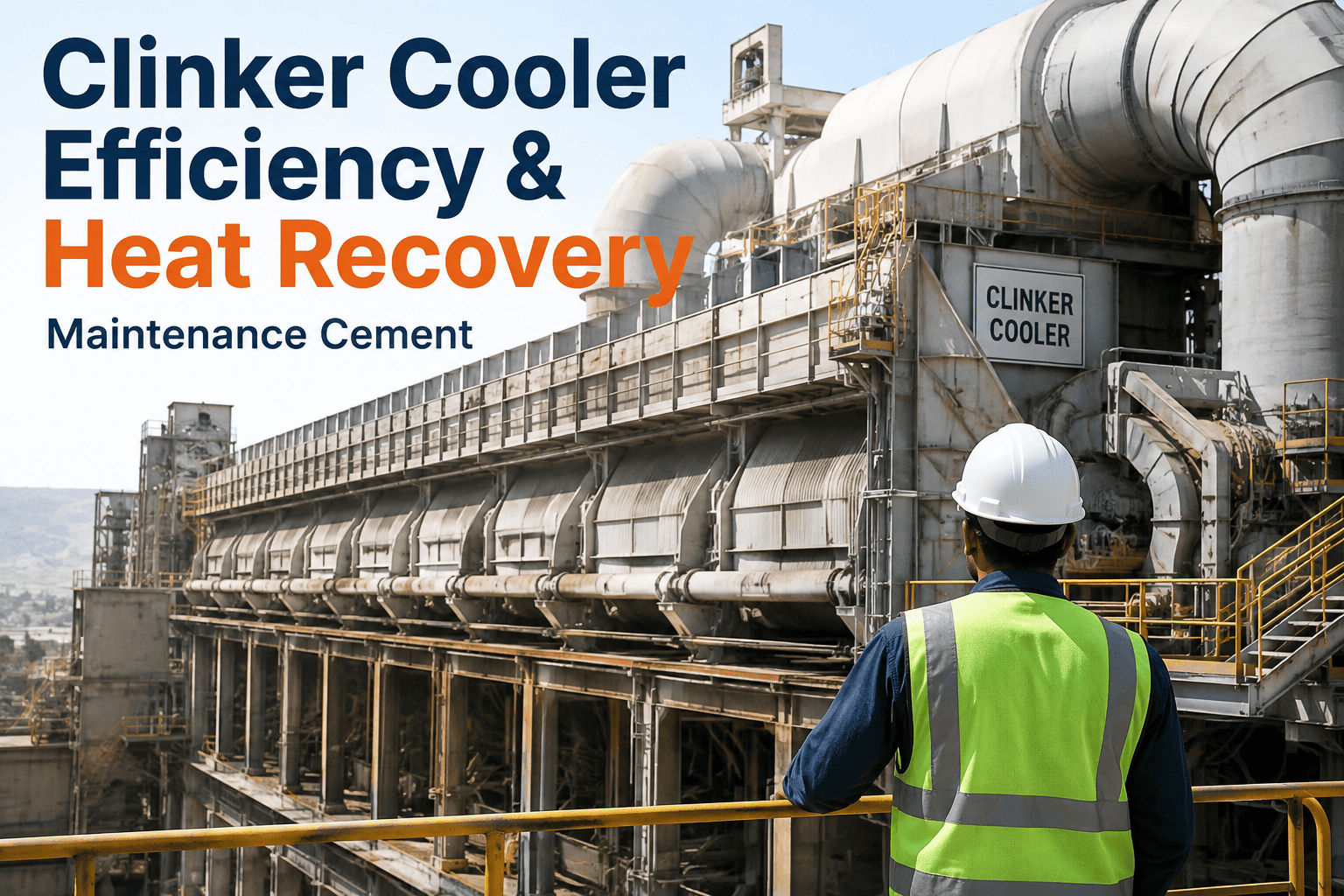
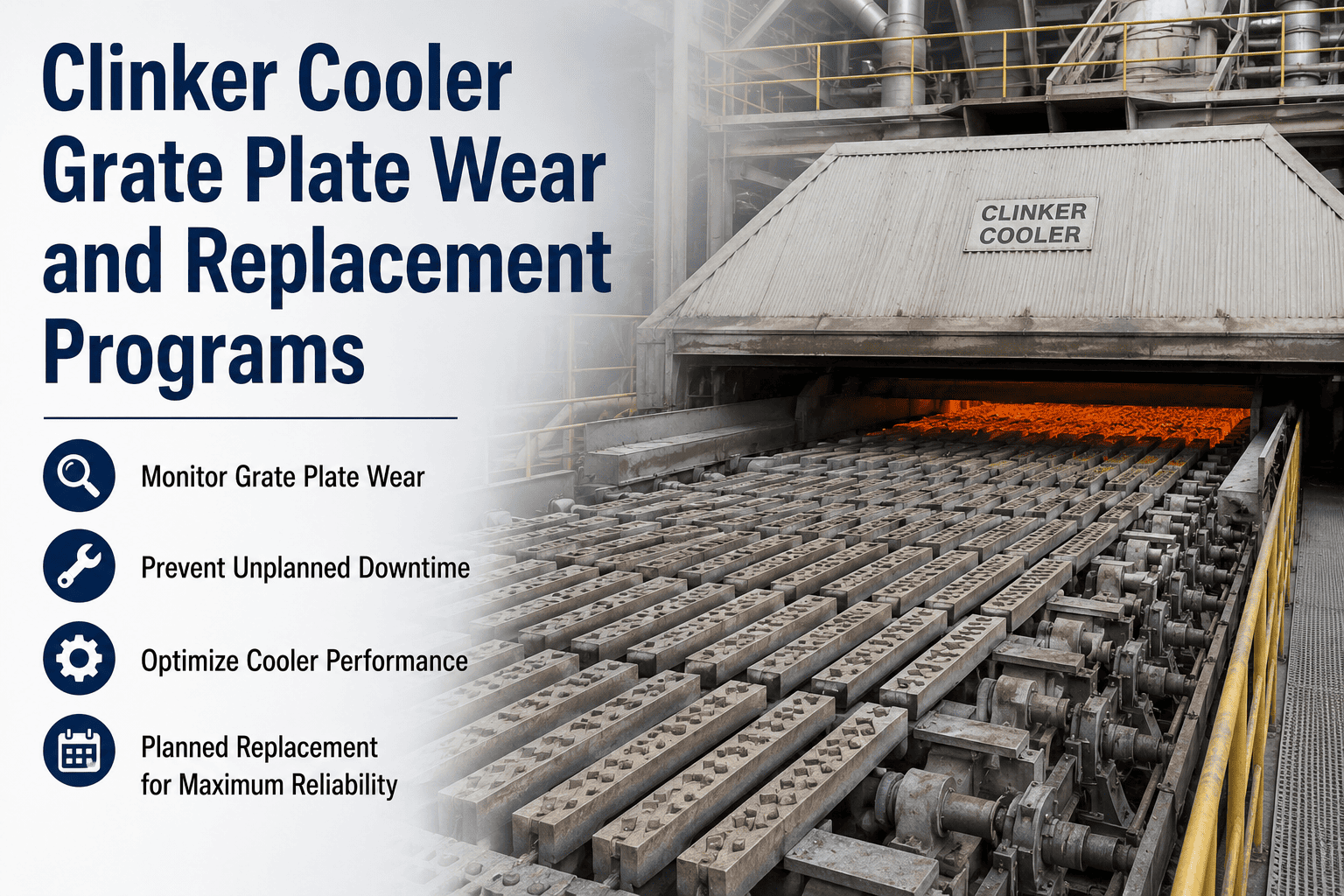
The clinker cooler is not a passive conveyor sitting at the end of the kiln line — it is the plant's primary heat recovery system. Ambient air pushed up through the clinker bed reclaims most of the heat carried by clinker leaving the kiln at around 1,200°C, and that reclaimed heat returns as secondary air feeding the burner and tertiary air feeding the calciner. Grate plates control how evenly that air moves through the bed. As slots widen and working faces thin from years of thermal cycling and abrasive clinker, air stops moving evenly and starts channeling through the path of least resistance, a pattern operators sometimes call a red river when hot, barely-cooled clinker rides the fast lane straight to discharge. None of this shows up as one dramatic failure. It shows up as a slow drift in secondary air temperature, a slightly higher fuel dosing rate week over week, and a fuel bill that quietly climbs while kiln output stays exactly the same. Oxmaint links grate plate condition data directly to secondary air temperature and specific heat consumption, so the connection shows up on a dashboard instead of a quarterly finance review. Book a demo at https://calendly.com/oxmaintapp/30min and see the wear curve mapped against your own fuel data.
1
Grate Plates Wear
Slots widen and working faces thin from thermal cycling and abrasive clinker.
→
2
Air Channels Form
Cooling air bypasses the clinker bed and follows the path of least resistance.
→
3
Secondary Air Temp Drops
Less heat returns to the burner and calciner as recovered secondary and tertiary air.
→
4
Kiln Burns More Fuel
The burner compensates with added fuel dosing to hold clinker output steady.
→
5
Margin Quietly Erodes
Higher fuel cost per tonne shows up in the invoice, rarely traced back to the plate.
Your Fuel Bill Already Knows About the Worn Plate. Your CMMS Doesn't — Yet.
Oxmaint links grate plate wear directly to secondary air temperature and fuel cost, so you catch the drift before the next invoice does. Free to start, no credit card.
How Oxmaint Tracks the Wear Curve Before It Costs You
Grate plate wear tracking only matters if it changes a decision before the next fuel invoice arrives. Oxmaint is built around two capabilities that make that connection visible in time to act on it.
Core Capability
Grate Plate Wear Tracking Against Fuel KPIs
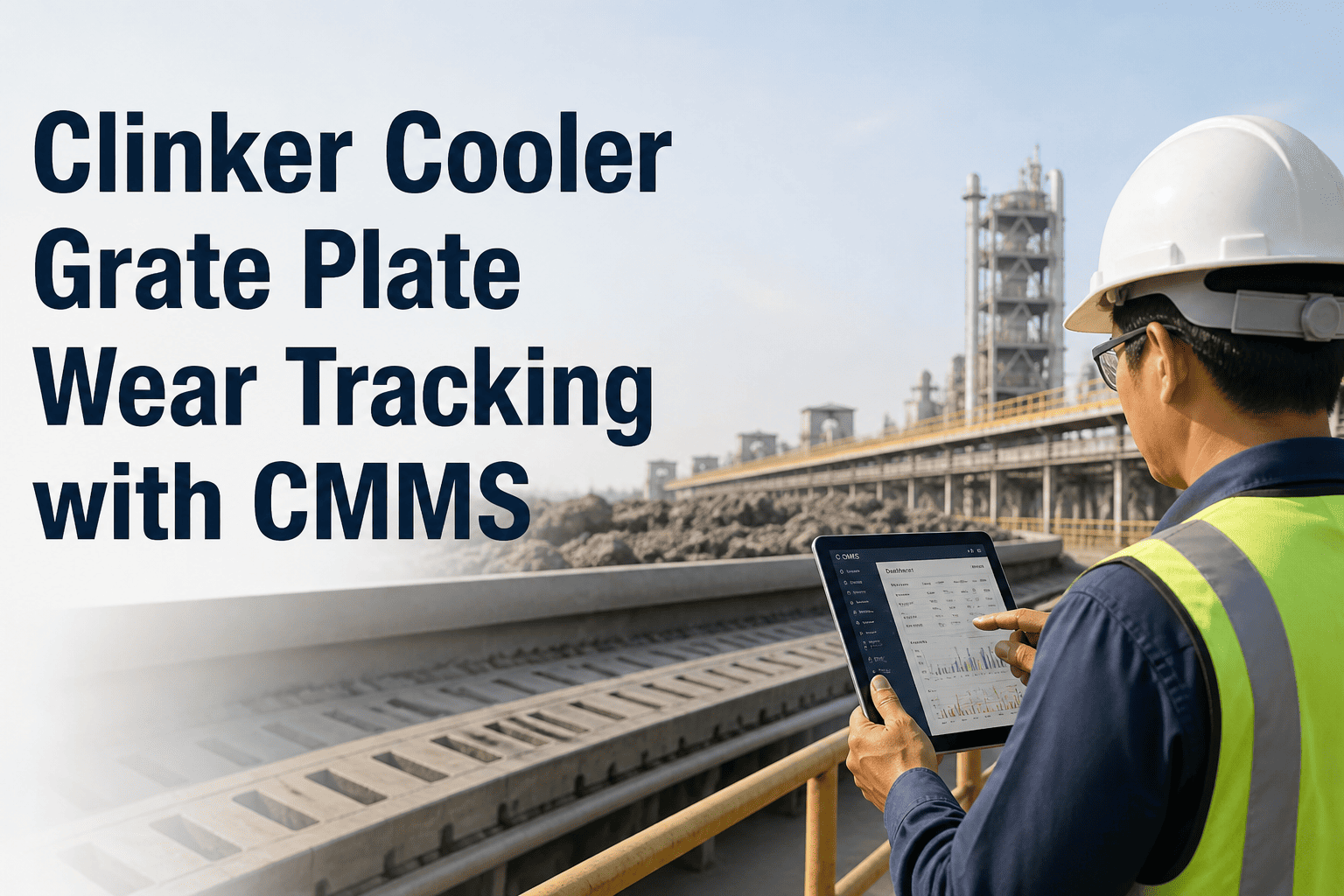
Log plate thickness and slot width at every inspection and see it plotted against secondary air temperature and specific heat consumption in the same view, so a thinning plate and a rising fuel dosing rate are never treated as two separate reports.
Core Capability
Wear-Triggered Replacement & Shutdown Planning
Set thickness and slot-width thresholds per cooler zone, and let the system flag plates approaching the point where air distribution starts to collapse — early enough to fold the replacement into the next planned kiln stop instead of an emergency one.
What Happens at Each Wear Stage
Not every worn plate needs to come out today. Knowing which stage a zone sits in is what separates a planned replacement from an emergency one.
Early Wear
Face thickness above 8mm, slot width within 1mm of original spec. Air distribution stays even and secondary air temperature holds within normal range. No action needed beyond the routine inspection log.
Moderate Wear
Face thickness between 6mm and 8mm, slot width widened up to 2mm. Early air channeling begins and secondary air temperature can drift 10 to 30°C below baseline. Flag for replacement at the next planned shutdown.
Critical Wear
Face thickness below 6mm or slot width beyond 2mm. Red river conditions become likely, secondary air temperature can fall 30 to 80°C, and fuel dosing rises to compensate. Requires scheduling now, not at the next convenient stop.
Implementation Roadmap
Most cooler wear-tracking programs are fully mapped and reporting live data within roughly three weeks, without adding any downtime to the current production schedule.
Week 1
Cooler & Grate Zone Mapping
Register every cooler chamber, grate zone, and plate group with baseline thickness and slot-width data from your last shutdown inspection.
Week 2
Fuel KPI Integration
Connect secondary air temperature, specific heat consumption, and fuel dosing data so wear and fuel cost show up on the same dashboard.
Week 3
Mobile Inspection Go-Live
Deploy the mobile app for grate-by-grate inspection walks, with photo capture and thickness logging replacing the paper grid.
Ongoing
Wear Curve & Shutdown Forecasting
The system learns each zone's wear rate and forecasts which plates will cross threshold before the next shutdown window, so replacement lists are ready before the outage starts.
Every Degree of Secondary Air Temperature Has a Price Tag.
Oxmaint shows you that price in real time, before it shows up in the fuel invoice. Free to start, live in under three weeks.
Proven Results
Inspections logged with thickness and slot-width data, not a pass/fail glance87%
Faster identification of zones drifting toward critical wear64%
Reduction in emergency plate replacements outside planned shutdowns41%
Reduction in time spent reconciling wear data with fuel KPIs79%
4 pts
Average heat recovery efficiency gained after digitizing wear tracking
$0
Implementation fees, free to start
90%
Grate inspections completed on mobile
99.9%
Platform uptime SLA
Oxmaint vs Competitors
Swipe to view full comparison table
| Capability |
Oxmaint |
SAP PM |
IBM Maximo |
Infor EAM |
Fiix (Rockwell) |
eMaint |
Hippo (Eptura) |
| Grate Plate Wear Tracking |
Native, zone-by-zone |
Custom build |
Custom build |
Custom build |
Not available |
Generic PM only |
Generic PM only |
| Fuel KPI Integration (SAT/SHC) |
Built-in, linked to wear data |
Not available |
Custom build |
Not available |
Not available |
Not available |
Not available |
| Wear-Based Shutdown Forecasting |
Automated, threshold-driven |
Manual planning |
Configurable |
Manual planning |
Manual planning |
Manual planning |
Manual planning |
| Cement-Specific Templates |
Pre-built, kiln to cooler |
Generic industrial |
Configurable |
Generic industrial |
Generic industrial |
Generic industrial |
Generic industrial |
| Offline Mobile for Kiln Deck |
Full offline + sync |
Limited offline |
Limited |
Limited offline |
Limited offline |
Limited offline |
Online only |
| Deploy Time |
18–21 days |
6–18 months |
6–18 months |
3–6 months |
4–12 weeks |
2–4 weeks |
2–6 weeks |
Data Security
AES-256
Encryption
Every inspection record, wear measurement, and fuel KPI feed is encrypted at rest and in transit between the kiln deck and the dashboard.
SOC 2 Type II
Certified Security
Independently audited every year, satisfying the vendor security review requirements of plant IT and corporate reliability teams.
RBAC
Access Control
Role-based access from field inspector to plant manager, with a full audit log on every measurement entered and every threshold override.
GDPR
Global Compliance
GDPR and regional data-privacy alignment for plant and personnel records, with regional data residency available on request.
Frequently Asked Questions
How does Oxmaint connect grate plate wear to fuel cost?
Every logged plate measurement is plotted alongside secondary air temperature and specific heat consumption data from the same period, so the fuel impact of a specific zone's wear is visible on one chart instead of buried in a separate finance report.
Sign up free to map your own cooler data.
What thickness and slot-width thresholds trigger a replacement flag?
Thresholds are configurable per plant and per cooler zone, but most operators flag plates once face thickness drops near 6mm or slot width widens beyond roughly 2mm, the point where air distribution typically starts to collapse.
Book a demo to set thresholds for your line.
Can we import our existing grate inspection data?
Does Oxmaint work offline on the kiln deck?
How does this fit with our existing LOTO and work order process?
Grate plate replacements generate a linked work order with digital LOTO isolation steps included, so wear tracking, the repair job, and the safety sign-off all live in one record instead of three separate systems.
Sign up free to see it end to end.
Stop Paying for Fuel a Worn Grate Plate Is Wasting.
Map your cooler's wear curve against real fuel data and know exactly when a plate needs to come out. Free to start. Live in under three weeks.