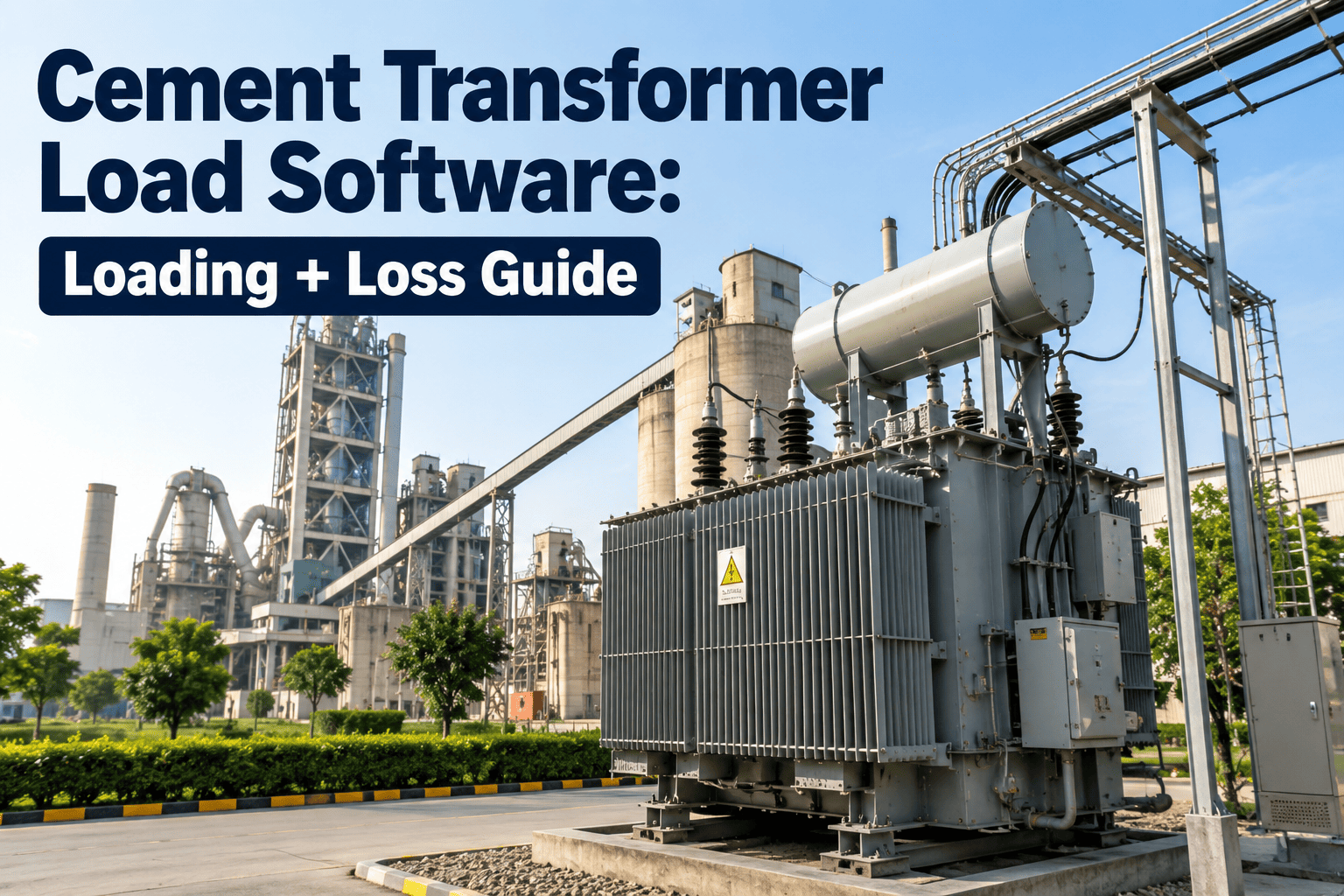
Ask a cement plant electrical engineer what load factor their kiln drive transformer ran at last quarter, and most will reach for a logbook instead of a dashboard. Cement plants carry some of the most cyclical electrical loads in heavy industry — kiln drives, raw mill motors, ESP fields, and packing lines swing between full load, part load, and complete idle within the same shift, and every swing changes no-load loss, load loss, and the winding hot-spot temperature that governs transformer life. Without a continuous loading record, transformers get sized on nameplate assumptions and thermal derating problems only surface after an unplanned trip takes down a kiln feed circuit. A cement transformer load software layer inside the plant CMMS turns scattered logbook readings into a structured loading history that flags loss trends before insulation damage sets in — see what your own transformer fleet's loading profile looks like at https://app.oxmaint.ai/.
CMMS GUIDE · TRANSFORMER LOADING & LOSS 2026
Cement Transformer Load Software: The Loading and Loss Discipline Guide
Load factor tracking, no-load and load loss separation, and hot-spot thermal derating are the three disciplines that keep cement plant transformers out of emergency replacement budgets. Here is how a purpose-built CMMS turns that discipline into a repeatable workflow.
WHY TRANSFORMER LOADING GETS IGNORED
62%
Plants with no logged load factor history
Most cement plants track transformer amperage on a control-room screen but never log it against nameplate rating, so load factor trends never reach the maintenance or finance teams who need them.
3-5x
Loss-of-life acceleration from sustained overload
Every rise past rated hot-spot temperature accelerates insulation aging exponentially rather than linearly, which is why short kiln-restart overload windows can quietly consume years of transformer life.
30-40%
Of distribution losses are avoidable core loss
A meaningful share of no-load loss in older cement plant transformers comes from oversized units running lightly loaded for years after a line was decommissioned or throughput dropped.
18 mo
Typical lead time for a replacement power transformer
A kiln drive or main incoming transformer failure without an ordered spare can idle production for the better part of a year, which is exactly the window a loading-based derating alert is meant to close.
THE THREE LOAD METRICS THAT MATTER
What a cement transformer load software actually measures
Reliability teams that manage transformers well are not tracking dozens of readings — they are tracking three numbers continuously and watching how they move against each other. A CMMS built for cement plant electrical assets pulls these directly from CT/PT readings, SCADA tags, or manual meter rounds and keeps a running history per transformer.
Load Factor
68% typical average, kiln drive transformer
The ratio of average load to rated capacity over a defined period. A cement kiln drive transformer that averages 68% load factor but regularly spikes to 95% during kiln restart is a very different asset than one that sits flat at 68% — and only continuous logging tells the two apart.
No-Load Loss
Fixed cost, present whenever energized
Core loss that exists the moment a transformer is energized, regardless of load — driven by core material and operating voltage. It never appears on a maintenance work order, only on the power bill, which is exactly why it needs an asset-level owner in the CMMS rather than a line item finance sees once a year.
Load Loss (I²R)
Rises with the square of current
Winding and stray losses that increase sharply as current rises, meaning a transformer running at 90% load does not lose 10% more than one at 80% — it loses considerably more, and that heat is what drives the hot-spot temperature calculation used for thermal derating decisions.
TRANSFORMER FLEET TRACKING
How load profiles differ across a cement plant's transformer fleet
Kiln Drive Transformer
Highest restart-inrush risk
Feeds the kiln main drive and auxiliary drive motors. Load profile is cyclical with sharp inrush at every kiln restart after a stoppage, making restart-window thermal tracking more important than average load factor alone.
Raw & Cement Mill Transformer
Throughput-linked loading
Load tracks grinding tonnage directly. A mill running below rated throughput for extended periods is a strong candidate for a right-sizing or refurbish-versus-replace review rather than continued nameplate operation.
ESP & Bag House Transformer
Voltage-sensitive, low current
High-voltage, low-current rectifier transformers for electrostatic precipitators need dielectric and voltage-stability tracking as much as loading data, since their failure mode is usually insulation breakdown rather than thermal overload.
Main Incoming / Distribution Transformer
Plant-wide single point of failure
Steps down grid supply for the entire plant. Load factor here should stay well below rated capacity to preserve emergency overload margin — a plant running its main incomer above 85% average load has no room left for a contingency.
Packing & Utility Transformer
Lightly loaded, core-loss heavy
Packing lines and utility circuits often run well under 40% load factor, which means no-load core loss dominates their total loss picture — a classic candidate for consolidation or right-sizing analysis.
See your own transformer fleet's loading profile mapped out
Oxmaint connects to your existing meters, SCADA tags, or manual reading schedule and builds a load factor and loss history for every transformer in your electrical single-line diagram — no new hardware required to get started.
LOSS & DERATING REFERENCE
Loss types, causes, and mitigation tracked per transformer
| Loss / Risk Type |
Primary Cause |
Typical Behavior |
CMMS-Tracked Mitigation |
| No-load (core) loss |
Core material, operating voltage, magnetizing current |
Constant whenever energized, independent of load |
Flag chronically underloaded units for right-sizing review |
| Load (copper) loss |
Winding resistance, current magnitude |
Rises with the square of load current |
Continuous load factor logging against rated current |
| Stray loss |
Eddy currents in structural parts and windings |
Grows with non-linear and harmonic-rich loads such as VFDs |
Harmonic loss factor tracking on drive-fed transformers |
| Hot-spot thermal rise |
Combined no-load and load losses plus ambient conditions |
Accelerates insulation aging non-linearly past rated temperature |
Thermal derating alerts tied to restart and peak-load windows |
| Insulation loss-of-life |
Cumulative time spent above rated hot-spot temperature |
Shortens expected service life irreversibly |
Loss-of-life trend feeding CapEx replacement forecast |
SYSTEM INTEGRATION
How transformer load data connects to SCADA, EMS, and ERP
SCADA and Energy Meter Feeds
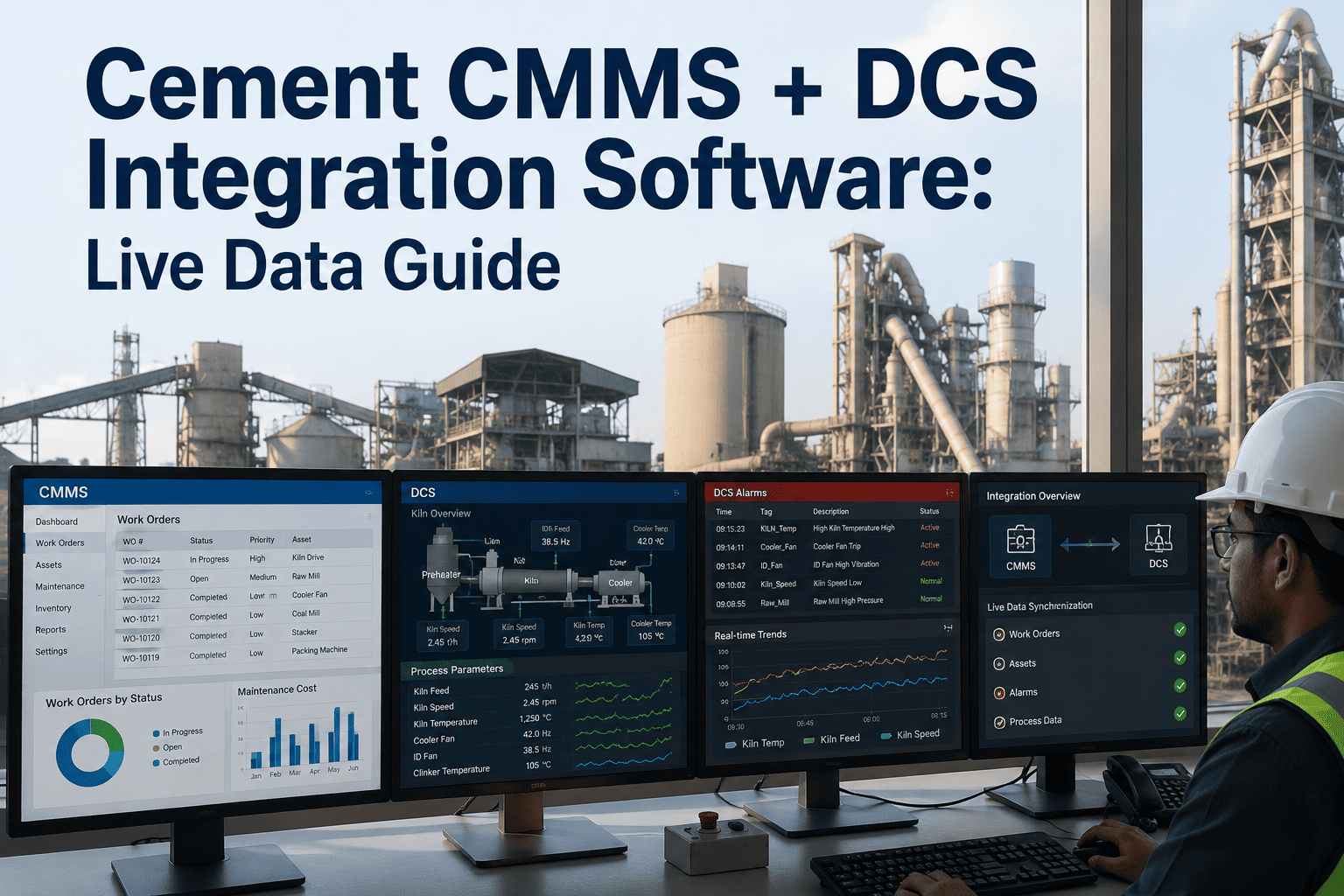
Current, voltage, and power factor tags from existing SCADA or energy meters stream into the CMMS asset record automatically, replacing manual meter rounds with a continuous load factor history.
Thermal Imaging and Oil Test Logs
Infrared thermography rounds and dissolved gas or oil test results attach directly to the same transformer record as loading data, so hot-spot alerts always sit next to their supporting evidence.
Work Order and Spares Linkage
A derating alert or an oil test outside limits auto-generates an inspection work order and checks reserved spare bushings, tap changers, or cooling fan assemblies against current stock.
ERP Cost and CapEx Sync
Loss-of-life trends and repeated overload events feed a pre-populated CapEx request into the ERP capital approval workflow before an emergency replacement becomes the only option left.
FREQUENTLY ASKED QUESTIONS
What electrical and reliability teams ask about transformer load tracking
Stop discovering transformer overload after the trip. Start tracking loading and loss continuously.
Oxmaint gives cement plant electrical and reliability teams a single record per transformer — load factor, no-load and load loss, thermal derating history, and a CapEx forecast built from real operating evidence instead of nameplate guesswork.