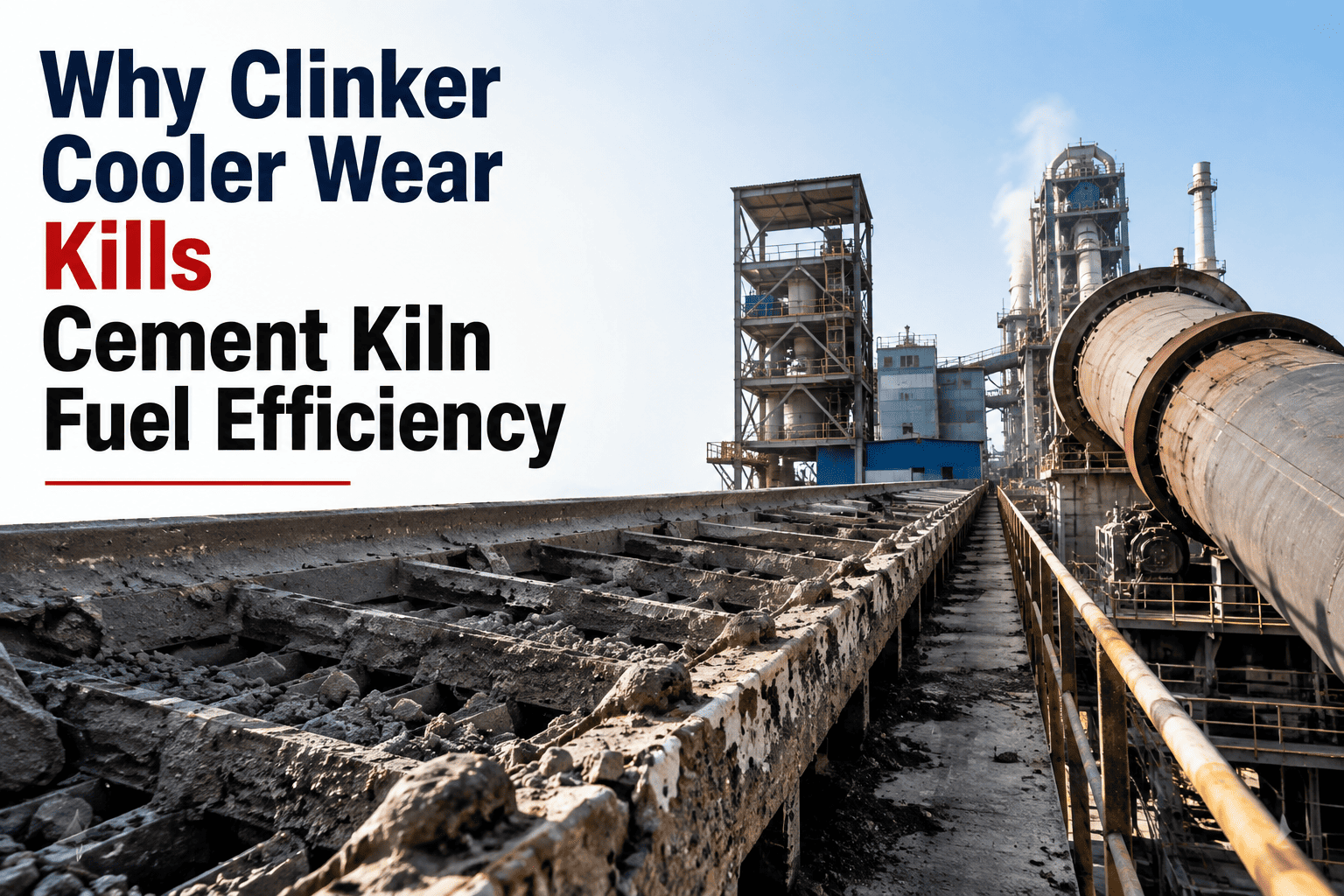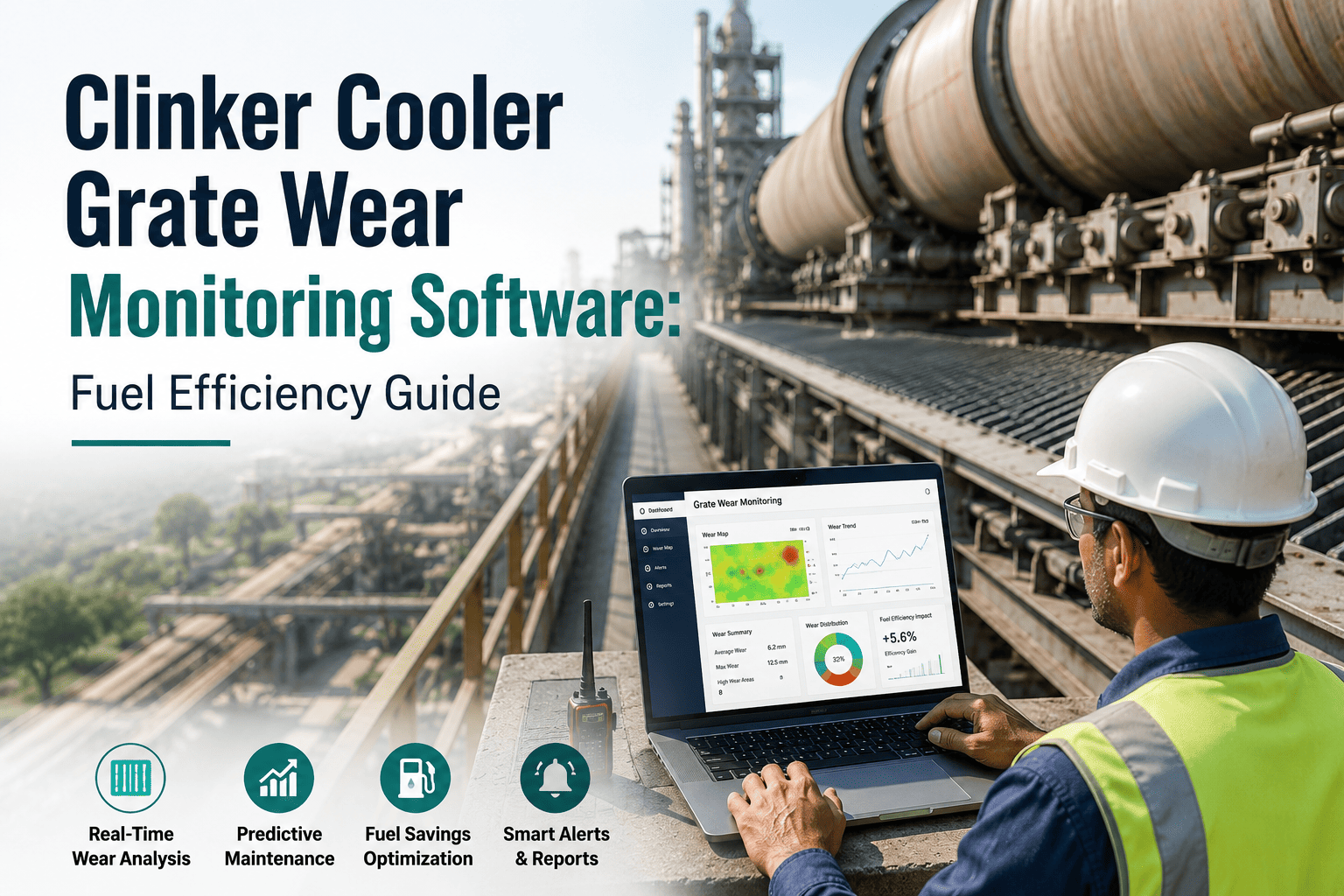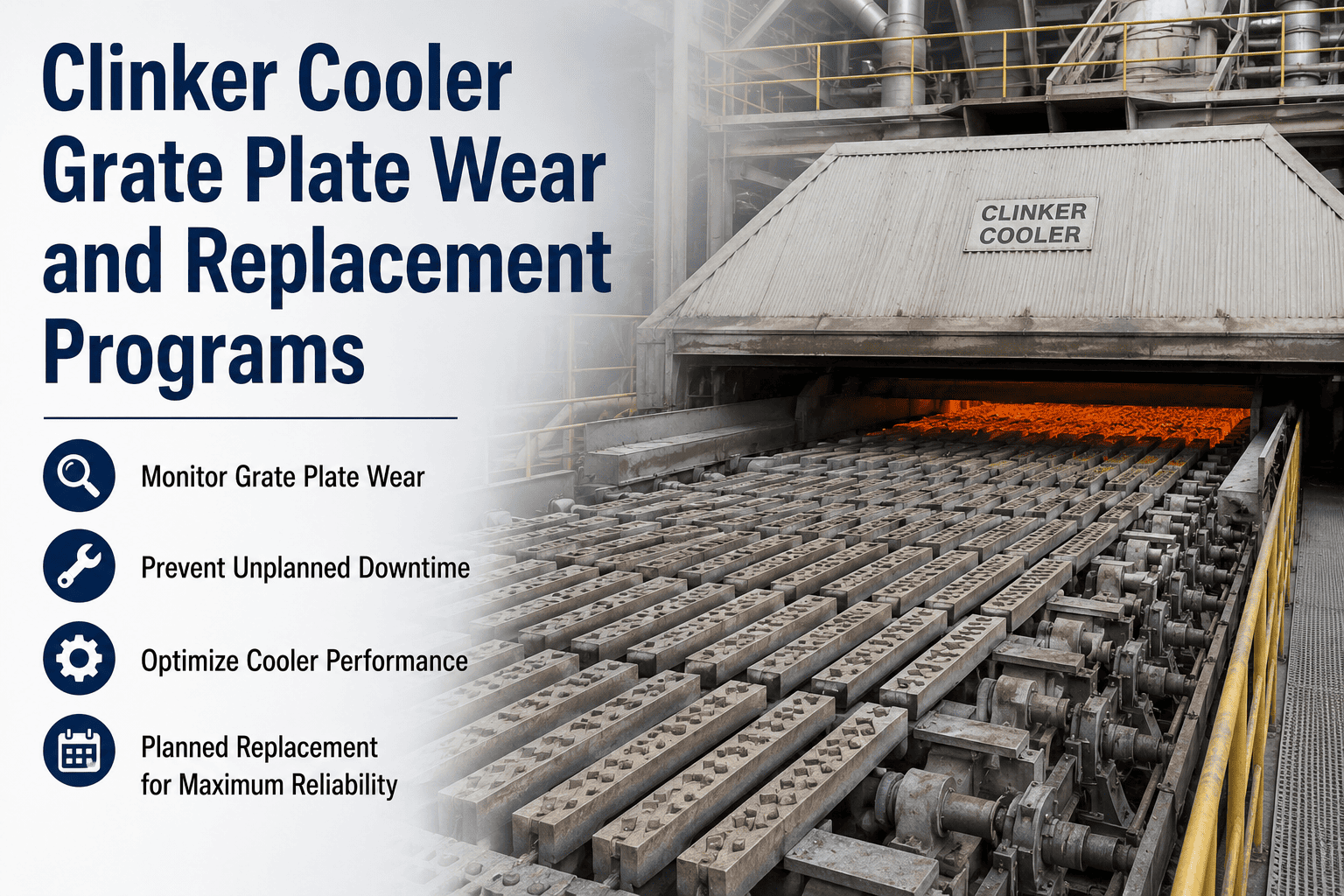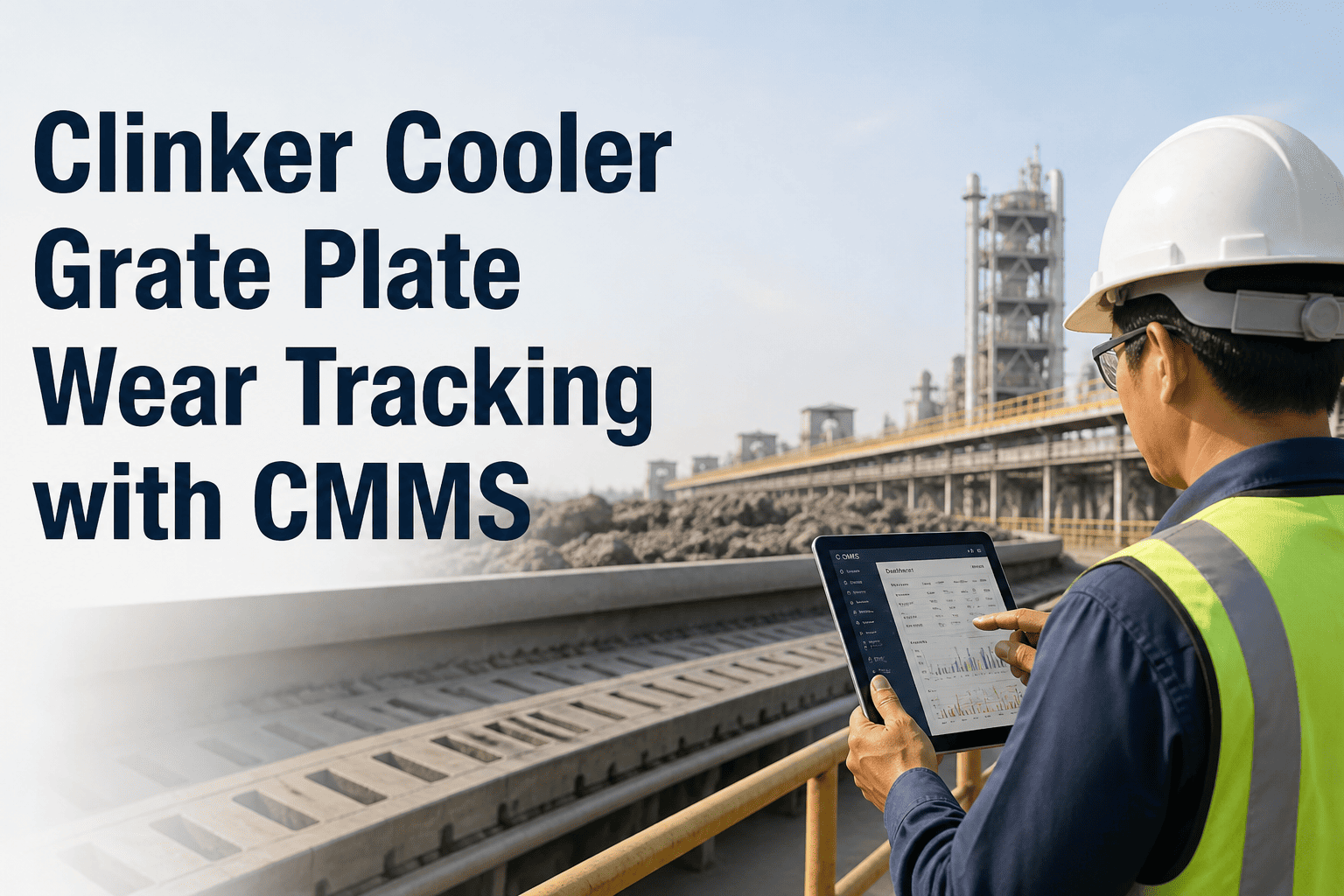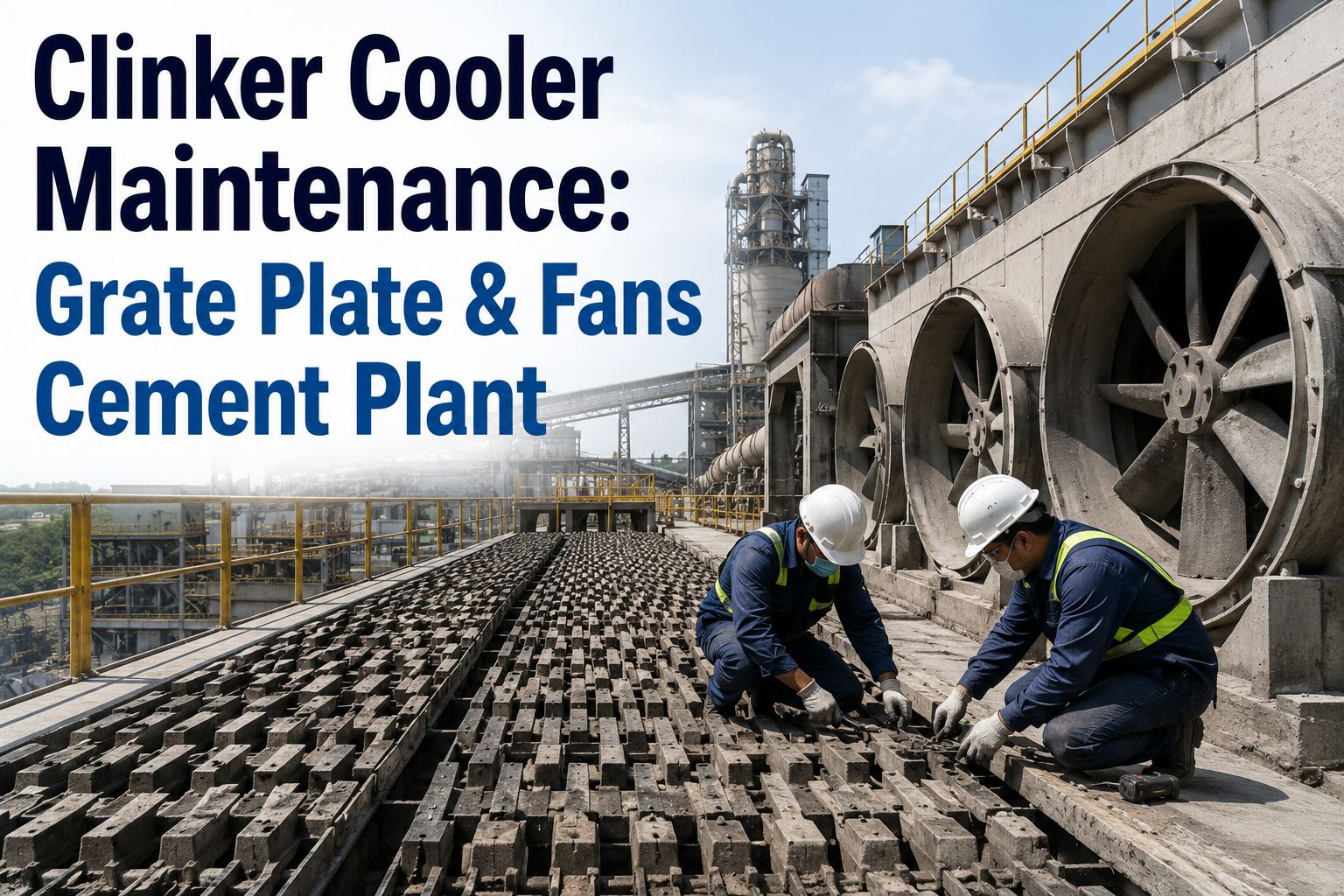
Clinker cooler performance decides both fuel efficiency and clinker quality — and grate plate wear plus fan issues quietly erode both. This guide covers clinker cooler maintenance including grate plate and fans in cement plants: grate inspection intervals, plate replacement thresholds, cooler fan PM, cooling air distribution, and the CMMS-driven cooler reliability program that protects heat recovery and clinker quality simultaneously. A well-structured clinker cooler PM program reduces secondary fuel use by 3–8% and limits free-lime excursions that can cost a kiln line tens of thousands per incident. Ready to operationalize it? Start Free Trial and turn this guide into a live work-order plan today.
Why does 60% of cooler efficiency loss go unnoticed until the kiln pays for it?
A 10°C drop in secondary air temperature quietly raises fuel cost roughly 0.8% and inflates free-lime risk. Grate plate wear, fan drift, and dust cycles compound in silence — until clinker quality, refractory life, and recovery all degrade together. This guide turns inspection intervals, replacement thresholds, and CMMS-driven PM into measurable protection for heat recovery.
Inspect every shift, measure every shutdown, replace before the 6 mm line
Grate plates meter clinker forward, distribute cooling air, and seal the under-grate chambers. Once plate slot width widens by more than 2 mm or working face thickness drops below 6 mm, air distribution collapses, red rivers form, and secondary air temperature falls. The threshold is not theoretical — it is the line between stable recovery and runaway fuel cost.
Daily Walk-Down Inspection
Visual check of clinker bed depth, red-river formation, and under-grate pressure trends. Flag any chamber whose pressure deviates more than 15% from baseline within a single shift.
Shift-based · 30 minWeekly Plate Mapping
Mark hot zones, warped plates, and blocked slots on a chamber-by-chamber grid. Track the same coordinates each week so degradation trends surface before failure — not after.
Weekly · 2 hrsShutdown Thickness Survey
Ultrasonic and caliper measurement of every accessible plate. Replace any plate under 6 mm working-face thickness or with slot width widened beyond 2 mm from OEM spec.
Shutdown · 8 hrs| Grate Plate Check | Frequency | Action Threshold | Risk if Ignored |
|---|---|---|---|
| Slot width (air gap) | Weekly visual / shutdown measure | +2 mm from OEM | Air maldistribution, snowmen |
| Working face thickness | Shutdown ultrasonic | < 6 mm | Plate rupture, red clinker spill |
| Plate warpage / flatness | Weekly mapping | > 1.5 mm deviation | Bypass air, bed instability |
| Fastener torque | Monthly | Below OEM torque spec | Plate lift, mechanical damage |
| Sealing strip condition | Every shutdown | Any hardening or gap | Chamber cross-leakage |
| Under-grate pressure trend | Continuous CMMS logging | ±15% from baseline | Silent efficiency loss |
Three PM checks that hold secondary air temperature inside its 2°C band
Cooler fans deliver the air that becomes secondary combustion air — every 10°C of recovery lost adds roughly 0.8% to kiln fuel cost. The three checks below are the ones most plants skip between major overhauls, and they account for the majority of avoidable drift in cooling air distribution.
Vibration & Bearing Temperature Log
Record vibration on both DE and NDE bearings. ISO 10816 zone C begins around 7.1 mm/s for rigid-mounted fans — anything trending above 4.5 mm/s deserves a CMMS alert. Bearing temperature above 80°C with a 10°C/hour rise predicts failure weeks before trip.
Inlet Damper & Vane Calibration
Verify damper position feedback against actual blade angle. A 5% mismatch starves or floods a chamber, shifting the air distribution curve and collapsing bed stability. Calibrate actuator limits, check linkage play, and log the corrected curve into the CMMS asset record.
Impeller Inspection & Dynamic Balance
Open the housing, photograph blade wear, and check for dust buildup that changes impeller mass distribution. Re-balance to ISO 1940 grade G2.5. A 10 g imbalance at 1,500 rpm shortens bearing life by an estimated 35% and pushes vibration into alarm territory.
"On a 5,000 tpd line, holding secondary air at 950°C instead of 920°C saves roughly $180K–$220K per year in fuel alone. Fan PM is the cheapest insurance policy in the plant."
— Worked benchmark based on typical 5,000 tpd kiln fuel economicsThe formula that converts secondary air loss into dollars
Most plants track cooler efficiency as a percentage, but few translate it into fuel cost. The equation below lets a maintenance planner show finance exactly what a 10°C secondary air drop is worth — and why the next PM window matters.
| Recovery Scenario | Secondary Air Temp | Estimated Annual Fuel Impact (5,000 tpd) | Clinker Quality Risk |
|---|---|---|---|
| Best-in-class PM | 950–960°C | Baseline | Low — free lime under 1.0% |
| Moderate drift | 920–930°C | +$190K–$260K | Medium — periodic free-lime excursions |
| Unmanaged wear | 880–900°C | +$540K–$700K | High — clinker rejection, kiln instability |
| Critical failure | < 880°C | Unplanned outage + fuel spike | Severe — refractory damage likely |
The six-step PM schedule that protects both heat recovery and clinker quality
A CMMS does not replace a maintenance engineer — it removes the friction of remembering, scheduling, and trending. The schedule below is the backbone of a clinker cooler PM program aligned with ISO 55000 asset-management principles and TPM autonomous-maintenance rhythms.
Asset & Criticality Register
Register every grate plate row, fan, damper, hydraulic drive, and hammer crusher as a discrete asset with criticality ranking (A/B/C), OEM specs, and failure modes mapped in the CMMS hierarchy.
PM Plan Generation
Convert the grate plate, fan, and crusher inspection tables above into recurring work orders with checklists, parts kits, and labor-hour estimates — auto-triggered by calendar or meter.
Condition-Based Triggers
Feed under-grate pressure, fan vibration, and secondary air temperature into the CMMS. Set alert thresholds that auto-create work orders before the asset crosses the failure boundary.
Shutdown Scope Builder
Use accumulated CMMS condition data to scope each kiln shutdown. Replace only the plates flagged by the shutdown survey, pre-kit the parts, and pre-assign the crews — cutting shutdown duration by an estimated 15–25%.
Failure Mode & Trend Analysis
Every completed work order feeds a trend dashboard. If one chamber's plates fail 30% faster than its peers, the CMMS surfaces it — prompting design, material, or air-distribution review instead of repeated blind replacement.
Reliability KPI Dashboard
Track MTBF, MTTR, cooler availability, secondary air temperature stability, and PM compliance live. A PM compliance rate above 90% correlates with a measurable drop in unplanned cooler downtime within two quarters.
Turn this guide into a live cooler PM program in under a day
Oxmaint comes pre-loaded with clinker cooler asset templates, grate plate inspection checklists, and fan PM schedules — so your team starts with a working plan, not a blank screen.
Clinker cooler maintenance — the questions plant teams ask most
How often should clinker cooler grate plates be inspected?
Daily visual walk-downs catch red rivers and bed-depth issues; weekly chamber-by-chamber mapping tracks wear trends; and a full ultrasonic thickness survey happens at every kiln shutdown — typically every 4–8 weeks depending on the line. Any plate dropping below 6 mm working-face thickness or showing more than 2 mm slot widening should be replaced during that same shutdown.
What is the most cost-effective cooler fan maintenance interval?
Weekly vibration and bearing-temperature logging, monthly damper calibration, and quarterly impeller inspection with dynamic balancing to ISO 1940 G2.5. Skipping the quarterly check saves a few labor hours but routinely shortens bearing life by 30% or more — the cheapest interval to skip is also the most expensive to ignore.
Can a CMMS really improve clinker cooler efficiency?
Yes — a CMMS like Oxmaint turns inspection checklists into recurring, auditable work orders and feeds condition data (under-grate pressure, fan vibration, secondary air temperature) into automated triggers. Plants that push PM compliance above 90% typically see measurable drops in unplanned cooler downtime within two quarters. You can Start Free Trial to load the cooler asset templates and see the workflow firsthand.
What are the warning signs of grate plate failure?
The earliest signals are under-grate pressure deviations beyond 15% from baseline, visible red-river channels in the clinker bed, and a slow secondary air temperature drift. By the time snowmen or clinker spillage appear, the plate has already failed and adjacent plates are overloaded — which is why trend-based detection in the CMMS beats visual inspection alone.
How much does poor cooler maintenance cost a cement plant?
On a 5,000 tpd line, a 10°C secondary air temperature drop adds roughly $190K in annual fuel cost; a 30°C drop from unmanaged wear can exceed $540K. Add clinker rejection from free-lime excursions and refractory damage, and the figure climbs fast. To scope the savings for your plant, Book a Demo and we will model it against your tonnage and fuel rate.
Protect heat recovery and clinker quality with one cooler PM platform
Grate plates, fans, and hammer crushers — all on one CMMS with pre-built inspection templates, condition triggers, and reliability KPIs designed for cement plant operations.
Free 14-day trial · No credit card