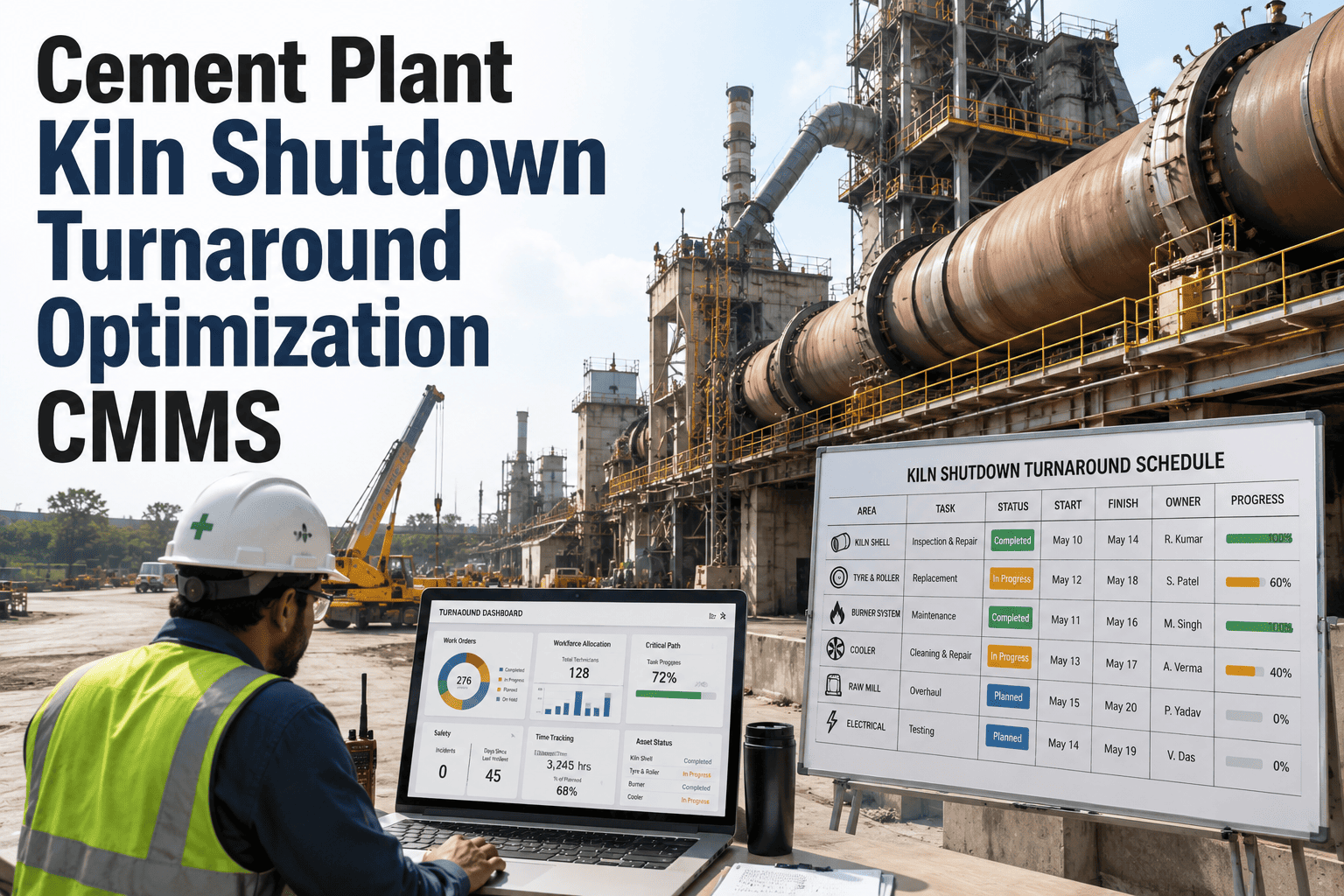
A cement plant in Indiana faced a 21-day annual shutdown for preheater tower relining—with 8 days consumed waiting for safe entry temperatures and manual demolition of existing refractory. After deploying Brokk demolition robots that begin tear-out at 80°C ambient instead of waiting for full cooldown, the same scope completed in 13 days. The robots removed refractory from cyclones, calciners, and gas risers while temperatures remained too high for human entry, with removal rates tracked in real-time through their Oxmaint CMMS for relining contractor coordination. The 8-day reduction recovered $1.6 million in lost production annually while eliminating worker exposure to extreme heat and silica dust during demolition.
Refractory removal in cement plants is among the most hazardous and time-consuming shutdown activities—workers exposed to extreme heat, crystalline silica dust, and confined space risks while manually demolishing material that can remain dangerously hot for days. Brokk descaler robots and similar demolition machines eliminate human entry requirements, start work at higher temperatures, and complete removal faster than manual methods. This guide covers demolition robot solutions for cement plant refractory removal, shutdown integration strategies, and CMMS-driven coordination for minimizing total downtime. Book a demo to see how Oxmaint manages shutdown planning.
Demolition Robots for Cement Plant Refractory Removal 2026
Brokk descalers that start tear-out at 80°C—removing refractory faster while eliminating worker heat exposure.
Refractory Removal Zones
Cement plant refractory removal spans multiple high-temperature zones, each with specific access and demolition challenges.
Preheater Tower
900-1000°C OperatingMulti-stage cyclone system with complex geometry. Highest time savings from robot deployment—100+ hours recovered per shutdown.
Cyclones
850-950°C OperatingIndividual cyclone stages requiring sequential demolition. Tight internal geometry demands compact robot footprint.
Calciner
900°C OperatingPrecalciner vessel with heavy refractory buildup. Large interior allows full-size robot deployment.
Kiln Inlet
1000°C OperatingKiln feed end with extreme thermal cycling. Refractory damage from material impact and temperature swings.
Gas Riser
850°C OperatingVertical duct connecting kiln to preheater. Scaffold-intensive for manual work; robots work from platforms.
Pyrotop
1100°C OperatingKiln hood and discharge area with highest temperatures. Critical path item—early robot start maximizes savings.
Coordinate Refractory Removal Across All Zones
Oxmaint tracks demolition progress by zone, triggering relining contractor mobilization at the optimal moment.
Brokk Demolition Robot Models
Brokk descaler robots are purpose-built for refractory removal in cement plant environments. Model selection depends on zone access and demolition requirements. Track robot deployment with Oxmaint.
Brokk 70
CompactUltra-compact robot for tight cyclone interiors and confined access points. Fits through 600mm openings.
Brokk 110
VersatileBest balance of compact size and demolition power. Standard choice for preheater tower applications.
Brokk 170
Mid-RangeIncreased power for heavy refractory and coating removal. Extended reach for larger vessels.
Brokk 200/300
Heavy-DutyMaximum demolition power for kiln inlet, pyrotop, and heavy coating removal applications.
Early Start Advantage
Traditional manual demolition requires waiting for temperatures below 40°C for safe human entry. Robots start at 80°C, recovering days of productive work.
CMMS Shutdown Integration
Sign Up to Oxmaint CMMS that coordinates robot deployment with relining contractors and other shutdown activities.
Pre-Shutdown Planning
Define zones, sequence, and robot requirements. Schedule contractor mobilization based on demolition completion estimates.
Early Start Deployment
Robot enters at 80°C. Real-time progress tracking by zone. Removal rates logged to CMMS for contractor timing.
Contractor Coordination
Oxmaint triggers relining contractor notification when zone demolition reaches 80% complete. Just-in-time mobilization.
Parallel Operations
Robot moves to next zone while relining begins on completed zones. Multiple activities tracked in single timeline.
Completion & Documentation
Full shutdown report with zone-by-zone timing, removal rates, and lessons learned for next cycle optimization.
Optimize Your Shutdown Timeline
Oxmaint tracks demolition progress, coordinates contractors, and documents every shutdown for continuous improvement.
Robot Maintenance Requirements
Cement environment demolition is extremely demanding on equipment. Oxmaint tracks robot maintenance alongside plant equipment.
Hydraulic Breaker Service
Heavy-duty hydraulic breakers require frequent inspection after refractory demolition. Check seals, bushings, and chisel wear.
Boom Arm Joints
Articulated boom arms experience high stress during demolition. Inspect pins, bushings, and hydraulic cylinders for wear.
Control Unit Sealing
Dust-resistant control units protect electronics from cement dust. Verify seals and filters; replace if compromised.
Track Pad Replacement
Heat-resistant track pads wear rapidly on hot refractory surfaces. Inspect after each deployment; replace when worn.
Frequently Asked Questions
Cut Your Shutdown Duration
Join cement plants using Oxmaint to coordinate demolition robots with relining contractors for faster shutdowns and better planning.