Fly ash supply chains are fragile in ways that cement plant engineers often underestimate until the first disruption hits production. Unlike internal raw materials, fly ash availability depends on power station output, transport logistics, and supplier quality programmes that are entirely outside the cement plant's control. When fly ash supply becomes unreliable — or when incoming quality drifts outside specification — the consequences cascade through dosing systems, silo management, and final product quality simultaneously. Cement plants that manage fly ash as a strategic supply chain asset, with documented QC protocols, supplier performance records, and CMMS-tracked handling equipment, consistently outperform those that treat it as a commodity input requiring no special programme. Sign up for Oxmaint to bring your fly ash supplier records, silo inspection schedules, and QC documentation into one connected maintenance and operations platform.
Fly Ash Supply Chain and Quality Control for Cement Plants
From power station sourcing to silo dosing — a structured approach to fly ash supply chain management and QC that protects product quality, reduces variability, and keeps your blended cement programme compliant.
The Fly Ash Supply Chain: Five Stages Where Quality and Availability Break Down
Every stage from power station discharge to cement mill dosing introduces a potential failure point. Understanding where breakdowns occur — and how to instrument each stage — is the starting point for a managed fly ash programme.
Fly ash quality varies significantly by coal source and boiler type. Class F and Class C ashes have different pozzolanicity and SO3 content. Supplier qualification records must document coal origin, combustion technology, and baseline chemistry before first delivery.
Road tanker and pneumatic rail transport can introduce moisture contamination, cross-contamination from prior loads, and LOI variation if tankers are loaded from mixed stockpiles. Carrier qualification and load documentation should be part of every delivery record.
Incoming fly ash must be tested against ASTM C618 or EN 450 parameters before acceptance: fineness, loss on ignition, activity index, and chloride content are minimum requirements. Acceptance criteria should be documented in the CMMS against each delivery work order.
Fly ash silos are susceptible to compaction, moisture ingress through damaged pressure relief valves, and dead zones that allow aged material to bypass FIFO sequence. Silo maintenance — including aeration pad inspection, vent filter condition, and level sensor calibration — directly affects dosing accuracy and chemistry consistency.
Dosing screw conveyors, rotary feeders, and weigh feeders at the mill inlet must deliver accurate, consistent fly ash at specified ratios. Calibration records and zero-drift checks are required at intervals defined by blend targets and product standards.
Fly Ash Quality Control: Parameters, Frequency, and CMMS Integration
A structured QC programme for fly ash defines what to test, how often, and what action to take when results drift. The table below reflects testing programmes in world-class blended cement operations.
| QC Parameter | Standard Reference | Testing Frequency | Out-of-Spec Action |
|---|---|---|---|
| Loss on Ignition (LOI) | ASTM C618 / EN 450 | Every delivery + weekly composite | Hold silo, notify supplier, retest before use |
| Fineness (45 µm sieve) | EN 450-1 | Every delivery | Reject or reclassify to lower-grade application |
| Activity Index (7-day, 28-day) | ASTM C618 Table 1 | Monthly per supplier lot | Adjust blend ratio; flag supplier for audit |
| SO3 Content | EN 450-1 (max 3%) | Every delivery | Immediate hold; check total sulfate in blend |
| Chloride Content | EN 450-1 (max 0.1%) | Quarterly per supplier | Supplier audit; suspension if repeated |
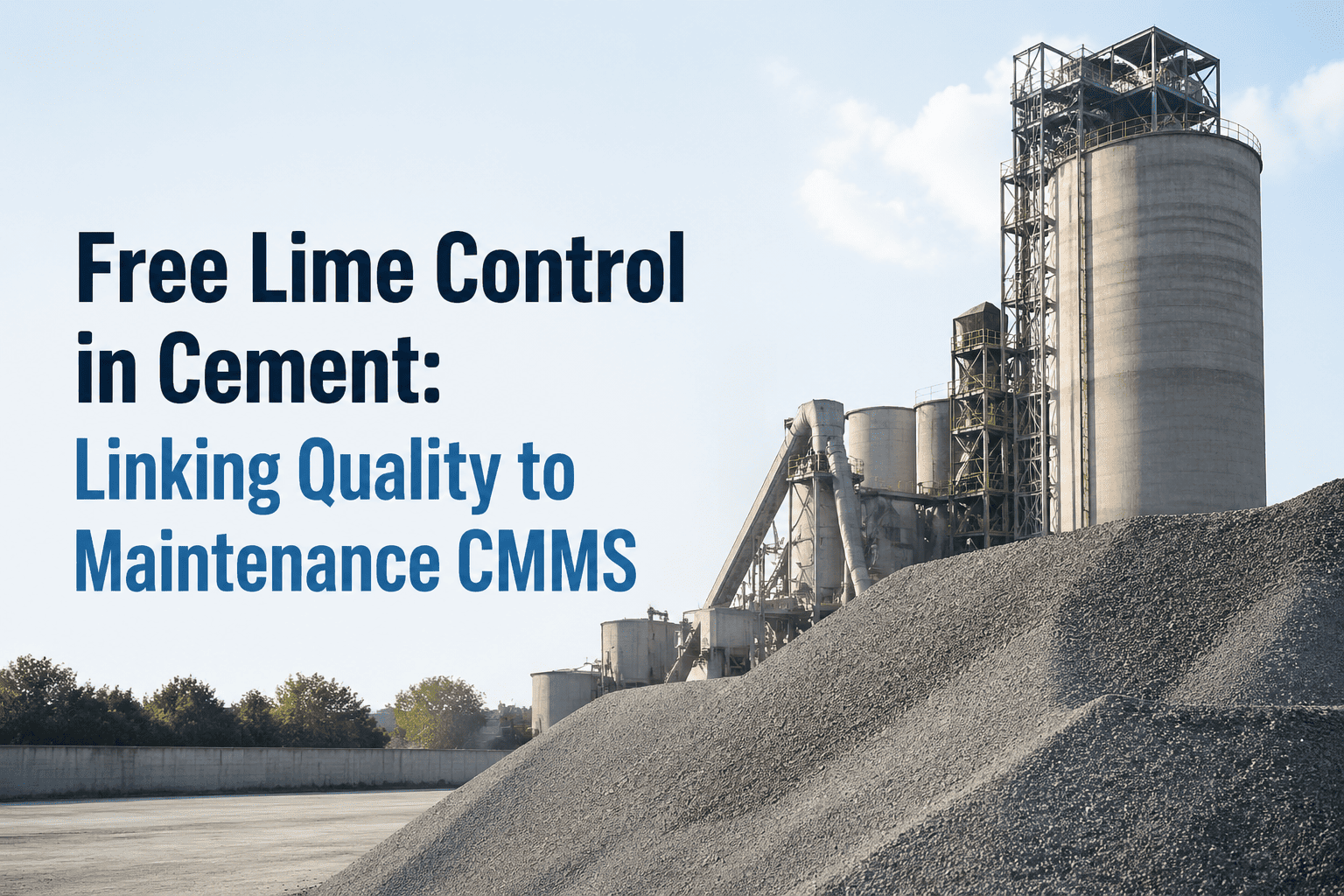
| Free CaO | EN 450-1 | Monthly | Soundness risk assessment; consult blend engineer |
Connect Fly Ash QC Records to Your Maintenance Programme in Oxmaint
Oxmaint links supplier delivery records, QC test results, silo maintenance work orders, and dosing equipment calibration logs in a single asset-linked record — giving quality managers and maintenance teams shared visibility of the full fly ash programme.
Fly Ash Silo Maintenance: The Most Overlooked Asset in the Blended Cement Programme
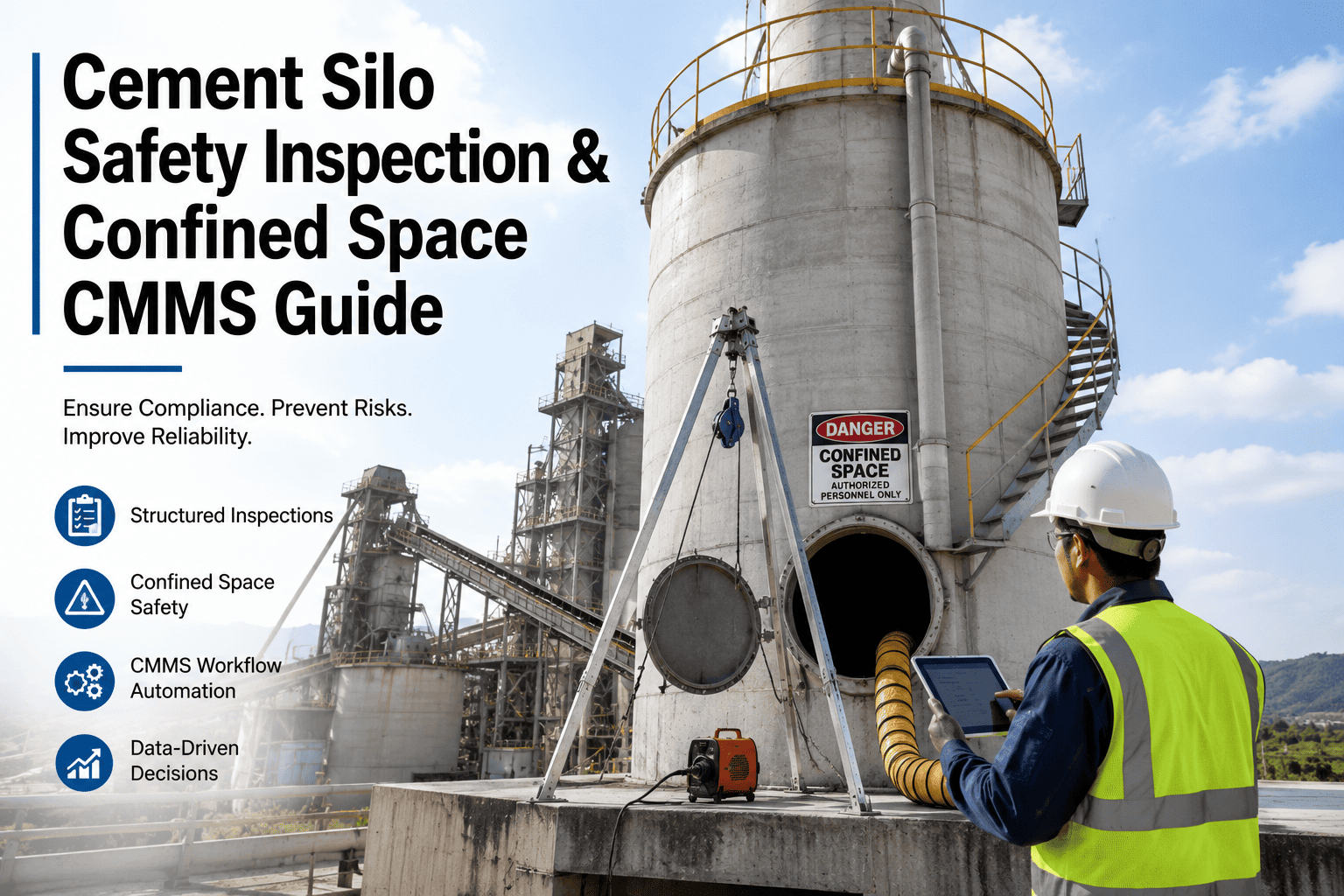
Fly ash silos fail silently. Unlike mechanical equipment that announces failure with noise or heat, a poorly maintained silo continues to appear functional while delivering variable quality ash to the mill. These are the inspection and maintenance priorities that world-class operations never defer.
Aeration pads that are blocked, broken, or under-pressured cause compaction and ratholing. Quarterly inspection with airflow verification ensures consistent material flow. Replacement should be condition-triggered and CMMS-tracked.
Failed pressure relief valve seals allow moisture ingress during low-pressure periods. Moisture-contaminated ash causes dosing equipment bridging and affects fly ash reactivity. Annual seal replacement is the standard in mature programmes.
Silo vent filters prevent atmospheric dust emissions during filling. Blinded filters increase silo pressure, slow filling, and can cause bag rupture. Differential pressure monitoring with CMMS alarms is the most reliable detection method.
Inaccurate level readings cause ordering errors — either excess inventory that ages and loses activity index, or stockouts that force unplanned production changes. Semi-annual calibration checks, logged against each sensor asset record, maintain accuracy.
Slide gates and knife gates on fly ash silos experience consistent erosion from abrasive material. Incomplete closure allows bleed flow that creates blend ratio errors. Annual stroke testing and seat inspection should be PM programme standards.
Concrete silo structures require periodic structural survey to detect cracking, delamination at cone transitions, and anchor bolt condition. A CMMS long-interval inspection record ensures this infrequent but critical task is never missed.
Managing Fly Ash Suppliers Like Critical Equipment — Not Commodity Vendors
The best blended cement producers apply supplier performance management to fly ash sourcing with the same rigour they apply to critical spare parts procurement. These are the practices that reduce supply chain risk and improve blend consistency.
Before any new fly ash source enters the supply chain, a baseline chemistry characterisation covering at least three months of production data is required. This characterisation documents the expected range of LOI, fineness, activity index, and SO3 for that specific power station and coal source — establishing the acceptance envelope the QC programme will monitor against.
Delivery-by-delivery QC data, aggregated quarterly, reveals trends in supplier quality that individual lot results miss. A supplier whose LOI is trending toward the upper limit across successive deliveries needs to be engaged before the first out-of-spec result. CMMS-stored delivery records make this analysis straightforward.
A single fly ash source creates a single point of failure in the blended cement production chain. World-class programmes maintain at least two approved sources for each grade of fly ash used, with both characterised and with approved blend recipes available for each — so that supply disruption from one source triggers a planned response, not a production stoppage.
Fly Ash Supply Chain and QC — Frequently Asked Questions
Loss on ignition (LOI) is the single most predictive QC parameter for fly ash quality consistency. High LOI indicates incomplete combustion and elevated carbon content, which affects concrete air entrainment, reduces pozzolanicity, and can cause variability in set time. Every delivery should be tested before the silo is committed to production use. Sign up for Oxmaint to log delivery test results directly against supplier and silo records.
The priority maintenance items are aeration pad condition, pressure relief valve sealing, and vent filter differential pressure monitoring. Moisture ingress and compaction are the two primary quality risks in storage, and both are preventable with a structured PM programme. Silo maintenance should be treated as part of the QC programme, not just a mechanical reliability task.
EN 450 conformity requires delivery-level test records for the parameters listed in Table 1 and Table 2, supplier declaration of conformity for each source, and internal QC test frequency logs. CMMS-linked delivery records with attached test certificates, stored against the specific silo and supplier asset, form the complete audit trail regulators and customers expect. Book a demo to see how Oxmaint structures supplier and QC documentation.
Pre-approved dual sourcing and documented contingency blend recipes are the two structural controls. When a primary supplier is disrupted, the plant switches to the approved secondary source using the pre-validated blend recipe, without needing an emergency qualification process. Plants without this preparation typically face 2–4 weeks of reduced fly ash substitution rates during any supplier disruption.
Dosing inaccuracy is most commonly caused by weigh feeder calibration drift, bridging in feed lines from moisture-contaminated ash, or aeration system failure at the silo discharge. Monthly calibration checks on weigh feeders and regular conditioning of silo discharge aeration, tracked as CMMS work orders, address all three root causes systematically.
Fly Ash Quality Starts at the Supply Chain and Ends at the Mill — Track Every Step in Oxmaint.
From supplier delivery records to silo maintenance logs to dosing equipment calibration — Oxmaint connects every part of your fly ash programme in one platform that quality managers, maintenance planners, and plant directors can all rely on.