Oxmaint's free tier covers the core maintenance execution stack — work orders, asset register, PM scheduling, and mobile field access — with no time limit and no credit card required. The ceiling is 50 assets and 3 users. For a satellite facility or single production line, that ceiling is never reached. For an integrated kiln plant, it is hit within 90 days. This guide defines exactly where the free tier ends, what it costs operationally to stay on it past that point, and which specific paid-tier capabilities drive the measurable ROI that justifies the upgrade.
Free Tier Feature Coverage
The table below maps each capability against free and paid tier availability, with a one-line operational note on what the limit means in a cement plant context.
| Feature | Free Tier | Paid Tier | Operational Limit |
|---|---|---|---|
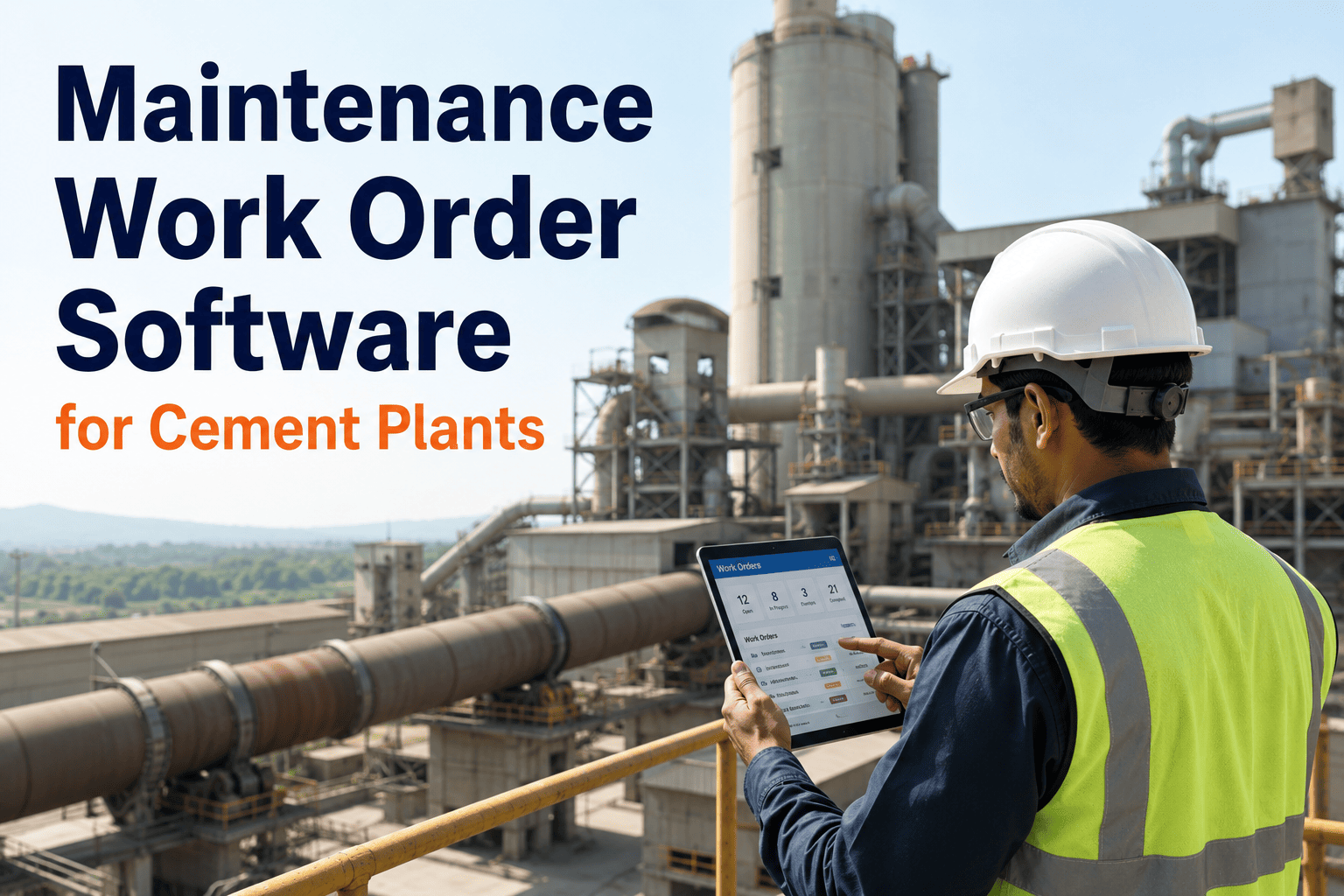
| Work Order Management | ✓ Full | Full | No restriction. Corrective, planned, and breakdown work orders fully supported. |
| Asset Register | 50 assets | Unlimited | Integrated kiln plants typically carry 200–400 maintainable assets. Satellite facilities stay within limit. |
| PM Scheduling | ✓ Calendar | + Run-hour & condition triggers | Calendar PMs free. Condition-based and run-hour-triggered scheduling requires paid tier. |
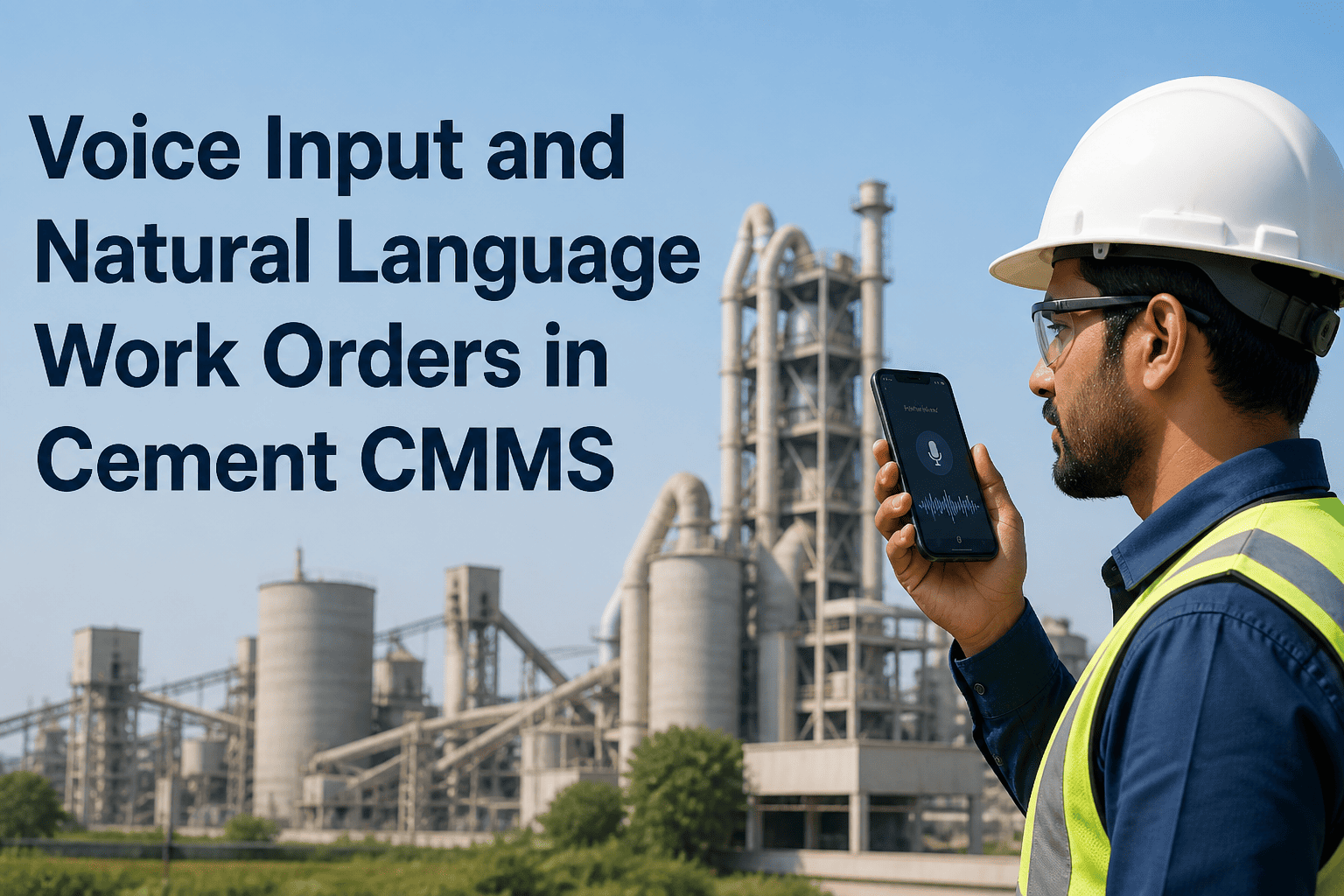
| Mobile Field Access | ✓ Full | Full | Unrestricted. No mobile user cap on free tier. |
| User Accounts | 3 users | Unlimited | Most common first constraint. Shift teams sharing accounts fragment work order attribution and maintenance history. |
| Spare Parts Inventory | Manual tracking | + Reorder automation | Manual stock tracking free. Minimum-stock alerts and work order parts reservation require paid tier. |
| KPI Dashboards | Basic reports | MTBF, MTTR, OEE, PM% | Live MTBF, MTTR and OEE dashboards are paid tier. Free tier produces work order count reports only. |
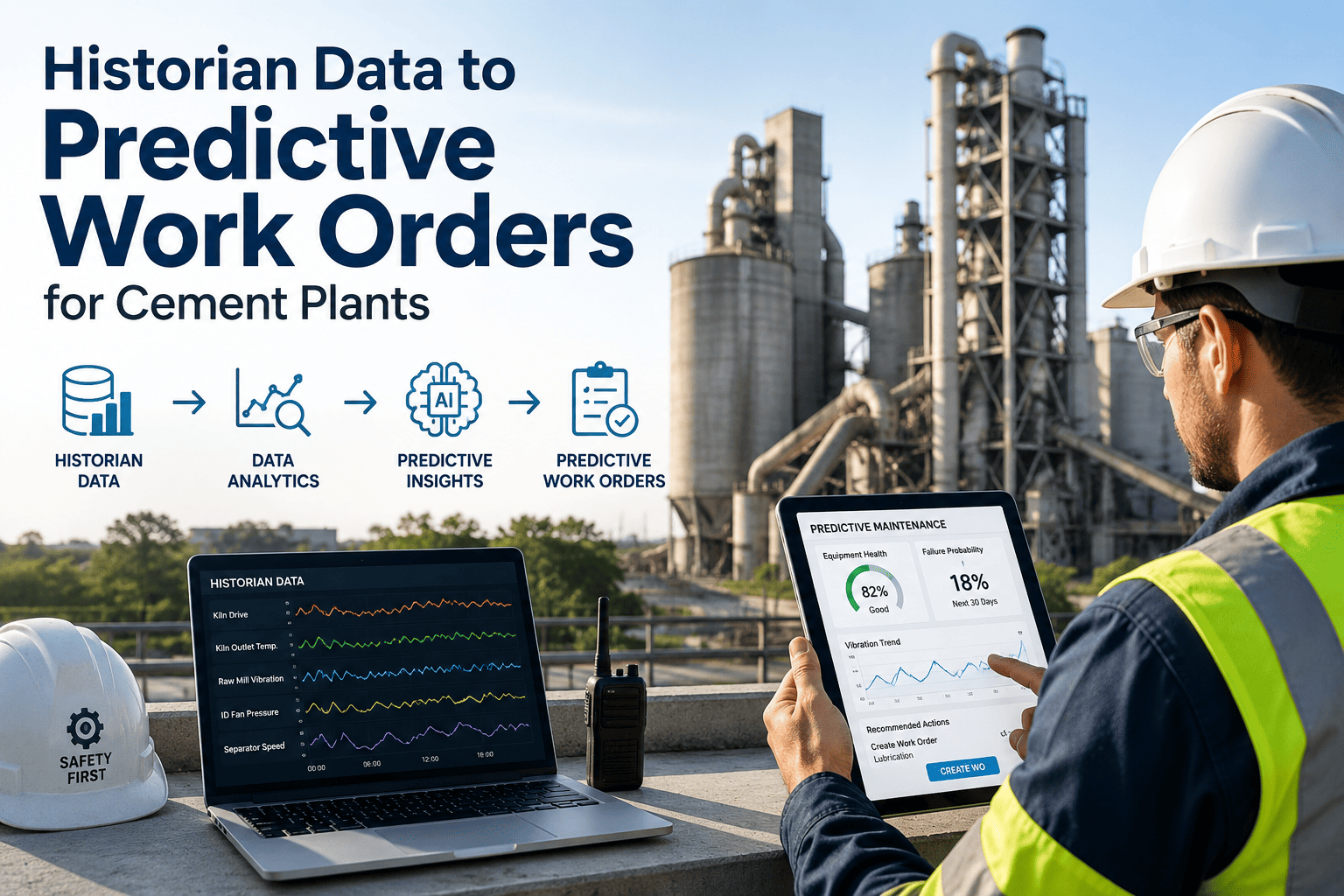
| Condition Data Integration | ✗ Not included | OPC-UA, API, manual entry | Sensor-to-work-order automation is paid tier. Free tier requires manual work order creation after condition review. |
| Multi-Site Management | ✗ Not included | Unlimited sites | Portfolio-level visibility across plant sites is paid tier only. |
| FMEA & Failure Mode Analytics | ✗ Not included | Full FMEA templates | RCM analysis tools, FMEA templates and failure mode tracking are paid tier. |
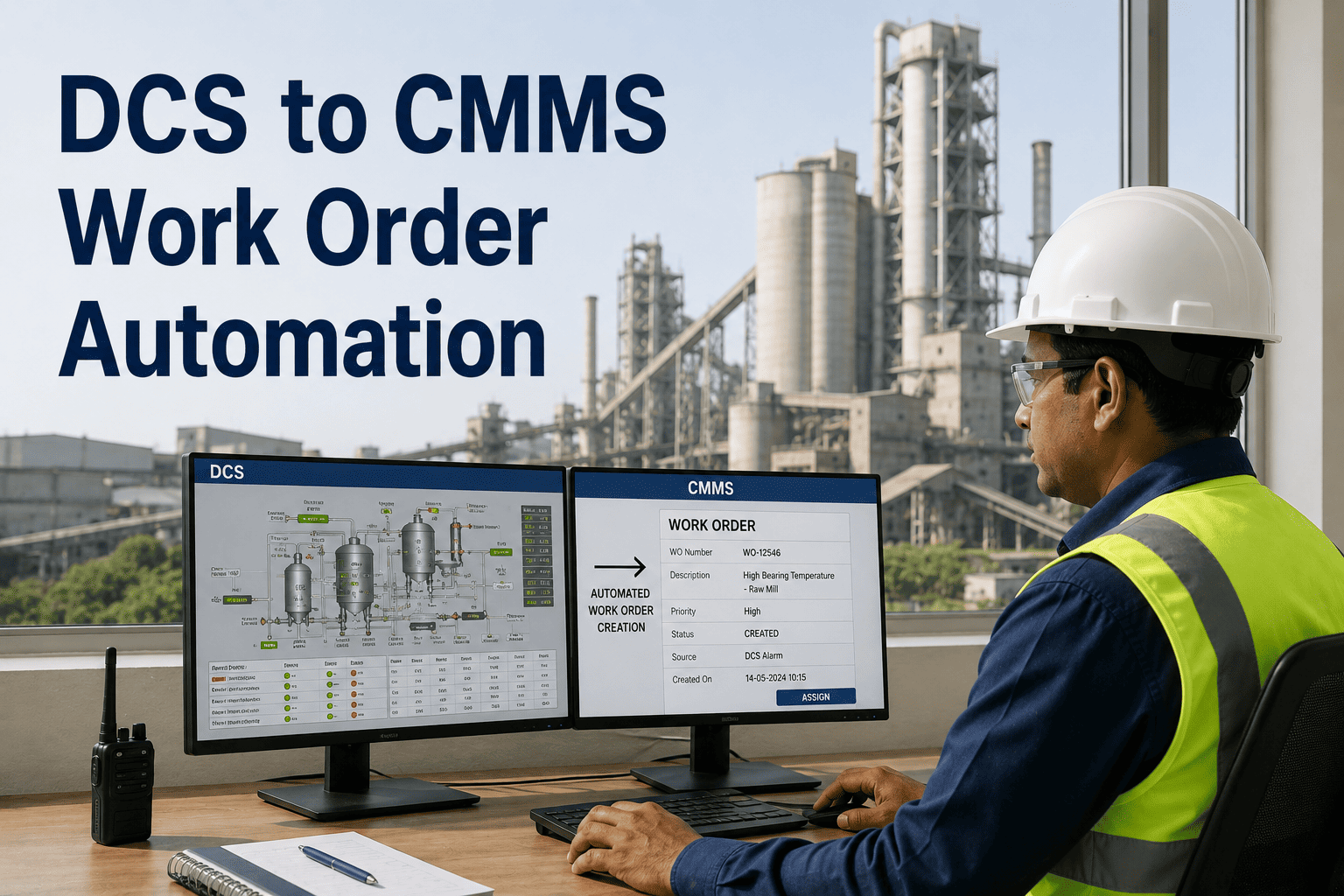
| ERP & DCS Integration | ✗ Not included | Full REST API | SAP, Oracle, historian and DCS integrations require paid-tier API access. |
| Compliance Documentation | CSV export | Regulatory-format reports | OSHA, PUWER and BetrSichV formatted audit documentation requires paid tier. |
Free vs Paid: What Changes Operationally
The distinction between free and paid tier is not about feature volume — it is about the operational cost of the gaps. The comparison below identifies where those gaps generate measurable maintenance cost in cement plant operations.
| Area | Free Tier Constraint | Paid Tier Capability |
|---|---|---|
| PM Scheduling | Calendar-based only. No run-hour or condition triggers. | Auto-generated from run hours, calendar, and condition thresholds. |
| KPI Reporting | Manual spreadsheet export. 6–10 hrs/month. Always retrospective. | Live MTBF, MTTR, OEE, and PM compliance dashboards. On demand. |
| Spare Parts | Manual stock checks. Shortages found at repair time. | Work orders linked to inventory. Automated reorder alerts. |
| Condition Monitoring | Manual anomaly-to-work-order process. 3–6 week delay typical. | Threshold breach triggers work order automatically. Under 1 hour. |
| Team Scale | 3-user cap. Account sharing breaks attribution and shift visibility. | Unlimited accounts. Full attribution and shift handover visibility. |
| Shutdown Planning | Individual work orders only. No project scope or critical path. | Full project management — dependencies, critical path, contractor assignment. |
Start Free — Upgrade When Your Plant Is Ready
Oxmaint's free tier is a permanent plan — not a trial. Work orders, PM scheduling, asset tracking, and mobile field access included at no cost. Paid tier unlocks condition monitoring integration, unlimited users, FMEA tools, and live KPI dashboards.
5 Signals Your Plant Has Outgrown the Free Tier
The free tier stops being cost-effective when the workarounds it requires cost more than the upgrade. These are the five operational signals — each with a direct cost implication.
Cost of Staying Free vs Value of Upgrading
Each free-tier constraint generates a quantifiable annual cost. The calculation below uses conservative estimates applicable to a mid-size integrated cement plant. Plants with active condition monitoring programmes or multi-site operations should apply higher figures to the integration and coordination lines.
Frequently Asked Questions
QIs the free tier a time-limited trial or a permanent plan?
QIs the data created on the free tier preserved on upgrade?
QAt what point does the upgrade ROI become clear-cut?
QHow does Oxmaint's free tier compare to competitors?
Continue Reading
The articles below provide the technical and strategic context that determines which paid-tier features your plant actually needs — and at what scale the upgrade investment is justified.
Start Free. Upgrade When the Numbers Say So.
Oxmaint's free tier is a permanent starting point — not a restricted preview. When any two of the five signals above are present, the upgrade ROI calculation resolves quickly.