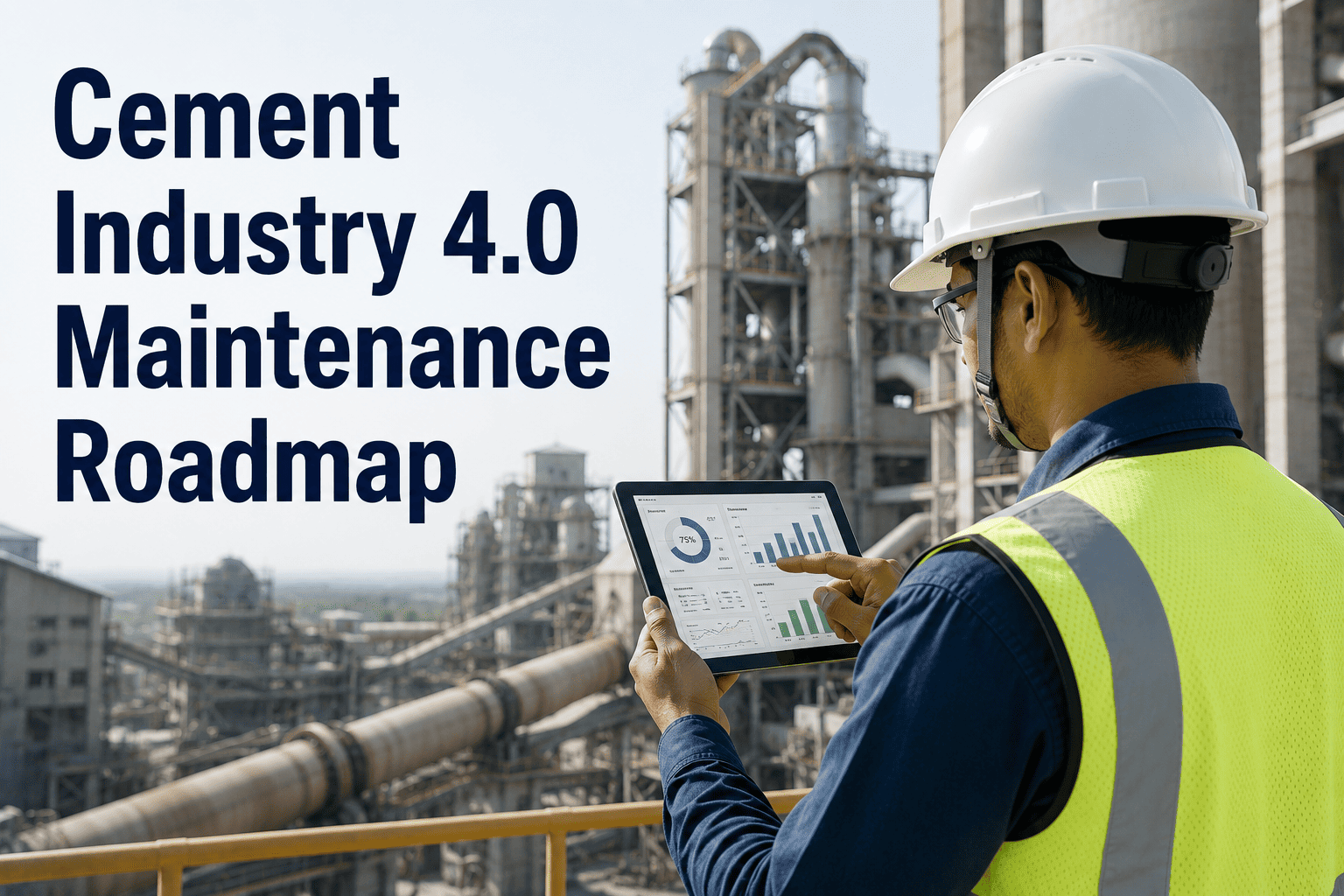
The cement industry stands at a crossroads. While other manufacturing sectors have embraced Industry 4.0 technologies to achieve breakthrough efficiency gains, not a single cement plant has achieved "lighthouse" status in the World Economic Forum's network of digital manufacturing leaders. Yet the pressure is mounting: volatile energy costs, stricter emissions regulations, and retiring expertise are forcing cement leaders to act. This practical roadmap shows you how to plan and execute digital transformation in cement manufacturing without disrupting production—turning your plant into a connected, data-driven operation that delivers measurable ROI within 12 months.→ Sign up to become Industry ready. or book a demo to see the impact of updated roadmap.
Why Digital Transformation Can't Wait
Cement manufacturers face unprecedented pressure from multiple directions. Digital transformation isn't optional—it's essential for survival in the next decade.
Energy Cost Volatility
Fuel and electricity represent 30-40% of production costs. Without real-time optimization, every price spike directly impacts margins. AI-powered systems can reduce energy consumption by 5-15%.
Emissions Regulations
Cement accounts for 7% of global CO2 emissions. Governments worldwide are implementing carbon taxes and stricter standards. Digital monitoring is becoming mandatory for compliance reporting.
Knowledge Drain
Experienced kiln operators are retiring faster than replacements can be trained. Their decades of intuition must be captured in AI systems before it walks out the door.
Competitive Pressure
Early adopters are achieving 20-30% efficiency gains. As digital leaders expand capacity at lower costs, traditional plants risk becoming uncompetitive in regional markets.
The Industry 4.0 Technology Foundation
Successful digital transformation builds on interconnected layers of technology. Understanding this stack helps you prioritize investments and avoid vendor lock-in.
Data Collection & Connectivity
The foundation: connecting your existing equipment to collect real-time operational data. Most cement plants already have 70-80% of needed sensors—the gap is in data aggregation.
Data Platform & Integration
Unifying siloed systems into a single source of truth. This layer breaks down barriers between quality labs, maintenance systems, and production control.
Analytics & Intelligence
Where data becomes insight. AI algorithms identify patterns humans can't see, predict failures before they happen, and optimize complex multi-variable processes.
Action & Automation
Closing the loop: insights trigger automated actions or operator recommendations. This layer delivers the actual business value from your digital investments.
Ready to Build Your Digital Foundation?
Get a customized Industry 4.0 assessment for your cement plant. Our experts will identify quick wins and long-term opportunities.
The 4-Phase Digital Transformation Roadmap
Successful transformation happens in stages. Each phase builds on the previous, delivering value while preparing for the next level of capability.
Connect & Collect
Goals
- Audit existing sensors and control systems
- Deploy edge gateways for data collection
- Establish secure cloud connectivity
- Create unified data lake architecture
Success Metrics
- 90%+ critical equipment connected
- Real-time data streaming established
- Historical data accessible in one platform
Visualize & Monitor
Goals
- Deploy real-time dashboards for operations
- Implement condition monitoring for critical assets
- Establish KPI tracking and alerting
- Train operators on new visibility tools
Success Metrics
- OEE visibility across all production lines
- Automated shift reports replacing manual
- Alert response time under 15 minutes
Predict & Optimize
Goals
- Deploy predictive maintenance algorithms
- Implement kiln optimization AI
- Launch quality prediction models
- Automate energy management
Success Metrics
- 30%+ reduction in unplanned downtime
- 5-8% energy cost reduction
- Quality variance reduced by 50%+
Automate & Scale
Goals
- Implement autonomous process control
- Deploy digital twin for simulation
- Scale solutions across multiple plants
- Integrate supply chain optimization
Success Metrics
- 80%+ processes with AI assistance
- Multi-plant visibility and benchmarking
- Continuous improvement culture established
Common Mistakes That Derail Transformation
Learn from others' failures. These are the most frequent pitfalls we see cement companies encounter—and how to avoid them.
Starting Without Strategy
The Mistake: Buying technology first, then figuring out what to do with it. "We installed sensors everywhere but don't know what to monitor."
Underinvesting in People
The Mistake: Putting existing managers in digital roles with minimal training. Digital product management requires fundamentally different skills than plant operations.
Vendor Lock-In
The Mistake: Choosing proprietary systems that don't integrate with existing infrastructure or future solutions. "Now we're trapped with one vendor for everything."
Boiling the Ocean
The Mistake: Trying to transform everything at once. Multi-year mega-projects that never deliver value. "We've been 'transforming' for three years with nothing to show."
Ignoring Cybersecurity
The Mistake: Connecting operational technology to networks without proper security. Cement plants are increasingly targeted by ransomware and industrial espionage.
No Executive Sponsorship
The Mistake: Running digital initiatives from IT or engineering without C-suite commitment. Projects stall when they need cross-functional cooperation.
Measurable Results from Digital Transformation
Industry 4.0 investments deliver quantifiable returns across multiple areas of cement operations.
Energy Efficiency
AI-optimized kiln operation, smart grinding circuits, and demand-based scheduling reduce fuel and electricity consumption.
Uptime Improvement
Predictive maintenance catches failures days or weeks in advance, enabling planned repairs during scheduled stops.
Quality Consistency
Real-time quality prediction and automated adjustments maintain consistent cement properties despite raw material variations.
Maintenance Optimization
Condition-based maintenance replaces time-based schedules, reducing both over-maintenance and unexpected failures.
Typical ROI Timeline
Your First 30 Days
Don't wait for the perfect plan. Here's how to build momentum immediately with low-risk, high-impact actions.
Audit Your Data Landscape
Map all existing data sources: SCADA, quality lab, maintenance systems, energy meters. Identify what's connected, what's siloed, and what's still manual.
Identify Quick Wins
Find 2-3 pain points where better data visibility would immediately help: unplanned downtime hotspots, energy spikes, quality variations. These become your first use cases.
Build the Business Case
Quantify the cost of current problems. A single avoided kiln failure or 1% energy reduction often justifies the entire Phase 1 investment.
Assemble Your Team
Digital transformation requires cross-functional commitment. Identify champions from operations, maintenance, IT, and quality. Secure executive sponsorship.
Frequently Asked Questions
How do we transform without disrupting production?
The phased approach is specifically designed to minimize risk. Phase 1 (Connect & Collect) runs in parallel with existing operations—you're adding visibility, not changing control. AI optimization in later phases starts in advisory mode, giving recommendations that operators can accept or reject before any autonomous control is enabled.
What if our equipment is old and doesn't have sensors?
Most cement plants have more data available than they realize. Even older equipment can be retrofitted with non-invasive sensors (vibration monitors, thermal cameras, power meters) at low cost. The key is starting with what you have—modern AI can extract valuable insights even from basic temperature and pressure readings.
Should we build internally or buy from vendors?
For most cement companies, a hybrid approach works best. Buy proven platforms for data collection and standard analytics. Build or customize for cement-specific optimization that creates competitive advantage. Avoid building commodity infrastructure—focus internal talent on domain-specific applications.
How do we measure success?
Define 3-5 KPIs before starting. Common metrics include: OEE improvement, energy consumption per ton of cement, unplanned downtime hours, quality variance, and maintenance cost per equipment category. Track baseline before implementation and measure monthly progress.
What's the minimum investment to get started?
A meaningful Phase 1 pilot can start at $50K-$100K for a single plant, covering data integration, basic dashboards, and condition monitoring for critical equipment. This delivers enough value to justify Phase 2 investment while building organizational capability.
Start Your Digital Transformation Journey
Get a customized Industry 4.0 roadmap tailored to your plant's current state, priorities, and budget. Our cement industry experts will help you identify quick wins and build a practical transformation plan.
No disruption to operations • Integrates with existing systems • Results in weeks