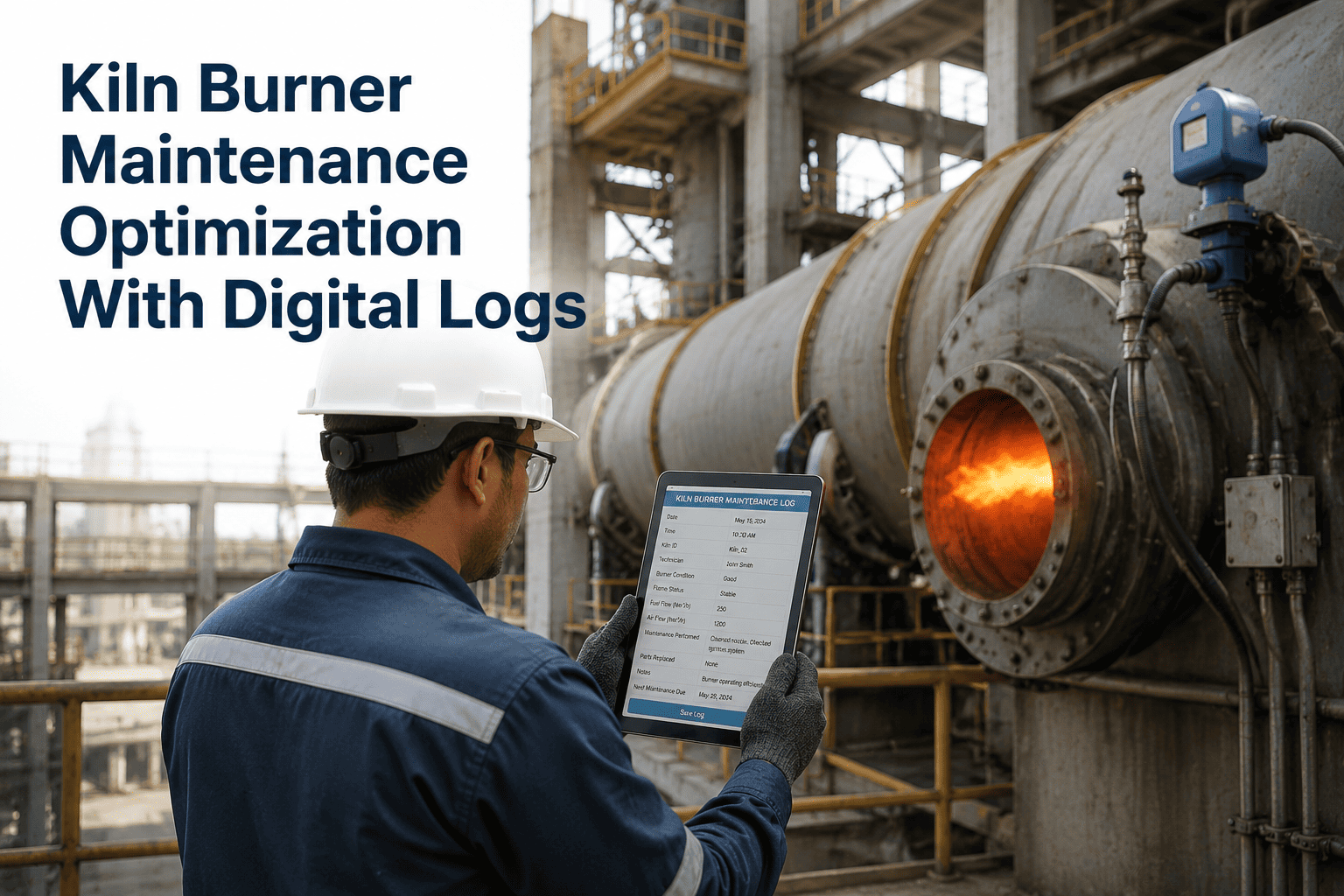
The kiln burner is the one component that touches everything — fuel cost, clinker quality, refractory life and kiln stability all hinge on a stable flame. Yet in most plants its health lives in scattered shift logs and a maintenance engineer's memory: a noted flame flicker here, a deferred burner-tip check there, a flame detector calibration that slipped past its interval. The warning was almost always written down somewhere; it just never became an action. A digital burner log changes that by turning every inspection, every flame observation and every spare into a tracked, searchable record that drives the next work order. Sign in to OxMaint to run your burner program on digital logs, or book a demo to see it on a kiln line.
Why The Burner Log Matters
What An Untracked Burner Quietly Costs
$80K–$200K
Saved by avoiding a single burner burnout event in repair and lost production
2nd
Highest single cause category of unplanned kiln shutdowns is fuel and burner system failures
~90 days
Average flame detector calibration interval — missed by most plants without structured scheduling
6–12 mo
Recommended burner pipe inspection cycle to catch corrosion, wear and thermal-shock damage early
Anatomy Of A Good Log Entry
What Turns A Note Into An Action
A scribbled "flame looked off" helps no one a month later. A useful burner log captures the same observation in a form that schedules the fix and survives the shift change.
What
The observation — flame shape distortion, burner-tip rhino horn, primary air noise, coal gun atomization drop
Where
The exact asset in the hierarchy: kiln line, firing system, burner pipe or flame detector — not just "the burner"
Evidence
A timestamped photo and reading captured at the equipment, so the next shift sees what you saw
Severity
Watch, plan or act — so an erratic flame impinging on the lining outranks a minor cosmetic note
Action
A work order with an owner and a date — the step that paper logs almost always skip
The Inspection Stack
The Burner Checks Worth Logging Every Cycle
These are the recurring checkpoints that keep a flame stable and a burner pipe alive. Each one becomes a scheduled, recurring task instead of a memory test.
01
Burner Tip & Rhino Horn
Inspect for the build-up that grows on the tip and the erosion that distorts flame shape. Untracked tip wear quietly lifts specific heat consumption.
02
Burner Pipe Condition
Check the wear-resistant layer, castable protection and alignment every 6–12 months. Corrosion, wear and thermal shock are the common failure paths.
03
Primary Air Channels
Clear blockages in the outlet air ducts and check nozzle clearance so combustion air spreads evenly and the flame stays stable.
04
Flame Detector Calibration
Calibrate on interval. An uncalibrated detector causes false trips or, worse, misses a real loss-of-flame event — a genuine safety exposure.
05
Coal Gun & Oil Atomization
Clean and maintain the atomization device so ignition is reliable and the spray stays uniform for stable, complete combustion.
06
Flame Shape & Position
Log flame readings each shift. A fragmented or impinging flame is the earliest visible sign of a burner or air-flow problem developing.
Every Flame Note Should End As A Work Order
OxMaint registers your burner, pipe, flame detectors and air system as tracked assets, schedules each inspection automatically, and turns every logged observation into an assigned job — so nothing waits for the next burnout to be noticed.
The Real Difference
Paper Shift Logs Versus A Digital Burner Log
Scattered Shift Logs
Flame flicker noted, then lost at handover
Inspection intervals tracked by memory
No photo, no trend, no history per burner
Spares discovered missing during the repair
Audit evidence reconstructed after the fact
OxMaint Digital Log
Observation becomes an owned, dated work order
Each check auto-scheduled on its own frequency
Timestamped photo and reading on every entry
Burner spares linked and reserved to the job
Calibration and inspection records export-ready
Burner Reference
Burner Issue, Warning Sign And Logged Response
| Burner Issue |
Warning Sign |
Why It Hurts |
Log Cycle |
OxMaint Action |
| Rhino horn on tip |
Flame shape distortion |
Higher fuel use, uneven heat |
Each shift / shutdown |
Cleaning work order raised |
| Burner pipe wear |
Castable loss, scoring |
Pipe burnout risk, downtime |
6–12 months |
Inspection task with photo log |
| Primary air blockage |
Uneven air, noise |
Unstable flame, poor mixing |
Each shutdown |
Nozzle-clearance check task |
| Flame detector drift |
False trips or no detection |
Safety exposure, lost output |
~90 days |
Calibration PM auto-scheduled |
| Atomizer fouling |
Poor ignition, rough spray |
Unstable start-up combustion |
Periodic |
Clean-and-verify work order |
| Flame impingement |
Flame hits lining at discharge |
Refractory and shell damage |
Continuous / each shift |
Urgent order, adjust and inspect |
Cycles are a baseline — tune them to fuel type, burner design and campaign length. Book a demo to configure your burner PM schedule.
From The Kiln Floor
What Kiln Maintenance Engineers Tell Us
“
For years our burner history was three notebooks and whatever the senior operator remembered. We knew the flame had been drifting, we knew a tip clean was overdue, but none of it was in a system that forced a decision. The shift that finally mattered was small: every flame observation and every inspection became a digital log entry that raised a work order with a name on it. Suddenly the burner had a memory of its own. We caught a developing pipe problem on a planned stop instead of a burnout, and our calibrations stopped slipping. The flame got steadier, and so did the fuel bill.
What You Get
What OxMaint Brings To Burner Maintenance
Asset Hierarchy
Burner As Tracked Assets
Burner pipe, flame detectors, coal gun, primary air fan and fuel chutes each registered with specs, install date and baseline — so history attaches to the right part, not a vague "burner".
Digital Logs
Field Entries On A Phone
Technicians scan a tag at the equipment and log flame readings, tip condition and photos without leaving the burner platform — no clipboard, no lost note at handover.
Auto PM
Scheduled Inspections
Burner tip checks, primary air clearance, calibration intervals and atomizer cleaning all generate on the correct frequency per asset, so nothing rides on memory.
Work Orders
Observation To Action
Every logged issue can raise an assigned, prioritised work order with the corrective action attached — closing the gap between noticing and fixing.
Spares Link
Burner Spares Ready
Tips, nozzles and pipe sections are linked to the burner and reserved against the job, so a planned repair is not delayed by a part nobody ordered.
Audit Ready
Evidence On Demand
Calibration records, interlock tests and inspection logs are timestamped and photo-evidenced, exporting as an audit package instead of a frantic reconstruction.
Common Questions
Kiln And Maintenance Teams Ask These
How is a digital burner log better than our existing shift logs?
A paper shift log records an observation but rarely drives an action, and it disappears at handover. A digital log ties each flame reading, tip check and calibration to the specific asset, attaches a photo and timestamp, and can raise a work order with an owner. The burner gains a continuous history instead of living in three notebooks.
Sign in to start a digital burner log.
Can technicians log burner inspections from the platform itself?
Yes. By scanning a tag on the equipment, a technician opens that asset's log and records flame shape, tip condition, primary air notes and photos right there, even offline. The entry is captured at the source rather than written up later from memory, which is where detail and accuracy are usually lost.
Book a demo to see mobile logging.
Does it keep flame detector calibrations and PSM records audit-ready?
It does. Flame detector calibrations, burner interlock tests and combustion inspections are logged with timestamps and photo evidence, then stored against the asset. When an audit or safety review arrives, the records export as a complete package instead of being reconstructed from scattered paperwork hours before the deadline.
Sign in to set up calibration tracking.
How does it help schedule burner inspections on the right interval?
Each burner asset carries its own PM frequency — tip checks each shutdown, calibrations on a roughly 90-day cycle, pipe inspections every six to twelve months. OxMaint generates the task automatically when it is due and escalates it if missed, so intervals stop slipping through the cracks during busy campaigns.
Book a demo to build your PM calendar.
Can it link burner spares so repairs are not delayed?
Yes. Burner tips, nozzles and pipe sections are linked to the burner asset and can be reserved against a planned work order, with stock visibility built in. That means a scheduled tip change or pipe repair is not held up by a missing part discovered only when the crew arrives at the platform.
Sign in to connect your burner spares.
Your Burner Has Been Trying To Tell You Something — Start Writing It Down Where It Counts
Plants that run their burner program on digital logs catch pipe and flame problems on planned stops, keep calibrations on schedule, and turn scattered notes into a steady flame and a lower fuel bill. Free trial, no implementation fees, your burner assets and logs live within days.