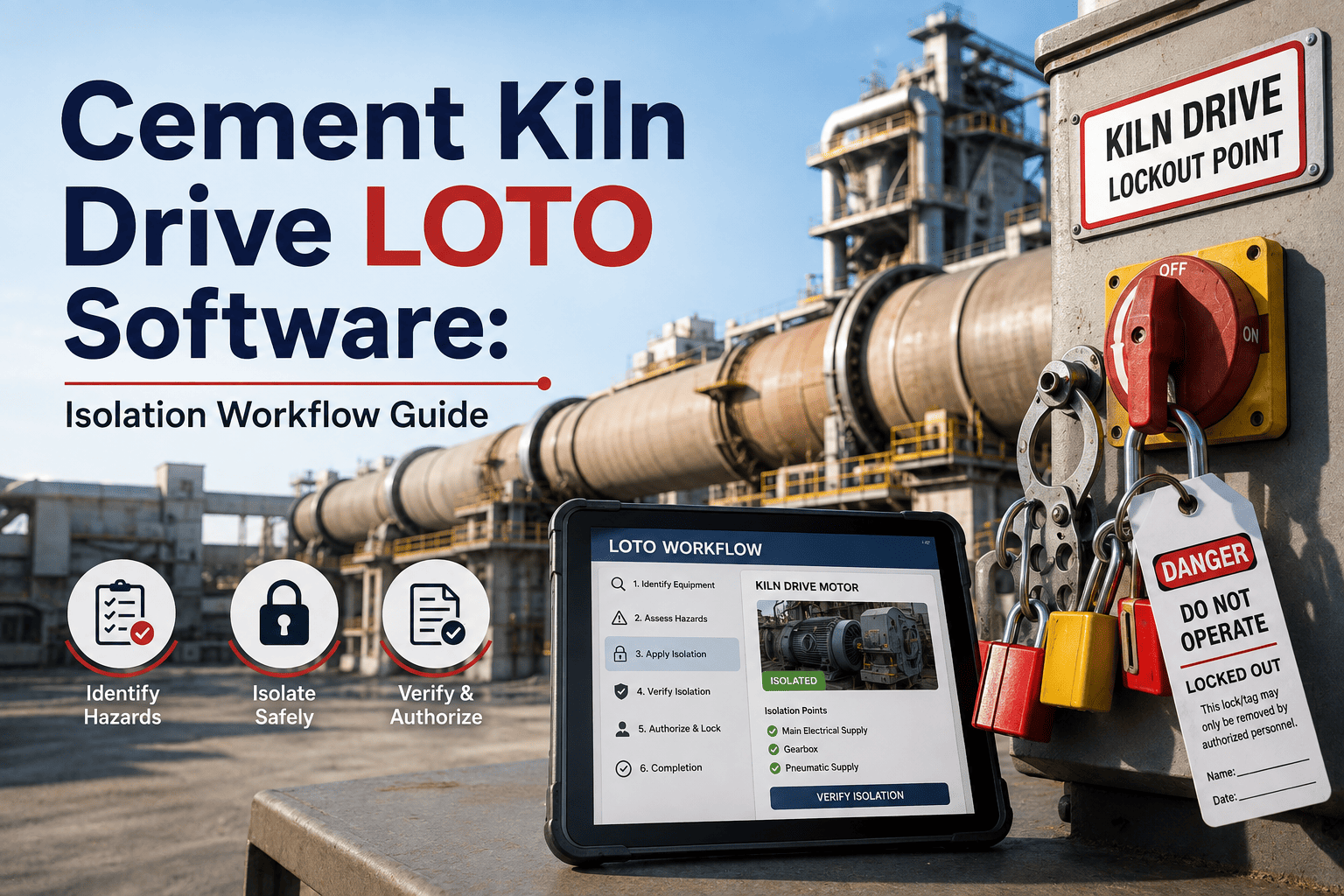
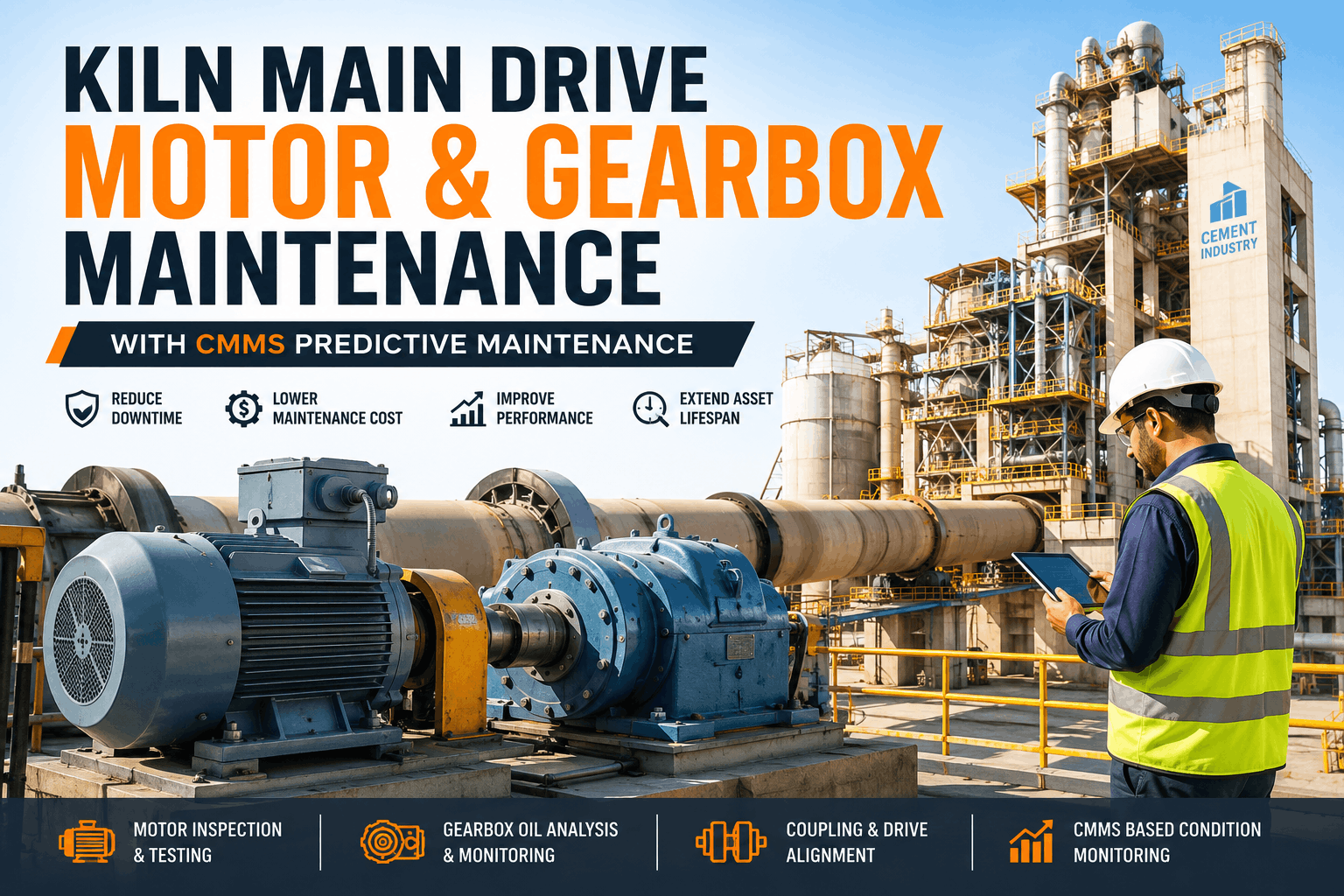
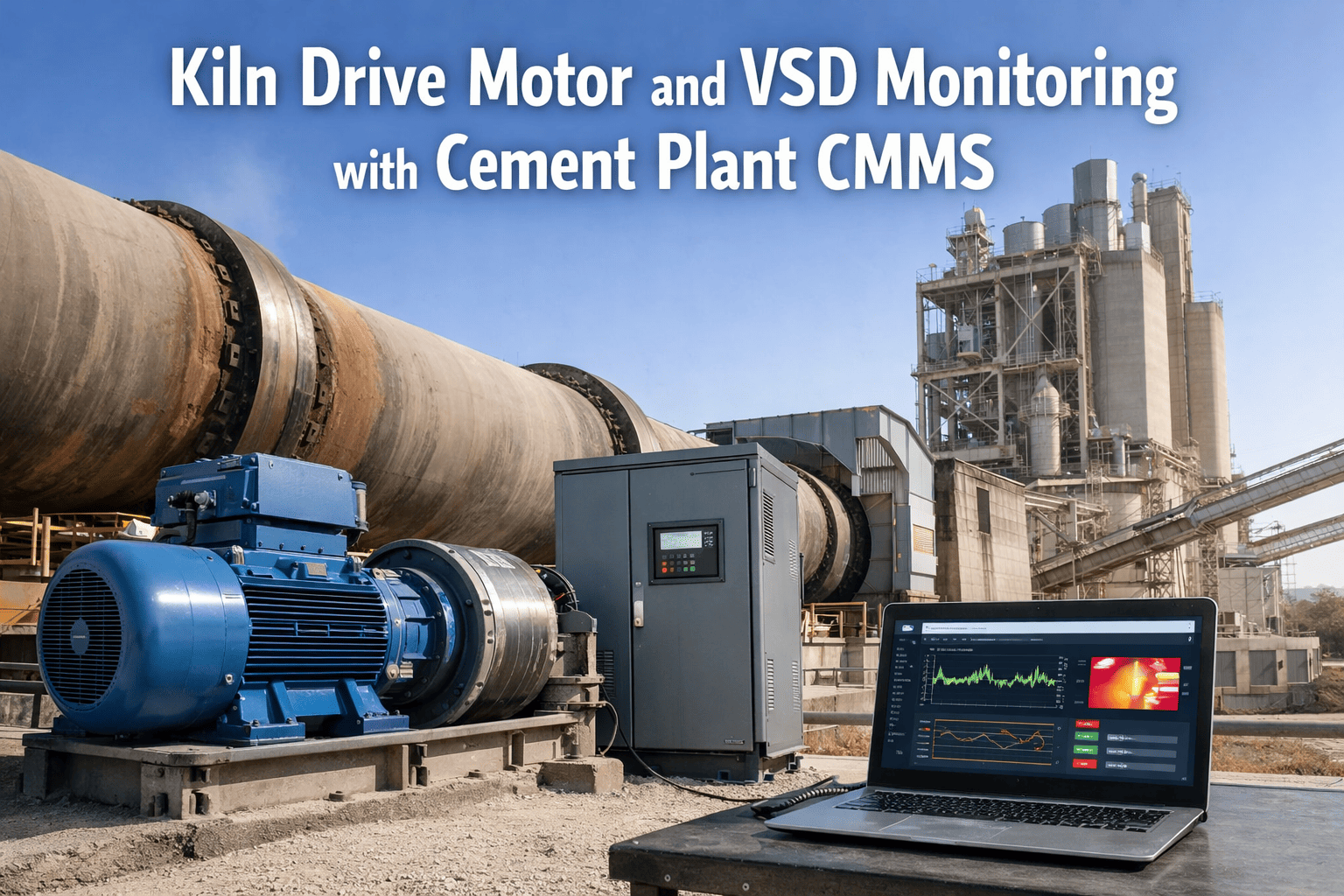
The kiln drive system — main gearbox, girth gear, pinion, support rollers, and trunnion bearings — is the mechanical backbone of continuous clinker production. A single main drive bearing seizure or girth gear failure at an unplanned moment costs $200,000 to $300,000 per day in lost production, plus emergency contractor rates and parts procurement premiums. What makes these failures so damaging is not that they are unpredictable — it is that the warning signals are routinely present for 10 to 45 days before catastrophic failure occurs and simply not being collected or acted upon. Bearing cage defect frequencies shift in the vibration spectrum. Motor current signatures drift. Gearbox oil temperatures rise. These are all measurable, trackable patterns that a well-integrated monitoring and CMMS system can catch weeks in advance. OxMaint AI combines vibration analysis, motor current monitoring, and thermal data from your kiln drive system into a single asset health model that generates structured work orders before failures reach the critical zone. Sign up free to connect your first kiln drive asset to OxMaint.
AI Predictive Maintenance · Kiln Maintenance
Kiln Drive Motor Maintenance and Vibration Alerts
Monitor kiln drive motor vibration, current, and temperature signals to trigger faster maintenance response — before bearing failures, gear wear, and motor faults stop production.
$300K
Per day — cost of unplanned kiln drive failure during production
10–18
Days bearing cage defect frequencies are detectable before seizure
30–45
Days girth gear wear signatures are detectable before critical failure
85%
Lower repair cost when kiln drive intervention is planned vs. emergency
Four Monitoring Methods. One Asset Record.
How OxMaint Detects Kiln Drive Faults Before They Become Failures
Each diagnostic method targets a different layer of the failure signal. Together, they catch degradation modes that any single sensor stream alone would miss.
Method 01
Vibration Spectrum Analysis
Continuous vibration sensors on drive bearings, gearbox housing, and support rollers generate frequency spectrum data every rotation. OxMaint's AI tracks BPFI, BPFO, BSF, and FTF defect frequencies — distinguishing genuine bearing fault signatures from process-driven vibration to eliminate false alerts.
Detection window: 10–45 days before failure
Method 02
Motor Current Signature Analysis
Motor current waveforms reveal rotor bar defects, bearing problems, and load variations without physical contact with the motor. Current signature monitoring detects kiln load changes caused by shell ovality and tyre migration — failure modes vibration sensors alone may miss.
Detection window: 14–30 days before failure
Method 03
Gearbox Oil Temperature and Particle Count
Oil temperature trending and integrated particle count monitoring detect gear tooth pitting and bearing wear before vibration anomalies appear. A rising iron particle count in gearbox oil is often the earliest reliable indicator of gear mesh degradation in high-load kiln drive applications.
Detection window: 30–90 days before failure
Method 04
Thermal Imaging Integration
Drive motor housing and gearbox thermal cameras provide an independent confirmation layer for vibration alerts. When thermal readings and vibration both deviate simultaneously, OxMaint elevates the alert priority and tightens the time-to-failure estimate — reducing the uncertainty window for planners.
Detection window: 7–21 days before failure
Alert to Work Order — Automatically
How a Kiln Drive Alert Becomes a Structured Maintenance Action
1
Signal Detected
Bearing defect frequency crosses configured threshold in vibration spectrum
›
2
AI Classification
Failure mode identified, severity scored, time-to-failure estimated with confidence range
›
3
Inventory Check
OxMaint verifies correct bearing is in stock — triggers purchase order if not
›
4
Work Order Created
Structured PM work order generated — aligned to next planned kiln stop window, not emergency
›
5
Model Updated
Post-repair sensor data confirms recovery and improves future prediction accuracy
Protect Your Most Expensive Rotating Asset
Stop Discovering Kiln Drive Failures at 3 AM. Start Getting 30-Day Warnings.
OxMaint connects to your existing drive monitoring infrastructure — no replacement, no rip-and-replace. Vibration, current, and thermal data flow into a single kiln drive asset health model that converts degradation trends into actionable work orders.
Assets Covered
Every Component in the Kiln Drive Circuit — Monitored
| Drive Component |
Failure Mode Monitored |
Primary Detection Method |
Typical Lead Time |
| Main drive gearbox |
Bearing cage defect, gear tooth pitting |
Vibration + oil particle count |
30–45 days |
| Girth gear and pinion |
Backlash increase, tooth wear, root cracking |
Gear mesh harmonic analysis |
4–6 weeks |
| Drive motor |
Rotor bar defect, winding insulation, bearing wear |
Motor current signature + thermal |
14–30 days |
| Support rollers and trunnion bearings |
Surface spalling, misalignment, overheating |
Vibration + thermal camera |
10–18 days |
| Kiln tyre and riding ring |
Migration rate, ovality, surface wear |
Motor current + shell deformation |
14–21 days |
Common Questions
What Drive System Engineers Ask Before Connecting to OxMaint
Does OxMaint integrate with our existing vibration monitoring hardware?
Yes. OxMaint connects to all major vibration platforms via API, OPC-UA, and PI historian. Data from Siemens, SKF, Emerson, and custom sensor networks flows into the kiln drive asset record without replacing existing hardware.
Book a demo to confirm compatibility with your current setup.
How does OxMaint handle false positives in vibration alerts?
The AI is trained on cement-specific kiln drive operating baselines — distinguishing process-driven vibration changes from genuine fault signatures. Alert confidence scoring means planners only see work orders when the model has sufficient evidence, not every time a threshold blips.
What happens when an alert fires during a planned production run?
OxMaint's time-to-failure estimate gives planners a decision window. If the estimated failure date exceeds the next planned kiln stop, the work order is scheduled for that stop. If not, OxMaint escalates the alert priority and flags the need for an unplanned intervention — with full diagnostic data attached.
Sign up free to configure your alert escalation logic.
Can OxMaint manage multi-kiln drive monitoring across multiple plant locations?
Yes. Each kiln line is configured with its own drive specifications and alert thresholds. Portfolio dashboards show comparative drive health scores across all lines and locations — with the ability to drill into any individual asset's vibration trend from the same interface.
Connect Your Kiln Drive to OxMaint
From First Vibration Alert to Planned Work Order — Without a Single Manual Handoff
Cement reliability teams use OxMaint to close the execution gap between sensor data and maintenance action. Vibration, current, and thermal signals become structured work orders. Drive failures become planned interventions. Emergency costs become standard rates.