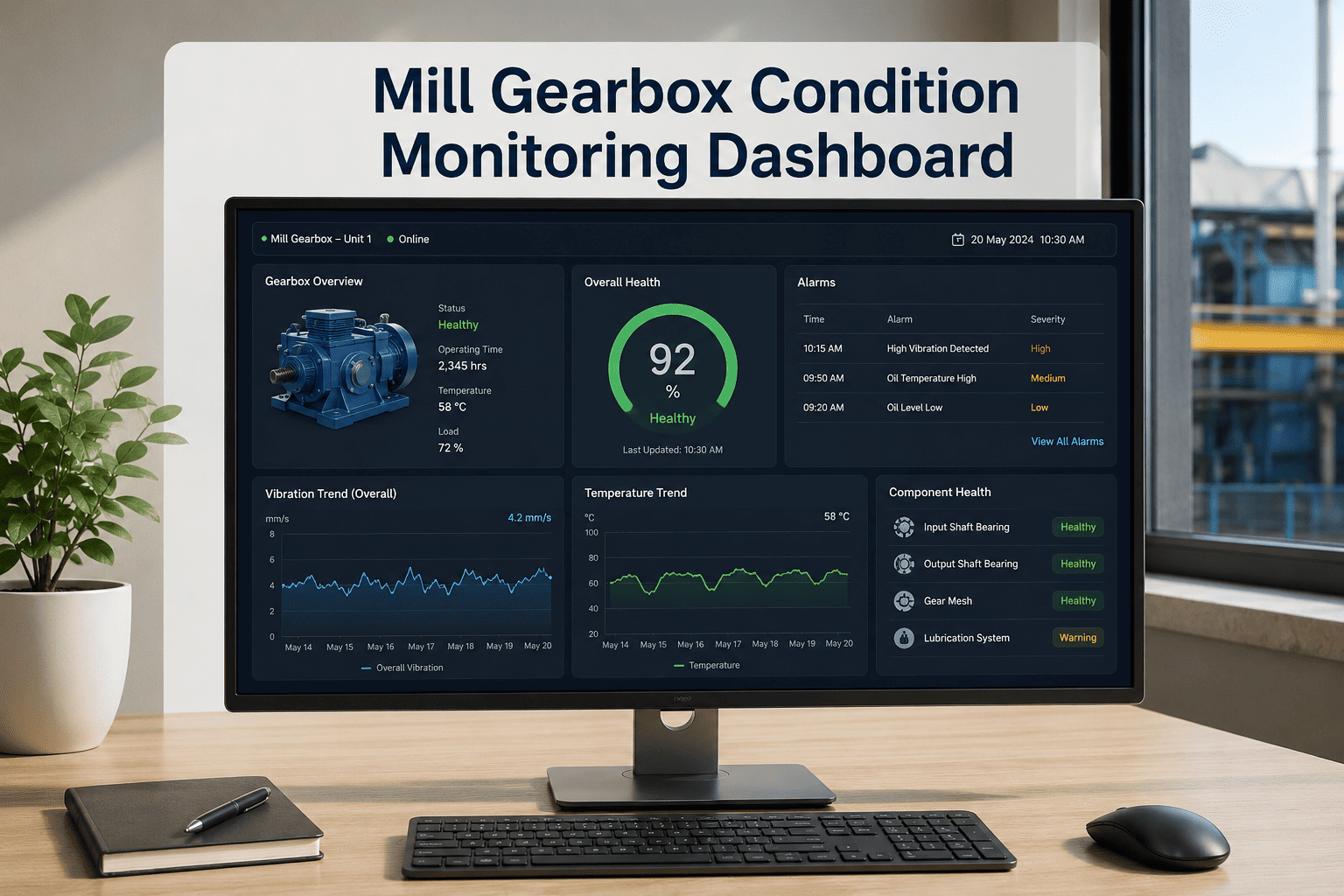
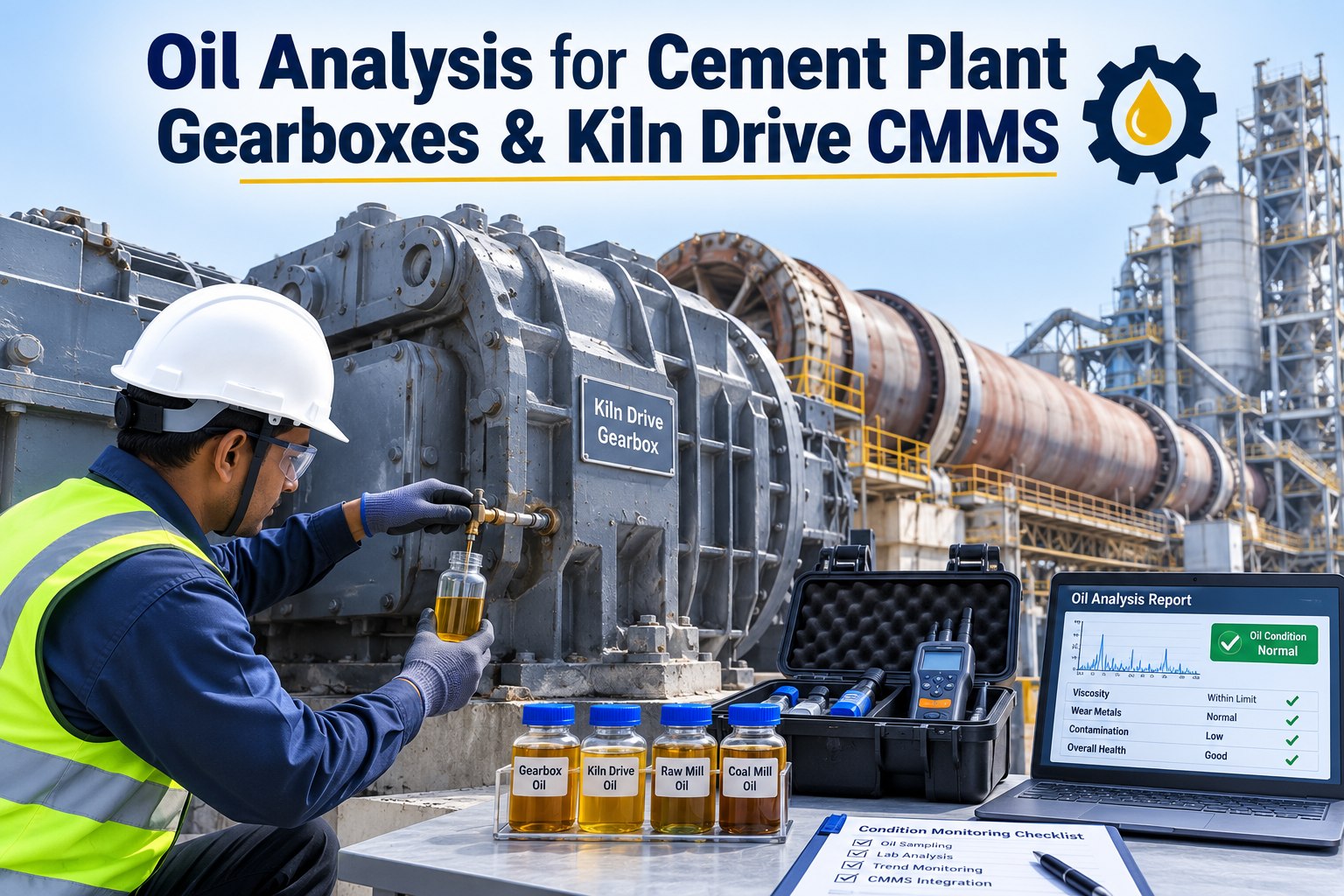
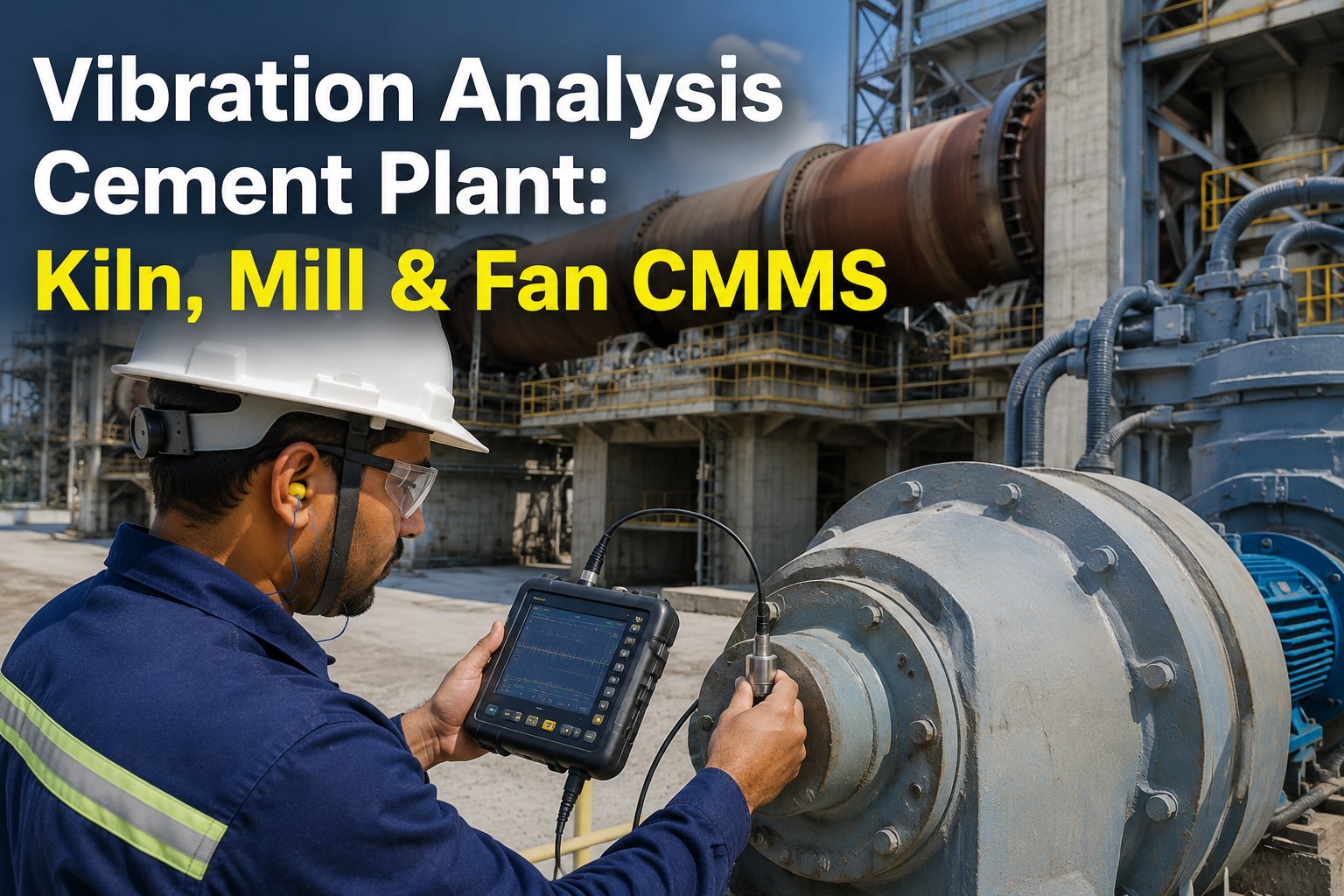
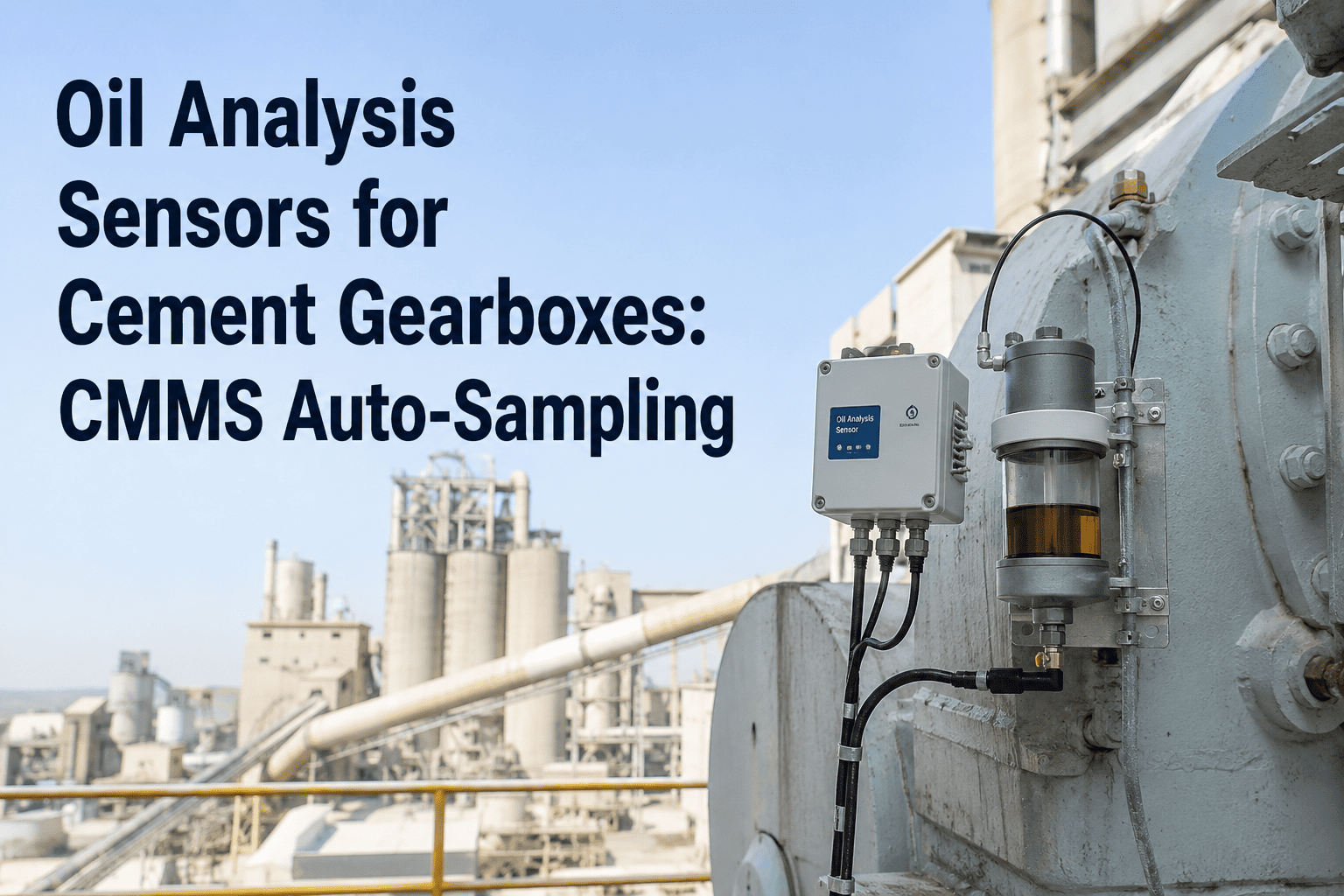
Cement mill gearboxes are among the most stressed mechanical assets in any plant — running 24 hours a day under high torque loads, contaminated with fine cement dust, and often starved of the real-time visibility needed to catch early-stage failures. A cracked gear tooth or degraded oil film can take a mill offline for days, stalling the entire production line. The OxMaint condition monitoring dashboard brings vibration trends, temperature profiles, oil health scores, and work order history into a single view — so maintenance engineers stop reacting and start predicting. Book a demo to see the dashboard live.
Analytics & Reporting — Cement Mill Maintenance
Mill Gearbox Condition Monitoring Dashboard
One screen. Every gearbox signal. Vibration, temperature, oil health, and work order history — tracked, trended, and audit-ready in OxMaint.
72 hr
Average early-warning lead time
40%
Reduction in unplanned gearbox stoppages
100%
Digital maintenance history per asset
Real-Time
Sensor-to-dashboard data pipeline
Why Gearbox Monitoring Fails Without a Dashboard
Most cement plants collect gearbox data — vibration logs from accelerometers, temperature readings from PT100 sensors, periodic oil sample results — but store them in disconnected systems: spreadsheets, paper rounds, lab reports from third-party analysts. By the time someone correlates a spike in drive-end bearing vibration with a deteriorating oil viscosity trend, the gear tooth has already chipped. A unified dashboard eliminates the gap between data collection and decision-making.
The Hidden Cost of Disconnected Gearbox Data
01
Vibration Data Silos
Vibration readings from accelerometers sit in a separate system from oil analysis reports. No one sees the combined risk picture until a failure happens.
02
Lagging Temperature Alerts
Manual temperature checks happen once per shift. Bearing temperatures can spike and stabilize between rounds — a failure signature that paper rounds completely miss.
03
Oil Health Guesswork
Oil change intervals are calendar-based, not condition-based. Oil can degrade in 60% of its rated life under high-load cement mill conditions, yet changes are delayed or missed.
04
No Work Order Linkage
Even when a vibration spike triggers concern, the link between the sensor alert and the resulting inspection, finding, and repair is never documented in one place.
What the OxMaint Gearbox Dashboard Tracks
The OxMaint dashboard is structured around the four signal categories that together predict 95% of gearbox failures in cement mill applications. Each category feeds a real-time trend view and an AI-generated health score, giving engineers a single number to monitor and a full data trail to investigate.
Vibration
Drive-end bearing RMS velocity
Non-drive-end bearing envelope spectrum
Gear mesh frequency harmonics
Overall vibration trend with alarm bands
Temperature
Bearing housing temperature (continuous)
Oil sump temperature trend
Inlet vs outlet oil delta-T
Cooling system performance index
Oil Health
Viscosity index and degradation curve
Particle count and ferrography results
Water ingress and contamination level
Remaining useful life estimate
Work Orders
Inspection history with technician notes
Repair events plotted on trend timeline
Spare parts consumed per event
MTBF and MTTR per gearbox
See Every Gearbox Signal in One Screen
OxMaint connects your vibration sensors, oil lab reports, and work order system into a live condition monitoring dashboard. No spreadsheets. No data gaps.
How AI Health Scoring Works
OxMaint's AI engine doesn't just display raw sensor data — it computes a composite gearbox health score by weighting each signal category against historical failure patterns from cement mill assets. When a score drops below a configurable threshold, the system auto-generates a work order and notifies the responsible engineer. The result is a closed loop from detection to action, with every step documented.
1
Sensor Data Ingestion
Vibration, temperature, and oil sensor data streams into OxMaint via MQTT, OPC-UA, or manual entry from lab reports — whichever your plant uses today.
Data Layer
2
Trend Analysis and Anomaly Detection
The AI baseline-trains on each gearbox individually. Anomalies are flagged relative to that asset's own history, not a generic threshold — eliminating false positives from mill-to-mill variation.
AI Layer
3
Health Score Calculation
A composite score from 0–100 is calculated per gearbox every hour. Weights are configurable per asset type — a high-speed pinion shaft scores vibration heavier than a slow-speed output shaft.
Scoring Layer
4
Auto Work Order Generation
Score drops below threshold trigger a work order automatically — with the sensor reading, timestamp, and recommended action pre-populated. Engineers confirm and assign, not create from scratch.
Action Layer
Dashboard vs. Traditional Monitoring
Frequently Asked Questions
What sensors does OxMaint support for gearbox monitoring?
OxMaint integrates with vibration accelerometers, PT100 temperature sensors, in-line oil quality sensors, and third-party lab oil analysis reports. Data can be ingested via MQTT, OPC-UA, API, or manual technician entry.
Talk to our team about your existing sensor setup.
Can the dashboard monitor multiple gearboxes across a cement plant?
Yes. OxMaint supports multi-asset, multi-site hierarchies. You can view a plant-level health summary or drill into an individual gearbox — including its sensor history, oil records, and linked work orders in one screen.
How does the AI health score differ from fixed vibration alarms?
Fixed alarms fire on absolute thresholds — useful but prone to false positives on variable-speed mills. OxMaint's health score baselines against each gearbox's own operating history, weighting multiple signals to detect degradation patterns before threshold limits are breached.
How long does implementation take?
Most cement plants are live with the gearbox dashboard within 2 to 4 weeks. OxMaint provides onboarding support, asset configuration, and sensor integration guidance.
Start your free trial to explore the platform before committing.
Does OxMaint store historical gearbox data for long-term trend analysis?
Yes. All sensor readings, oil analysis results, and work order records are stored indefinitely and accessible for trend analysis, root cause investigation, and reliability benchmarking across your asset fleet.
Stop Reacting to Gearbox Failures. Start Predicting Them.
OxMaint gives cement plant maintenance teams a live gearbox condition monitoring dashboard — vibration, temperature, oil health, and work orders in one place. Reduce unplanned stoppages, protect your mill assets, and keep production running.