Cement plant operations involve some of the most hazardous industrial environments globally, featuring massive rotating equipment like kilns, extreme temperatures, confined spaces in silos, and high-voltage electrical systems. Managing maintenance in these conditions requires more than just scheduling; it requires strict, infallible safety protocols. The difference between a safe shutdown and a catastrophic incident lies in the effectiveness of your safety documentation. A well-designed Permit-to-Work (PTW) system transforms standard safety procedures into actionable, verifiable checkpoints: identifying exactly who is authorized, what hazards exist, and which isolations must be active. Digital Permit-to-Work (PTW) platforms provide real-time authorization capabilities that surface critical safety overlaps automatically, eliminating the dangerous paperwork chaos that leads to fatal errors.
This guide covers the essential Permit-to-Work categories every cement facility should enforce, how to structure safety dashboards for different operational stakeholders, and proven strategies to turn compliance tracking into measurable incident reductions.
Permit-to-Work (PTW) System Defined
A formal, documented safety control system to manage high-risk activities in facility operations
The PTW Viability Test
The Five Core High-Risk Permits in Cement Operations
Before launching a digital system, you need the right procedural foundation. These five permit types form the backbone of life-critical safety management in a cement manufacturing environment. Consult our safety specialists about auditing your baseline protocols.
Hot Work Permit
Strict requirement near coal mills & silosRequired for any operation involving open flames or producing heat/sparks. Highly critical in cement plants due to combustible coal dust and alternative fuels.
Crucial Checkpoints
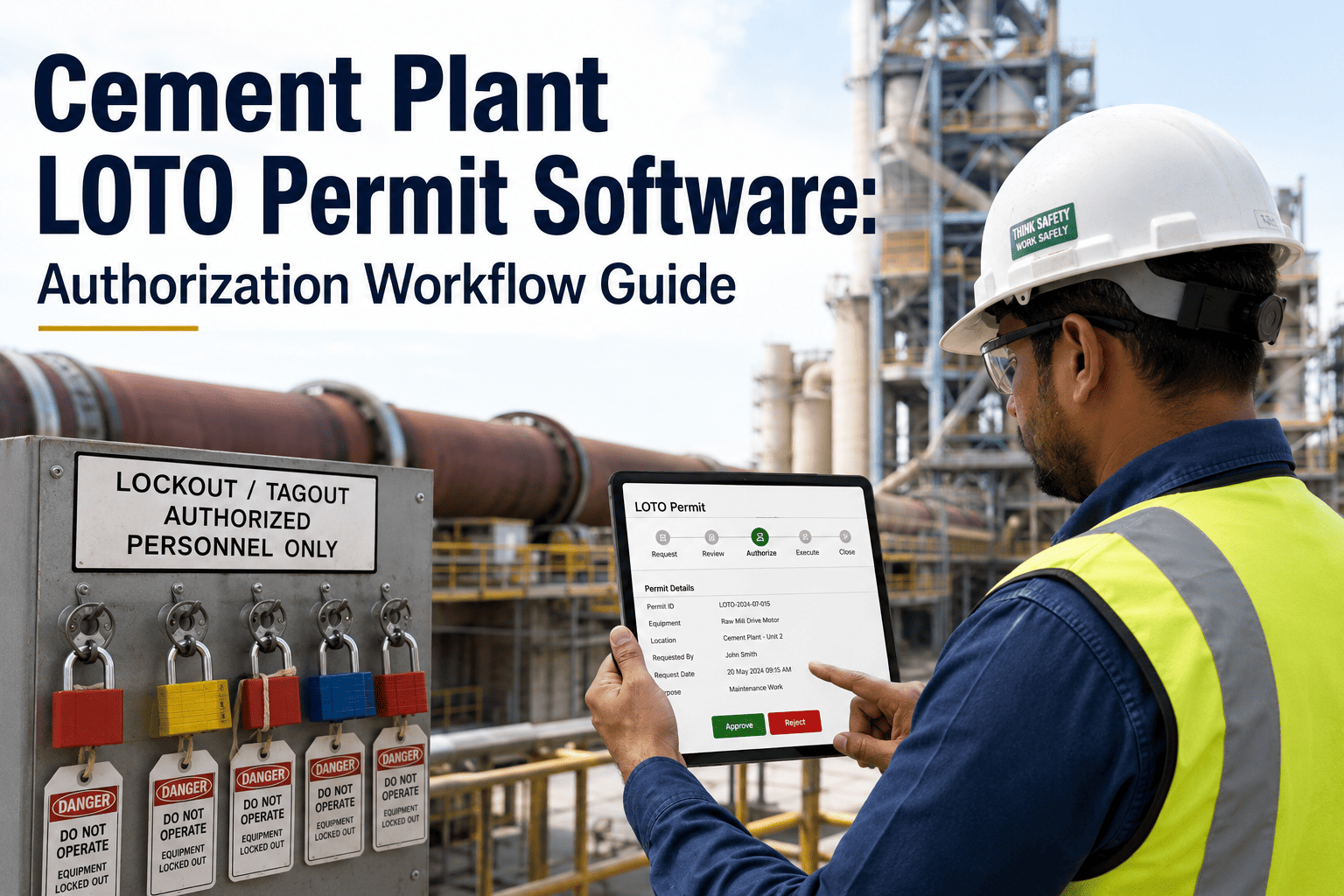
Energy Isolation (LOTO)
Zero-energy state verificationEnsures that dangerous machines (like crushers, raw mills, and conveyor belts) are completely shut off and cannot be started up again prior to the completion of maintenance work.
Crucial Checkpoints
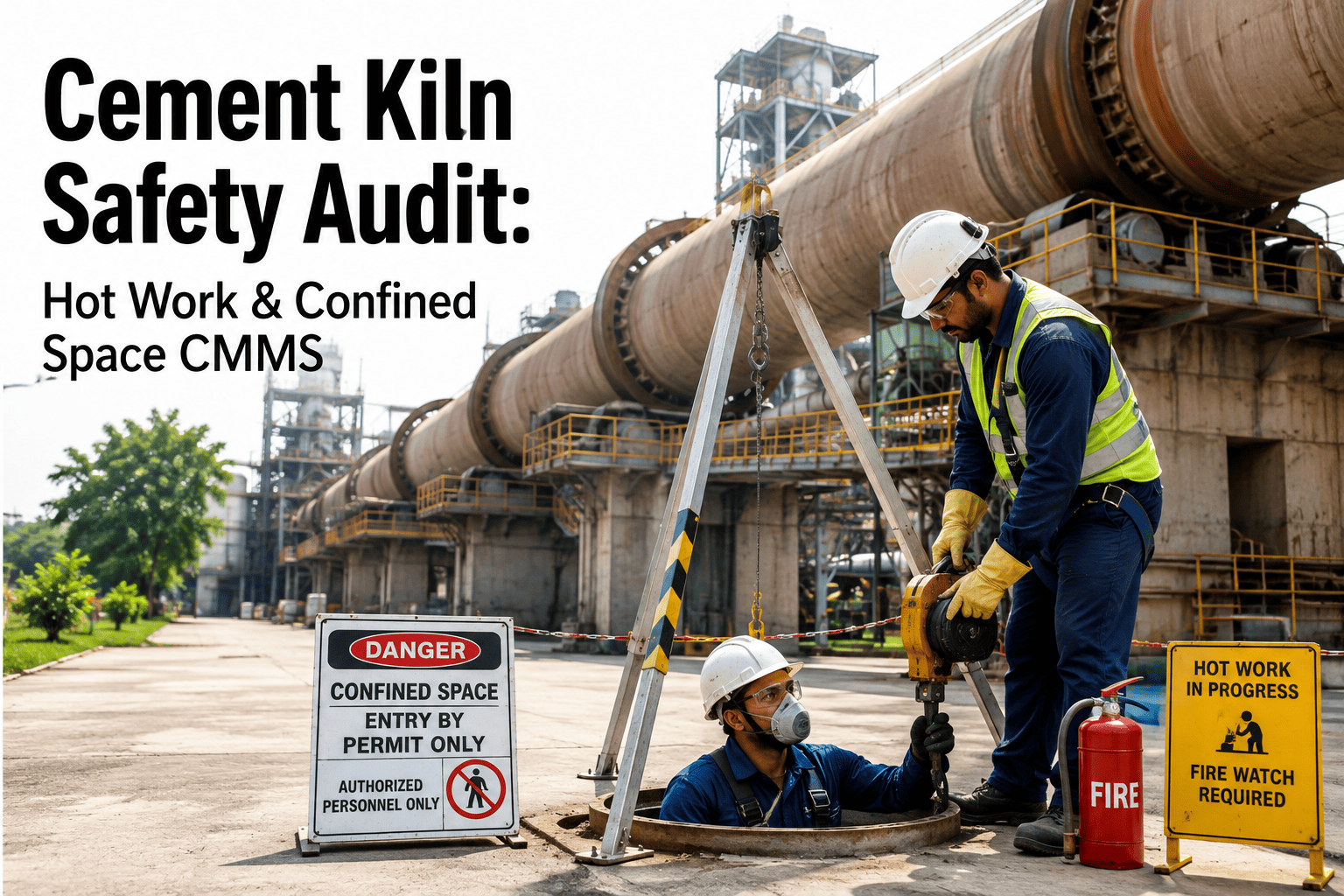
Confined Space Entry
Required for entering kilns, cyclones, ball mills, and clinker silos where hazardous atmospheres or engulfment risks exist.
Working at Heights
Necessary for any work on preheater towers, conveyor galleries, or stack emissions testing platforms above standard safety rails.
Excavation & Trenching
Required when digging around underground plant infrastructure, gas lines, electrical conduits, or water mains.
Why PTW Strictness Matters in Cement Plants
Engulfment Risk
Silos and hoppers can collapse materials, trapping workers instantly without safety lines.
Thermal Hazards
Kilns operate at ~1450°C. Refractory brick cooling and radiant heat require strict timing.
Kinetic Energy
Crushers and large motors have massive momentum that takes minutes to stop fully.
Contractor Safety
During annual shutdowns, hundreds of temporary workers enter the plant, needing tight oversight.
Digitize Your PTW Processes Today
iFactory and Oxmaint provide mobile-first Permit-to-Work modules ensuring real-time compliance, automatic clash detection, and comprehensive audit trails for heavy industry.
Safety Dashboard Views by Stakeholder
Different roles interact with safety systems differently. A technician needs to see active hazards in their exact location, while a safety manager needs facility-wide visibility. Design your digital PTW dashboards around functional safety roles.
Plant Manager View
Focus: Plant-wide Risk PostureHigh-level view of ongoing risks, particularly during major turnaround events.
Key Monitors
- Total Active Critical Permits
- Contractor vs Internal Safety Ratios
- Overdue Permit Closures
- Incident / Near Miss Frequency Rates
- Regulatory Audit Readiness Status
Safety Officer Dashboard
Focus: Live ComplianceOperational oversight to ensure no steps are skipped in hazard mitigation.
Key Monitors
- Live Gas Testing Results
- Simultaneous Operations (SIMOPS) Clashes
- Failed Verification Checks
- Competency/Training Expirations
- Emergency Rescue Team Availability
Shift Supervisor Dashboard
Focus: Daily OperationsTactical workflow approvals to keep maintenance moving without sacrificing safety.
Key Monitors
- Permits Awaiting Approval
- Isolations Ready for Verification
- Shift Handovers (Open Permits)
- Equipment Status Boards
- Permits Nearing Expiry (Under 1 hour)
Technician View
Focus: Safe ExecutionIndividual safety task management and localized hazard awareness.
Key Monitors
- My Active Permits
- Required PPE Checklists
- Digital LOTO Tags / Keys
- JSA (Job Safety Analysis) Docs
- "Stop Work" Authority Button
Advanced PTW Tracking for Incident Prevention
Moving beyond simple "approved/denied" status, advanced PTW metrics look at the quality of your safety culture. Track these indicators to prevent accidents before they happen.
Permit Lead Time
The average time from requesting a permit to receiving authorization. If it takes 4 hours to approve a 1-hour job, workers are incentivized to bypass the system.
SIMOPS Conflicts Avoided
Instances where the system flagged contradictory work (e.g., painting below hot welding) and prevented them from occurring simultaneously.
Isolation Verification Rate
Percentage of LOTO applications that received independent secondary physical verification before the permit was issued.
Shift Handoff Compliance
Percentage of active multi-shift permits that are formally suspended, reviewed, and re-authorized during shift changes.
Digital vs. Paper PTW Effectiveness
The format of your permit dictates how reliable it is. Paper systems are inherently flawed in massive cement operations. Here is why the industry is mandating digital shifts.
Digital PTW System
Enforces logic, requires geo-fenced sign-offs, and ensures visibility.
Capabilities
- Mandatory photo uploads of isolations
- Automated expiry countdowns & alarms
- Live tracking of all confined space entrants
- Digital signatures with timestamp & location
- Impossible to skip mandatory fields
Outcomes
- Higher compliance and auditing ease
- Faster tool-time for technicians
- Real-time plant-wide hazard map
Paper-Based System
Relies entirely on human perfection and physical movement of paper.
Critical Flaws
- Forms get lost, stained, or torn
- Illegible handwriting hides crucial details
- No way to cross-reference hazards instantly
- "Pencil whipping" signatures from the office
- Historical data is locked in filing cabinets
Impact
- Hidden SIMOPS clashes
- Audits take weeks instead of minutes
- Complacency leading to severe injuries
Safety Alert Thresholds & Escalations
A digital PTW system monitors conditions continuously. Automated rules ensure that when safety parameters are breached, the right people know instantly.
Critical (Stop Work)
Atmospheric monitor detects high CO in silo, LOTO breach reported, emergency evacuation triggered in sector.
Warning (Action Required)
Confined space permit expiring in 15 mins, Fire watch period ending, Gas re-test interval overdue by 5 mins.
Info (Operational)
New Hot Work permit requested in Raw Mill, Equipment handback initiated, Shift roster updated.
Protect Your Workforce
Implement strict, digitized safety controls that operators actually want to use. Prevent incidents, streamline shutdowns, and ensure every worker goes home safely.
PTW Digital Transformation Roadmap
Replacing paper permits with tablets is a major cultural shift in a cement plant. Follow this phased implementation to ensure union and workforce buy-in.
Audit & Standardization (Weeks 1-3)
Pilot Digitization (Weeks 4-6)
Frequently Asked Questions (Cement PTW)
How do we handle digital PTW when plant Wi-Fi is spotty?
Offline-first capability is mandatory. Any robust industrial PTW application must allow technicians to fill out safety checklists, capture photos, and sign digitally while offline in a kiln or basement. The data caches securely and syncs to the central dashboard the moment they step into a connected zone.
Can contractors use our digital permit system?
Yes, through secure portal links or QR codes. During major shut-downs, you can issue temporary, role-restricted access to contractors. They scan a QR code at the equipment, complete the JSA on their own smartphone, and submit it directly to your shift supervisor's queue for approval.
Does digital PTW replace physical LOTO locks?
No. Digital PTW manages the *process*, not the physical barrier. The physical padlock must always remain on the breaker. The digital system replaces the paper tags and logbooks, forcing technicians to document the exact isolation point, upload a photo of the applied lock, and verify zero-energy states before the software allows the permit to advance.