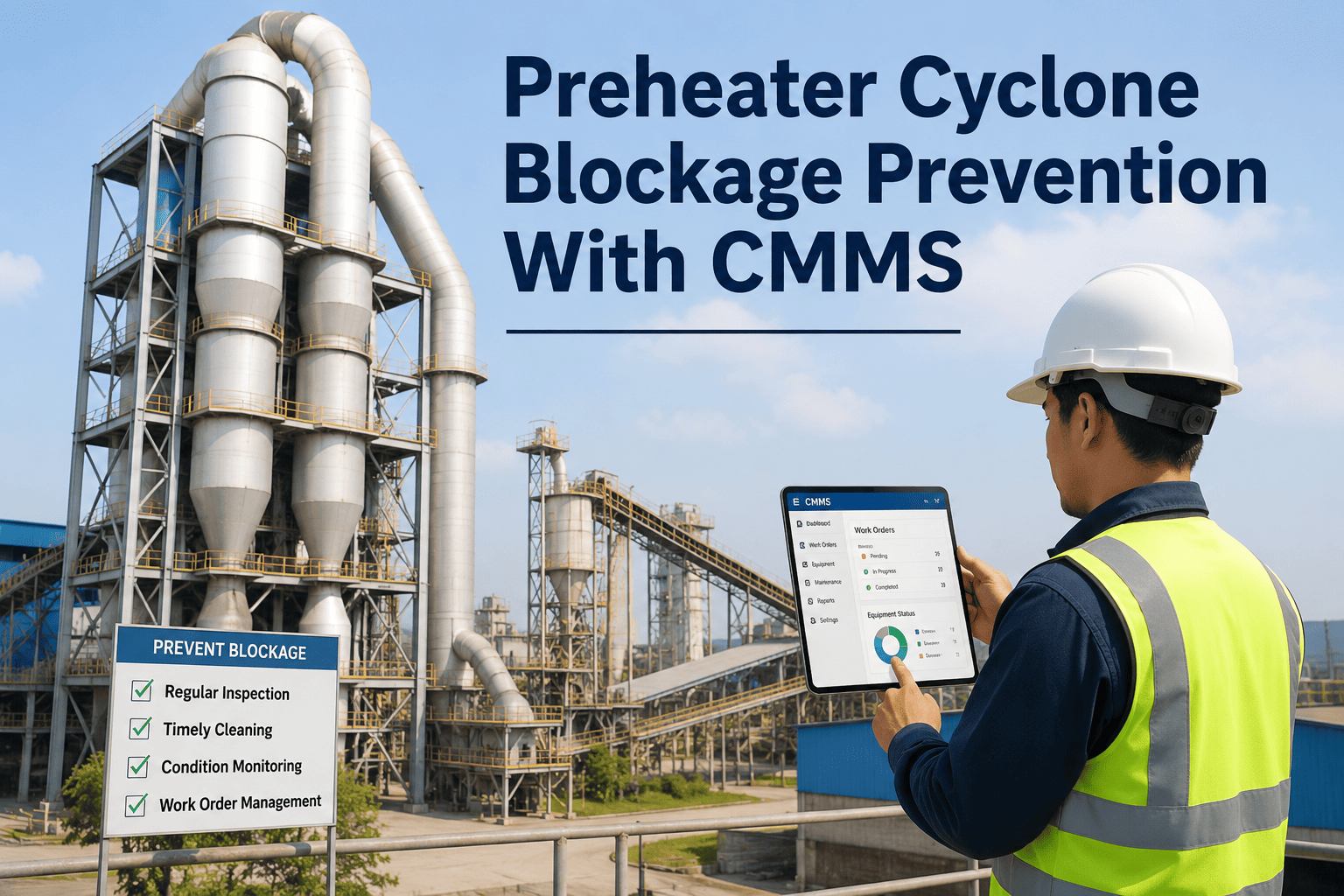
A blocked preheater cyclone can pull a kiln line down within hours, and clearing it puts crews in one of the most hazardous areas of a cement plant. Buildup rarely arrives without warning. Rising pressure drop, unstable draft, false air and shifting temperatures usually appear first. This checklist helps maintenance and process teams inspect, rate and act on those signals, with each finding logged in Oxmaint maintenance management software so repeat blockages can be traced to a cause.
Preheater Cyclone Blockage and Buildup Prevention Checklist
Prevent blockages and production interruption by checking the signals that come before them, from stage pressure drop to flap valves and air cannons.
Why Cyclone Blockages Interrupt Production
Raw meal moves down the preheater through a stack of cyclones against rising gas temperature. If material sticks to a wall or a chute, the passage narrows and flow becomes unstable.
Root Causes Behind Buildup
Blockages usually have more than one contributor, so the checklist covers both process signals and equipment condition.
How to Use the Checklist
Tags show how often each item should be completed and by whom. Record numeric readings where possible instead of ticking only yes or no.
Process Signals and Early Warning
Air Cannons, Blasters and Cleaning Devices
Flap Valves, Chutes and False Air
Refractory, Shell and Kiln Stop Inspection
Catch Buildup Before It Becomes a Stoppage
Turn shift checks into mobile inspections with clear thresholds and work orders that start automatically.
Escalation Ladder for Rising Blockage Risk
Corrective Maintenance After a Blockage
Clearing the blockage is only the first half of the job. The second half is finding out why it formed.
- Record where, when and under what kiln conditions the blockage formed.
- Photograph the buildup and note its thickness, colour and hardness.
- Inspect refractory, flap valves and cannons in the affected stage.
- Compare raw meal and fuel chemistry with earlier events.
- Create work orders for repairs and any recommended design changes.
- Review recurrence by stage at the monthly reliability meeting.
Reading Pressure Drop Trends Correctly
A single high reading means little. The pattern across stages, shifts and operating conditions tells you whether buildup is forming or the kiln is simply running at a different rate.
- Compare each stage with its own history at a similar feed rate, not with a fixed number from another plant.
- Look at the stage where the rise starts. Buildup in one cyclone raises pressure drop locally and can lower it in stages above.
- Note recent changes in fuel, raw meal, alternative fuel share or kiln speed before blaming equipment.
- Check whether the rise follows a cannon failure, a door left open or a flap valve problem.
- Write the interpretation into the inspection record so the next shift sees the reasoning, not only the number.
Shift Handover Checklist for Preheater Risk
Many blockages grow across a shift change because the incoming crew does not know what the outgoing crew was watching.
Safety Controls Around Cleaning and Inspection
Cyclone cleaning exposes workers to hot meal, sudden collapses of buildup and gas. Prevention matters partly because it reduces how often crews must be in that position.
- Confirm permits and isolation.
- Define exclusion zones below the work area.
- Check protective equipment and communication.
- Clear in a planned sequence from the top down.
- Stop if draft or temperature changes unexpectedly.
- Keep a named supervisor at the work location.
- Close and seal all doors and ports.
- Record the amount and location of material removed.
- Report near misses and equipment damage.
Operational Impact of Recurring Blockages
The direct cost of a blockage is lost kiln time. The indirect costs are often larger and are rarely recorded in one place.
Hidden production costs
- Reduced feed while the problem is managed rather than fixed.
- Restart instability and extra fuel use after a stop.
- Quality variation in clinker and cement made afterward.
Hidden maintenance costs
- Refractory damage from poking and aggressive cleaning.
- Cannon, valve and door wear from emergency use.
- Overtime and contractor support at short notice.
Planning Preventive Work During a Kiln Stop
- Collect every open preheater defect and group them by stage so crews work efficiently.
- Confirm refractory, anchors, nozzles, valve parts and gaskets are available before the stop begins.
- Inspect buildup locations before cleaning removes the evidence, and photograph them.
- Repair false air sources, including expansion joints, doors and thermocouple ports.
- Test every cannon and flap valve before the kiln returns to service.
- Update the checklist thresholds with what the stop revealed.
Trends and Technology in Preheater Monitoring
Before and After a Structured Prevention Routine
Reactive routine
- Blockages found when draft collapses.
- Cleaning crews called at short notice.
- Causes discussed from memory.
- Cannon and valve checks skipped under pressure.
Structured routine
- Pressure trends raise early work orders.
- Cleaning is planned and permitted.
- Causes are traced through records.
- Prevention tasks are tracked as overdue or done.
Indicators That Show Prevention Is Working
| Indicator | Why it matters | Review |
|---|---|---|
| Blockage events per quarter | Shows whether prevention is reducing stoppages | Monthly |
| Cleaning hours by stage | Reveals recurring problem cyclones | Monthly |
| Overdue cannon and valve checks | Highlights missed prevention tasks | Weekly |
| Open preheater defects | Tracks backlog before it causes a stoppage | Weekly |
| Repeat failures on the same asset | Points to unresolved root causes | Quarterly |
| Kiln stop hours from preheater causes | Measures production impact | Quarterly |
How Oxmaint Supports Preheater Maintenance
- Preventive maintenance plans for cannons, flap valves, doors and expansion joints.
- Mobile inspection forms with numeric readings, photos and escalation prompts.
- Work orders linked to the specific cyclone stage asset and its history.
- Spare parts tracking for refractory, valves, nozzles and blaster components.
- Reports on blockage history, overdue tasks and repeat defects.
- Condition-based triggers when pressure or temperature readings cross limits.
Spare Parts and Readiness for Preheater Work
A prevention routine fails quickly if the parts needed to act on a finding are not available. Link the checklist to stores so findings never wait on procurement.
- Keep critical spares for flap valves, including shafts, bearings, seals and counterweights, with minimum stock levels.
- Hold air cannon valves, nozzles and gaskets that match the installed models.
- Stock refractory materials and anchors suited to the zones that fail most often.
- Record which spares were used on each stage so future stock levels match real consumption.
- Review lead times for long-delivery items and order against the next planned kiln stop.
- Assign a named owner for stock reviews so shortages are raised before the work is due.
Training Operators and Technicians to Spot Early Signs
Operators see the process signals and technicians see the equipment, so the routine works best when both groups share the same vocabulary and thresholds.
- Review recent blockage cases together and show which signals appeared first.
- Agree what counts as a minor, sustained or severe pressure drop rise for each stage.
- Practise the cleaning procedure and permit steps before they are needed.
- Walk new staff through each inspection point at the equipment, not only on screen.
Common Mistakes That Let Blockages Return
- Clearing the blockage without recording where it formed, how thick it was and which conditions preceded it.
- Treating cannon failures as minor items because the kiln keeps running.
- Ignoring small false air leaks that cool material and encourage sticking.
- Separating process data from maintenance records so nobody sees the full picture.
- Leaving corrective work open with no owner or due date.
Frequently Asked Questions
What is the earliest sign of cyclone buildup?
A gradual pressure drop rise in one stage, often before alarms trigger.
How often should air cannons be tested?
Follow the OEM plan and verify firing each shift. Book a demo to see scheduling.
Does false air cause blockages?
It can cool material and promote sticking, so leak checks belong in the routine.
Who owns blockage prevention?
Process and maintenance together, using shared readings and work orders.
Can these checks run on mobile?
Yes. Oxmaint supports mobile inspections with photos and thresholds.
Protect Kiln Uptime With a Preheater Routine That Sticks
Bring shift checks, blockage history and corrective work into one maintenance record.