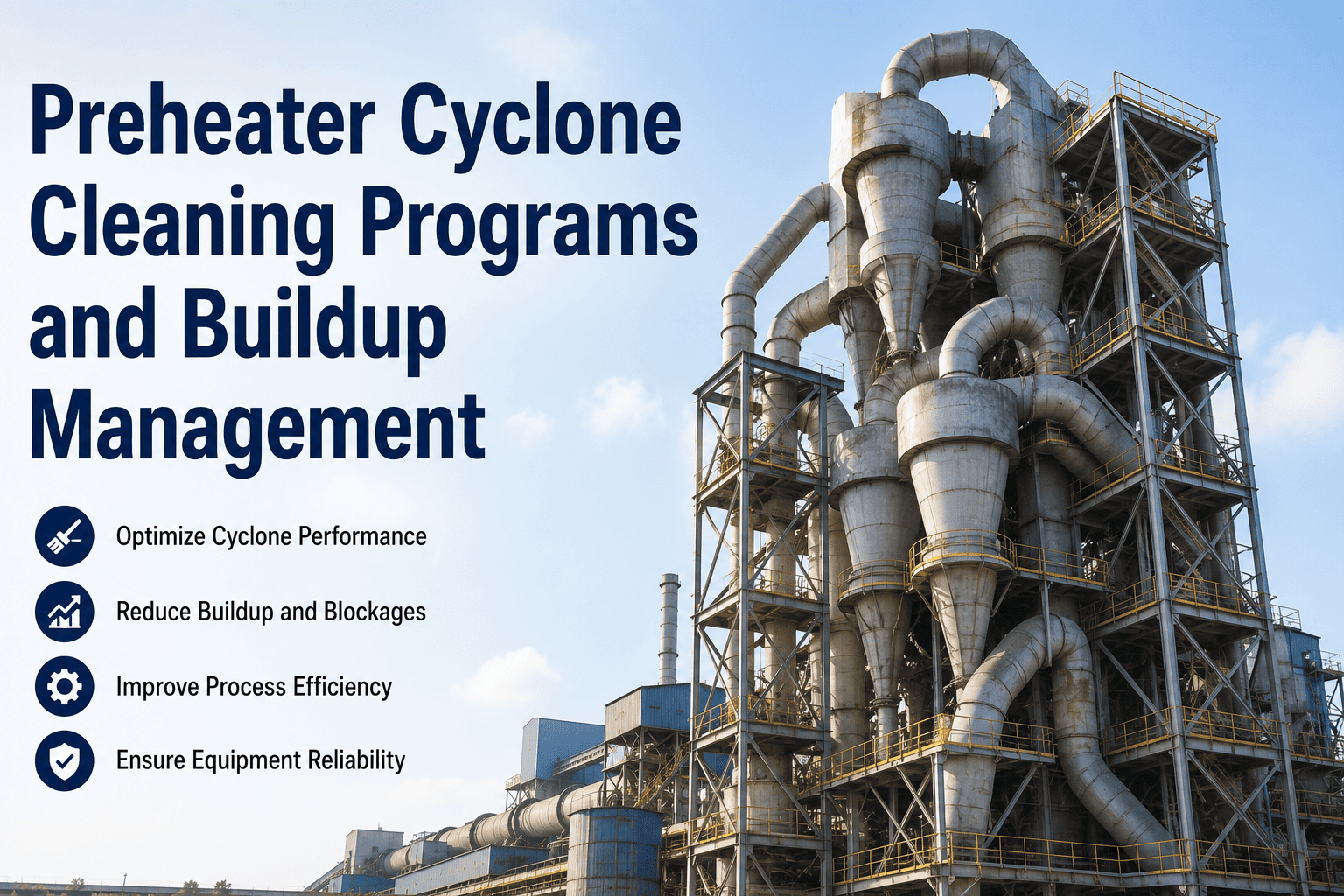
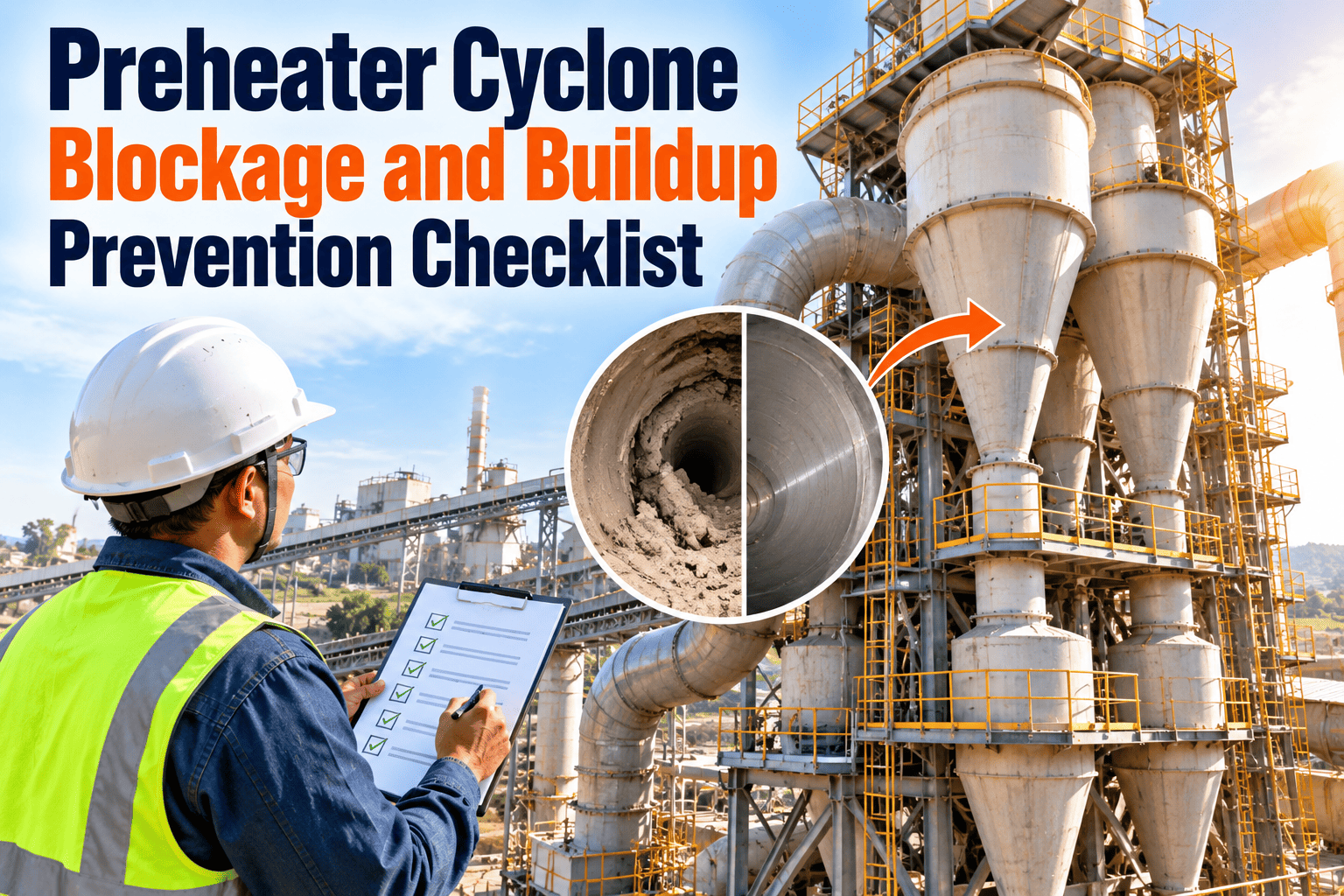
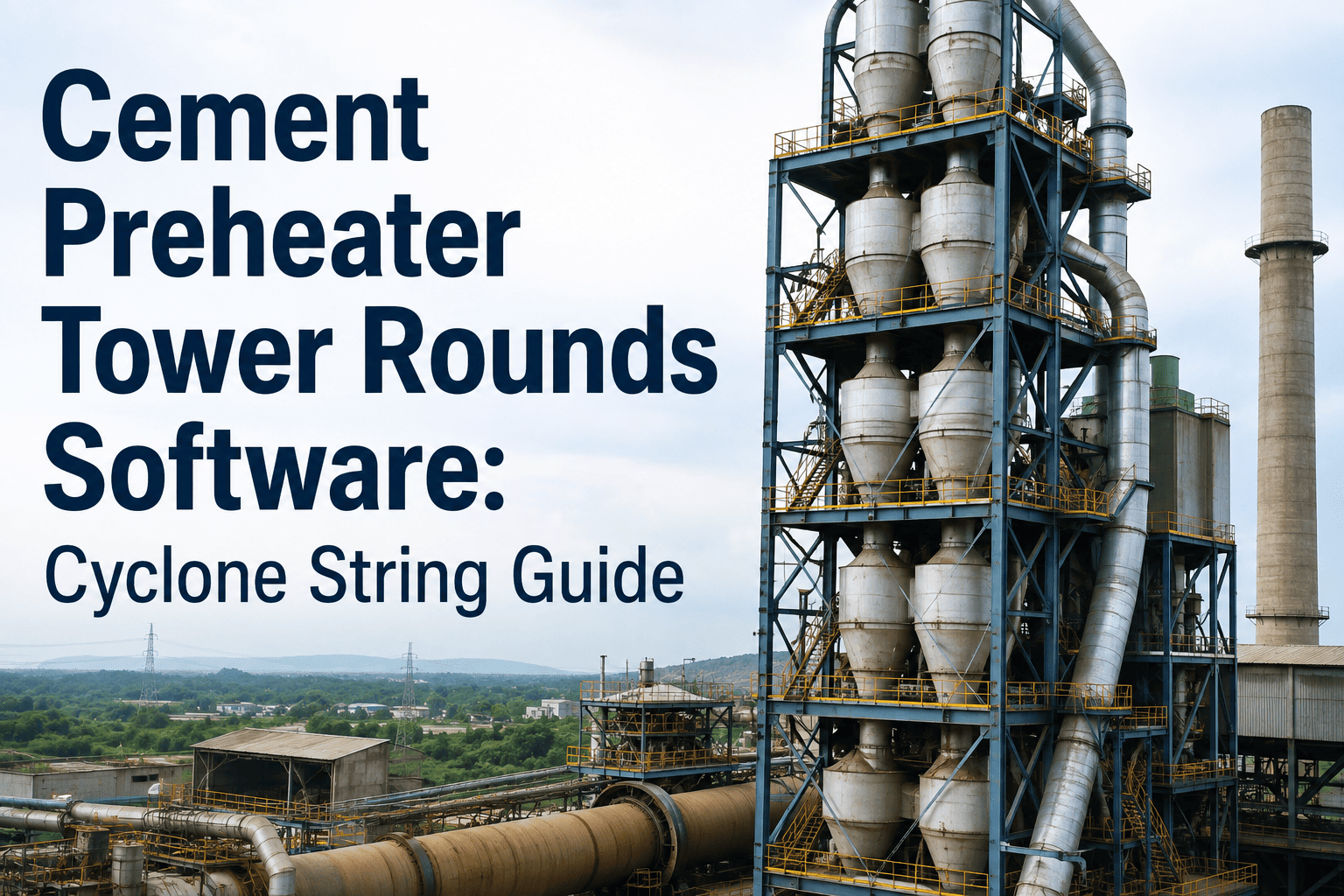
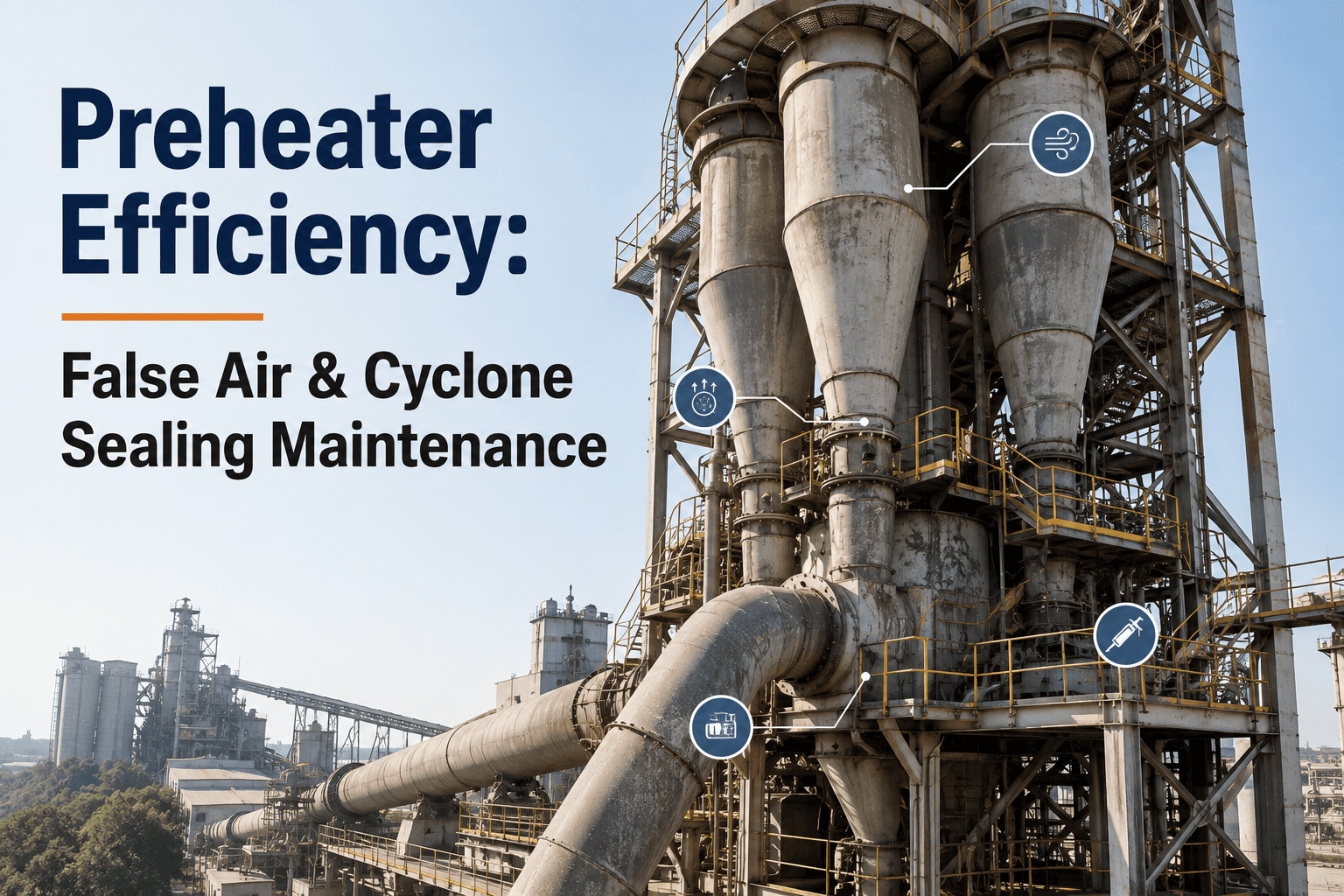
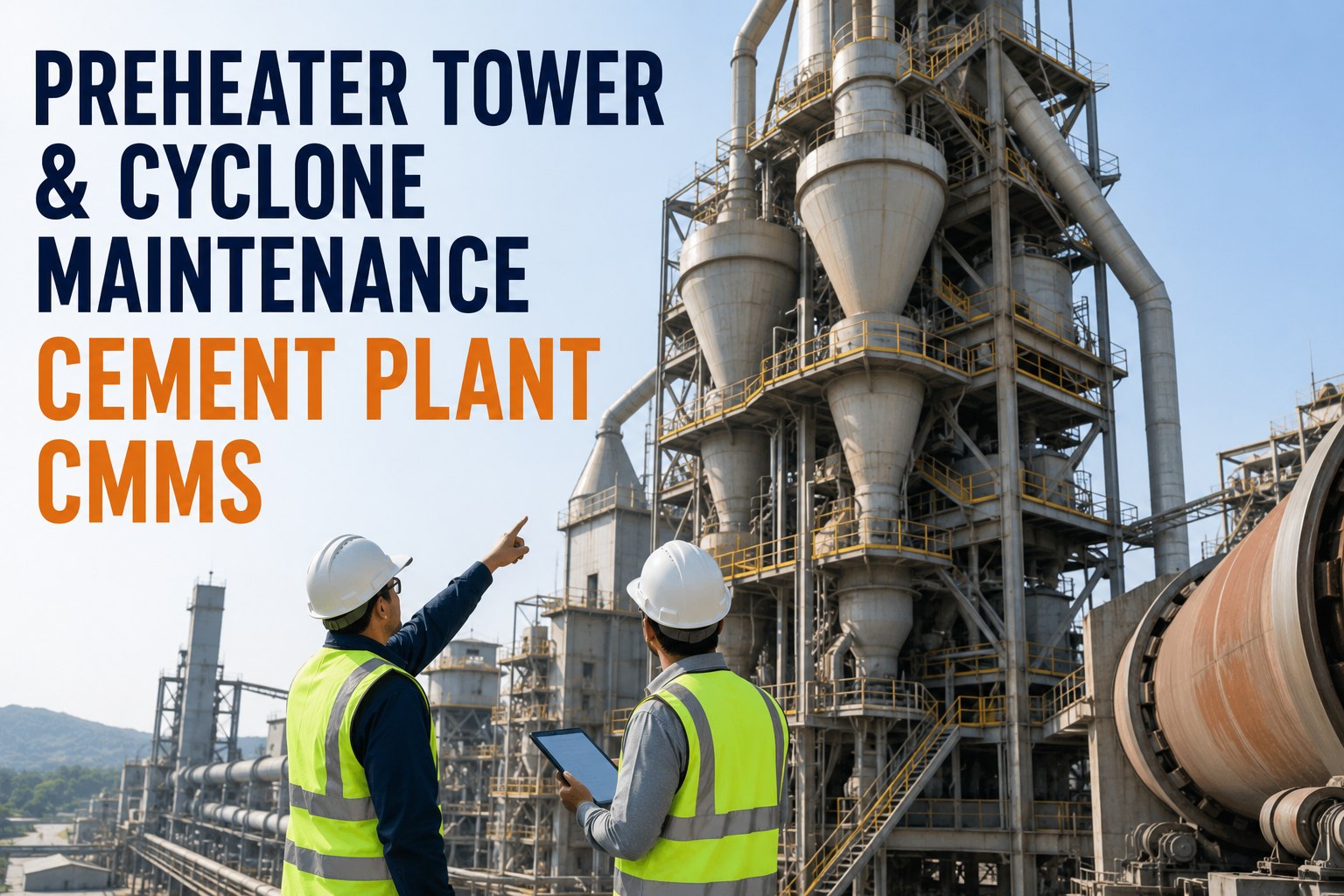
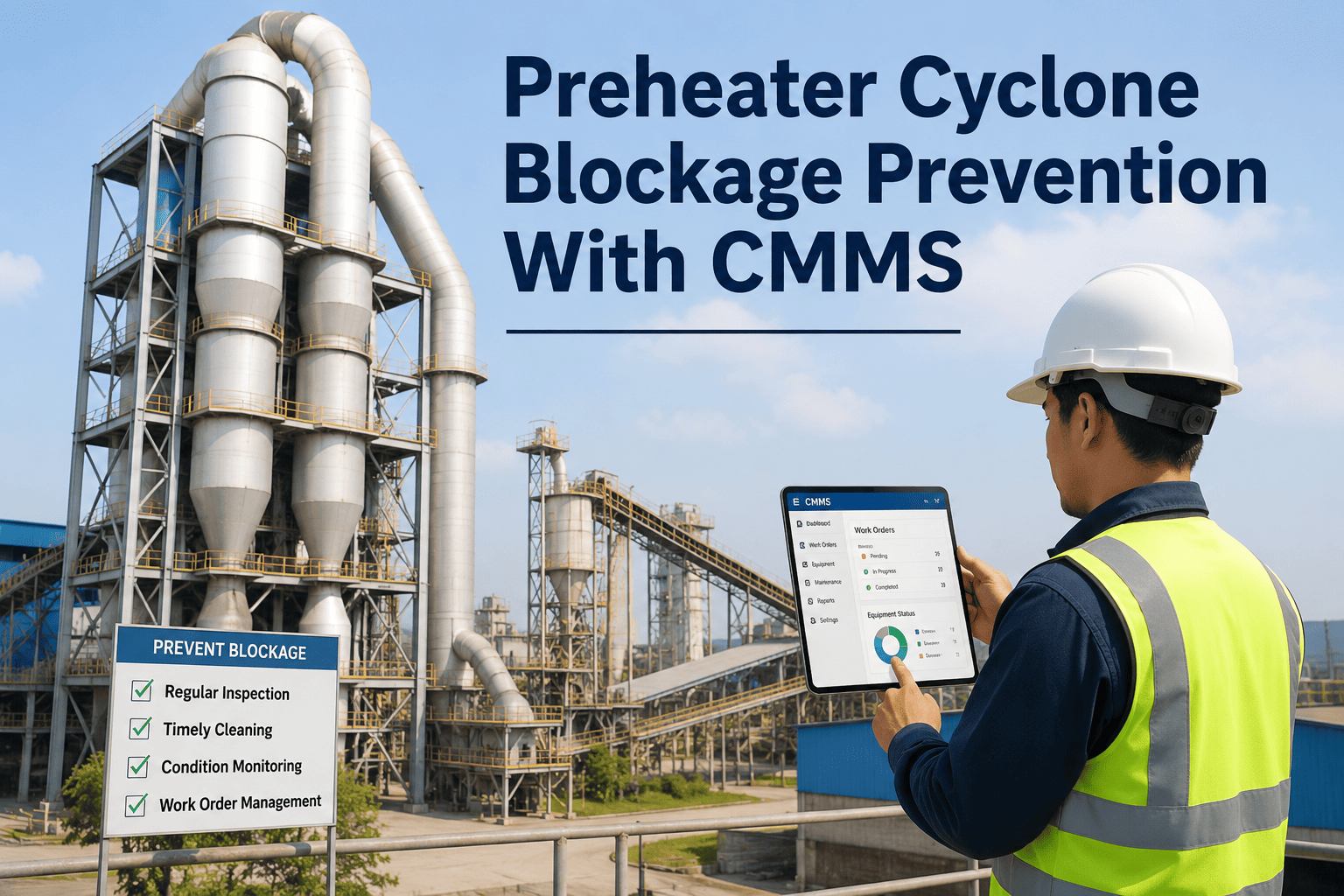
A single preheater blockage event shuts down clinker production for 8 to 36 hours — costing cement plants anywhere from $180,000 to $650,000 in lost output and emergency clearing labor, according to industry incident data. Over 60% of these events originate from coating buildup in cyclone stages 4 and 5, or riser duct restrictions that accumulate undetected between planned shutdowns. The core problem is not that buildup happens — it is that most plants discover it too late, relying on operator walkthroughs, manual temperature logs, and reactive clearing procedures that put crews at risk and sacrifice days of production. A structured differential pressure trending program, combined with CMMS-tracked cleaning campaign records, changes this entirely: buildup is detected in its early stages, cleaning is scheduled during planned windows, and the $200,000+ emergency response becomes a scheduled four-hour task. Sign up free on OxMaint to start tracking cyclone DP trends, schedule cleaning campaigns, and document every inspection with the audit trail that modern cement operations require.
Preheater Tower Reliability
Preheater Cyclone Cleaning: Stop Discovering Blockages After Production Stops
$650K
Maximum cost of a single blockage event — lost production, emergency labor, refractory damage
60%
Of blockages originate in stages 4 and 5 — the hardest to access and least frequently inspected
72h
Lead time for blockage detection using DP trending — before visible process alarms trigger
90%
Reduction in preheater-related kiln stops achieved by plants using structured CMMS programs
The Buildup Lifecycle: How Cyclone Blockages Actually Develop
Cyclone blockages are not sudden events. They are the visible endpoint of a weeks-long accumulation process that passes through four distinct stages — each detectable if the right parameters are being tracked. Understanding the lifecycle is the first step to catching buildup before it closes the cone. Talk to an OxMaint specialist about configuring DP alert thresholds for each stage of your preheater tower.
STAGE 1
Initial Deposit Formation
Alkali sulfate and chloride compounds carried by kiln gas begin condensing on cyclone walls. No pressure differential change visible yet. Only method of detection: refractory temperature trending during operation.
Risk Level: Low — Detectable with temperature monitoring
STAGE 2
Coating Growth — DP Begins Rising
Deposit layer thickens over 1–3 weeks. Differential pressure across the affected stage begins rising 5–12% above baseline. Cyclone separation efficiency starts declining, slightly raising preheater exit temperature. Still entirely manageable with planned cleaning.
Risk Level: Moderate — DP trending detects in 24–72 hours
STAGE 3
Snowman Formation — Cone Restriction
Coating reaches the cyclone cone and outlet duct, forming the characteristic snowman buildup shape. Meal flow is partially restricted. Exit temperature rises noticeably. Air cannon intervention may clear minor accumulations; major snowman formations require shutdown access.
Risk Level: High — Requires immediate cleaning plan
STAGE 4
Full Blockage — Emergency Shutdown
Cone outlet fully sealed. Meal backs up into the cyclone chamber and riser duct. Kiln feed stops within hours. Emergency clearing requires confined space entry, high-temperature work, and refractory inspection post-clearing. Total event cost: $180K–$650K.
Risk Level: Critical — Production halted, safety incident risk
Differential Pressure Trending: The Early Warning System Your Plant Needs
What DP Trending Tells You — Per Stage
Normal Range
Establish per-stage DP baseline during clean operation. Record values at consistent kiln throughput. Any deviation more than 8% from baseline warrants increased monitoring frequency.
Rising DP Trend (8–15% Above Baseline)
Indicates early-stage coating buildup. Schedule air cannon intensification and advance the next visual inspection. Cleaning during this window costs 6x less than emergency clearing at Stage 4.
Rapid DP Spike (15%+ Above Baseline)
Snowman formation in progress. Immediate supervisor notification required. Water lance deployment to targeted zone. Kiln feed rate assessment and potential reduction to reduce loading on blocked stage.
Stage DP Drops While Adjacent Stage Rises
Indicates bypass routing of gas flow — a coating fall or partial cone collapse. Requires immediate kiln shutdown assessment and post-event refractory damage inspection.
CMMS-Tracked Cleaning Tools by Buildup Stage
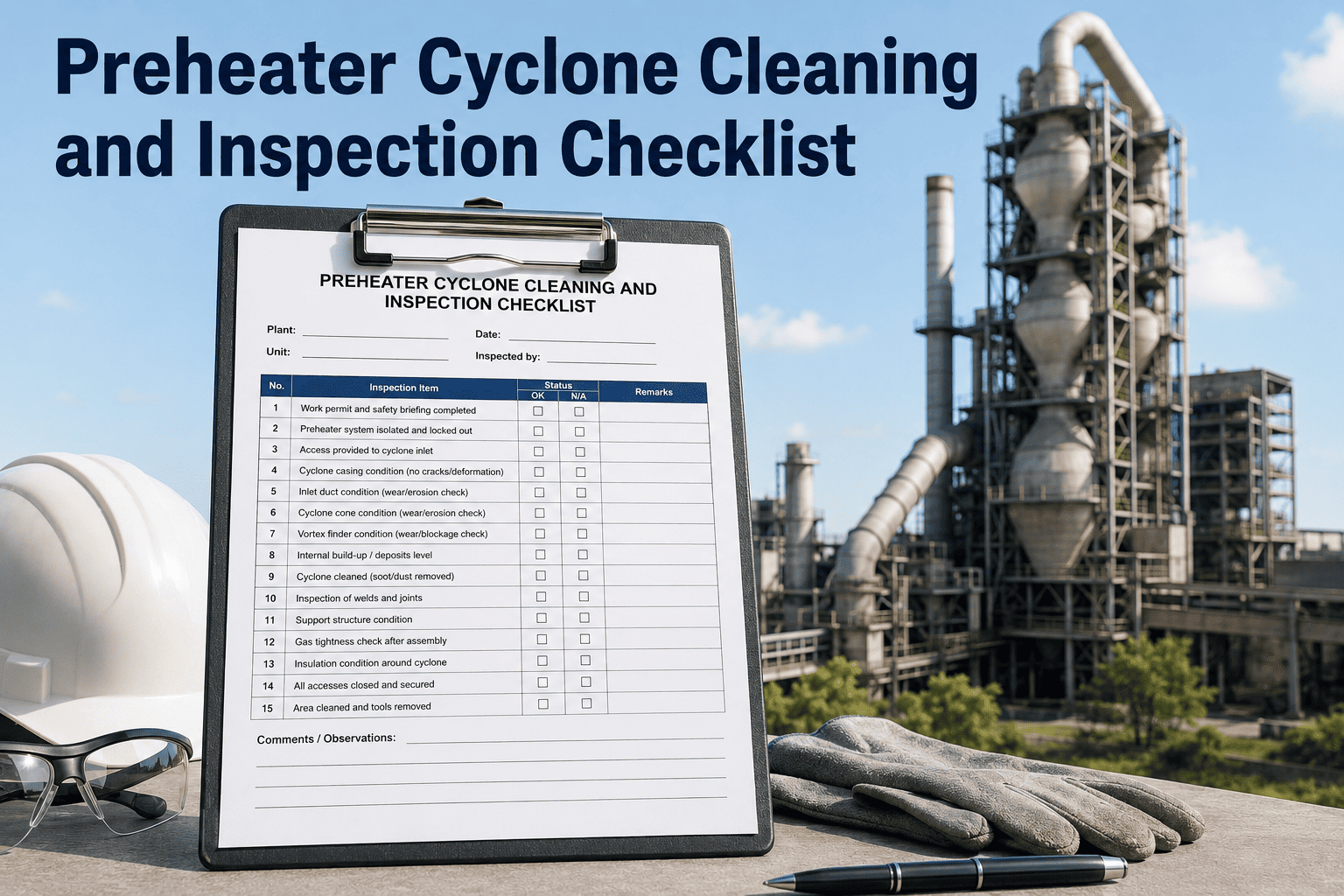
Cyclone Inspection Program: What Gets Checked at Every Planned Shutdown
Dip tube condition — cracks, erosion, deformation at lower edge
Vortex finder alignment and wear depth measurement
Refractory lining condition in inlet scroll zone
Meal outlet flap seal integrity and hinge wear
External shell temperature mapping for hot spot identification
Cone section — snowman deposit remnants, cone diameter measurement
Lower cone refractory thickness at high-wear abrasion zone
Riser duct connection flange and expansion joint inspection
Coating sample collection for alkali/chloride chemistry analysis
Air cannon nozzle alignment and discharge port condition
Riser duct lining — highest thermal stress zone in the tower
Calciner connection geometry and coating buildup measurement
False air detection at access door seals and flanged joints
Gas bypass duct condition where applicable
Meal distribution splitter wear and alignment
A cement plant that tracks preheater DP trends per stage in OxMaint receives automated alerts when any stage rises above its configured threshold — giving the maintenance team 24–72 hours to deploy a targeted cleaning response before production is impacted. The same platform stores every cleaning event, DP reading, and inspection record in a searchable archive — eliminating the audit documentation gap that plants running on spreadsheets consistently fail during annual safety and compliance reviews.
What a Structured Cyclone Cleaning Program Delivers — Measured Results
90%
Reduction in Kiln Stops
Plants that shift from reactive clearing to structured DP-monitored programs eliminate the majority of preheater-driven unplanned kiln shutdowns within the first 12 months of deployment.
6x
Cost Difference: Planned vs Emergency Cleaning
A planned cleaning campaign targeting Stage 3 buildup during a scheduled window costs a fraction of the emergency clearing labor, refractory repair, and lost production from a full blockage event.
10–15%
Specific Heat Consumption Reduction
Restoring cyclone separation efficiency through proactive cleaning programs reduces preheater exit temperatures and closes the gap between actual and theoretical minimum heat consumption.
Start Tracking Cyclone Buildup Before It Becomes a Shutdown
OxMaint gives cement maintenance teams per-stage DP trending dashboards, automated cleaning campaign scheduling, and inspection checklists built for preheater tower realities — not generic equipment templates. Every blockage is preventable. The question is whether your CMMS program catches it at Stage 2 or Stage 4.
Frequently Asked Questions
How does OxMaint configure DP trending thresholds for multi-stage preheater towers?
OxMaint establishes a clean-operation baseline DP value for each cyclone stage during initial setup — typically taken over a 7-day average at consistent kiln throughput. Alert thresholds are set at configurable percentages above baseline (commonly 8% for early warning, 15% for immediate action). When any stage crosses its threshold, the system generates a work order and sends supervisor notifications automatically.
Sign up free to configure your tower's alert profile.
Does OxMaint track the outcome of each air cannon discharge and water lance cleaning event?
Yes. Every cleaning event is recorded with the before and after DP value for the targeted stage, cleaning method used, operator identification, and time to effect. This allows maintenance teams to compare cleaning effectiveness per method per stage — identifying which zones respond to air cannon pulses versus which require manual lance intervention, and planning resources accordingly.
Book a demo to see cleaning event logging in action.
How does OxMaint handle cyclone inspection documentation for confined space entry in preheater towers?
Preheater cyclone internals that require personnel entry are configured in OxMaint as permit-required confined spaces. Every internal inspection triggers a confined space entry permit workflow — including atmospheric testing requirements, attendant designation, rescue plan acknowledgment, and permit closure sign-off. All permits are archived with the corresponding inspection record for compliance audit retrieval.
Can OxMaint generate documentation for capital rehabilitation requests based on cyclone condition data?
Yes. OxMaint generates stage-level condition score histories, buildup frequency records, refractory thickness trends, downtime cost attribution per stage, and refurbish-versus-replace analysis reports formatted for capital budget submissions. Plants using evidence-backed condition data in CapEx requests see approval rates significantly higher than those submitting age-estimate-based submissions.
Sign up free to access the capital reporting module.
What is the typical deployment timeline for OxMaint on a two-tower, five-stage preheater system?
A two-tower plant with five-stage preheaters completes tower hierarchy configuration, DP threshold setup, inspection schedule programming, and technician onboarding within 2–3 weeks of deployment start — with no hardware installation required. Most plants begin generating their first DP trend reports and automated cleaning work orders within the first week of go-live.
Book a demo to review your site's deployment timeline.
Your Preheater Tower Should Never Be a Black Box
From Stage 1 deposit formation to snowman formation to emergency shutdown — OxMaint tracks every step of the buildup lifecycle with DP trending, automated alerts, and CMMS-linked cleaning campaigns. Every inspection record. Every cleaning event. Every audit document. Ready before the regulator or corporate engineer arrives.