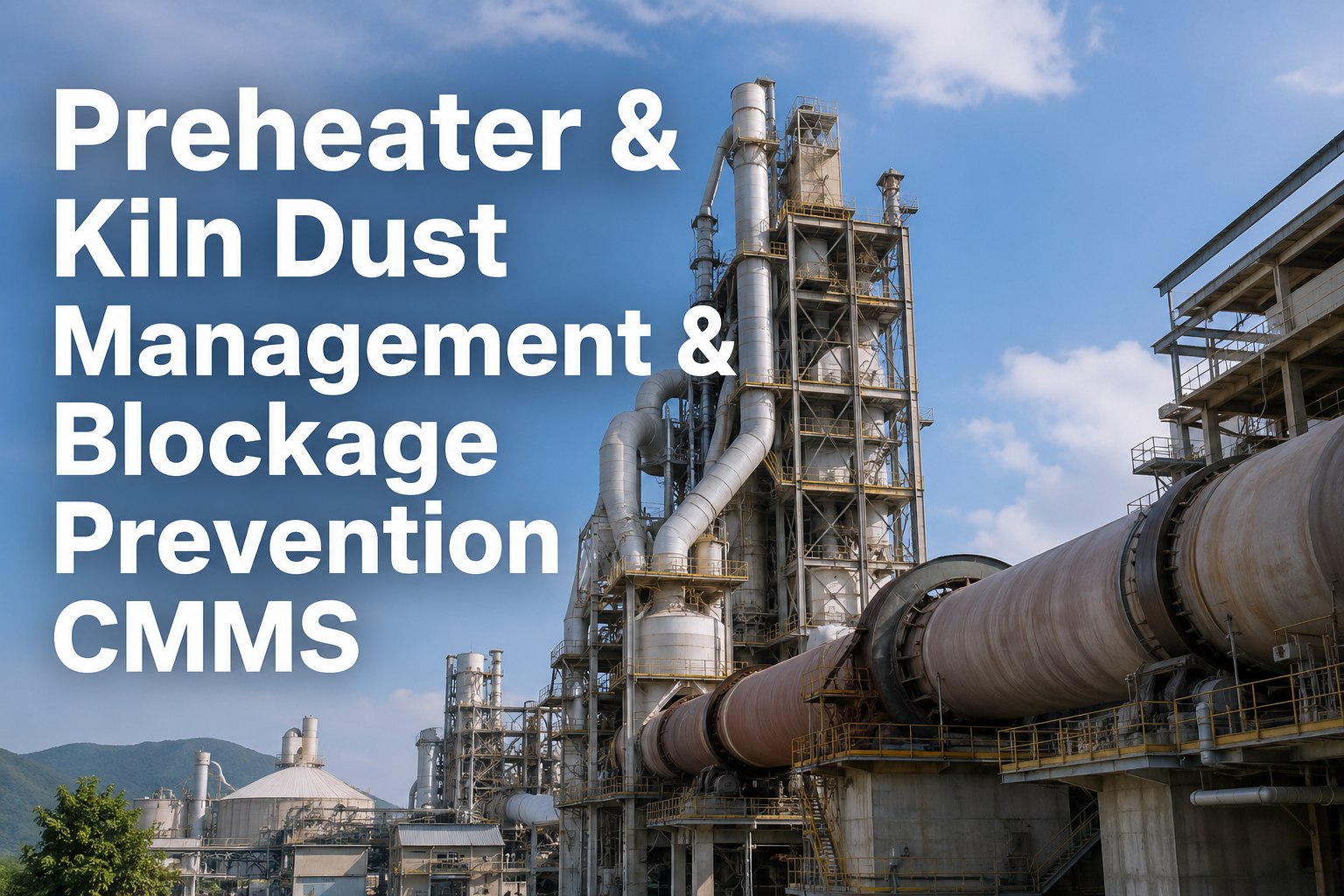
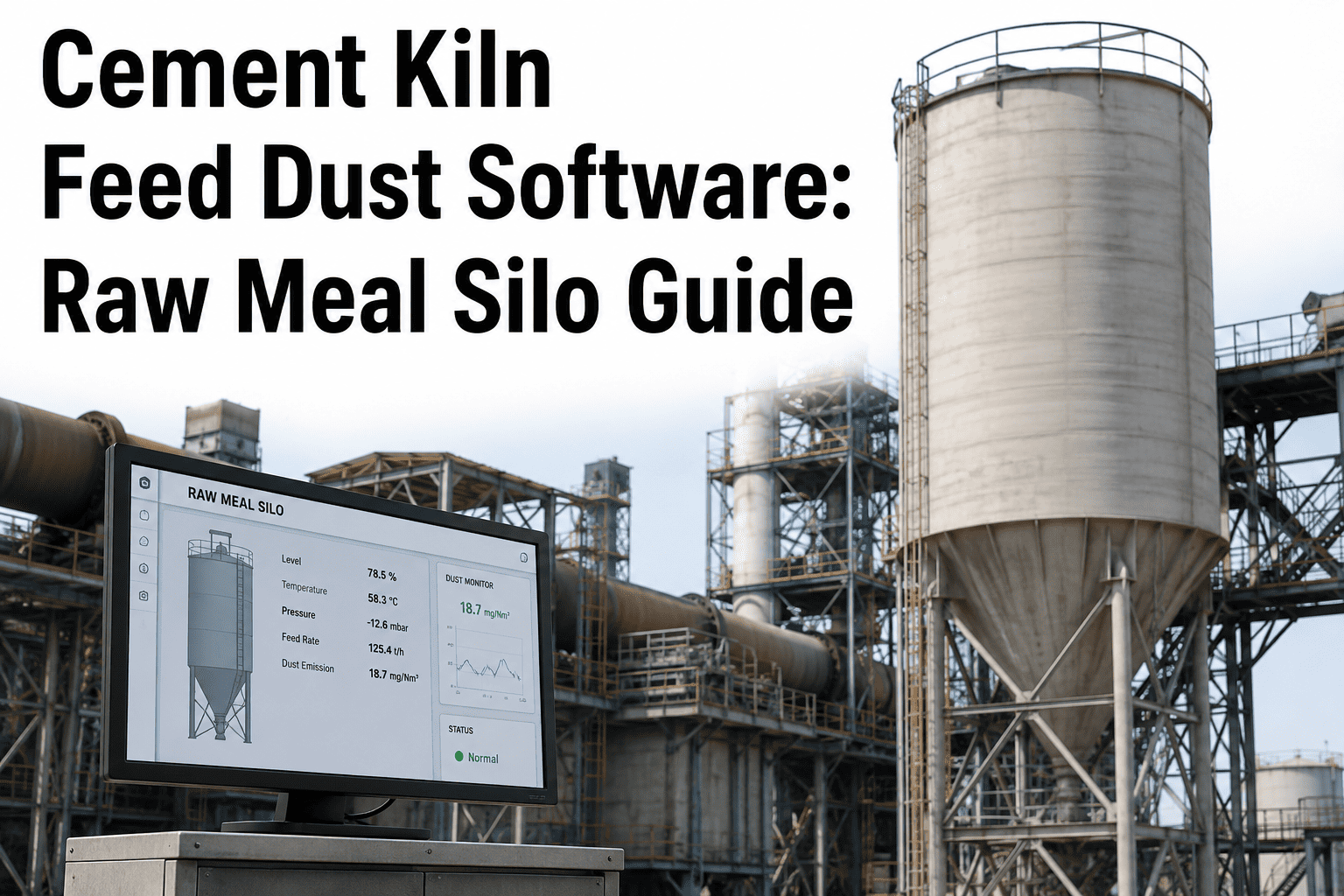
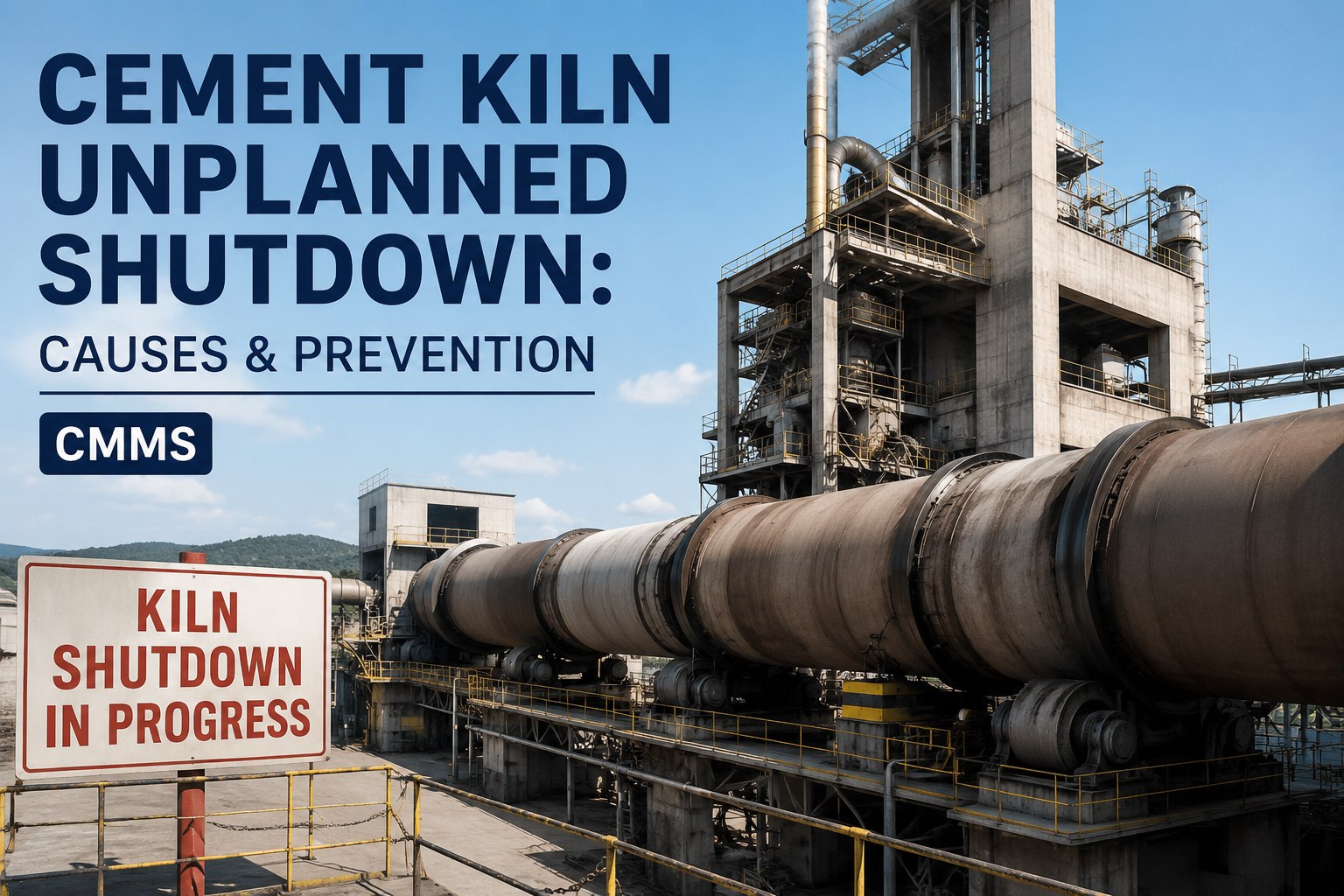
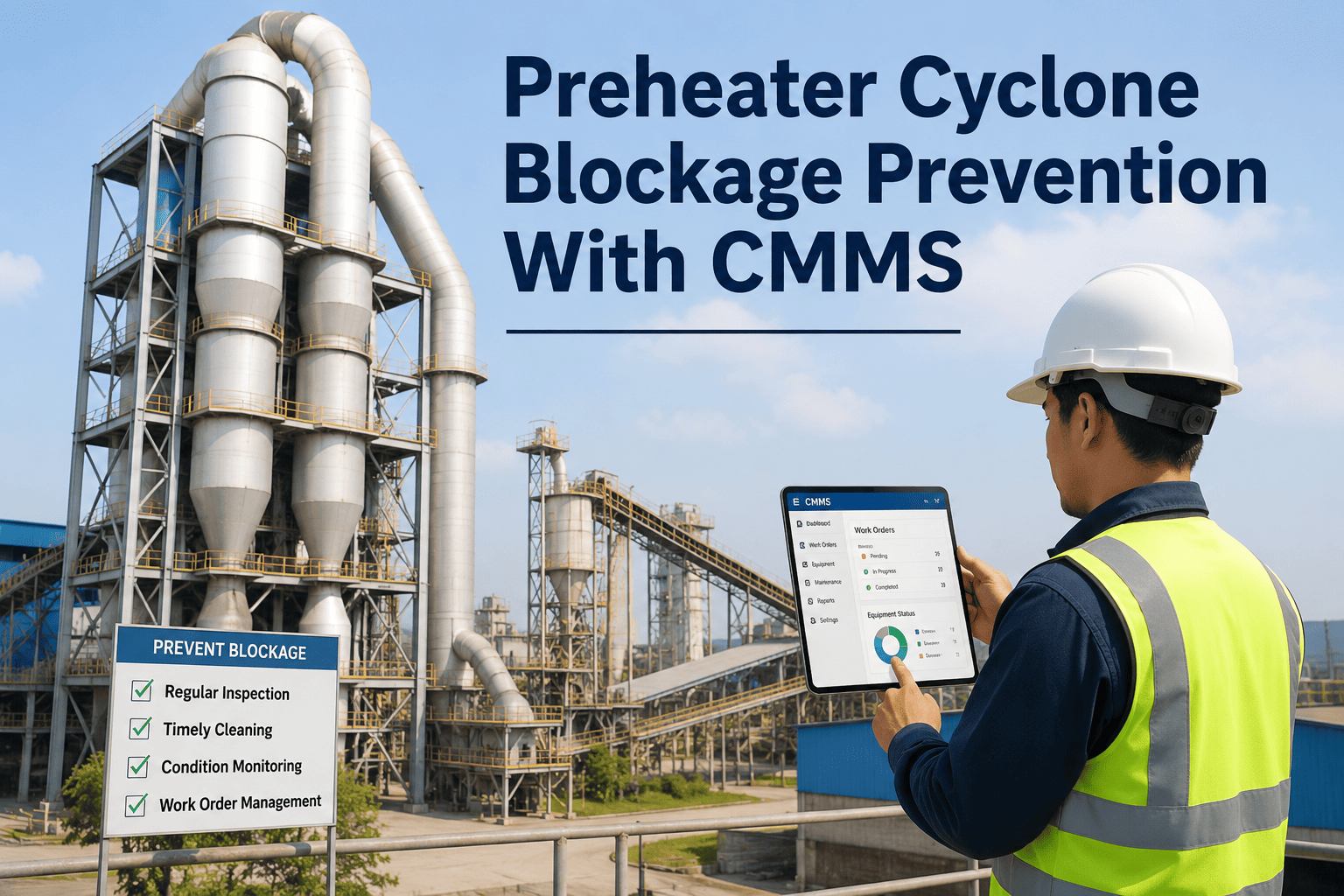
Dust buildup in the preheater cyclones and kiln inlet is one of the top three causes of unplanned kiln stops in cement plants, often consuming 40 to 70 hours of lost production per event when a complete blockage forces an emergency shutdown. Most crews fight this problem reactively with air cannons and water guns, yet the underlying cause is rarely tracked through a structured maintenance program. Oxmaint treats dust accumulation as a measurable operational risk by logging air-cannon firing cycles, water-gun injection events, cyclone pressure trends and inspection findings inside a single CMMS. When you can quantify buildup rate against production hours, you shift from firefighting to prevention. Start your Start Free Trial to digitize your preheater dust management workflow today.
PREHEATER DUST MANAGEMENT
Is a cyclone blockage going to take your kiln down in the next 72 hours?
Most cement plants lose 40–70 production hours per kiln stop caused by preheater and kiln inlet blockages. With structured dust buildup tracking and timed air-cannon service cycles inside a CMMS, that recurring emergency becomes a managed, predictable maintenance task.
3rd
Leading cause of unplanned
cement kiln stops worldwide
THE COST OF INACTION
Why dust buildup is a budget problem, not just a maintenance problem
A single 8-hour kiln stop on a 5,000 TPD line costs roughly $120,000 in lost clinker margin before you count fuel to reheat, refractory thermal-shock damage and overtime. Most preheater blockages build slowly over 5 to 14 days, which means the window to intervene is visible — if you are logging the right signals.
5–14
Days for a cyclone blockage to mature from thin crust to full choke
$120K
Average gross margin lost per 8-hour unplanned kiln stop, 5,000 TPD line
40–70h
Typical production hours lost per major preheater blockage event
Top 3
Ranked cause of unplanned kiln stops across global cement operations
WORKED EXAMPLE
A 2-million-TPA plant in South Asia averaged 11 preheater blockage stops per year, each costing 18 hours and $145,000. After logging cannon-firing cycles, water-gun events and cyclone differential pressure in a CMMS for 90 days, the reliability team identified that stage-4 cyclone buildup accelerated whenever kiln back-end temperature exceeded 1,050°C with sulphur above 1.8%. Targeted air-cannon service intervals and a sulphur-triggered dust bypass cut blockage stops from 11 to 3 per year — recovering roughly 145 production hours and $1.45M annually.
DETECTION CHECKLIST
Six signals that predict a preheater blockage before it chokes the kiln
Buildup rarely fails without warning. The signals below appear 18 to 96 hours before a stop in most documented cases — but only if they are logged, trended and escalated inside a CMMS where the shift team can see them.
01
Cyclone ΔP drift
Stage 3 and 4 cyclone differential pressure rising more than 15% above the 7-day rolling baseline signals wall buildup narrowing the gas path.
02
Riser duct temperature
Back-end temperature above 1,050°C combined with high sulphur accelerates volatile condensation and sticky crust formation in lower stages.
03
Cannon firing failures
More than 2 consecutive misfires on a single cannon indicate either a blocked nozzle or a compromised charge valve — both raise blockage risk in that zone.
04
Water gun pressure drop
Injection pressure falling 20% below setpoint means scale is restricting the lance — the cleaning effect drops and buildup accelerates within 48 hours.
05
ID fan amperage climb
A 5–8% gradual rise in induced-draft fan motor amps over 24 hours often reflects the fan working harder against a partially restricted preheater gas column.
06
Kiln inlet ring formation
Visual inspection through the kiln inlet showing a 200mm+ ash ring narrows the feed path and feeds material back into the lower cyclone, compounding the blockage.
WORKFLOW TIMELINE
From buildup detection to prevention: a 30-day CMMS workflow
Turning dust buildup from an emergency into a managed risk requires a structured, time-boxed workflow. Each phase below has measurable exit criteria tracked as work orders inside the CMMS.
Days 1–7
Baseline data capture
Log cyclone ΔP, back-end temperature, sulphur and chloride levels, and every air-cannon firing event with timestamp and location. The CMMS auto-tags anomalies against the 7-day rolling baseline.
Days 8–14
Risk-zone mapping
Identify which cyclone stages and riser duct zones accumulate fastest. Rank assets by buildup rate and assign cannon-service and water-gun inspection intervals per zone, not plant-wide.
Days 15–21
Trigger-based work orders
Configure CMMS triggers: when stage-4 ΔP rises 12% above baseline, auto-generate a cannon-service work order. When back-end temperature plus sulphur thresholds are breached, trigger a dust-bypass evaluation task.
Days 22–30
Verification and tuning
Compare blockage incidents against the prior 30 days. Adjust firing intervals, water-gun pressure setpoints and bypass activation criteria based on actual buildup rate, not generic OEM recommendations.
SYSTEM COMPARISON
Reactive firefighting vs. CMMS-managed dust control
Most plants already own air cannons, water guns and a dust bypass — the difference is whether their service is scheduled by condition data or by the calendar. The comparison below shows the operational gap.
| Operational dimension |
Reactive approach |
CMMS-managed approach |
| Air cannon service |
Fixed calendar schedule; misfires logged on paper, rarely trended |
Firing cycles and misfire counts tracked per cannon; service triggered by actual wear data |
| Blockage detection |
Operator notices ΔP spike during rounds; response often hours late |
ΔP and temperature anomalies auto-flagged at 12% drift; work order generated within minutes |
| Water gun coordination |
Injection timing set by shift habit; pressure drops ignored |
Injection pressure and lance condition logged; cleaning effect quantified per zone |
| Dust bypass activation |
Activated only after buildup is already severe |
Triggered proactively when sulphur, chloride and temperature thresholds converge |
| Annual blockage stops |
8–14 stops per kiln per year (industry typical range) |
2–4 stops per kiln per year (achieved within 6 months of CMMS rollout) |
| Knowledge retention |
Lives in operators' heads; lost on shift change or retirement |
Every event, trigger and corrective action stored in the asset history record |
READY TO ACT
Stop treating dust buildup as an emergency. Start managing it as data.
Deploy Oxmaint's preheater dust management workflow in under a week. Your first blockage-prevention dashboard is 48 hours away.
KEY CAPABILITIES
What a preheater dust CMMS actually does for your crew
Beyond logging work orders, the right CMMS converts dust management into a closed-loop process: detect, trigger, execute, verify. Each capability below maps to a concrete reduction in blockage risk.
Condition-based triggers
Cyclone ΔP, back-end temperature and fan amperage thresholds auto-generate work orders — no operator interpretation required, no delay between signal and action.
Cannon cycle tracking
Every firing and misfire is logged per cannon location. Service intervals adjust to actual wear, not the OEM manual's generic 6-month default.
Water gun coordination
Injection pressure, lance condition and timing are tracked per position. Cleaning effectiveness is quantified, so underperforming guns are caught before a blockage forms.
Dust bypass logic
Bypass activation criteria tied to live sulphur, chloride and temperature data — proactive withdrawal of volatile-rich dust before it condenses in lower cyclone stages.
Asset history archive
Every blockage event, corrective action and inspection finding is stored against the asset record — so the next shift inherits the full context, not a blank slate.
Buildup-rate analytics
Trend lines show how fast each cyclone stage accumulates under different fuel and raw-mix conditions — enabling predictive scheduling of cleaning stops.
FREQUENTLY ASKED
Preheater dust management CMMS — your questions answered
How quickly can a preheater dust management CMMS reduce blockage stops?
Most plants see a measurable drop within 60 to 90 days. The first 30 days establish baseline data; the next 30 days activate trigger-based work orders. Plants that consistently log cannon cycles and ΔP trends typically cut blockage stops by 50–70% within the first six months. You can
Start Free Trial to begin baseline capture this week.
Do we need new sensors to use the CMMS for blockage prevention?
No. Most cement plants already have cyclone differential pressure transmitters, back-end thermocouples and ID fan amperage in the DCS. Oxmaint ingests existing data streams via integration and combines them with manual inspection findings. New sensors are only recommended for stage-4 and stage-5 cyclones where ΔP coverage is incomplete.
How does the CMMS coordinate air cannons and water guns?
Each cannon and water gun is registered as a tracked asset with location, firing interval and pressure setpoint. The CMMS logs every firing cycle and flags misfires or pressure deviations. When a zone shows rising ΔP, the system can recommend increased cannon firing frequency or a targeted water-gun injection before the blockage matures.
What is the role of the dust bypass in a CMMS workflow?
The dust bypass withdraws volatile-rich material from the kiln system to prevent sulphur and chloride condensation in lower cyclone stages. Inside the CMMS, bypass activation is tied to live sulphur, chloride and temperature thresholds rather than operator memory. This shifts bypass usage from reactive emergency to proactive control, reducing sticky crust formation by 30–50%.
Can the system handle multiple kiln lines and different raw mix profiles?
Yes. Each kiln line, preheater stage and bypass system is tracked as a separate asset hierarchy. Buildup rates, trigger thresholds and service intervals are configured per line and per stage, so a high-sulphur raw mix on Line 1 does not impose the same rules as a low-chloride mix on Line 2. Book a walkthrough via
Book a Demo to see multi-line configuration in action.
START MANAGING DUST TODAY
Your next kiln stop should be planned — not caused by a cyclone blockage.
Join cement plants that turned preheater dust from a recurring emergency into a managed operational risk using Oxmaint CMMS.
Free 14-day trial · No credit card