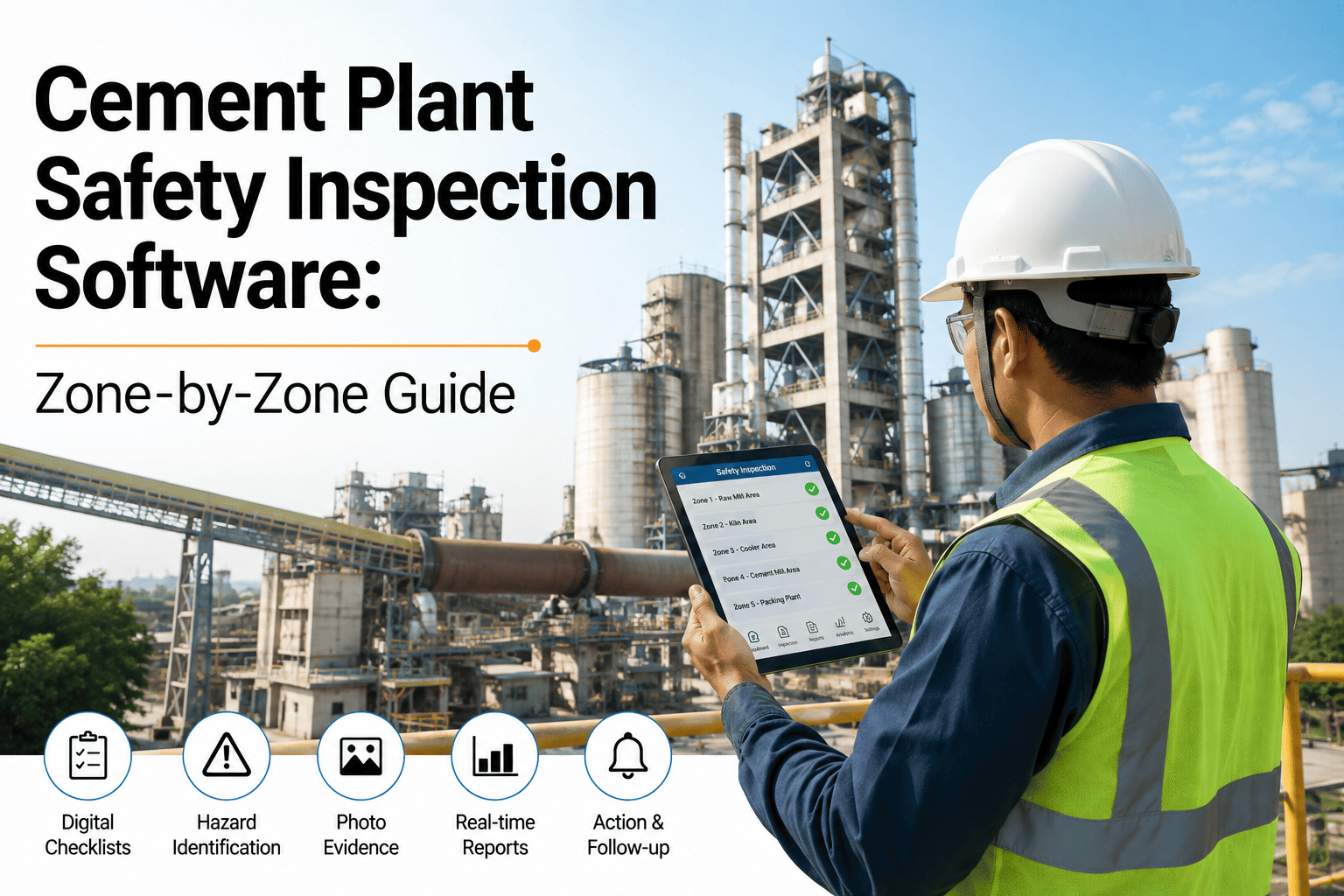
A cement plant in Germany deployed ROS 2-based inspection robots to monitor their kiln zone, preheater towers, and clinker cooler—areas where temperatures exceed 400°C and toxic gas concentrations make human entry dangerous. The autonomous inspection robot fleet navigates these hazardous zone inspection routes autonomously, capturing thermal data, detecting equipment anomalies, and transmitting findings directly to their CMMS software for automated work order generation. Within the first year, the system identified 47 developing equipment issues that would have required emergency intervention if discovered during traditional quarterly inspections. Sign up for Oxmaint to integrate ROS 2 robot data with your cement plant maintenance software workflows.
ROS 2 for Hazardous Zone Inspection in Cement Plants
Robot Operating System 2 (ROS 2) provides the middleware foundation for autonomous inspection robots in cement plant environments. This technical guide covers architecture, implementation considerations, and CMMS integration for industrial robotics 2026 deployments.
Why ROS 2 for Cement Plant Robotics
ROS 2 addresses critical requirements for cement industry robotics 2026 deployments that ROS 1 could not reliably meet. Real-time communication, deterministic behavior, and robust networking enable inspection robots to operate safely in hazardous zones where communication failures could strand expensive equipment or miss critical safety observations.
The DDS (Data Distribution Service) middleware in ROS 2 provides quality-of-service guarantees essential for industrial environments—message delivery confirmation, automatic reconnection after network interruptions, and configurable reliability levels for different data types. Thermal alerts require guaranteed delivery; routine telemetry can tolerate occasional packet loss.
Book a demo to discuss technical implementation requirements for your cement plant robotics deployment.
ROS 2 Inspection Robot Architecture
Typical node architecture for cement plant robotic inspection system deployment. Sign up for Oxmaint to receive data from any ROS 2-based robot.
Hazardous Zone Classifications
Different cement plant zones require different robot configurations and safety compliance considerations. ROS 2's quality-of-service settings adapt to zone-specific requirements.
Extreme temperature zone requiring thermal-shielded robots with active cooling. ROS 2 nodes monitor internal temperatures and trigger automatic retreat if thermal limits approach.
Vertical confined spaces with CO and CO2 accumulation risks. Robots require gas detection with automatic abort behaviors when concentrations exceed safe thresholds.
High dust environment with hot clinker and mechanical hazards. IP68 sealing mandatory with positive pressure enclosures preventing dust infiltration into electronics.
Connect Your ROS 2 Robots to Oxmaint
Our API accepts inspection data from any ROS 2-based robot platform for automated work order generation.
Key ROS 2 Features for Cement Robotics
These ROS 2 capabilities address specific challenges in hazardous zone inspection that differentiate it from general-purpose robotics applications.
ROS 2 lifecycle nodes enable graceful degradation when sensors fail or communication drops—critical for safe operation in hazardous zones where robot recovery may be difficult.
- Configurable state transitions
- Automatic error recovery
- Clean shutdown procedures
- Health monitoring integration
QoS policies ensure critical safety data reaches operators even when network conditions degrade—essential when robots operate in RF-challenging cement plant structures.
- Reliable delivery for alerts
- Best-effort for telemetry
- Deadline enforcement
- Liveliness assertions
The Navigation 2 stack provides autonomous navigation with behavior trees that can encode complex inspection logic including thermal limits, gas thresholds, and mission priorities.
- Behavior tree flexibility
- Multiple planner support
- Recovery behaviors
- Costmap integration
DDS discovery enables multiple inspection robots to coordinate without central infrastructure—important when inspecting different zones simultaneously or providing redundancy.
- Decentralized discovery
- Namespace isolation
- Shared map data
- Task allocation
Data Flow to CMMS
Inspection findings flow from ROS 2 nodes through the bridge to Oxmaint, enabling maintenance automation based on actual equipment condition.
Implementation Checklist
Frequently Asked Questions
Build Industrial-Grade Inspection Robotics
ROS 2 provides the foundation for reliable hazardous zone inspection. Oxmaint turns inspection data into maintenance action, completing the automation loop from robot sensor to work order.