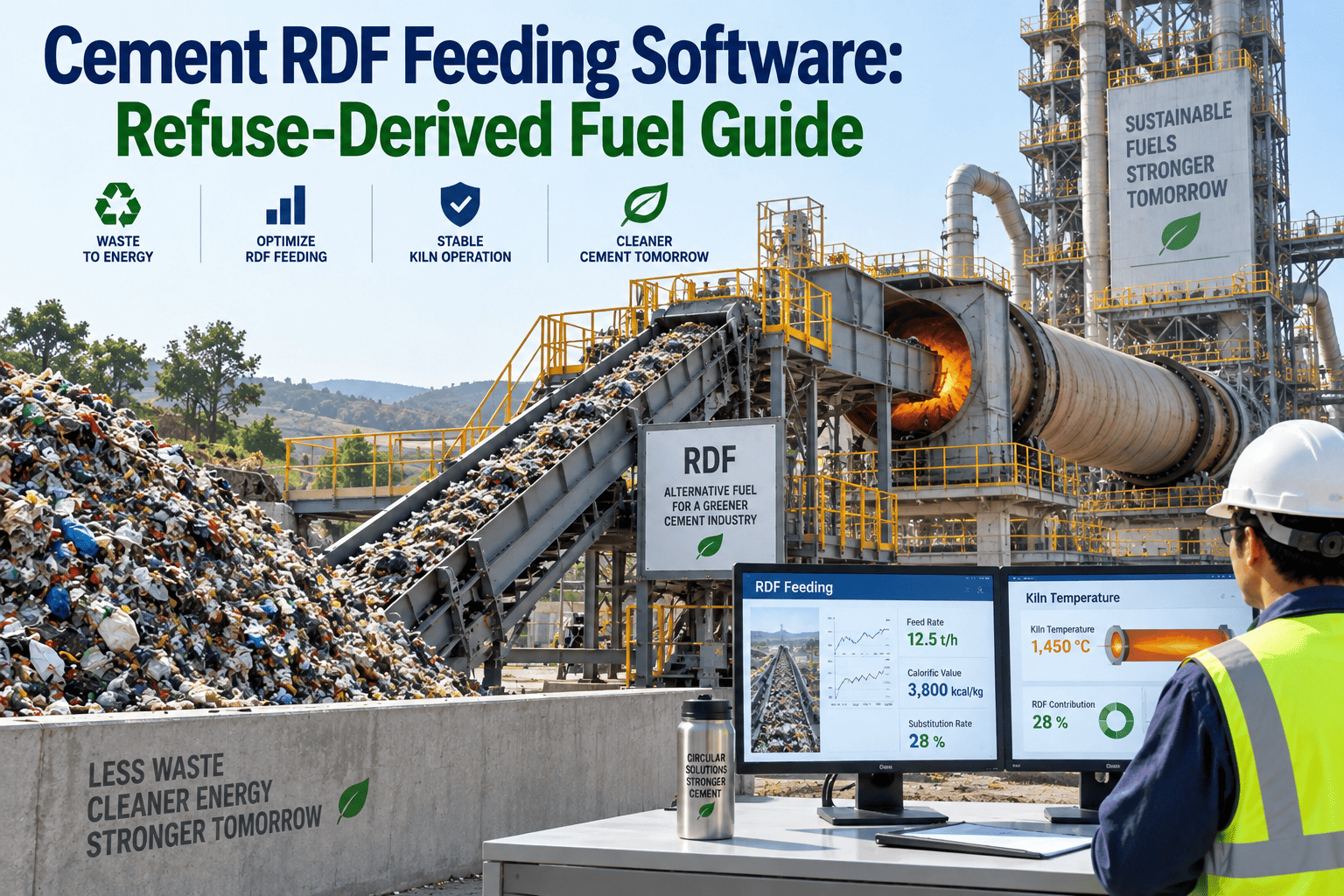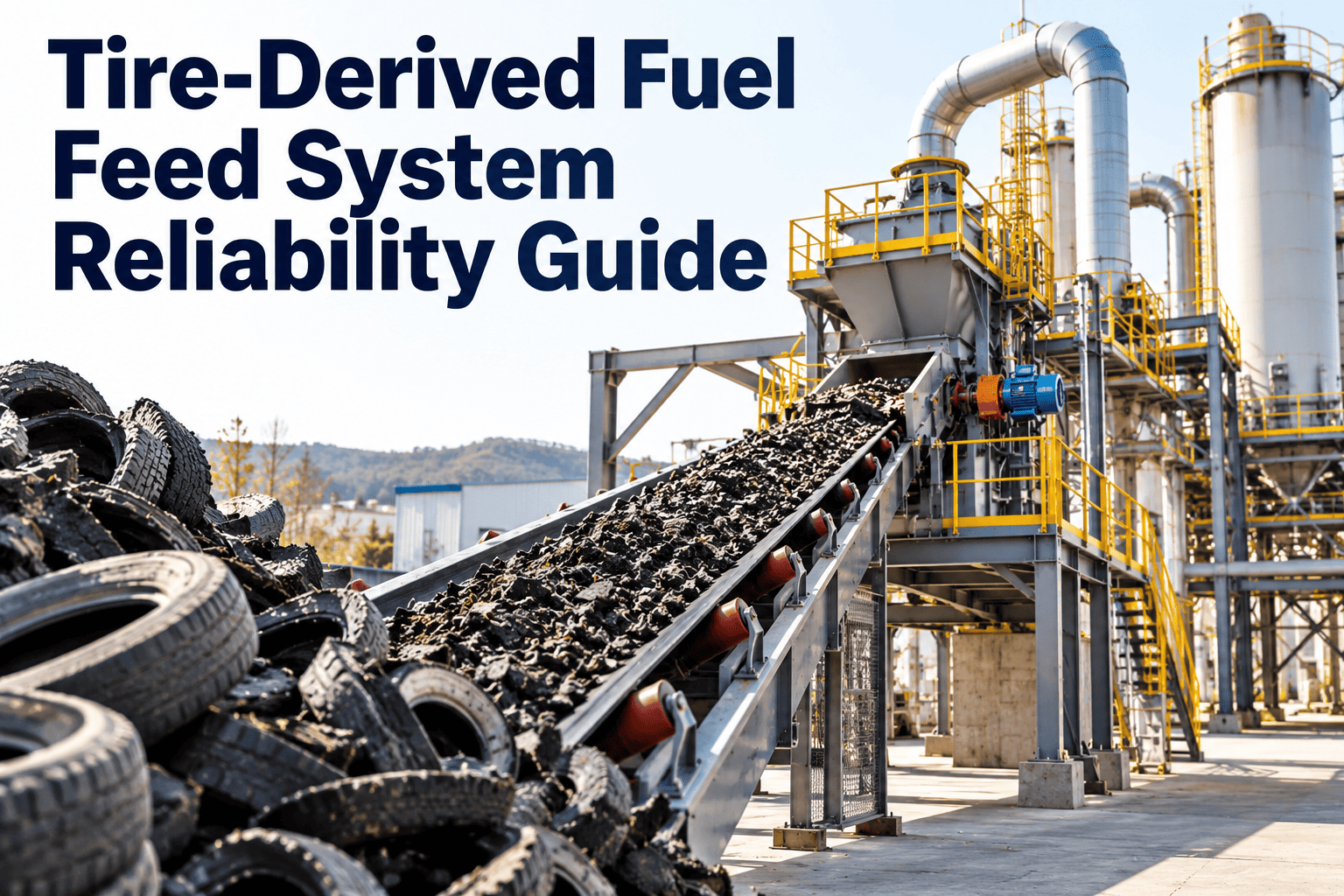
Whole tires and shredded tire chips are among the densest alternative fuels a cement kiln can burn, and the feed line built to handle them looks deceptively simple from the control room: a receiving bay, a conveyor, a metering gate, a drop point into the kiln or calciner. Behind that simple view sits a chain of sector valves, weigh feeders, and separators that each wear on a different schedule, often carrying hundreds of tons of steel-belted rubber through the line every month without a single planned stop between reline shutdowns, and with very little tolerance for a component that fails mid-shift. When one link in that chain drifts out of calibration or seizes, the substitution rate drops and the plant quietly falls back on more expensive primary fuel, often without anyone flagging the feed line itself as the cause. This guide breaks down where TDF feed reliability actually comes from, and how a connected maintenance program keeps the line running at the substitution rate it was designed for — see how it fits your fleet with a free Oxmaint trial.
Keep Your Tire-Derived Fuel Line Feeding At The Rate You Designed It For
Sector valves warp, weigh feeders drift, and separators quietly start passing oversized tires weeks before anyone notices the jam. A structured reliability program catches every one of those failure points before they cost you thermal substitution rate.
Thermal Substitution Rate Is Only As Reliable As The Feed Line Behind It
Plants chasing a higher thermal substitution rate often focus their attention on the burner and the kiln process itself, since that is where the substitution actually shows up as fuel savings. The feed line that delivers the tires to that burner gets far less attention, even though it is usually the first thing to fail when substitution rate is pushed higher.
Because a continuously running kiln process needs a steady, uninterrupted fuel supply to hold clinker quality, an automatic feed system has to compensate for the naturally uneven arrival of scrap tires by truck. That buffering role puts real mechanical stress on storage, reclaim, and metering equipment, which is exactly why those components need their own dedicated maintenance discipline rather than being lumped in with general conveyor upkeep.
Four Stages, Each With A Different Failure Pattern
A TDF feed line is not one machine — it is four distinct stages stacked in series between the storage yard and the burner. A failure at any single stage stops fuel flow for the whole line, so each one deserves its own maintenance strategy rather than a single generic PM plan.
Because the stages sit in series, the line is only as reliable as its weakest stage in any given month, and that weakest stage tends to move around as different components age at different rates. A plant can run flawless preventive maintenance on the injection valve and still lose substitution rate to a reclaim conveyor that keeps mistracking, simply because nobody assigned the same discipline to that earlier stage. Mapping the line stage by stage, rather than treating it as one undifferentiated piece of equipment, is the first step toward a maintenance plan that actually matches where the risk sits.
Whole tires or chips arrive by truck and are moved into stockpile or bunker storage using a wheel loader, grab crane, or walking-floor bin.
Material is reclaimed from storage at a controlled rate and moved by belt or drag conveyor toward the metering stage.
Weigh feeders set dosing rate while oversize separators reject material too large for the sector valve or injection line.
A sector valve or rotary airlock feeds tires into the kiln inlet, riser duct, or precalciner at a controlled interval.
The Four Components That Carry Almost All The Wear
Across a typical TDF line, failure history concentrates heavily in a small set of components. Knowing which ones, and why, is what turns a generic inspection checklist into one that actually catches problems early.
| Component | What Wears It | Early Warning Sign | Failure Consequence |
|---|---|---|---|
| Sector Valve | Heat cycling causes warping of the seal face | Extended cycle time, air leakage past the seal | Kiln draft disruption, loss of feed seal |
| Weigh Feeder | Vibration and dust ingress drift the load cell calibration | Dosing rate variance versus setpoint | Combustion instability, fuel quality swings |
| Oversize Separator | Repeated impact from tire chips wears the screening deck | Falling rejection rate on routine checks | Oversized material reaching the sector valve |
| Conveyor Belt & Tracking | Steel wire fragments and abrasive rubber dust | Belt mistracking, localized cover wear | Spillage, belt damage, unplanned stop |
Most TDF Jams Give Weeks Of Warning Nobody Is Watching For
A sector valve does not fail on the spot. It warps gradually across thousands of heat cycles, and the extra time it takes to seat each cycle is measurable well before it ever causes a stoppage. The same is true of separator screens: the rejection rate declines gradually, not all at once, which means an oversized tire reaching the injection point is usually the end of a slow drift rather than a sudden event.
The problem is not that the warning signs don't exist. It is that most plants have no standard place to log them, so a valve cycle time creeping upward over three weeks looks identical, shift to shift, to normal variation — until the day it doesn't seat at all. Tracking these readings against the asset, not in a shift log that gets overwritten, is what turns a slow drift into a visible trend line, and links back to the structured PM scheduling a mature reliability program runs on.
This is also why reactive repairs on a TDF line tend to run so much longer than a scheduled fix for the exact same failure. A sector valve that seizes mid-cycle usually does so during an operating shift, with the kiln waiting on it, which forces a rushed teardown instead of a planned one. Parts that would normally be ordered ahead of a forecasted wear date instead have to be sourced on an emergency basis, and the crew doing the repair is pulled off whatever else was scheduled that day. None of that extra cost shows up on the invoice for the replacement part itself, which is exactly why it tends to stay invisible until someone adds up a full year of emergency TDF repairs against the line's overall reliability budget.
Building Reliability Into The Feed Line In Three Phases
Every shift checks the same points, every time. Mobile checklists capture sector valve cycle counts, weigh feeder drift readings, and belt tracking on a fixed schedule instead of relying on memory.
A feed line wears according to how many tires have actually passed through it, not how many calendar days have elapsed, so thresholds are set against throughput rather than time.
When a threshold is crossed, a work order is generated automatically with the affected part, the assigned technician, and the asset's maintenance history already attached.
Every Week Of Lost Substitution Rate Is Fuel Cost You Didn't Need To Pay
Oxmaint schedules the inspection routes, tracks wear by tonnage, and generates work orders automatically across your entire TDF feed line.
What A Sector Valve Failure Actually Costs Depending On How It's Caught
TDF Handling Carries Its Own Safety And Permit Obligations
Alternative fuel receiving and storage areas typically fall under specific fire detection, negative-pressure ventilation, and housekeeping requirements tied to a plant's environmental permit. Missing a documented inspection interval on fire suppression or storage-area monitoring is not just a reliability gap, it is a compliance gap.
Scrap tire storage carries a particular fire risk because a stockpile fire can be extremely difficult to extinguish once it takes hold, which is why storage-area design and inspection intervals tend to be specified in detail by local fire codes and environmental permits alike. A reliability program that treats these checks as equal in priority to mechanical PM, rather than a separate compliance task bolted on afterward, is far less likely to let a suppression system inspection lapse during a busy production period.
Keeping these records inside the same system that tracks mechanical PM avoids the common failure mode of a separate spreadsheet that nobody updates once the person who built it moves on.
How Oxmaint Supports A TDF Feed Line
PM intervals are set against cumulative throughput per asset, not a flat calendar date, matching how the feed line actually wears.
Cycle time, drift readings, and rejection rate checks are captured on a fixed shift schedule from a phone or tablet at the asset.
Crossing a configured threshold generates a work order automatically with the part and technician already assigned.
Fire suppression checks, calibration records, and permit-related documentation live against the same asset record as mechanical PM.
Bringing all four of these into one system means a reliability engineer reviewing the feed line's health does not have to cross-reference a separate compliance spreadsheet, a maintenance log, and a set of inspection sheets from three different shifts to understand what state the line is actually in.
Where TDF Reliability Programs Fall Short
Plants that try to formalize TDF feed maintenance tend to trip on the same few issues, usually because the feed line is treated as an accessory to the kiln rather than a system with its own failure modes. Recognizing these patterns early is usually enough to avoid repeating them for a full year before the gap becomes obvious in the substitution rate numbers.
A generic belt PM schedule misses the sector valve, weigh feeder, and separator checks that actually drive most TDF-specific failures.
A fixed monthly PM date does not match a line that might run near capacity one week and light the next, so wear-based thresholds fit better than a calendar.
Waiting for an actual jam to check the separator means the screening deck has usually already been passing oversized material for weeks.
Fire suppression and storage inspection logs kept outside the CMMS create a second system that is easy to let lapse and hard to produce during an audit.
Frequently Asked Questions
Why does TDF feed reliability affect thermal substitution rate directly?
Any unplanned stop or dosing drift in the feed line forces the kiln back onto primary fuel to hold combustion stable, which lowers the achieved substitution rate for that period. Start a free trial to start tracking your feed line's uptime.
How often should a sector valve be inspected on a whole-tire feed line?
Cycle time and seal condition should be checked on a fixed shift or weekly schedule rather than waiting for a scheduled shutdown, since warping develops gradually across many heat cycles.
What causes an oversize separator to start passing tires it should reject?
Repeated impact wear on the screening deck gradually enlarges the openings, so the rejection rate should be checked on a routine basis rather than assumed constant.
Can weigh feeder drift be caught before it affects fuel quality?
Yes, when calibration checks are logged and trended over time, a drifting load cell shows up as a gradual deviation from setpoint well before it becomes a combustion problem. Book a demo to see calibration tracking in a live account.
Does a TDF reliability program require new sensors on the feed line?
Not necessarily. Most plants already generate the readings needed; the gap is usually a consistent place to log and trend them rather than missing instrumentation.
Build A Reliability Program Around Your TDF Feed Line
Oxmaint tracks wear by tonnage, standardizes inspections, and automates work orders across receiving, conveying, metering, and injection. No credit card required to start.