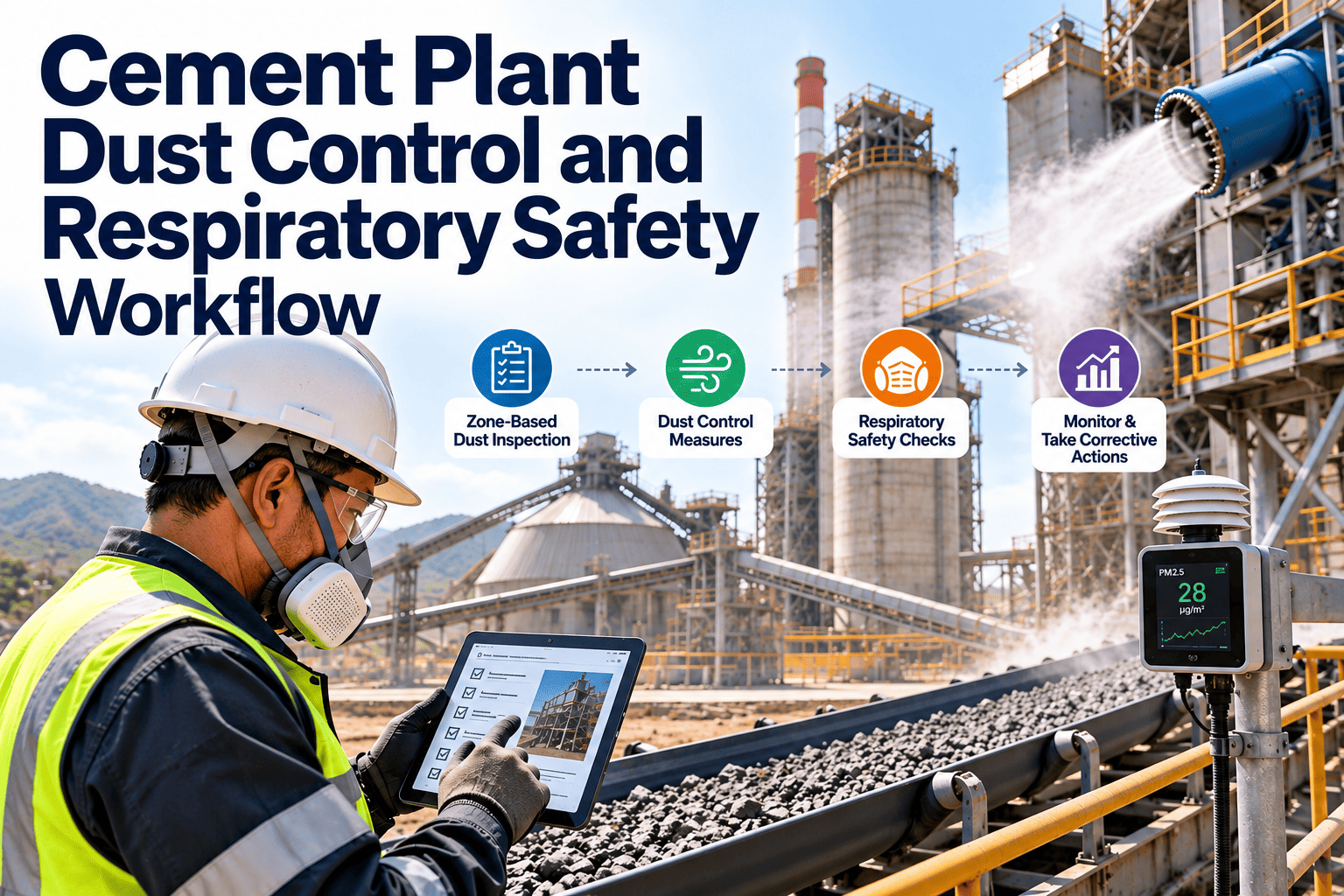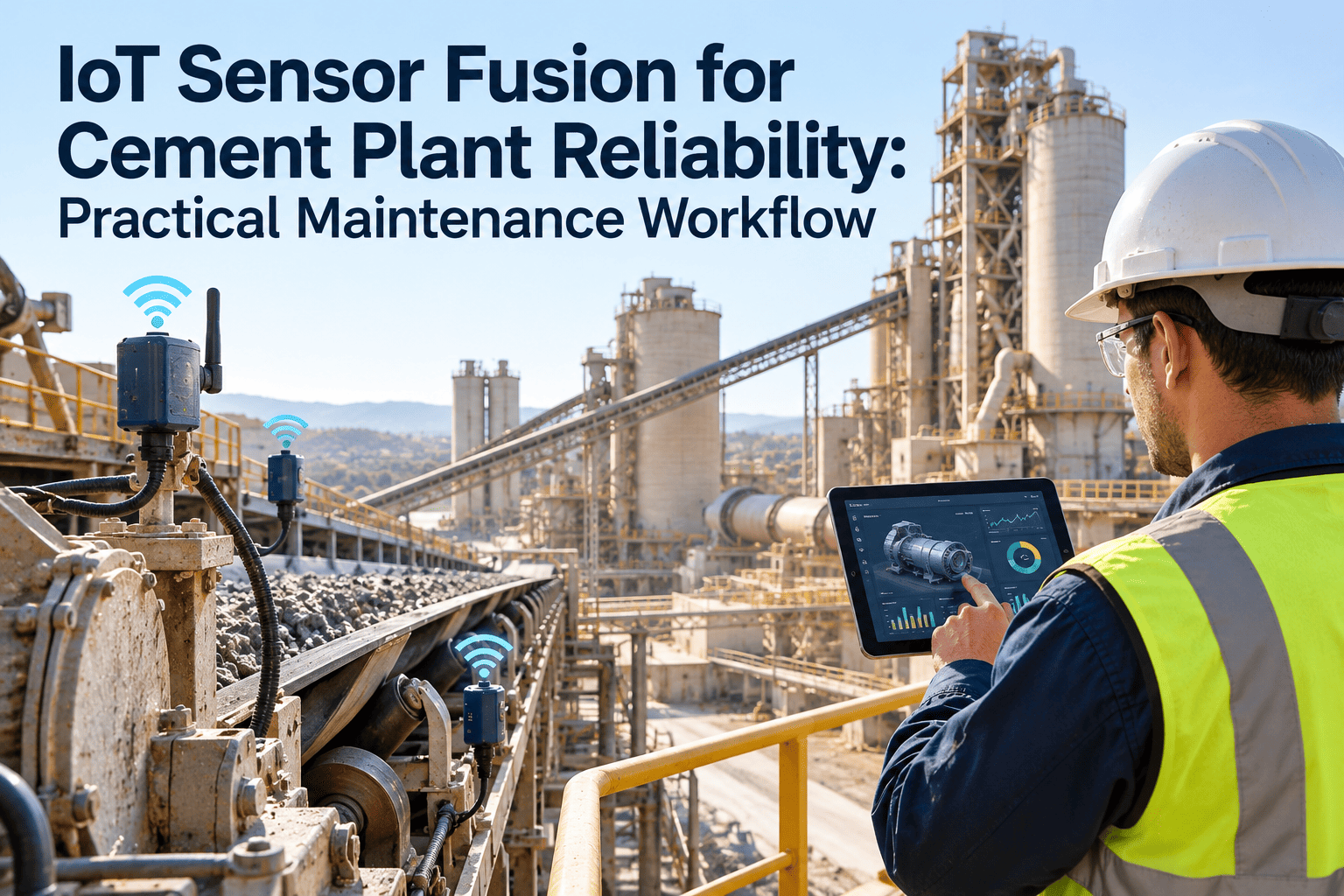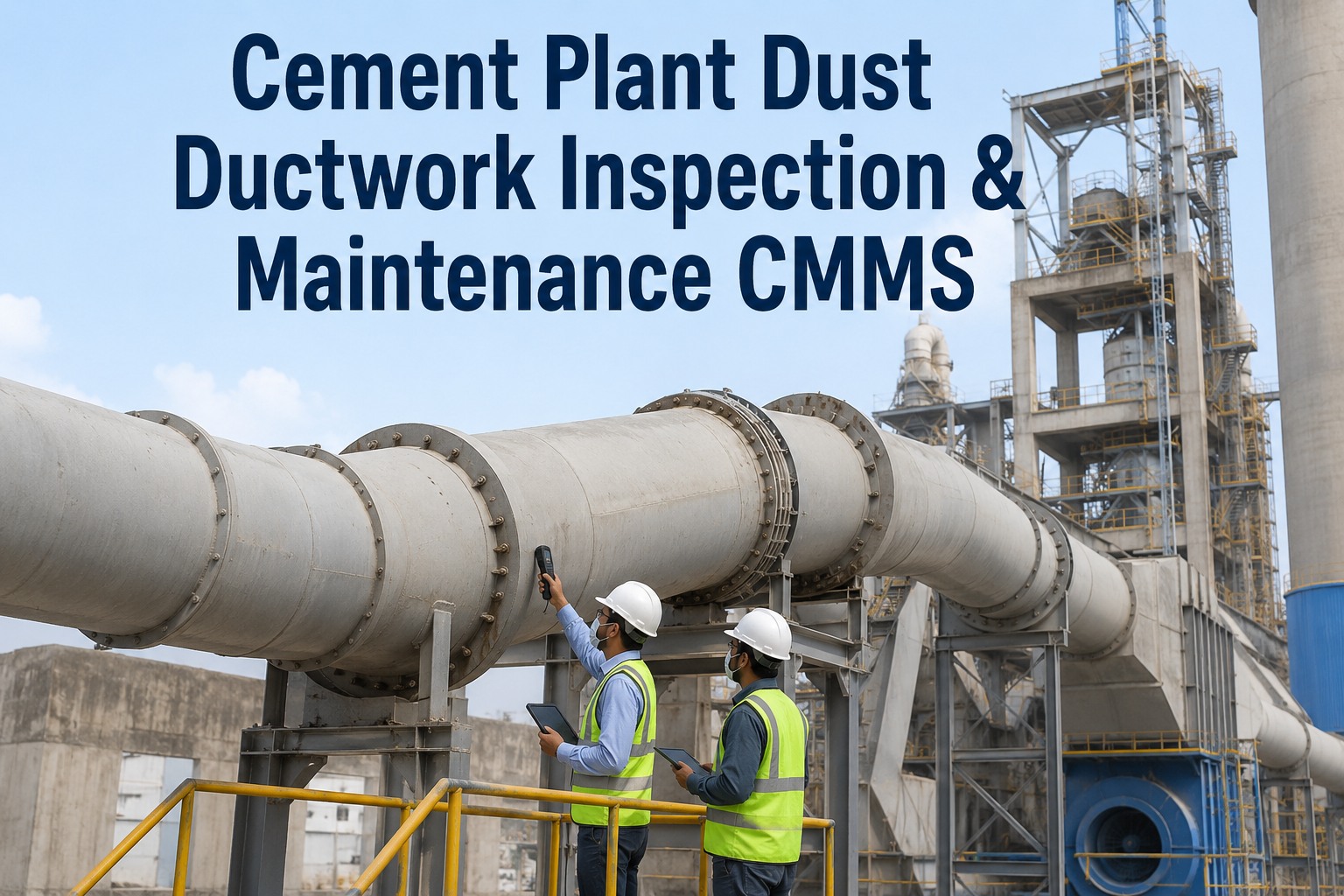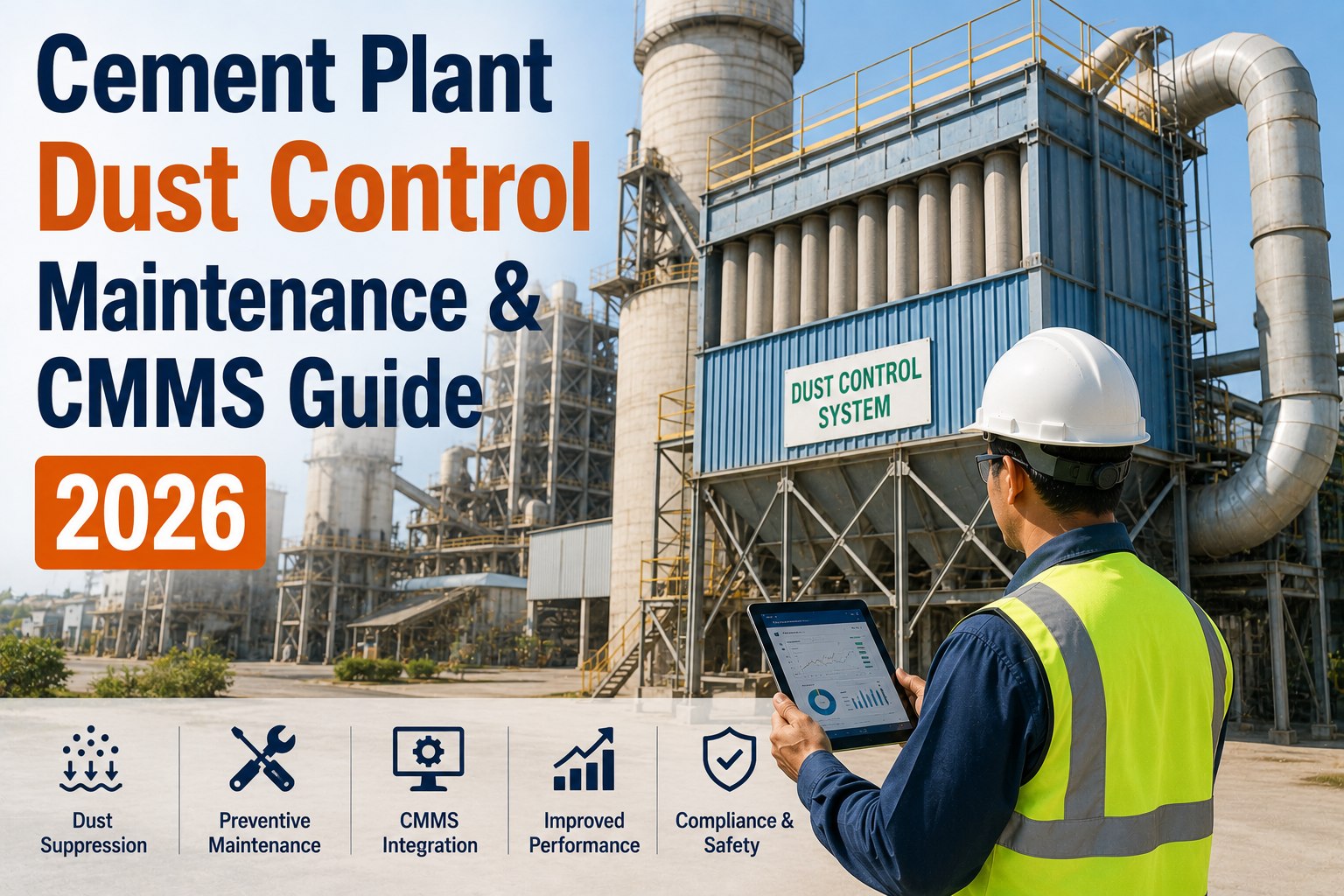
Transfer tower dust control is one of cement plant maintenance's most persistent pain points — fine particulate escapes suppress visibility, accelerate bearing wear, and trigger regulatory citations, yet the corrective work orders often stack up in paper logs that no one sees until the next shutdown. OxMaint's work order management brings structure to this disorder: every dust suppression inspection, filter service, and suppression system check runs as a digital task assigned to the right technician, tracked in real time, and closed with photo proof before the shift ends. This guide walks through the workflow step by step — what to inspect, how to sequence tasks, and which metrics prove the system is working. Start free on OxMaint or book a demo to see how the workflow runs on your transfer towers.
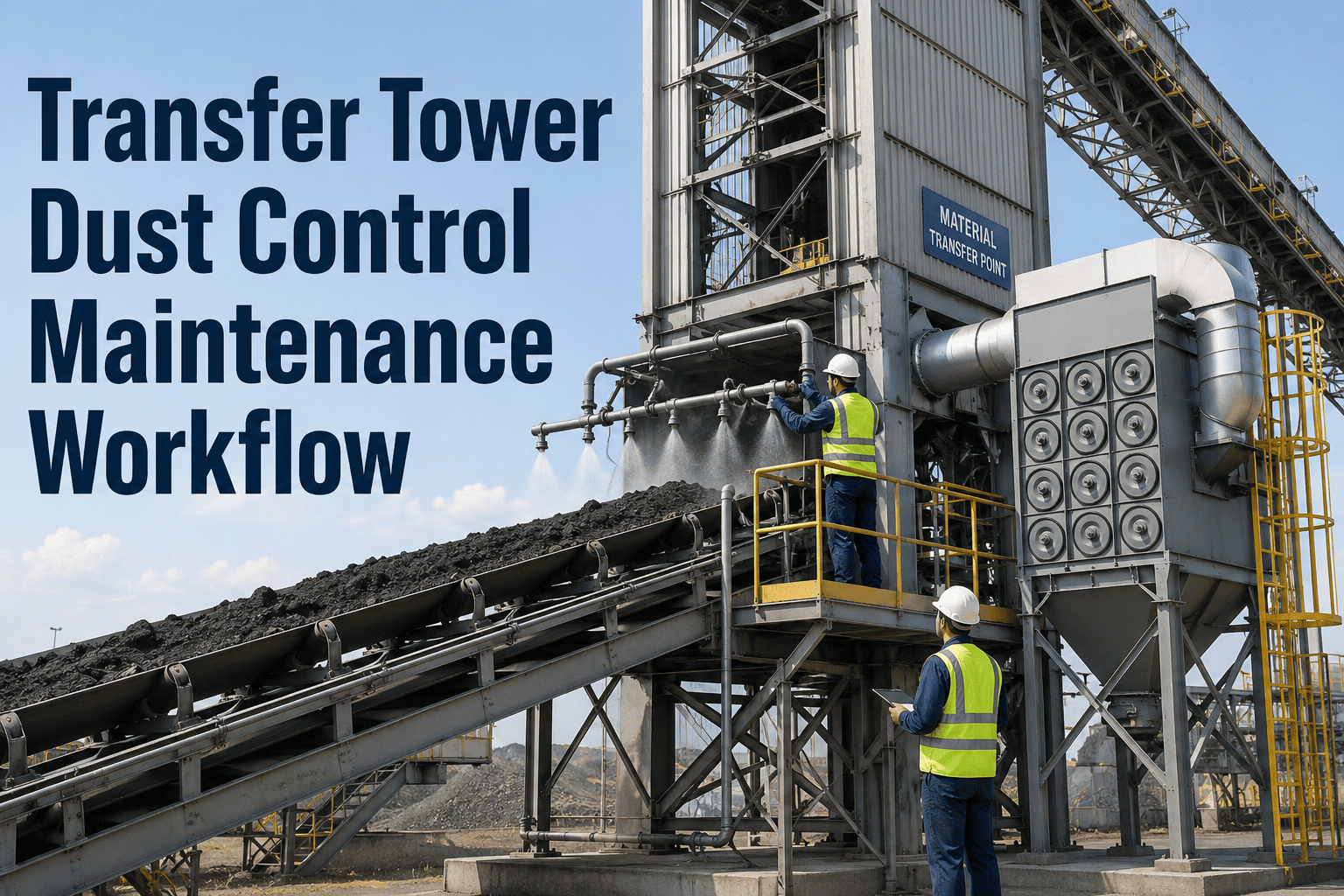
Transfer Tower Dust Control Maintenance Workflow
A field-ready workflow for cement plant teams: how to structure, assign, and close dust control work orders so every filter, suppression nozzle, and enclosure is serviced before it becomes a citation or a breakdown.
Why Transfer Tower Dust Control Fails in Practice
Transfer towers are the highest-wear, highest-dust nodes in any cement conveyor circuit. Material changes direction, velocity drops, and particles become airborne — and that happens dozens of times per shift. The maintenance gap is not ignorance of the problem; it is the absence of a structured workflow that keeps inspection records out of clipboards and into a system where planners can act on them.
Transfer Tower Dust Control: Step-by-Step Work Order Flow
A repeatable workflow turns dust control from a reactive scramble into a planned cycle. OxMaint structures the workflow as five sequential stages, each with a named owner, a checklist, and a digital close-out before the next stage begins.
Transfer Tower Dust Control Inspection Checklist
This checklist runs inside OxMaint as a required-field mobile form. Technicians cannot close the work order without entering a reading or marking each item — which eliminates the blank-paper round problem entirely.
Run This Checklist on Mobile — No Clipboards
OxMaint puts this inspection workflow on every technician's phone. Required fields, photo capture, and instant corrective work order creation — all without leaving the transfer tower.
How to Measure Transfer Tower Dust Control Performance
A workflow without metrics has no feedback loop. These are the six KPIs OxMaint tracks automatically as work orders close — no manual report compilation required.
What OxMaint Brings to the Dust Control Workflow
Frequently Asked Questions
How often should transfer tower dust suppression systems be inspected?
Daily visual inspections catch the most common failure modes — blocked nozzles, seal gaps, and abnormal DP readings — before they become downtime events. Weekly service rounds address nozzle flushing, solenoid testing, and pressure checks. Monthly deep inspections cover bag condition, impeller wear, and structural integrity. The specific frequency should be calibrated to your throughput rate and material type; high-moisture clinker loads differently than dry limestone. OxMaint lets you configure each round independently and adjust frequency based on the trend data that accumulates after a few months of operation. Start free to set up your inspection schedule.
What is the right differential pressure threshold to trigger a bag change?
Most baghouse manufacturers specify a DP operating window — typically between 1 and 2.5 kPa for woven filter bags in cement dust service. A sustained reading 20% above the baseline established in the first 30 days of operation is the practical alert point: it signals blinding without yet compromising airflow enough to affect suppression performance. The key word is sustained — a single high reading after a pulse-jet cycle can be normal. OxMaint records every reading logged by technicians and shows the trend line, so you are acting on the pattern rather than a one-off spike. Book a demo to see how threshold alerts work.
How does a digital work order system help with dust control regulatory compliance?
Environmental regulators expect documented evidence that suppression systems are maintained to the manufacturer's specification — inspection dates, readings, corrective actions, and technician identities. A paper round provides this in theory but fails in practice: entries are illegible, records go missing, and preparing a compliance file before an audit is a multi-day project. OxMaint stores every inspection as a timestamped, signed digital record. When the environmental officer arrives, the maintenance manager exports the relevant date range in under two minutes — complete with photos and readings. The program's compliance score KPI tracks record completeness continuously, so gaps are caught during normal operations rather than discovered during an audit. Start free to build your audit trail.
Can the same workflow cover multiple transfer towers across the plant?
Yes — and this is where a digital system pays back the most. Each transfer tower is configured as a separate asset in OxMaint with its own inspection schedule, alert thresholds, and maintenance history. A planner sees the status of every tower on one dashboard: which rounds are complete, which have open correctives, and which towers are trending toward a threshold alert. The technician sees only their assigned rounds for the shift. Multi-tower plants typically reduce missed inspections by 40–60% within the first quarter because the assignment and reminder system is automatic rather than relying on supervisor memory. Book a demo to configure your tower assets.
What is the typical ROI timeline for structured dust control work order management?
Most cement plants running primarily reactive dust control carry two or three unplanned downtime events per transfer tower per year, each averaging four hours of lost production plus emergency labor. Converting those events to scheduled corrective work orders — caught by the inspection workflow before failure — typically recovers that downtime within the first six months of operation. Parts savings follow as suppression components are replaced on condition rather than after failure, when secondary damage inflates the parts bill. Environmental citation risk, which carries both direct fines and indirect reputational cost, is the third financial benefit that is harder to quantify but no less real. Start free to begin tracking your baseline.
Stop Managing Transfer Tower Dust with Clipboards
OxMaint puts every suppression inspection, bag service, and corrective work order into a digital workflow — assigned, tracked, and closed with photo proof on the technician's phone before the shift ends.