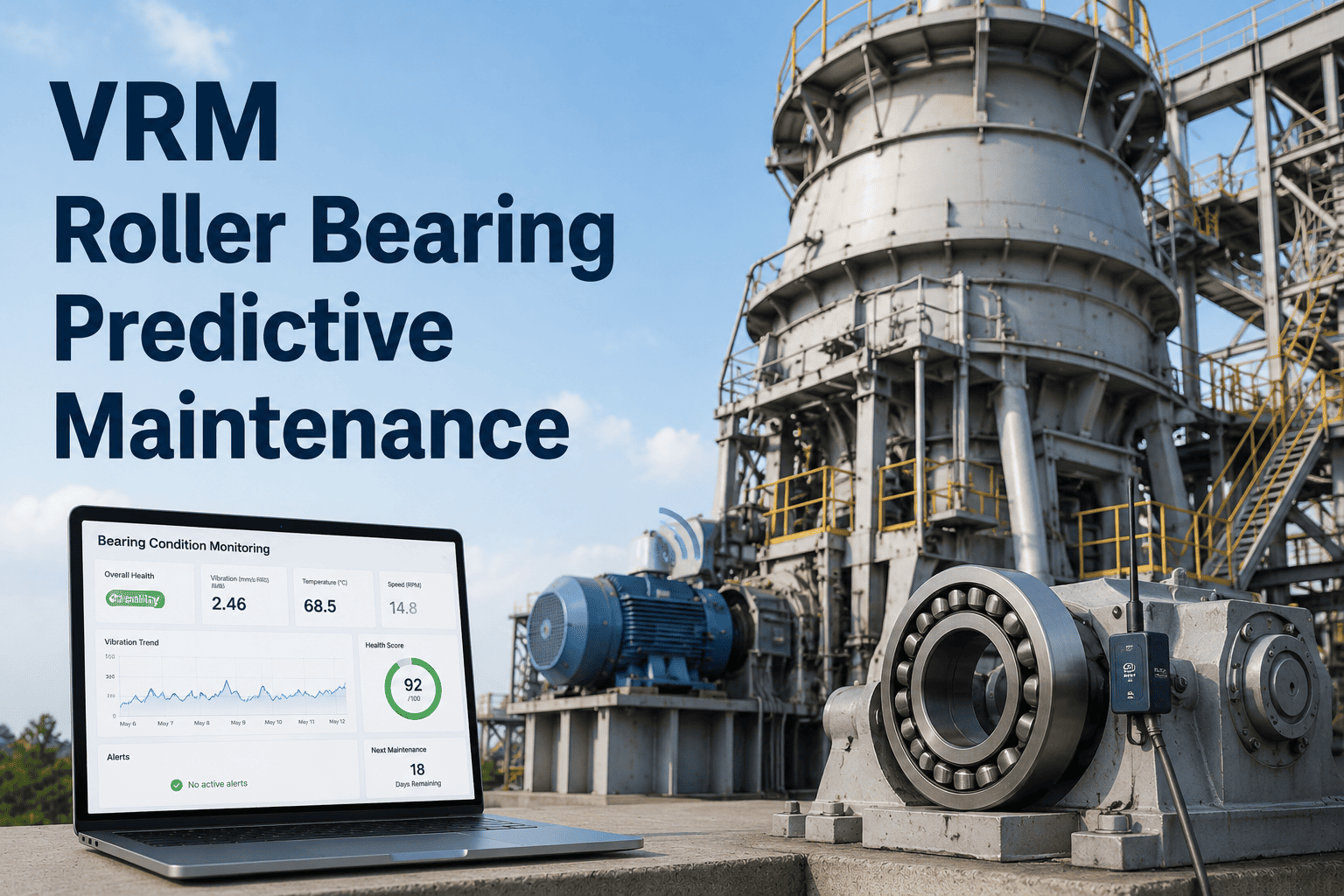
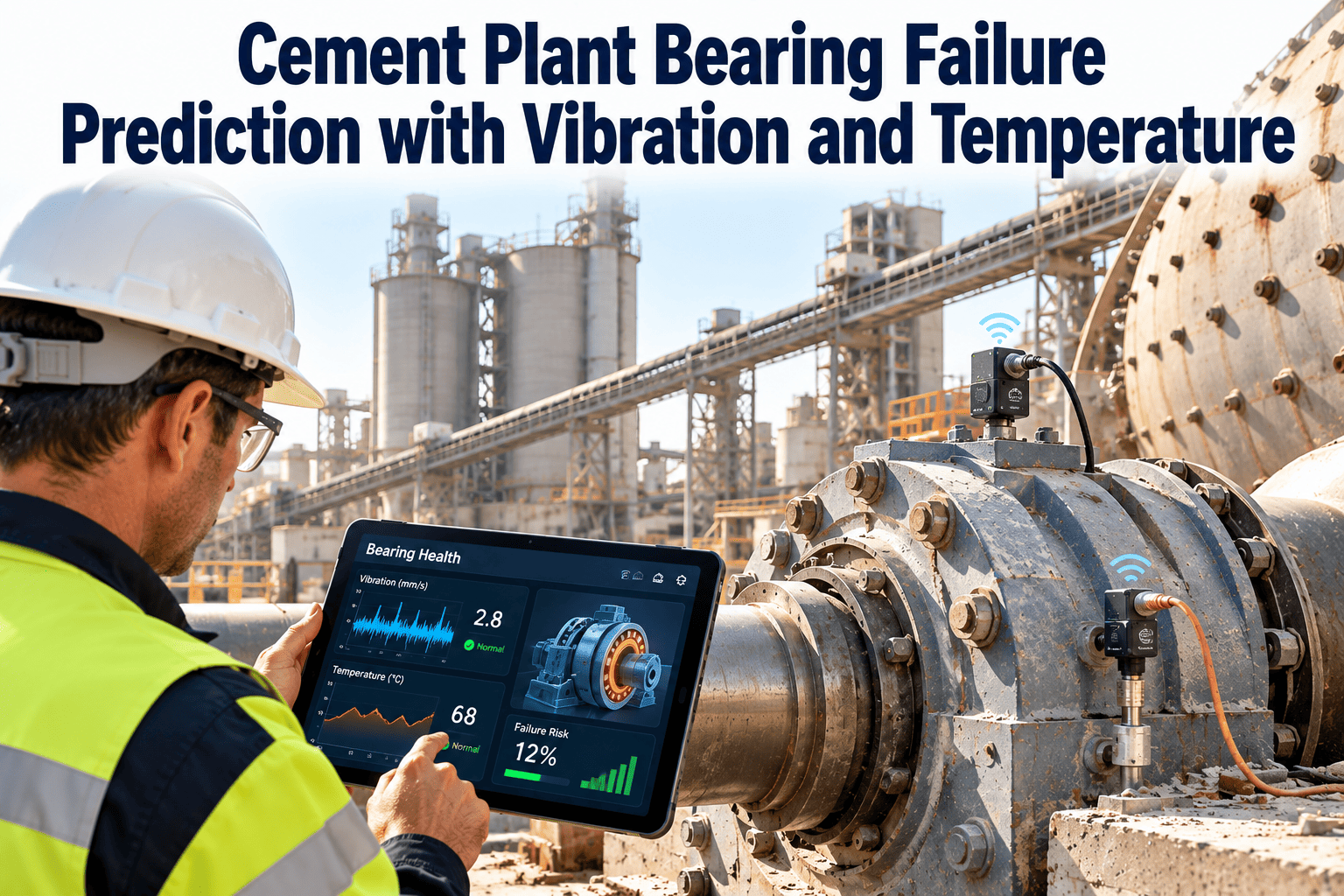
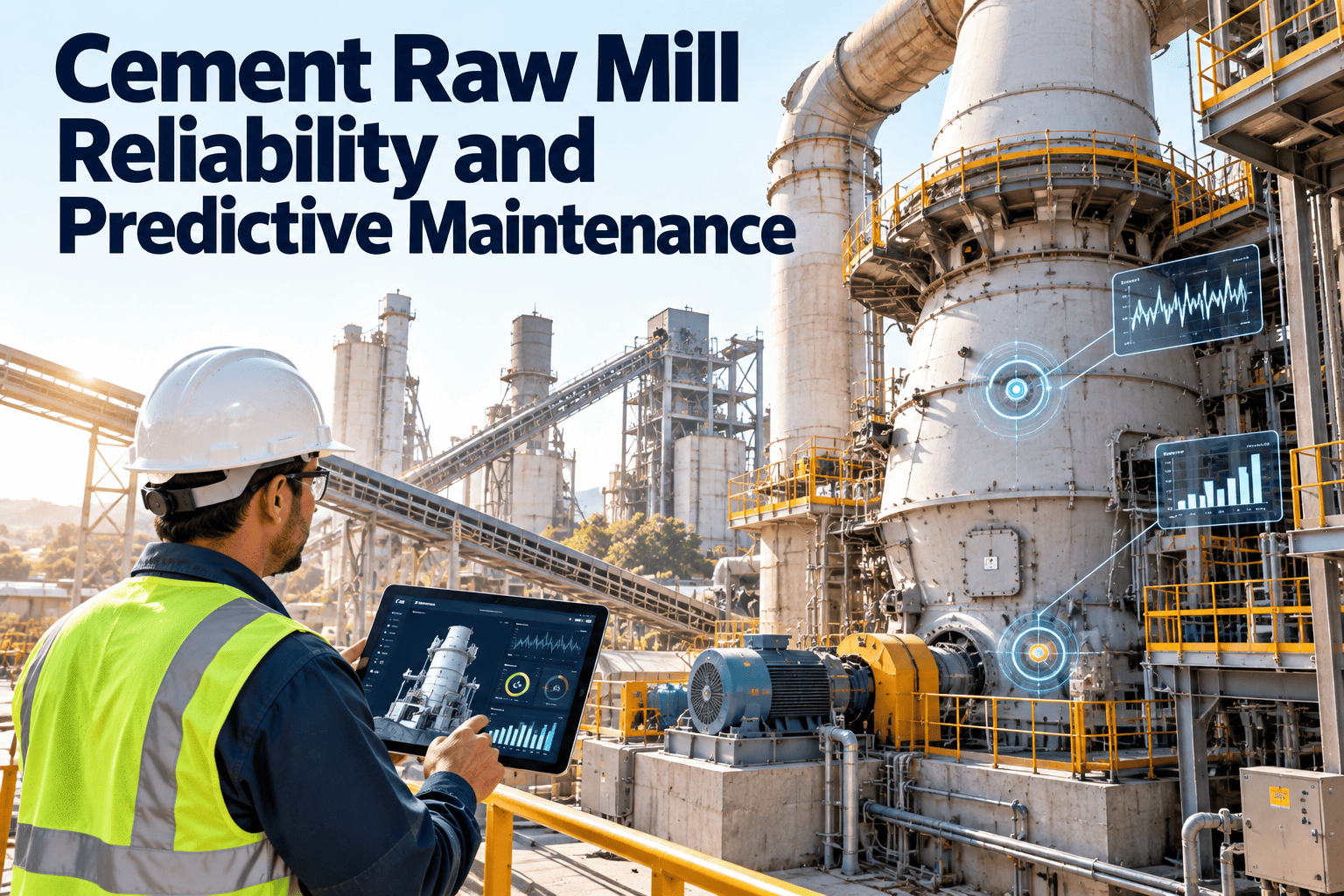
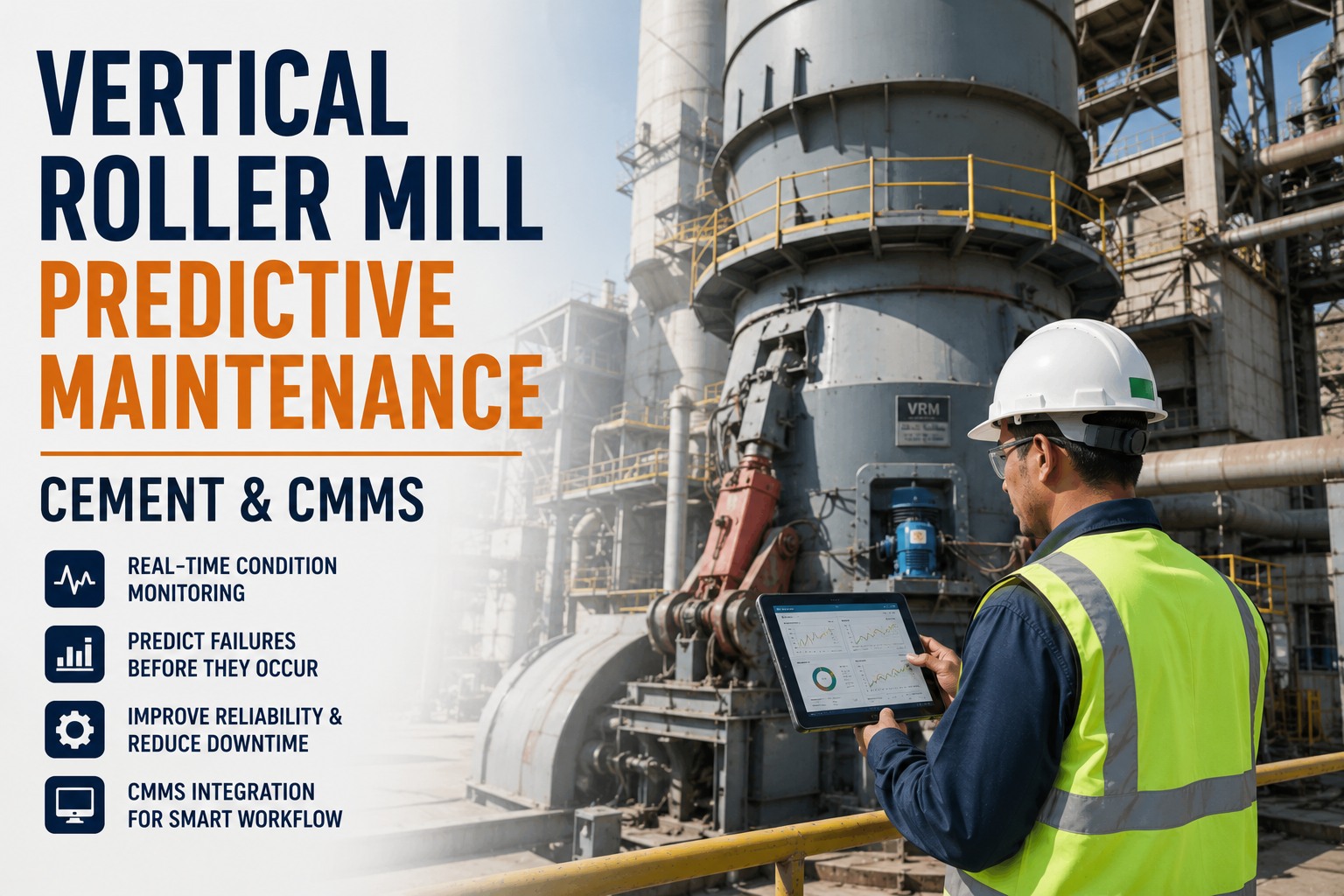
A vertical roller mill bearing failure that halts production for 72 hours does not just cost the mill — it starves the kiln of raw meal, forces thermal stabilization cycles, and creates a production shortfall that takes days to recover. The engineering reality behind most VRM bearing emergencies is that every failure was preceded by a detectable vibration signal weeks earlier: a rising BPFO frequency at the roller journal bearing, a hydraulic pressure transient at the accumulator, a kurtosis spike in the grinding table segment. The problem is that these signals exist in sensor data that nobody is correlating systematically — because the sensor platform, the CMMS, and the spare parts system have never been connected. AI predictive maintenance bridges that gap, reading VRM bearing condition continuously, projecting remaining useful life, and reserving the replacement bearing automatically when the clock starts ticking. Oxmaint connects every VRM sensor, hydraulic pressure reading, and roller hour to one asset record — so your team gets a work order and a reserved spare part before the bearing fails, not after. If your VRM bearings are currently managed on scheduled intervals alone, book a consultation to see what condition-based VRM bearing management looks like in practice.
AI Predictive Maintenance — VRM
VRM Bearing Failures Are Predictable. Start Predicting Them.
AI vibration analysis detects VRM roller bearing wear weeks in advance — projecting remaining useful life, reserving replacement parts, and scheduling the intervention before the mill trips.
72 hrs
Typical VRM bearing failure downtime when caught too late
70%
Reduction in unplanned VRM stops with condition-based PM
30 days
Lead time AI provides for mission-critical parts procurement
VRM Bearing Monitoring Points
Roller Journal Bearing (×4)
BPFO / BPFI defect frequencies + envelope amplitude
Critical — failure halts grinding instantly
Main Gearbox Bearings
Gear mesh frequency + planetary stage vibration
High — 12–18 week replacement lead time
Separator Shaft Bearing
Vibration at separator shaft + fineness quality correlation
High — failure creates quality drift before mechanical alarm
Hydraulic Accumulator
Nitrogen pressure trending + seal integrity transients
Medium — rupture creates grinding instability + gearbox shock
Failure Modes
How VRM Roller Bearings Actually Fail — and When AI Catches Each Stage
VRM roller journal bearings fail in four distinct stages, each producing a different vibration signature. AI monitors all four simultaneously — catching the failure in Stage 1 or 2, not Stage 3 or 4 when intervention costs have already multiplied.
Early-Stage Bearing Fatigue
Signal: Subtle BPFO frequency emergence in enveloped vibration spectrum. Amplitude 1.5–2× baseline.
Detection lead time: 30–60 days before failure
Oxmaint action: Monitoring work order + spare part reservation
Intervention cost: $8,000–$15,000 — bearing replacement at planned stop
Progressive Race Damage
Signal: BPFO sidebands appear. Kurtosis rising — rolling element impacts becoming repetitive. Crest factor elevated.
Detection lead time: 7–21 days before failure
Oxmaint action: Urgent work order + expedited spare procurement if not already reserved
Intervention cost: $20,000–$40,000 — roller removal + bearing replacement + seal inspection
Advanced Wear — Heat Generation
Signal: Temperature at bearing housing rising. Vibration broadband elevation. DCS bearing temperature alarm approaching.
Detection lead time: 24–72 hours
Oxmaint action: Critical work order + reduce mill load + immediate intervention planning
Intervention cost: $60,000–$120,000 — emergency stop, roller damage likely
Seizure / Catastrophic Failure
Signal: None — DCS alarm fires at seizure. Gearbox shock load from roller lockup. Secondary damage likely.
Detection lead time: Zero — reactive stop
Monthly pyrometer readings miss Stages 1–3 entirely. This is where reactive plants intervene.
Emergency cost: $200,000–$600,000 — emergency rebuild + gearbox inspection + lost production
The difference between a $12,000 bearing swap and a $400,000 emergency stop is Stage 1 detection.
Oxmaint AI catches VRM bearing deterioration in Stage 1 — when a planned stop, a reserved spare, and a coordinated crew turns a potential crisis into a routine maintenance event. The math is simple: one prevented failure pays for years of monitoring.
Spare Parts Intelligence
Why Spare Parts Planning Is Part of Predictive Maintenance
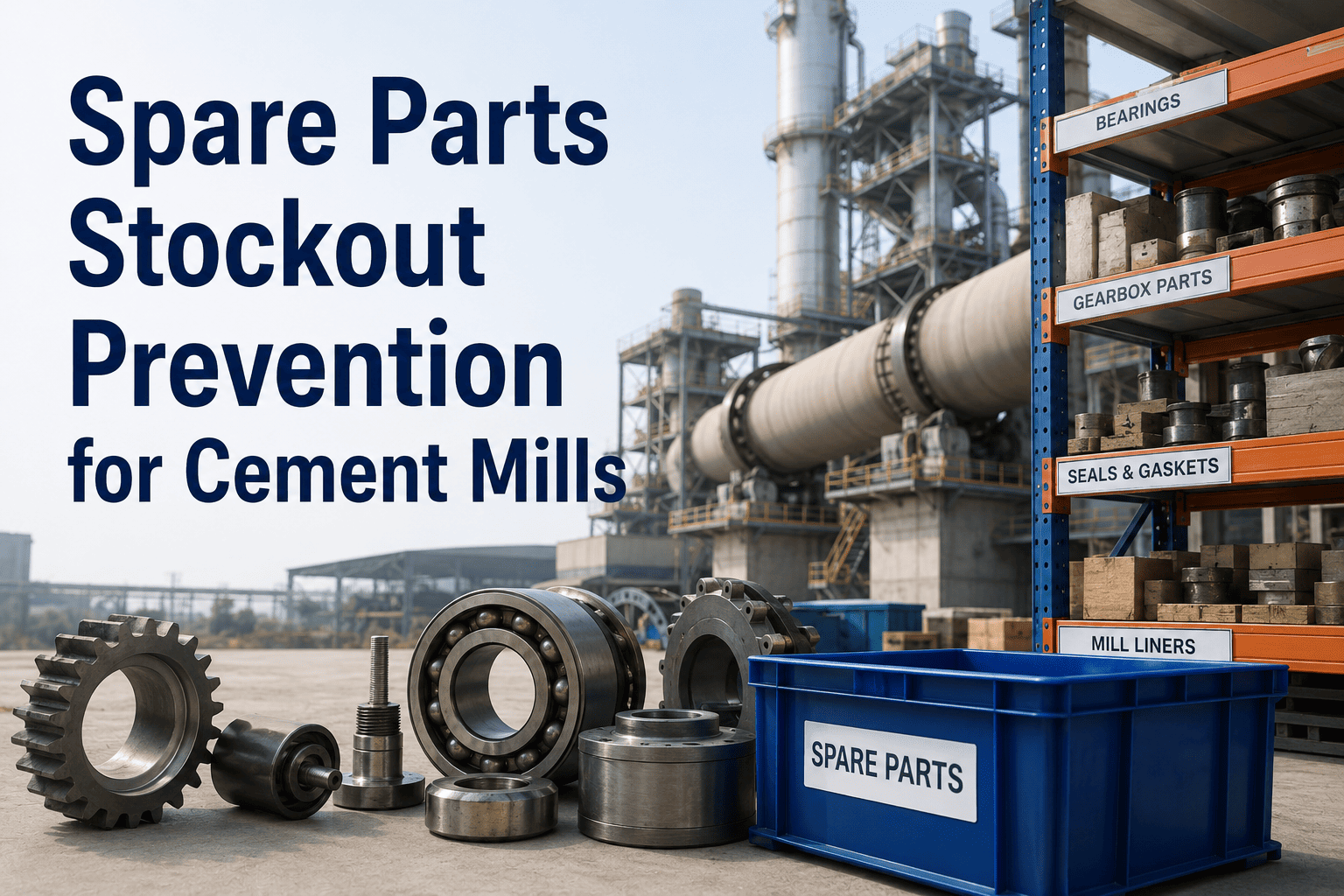
VRM roller bearings are not off-the-shelf components. Lead times for journal bearings in large VRMs run 8–20 weeks. An AI system that detects bearing wear 30 days in advance is only useful if the spare part pipeline is already configured to respond in time. Oxmaint closes this loop automatically.
Critical VRM Bearing Lead Times
Roller journal bearing set (large VRM)
8–20 weeks
Main gearbox planetary bearing
12–18 weeks
Separator shaft bearing
4–8 weeks
Hydraulic accumulator bladder
2–6 weeks
Roller tire (hardfaced)
6–12 weeks
How Oxmaint Closes the Parts Gap
AI detects Stage 1 bearing wear — 30–60 days lead time available
Oxmaint checks current stock for the bearing at this VRM asset
If not in stock: purchase requisition generated automatically with part number, quantity, and required-by date
If in stock: part reserved against the pending work order — unavailable for other jobs
Planned stop scheduled — crew, crane, and thermal equipment coordinated in advance
Bearing replaced on the correct side of the failure curve — not in emergency mode
FAQ
Questions About VRM Roller Bearing Predictive Maintenance
What vibration data does Oxmaint need from each VRM roller bearing position?
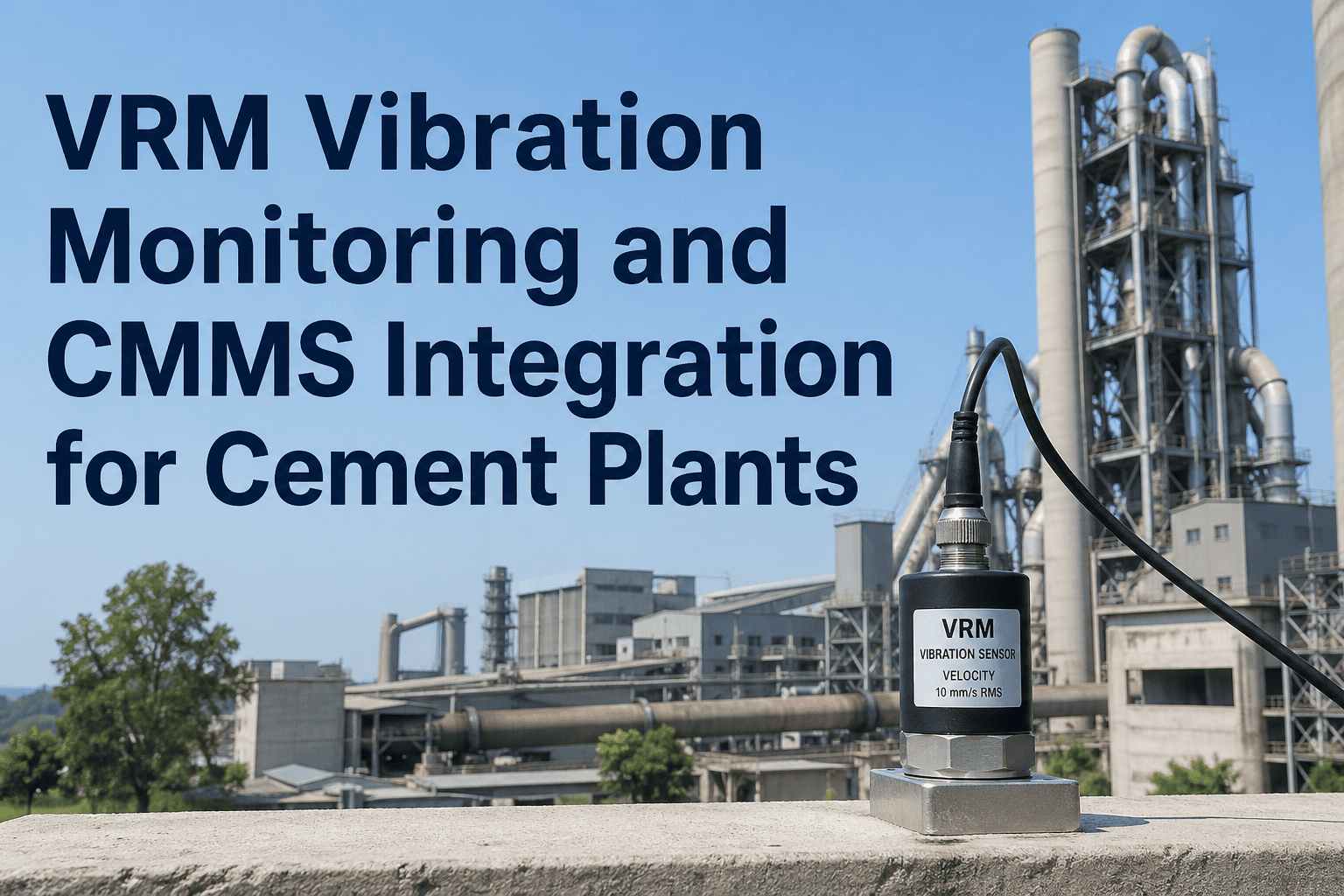
Oxmaint uses triaxial acceleration data from bearing housing locations, sampled at minimum 5 kHz to capture high-frequency enveloping signatures. Temperature sensors at the same locations provide the thermal validation layer. Most modern VRMs have at least some of this instrumentation already connected to the DCS. Oxmaint ingests it via OPC-UA or MQTT — no new hardware required at instrumented positions.
Book a consultation to assess your current VRM sensor coverage and identify any gaps.
How does AI distinguish a bearing fault from a process vibration event like a mill bump?
Mill bumps — caused by grinding bed instability — produce broadband vibration events at the table and rollers simultaneously. Bearing fault signals appear at specific defect frequencies (BPFO, BPFI) that are independent of mill operating events and consistent across rotations. Oxmaint AI tracks both signatures separately, filtering out mill bumps from the bearing health trend so process events do not generate false bearing fault alerts. The distinction is reliable enough to eliminate alert fatigue — a common failure mode in manual vibration programs.
Can Oxmaint predict remaining useful life for VRM roller bearings?
Yes. After 30 days of baseline operation plus at least one bearing defect signature detection, Oxmaint's RUL model projects remaining useful life based on defect frequency growth rate, envelope amplitude trend, and kurtosis progression. The estimate is expressed as a date range with confidence bounds — giving planning teams a realistic procurement and scheduling window, not just a binary alert. The model recalibrates automatically as new measurements accumulate.
Start your trial to configure the RUL model for your VRM bearing fleet.
How many VRM mills can Oxmaint manage from a single platform?
Oxmaint manages unlimited VRM assets across multiple plant sites from a single account. Each VRM has its own asset hierarchy — roller bearings, gearbox, separator, hydraulic system — with independent PM calendars, vibration baselines, and spare parts linkages. Multi-site operations see a unified portfolio view for cross-plant benchmarking and combined CapEx forecasting, while each plant maintains its own work order queue and maintenance calendar.
What is the typical ROI timeline for VRM bearing predictive maintenance with Oxmaint?
Plants with 2 or more VRMs typically recover the full cost of Oxmaint deployment within 8–14 months from the first prevented unplanned stop. The Stage 1 bearing intervention cost ($8,000–$15,000) versus emergency Stage 4 failure cost ($200,000–$600,000) means a single prevention event delivers a 15–40× return on the intervention cost alone. Secondary benefits — extended bearing life, reduced overtime, optimized parts stocking — compound over time.
Book a consultation to build an ROI model for your specific VRM fleet.
Your VRM bearings are telling you when they will fail. Oxmaint makes sure your team hears it in time to act.
AI vibration analysis for VRM roller bearings, gearbox stages, and separator shafts — with automatic spare parts reservation, work order generation, and remaining useful life projection — so every bearing replacement happens at a planned stop, not an emergency one.