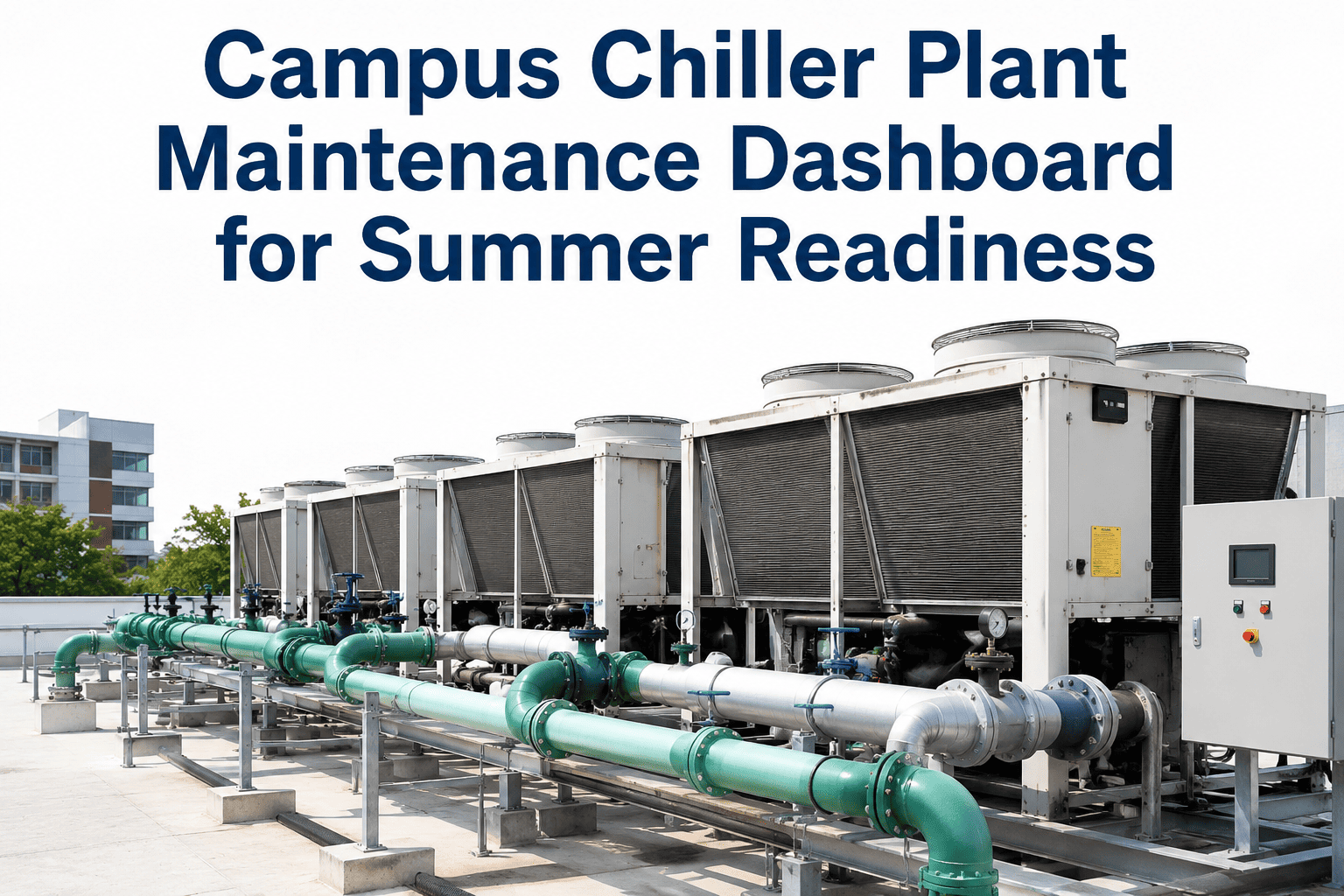
Campus chiller plants are the backbone of summer comfort for thousands of students and staff — but most facilities teams only discover problems after temperatures spike and classrooms become unusable. A dedicated maintenance dashboard gives you real-time visibility into chiller performance, scheduled PM completion, and equipment health before the heat arrives. Without a structured approach, deferred maintenance silently builds until an emergency shutdown disrupts operations mid-semester. OxMaint gives higher education facilities teams the chiller-specific dashboard, automated work orders, and inspection tracking needed to enter summer fully prepared. Start a free trial or book a demo to see how campus facilities teams track chiller readiness year-round.
Campus Chiller Plant Maintenance Dashboard for Summer Readiness
Most chiller failures happen in June — not because plants break suddenly, but because deferred PMs compound over winter. A purpose-built maintenance dashboard surfaces every deferred task, overdue inspection, and at-risk asset before peak cooling season arrives.
The 4 Reasons Campus Chillers Fail in Summer
Chiller failures are rarely random — they follow predictable patterns that a maintenance dashboard would have flagged weeks earlier.
Annual startup checks — oil analysis, refrigerant charge verification, tube bundle inspection — get skipped when there is no automated PM trigger. By the time the unit runs, undetected wear has accelerated to failure point.
Condenser tubes that are not cleaned on schedule force the compressor to work harder, raising head pressure and energy consumption by 10–15% before efficiency loss becomes noticeable without dashboard trending data.
Cooling tower fill, basin, and fan inspection PMs scheduled for fall or spring get pushed when staffing is thin. Without a dashboard showing overdue tasks, towers go into summer with unknown condition status.
Chiller plant controls — setpoints, staging sequences, demand response logic — drift over time without documented review. A maintenance dashboard that tracks controls calibration PM completion prevents invisible efficiency losses.
What a Summer Readiness Dashboard Should Show
A chiller plant maintenance dashboard is only useful if it surfaces the right information at the right time. These are the six metric categories that determine summer readiness.
Percentage of annual startup PMs completed before May 15. Any chiller below 100% is at elevated risk before peak load hits.
Count of open work orders past due date, sorted by asset criticality. Chiller units and cooling towers should show zero overdue items entering June.
Rolling condition score per asset based on completed inspections, corrective work history, and age. Declining scores trigger priority review before failure.
Cooling tower water treatment test log completion and chemical dosing records. Legionella risk management requires documented test results, not verbal confirmation.
Average repair time per asset type, trended over 12 months. Rising MTTR on a chiller indicates technician skill gaps or parts procurement delays that need addressing before summer.
Dollar value of deferred maintenance on chiller plant assets. This number, tracked in the dashboard, is the business case for summer capital requests before failure forces emergency spend.
Summer Readiness Checklist: Chiller Plant
Use this checklist as the basis for your pre-summer inspection program. Each item should generate a completed work order with technician sign-off in your CMMS before June 1.
| Inspection Item | Frequency | Asset | Documentation Required |
|---|---|---|---|
| Oil analysis sample | Annual (spring) | Centrifugal/screw chiller | Lab report on file in CMMS |
| Refrigerant charge verification | Annual (spring) | Chiller unit | Tech sign-off + reading logged |
| Condenser tube cleaning | Annual | Water-cooled condenser | Work order with before/after photos |
| Cooling tower basin cleaning | Semi-annual | Cooling tower | Inspection checklist completed |
| Fill and distribution inspection | Annual | Cooling tower | Condition rating logged per section |
| Variable frequency drive test | Annual | Chiller / pump / cooling tower fan | Function test results recorded |
| Water treatment start-up test | Annual (at startup) | Cooling tower system | Chemical test results + treatment log |
| Controls and setpoint review | Annual | Chiller plant controls | Setpoints verified and documented |
Your Chiller Plant Readiness Dashboard Is One Step Away
OxMaint auto-schedules every spring startup PM, tracks completion against your go-live deadline, and surfaces overdue items before the first hot day of the year. Facilities teams that use OxMaint enter summer with zero overdue chiller PMs — not luck, just structure.
Unstructured vs. Dashboard-Driven Chiller Management
Frequently Asked Questions
What should a campus chiller plant maintenance dashboard track?+
When should spring chiller startup inspections be scheduled?+
How does a CMMS help with Legionella risk in cooling towers?+
Can OxMaint track multiple chiller plants across a campus?+
What is the ROI of planned chiller maintenance versus reactive repairs?+
Enter Summer With Every Chiller PM Completed and Documented
OxMaint gives campus facilities teams the automated scheduling, real-time dashboard visibility, and complete work order history to prove summer readiness — to administration, to auditors, and to every student counting on cool classrooms in June.