Campus Fire Alarm System Maintenance Checklist

By Oxmaint on February 20, 2026

campus-fire-alarm-maintenance-checklist-2026

A 32,000-student state university in Ohio failed its fire marshal inspection across four residence halls on the same day — not because the fire alarm panels were broken, but because the facilities team could not produce testing documentation for 116 of 340 initiating devices. The pull stations worked. The smoke detectors worked. The notification appliances worked. But NFPA 72 §14.2.1.2 requires documented evidence that every device has been tested on schedule — and "we tested them, we just didn't write it down" is not a defense the fire marshal accepts. The university received 116 individual deficiency citations, a 90-day corrective action deadline, and a public notice to the board of trustees. Total cost of re-testing every device with witnessed documentation: $74,000 in contracted labor plus $18,000 in administrative time compiling the records. A CMMS-managed inspection program with digital checklists, timestamped photo evidence, and automated compliance dashboards would have tracked every device test as it happened — and generated the fire marshal's required documentation as a byproduct of the work itself. The re-testing cost $92,000. The CMMS costs $3,200 per year. Schedule a consultation to digitize your fire alarm inspection program inside Oxmaint, or sign up now to start building your compliance program.

Key Fire Alarm System Components Covered in This Checklist

Before running through inspection tasks, your campus safety team should be familiar with every fire alarm component category the fire marshal inspects. Each item in this checklist maps directly to one of these critical subsystems — and missing documentation on any single category triggers a deficiency citation.

Smoke & Heat Detectors
Photoelectric and ionization smoke detectors, fixed-temperature and rate-of-rise heat detectors, and duct smoke detectors in HVAC air handling units — annual functional testing and biennial sensitivity testing per NFPA 72 §14.4.5
Manual Pull Stations
Wall-mounted manual fire alarm boxes at every required exit. Annual functional testing confirms signal transmission to FACP and central station. Inspect for physical damage, obstruction, and proper signage
Notification Appliances
Horns, strobes, horn/strobe combos, and voice evacuation speakers. Annual testing verifies audible output meets 75 dBA at pillow level in sleeping areas and visible output meets ADA candela requirements
Fire Alarm Control Panels (FACP)
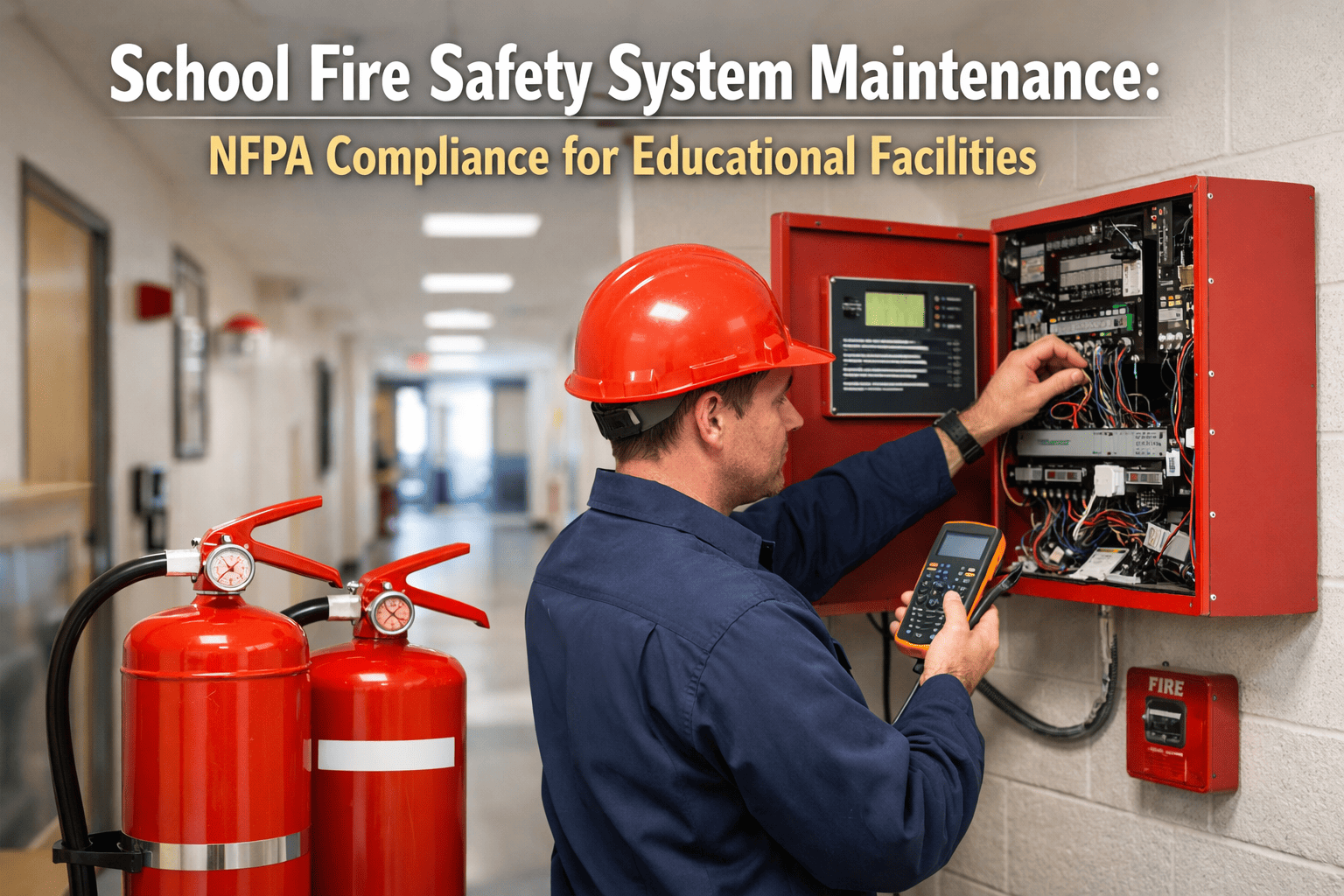
Main and remote annunciator panels, zone cards, power supplies, and communication modules. Weekly visual inspection, semiannual functional testing, and annual battery load testing per NFPA 72
Waterflow & Supervisory Devices
Sprinkler waterflow switches, valve tamper switches, and supervisory signal devices. Quarterly functional testing per NFPA 25 with signal verified at FACP and central monitoring station
System Interfaces & Monitoring
Elevator recall, HVAC smoke control shutdown, magnetic door holders, emergency power transfer, and central station communication. Annual interface testing requires multi-trade coordination
Turn every checklist item into a trackable work order. Oxmaint auto-schedules NFPA 72 inspections, sends push notifications to technicians, and logs every completed task with timestamps and photos — so you never face a fire marshal without documentation again.

Weekly Fire Alarm Inspection Checklist

Perform these checks every week. Most can be completed during a walkthrough without disrupting building operations. Record all panel conditions and observations in the CMMS with inspector ID and timestamp. Sign up free to automate weekly inspection scheduling.

Weekly FACP Walkdown & Visual Inspection
Verify FACP status indicators show normal condition
Check every fire alarm control panel in assigned buildings. All zone LEDs should show normal. No active trouble, supervisory, or alarm conditions should be present without documented explanation.
Record all active trouble conditions and disabled zones
Log every trouble condition with zone number, device type, and building location. Any disabled zone must have an active impairment record in the CMMS with compensating measures documented.
Confirm central station communication is active
Verify the FACP shows active connection to the central monitoring station. A panel that cannot transmit alarm signals defeats the entire purpose of the fire alarm system. Test signal path if communication LED is not green.
Check panel power supply — AC and battery backup
Verify AC power indicator is on. Check battery charge indicator shows normal. A panel running on battery with no AC power will exhaust backup within 24 hours — creating an unmonitored building.
Visual inspection of accessible pull stations and notification appliances
During building walkthrough, visually inspect pull stations for physical damage, obstruction, or missing signage. Check that horn/strobes are not covered, painted over, or obstructed by furniture or decorations.
Review impairment log for open items
Check CMMS impairment dashboard. Any system impairment open longer than 48 hours without compensating measures (fire watch) requires escalation per NFPA 72 §14.2.3.

Monthly Fire Alarm Maintenance Checklist

Monthly tasks address the components that degrade gradually — battery capacity, emergency communication equipment health, and environmental conditions in panel rooms. These checks catch developing problems before they become trouble conditions or inspection failures.

Monthly Battery, Power Supply & Emergency Systems
Test emergency generator transfer for fire alarm circuits
Verify fire alarm circuits transfer to emergency power within 10 seconds of AC loss. Record transfer time. Confirm panel continues normal operation on generator power without trouble conditions.
Check battery terminal voltage under standby conditions
Measure and record battery voltage at each FACP. NFPA 72 requires 24-hour standby capacity plus 5 minutes of alarm (15 minutes for voice systems). Voltage below manufacturer minimum indicates failing cells.
Test mass notification system and emergency PA speakers
Activate test tone on all mass notification zones. Verify speaker output in representative locations. Check digital signage displays for emergency message capability. Document any zones with reduced output or failed speakers.
Inspect fire alarm panel room conditions
Check room temperature (panels have operating limits), humidity, and housekeeping. Ensure nothing is stored within 36 inches of panels. Verify room access is restricted and emergency lighting is functional.
Review trouble condition history and work order completion
Pull CMMS report of all fire alarm trouble conditions for the past 30 days. Verify every trouble condition generated a work order. Verify every work order was completed and closed with documented resolution.
Verify Clery Act timely warning procedures are current
Confirm emergency notification contact lists are current. Verify timely warning templates are accessible. Test notification system send capability to at least one test recipient. Document test results in CMMS.
Never miss a monthly fire alarm check again. Oxmaint auto-generates work orders every month and sends push notifications directly to your fire safety technicians' mobile devices.

Quarterly Fire Alarm Inspection Checklist

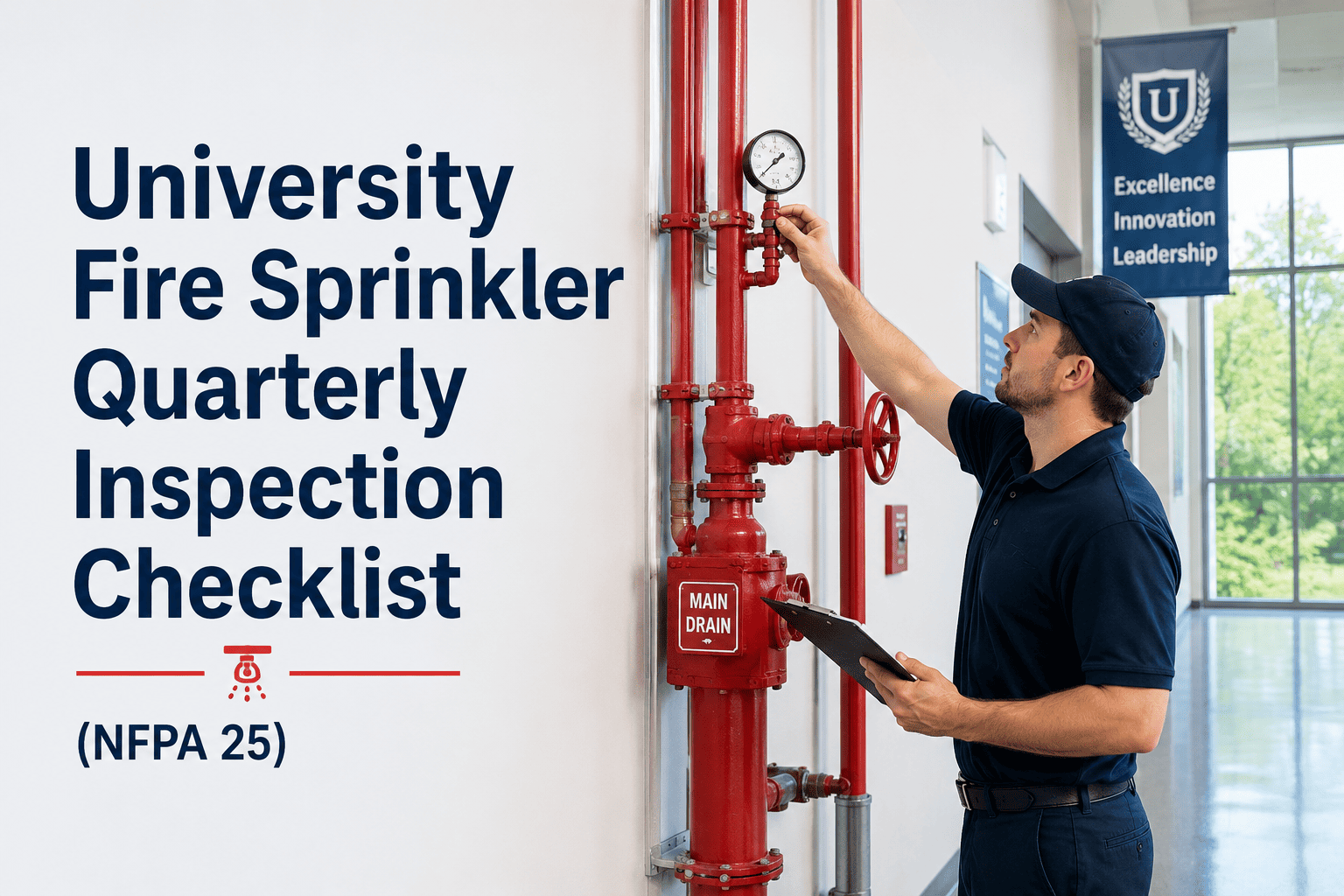
Quarterly tasks focus on the sprinkler interface devices and supervisory systems that NFPA 25 and NFPA 72 require testing four times per year. These are among the most commonly cited deficiencies in campus fire marshal inspections because the quarterly frequency is easy to miss without automated scheduling. Book a demo to see quarterly scheduling in action.

Quarterly Waterflow, Supervisory & Interface Testing
Test all sprinkler waterflow switches
Activate each waterflow switch using the inspector's test valve. Verify alarm signal transmits to the FACP within 90 seconds and to the central monitoring station. Record device ID, signal transmission time, and result for each switch.
Test all valve tamper switches
Turn each supervised valve handwheel two revolutions from the open position. Verify supervisory signal transmits to FACP and central station. Return valve to full open. This is the single most commonly missed quarterly test on campus — and the most commonly cited deficiency.
Test supervisory signal devices
Test all supervisory devices including pressure switches, temperature sensors, and water level indicators. Verify each generates a distinct supervisory signal at the FACP — not an alarm signal. Log each device test individually.
Verify central station signal transmission for all device types
Coordinate with your central monitoring station to confirm receipt of alarm, supervisory, and trouble signals tested during this cycle. Obtain written confirmation from the monitoring company with timestamps.
Inspect fire department connection (FDC) accessibility
Verify FDC caps are in place, threads are undamaged, and access is unobstructed by landscaping, construction, or parked vehicles. Report any FDC accessibility issues to campus facilities and public safety immediately.
Complete all weekly and monthly checklist items
Quarterly inspections supplement — not replace — every weekly and monthly task. Verify all lower-frequency items were completed and logged throughout the quarter. Address any gaps before closing the quarterly work order.

Semiannual Fire Alarm Inspection Checklist

NFPA 72 requires semiannual functional testing for fire alarm control panels and several critical subsystems. This mid-year inspection is your opportunity to catch problems before they become annual inspection failures.

Semiannual Panel Functional Testing & Battery Load Test
FACP functional test — all zones and circuits
Activate each zone on the FACP and verify correct annunciation, signal routing, and auxiliary function activation. Confirm all zone cards respond correctly. Test panel programming for accuracy against as-built drawings.
Battery load test under alarm conditions
Disconnect AC power. Place system in alarm condition to simulate full notification appliance load on batteries. Verify battery sustains alarm for required duration (5 min standard, 15 min voice systems) after 24-hour standby equivalent. Record voltage readings at start and end of test.
Test all communication paths — primary and secondary
Verify primary communication path to central station (typically IP or cellular). Disconnect primary path and verify secondary path activates and transmits successfully. Record transmission times for both paths.
Verify remote annunciator panel synchronization
Confirm remote annunciator panels at building entrances and security desks accurately reflect the status of the main FACP. Test with alarm, trouble, and supervisory signals. Any display discrepancy requires immediate correction.
Review and update FACP programming and zone maps
Compare panel programming against current building layout. Verify zone assignments reflect any renovations, room changes, or new construction since last review. Update zone maps posted at the FACP if changes exist.
Semiannual inspections require advance coordination. Oxmaint auto-generates semiannual work orders with lead-time reminders, occupant notification templates, and contractor scheduling built in.

Annual Fire Alarm System Inspection & Functional Test

The annual inspection is the comprehensive test the fire marshal reviews. Every initiating device, every notification appliance, every system interface must be functionally tested and documented with device-level records. This is where documentation gaps generate citations — and where a CMMS pays for itself in a single inspection cycle. Create your free Oxmaint account to build your annual inspection program.

Annual Complete System Functional Test — 100% of Devices
Functional test 100% of smoke detectors
Test every smoke detector using listed aerosol or magnet per manufacturer instructions. Verify alarm signal transmits to correct zone on FACP. Record device ID, location, test method, and pass/fail result for each detector. Campus scale: 200–2,000+ per building.
Smoke detector sensitivity testing (biennial — verify schedule)
Per NFPA 72 §14.4.5.3: sensitivity testing within 1 year of installation and every alternate year thereafter. Detectors reading outside listed range must be cleaned or replaced. CMMS tracks each detector's last sensitivity reading and next due date.
Functional test 100% of heat detectors
Test fixed-temperature and rate-of-rise heat detectors per manufacturer method. Non-restorable heat detectors in service for 15+ years require laboratory testing of a sample or complete replacement per NFPA 72.
Functional test all duct smoke detectors
Test every duct detector in every AHU. Verify alarm signal triggers HVAC shutdown for the served zone. Duct detectors are the most commonly failed devices on campus due to airborne debris accumulation. Schedule alongside AHU filter changes for efficiency.
Functional test 100% of manual pull stations
Activate each pull station and verify alarm signal transmits to correct FACP zone and central station. Reset station. Inspect for physical damage, proper signage, and unobstructed access. Record each device individually.
Functional test 100% of notification appliances
Activate every horn, strobe, horn/strobe, and speaker in alarm mode. Verify audible output meets 75 dBA at pillow level in sleeping areas (residence halls) and 15 dBA above ambient in all other areas. Verify visible output meets ADA candela requirements. The 75 dBA sleeping area test is the single most common campus deficiency.
Test voice evacuation intelligibility
For buildings with voice evacuation systems: conduct intelligibility testing per NFPA 72 Annex D. Measure speech transmission index (STI) at representative locations. Intelligibility below 0.50 STI requires speaker adjustment or addition.
Test elevator recall interface
Activate fire alarm in the elevator lobby zone. Verify elevators recall to the designated floor with doors open. If lobby detector activates recall, verify alternate floor recall. Requires coordination between fire alarm and elevator contractors.
Test HVAC smoke control and shutdown interfaces
Verify fire alarm activation shuts down the correct air handling units and activates smoke control sequences per building design. Requires coordination with HVAC contractor. Document which AHU shuts down for which alarm zone.
Test magnetic door holder release
Verify all fire-rated doors held open by magnetic holders release on alarm activation and close fully. Inspect door hardware, closers, and latching mechanisms. Doors that do not fully close and latch on release compromise fire compartmentation.
Comprehensive battery load test
Full 24-hour standby plus alarm duration load test per NFPA 72 §14.4.5. Replace sealed lead-acid batteries every 4–5 years regardless of test results. Record battery installation date, manufacturer, and load test voltage readings.
Compile complete annual inspection report
Generate comprehensive report listing every device tested, test date, result, technician, and any deficiencies found. Include corrective actions taken for all failures. This document is what the fire marshal requests — and what the Ohio university could not produce for 116 devices.

Documentation & Compliance Checklist

Every inspection task above must be documented at the individual device level. Fire marshals, insurance inspectors, Clery Act auditors, and accreditation reviewers all require proof that your fire alarm maintenance program produces verifiable records — not just plans and intentions.

Ongoing Records, Impairments & Regulatory Requirements
Maintain device-level inspection records in CMMS for every initiating device, notification appliance, and interface
Log all system impairments with start time, affected area, compensating measures, and restoration time per NFPA 72 §14.2.3
Retain contractor inspection reports with device-level test results — verify completeness against your asset inventory
File fire marshal inspection reports and track all deficiency corrections with documented evidence of resolution
Document Clery Act timely warning tests and emergency notification system verification
Retain battery load test results, sensitivity test results, and central station communication test records for minimum 1 year
Maintain current as-built fire alarm drawings and zone maps at each FACP — update after every renovation or construction project
Every Device Tested. Every Test Documented. Every Inspection Passed.
Oxmaint tracks every smoke detector, pull station, notification appliance, waterflow switch, and fire alarm panel across your entire campus — auto-scheduling NFPA 72 inspections, enforcing device-level digital checklists, documenting every test with timestamped photos, and generating the compliance reports that satisfy fire marshals on the first visit. The Ohio university spent $92,000 re-testing. Oxmaint costs $3,200 per year.

Frequently Asked Questions

What NFPA 72 testing frequencies apply to campus fire alarm systems?
NFPA 72 Chapter 14 defines specific frequencies by component. Fire alarm control panels require weekly visual inspection and semiannual functional testing. All initiating devices — smoke detectors, heat detectors, duct detectors, and pull stations — require annual functional testing. Smoke detector sensitivity testing is required within 1 year of installation and every alternate year after. Waterflow and supervisory devices require quarterly testing. Notification appliances require annual testing. Battery backup requires annual load testing with monthly voltage checks. Book a demo to see how Oxmaint auto-schedules every NFPA 72 frequency.
How many fire alarm devices does a typical campus have to track?
Device counts vary by building type and age. A 50,000 sq ft academic building has 150–300 initiating devices and 100–200 notification appliances. A 500-bed residence hall may have 400–800 total devices. A 40-building campus can have 8,000–15,000 individually testable fire alarm devices. Tracking each one with its own inspection history is the only way to demonstrate 100% testing completion. Sign up free and start building your device inventory.
What documentation does the fire marshal actually require?
Fire marshals require: annual functional test results for every initiating device and notification appliance, smoke detector sensitivity test results on the biennial schedule, quarterly waterflow and supervisory device test records, battery load test results, central station communication test records, impairment logs showing any periods where zones were disabled with compensating measures documented, and records of all deficiency corrections. Every record must identify the specific device, test date, result, and person who performed the test.
Can we use Oxmaint alongside our existing fire alarm contractor?
Yes — this is the most common model. Your fire alarm contractor performs annual functional testing and provides their reports. Oxmaint serves as the compliance management layer: scheduling contractor visits, providing device-level checklists to verify completeness, storing contractor documentation alongside your in-house weekly and monthly records, and generating the unified compliance report the fire marshal needs. The CMMS ensures no device is missed between what your contractor tested and what NFPA 72 requires.
What does it cost to implement a CMMS-managed fire alarm compliance program?
Oxmaint's platform cost for campus fire alarm compliance is a fraction of a single failed inspection. The Ohio university spent $92,000 re-testing after a failed fire marshal visit. A CMMS subscription tracking 5,000–15,000 devices across a 40-building campus typically runs $3,000–$8,000 annually. One avoided re-testing event pays for years of service, and the ongoing labor savings from digital documentation versus paper-based record compilation compound each inspection cycle. Schedule a consultation to model costs for your campus.

Share This Story, Choose Your Platform!