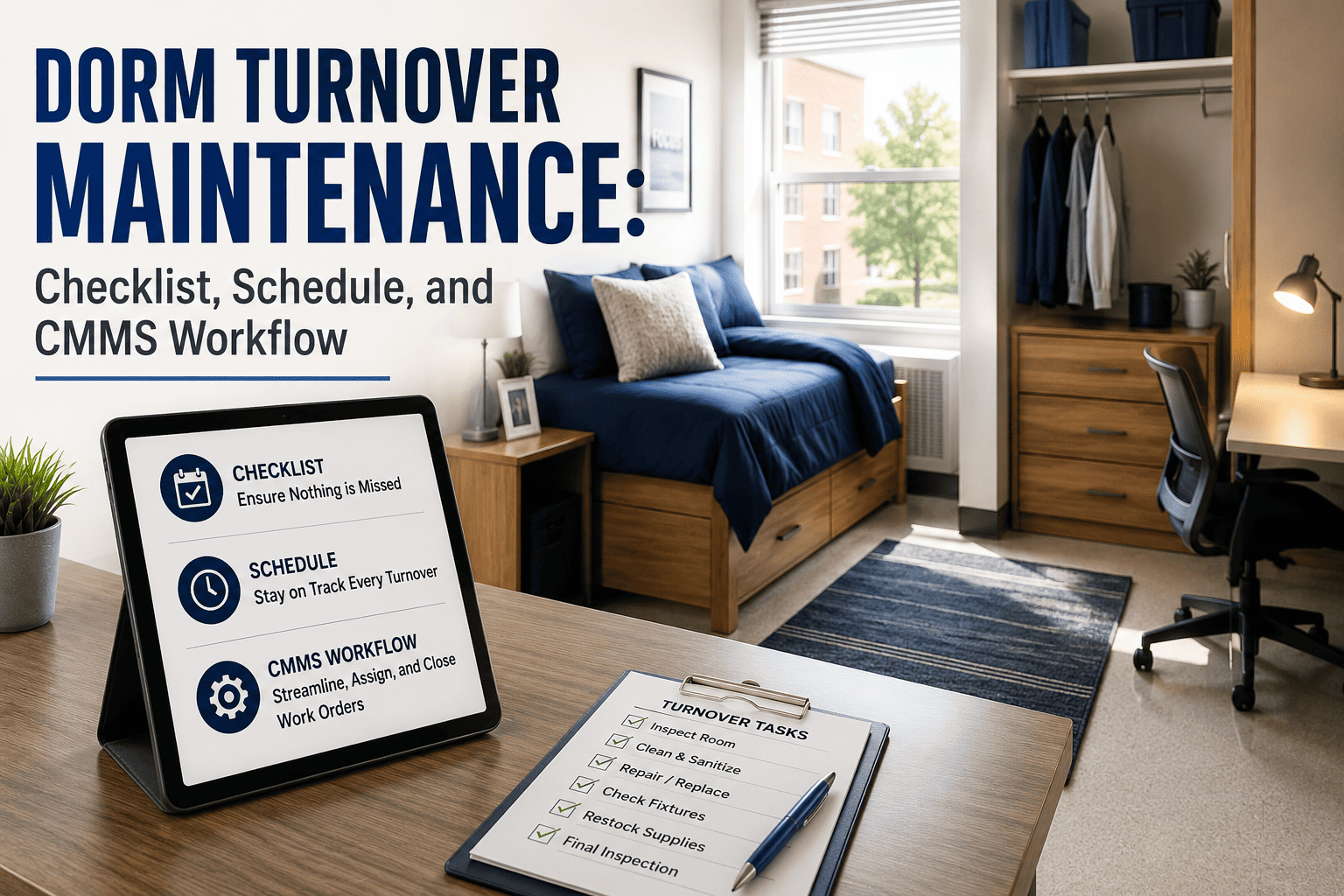
Dorm turnover is the most compressed maintenance operation on any university calendar — hundreds of rooms must be inspected, cleaned, repaired, and re-occupied inside an 8–12 week window between move-out and move-in. A single skipped room generates a midnight phone call from a parent, a refund request, and a reputation hit that no amount of social media management can fix. The work is unglamorous: scrubbing carpets, replacing PTAC filters, photographing wall damage, calibrating door locks, and chasing down 30 different deficiency reports per building. Districts and universities that treat turnover as a documented, repeatable workflow consistently reset 100% of rooms before move-in day. Those that rely on memory and clipboards send students into rooms with broken blinds, cold showers, and dripping taps on day one. Run your turnover from OxMaint or book a demo to see how universities turn over 800-bed buildings in 6 weeks without missing a room.
AI Predictive Maintenance
Dorm Turnover Maintenance: Checklist, Schedule, and CMMS Workflow
Reset every room, every building, every summer — without a single missed deficiency. A structured turnover program closes the gap between move-out chaos and move-in confidence.
847
avg requests per hall per year
61%
are repeat issues
8wk
typical turnover window
100%
room sign-off goal
What This Guide Covers
Before You Begin
This checklist supports housing operations and facilities staff in documenting and assigning turnover work — it does not replace licensed trades for electrical, plumbing, gas, or fire safety work. Items marked Trade require a licensed contractor. Items marked Photo require a date-stamped photo attached to the CMMS work order before the room can be signed off.
01
No Baseline Condition Record
Without a dated move-in photo from the prior tenancy, every damage claim becomes a judgement call. Disputes drag, charges get reversed, and the same room gets photographed for the third year running while invoices pile up.
02
Paper Checklists in Binders
Inspectors using paper spend 30–40% of their time on post-walk data entry. A 200-room building with 4 inspectors loses an entire week to paperwork alone — time that should have gone into actually fixing the deficiencies they found.
03
Late Parts and Vendor Booking
PTAC compressors, mattresses, and lock cores have lead times that exceed the turnover window. Teams that wait until rooms are vacated to order parts end up running emergency contractor calls at peak-season rates the week before move-in.
04
No Building-Level Sign-Off Gate
When rooms get released back to housing one by one without a documented sign-off, deficient rooms slip into the allocation pool. The student finds the broken blind on move-in day, not the inspector during turnover.
Within 24 Hours of VacateDamage Capture and Key Return
Weeks 2–5Deep Clean and Cosmetic Reset
Weeks 2–5Door, Lock, and Access
Run Every Room as an Asset in OxMaint
Each room is its own asset with PM history, prior-tenancy photos, deficiency log, and turnover sign-off record. OxMaint auto-generates the full turnover checklist per room and tracks completion building by building — so the housing director knows exactly which rooms are ready and which are still waiting on parts.
Every TurnoverHVAC, Plumbing, Electrical
48 Hours Before Move-InFinal Room and Building Sign-Off
1
Week 1 — Plan Lock
Building-by-building turnover plan approved with vacate dates, repair windows, contractor bookings, and parts orders confirmed. Any room flagged for major works (full re-paint, PTAC swap, structural) is identified before move-out.
2
Weeks 2–6 — Daily Stand-Up
15-minute daily review of rooms in each status: inspected, in repair, awaiting parts, ready. Any room blocked for more than 48 hours escalates to the housing operations lead with a target unblock date.
3
Week 7 — Quality Audit
Independent sample audit on 10% of signed-off rooms by a senior facilities member. Any failed audit room returns to repair queue and the inspector's full batch is re-audited.
4
Week 8 — Allocation Release
Only rooms with documented sign-off, closed work orders, and current move-in photo released to housing for allocation. Any room without a complete record stays out of the pool until cleared.
Room Asset Setup
Every room is its own asset in OxMaint with building, floor, room type, furniture inventory, last tenancy dates, and prior-condition photos. The full turnover checklist auto-generates against each room when the vacate date arrives.
Mobile Inspection
Inspectors complete the room walkthrough on a phone — checklist items, deficiency photos, and work order creation all happen during the walk. Zero back-office data entry; a 200-room building with 4 inspectors is fully captured in one day.
Status Dashboard
The housing director sees every room across every building in one of six states: vacated, inspected, in repair, awaiting parts, ready for sign-off, or signed off. Building-level completion percentage updates in real time.
Parts and Vendor
Long-lead items (PTACs, mattresses, lock cores) are ordered against the turnover plan, not after the deficiency is found. Contractor work orders are tracked through completion with documented response times against contract SLAs.
Photo and Damage Record
Every move-out, repair, and move-in photo is stored against the room asset record indefinitely. A damage charge dispute three years later is resolved in seconds with a dated photo pulled from the asset history.
Sign-Off Gate
No room is released for allocation until every checklist item is complete and every work order is closed. The system blocks premature release — housing cannot allocate a room that the facilities team has not signed off.
A 200–300 bed hall typically needs 6–8 weeks for inspection, repair, deep clean, and final sign-off if the program is structured. Larger 600–800 bed buildings need 8–12 weeks. The variable is parts lead time, not labor — schedule contractors and long-lead parts in OxMaint before the first room is vacated.
The defence is the dated move-in photo from the start of that tenancy paired with the dated move-out photo from the same room. Without both, charges get reversed in appeal. Store every move-in and move-out photo against the room asset record so a three-year-old dispute resolves in seconds.
PTAC and fan coil servicing. Units that ran continuously all year accumulate coil fouling, filter loading, and drain pan biofilm. A student arriving to a room at 82°F on move-in day is the single biggest turnover complaint. Replace filters and clean coils on every unit during the turnover window — no exceptions.
Yes. Every room across every hall is an asset with its own turnover checklist, work orders, photos, and sign-off status. The director sees building-level and district-level completion in real time and drills into any single room in two taps. Book a demo to see multi-building turnover dashboards live.
Retain inspection records, photos, and work orders for at least 2 years after the tenancy ends to cover damage disputes. For records linked to health and safety (fire safety, mould, structural), retain for 7 years or the life of the building. OxMaint stores all records against the room asset indefinitely, exportable in minutes.
OxMaint CMMS — Student Housing
Turn Every Room Over On Time, Every Summer
Per-room checklists, photo-backed damage records, contractor SLA tracking, and a single building-level sign-off dashboard — built for housing operations teams running multi-thousand-bed turnover windows.
Auto-generated turnover checklists per room and per building
Dated photo archive against every room asset, retained indefinitely
Contractor work order dispatch with response-time SLA tracking
Building-level completion dashboard with allocation-release gate