A university library running on reactive maintenance alone — fixing HVAC only after complaints, cleaning air handlers once a year, and logging work orders on paper — spends 40% more per square foot than peer institutions that run structured preventive programs. Library facilities teams managing stack areas, reading rooms, computer labs, rare book vaults, and mechanical rooms need a documented maintenance schedule that covers HVAC filtration, plumbing, electrical, pest control, and structural inspections on defined cycles — with every task assigned, timestamped, and signed off before the next cycle opens. Insurance carriers and accreditation reviewers treat unlogged maintenance as deferred liability, not oversight. This page gives your campus library facilities and environmental health team a complete maintenance checklist, scheduling framework, and CMMS workflow built for audit-ready documentation. Use OxMaint to digitize every round and generate compliance reports on demand.
Library Facilities · Campus Maintenance · CMMS
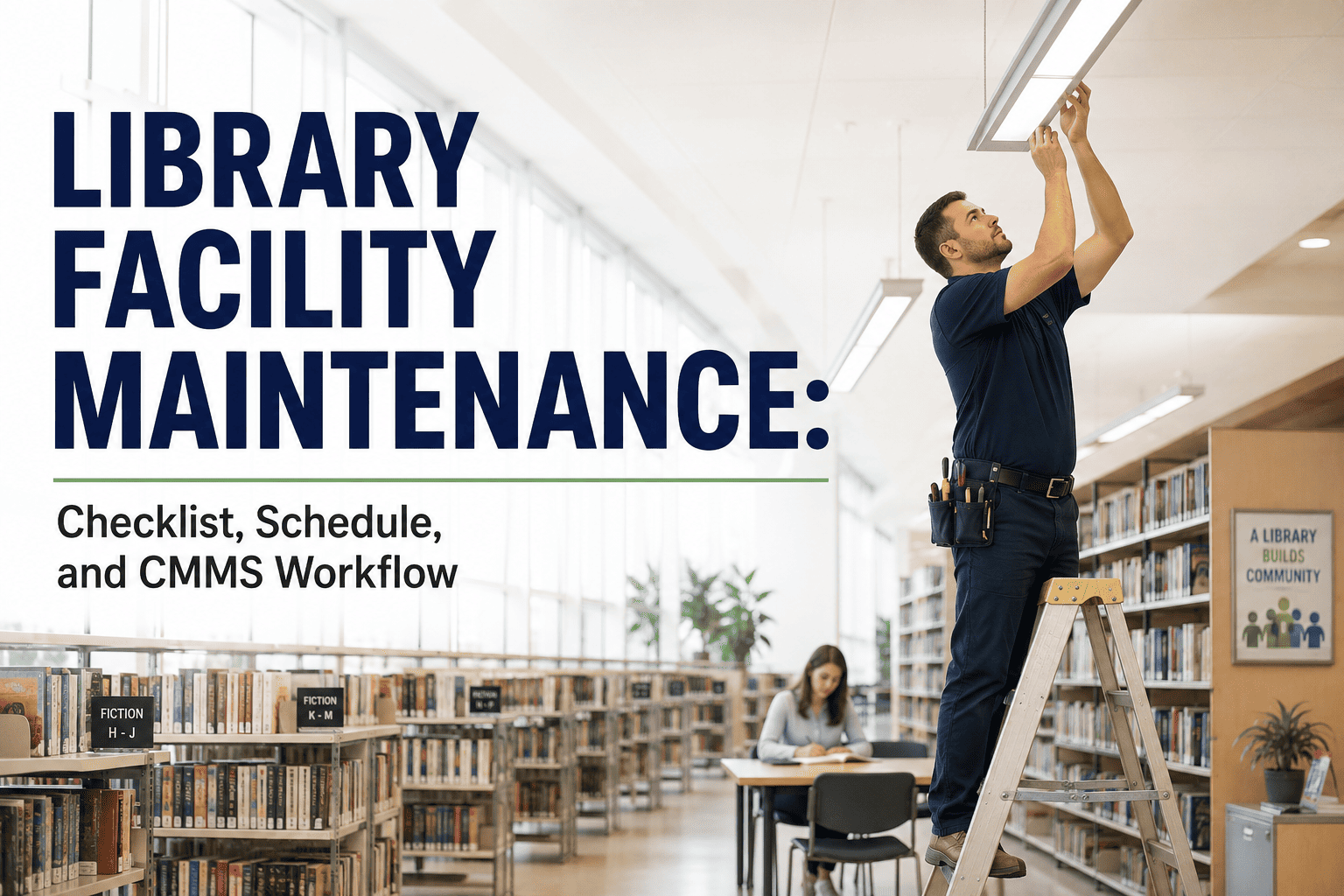
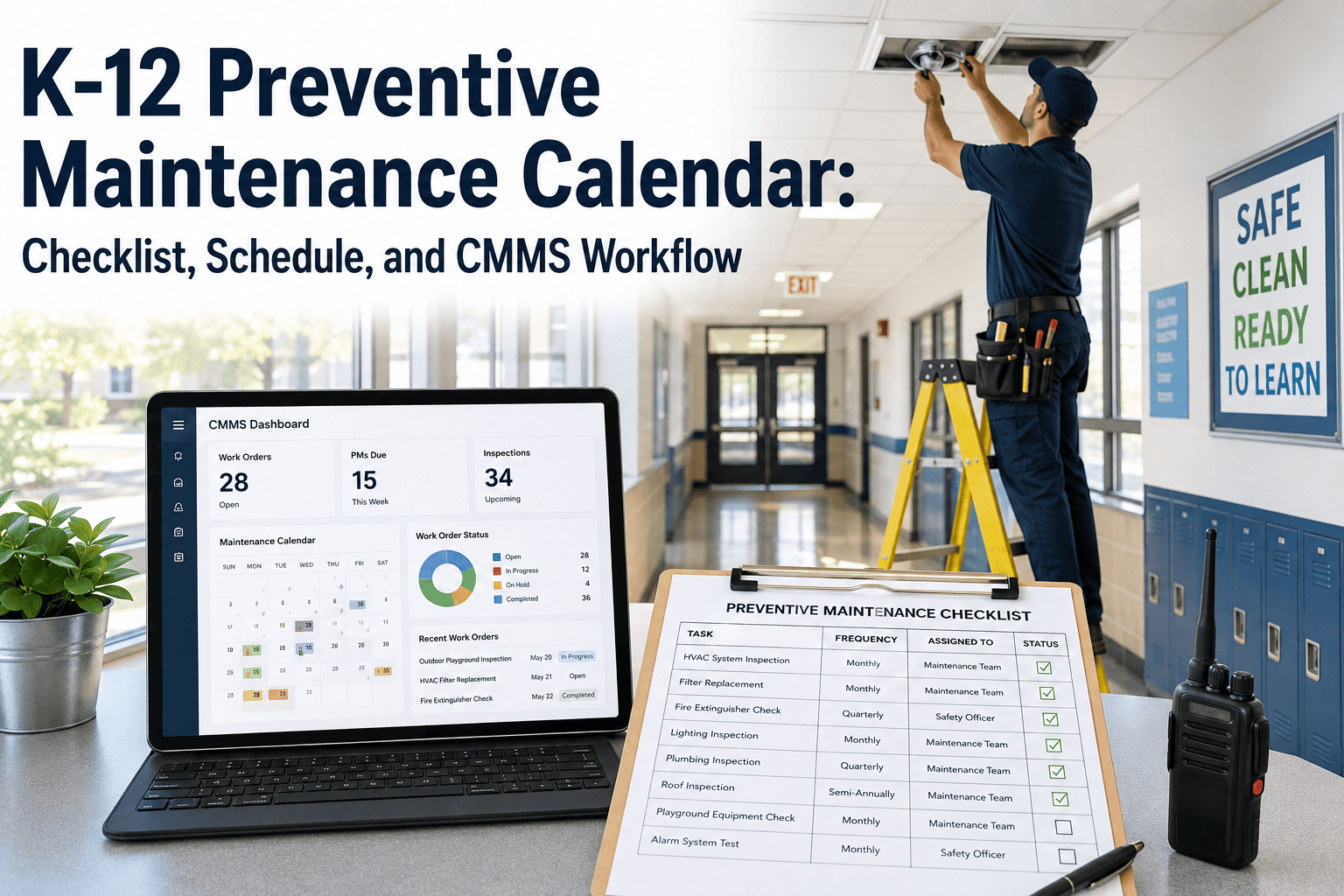
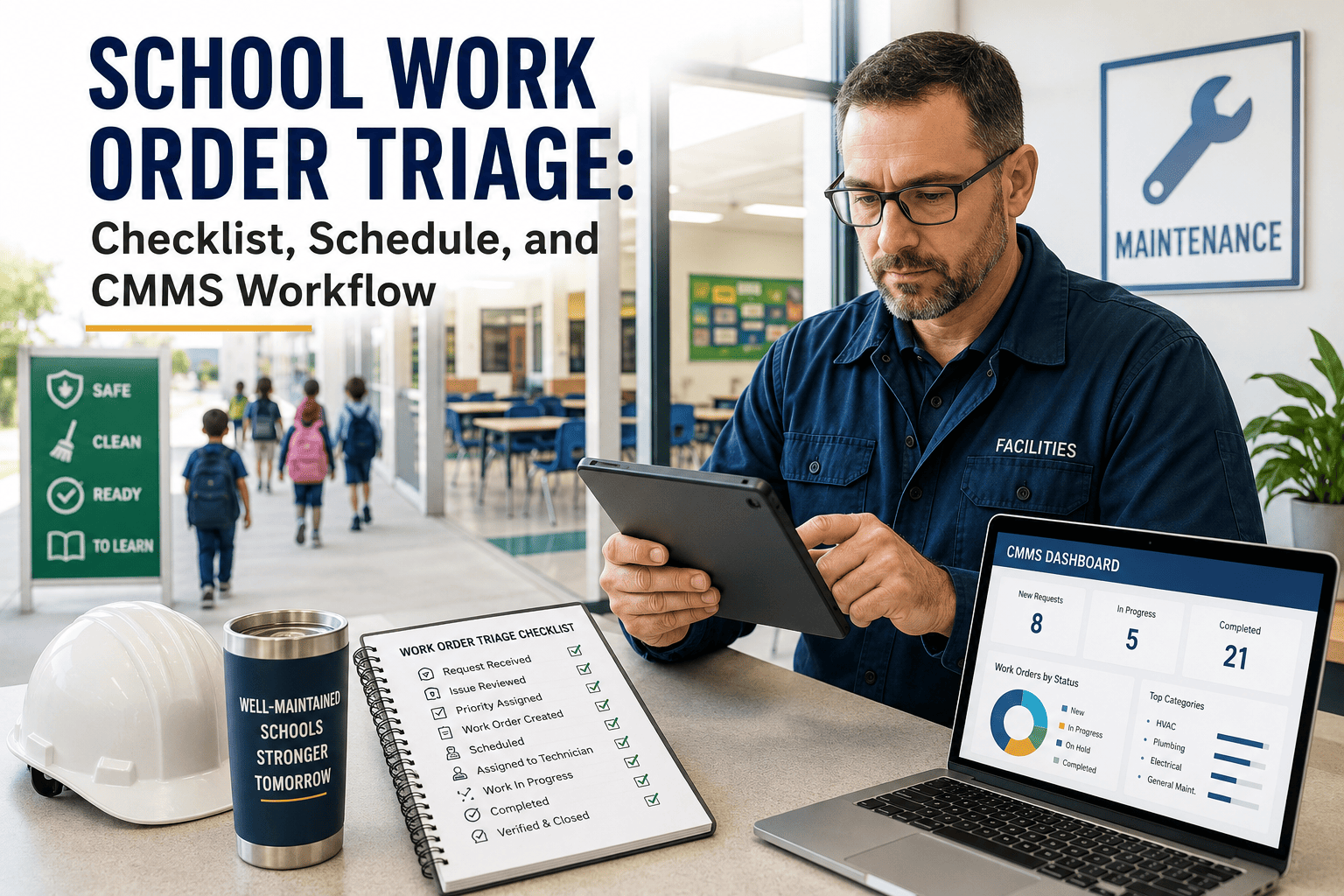
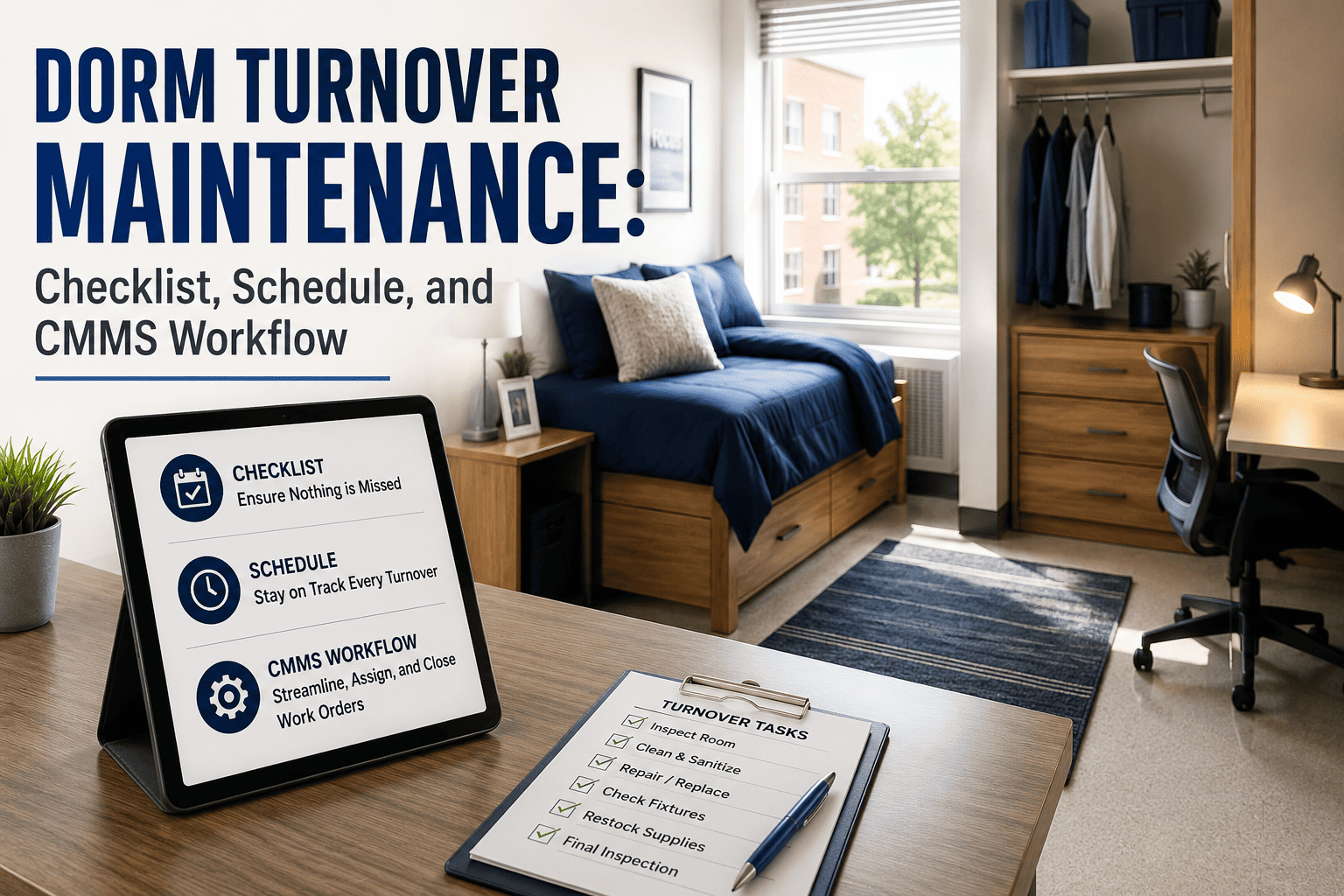
Library Facility Maintenance: Checklist, Schedule & CMMS Workflow
A complete preventive maintenance framework for university and school library buildings — covering HVAC, plumbing, electrical, pest control, and structural systems with CMMS-tracked scheduling built for facilities directors and AHJ review.
6
Maintenance Areas
40+
Checklist Items
4
Schedule Frequencies
CMMS
Workflow Ready
Why It Matters
What Unplanned Library Maintenance Actually Costs
$
40% Higher Spend
Reactive-only library facilities spend significantly more per square foot than those running structured PM programs — every emergency call-out costs 3–5x a scheduled visit.
!
Collection Damage Risk
A single HVAC failure in a rare book vault or archive room can cause irreversible humidity damage to thousands of volumes — a loss no insurance policy fully recovers.
~
Pest Infestations
Skipped quarterly pest inspections allow silverfish, book lice, and rodent populations to establish in stack areas — remediation costs exceed 10x the cost of quarterly prevention.
#
Accreditation Gaps
Regional accreditation bodies and state fire marshals reviewing library buildings expect documented maintenance logs — unlogged work is treated as work not done.
Schedule Key
WWeekly
MMonthly
QQuarterly
AAnnual
Library collections — particularly rare books, manuscripts, microfilm, and audiovisual materials — require stable temperature (65–70°F) and relative humidity (45–55%) year-round. HVAC failures and filter neglect are the leading cause of collection damage in campus library buildings. A documented filter-change and coil-inspection schedule is the single highest-return maintenance investment a library facilities team can make.
HVAC air handling unit filters inspected and replaced — MERV-13 or higher filters in stack and archive areas checked monthly; a clogged filter reduces airflow and causes humidity spikes that can begin mold growth on paper within 48 hours of exposure above 65% RH
MFacilities Technician · Filter log with unit ID and MERV rating
Temperature and humidity data logger readings reviewed for stack areas, reading rooms, and rare book vaults — readings outside the 65–70°F / 45–55% RH envelope logged as deficiencies requiring HVAC investigation within 24 hours
WFacilities Technician · Climate log with zone ID and timestamp
Cooling coils and drain pans inspected for biological growth — quarterly coil inspection with pan flush and biocide treatment where standing water is present; a fouled drain pan is the most common source of Legionella risk in library HVAC systems
QLicensed HVAC Contractor · Coil inspection record
Ductwork visual inspection in accessible zones — supply and return ducts in mechanical rooms and above suspended ceilings checked annually for debris accumulation, visible mold, and duct seal failures; any mold finding triggers a campus EH&S notification and industrial hygienist assessment
AFacilities Director · Duct inspection log with photo documentation
A single roof or pipe leak reaching an open stack area can destroy hundreds of volumes in minutes and cause structural damage that takes months to remediate. Library buildings with older plumbing infrastructure — common in research universities built before 1980 — face elevated risk from galvanic corrosion, failing pipe joints, and aging water heater tanks. Quarterly plumbing inspections with documented pressure readings are non-negotiable for facilities teams managing collection-bearing spaces.
Domestic water supply lines and shut-off valves inspected in mechanical rooms and janitor closets — valves confirmed in correct open/closed position, no visible corrosion or mineral deposits on fittings; any seized shut-off valve must be replaced before the next inspection cycle
QPlumbing Technician · Valve position and condition log
Restroom plumbing fixtures checked for leaks at supply lines, flush valves, and drain connections — running toilets and dripping faucets logged as work orders within 24 hours; a running toilet in a multi-floor library building can waste 200 gallons per day and inflate utility costs significantly
MFacilities Staff · Fixture condition log
Water heater tank condition, pressure relief valve, and anode rod inspected — PRV tested by lifting handle and confirming discharge; anode rod inspected and replaced if more than 50% consumed; a failed PRV on an aging water heater tank is a primary cause of flooding events in library utility rooms
ALicensed Plumber · Water heater inspection record
Roof drains and overflow scuppers cleared of debris — library buildings with flat or low-slope roofs require monthly drain inspection during fall and spring leaf seasons; a blocked roof drain during a 2-inch rainfall event can cause catastrophic ceiling collapse into stack areas below
MFacilities Technician · Roof drain inspection log
Stop Losing Time to Paper Logs
Facilities directors at peer institutions use OxMaint to assign, track, and close every library maintenance task from a mobile device — with automatic escalation when tasks are overdue and one-click reports for accreditation reviewers.
Library buildings with extended operating hours — many academic libraries operate 18–24 hours during examination periods — place sustained demand on electrical panels, emergency lighting, and exit sign systems. A failed emergency light battery or a tripped GFCI outlet near a computer workstation area is both a life safety and an operational issue that a structured electrical maintenance schedule catches before it becomes an incident report.
Emergency exit lighting units tested monthly — each unit activated by test button and confirmed to illuminate for minimum 90-second duration per NFPA 101 requirements; any unit failing the 90-second test is flagged for battery replacement within 72 hours
MFacilities Technician · Emergency light test log with unit location
GFCI outlets in restrooms, computer labs, and any wet-area locations tested and confirmed functioning — GFCI test-reset cycle completed and logged; a GFCI that trips but does not reset indicates a failed device requiring immediate replacement
QElectrician · GFCI test log with outlet location and circuit ID
Electrical panel visual inspection — all breakers in correct on/off position, no tripped breakers left unaddressed, panel cover secured, no evidence of heat damage or burning odor around panel enclosure; any burning smell near an electrical panel is an immediate work order requiring same-day licensed electrician response
QLicensed Electrician · Panel inspection log
Interior lighting lamp and ballast condition inspected — burned-out lamps in stack aisles, reading areas, and stairwells logged and replaced within 5 business days; libraries with fluorescent T12 fixtures require annual assessment for conversion to LED given lamp availability constraints
MFacilities Staff · Lamp replacement log with location
Library collections are uniquely attractive to paper-consuming insects and rodents — silverfish, book lice, cockroaches, and mice treat stack areas as both food source and habitat. An integrated pest management program with quarterly inspections and documented trap monitoring is the minimum standard expected by collection managers, accreditors, and campus risk officers. Indoor air quality monitoring in public-facing reading rooms is increasingly required by state occupational health standards for buildings with high student occupancy hours.
Pest monitoring stations in stack areas, break rooms, and loading dock inspected and recorded — glue board trap activity logged by station ID; any station showing rodent activity requires escalation to licensed pest control contractor within 24 hours and a collection manager notification
QIPM Coordinator · Trap activity log with station map
Building envelope entry point inspection — door sweeps, window seals, pipe penetrations, and loading dock gaps inspected for pest entry points; a 1/4-inch gap around a utility pipe penetration is sufficient for mouse entry and must be sealed with steel wool and expanding foam within 5 days of identification
QFacilities Technician · Envelope inspection log with photo
CO2 and VOC air quality readings taken in high-occupancy reading rooms and computer labs during peak occupancy hours — CO2 above 1100 ppm indicates inadequate fresh air supply and requires HVAC investigation; VOC readings above baseline in buildings with recent renovations require material safety data review
MEH&S Staff · IAQ log with room ID and occupancy count at time of reading
Library buildings, many of which are architectural landmarks on their campuses, face deferred maintenance backlogs that concentrate in the building envelope — roof membrane failures, failed caulking at window frames, and cracked masonry pointing that allows water infiltration at rates too slow to trigger immediate work orders but fast enough to damage collections, steel shelving, and concrete subfloors over a single winter season.
Roof membrane and flashing inspected after major weather events — ponding water locations mapped, blistering or seam separations photographed and logged; any active leak must be reported to collections staff within 1 hour and collection materials moved before emergency repair is scheduled
QRoofing Contractor · Roof inspection report with photos
Window and curtain wall caulking and weatherstripping inspected — failed sealant at window perimeters photographed and logged for seasonal recaulking; a failed 6-inch section of window caulking on a west-facing elevation can admit a gallon of water per hour during wind-driven rain
AFacilities Technician · Envelope sealant log with elevation and location
Floor finish condition in high-traffic entry areas, stairwells, and computer lab zones inspected — worn finish in stairwells is a slip-and-fall liability; refinishing schedule driven by wear inspection rather than fixed calendar cycle reduces material costs while maintaining safety compliance
QFacilities Staff · Floor condition log with photos
Library buildings classified as assembly or educational occupancies require documented fire alarm, suppression, and access control maintenance under NFPA 72, NFPA 25, and applicable state fire codes. A fire alarm pull station that has been painted over, a smoke detector with a dead supervision battery, or an access-controlled door that fails to release on alarm are all conditions that a structured quarterly inspection program catches before they appear on a fire marshal deficiency report.
Smoke and heat detector visual inspection — detector faces checked for dust accumulation, paint overspray, or physical damage; detectors in stack areas, server rooms, and mechanical spaces inspected for obstruction; any detector showing a supervisory trouble signal at the panel must be investigated before the log is closed
QFire Protection Technician · Detector condition log with device address
Fire extinguisher monthly inspection — each extinguisher checked for correct pressure gauge reading, intact tamper seal, unobstructed access, and current annual inspection tag; an extinguisher with a broken seal or a gauge in the red zone is an impairment requiring immediate replacement from building spare inventory
MFacilities Staff · Extinguisher inspection log with location and serial number
Card access readers and electronic door hardware tested — door release on fire alarm confirmed functional; access-controlled doors to server rooms, rare book vaults, and staff areas tested for proper latching and release; a door that fails to latch after entry is a security event requiring same-day hardware service
QSecurity Systems Technician · Door hardware test log
CMMS Workflow
How OxMaint Turns This Checklist Into a Running Program
1
Build Your Asset Register
Enter every maintainable asset — AHUs, water heaters, electrical panels, fire extinguishers, access doors — with location, install date, and manufacturer data. OxMaint links every work order to a specific asset, building a maintenance history that survives staff turnover.
2
Set Recurring PM Schedules
Assign weekly, monthly, quarterly, and annual tasks to specific technicians with required completion windows. OxMaint pushes mobile notifications before each task is due — no more relying on paper calendars or individual memory to keep the program running.
3
Complete Inspections on Mobile
Technicians open assigned tasks on their phone, check off each item, add photos for deficiencies, and submit with a timestamped digital signature. Paper logs and after-the-fact data entry are eliminated from day one.
4
Auto-Escalate Deficiencies
When a technician flags a critical finding — a seized shut-off valve, a failed GFCI, a pest station with rodent activity — OxMaint automatically generates a corrective work order and notifies the facilities director and relevant department head.
5
Generate Audit Reports
Pull a complete maintenance history for any asset, building zone, or inspection type in one click — formatted for accreditation review, insurance audit, or AHJ inspection. Every record is timestamped, technician-signed, and permanently stored.
6
Track KPIs on Your Dashboard
Monitor PM completion rate, mean time to repair, open deficiency count, and overdue task volume from a live dashboard. Data-driven facilities directors use OxMaint KPIs to justify budget requests and demonstrate program effectiveness to administration.
Compliance KPIs
Five Metrics That Prove Your Library Maintenance Program Is Working
| Metric |
How to Measure |
Target |
Frequency |
| PM Completion Rate |
Tasks completed on schedule / Total scheduled tasks |
95%+ |
Monthly |
| Climate Compliance Rate |
Hours within 65–70°F / 45–55% RH envelope / Total monitored hours |
98%+ |
Weekly |
| Deficiency Close Rate |
Deficiencies closed within SLA / Total deficiencies opened |
90%+ within SLA |
Monthly |
| Emergency Work Order Ratio |
Emergency WOs / Total WOs |
Below 15% |
Monthly |
| Inspection Record Completeness |
Signed inspection logs / Required inspections |
100% |
Quarterly |
FAQs
Frequently Asked Questions
What maintenance tasks should a university library facility prioritize first?
Climate control and HVAC maintenance should always be the first priority in any library building. Temperature and humidity instability are the leading causes of irreversible collection damage, and a single HVAC failure in an archive space can destroy more asset value than a year of deferred maintenance across the rest of the building. After climate systems, fire safety and water leak prevention are the next tier.
OxMaint helps you prioritize tasks by risk level automatically.
How often should a library building's HVAC filters be replaced?
MERV-13 filters in stack and archive zones should be inspected monthly and replaced when pressure drop exceeds the manufacturer's specification — typically every 60–90 days in high-occupancy library buildings. Standard MERV-8 filters in public reading rooms typically require replacement every 90 days. Filter change intervals should be shortened during renovation periods when dust loads are elevated.
Book a demo to see how OxMaint automates filter change scheduling.
Does a CMMS actually reduce library maintenance costs, or does it just add complexity?
Peer-reviewed facilities research consistently shows that structured PM programs tracked in a CMMS reduce emergency repair spend by 25–40% within the first two years of implementation. The reduction comes from catching failures before they escalate — a worn belt replaced on schedule costs $40; the same belt failing and taking out an AHU costs $4,000. OxMaint pays for itself in the first prevented emergency callout for most library facilities teams.
Who is responsible for library facility maintenance documentation in a university setting?
Documentation responsibility is typically shared between the campus facilities management department (for HVAC, plumbing, electrical, and structural systems), the library's own facilities coordinator (for collection environment monitoring and pest control), and EH&S (for indoor air quality and life safety systems). A single CMMS platform that all three teams log into eliminates the documentation gaps that appear when each team maintains separate records.
What records do accreditation reviewers expect to see for library facility maintenance?
Regional accreditation bodies and state building officials typically request three to five years of maintenance records covering fire alarm testing, HVAC filter logs, emergency lighting tests, and pest control reports. Records must identify the inspector, the date, the asset or zone inspected, the finding, and any corrective action taken.
OxMaint generates audit-ready reports for all of these record types in one click.
Built for Campus Library Facilities Teams
Every Filter Changed. Every Valve Checked. Every Record Ready for Review.
OxMaint turns your library maintenance checklist into a live, mobile-first program — with scheduled tasks, automatic deficiency escalation, and one-click compliance reports that satisfy accreditors, insurers, and fire marshals without pulling your team off the floor.