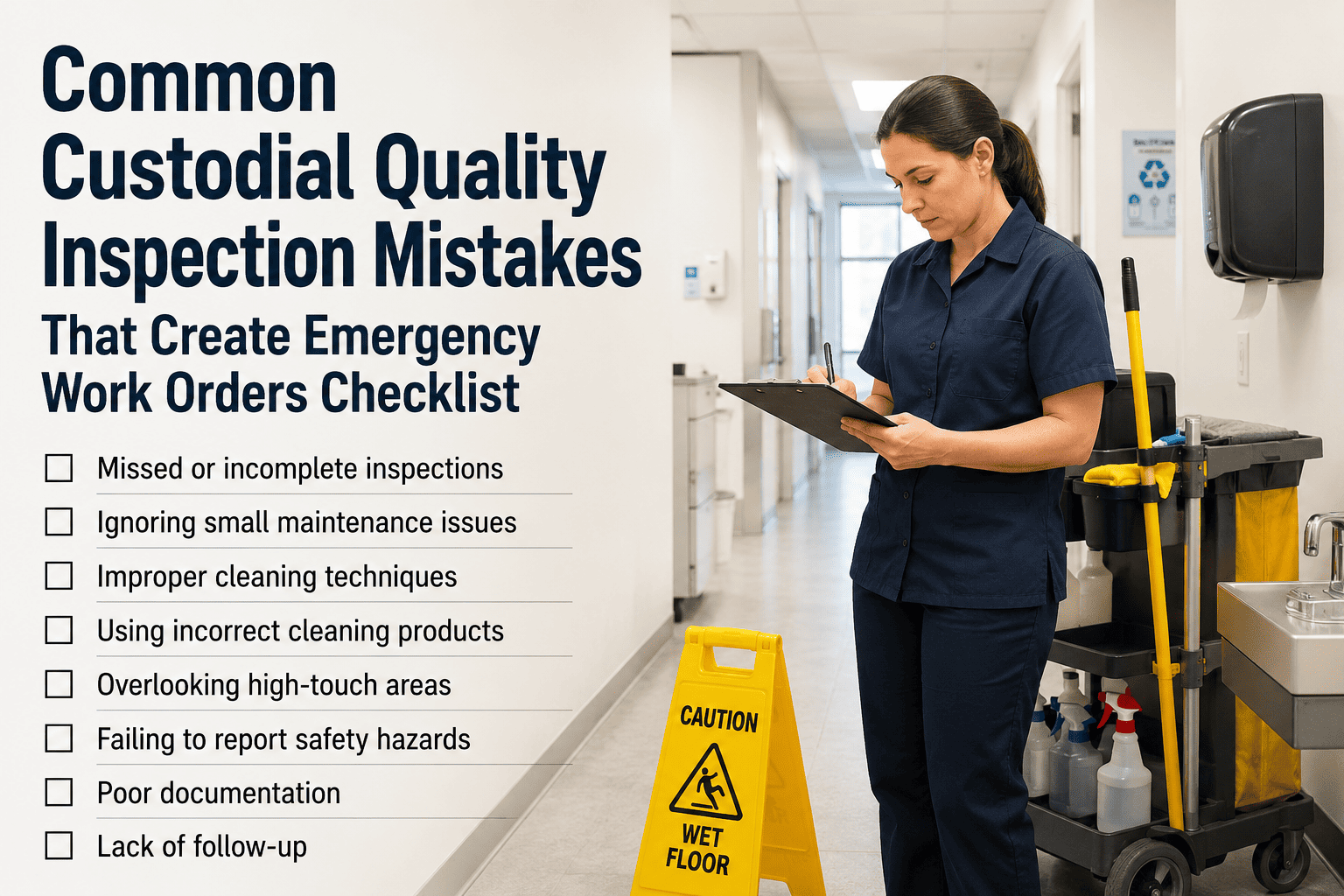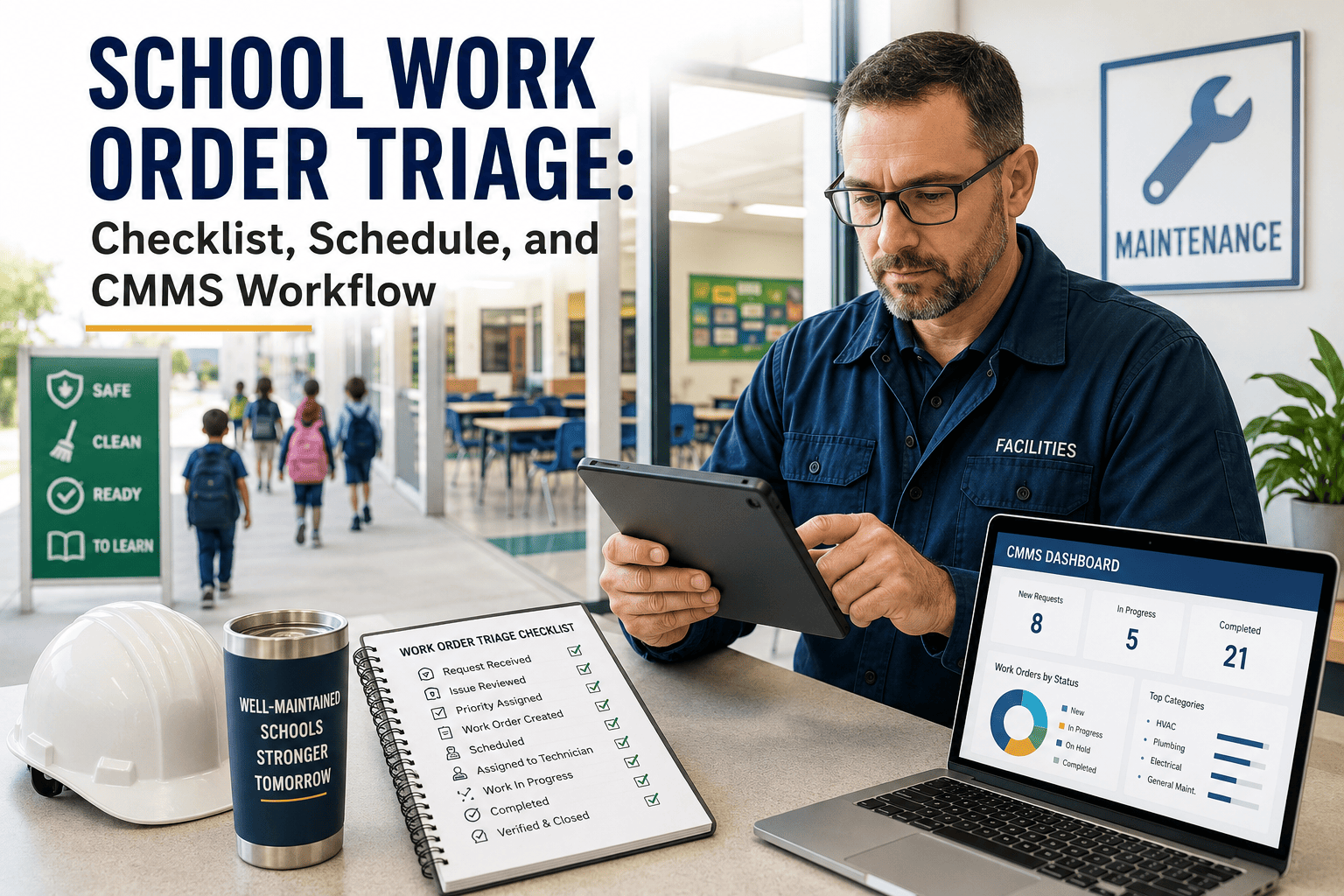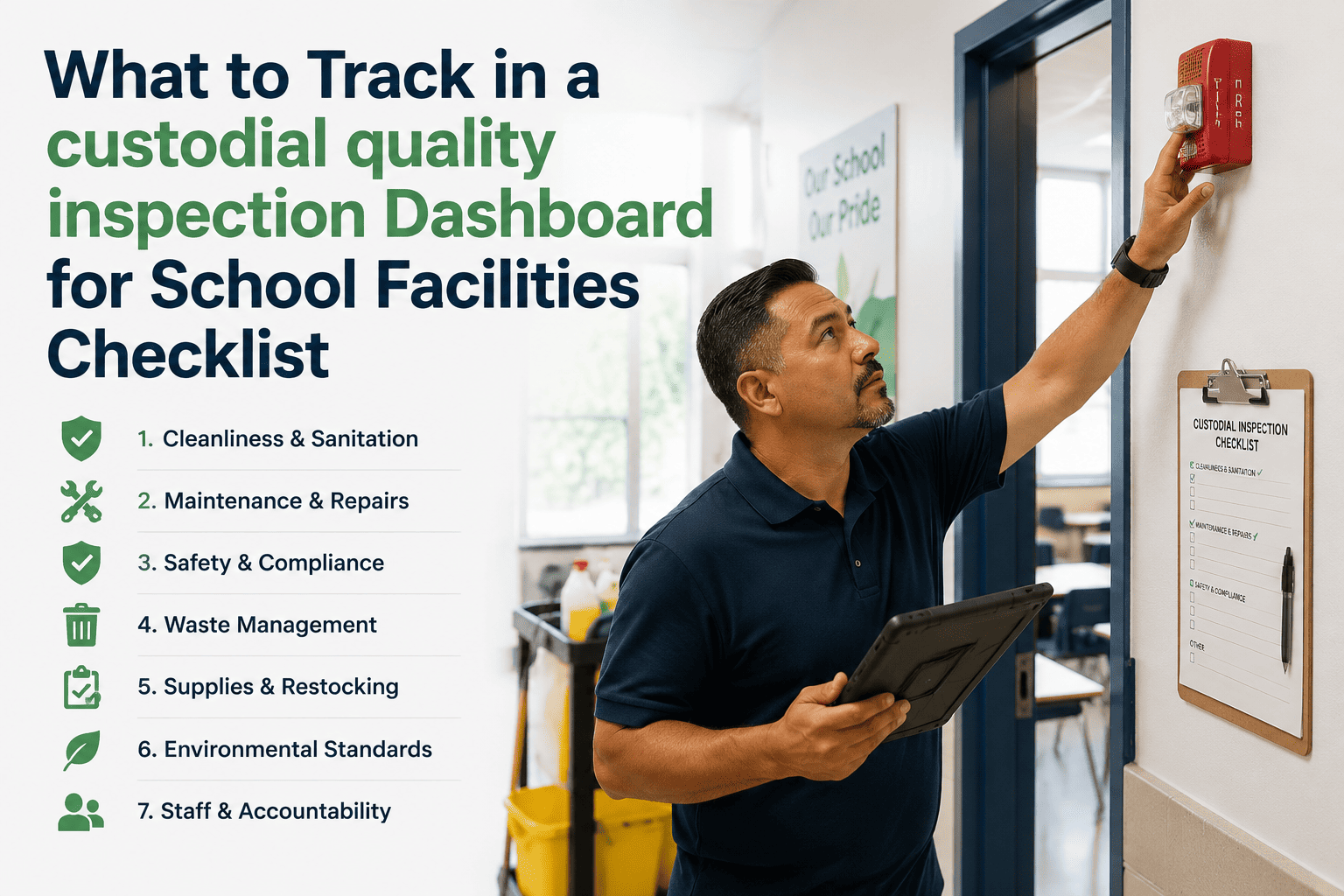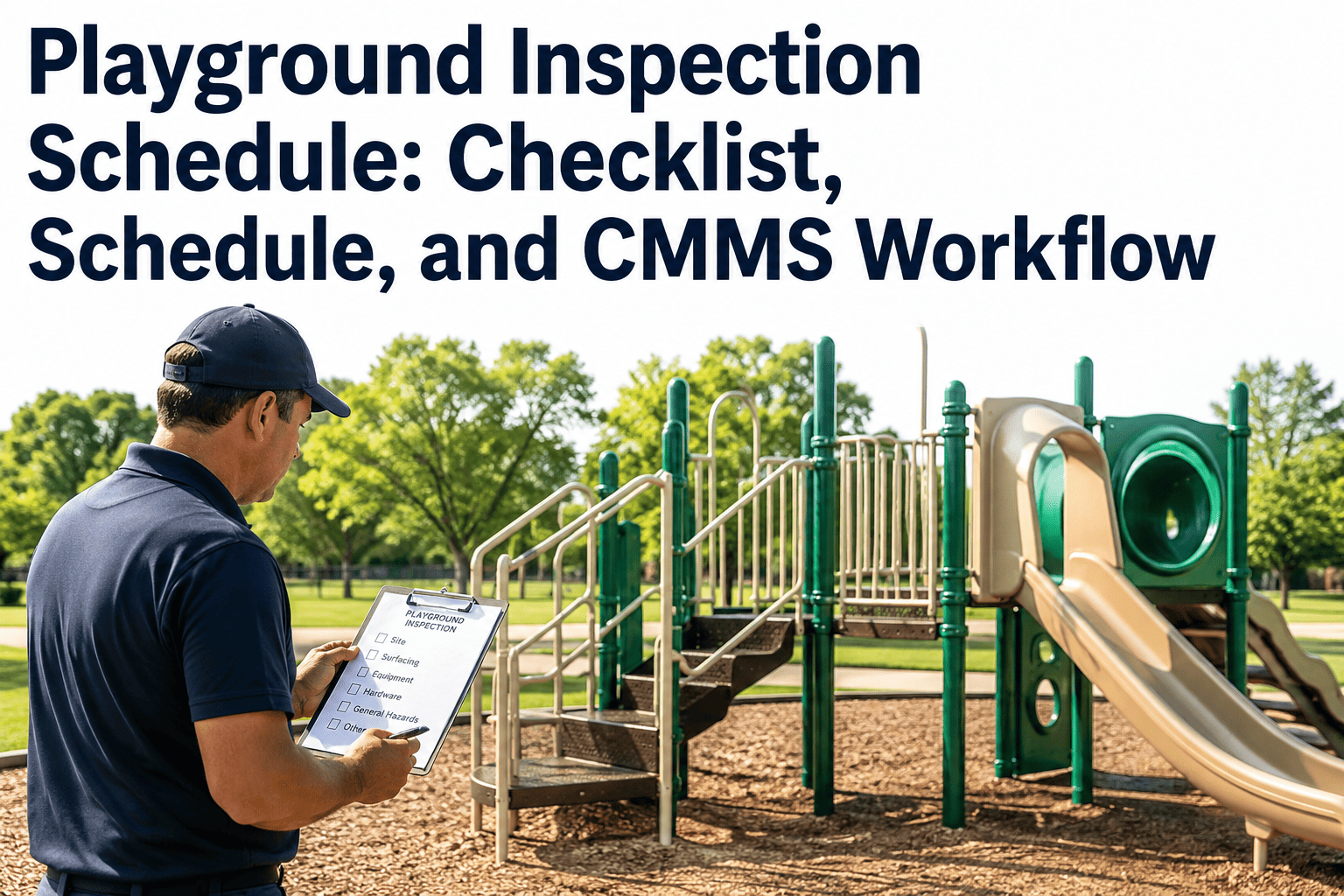
A custodial quality inspection only works when three things line up: a checklist that defines what "clean" means, a schedule that says how often each space is checked, and a CMMS workflow that turns every failure into a fix you can prove happened. Most teams have the checklist but run it on paper with no schedule discipline and no closed loop — so failures repeat and inspections become a formality. This page brings all three together: the line-item checklist, a frequency schedule by space type, and the inspect-to-verify workflow, all run inside OxMaint.
1. The Core Inspection Checklist
These are the scored line items every general-space inspection should cover. Each is observable and measurable so two inspectors reach the same result, which is what makes trended scores trustworthy.
2. Inspection Schedule by Space Type
Frequency should follow risk and traffic, not a single blanket rule. This schedule shows a typical higher-ed cadence — inspect high-risk space often, sample lower-risk space less. Scroll the table sideways on mobile to see every column.
| Space Type | Inspection Frequency | Target Level | Priority |
|---|---|---|---|
| Restrooms | Daily / per service | Level 1–2 | Critical |
| Dining & food service | Daily | Level 1–2 | Critical |
| Entrances & lobbies | Daily | Level 1–2 | High |
| Classrooms & labs | 2–3x per week | Level 2 | High |
| Corridors & stairs | 2x per week | Level 2 | Medium |
| Residence common areas | Daily | Level 2 | High |
| Offices (low traffic) | Weekly sample | Level 2 | Low |
| Storage & back-of-house | Monthly | Level 3 | Low |
3. Daily Schedule Checklist
Daily inspections target the spaces where one bad day generates complaints. Keep them fast and mobile so coverage holds even on short-staffed shifts.
4. Weekly Schedule Checklist
Weekly inspections rotate through medium-risk and sampled space. Random area sampling keeps coverage honest without inspecting every room every week.
5. Monthly & Periodic Checklist
Monthly inspections cover back-of-house and deep-clean verification, plus the program review that keeps frequency aligned to where quality is actually slipping.
6. The CMMS Workflow That Closes the Loop
The checklist and schedule produce findings; the workflow makes them matter. These are the steps that take a failed line item from detection to verified correction inside the CMMS.