Prospective students and their parents walk every inch of your campus before they sign enrollment papers. What they see — and what they smell, hear, and experience — shapes their decision as powerfully as your rankings and scholarship offers. Research now confirms what admissions officers have suspected for years: facility condition scores correlate directly with enrollment yield, and the gap between a well-maintained campus and a deteriorating one is costing institutions millions in lost tuition revenue annually. The maintenance decisions made in your facilities office are, in a very real sense, enrollment decisions. Start a free trial with Oxmaint and begin closing the facility condition gap, or book a demo to see how CMMS directly supports your enrollment outcomes.
How Campus Facility Condition Directly Impacts Enrollment and Retention
Students walk past shuttered buildings on campus tours and choose competitors. The data is clear: institutions with facility condition scores above 85 see 12% higher enrollment yield and 9% better first-year retention. Oxmaint closes the gap between the campus you manage and the campus that wins students.
The Proven Facility-Enrollment Connection
The physical campus has always mattered to students. But the intensity of its influence has grown sharply as tuition costs have risen and students increasingly view enrollment as a consumer decision. Campus visit research from the Education Advisory Board, NACUBO surveys, and independent enrollment studies consistently identify physical campus condition as a top-five decision factor — alongside academics, financial aid, location, and career outcomes. What has changed is that institutions now have the data to quantify the relationship precisely. A campus whose facilities score moves from 70 to 85 on a standard condition index can expect measurable yield improvement within two to three admissions cycles. That yield improvement translates directly to tuition revenue, and the revenue gap between high-scoring and low-scoring campuses typically dwarfs the cost of the maintenance programs required to close it. Start a free trial with Oxmaint to begin building the facility condition data your leadership needs, or book a demo to see Oxmaint's facility condition scoring in action.
Campus visits occur within the final decision window. A student who sees peeling paint, broken furniture, dark corridors, or visibly failing HVAC equipment on a tour day compresses years of deferred maintenance into a single negative impression — and chooses a competitor.
Niche, Reddit, and Google reviews are now primary research tools for prospective students. Facility complaints — broken elevators, cold dorms, mold, malfunctioning labs — appear in reviews and persist for years, shaping the perception of thousands of students who never visit in person.
Students who enroll and then experience a campus that does not match the promise of the tour are prime candidates for transfer. Facility condition affects daily quality of life — room temperature, lab reliability, residential comfort — and is a documented driver of first-to-second year retention rates.
Students and parents use visible campus condition as a proxy for institutional investment and quality. A well-maintained campus signals an institution that cares. Deteriorating infrastructure signals one that does not — regardless of actual academic quality.
Facility Failures That Damage Enrollment Outcomes
Cracked walkways, stained ceiling tiles, broken exterior lighting, and faded signage along campus tour paths create a disproportionately negative first impression. Admissions and facilities must coordinate tour route condition as a strategic priority — not an afterthought.
Dorm rooms that are too hot in August or too cold in January generate Niche and Google reviews within 48 hours. These reviews persist for 3–5 years, influencing prospective students long after the underlying issue is fixed. Residential HVAC is a direct enrollment asset.
Students choosing science, engineering, or health programs evaluate lab quality on tour day. Equipment that is visibly aging, malfunctioning, or out of service communicates that the institution is underinvesting in the educational environment students will occupy for four years.
When facility directors cannot provide leadership with a scored, current condition index, enrollment strategy decisions are made without the data they need. Capital investment conversations lack the evidence to prioritize enrollment-impacting buildings over administrative infrastructure.
Teams without preventive maintenance programs experience equipment failures at unpredictable times — including orientation week, open house weekends, and graduation. These high-visibility failures damage institutional reputation precisely when the highest-value audience is present.
Capital expenditure decisions that do not account for enrollment impact prioritize back-of-house infrastructure over student-facing facilities. Without condition score data tied to building usage by enrollment-relevant populations, CapEx allocation misses its highest-ROI targets.
How Oxmaint Connects Maintenance to Enrollment Outcomes
The connection between maintenance and enrollment is real, measurable, and actionable — but only if you have the data to see it and the systems to act on it. Oxmaint provides campus facilities teams with the condition scoring, PM automation, and CapEx forecasting tools needed to systematically improve the physical campus that prospective students experience. Start a free trial with Oxmaint and begin improving the campus condition your enrollment depends on, or book a demo to see how facility condition scoring works across a multi-building campus.
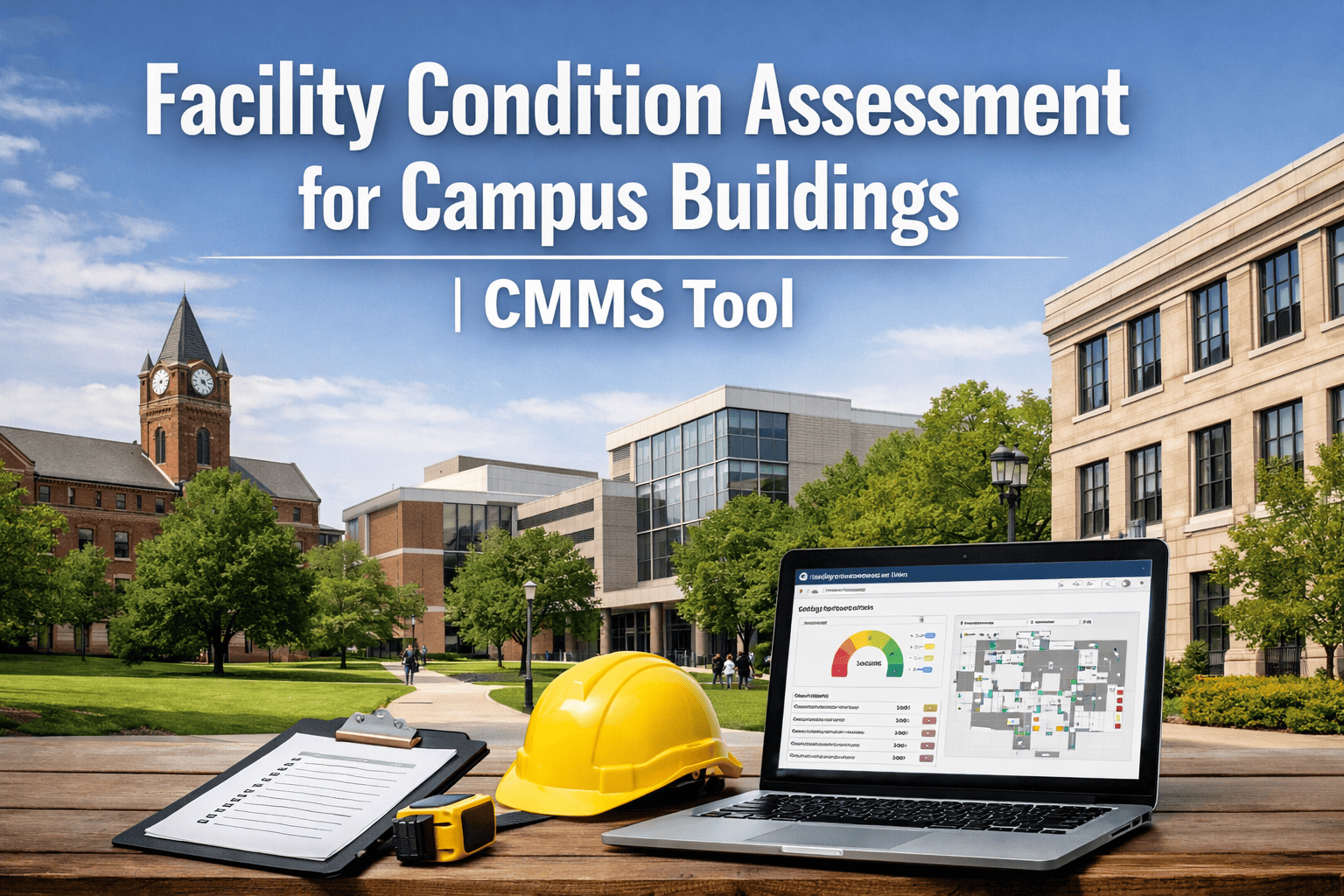
Every campus building and system gets a scored condition rating in Oxmaint. Leadership sees which facilities are in which condition band — and can prioritize investment in the buildings that most directly affect enrollment outcomes.
Automated PM scheduling ensures that HVAC, elevators, plumbing, and exterior systems are serviced on schedule — before they fail during high-visibility windows. High-traffic, enrollment-relevant buildings get priority scheduling built into their PM templates.
Oxmaint's rolling 5-year CapEx forecasting model projects replacement timelines based on current asset condition and age. Leadership can present enrollment leadership with a defensible data case for prioritizing student-facing building investment.
Compare condition scores across all campus buildings in a single dashboard view. Identify which buildings are tour-route priorities, which residential halls need urgent attention, and which facilities require CapEx planning before enrollment season.
Campus Maintenance Approach: Reactive vs. Oxmaint-Managed
What Improved Facility Condition Delivers
Institutions moving from a facility condition score of 70 to 85 see measurable yield gains within 2 admissions cycles.
Students who experience a consistently well-maintained campus are 9% more likely to continue into their second year.
Proactive PM reduces the emergency failures that generate the online reviews prospective students read before applying.
Oxmaint's 5-year CapEx forecasting gives leadership the data to align building investment with enrollment-driven priorities.
Frequently Asked Questions
How do we quantify the link between facility condition and our specific enrollment numbers?
Start by building a facility condition index in Oxmaint — a scored, current rating for every building on campus. Correlate changes in those scores with application, visit-to-application, and visit-to-enrollment conversion rates over the same period. Oxmaint's reporting makes this correlation analysis straightforward, and many institutions see a clear correlation within two to three admission cycles of implementing systematic condition tracking.
Which buildings should we prioritize when budgets are tight?
Focus first on buildings that prospective students directly experience: campus tour routes, residential halls, dining facilities, student unions, and program-specific labs for high-enrollment majors. Oxmaint's asset registry lets you tag buildings by their enrollment relevance category and prioritize PM scheduling and CapEx investment accordingly. The ROI on maintaining enrollment-facing facilities consistently exceeds investment in back-of-house infrastructure.
How quickly can Oxmaint help us build a defensible facility condition case for CapEx investment?
Most institutions can build an initial condition-scored asset registry within their first two to four weeks on Oxmaint, beginning with the highest-priority buildings. As work orders are completed and inspections logged, condition scores update automatically. Within 60 to 90 days, facility directors typically have enough scored data to present a compelling, evidence-based CapEx request to senior leadership — with the enrollment ROI angle built in.
Can Oxmaint help us respond faster to student-reported facility issues?
Yes — significantly. Student work order requests submitted via mobile portal are immediately routed and prioritized in Oxmaint. High-priority residential issues can be set to trigger automatic escalation if not acknowledged within a defined time window. Faster response times reduce the likelihood of negative online reviews, and the documented response record demonstrates institutional commitment to the living and learning environment.
The Campus Students Choose Is the Campus You Maintain
Every deferred repair, every unplanned failure, every HVAC complaint in a dorm room is a data point in the enrollment decision your prospective students are making. Oxmaint gives campus facilities teams the condition scoring, PM automation, and CapEx forecasting needed to systematically improve the physical campus that drives your enrollment outcomes — and prove its ROI to leadership in numbers they can act on.