It was 11:15 PM on a Sunday when a burst pipe on the third floor of Eastwood University's Morrison Hall sent water cascading through two floors of student rooms. By morning, 47 residents were displaced, personal belongings were damaged, and the university faced a six-figure remediation bill. The post-incident investigation revealed the real failure: a maintenance request for a "slow drip" had been submitted three weeks earlier but was lost in a spreadsheet-based tracking system. This wasn't an infrastructure problem—it was a work order management problem. Universities that implement systematic student housing maintenance campus programs catch these issues before they displace students, turning potential crises into routine scheduled repairs.
For schools and higher education institutions managing residential facility maintenance university operations, the stakes extend far beyond property damage. Student housing is where enrollment promises meet reality. Research shows that 89% of students say housing quality directly influences their college satisfaction, and institutions with well-maintained dormitories see 12% higher retention rates. With dormitory plumbing and HVAC maintenance demands rising across aging campus housing stock—64% of U.S. university residence halls were built before 1990—mastering housing facility upkeep higher education best practices has become a competitive imperative.
64%
Of U.S. university residence halls were built before 1990 and require ongoing maintenance
89%
Of students say housing quality directly influences their campus satisfaction
3.2×
More costly to handle emergency repairs vs. preventive maintenance for dorms
The 6 Most Common Student Housing Maintenance Failures
Campus residential facilities face unique challenges that commercial or single-family properties never encounter: extreme turnover every semester, 24/7 occupancy by residents who aren't property owners, seasonal vacancy during breaks, and deferred maintenance driven by tight institutional budgets. Understanding the most frequent failure modes helps facilities teams prioritize preventive maintenance for dorms and address problems before they impact the student experience.
Burst or leaking pipes in aging dorms
Clogged drains from shared bathrooms
Water heater failures affecting entire floors
Toilet and fixture malfunctions
Heating failures during winter months
Cooling system overloads in packed dorms
Thermostat drift and calibration issues
Poor air quality from clogged filters
Overloaded circuits from student devices
Faulty outlets and switches
Emergency lighting failures
Tripped breakers and GFCIs
Broken door locks and access systems
Window seal failures and drafts
Elevator malfunctions
Flooring damage and trip hazards
Work Order Lifecycle: From Student Request to Verified Resolution
When a student submits a maintenance request at 2 AM for a leaking faucet or a broken heater, response speed and follow-through define their experience. A structured work order management process ensures every request is captured, prioritized, assigned, and closed—with full accountability at each step. Here's how leading universities manage the lifecycle.
Goal: Capture every request with zero data loss, regardless of how it's submitted—mobile app, email, walk-in, or RA report.
Auto-classify by trade (plumbing, HVAC, electrical)
Tag building, floor, and room number
Attach photos from student submission
Priority flag: Safety & habitability issues
Goal: Route each work order to the right technician based on skill set, location, and current workload—not just first-come-first-served.
Critical: 2-hour response (water, fire, security)
Urgent: Same-day response (no heat, no hot water)
Standard: 48-hour response (fixture repairs)
Escalation rules for SLA breaches
Goal: Complete repairs with full documentation—parts used, labor time, root cause notes—building the asset history that powers future prevention.
Mobile check-in/check-out timestamps
Before/after photo capture
Parts and materials tracking
Flag recurring issues for PM review
Goal: Close the loop with the student, verify the repair holds, and feed data back into your preventive maintenance program.
Automated completion notification to student
Satisfaction survey trigger
Warranty and follow-up tracking
Reopen protocol if issue recurs
Every Request Tracked. Every Repair Documented.
OxMaint gives campus housing teams a single platform to manage work orders from intake to close-out—with mobile access, automated prioritization, and the maintenance history that prevents problems from repeating.
Campus Residential Safety Compliance: What's at Stake
Meeting campus residential safety compliance standards isn't optional—it's a legal and ethical obligation that directly impacts student well-being. From fire suppression systems to ADA accessibility, residential facilities must pass inspections and maintain audit-ready documentation. Work order management is the backbone of compliance tracking.
Why It Matters
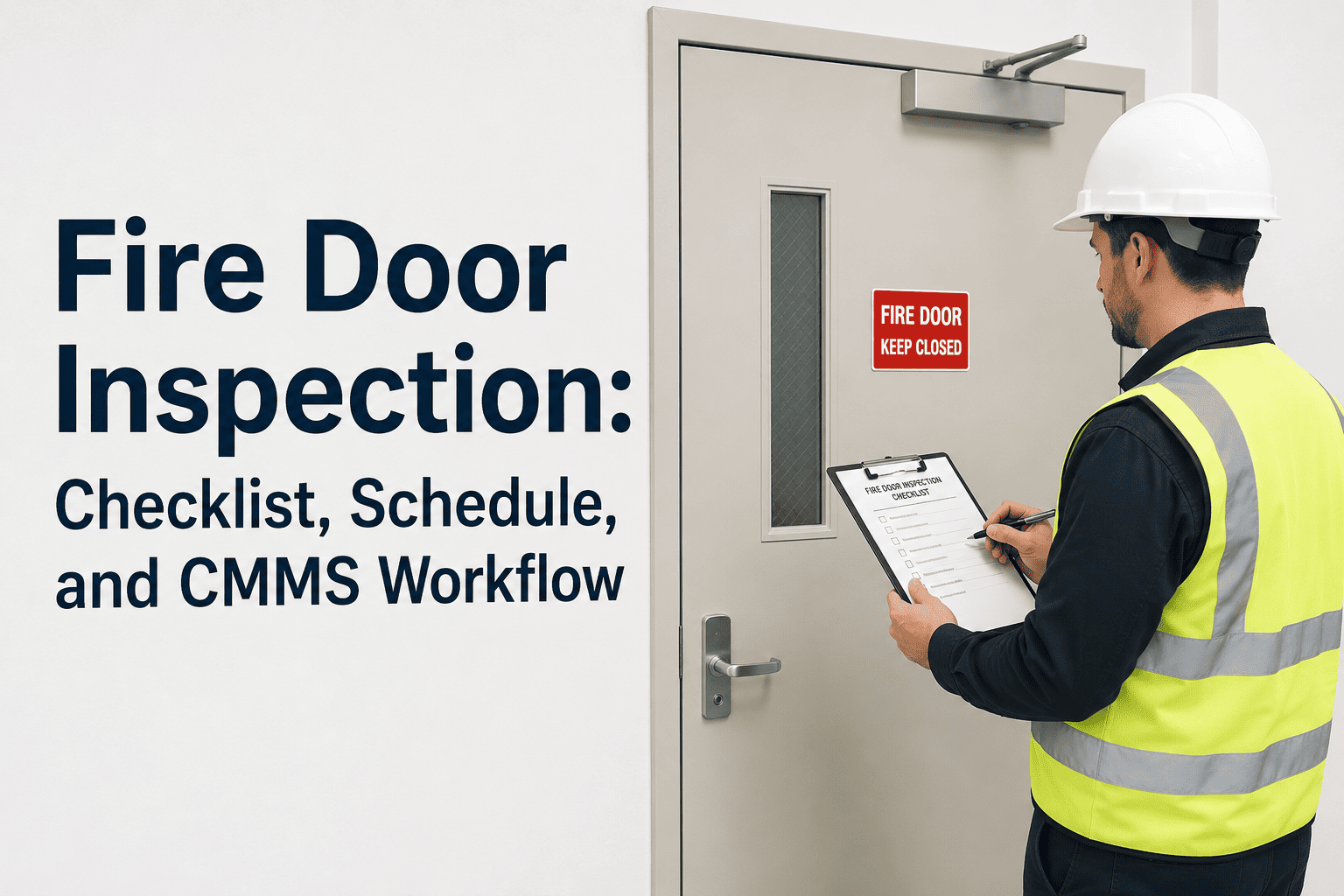
NFPA codes require monthly fire alarm testing, annual sprinkler inspections, and documented emergency lighting checks in all student housing. A single missed inspection can result in fines exceeding $10,000 per violation and, more critically, endanger lives.
Work Order Best Practice
Auto-generate recurring PM work orders
Attach inspection certificates to asset records
Track deficiency resolution timelines
Why It Matters
EPA guidelines and institutional liability require proactive IAQ management in residential facilities. Mold claims in student housing have resulted in settlements exceeding $1M. Proper dormitory plumbing and HVAC maintenance is the first line of defense against moisture-related hazards.
Work Order Best Practice
Flag all moisture/leak reports as high priority
Schedule seasonal HVAC filter changes
Document remediation with timestamped photos
Why It Matters
Title II of the ADA requires that campus housing be accessible. Broken automatic door openers, malfunctioning elevators, or non-functional grab bars aren't just inconveniences—they're civil rights violations that trigger federal investigations and funding risks.
Work Order Best Practice
Tag accessibility assets for priority routing
Set 4-hour SLA for accessibility failures
Maintain ADA compliance audit trail
Why It Matters
Clery Act reporting requires institutions to maintain secure residential facilities. Broken locks, malfunctioning card readers, and non-operational security cameras create liability exposure and genuine safety risks for students living on campus.
Work Order Best Practice
Classify all security work orders as critical
Require supervisor sign-off on close-out
Generate monthly security system PM reports
The Real Cost of Lost Work Orders in Student Housing
When maintenance requests disappear into email inboxes, sticky notes, or outdated spreadsheets, the financial and reputational consequences compound rapidly. Here's what the data reveals about reactive vs. proactive student housing maintenance campus operations.
Without Work Order Management (Reactive):
Maintenance teams spend up to 40% of their time tracking down request details, duplicating efforts, or responding to issues that were previously reported but never resolved. Emergency repairs cost 3.2× more than scheduled service. Deferred maintenance backlogs grow 15-20% annually, and student satisfaction scores drop by an average of 23 points on housing surveys.
With Structured Work Order Management (Proactive):
Every request is captured, categorized, and assigned within minutes. Technicians arrive with the right parts and context. First-time fix rates increase by 28%, average resolution time drops by 45%, and housing teams can demonstrate compliance readiness at any moment. Institutions using a CMMS report labor cost reductions of 15-22% within the first year.
3.2×
Cost multiplier for emergency repairs vs. scheduled preventive maintenance
45%
Reduction in average work order resolution time with CMMS adoption
15-22%
Labor cost savings reported by universities in the first year of CMMS use
Ready to eliminate lost work orders and build a maintenance program students actually trust? Sign up free to start managing your student housing maintenance, or request a demo to see how OxMaint transforms residential facility operations for schools and universities across North America.
Building a Preventive Maintenance Program for Student Housing
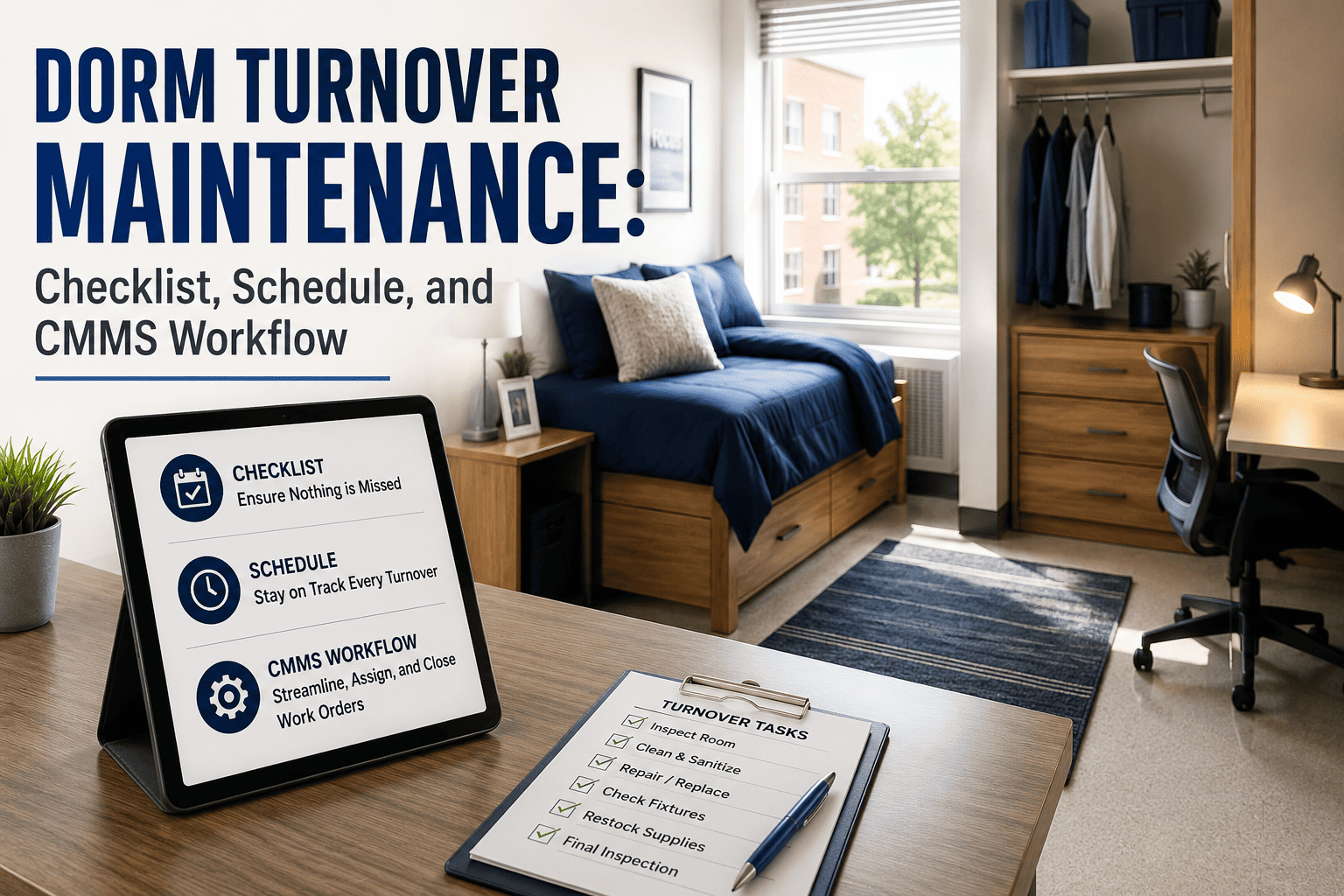
Effective preventive maintenance for dorms isn't about doing more—it's about doing the right things at the right intervals, aligned with the academic calendar. A CMMS designed for schools and higher education automates scheduling, surfaces recurring failure patterns, and ensures nothing falls through the cracks during move-in weeks, finals, or summer turnover.
Baseline maintenance that prevents the most common failures and keeps living spaces safe and comfortable during the academic term.
HVAC filter inspection and replacement
Common area plumbing checks
Fire extinguisher visual inspections
Emergency lighting walk-throughs
Deeper inspections that catch developing problems before they escalate into emergency work orders or compliance violations.
Water heater flush and anode rod check
HVAC coil cleaning and belt inspection
Door lock and access control testing
Elevator safety inspections
Comprehensive unit-by-unit inspections during vacancy periods. This is your highest-ROI maintenance window—use it to address deferred items, refresh units, and reset for the next cohort of residents.
Full plumbing pressure testing per unit
HVAC seasonal changeover and calibration
Appliance inspection and replacement
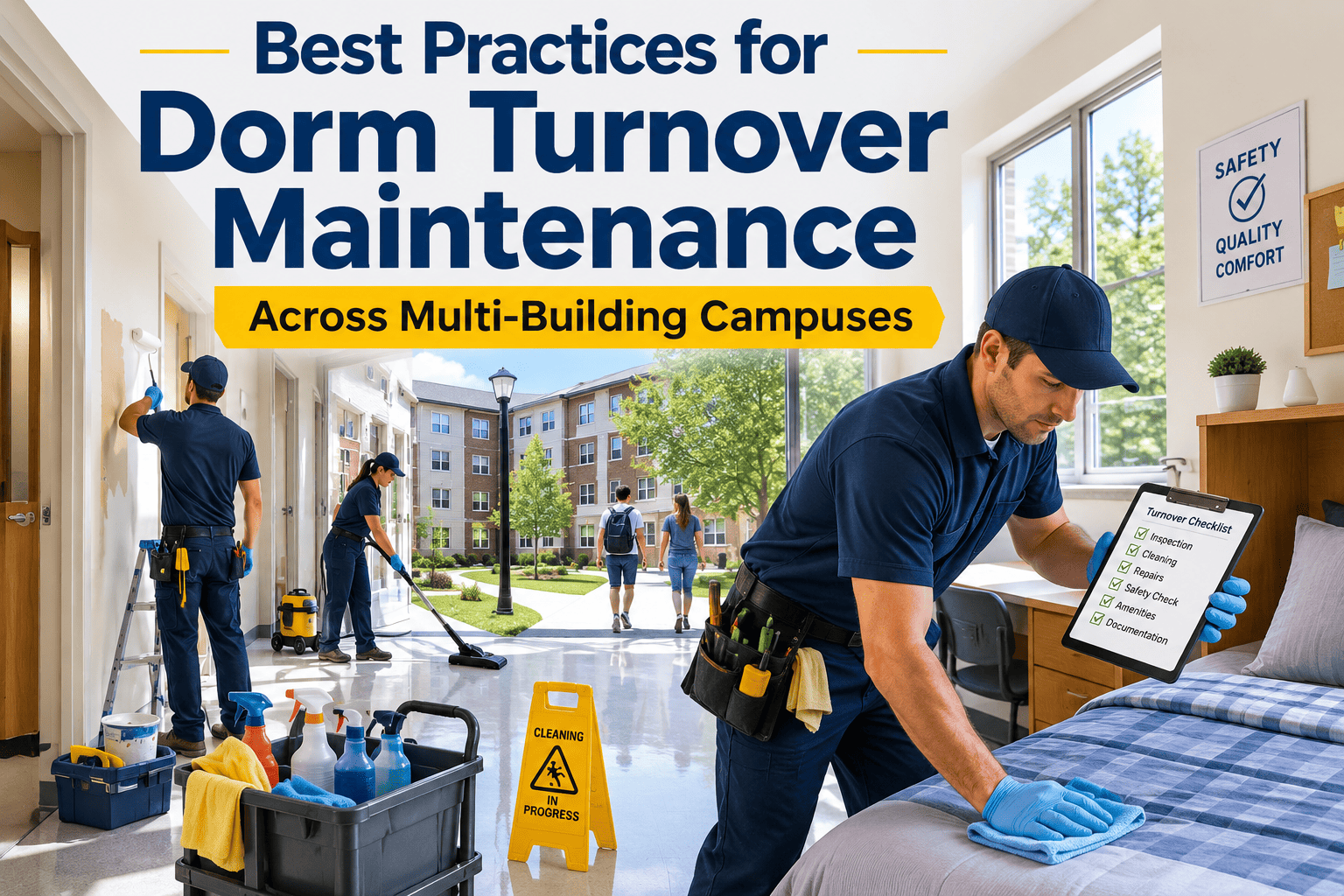
Paint, flooring, and fixture refresh
Smoke/CO detector battery and function test
Window and door seal integrity check
Frequently Asked Questions
How should universities prioritize student housing maintenance requests?
Best practice is a three-tier priority system: Critical (2-hour response) for issues affecting safety or habitability—water leaks, no heat, security breaches, gas odors. Urgent (same-day) for significant comfort issues like no hot water or broken appliances. Standard (48-72 hours) for cosmetic or non-urgent repairs. A CMMS automates this classification at intake, ensuring critical issues never wait behind a queue of routine requests.
What are the biggest compliance risks in student housing maintenance?
The top compliance risks include fire and life safety system lapses (NFPA codes), ADA accessibility failures (Title II), mold and indoor air quality violations (EPA guidelines), and security system deficiencies (Clery Act). Each of these requires documented, recurring inspections with audit-ready records. Universities that track compliance-related work orders in a CMMS can produce inspection histories instantly during audits, rather than scrambling to reconstruct paper trails.
How does work order management improve student retention?
Students who experience responsive, transparent maintenance services rate their housing satisfaction 34% higher than those at institutions with slow or disorganized repair processes. When a student submits a request and receives automatic status updates through completion, it builds institutional trust. Universities with structured work order management report 12% higher housing renewal rates—each retained resident represents $8,000-$15,000 in annual housing revenue that doesn't need to be replaced through recruitment.
What should a CMMS for student housing include?
A CMMS for residential campus facilities should include: mobile work order submission for students and staff, automated priority classification and routing, asset-level maintenance histories per room and building, preventive maintenance scheduling aligned with the academic calendar, compliance tracking with audit-ready reports, and analytics dashboards that surface recurring failure patterns. OxMaint is purpose-built for these needs, giving facilities teams full visibility from a single platform.
How often should dormitory HVAC and plumbing systems be inspected?
HVAC filters should be checked monthly and replaced every 1-3 months depending on system type and occupancy density. Full HVAC tune-ups should occur twice annually—before heating season and before cooling season, ideally during semester breaks. Plumbing systems benefit from quarterly visual inspections of common areas, with comprehensive unit-by-unit pressure testing during turnover periods. Water heaters should be flushed quarterly, with anode rod replacement every 3-5 years to prevent tank failure.
See How Leading Universities Save 20% on Housing Maintenance Labor
Join schools and universities across North America using OxMaint to streamline work order management, automate preventive maintenance scheduling, and deliver the residential experience that retains students—all in one platform built for higher education facilities teams.