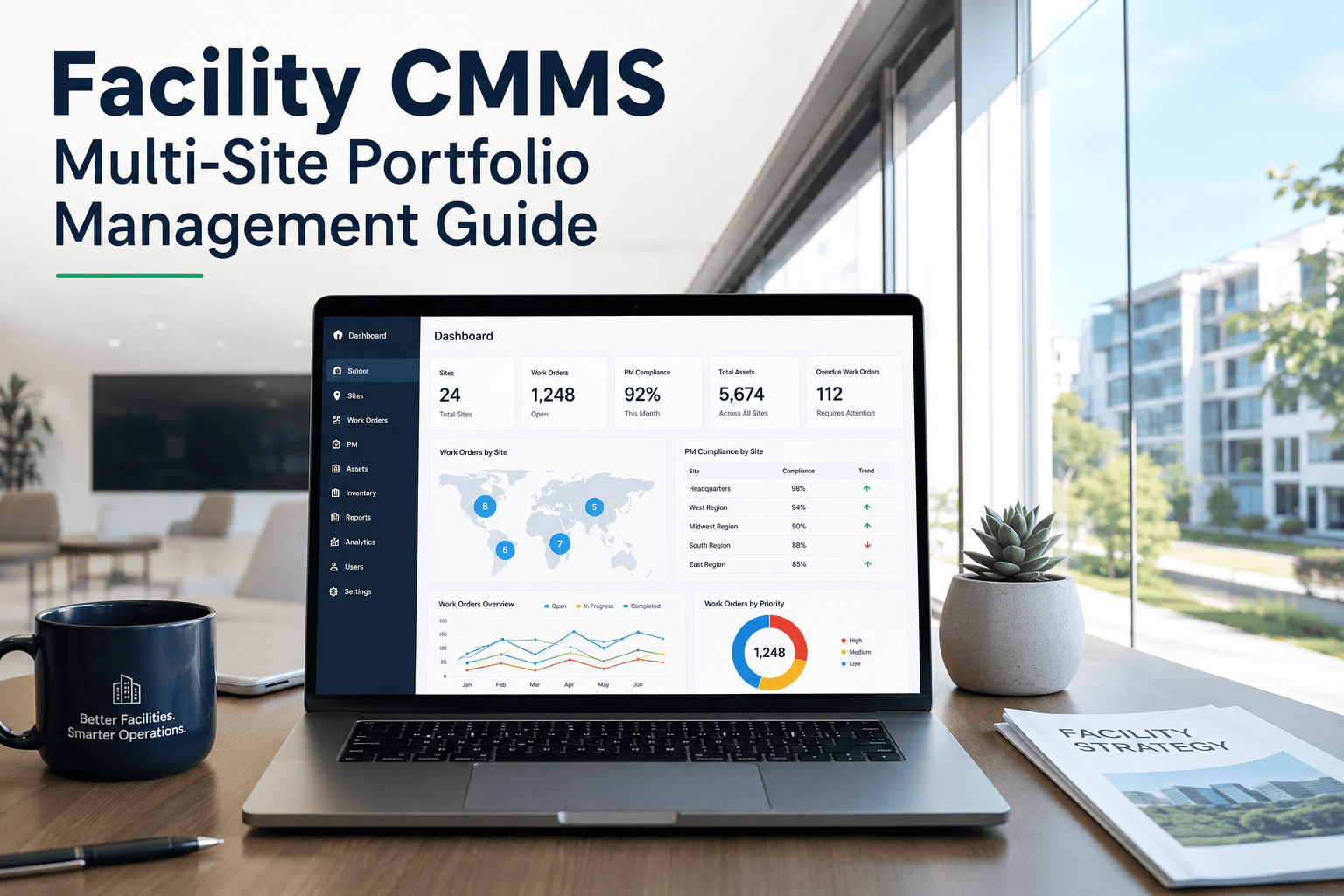
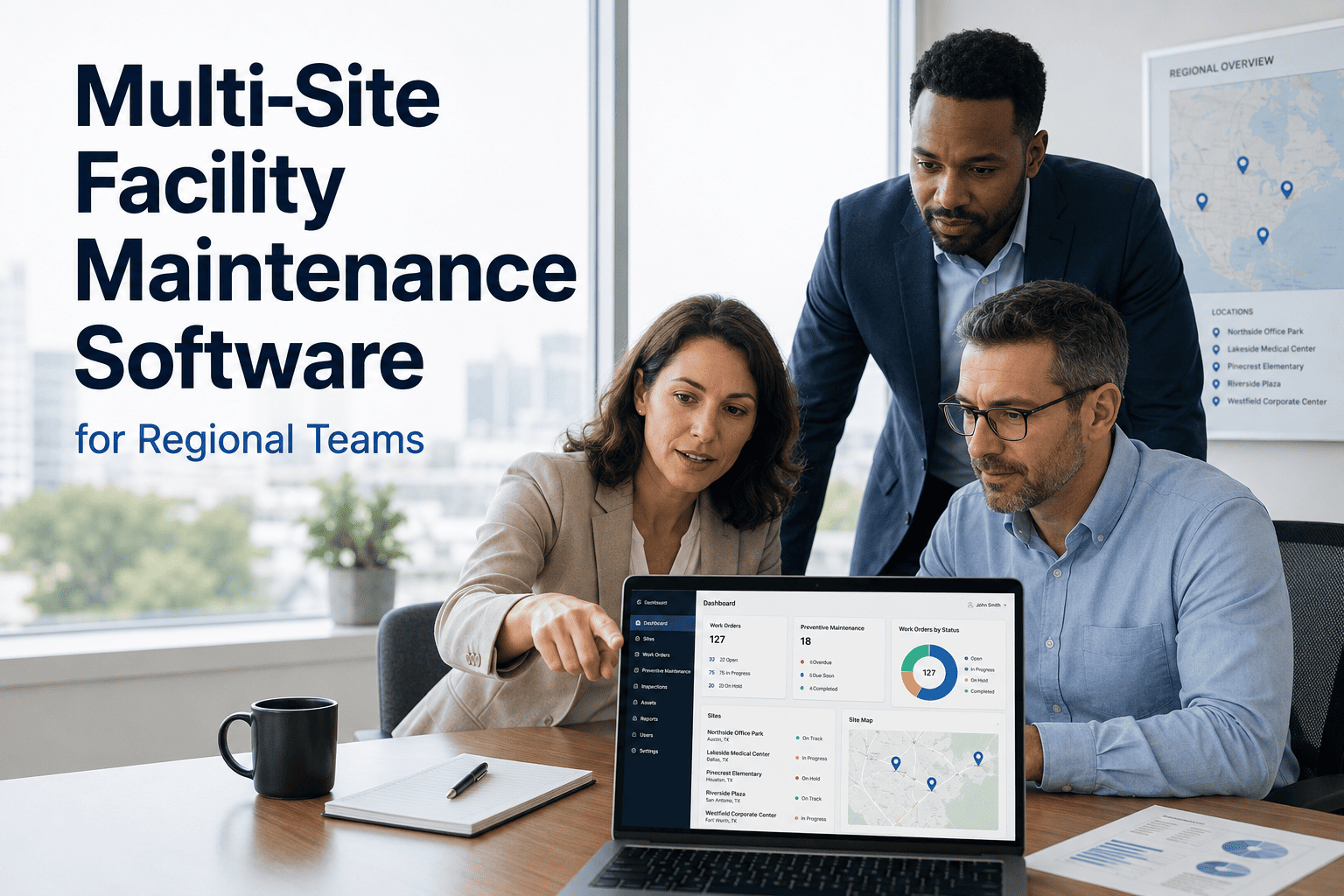
A director of facilities managing 22 commercial properties across four cities opens her Monday morning dashboard. Property 7 has an overdue PM on the cooling tower that was deferred three weeks ago. Property 14 just generated its fourth reactive work order on the same AHU in 60 days. Property 19 has a chiller approaching end of useful life but nobody has flagged it in the CapEx plan. She knows these problems exist somewhere across the portfolio. She cannot see them all at once. She cannot act on them before they become emergencies. Every day this visibility gap persists, the portfolio is spending more on reactive repairs, missing CapEx windows, and building up maintenance backlogs that compound silently across every property. AI maintenance planning for multi-site commercial facilities exists to close that visibility gap entirely. Book a demo to see how Oxmaint unifies maintenance planning, asset tracking, and CapEx forecasting across your full commercial portfolio in a single real-time dashboard. The global CMMS market reached $2.4 billion in 2026 and is projected to reach $5.9 billion by 2036. 65% of maintenance teams plan to adopt AI-powered tools by end of 2026. Large enterprises hold 60% of EAM market share precisely because multi-site asset portfolios require centralised governance and standardised KPIs that single-site tools cannot deliver.
22 Properties. One Dashboard. Zero Maintenance Blind Spots Across Your Portfolio.
Oxmaint AI unifies maintenance scheduling, asset condition tracking, work order management, and rolling CapEx forecasting across every property in your commercial portfolio from a single platform deployed in days not months.
$2.4B
Global CMMS market value in 2026, growing to $5.9 billion by 2036 as multi-site AI maintenance planning drives enterprise adoption
65%
Of maintenance teams plan to adopt AI-powered tools by end of 2026. Multi-site operators lead adoption due to portfolio visibility demands
25%
Maintenance cost reduction achievable through AI-driven predictive and condition-based maintenance versus reactive programmes (Deloitte)
90%
Failure prediction accuracy improvement with AI in predictive maintenance versus traditional inspection-only programmes (PwC research)
WHAT MULTI-SITE AI MAINTENANCE PLANNING IS
The 4 Problems AI Maintenance Planning Solves Across Multi-Site Portfolios
Multi-site facility management is a fundamentally different challenge from single-site maintenance. The problems are not just bigger versions of single-site problems. They are structurally different failures that single-site tools cannot address regardless of how well they are implemented at individual properties.
01
Siloed Records Across Properties
Each property maintains its own spreadsheets, inspection logs, and maintenance records in disconnected systems. A recurring HVAC failure mode affecting six properties is undetectable when records live in six separate locations. Portfolio-level patterns that would trigger a proactive capital decision remain invisible until they surface as individual emergency events across the portfolio.
Impact: Repeat failures across properties that a unified view would have prevented months earlier
02
No Standardised Maintenance KPIs
Without a unified platform, every property measures maintenance performance differently. One property manager tracks reactive-to-planned ratio. Another tracks work order backlog. A third tracks nothing systematically. Portfolio directors cannot compare maintenance performance across properties, identify underperformers, or benchmark against industry standards when every property uses a different measurement framework.
Impact: Capital and resource allocation decisions made on anecdotal reporting rather than comparable data
03
CapEx Surprises From Untracked Asset Degradation
When asset condition is not tracked continuously across a multi-site portfolio, CapEx plans are built on age assumptions rather than actual condition data. Emergency capital events bypass the approval process. Annual budgets miss near-term replacement needs on assets with accelerated degradation while allocating capital to assets that have years of useful life remaining based on age alone.
Impact: CapEx budget variance of 40 to 65% versus actual spend reported by portfolios without condition-based forecasting
04
Technician Resource Gaps Across Sites
Without unified work order and scheduling visibility across all properties, maintenance resource allocation is reactive. A property with three overdue critical PMs and a property with zero open work orders receive identical staffing because the portfolio director cannot see the distribution of maintenance demand across sites in real time. Technician utilisation is uneven and preventable backlogs build silently.
Impact: Properties with heaviest maintenance demand consistently underserved while others are overstaffed
THE OXMAINT MULTI-SITE ARCHITECTURE
How Oxmaint Structures AI Maintenance Planning Across a Commercial Portfolio
Oxmaint is built on a five-level asset hierarchy that makes multi-site maintenance planning structurally different from adding properties to a single-site tool. Every level of the hierarchy feeds the AI analytics and CapEx forecasting layers. The result is portfolio intelligence that no collection of individual property tools can replicate.
L1
Portfolio Level
Consolidated view of maintenance performance, asset condition scores, CapEx forecasts, and work order status across every property. Investor-grade portfolio reporting generated automatically from live operational data. Cross-property benchmarking surfaces underperforming assets for targeted capital attention.
L2
Property Level
Each property operates independently within its own permission structure, maintenance team, and work order queue while contributing to the unified portfolio intelligence layer. Property managers see their own dashboard. Portfolio directors see all properties. Zero data re-entry between levels.
L3
System Level
Building systems — HVAC, electrical, plumbing, elevators, fire suppression — tracked as groups with system-level health scores aggregated from individual asset condition data. System-level failure patterns detected across properties surface cross-portfolio risks that asset-level views miss.
L4
Asset Level
Every maintainable asset registered with condition score, maintenance history, cost per asset tracking, remaining useful life estimate, and PM schedule trigger. AI anomaly detection operates at the asset level, generating condition-based work orders when sensor data or inspection findings indicate degradation.
L5
Component Level
Individual components — bearings, belts, filters, valves — tracked with replacement histories that feed the asset-level MTBF model. Component-level data identifies which specific parts are driving maintenance cost and failure frequency on each asset class across the full portfolio.
6 AI PLANNING CAPABILITIES
What Oxmaint AI Delivers Across Multi-Site Maintenance Planning
Plan
AI-Driven PM Schedule Optimisation
AI optimises PM schedules across all properties based on asset condition data, operating hours, and failure history rather than calendar defaults. Properties running identical equipment classes on different load profiles get different PM intervals tuned to their specific operating conditions. Unnecessary PM tasks are eliminated. Overdue tasks on high-risk assets are escalated automatically.
Forecast
Rolling Multi-Site CapEx Forecasting
Remaining useful life calculations per asset across every property feed rolling 5 to 10 year CapEx forecasts updated automatically as condition data changes. Portfolio directors see which assets across which properties approach end of life this year versus next. Capital budgets built on live condition data rather than age assumptions. CapEx variance reduced from 40 to 65% in reactive portfolios to under 15%.
Benchmark
Cross-Property Performance Benchmarking
AI surfaces which properties perform above or below portfolio norms on PM compliance rate, reactive-to-planned ratio, cost per asset, MTTR, and asset availability. The gap between a property running at 180 dollars cost-per-asset-per-month and one running at 340 is visible instantly with drill-down to the specific assets driving the variance. Benchmarking converts portfolio data into targeted improvement actions.
Allocate
Cross-Site Technician Resource Planning
Unified work order queues across all properties give maintenance managers real-time visibility into technician workload distribution. Properties with overdue critical PMs are flagged for reallocation. Properties with surplus capacity are identified for cross-site deployment. Technician utilisation balances across the portfolio rather than fluctuating property by property based on whoever calls loudest.
Comply
Portfolio-Wide Compliance Documentation
Inspection schedules, compliance work orders, and audit documentation managed across all properties from a single Oxmaint instance. Audit-ready records generated automatically from live programme data. OSHA, building safety, and regional compliance requirements tracked per property with automated overdue escalation. Compliance status visible across the full portfolio without visiting each property system separately.
Report
Investor-Grade Portfolio Reporting
Portfolio-level reports covering asset condition scores, maintenance performance KPIs, energy efficiency trends, and CapEx forecasts generated from live data in under 5 minutes. Ownership groups and investors receive the standardised asset intelligence that institutional capital increasingly expects as standard in commercial portfolio management. 85% of institutional investors expect AI tools in CRE asset management.
BEFORE VS. AFTER OXMAINT
Multi-Site Maintenance Planning: Fragmented Management vs. Oxmaint AI Platform
The performance gap between multi-site portfolios running fragmented tools and those running unified AI maintenance planning is measurable across every operational and financial KPI that matters to directors, investors, and ownership groups.
DOCUMENTED RESULTS
What AI Multi-Site Maintenance Planning Delivers: Measurable Portfolio Outcomes
25%
Maintenance Cost Reduction
Deloitte research: AI-driven predictive maintenance cuts total maintenance costs up to 25% across commercial portfolios. Primary drivers are emergency repair elimination and condition-optimised PM scheduling replacing fixed-interval task execution.
10-20%
Equipment Uptime Improvement
Deloitte: AI maintenance planning boosts equipment uptime 10 to 20 percentage points across multi-site portfolios. Every percentage point of uptime improvement on critical building systems generates measurable tenant satisfaction and NOI impact.
Under 15%
CapEx Budget Variance
Portfolios running rolling CapEx forecasts from live condition data achieve CapEx budget variance under 15%. Fragmented portfolios relying on age-based assumptions report 40 to 65% variance. The difference is capital planning from data versus assumptions.
60 days
Time to Documented ROI
Multi-site portfolios deploying Oxmaint AI maintenance planning typically document measurable cost reduction and response time improvement within 60 days. First prevented CapEx event commonly covers multiple months of full portfolio platform cost.
FREQUENTLY ASKED QUESTIONS
AI Maintenance Planning for Multi-Site Facilities: What Portfolio Teams Ask Most
How long does it take to deploy Oxmaint AI maintenance planning across a multi-site commercial portfolio?
Oxmaint deploys across a full multi-site commercial portfolio in 4 to 8 weeks. Asset records import via CSV or direct API from existing spreadsheets, CMMS platforms, or property management systems. The first property typically reaches full operational function — asset registry live, PM schedules active, work order management running — within 5 to 7 days of deployment start. Additional properties are added in parallel. Multi-site portfolios averaging 10 to 30 properties typically complete full deployment in 4 to 6 weeks. Portfolios above 30 properties complete in 6 to 8 weeks with Oxmaint onboarding support throughout. No IT infrastructure project is required. No implementation consultant is required. No property shutdown at any stage.
Sign up free and connect your first property today, or
book a demo to map a deployment timeline against your specific portfolio size.
Can Oxmaint manage different property types across the same portfolio with different maintenance requirements?
Yes. Oxmaint manages mixed commercial portfolios — office towers, retail centres, industrial facilities, healthcare buildings, and mixed-use assets — from a single platform instance. Each property type gets its own asset hierarchy, PM trigger parameters, compliance schedule, and maintenance team configuration. The portfolio dashboard consolidates performance across all property types into comparable KPIs. Cross-property benchmarking is filtered by property type so office performance benchmarks against office properties and industrial benchmarks against industrial. A retail centre and a medical office building in the same portfolio operate on entirely different maintenance frequencies and compliance frameworks while appearing in the same portfolio-level CapEx and condition score dashboard.
How does Oxmaint handle maintenance planning for properties with existing BMS or IoT infrastructure alongside properties without it?
Oxmaint handles both simultaneously in the same portfolio instance. Properties with BMS connectivity integrate via OPC UA, BACnet, MQTT, or REST API and receive condition-based AI maintenance planning from live sensor data. Properties without BMS connectivity operate on AI-optimised PM schedules driven by manual inspection findings and work order history from day one. Both property types contribute to the same portfolio dashboard, CapEx model, and cross-site benchmarking reports. IoT and BMS sensor connectivity can be added to non-connected properties incrementally as the programme matures without any disruption to the existing Oxmaint deployment. Most portfolios start with software-only deployment and add sensor integration on highest-criticality assets first.
Book a demo to map your portfolio infrastructure mix, or
start free and connect your first property today.
What does Oxmaint multi-site maintenance planning cost compared to managing separate tools per property?
Oxmaint is priced as a single multi-site platform licence covering all properties in your portfolio rather than per-property subscriptions that multiply across every site. Most portfolios find total cost of ownership over 3 years is 60 to 70% lower than managing separate CMMS tools per property or deploying enterprise EAM platforms requiring 12 to 18 months of implementation consulting. Oxmaint paid plans start at $8 per user per month with AI included at all paid tiers. No hidden per-asset charges. No annual lock-in required. Multi-site portfolios receive volume pricing applicable across the full property count. The first prevented CapEx emergency event at any property in the portfolio typically covers multiple months of full portfolio platform cost. There is no free plan for enterprise multi-site deployments but a 30-day free trial covers all features with no credit card required.
CONTINUE READING
AI Maintenance Resources for Commercial Facility Teams
Explore these guides to build a complete picture of AI-driven maintenance management, downtime reduction, asset management, and predictive versus preventive maintenance strategy across your commercial facility portfolio.
Downtime Reduction Guide
How AI Reduces Equipment Downtime in Commercial Facilities
How AI detects failure signals weeks before equipment stops working. The specific mechanisms behind downtime reduction and the measurable outcomes commercial facility portfolios document within the first 90 days of AI maintenance deployment.
Read the Guide
Work Order Automation Guide
AI Work Order Automation for Facility Management
How AI eliminates the manual dispatcher bottleneck by auto-creating, classifying, assigning, and tracking work orders from any trigger across commercial facility operations. Cut response time and emergency repair costs simultaneously.
Read the Guide
Asset Management Guide
AI Asset Management for Commercial Buildings 2026
Real-time AI condition scoring, predictive failure detection, and rolling CapEx forecasting for every asset across your commercial building portfolio. Extend asset life, cut capital surprises, and deliver investor-grade asset reporting from live data.
Read the Guide
Strategy Comparison Guide
AI vs Traditional Preventive Maintenance: Full Comparison
A data-driven comparison of AI predictive maintenance and traditional calendar-based PM across cost, downtime, asset life, and ROI. Which approach delivers more value for commercial facility portfolios and when to deploy each strategy.
Read the Guide
65% of Maintenance Teams Are Adopting AI by End of 2026. Multi-Site Portfolio Teams Cannot Afford to Wait.
Oxmaint AI maintenance planning unifies scheduling, asset tracking, work order management, and CapEx forecasting across every property in your commercial portfolio. Deploy in days. Document ROI within 60 days. No implementation project. No per-property pricing. No annual lock-in required.