Facility management has crossed an inflection point. The teams still running work orders through spreadsheets and scheduling PM by calendar are competing against facilities where AI predicts equipment failures three weeks in advance, routes technicians without dispatcher input, and benchmarks energy consumption across a 20-building portfolio in real time. The gap between these two operating models is widening every quarter — and it is measured in maintenance costs, asset uptime, energy spend, and tenant satisfaction scores. OxMaint's AI-powered CMMS gives commercial facility teams the analytics, automation, and decision intelligence that close that gap — without a 12-month implementation project.
Blog · AI Facility Analytics · Complete Guide
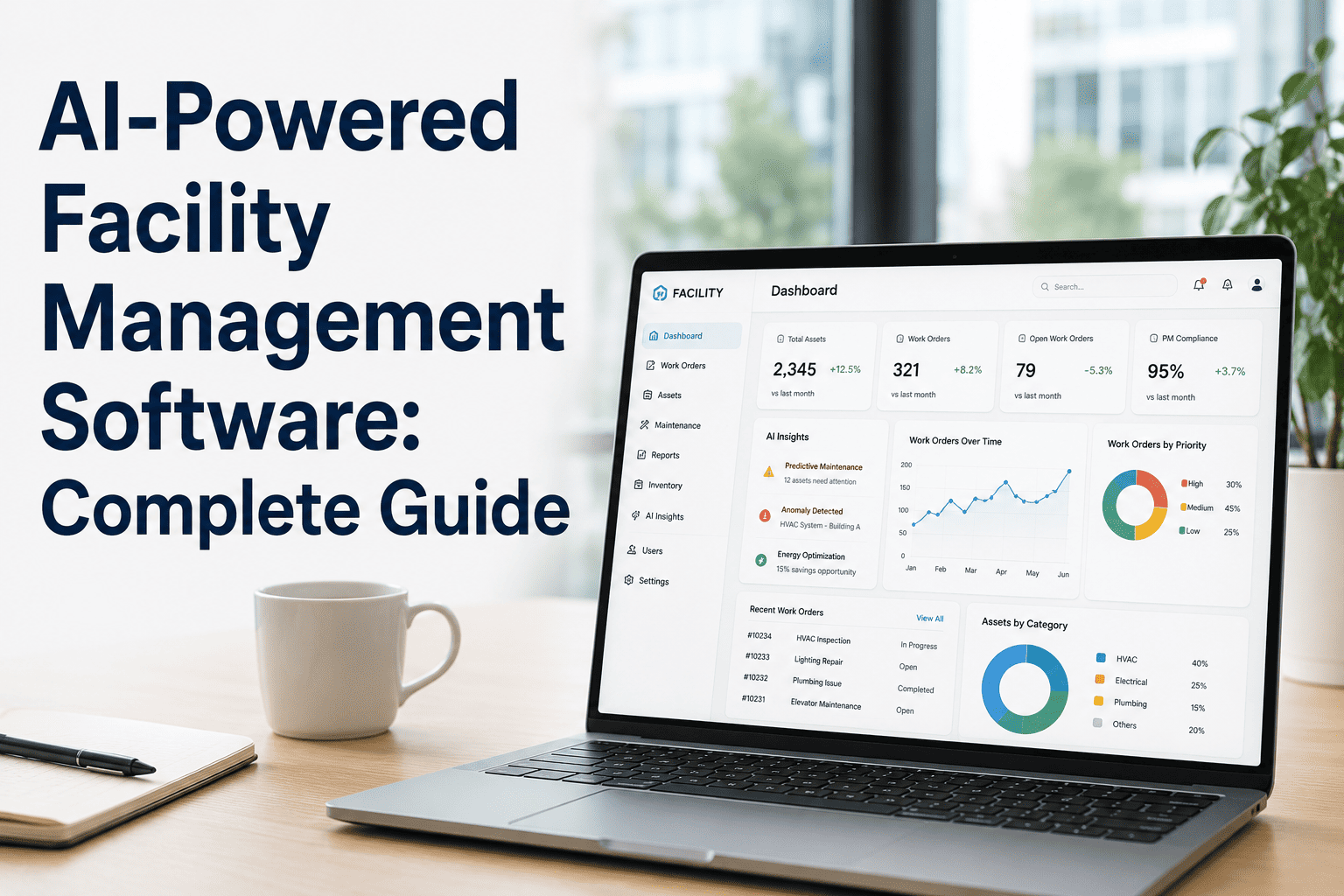
AI-Powered Facility Management Software: Complete Guide
Predictive Analytics · Energy Optimisation · Space Intelligence · Automated Workflows · Multi-Site AI Operations
40%
Reduction in unplanned downtime
25%
Energy cost savings
73%
Work orders auto-routed
3x
Faster audit preparation
OxMaint AI Platform — Verified Outcomes
4 AI Capabilities Transforming Facility Management
01
Predictive Analytics
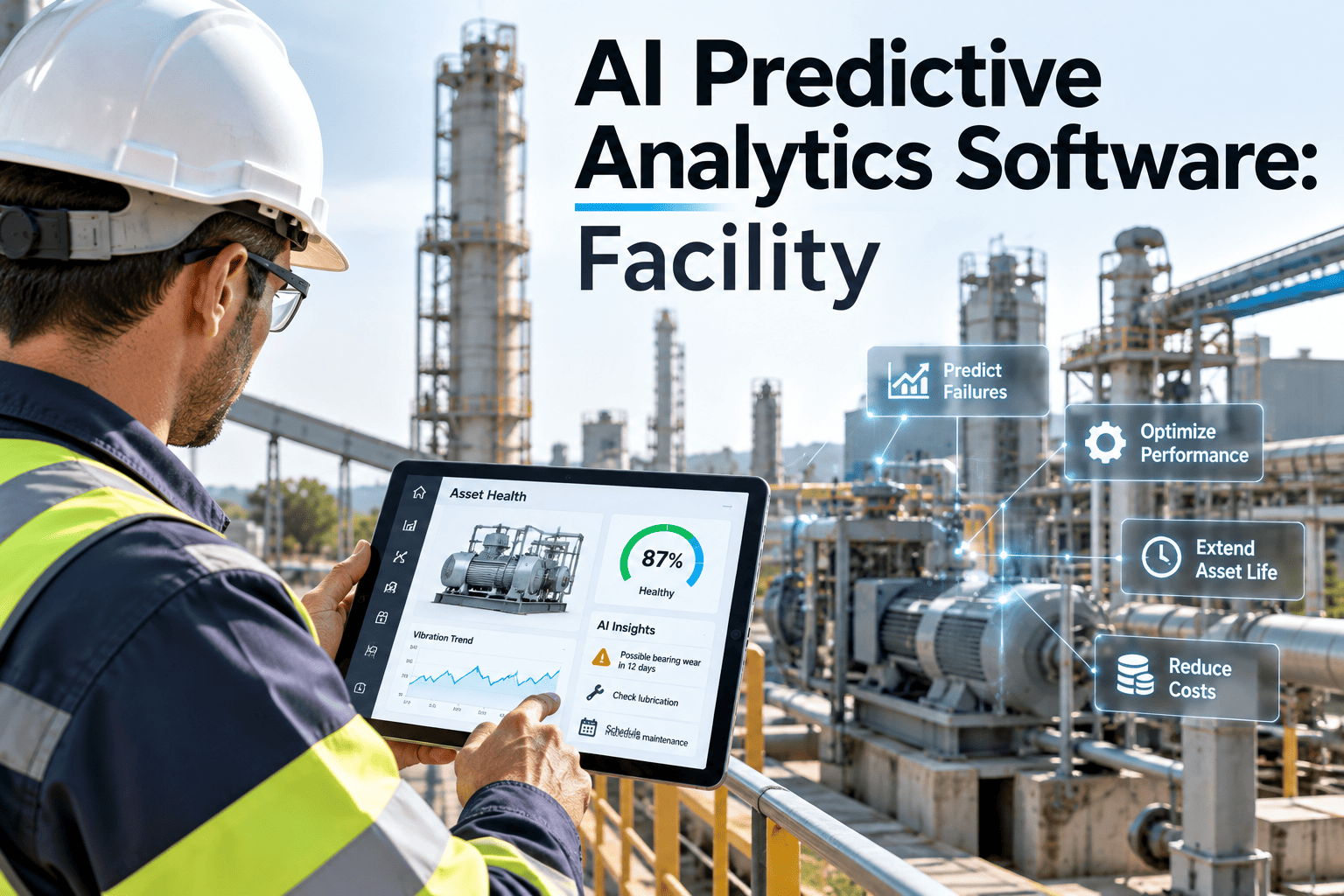
AI analyses sensor data, run hours, and failure history to predict equipment faults 2–8 weeks before they occur — converting reactive spend into scheduled PM at a fraction of the cost.
02
Energy Optimisation
Machine learning benchmarks energy consumption per square foot across all sites and identifies outliers automatically — flagging the buildings where HVAC, lighting, or BMS configuration is costing more than it should.
03
Space Analytics
Occupancy data from sensors and access control systems feeds AI models that right-size cleaning, HVAC scheduling, and asset deployment to actual usage — not assumed patterns.
04
Automated Workflows
Work order routing, PM generation, SLA escalation, and compliance alerts are handled by AI without dispatcher input — freeing supervisors from queue management to focus on strategy and quality.
Traditional FM vs AI-Powered FM — What Changes
| FM Function | Traditional Approach | AI-Powered Approach | Measurable Gain |
|---|---|---|---|
| Equipment maintenance | Calendar-based PM · Reactive repairs | Condition-based · Predictive triggers | 40% fewer unplanned failures |
| Work order dispatch | Manual supervisor assignment | AI routing in under 2 seconds | 99% faster assignment |
| Energy management | Monthly utility bill review | Real-time AI anomaly detection | 20–25% energy cost reduction |
| Compliance tracking | Manual calendars and binders | Automated alerts and digital records | 83% fewer compliance gaps |
| Capital planning | Opinion-based replacement decisions | MTBF trend and cost-per-repair data | Replacement justified 12–18 mo earlier |
| Multi-site reporting | Manual consolidation · Hours per week | Live portfolio dashboard · Instant | 6+ hrs/week reclaimed per FM director |
AI Maturity Curve — Where Is Your FM Team?
Stage 1
Reactive
Work orders raised after failure. Paper or spreadsheet records. No visibility into asset health or PM compliance.
Signal: High emergency repair costs · Frequent occupant complaints
Stage 2
Preventive
Calendar-based PM schedules. Digital work orders. Basic reporting on compliance and cost.
Signal: Improved compliance · Still missing early failure signals
Stage 3
Predictive
IoT sensors feed AI models. Condition-based maintenance. MTBF tracking and energy benchmarking active.
Signal: Failures prevented · Energy savings visible · Capital plans data-backed
Stage 4
Autonomous
AI routes work, escalates SLAs, optimises energy, and generates compliance records without human triage. FM team manages exceptions.
Signal: Supervisors doing strategy · Zero reactive spend · Full audit readiness
See Which AI Features Apply to Your Facility Type
OxMaint's 30-minute demo is structured around your specific building type, team size, and current maintenance maturity — not a generic product walkthrough.
Energy Optimisation — Where AI Finds the Savings
HVAC Systems
38% of building energy
AI detects setpoint drift, filter loading, and scheduling inefficiency — typical saving: 18–22%
Lighting
22% of building energy
Occupancy-linked scheduling eliminates over-lighting in vacant zones — typical saving: 30–35%
Pumps and Motors
18% of building energy
VFD performance and system curve AI detects degraded efficiency before energy bills show it — typical saving: 12–18%
BMS Controls
Crosscutting impact
AI identifies BMS configuration drift from optimal — buildings with uncalibrated BMS average 12% excess spend
"
The most significant shift I have seen in facility management over the last five years is not any specific technology — it is the change in what FM directors are asked to be accountable for. Energy consumption per square foot, asset uptime percentage, maintenance cost as a proportion of asset replacement value, tenant satisfaction scores tied to FM performance — these are the metrics that executive stakeholders now use to evaluate facilities functions. The FM teams that are meeting those standards are the ones that have deployed AI-powered platforms where the data collection, analysis, and alerting happen automatically. The teams still relying on periodic manual inspections and monthly spreadsheet reports are consistently losing ground on all four metrics simultaneously. OxMaint represents the platform maturity level that lets an FM director speak the language of the board — not just the boiler room.
Marcus Oyelaran, MRICS, FMP
Head of Facilities Technology Strategy · 26 Years Commercial FM · RICS Member · IFMA Facility Management Professional · Specialist in AI and smart building system deployment, FM digital transformation, and technology ROI evaluation for large commercial and institutional portfolios
Frequently Asked Questions
What existing infrastructure does OxMaint's AI require to start delivering value?
OxMaint's AI capabilities activate progressively based on available data — no IoT sensors are required to start. The AI work order routing and predictive PM scheduling functions activate from the work order history and asset data your team enters during normal operations, typically showing measurable improvement within 60–90 days of consistent use. IoT sensor integration, which unlocks condition-based triggering and real-time energy analytics, can be added at any stage as the facility's technology programme matures. Start a free trial to see which AI features activate with your current data. Most facilities find that 80% of the AI value they are seeking — predictive PM, routing automation, compliance alerting — is achievable without any new sensor hardware, using only the structured maintenance data captured through normal CMMS operations over the first two to three months.
How does AI facility management software handle regulatory compliance across multiple jurisdictions?
OxMaint's compliance module allows each site or building to be configured with its own regulatory framework — inspection frequencies, certification requirements, and document retention rules — specific to its jurisdiction, building type, and occupancy classification. A hospital in one state, a retail centre in another, and a data centre overseas can all have compliance schedules that reflect local regulatory requirements while rolling up to a unified portfolio-level compliance dashboard. Book a demo to see multi-jurisdiction compliance management in action. The AI surface compliance risk proactively — flagging upcoming certificate expirations 30 and 60 days in advance, auto-generating inspection work orders, and creating a complete digital audit trail without FM staff manually tracking dozens of separate expiry dates across a complex portfolio.
What is the realistic timeline to see measurable ROI from an AI FM platform?
Facilities deploying OxMaint's AI platform typically see measurable ROI within the first quarter of active use. The fastest returns come from three sources: work order routing automation reduces supervisor admin time within weeks of go-live; PM compliance improvement reduces reactive maintenance spend within the first 60–90 days as overdue PM is caught up and maintained; and energy anomaly detection typically identifies savings opportunities within the first month of monitoring. Start a free trial to begin tracking your baseline metrics from day one. The 12-month cumulative ROI for a mid-size commercial facility portfolio is typically in the range of 3–6x platform cost, driven by emergency maintenance reduction, energy savings, and compliance penalty avoidance — with the payback period almost always under nine months for active teams.
OxMaint · AI Facility Management Platform
Your Competitors Are Already Running AI. Close the Gap.
OxMaint gives commercial facility teams predictive analytics, automated workflows, energy optimisation, and compliance intelligence — live in days, not months.