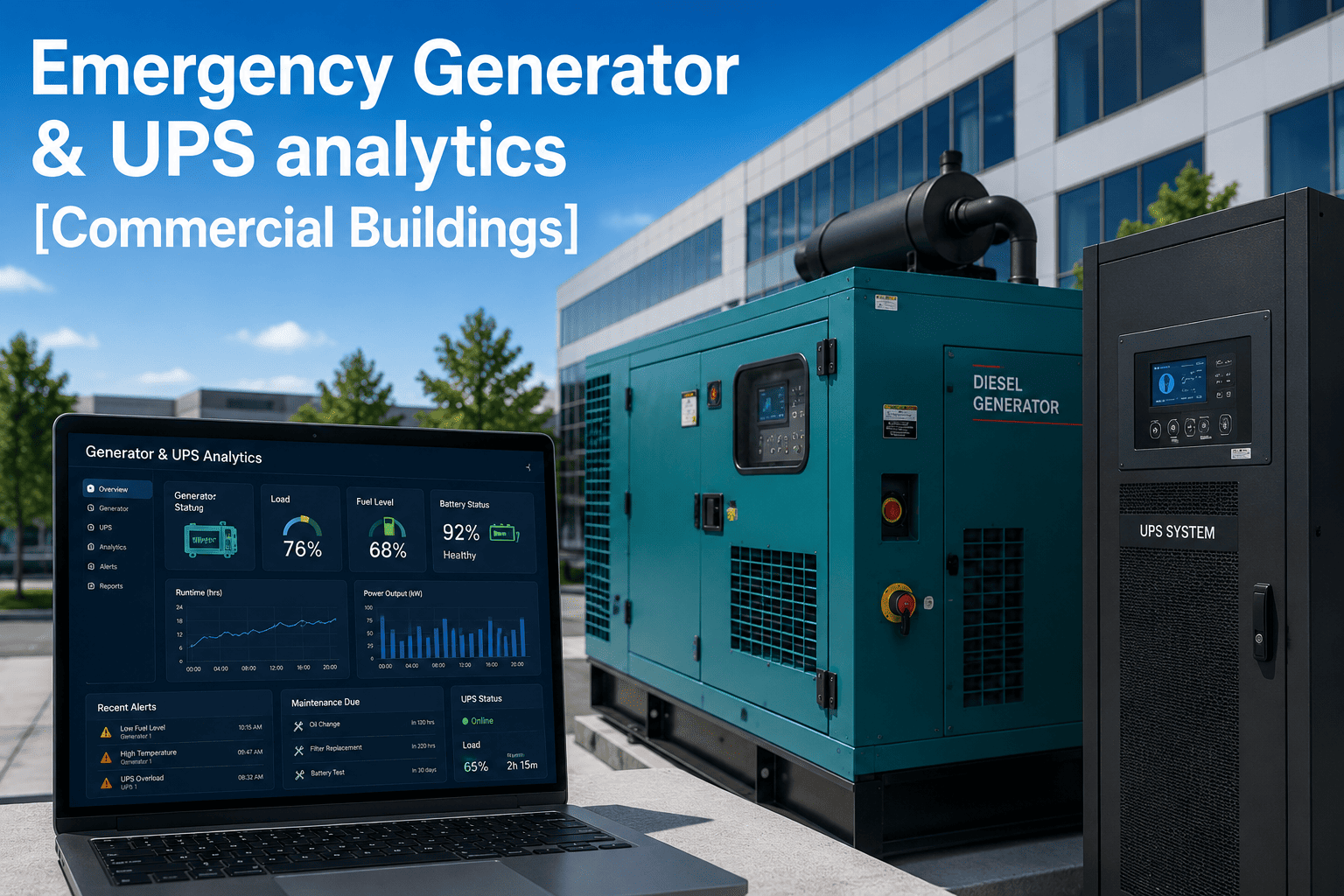
A commercial building's emergency power system is the last line of defense between a utility outage and a complete operational failure — and it is the system most likely to be untested when it is needed. EPRI data shows that 27% of emergency generator failures during real power outages occur in units that passed their last scheduled test. The gap is not the generator — it is the testing protocol. Weekly visual checks, monthly exercise runs, and annual load bank tests exist precisely because runtime simulation is the only way to confirm backup power reliability. OxMaint's maintenance scheduling platform automates the full generator and UPS testing calendar — weekly, monthly, quarterly, and annual — so no test interval is missed and every result is documented for insurance, compliance, and reliability records.
Emergency Generator & UPS Maintenance for Commercial Buildings
Every commercial building's backup power system has one job — work when the grid doesn't. Here is the complete testing and maintenance program that ensures it will.
The Complete Generator & UPS Testing Calendar
NFPA 110 establishes the minimum testing intervals for emergency power systems. Most commercial buildings run only monthly no-load exercises — leaving the most critical failure modes undetected until a real outage exposes them.
Why Load Bank Testing Is Not Optional
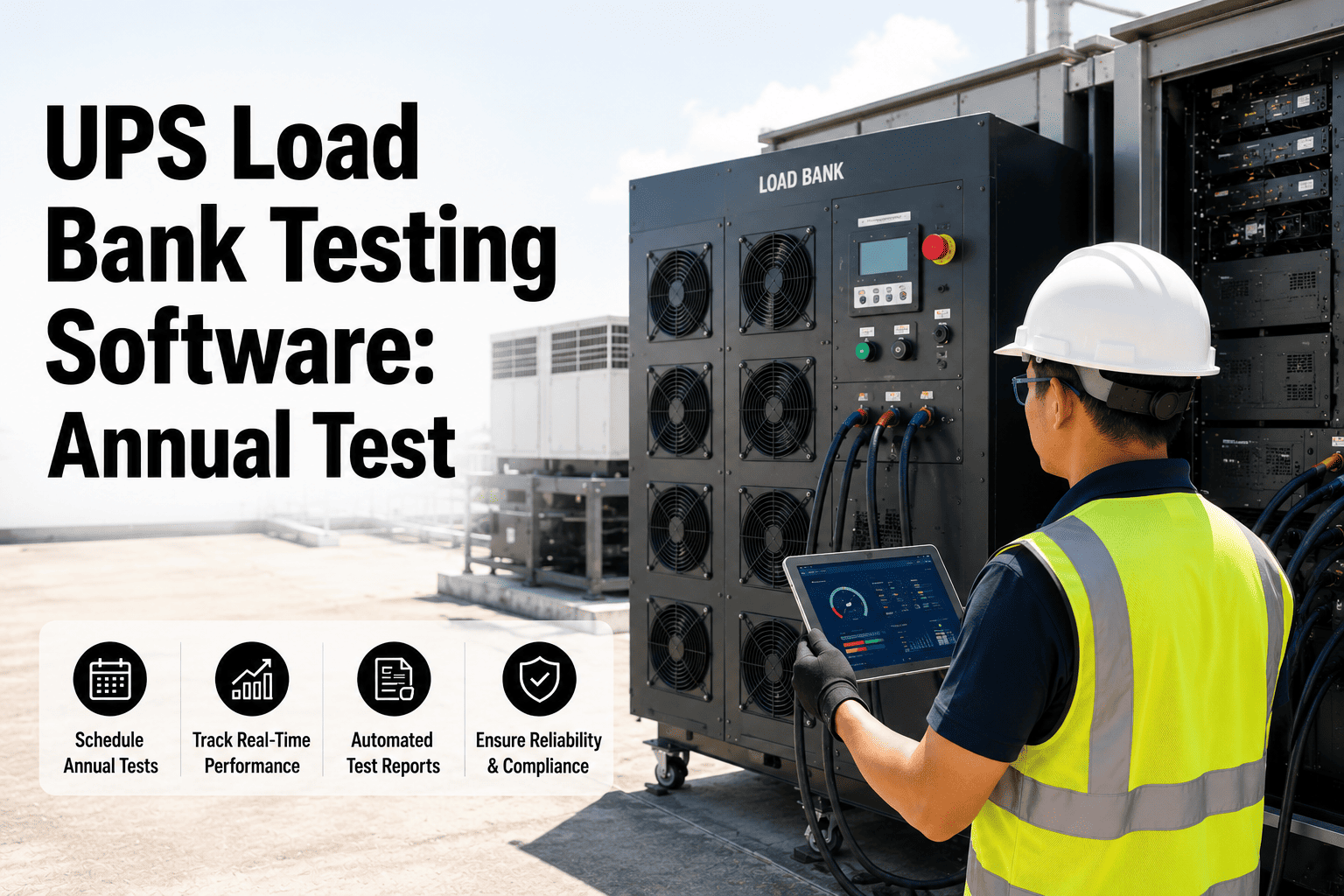
A generator that runs unloaded for 30 minutes every month will appear perfectly operational — until it is asked to carry the building's actual emergency load. Wet stacking (incomplete combustion from low-load operation) accumulates unburned fuel in the exhaust system, causes carbon buildup on injectors and rings, and degrades engine performance in ways invisible to any visual inspection. NFPA 110 Section 8.4.2 requires annual load bank testing at full rated load specifically because monthly exercise runs at partial load are not sufficient to validate full-load transfer readiness.
| Test Type | What It Validates | What It Misses | NFPA 110 Requirement |
|---|---|---|---|
| Weekly visual check | Fluid levels, visible leaks, alarm status | Engine performance, transfer reliability | Recommended practice |
| Monthly no-load run | Engine starts, basic output | Full-load capacity, wet stacking issues | Required (30 min minimum) |
| Monthly with 30% load | Partial load response, basic transfer | Full-load transfer, peak demand performance | Required where no-load run not possible |
| Annual load bank (100%) | Full-load capacity, wet stacking correction, transfer at peak | — | Required — 2 hrs minimum |
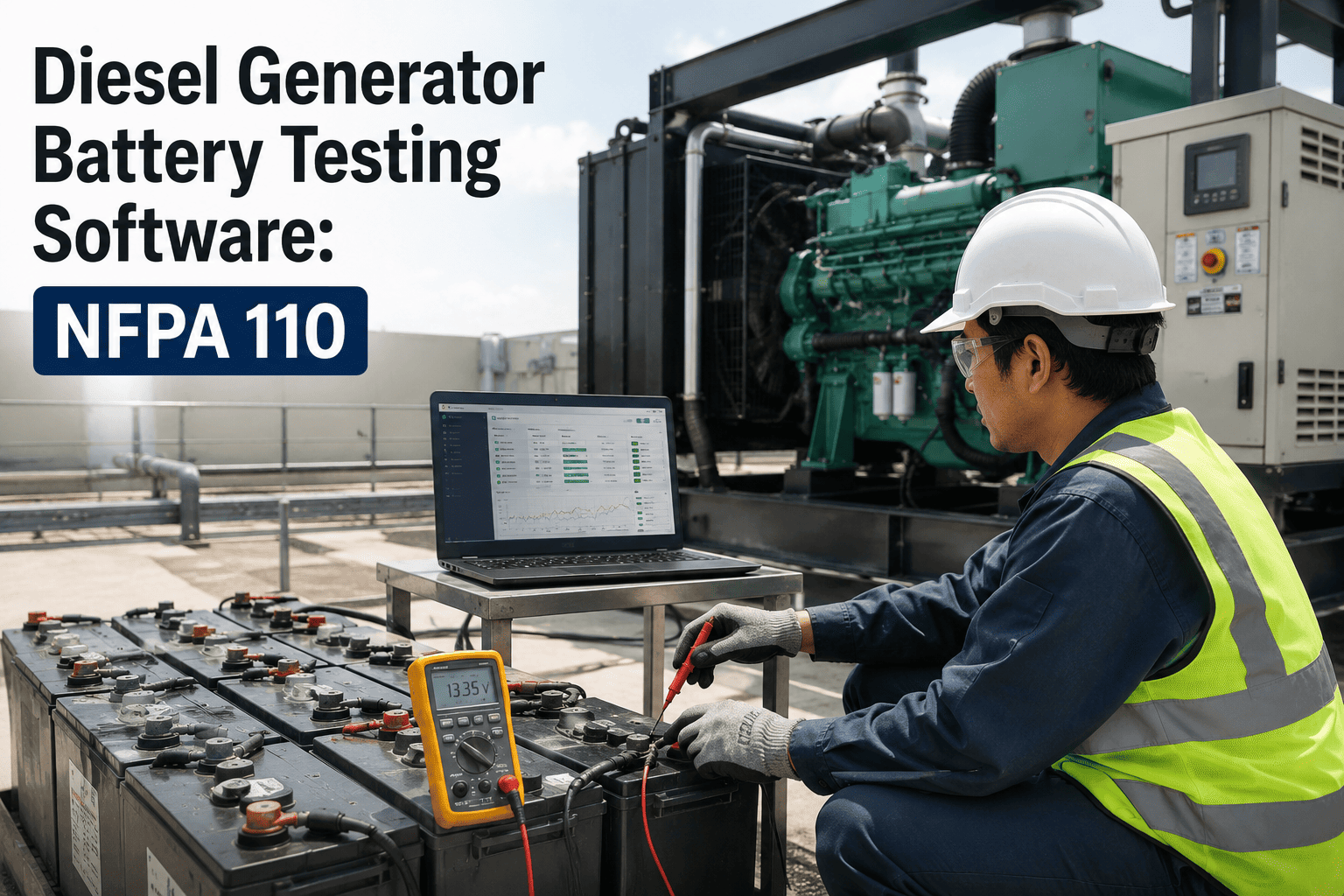
| UPS battery impedance test | Individual cell health, internal resistance | Runtime under actual load | Annual per IEEE 1188 |
Automate Your Entire Generator Testing Calendar
OxMaint schedules weekly checks, monthly runs, quarterly inspections, and annual load bank tests automatically — with mobile checklists for technicians and digital records for insurers and compliance audits.
UPS System Maintenance: The Often-Neglected Half of Backup Power
Expert Review
The two most common emergency power failures I investigate have identical root causes: the generator was never load-bank tested at full capacity, and the UPS batteries were replaced on a calendar schedule rather than an impedance-test schedule. Monthly exercise runs at no load or partial load satisfy NFPA 110's minimum requirements but they do not validate the system's ability to carry real emergency loads at the moment of need. A generator that has never been tested at 100% load may carry 60% of rated load successfully and then trip on overload or governor instability when the transfer switch connects the building's actual emergency circuits. Annual load bank testing is the only way to know — and a CMMS that automatically schedules and documents that test is the only way to ensure it actually happens every year without exception.
Frequently Asked Questions
How often should emergency generator fuel be tested and treated?
Diesel fuel in generator day tanks and bulk storage tanks degrades within 12 months under typical storage conditions — oxidation produces gum deposits, water contamination promotes microbial growth, and fuel stratification reduces combustibility. NFPA 110 Annex A recommends fuel quality testing annually and fuel treatment (biocide addition and stabilizer) at the same interval. For generators with infrequent fuel consumption (buildings with few or short outages), fuel polishing — circulating stored fuel through filtration — every 12 to 24 months prevents injector fouling that only appears during extended load operation. OxMaint schedules fuel testing and treatment as a recurring PM linked to each generator asset.
What is the difference between Level 1 and Level 2 emergency power systems under NFPA 110?
NFPA 110 classifies emergency power systems by the consequence of failure. Level 1 systems serve life-safety loads where failure could result in loss of life — hospitals, fire pump controllers, emergency lighting in high-rise buildings. Level 1 systems must transfer within 10 seconds and are subject to more rigorous testing requirements. Level 2 systems serve loads where failure causes economic loss or operational disruption but not life safety risk — data centers, office buildings, retail operations. Level 2 transfer time is 60 seconds. Both levels require monthly exercise tests and annual load bank tests, but Level 1 facilities face additional AHJ scrutiny and testing documentation requirements. Book a demo to see how OxMaint configures testing schedules by system level.
How do you document load bank test results for insurance and compliance purposes?
A compliant load bank test record must capture: the date, duration, and location of the test; the rated and applied load in kW and percentage of rating; voltage, frequency, and current readings at test start, 30-minute intervals, and test completion; fuel consumption rate during test; coolant and oil temperature readings; any alarms, abnormal readings, or test interruptions; and the name and qualifications of the test personnel. OxMaint's mobile inspection checklist captures all required fields at the generator with photo documentation, technician sign-off, and automatic report generation — producing a test record that satisfies NFPA 110, insurance carrier requirements, and AHJ inspection requests simultaneously.
When should UPS batteries be replaced — on a schedule or based on testing?
IEEE 1187 and 1188 standards recommend replacing UPS batteries based on measured capacity and impedance rather than a fixed calendar schedule — because battery degradation rate varies significantly with temperature, discharge frequency, and float voltage. Batteries in a 25°C environment with moderate discharge cycling may reach end-of-life in 5 years; the same battery model in a 35°C environment may fail in 2 years. Annual impedance testing establishes a degradation trend for each battery string. Replacement is indicated when capacity falls below 80% of rated or when impedance testing shows a cell more than 10% above the string average — whichever comes first. Waiting for a failure event to trigger replacement means experiencing an outage during transfer. Learn how OxMaint tracks battery test history and triggers replacement alerts.
Your Backup Power System Should Be Your Most Reliable System
OxMaint schedules weekly, monthly, and annual generator and UPS tests, alerts before every deadline, and generates documentation that satisfies NFPA 110, insurance carriers, and regulatory inspectors — automatically.