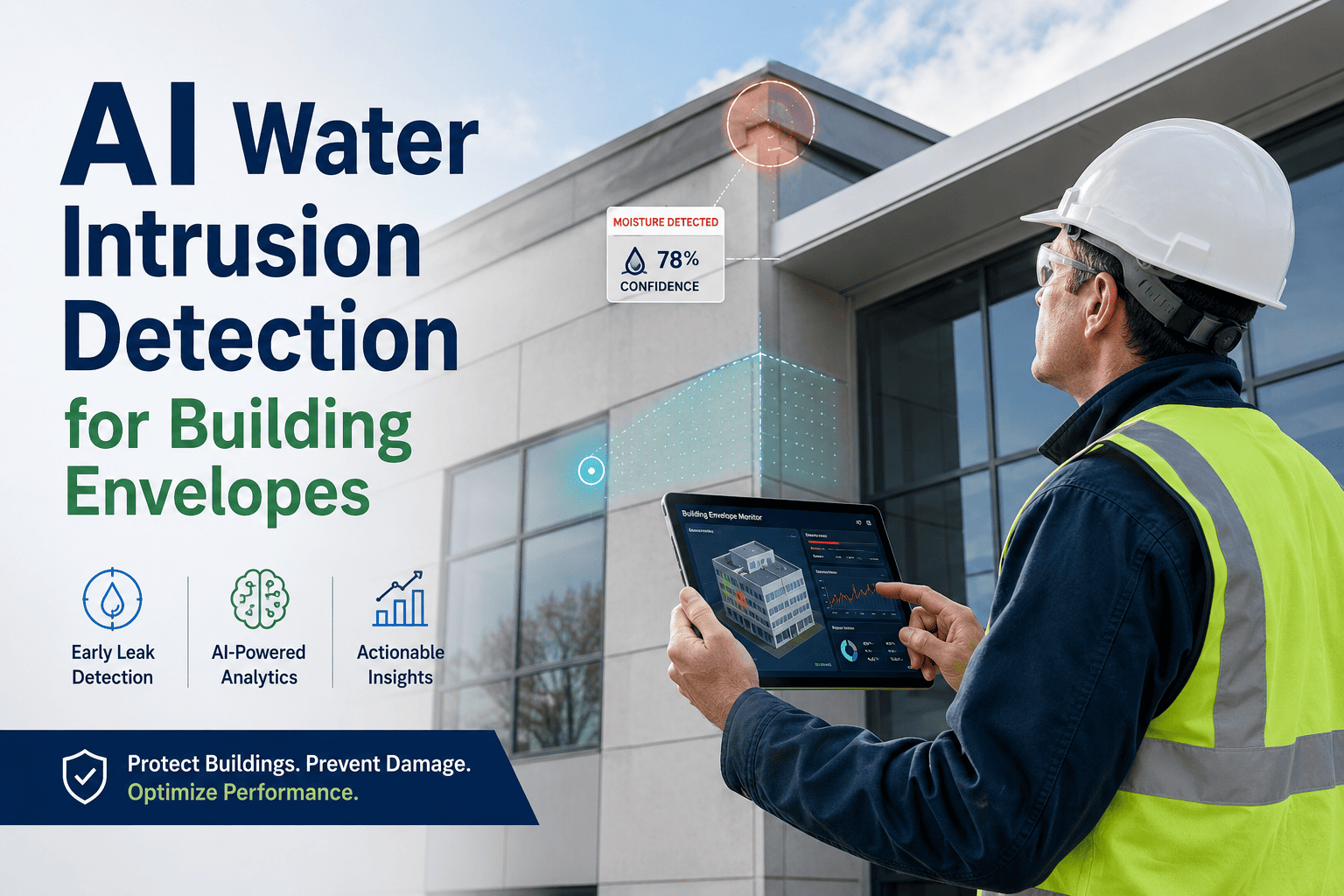
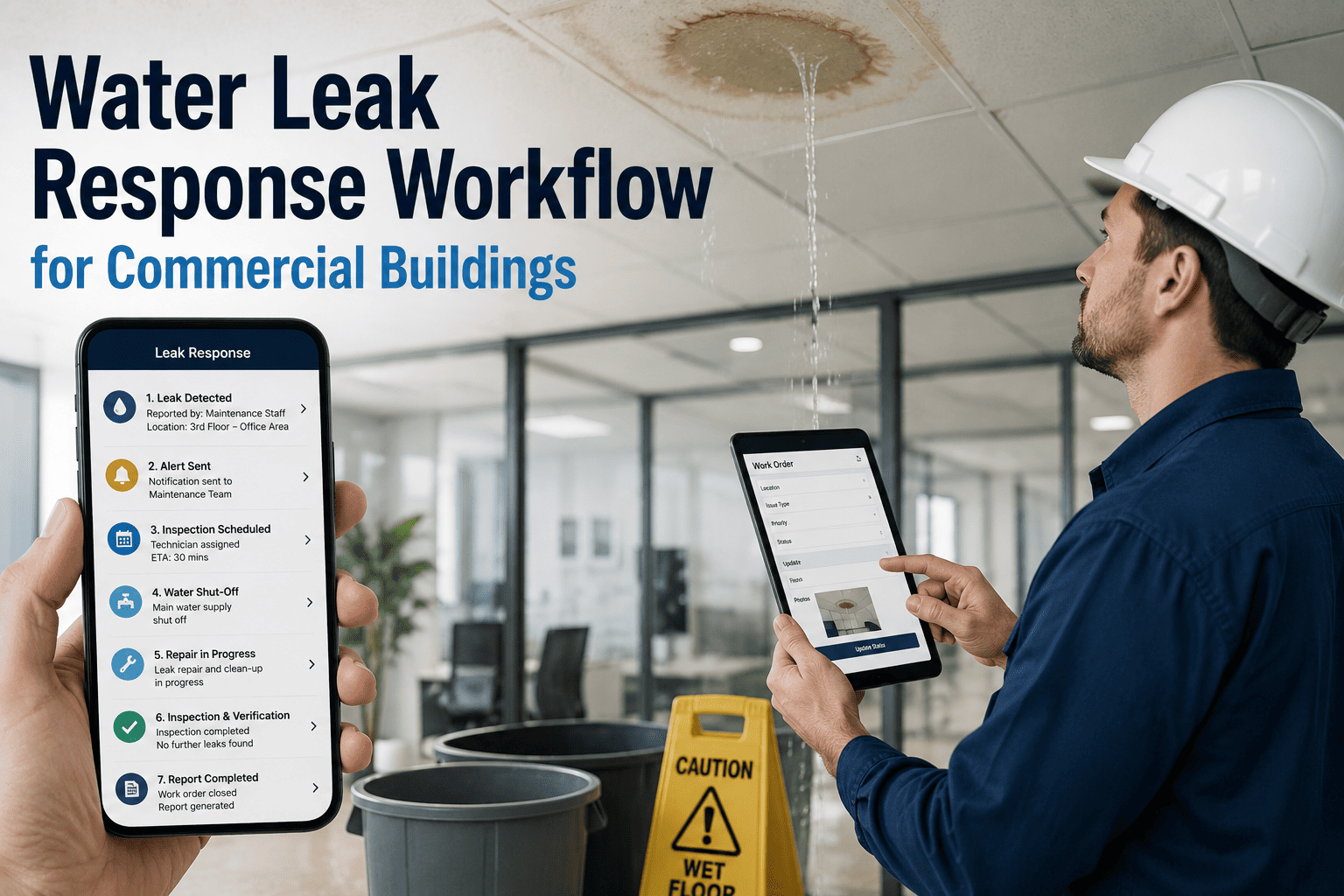
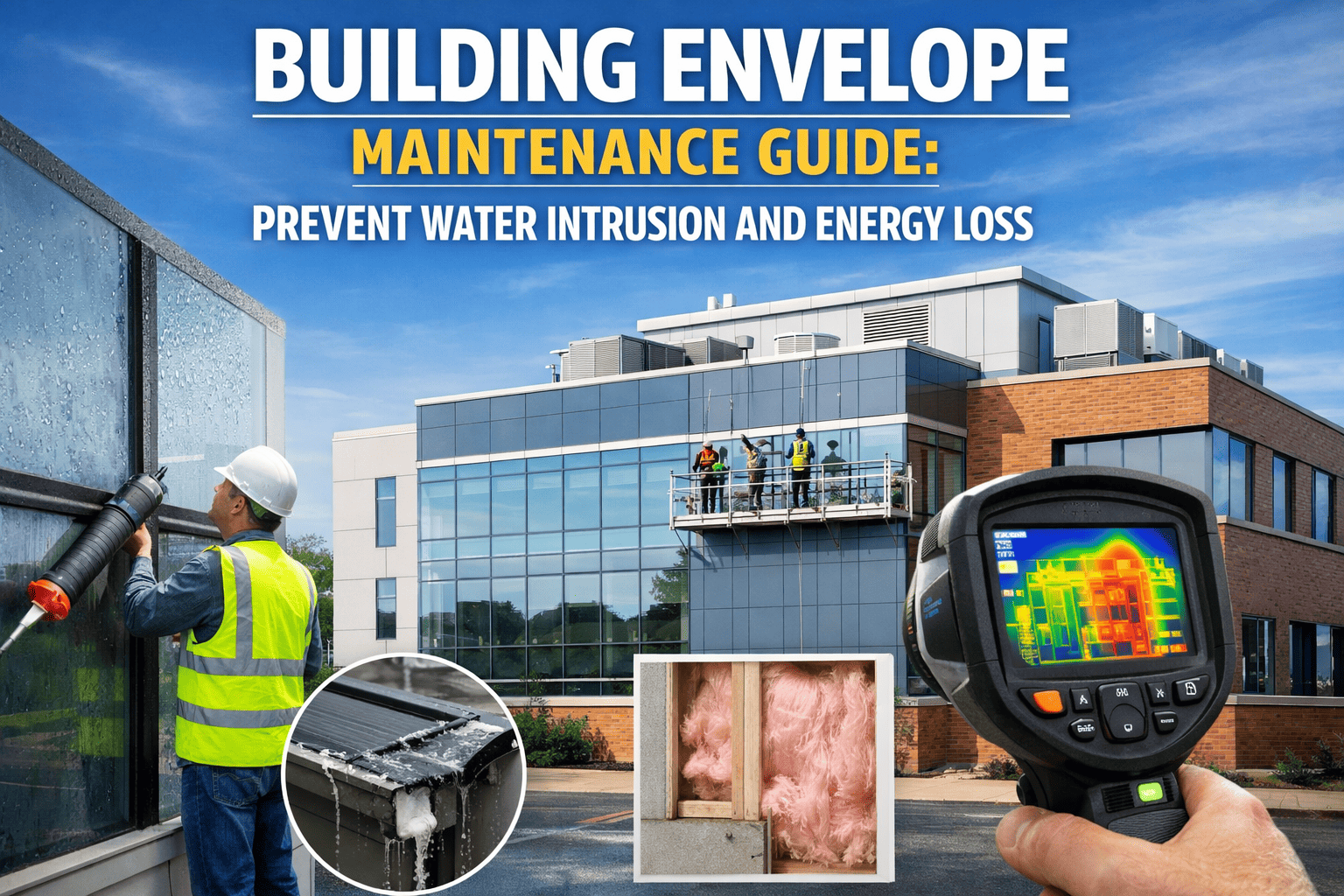
Water intrusion through building envelopes is the leading cause of structural damage and indoor air quality failure in commercial buildings — and the most insidious, because it often goes undetected for months while damage accumulates silently behind walls and above ceiling tiles. AI-powered detection using smart humidity, moisture, and temperature sensors changes the detection timeline from months to minutes, flagging intrusion events before they become mold problems, structural damage, or tenant health incidents. Sign Up Free and give your building envelope a nervous system.
IOT SENSOR INTELLIGENCE
Water Damage That Takes 6 Months to Discover Takes 6 Days to Fix. The Difference Is Detection.
Oxmaint's AI Water Intrusion Detection deploys smart sensors across your building envelope and uses machine learning to separate normal humidity variation from actual intrusion events — alerting your team in real time, not after the damage is done.
Water Intrusion — Without Detection vs With AI Monitoring
Without Monitoring
Day 1 — Water enters through compromised seal
Day 7 — Insulation becomes saturated
Day 21 — Mold colonies begin forming
Day 60 — Ceiling tile discoloration appears
Day 120 — Tenant reports issue or ceiling fails
Average Remediation Cost: $47,000+
With Oxmaint AI Detection
Day 1 — Sensor detects humidity spike above baseline
Day 1 — AI classifies event as potential intrusion
Day 1 — Alert sent, work order auto-created
Day 2 — Technician locates and patches source
Day 3 — Sensor readings return to baseline, event closed
Average Remediation Cost: $800–$2,400
How the AI Distinguishes Normal Humidity from Intrusion Events
STEP 1
Baseline Learning
Over 14–21 days, the AI establishes normal humidity, temperature, and moisture variance patterns for each sensor zone — accounting for seasonal variation, HVAC cycles, and occupancy patterns specific to that area of the building envelope.
STEP 2
Anomaly Detection
Any reading that deviates from the established baseline by more than a configurable threshold triggers the AI analysis layer. A single humidity spike on a rainy day won't generate a false alarm — the AI looks for pattern characteristics that match intrusion signatures.
STEP 3
Intrusion Classification
The AI classifies the anomaly against a library of known intrusion patterns — roof deck infiltration, window seal failure, facade joint failure, and HVAC condensation leak — and produces a confidence score and probable source location for the responding technician.
STEP 4
Alert & Work Order
High-confidence intrusion events generate an immediate push alert to the facilities team and automatically create a work order with the sensor location, anomaly type, confidence level, and recommended diagnostic steps — so the technician arrives informed, not guessing.
Sensor Placement Guide — Building Envelope Zones
| Envelope Zone |
Sensor Type |
Detection Target |
Alert Threshold |
Risk Level |
| Roof Deck / Parapet |
Moisture + humidity |
Membrane breach, standing water |
>85% RH sustained 4+ hours |
High |
| Exterior Wall Cavity |
Humidity + temperature |
Facade joint failure, window seal |
Dewpoint reached at surface |
High |
| Below-Grade Walls |
Moisture + pressure |
Foundation seepage, hydrostatic |
Any moisture above dry baseline |
Critical |
| Skylight Frames |
Humidity + leak sensor |
Gasket failure, thermal cycling |
Contact sensor trigger or >80% RH |
Medium |
| Mechanical Penthouses |
Humidity + temperature |
Roof penetration leaks, flashing |
>75% RH delta vs exterior |
Medium |
EXPERT REVIEW
Thomas Brennan, AIA, RRO
Registered Roof Observer & Building Envelope Consultant — 26 Years
The building envelope represents the first and last line of defense against water damage, yet most commercial facilities have zero continuous monitoring of envelope performance between inspection cycles. Annual or biannual inspections catch deterioration but completely miss dynamic intrusion events triggered by specific storm conditions, thermal cycling, or sudden material failure. Continuous IoT-based moisture monitoring with AI anomaly detection is the only way to achieve meaningful early warning on a building envelope — and the ROI versus a single major remediation event is essentially infinite. Buildings I've consulted for that deployed sensor-based monitoring have gone years without a significant undetected water event.
PROTECT YOUR BUILDING ENVELOPE
Deploy Smart Sensors Across Your Building Envelope in Days — Not Months
Wireless, battery-powered sensors install without drilling or conduit. Oxmaint's AI begins learning your building's baseline immediately — your first intrusion event gets detected in real time, not six months later during a ceiling collapse.
Frequently Asked Questions
How many sensors are typically needed to cover a commercial building's envelope?
Sensor requirements vary by building size, age, and envelope complexity, but a typical 100,000 square foot commercial building requires between 40 and 80 sensors for meaningful coverage across the roof, walls, and below-grade areas. Oxmaint's deployment planning tool helps facility teams identify the highest-risk zones based on building age, previous leak history, and construction type — allowing strategic placement that maximizes detection coverage with the most cost-effective number of sensors.
Book a demo to get a sensor recommendation for your specific building.
Can the system differentiate between HVAC condensation and actual water intrusion?
Yes. This is one of the most important capabilities of the AI classification layer. HVAC condensation produces predictable humidity and temperature patterns correlated with system operating cycles, while water intrusion produces anomalies that are time-correlated with external events like rain, temperature differentials, or rapid barometric pressure changes. The AI learns to recognize HVAC-pattern anomalies and suppress them from intrusion alerts, dramatically reducing false positive rates. Buildings with complex HVAC layouts typically see false positive rates below 3% after the 21-day baseline learning period.
What happens to sensor data if Wi-Fi or cellular connectivity is interrupted?
Oxmaint's sensors include onboard data buffering that stores readings locally when connectivity is lost, then automatically transmits the buffered data when connection is restored. No readings are lost during connectivity gaps. For critical monitoring zones in below-grade areas or mechanical rooms with poor wireless coverage, Oxmaint supports LoRaWAN mesh networking that extends reliable connectivity to challenging locations without additional infrastructure investment. All sensor connectivity status is visible in the platform dashboard, with alerts for sensors that go offline for extended periods.
Sign up free to explore the sensor management module.
Does Oxmaint integrate water intrusion detection with building insurance programs?
Several major commercial property insurers now offer premium discounts for buildings with documented continuous water monitoring programs, recognizing that early detection significantly reduces claims severity. Oxmaint generates compliance reports and detection event documentation that facilities can submit to their brokers as evidence of an active monitoring program. Additionally, in the event of a water damage claim, the Oxmaint event log provides timestamped evidence of when intrusion was detected and what response was taken — documentation that protects building owners during claims investigations and demonstrates due diligence in maintenance practices.