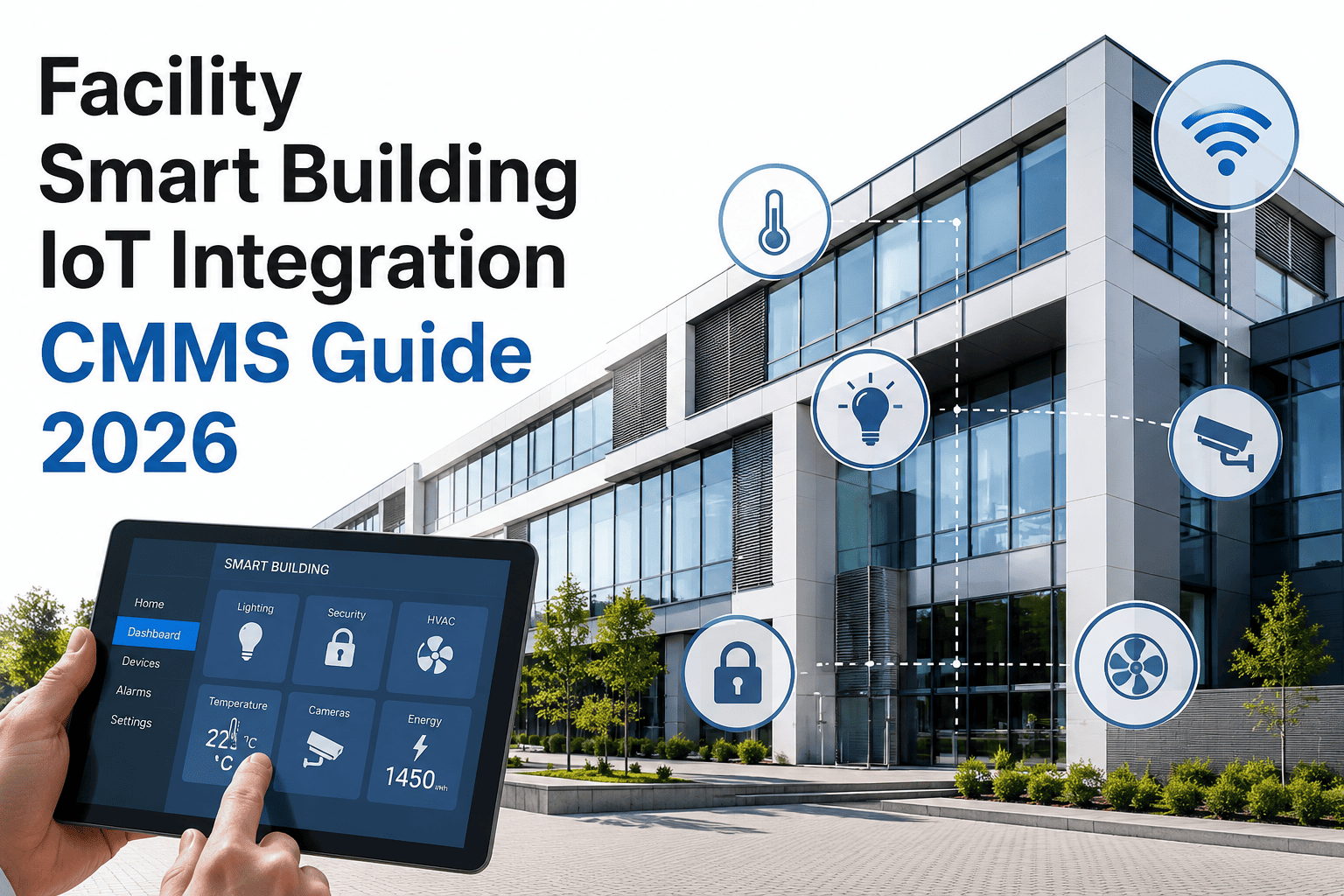
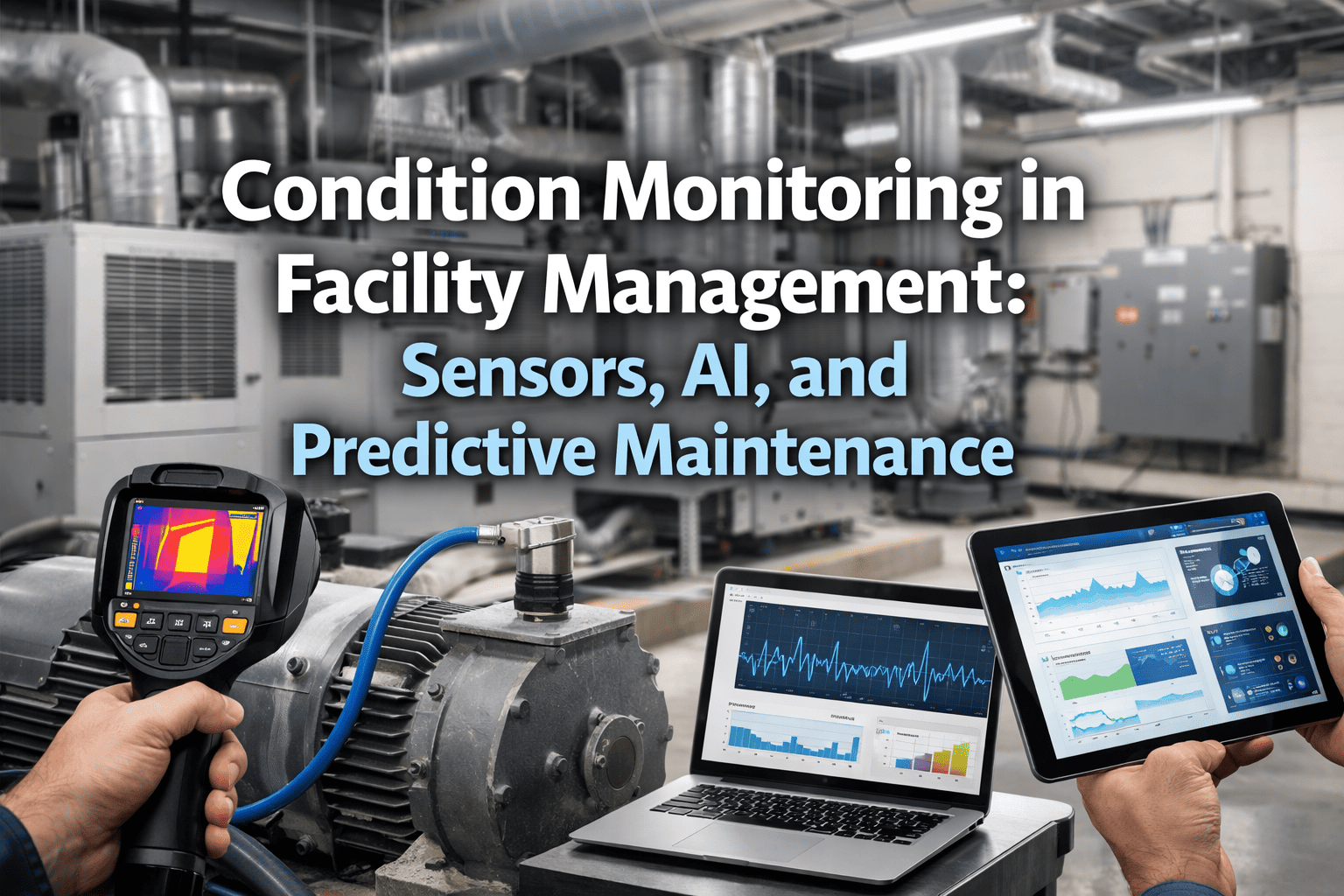
IoT sensors connected to AI monitoring platforms are changing the economics of commercial building maintenance by making it possible to detect HVAC failures, elevator anomalies, and electrical system degradation weeks before they cause service disruptions. The hardware cost barrier that once made sensor deployment prohibitive has fallen sharply: wireless vibration sensors now retail for under $200 per unit, BAS protocol integration eliminates the need for additional sensors on connected systems, and cloud-based AI platforms process the sensor streams without on-premise infrastructure. For facility managers, the result is a monitoring capability that previously required specialist engineers and dedicated monitoring rooms now deployable from a mobile phone in 14 days across an entire portfolio. Sign up free on Oxmaint to see IoT sensor monitoring configured for your building systems, or book a demo for a live sensor integration walkthrough.
Deploy IoT Sensor Monitoring Across Your Building Portfolio in 14 Days
Oxmaint integrates with existing BAS systems and wireless IoT sensors to deliver real-time equipment monitoring with AI-powered failure prediction and automatic work order generation. No hardware replacement required.
IoT sensors collect raw equipment data: vibration frequency and amplitude, motor casing temperature, current draw, pressure differentials, and run hours. AI models analyse that data stream, comparing current readings against baseline operational profiles and historical pre-failure patterns. When the AI detects a deviation that matches a known failure precursor, it generates an alert and creates a maintenance work order automatically, turning raw sensor data into a coordinated maintenance response without human triage between detection and dispatch.
IoT Sensor Types for Commercial Building Equipment
Different equipment failure modes require different sensor types. Deploying the right sensor at the right mounting point is the difference between comprehensive condition monitoring and a collection of irrelevant data. The four sensor categories below cover over 85% of commercial building equipment failure modes.
Mounted on motor housings, compressor casings, fan shaft bearings, and pump casings. Measure vibration velocity, acceleration, and frequency spectrum. Wireless units with 2 to 5 year battery life. Best for detecting bearing degradation, rotor imbalance, misalignment, and early-stage mechanical failure in rotating equipment.
Covers: HVAC motors, pumps, fans, compressorsSurface-mounted on motor casings, bearing housings, VFD enclosures, and pipe surfaces. Wireless thermocouple and RTD sensors capture temperature trend data that precedes thermal failure modes. Ambient sensors provide context for normalising readings across seasons and operating conditions.
Covers: Motors, VFDs, pipes, boilers, refrigerant linesClamp-on current transformers on motor power feeds measure amp draw against nameplate rating and historical baseline. Deviations in current draw at steady-state conditions indicate bearing degradation, coil fouling, refrigerant issues, or VFD performance degradation before any visible symptom appears on the building.
Covers: All motors, electrical panels, VFDsInstalled at chiller refrigerant circuits, AHU filter housings, and cooling coil water circuits. Filter loading, refrigerant charge, and waterside fouling all produce pressure trend deviations. Differential pressure across AHU filter banks provides the earliest indicator of filter loading that causes performance and air quality losses.
Covers: Chillers, AHUs, pumps, filter systemsHow AI Processes Building Sensor Data Into Maintenance Actions
IoT Sensor Deployment: What to Expect in the First 30 Days
A complete IoT sensor deployment for a commercial building portfolio is a 14 to 21 day process, not a multi-month IT project. The deployment path below reflects typical Oxmaint customer onboarding across office, mixed-use, healthcare, and industrial building portfolios.
| Deployment Stage | Timeline | Activities | Output |
|---|---|---|---|
| Asset Prioritisation and Sensor Specification | Days 1 to 3 | Critical assets identified based on replacement cost and downtime impact. Sensor type and quantity specified per asset. BAS integration points mapped for existing connected systems | Asset priority list and sensor specification confirmed |
| Sensor Hardware Procurement and Delivery | Days 3 to 7 | Wireless sensors ordered from Oxmaint-approved suppliers. IoT gateway units configured for building network. BAS integration credentials confirmed and tested | Hardware on site, gateways configured |
| Physical Sensor Deployment and Commissioning | Days 7 to 12 | Sensors mounted at specified locations. Gateway commissioned at each building. Data flow verified from sensor to cloud platform. All assets transmitting live sensor data confirmed | All priority assets transmitting live data |
| Baseline and Model Activation | Days 12 to 17 | ML models activated per equipment class. 5 to 7 day baseline period establishes normal operating profiles. Thresholds calibrated. Dashboard configured for site and portfolio views | Live AI monitoring active, first alerts possible |
| Work Order Integration Go-Live | Days 17 to 21 | Prediction-to-work-order automation enabled. First auto-generated work orders reviewed by FM manager. Technician mobile training completed. Full autonomous operation activated | Full predictive programme live and autonomous |
Building System Coverage: What IoT Sensors Monitor in Oxmaint
Oxmaint supports IoT monitoring across all major commercial building equipment classes, with pre-trained ML models for each system type. BAS integration maps existing connected points without additional hardware installation.
Chillers (water-cooled and air-cooled), AHUs, cooling towers, fan coil units, centrifugal pumps, and boilers. Failure modes detected include compressor bearing degradation, refrigerant leak, condenser fouling, belt slippage, motor overheating, and VFD thermal failure. Detection lead time: 7 to 28 days.
Sensors required: vibration, temperature, current, pressureMotors above 15kW, VFDs, electrical distribution panels via current and power quality monitoring. Detects winding insulation degradation, bearing failure precursors, power factor deviation, and harmonic distortion that precedes motor or VFD failure. Integrates with BAS for real-time panel monitoring without additional sensors.
Sensors required: current transformers, power quality monitorsController data integration via BAS or dedicated elevator monitoring gateway. Tracks door cycle counts, motor current profiles, levelling accuracy, and ride quality metrics. Detects hydraulic system degradation, rope wear indicators, and drive system anomalies. Integrates with ASME inspection tracking in the CMMS.
Primary method: controller data integration via gatewayDomestic water pumps, sump pumps, hot water heaters, and backflow preventers via pressure and flow sensors. Monitors pump performance degradation, pressure drop trends indicating seal wear, and water heater thermal performance indicating scale buildup requiring descaling or anode replacement.
Sensors required: pressure transducers, flow metersIoT Sensor Monitoring ROI: Cost and Return Data
Frequently Asked Questions: IoT Sensors and AI for Building Monitoring
Connect Every Building System to AI Monitoring in 14 Days
BAS integration plus wireless IoT sensors for complete building equipment visibility. AI failure prediction, automatic work order generation, and real-time portfolio health dashboard. No infrastructure replacement, no IT project, full ROI visibility from month one.